Callaway Opus SP Wedge
Callaway — Callaway Opus SP Wedge · By Lauryl · Nov 16, 2025
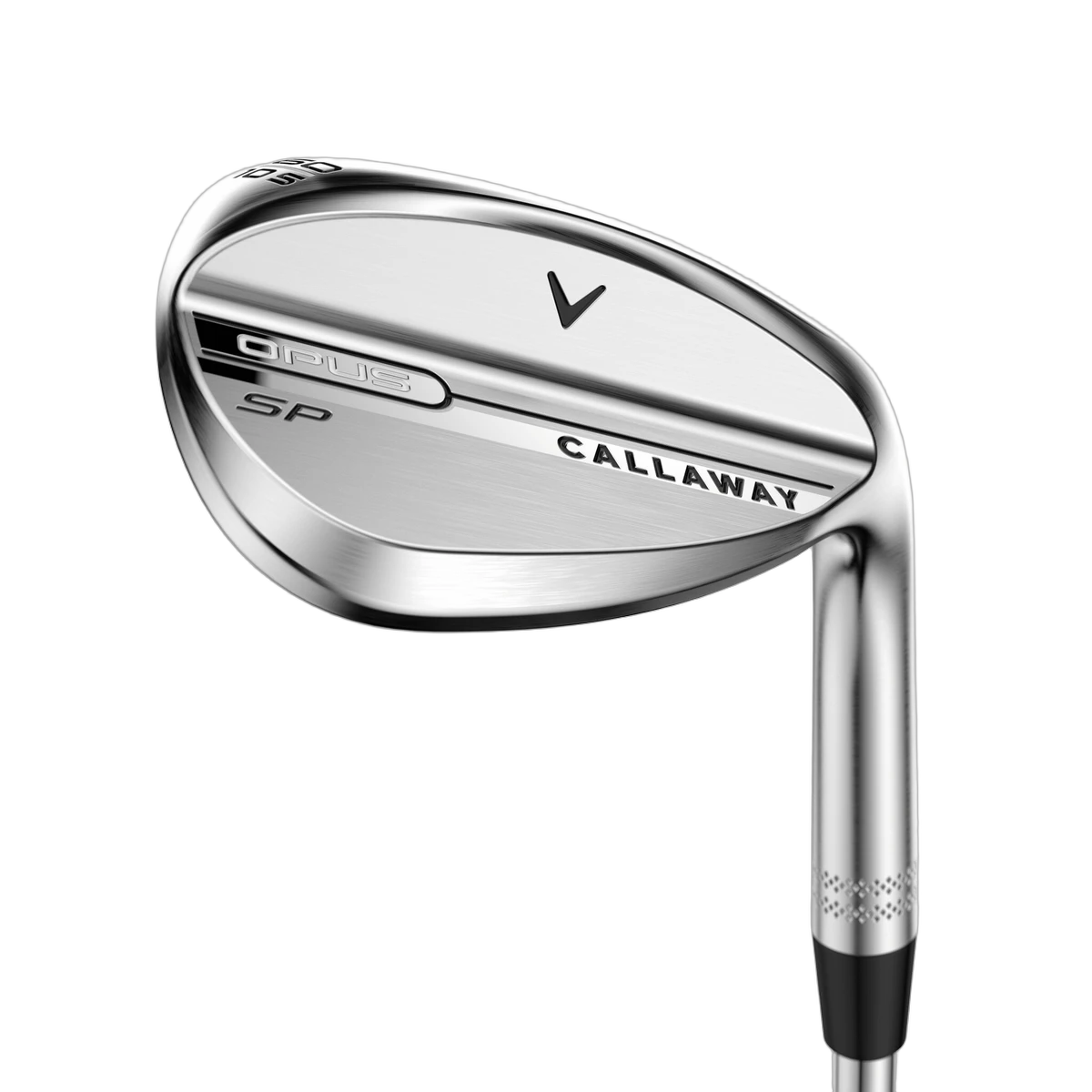
Callaway's Spin Pocket technology is genuinely different from anything else on the market, and it might finally give Vokey a reason to look over their shoulder.
The Big Picture
The Callaway Opus SP is the latest evolution of the wedge lineup that's been rapidly closing the gap on Titleist's decades-long dominance. The original Opus, launched in 2024, was widely regarded as the best Callaway wedge in years, a significant step forward in shaping, tour validation, and overall performance. The Opus SP arrives barely a year later, which suggests Callaway felt they could push further, faster. The "SP" stands for Spin Pocket, the headline technology that fundamentally rethinks how a wedge generates spin by raising the center of gravity through hollowed-out construction in the lower face rather than relying solely on grooves and face treatments.
The result is a wedge that pairs an 8620 cast body with a 1025 form-forged face, features the tour-validated Shape 6 profile (chosen from five prototypes by tour staff), new SPIN GEN 2.0 grooves with a 17-degree groove angle and deeper laser-etched face pattern, and five grind options covering every playing style from tight-lie specialists to bunker bashers. At $199.99 steel / $209.99 graphite, it's at the new premium floor for major manufacturer wedges. Available from 46° to 64° in two-degree increments, primarily right-hand with limited left-hand options. Stock shaft is the Dynamic Gold S200, a deliberate choice that sits between regular and stiff, making it workable for most players off the rack.
This wedge has earned more tour player approval than any previous Callaway wedge. That's not marketing language. It's the culmination of years of shape iteration that finally produced something tour players actually want to use.
At Address
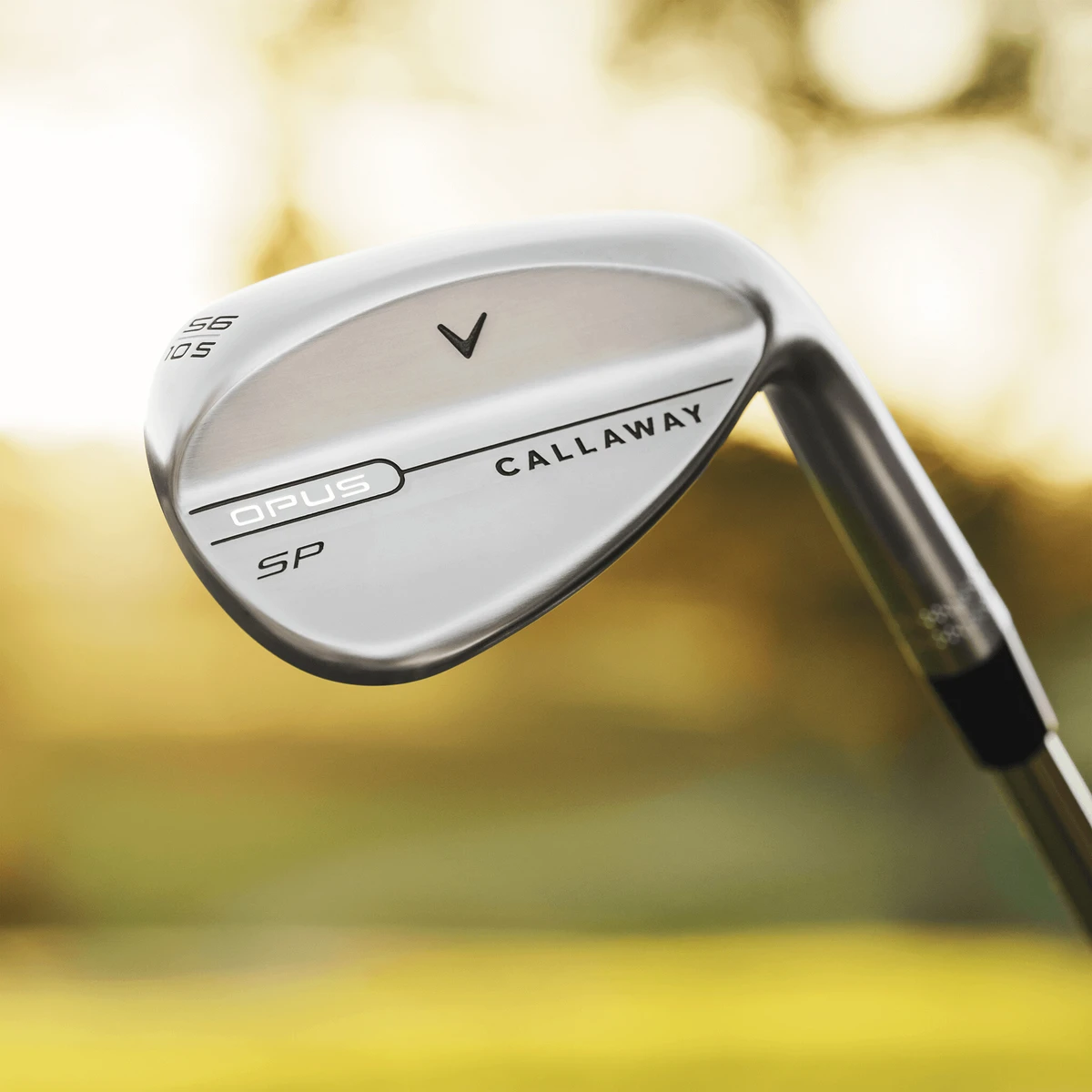
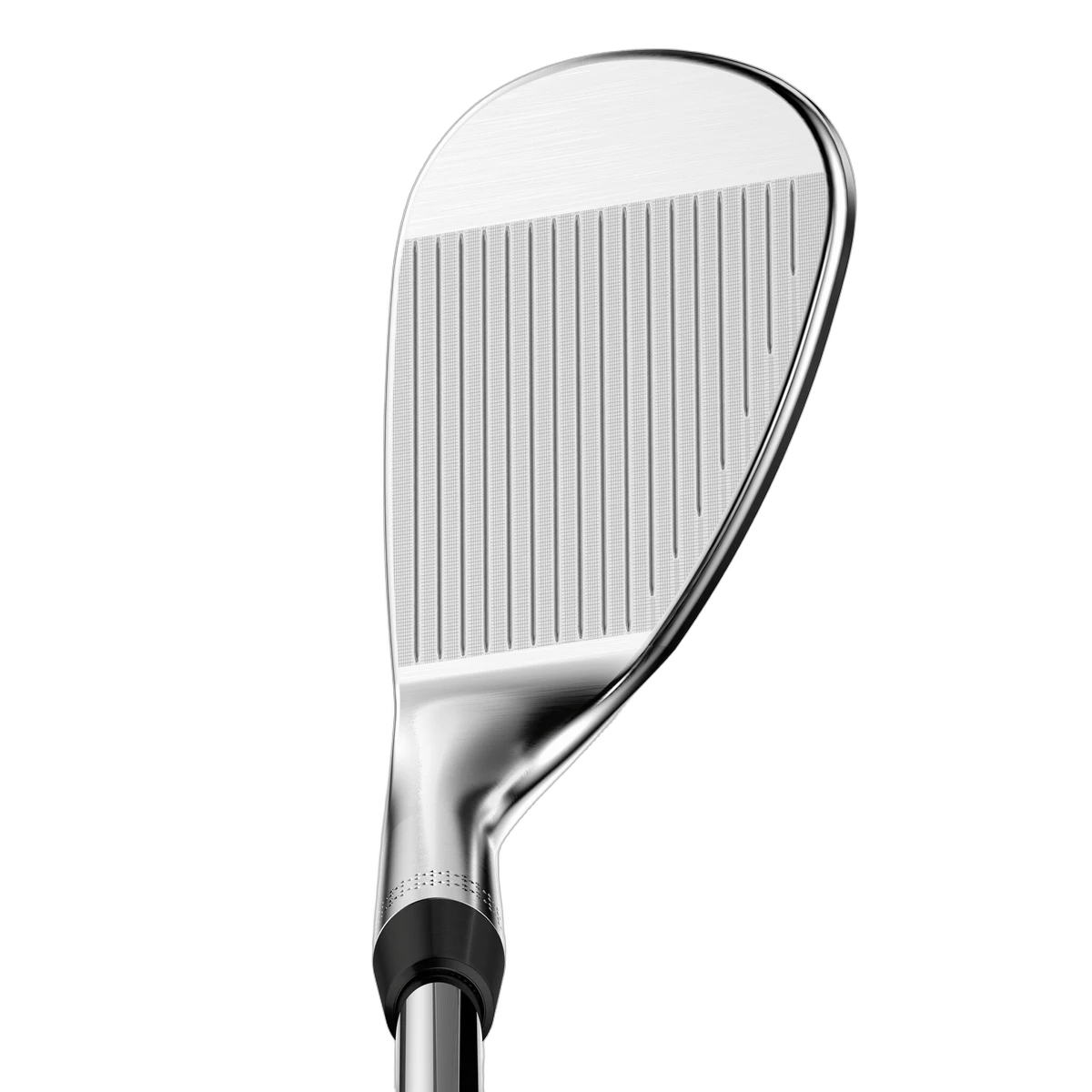
Shape 6 is the payoff of five rejected prototypes, and it shows. The Opus SP presents a clean, compact profile at address with a slightly thicker topline than a pure blade, enough to communicate forgiveness without looking game-improvement. The transition from toe to topline to hosel is sharper and more refined than previous Callaway wedges, and to my eye, slightly more compact than a Vokey SM10 at equivalent loft and grind.
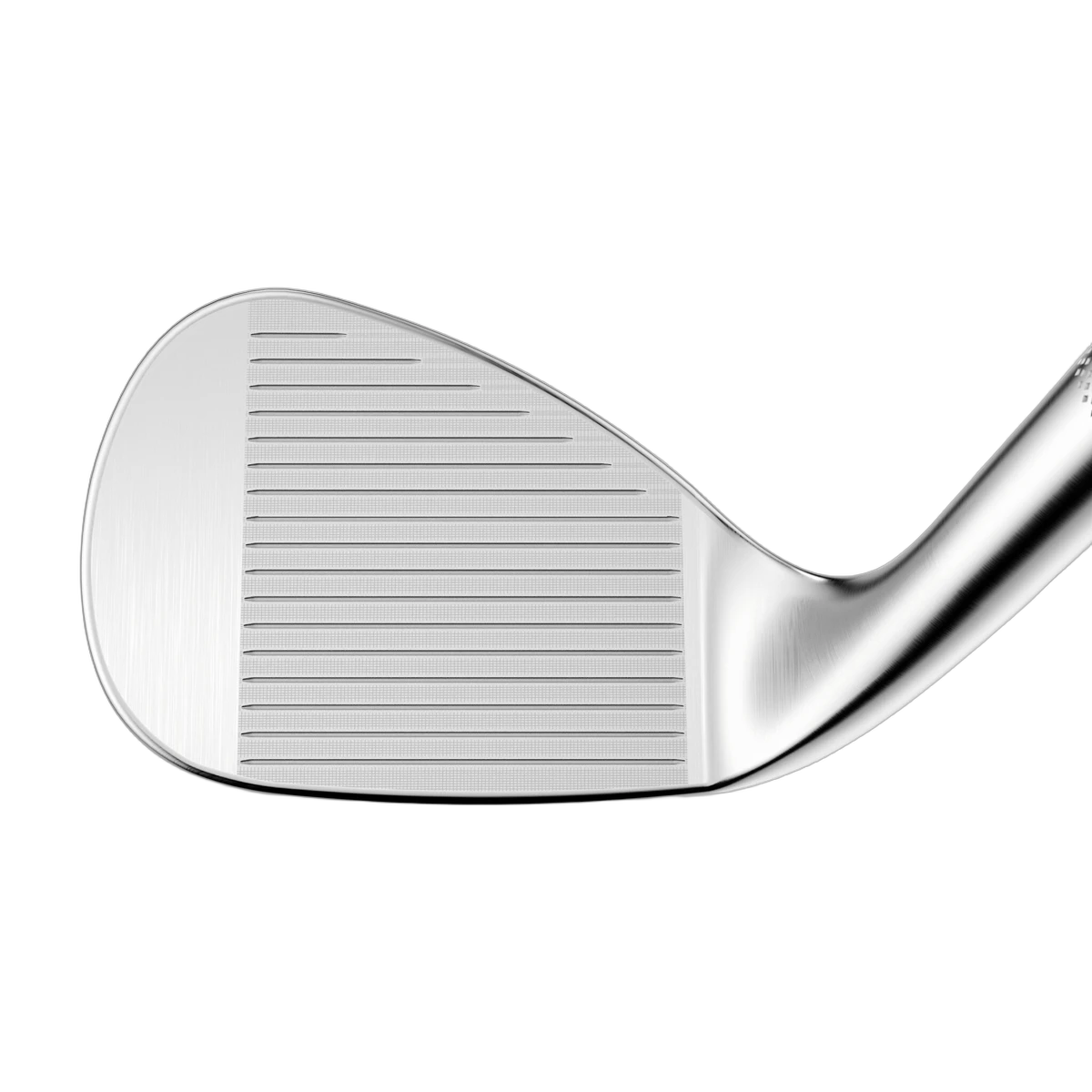
Opus SP face-on view highlighting vertical groove milling
What's particularly clever is the loft-dependent shaping. The 48° through 52° models have less offset and a straighter leading edge to blend seamlessly with your irons. The 54° through 64° models feature a thicker topline, longer hosel, and what Callaway claims is the highest center of gravity in the industry. This means your gap and pitching wedges look like extensions of your iron set, while your sand and lob wedges look like purpose-built scoring tools. It's a thoughtful design philosophy that most competitors ignore.
The Satin Chrome finish is clean and professional. QPQ Black is available for golfers who prefer a low-glare option. Both look tour-authentic without the overly aggressive branding that cluttered previous Callaway wedge generations.
Sound & Feel
The two-piece construction, cast body with a form-forged face, delivers a feel that's simultaneously soft and solid. Initial concerns about the Spin Pocket hollowing creating a hot or unpredictable face feel proved unfounded. Strikes from the sweet spot produce a crisp, compressed feedback with a quiet acoustic signature. The forged 1025 face likely contributes to this. It's inherently softer than a fully cast construction and helps absorb vibration that the hollow lower section might otherwise amplify.
Across five rounds of testing by National Club Golfer, the feel remained consistent and predictable. Toe and heel strikes produced slightly different feedback (as they should, feel feedback is information), but the overall sensation stayed solid rather than tinny or hollow. For a wedge with this much internal engineering, the feel is remarkably traditional.
Performance
Spin & Launch
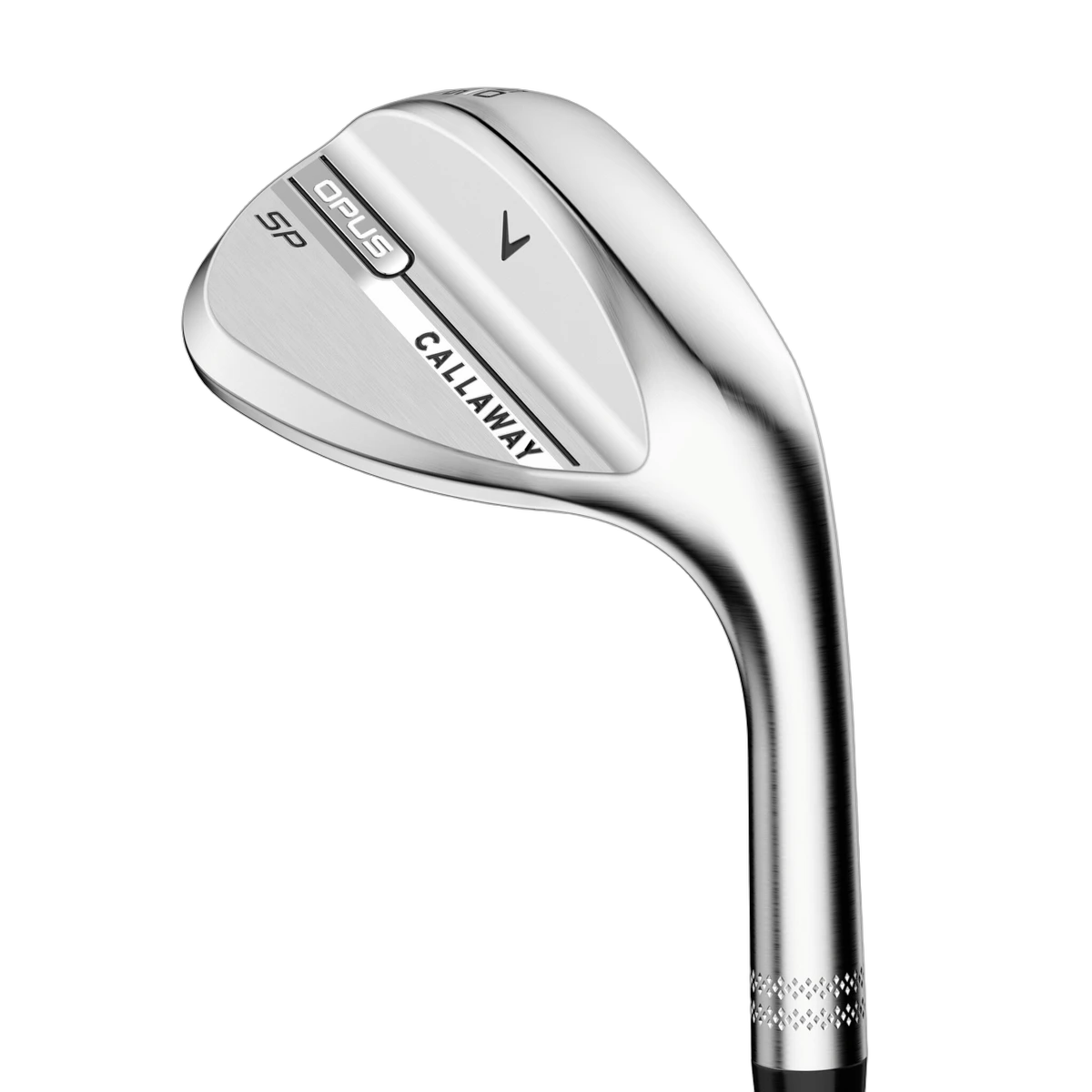
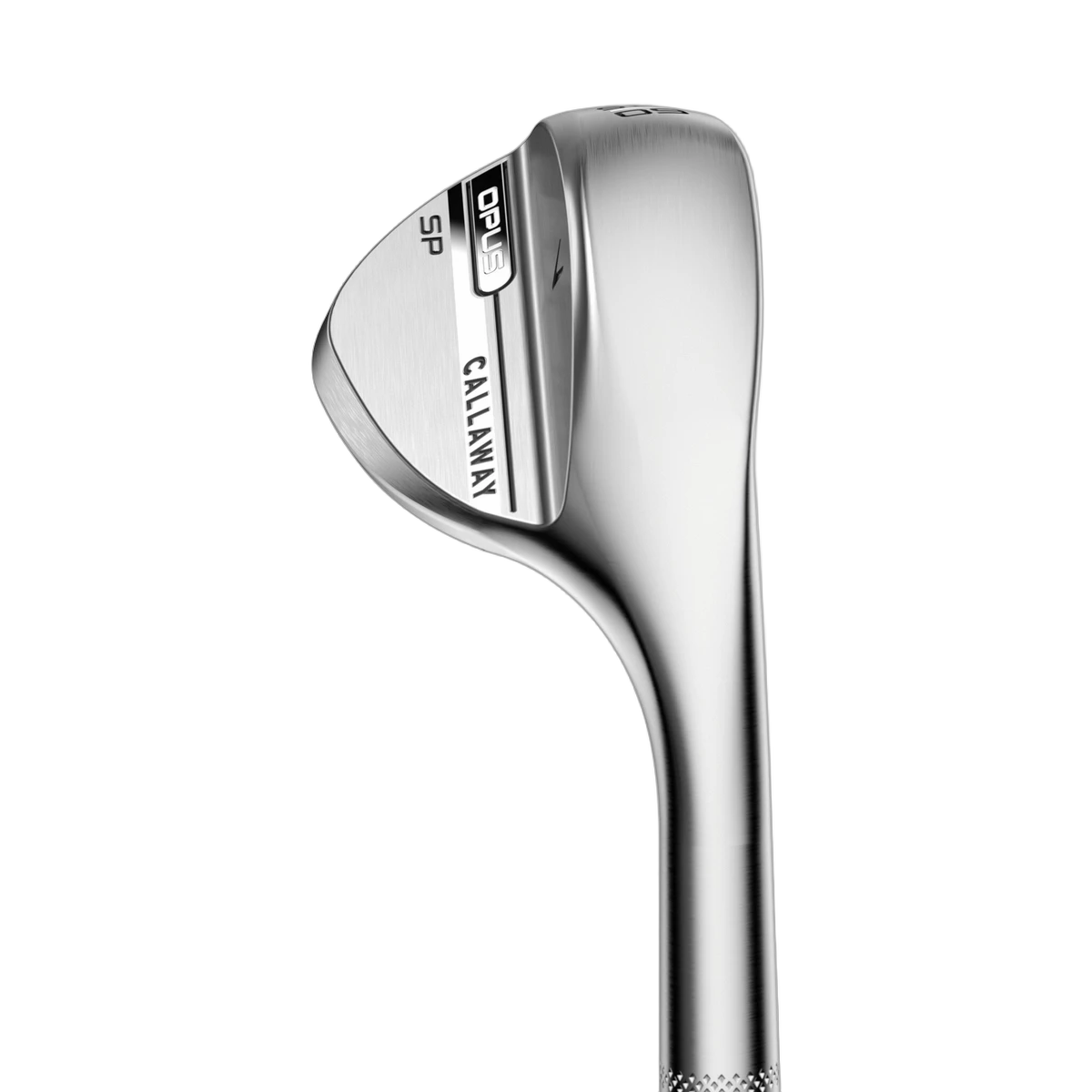
The Spin Pocket is the story, and it delivers on its promise. By hollowing out 16.8 to 23.6 grams (depending on loft) from behind the lower face, Callaway raises the center of gravity roughly two millimeters above equivalent Vokey wedges and three millimeters above the original Opus. The practical effect: lower launch with higher spin, what Callaway calls "Efficient Spin," or spin per degree of launch.
On the course, this translates to wedge shots that fly lower and stop faster. Semi-thin strikes that would normally land hot and run past the pin instead grab and check. Full shots from 100-120 yards launch on a more penetrating trajectory that holds its line in wind rather than ballooning. The difference is measurable. Testing showed launch angles dropping roughly 2 degrees compared to the original Opus while spin rates held or increased.
The SPIN GEN 2.0 grooves contribute meaningful additional spin. The 17-degree groove angle creates more groove-on-ball contact, and the deeper laser-etched face pattern adds friction between grooves. Critically, Callaway has acknowledged that previous face treatments wore away in less than two rounds, essentially marketing spin (pun intended) that didn't survive real-world use. The Opus SP's deeper etching is plated for significantly longer durability. Whether it truly lasts remains to be verified over months of play, but the engineering intent is sound.
Forgiveness & Consistency
The Spin Pocket design provides unexpected forgiveness for a tour-style wedge. Shots struck from the toe or heel retained distance and spin impressively. The raised CG and redistributed mass create a more stable head through off-center contact. This isn't CB-level game-improvement forgiveness, but it's meaningfully more forgiving than a traditional forged blade.
Opus SP back cavity with loft and grind markings visible
The 52° impressed most in versatility testing, capable of handling full 120-yard approaches down to delicate 60-yard pitches with predictable spin behavior across the entire range. Around the greens, the wedge proved easy to flight and control, with the higher-bounce lob wedge excelling in bunker play.
Grinds
The grind selection is comprehensive and well-considered. S Grind (10° bounce, available 46°-60°) is the safe, middle-of-the-road option for golfers who don't know what grind they need. C Grind (8° bounce) trades some forgiveness for additional relief and versatility. X Grind (12° bounce) returns to the lineup as a better-player's high-bounce option with enough heel, toe, and trailing-edge relief for green-side manipulation, think Vokey D-Grind adjacent. W Grind (12-14° bounce) is the wide, full-sole offering for maximum turf forgiveness and soft bunker play. T Grind (5-6° bounce) is the low-bounce specialist for tight lies and shallow swings, available up to 64° for the adventurous.
MSRP: $199.99 (steel) / $209.99 (graphite)
Verdict
The Callaway Opus SP represents a genuine leap forward in wedge design. The Spin Pocket technology isn't a groove tweak or a face coating — it's a fundamental rethinking of how a wedge generates spin, and the real-world results match the engineering intent. Lower launch, higher spin, and more stopping power from every lie. The Shape 6 profile has earned more tour approval than any previous Callaway wedge for a reason: it looks right, feels right, and performs at a level that finally makes the Vokey comparison a conversation rather than a concession.
The construction — cast body with forged face — delivers feel that defies the internal complexity. The five grind options cover every playing style. The loft-dependent shaping that transitions seamlessly from iron-matching gap wedges to purpose-built scoring wedges is smart design that competitors should copy. And the more durable face treatment addresses the industry's quiet admission that micro-groove marketing features historically disappeared after two rounds.
At $199.99, it's $20 more than the original Opus and squarely at the premium end of the wedge market. Golfers who want game-improvement forgiveness should look at the CB instead. And the quick one-year replacement cycle may frustrate 2024 Opus buyers who feel their wedges are already "last gen."
But for low-to-mid handicap golfers who want a tour-quality wedge with genuine innovation behind it — not just incremental groove reshaping — the Opus SP is the most interesting wedge released in 2025. Callaway is no longer just chasing Vokey. They're running their own race.