Titleist T350 Oil Can Irons Review
Titleist — Titleist T350 Oil Can Irons · By Troy · May 3, 2026
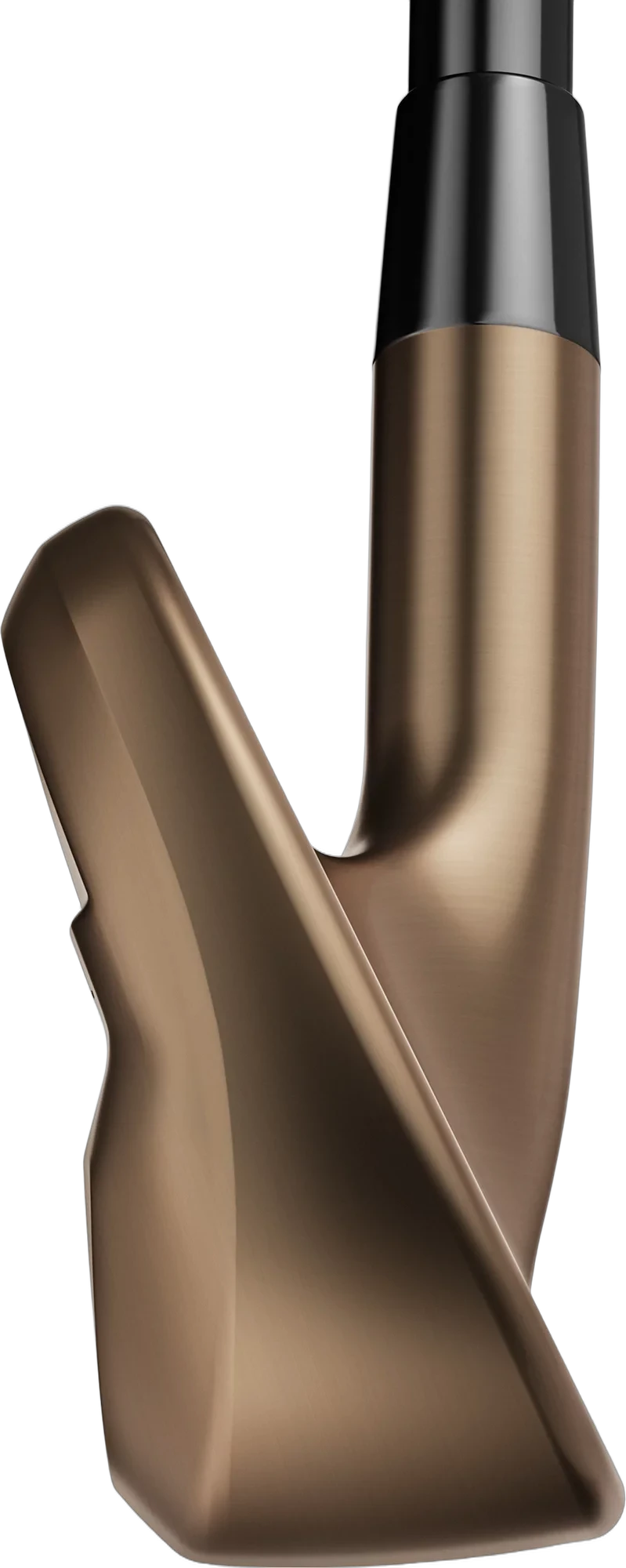
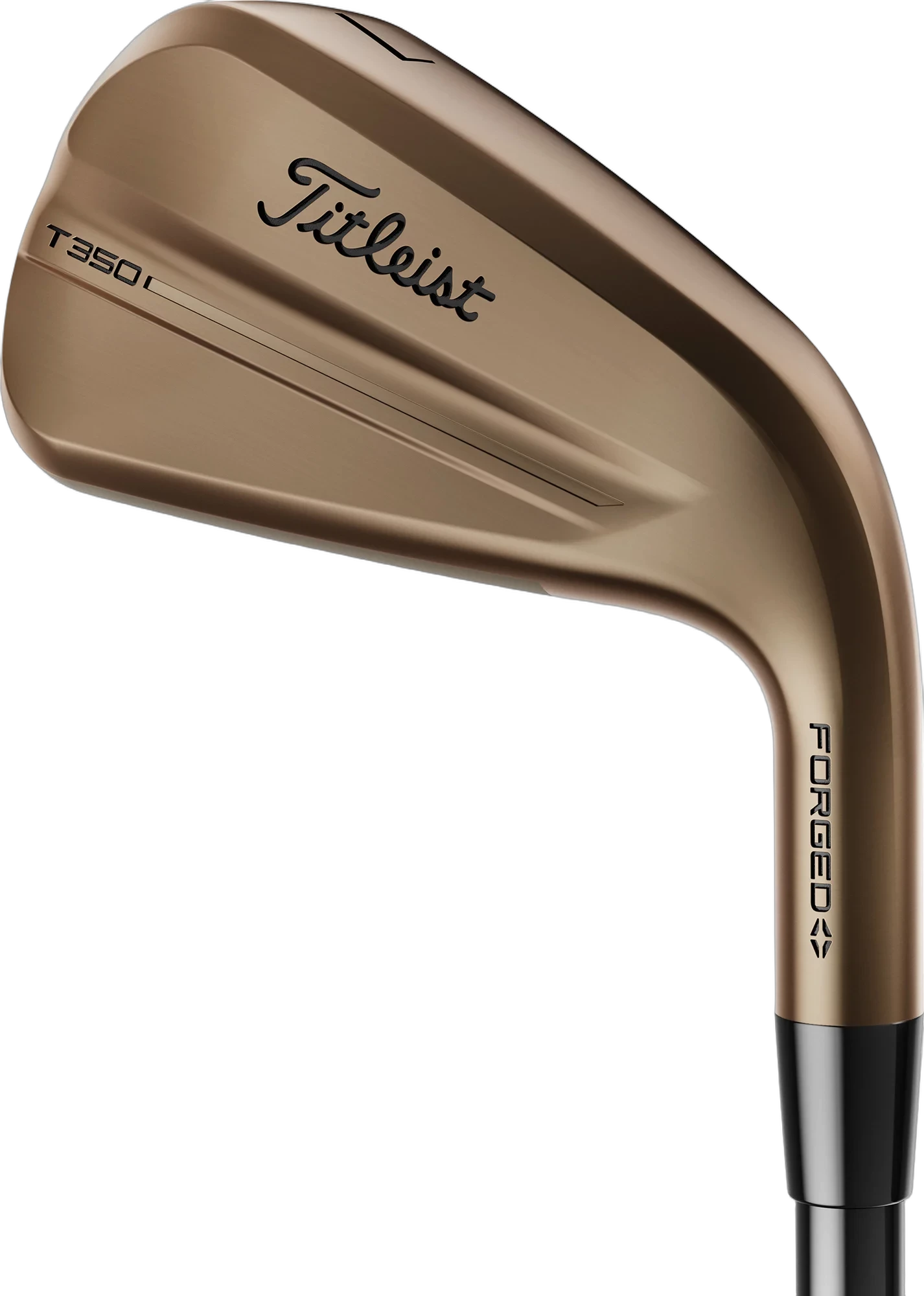
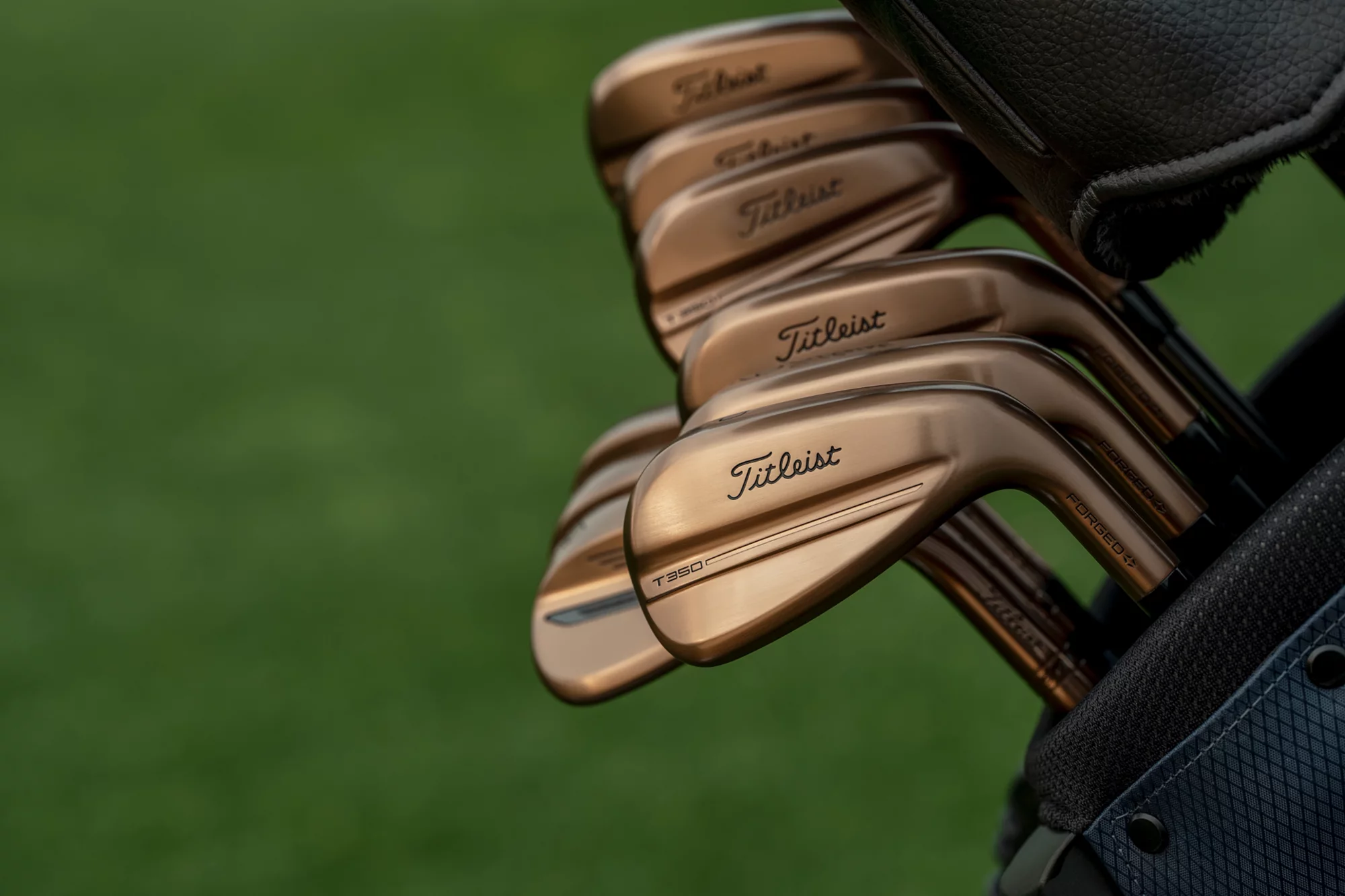
Titleist's most forgiving iron gets a limited-edition finish that finally looks as good as it performs.
The Big Picture
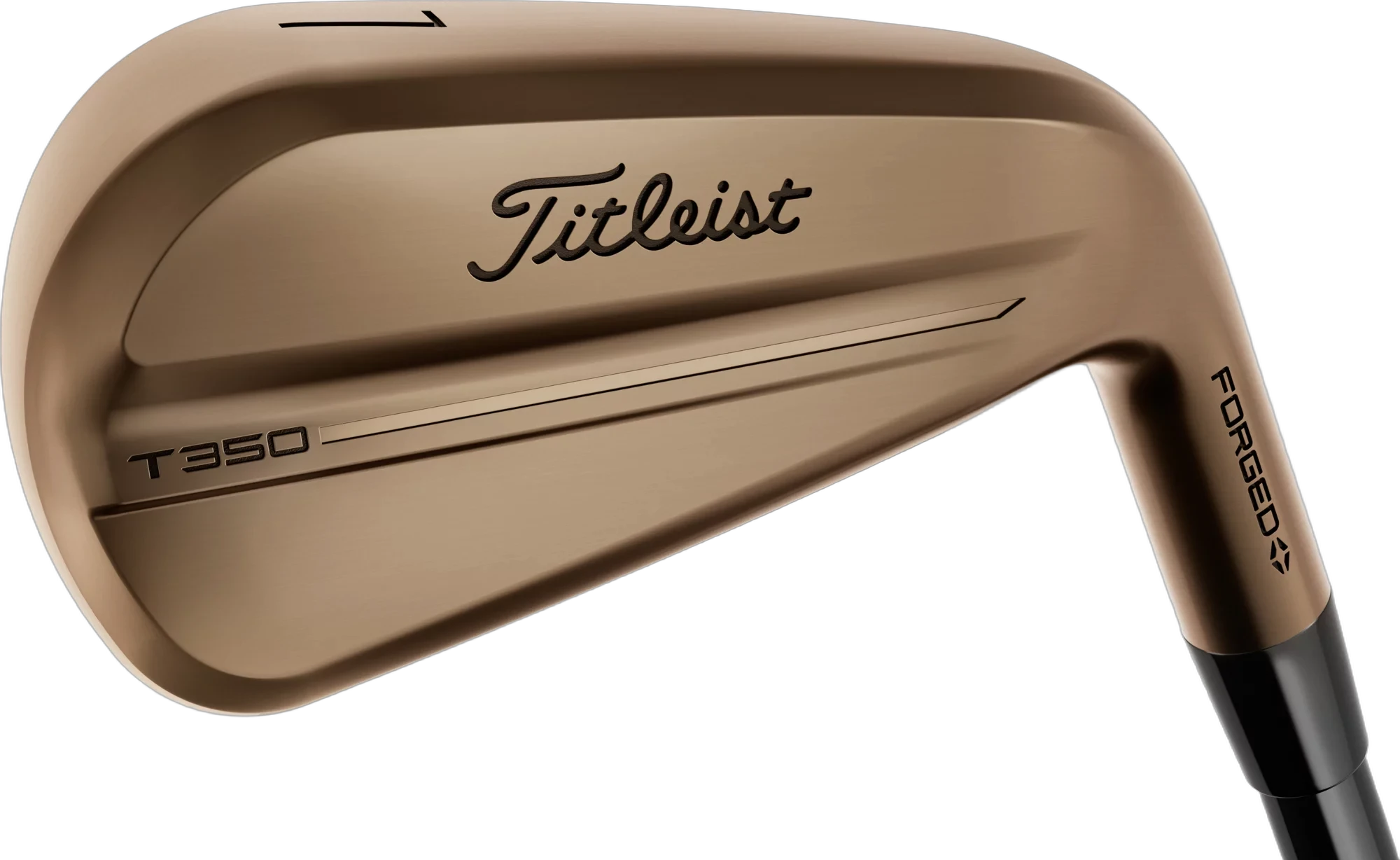
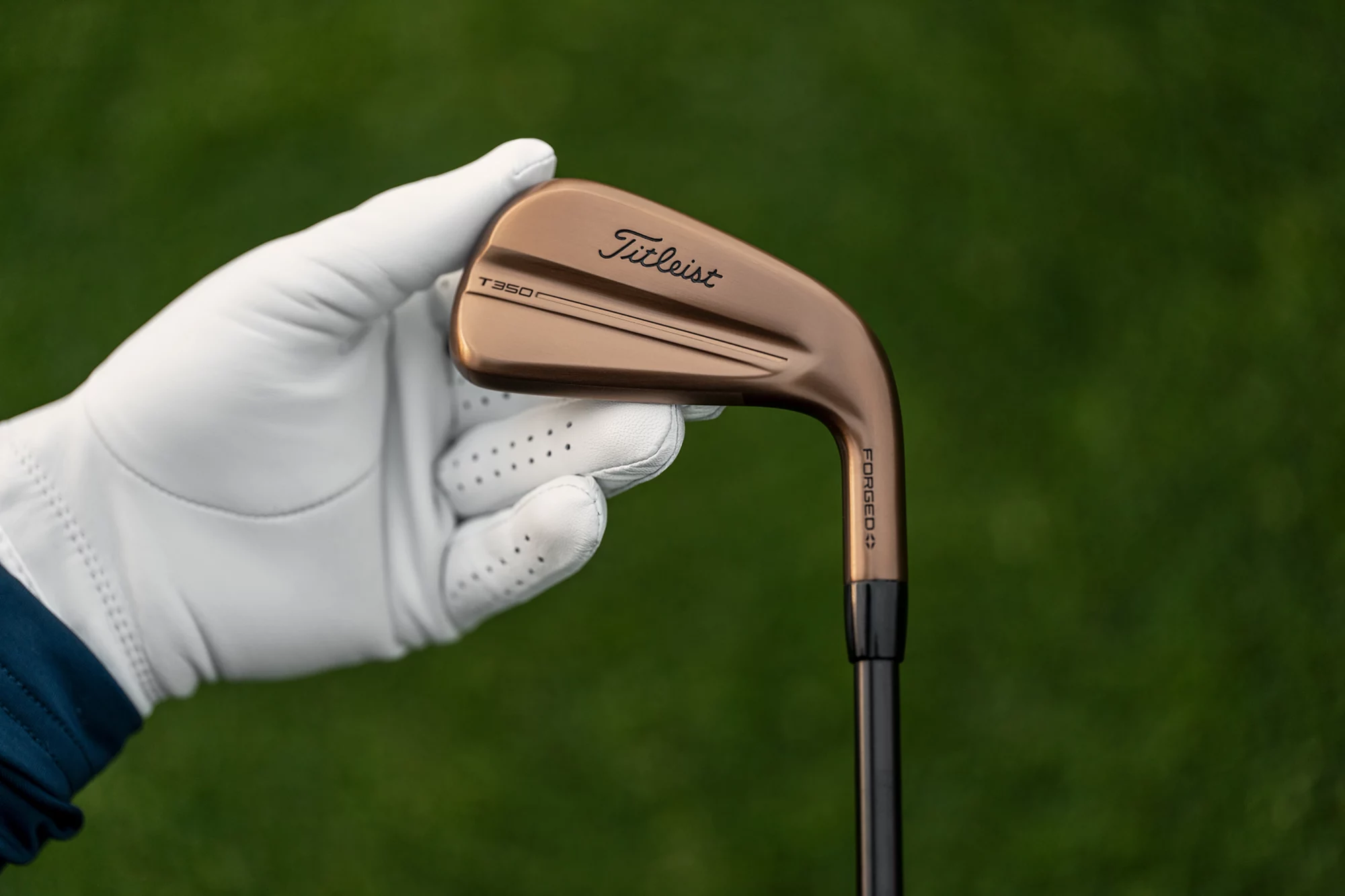
The Titleist T350 has always occupied an interesting space in the T-Series lineup. It is the brand's maximum game improvement offering, the largest, most forgiving iron Titleist makes, and yet it has never looked the part the way competitors' chunky cavity-backs do. The Oil Can edition takes that contradiction further. A PVD treatment gives the clubhead a rich copper tone that develops a natural patina over time, paired with True Temper AMT Red Onyx shafts and Oil Can-inspired Golf Pride Z-Grip full cord grips. The performance underneath is identical to the standard T350: hollow-body construction, a forged face insert with multi-zone variable face thickness, Max Impact Technology (a polymer disc bonded behind the face to maintain ball speed across a wider hitting area), and split high-density D18 tungsten positioned in the heel and toe through an aerospace brazing process. The result is an iron engineered to launch high, carry far, and protect you on mishits, now wrapped in a finish that belongs in a tour player's bag.
The T350 replaced the T300 in Titleist's lineup, and the name change was deliberate. This is not a mild refresh. The 2025 generation features a fully enclosed back body instead of the old glued-on plastic back plate, improved sound characteristics, and the same progressive groove design found across the entire T-Series range. At $1,710 for the Oil Can limited edition, it sits at a premium over the standard T350's $1,399 price point, but the construction quality and fit-and-finish justify the step up for golfers who care about aesthetics alongside function.
At Address
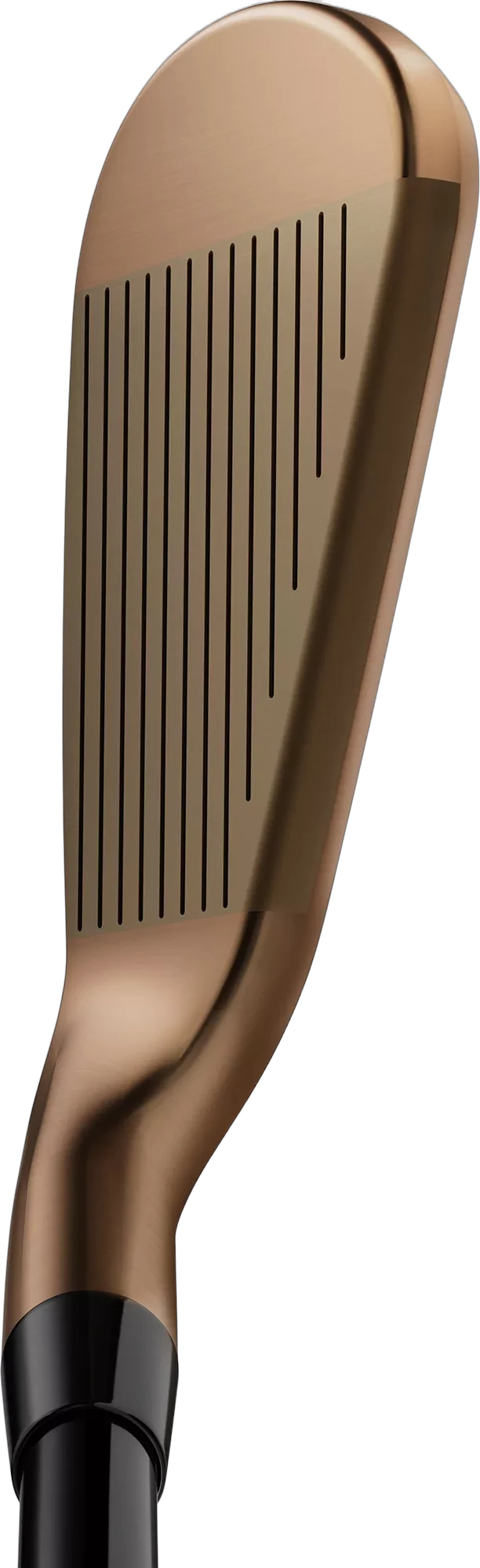
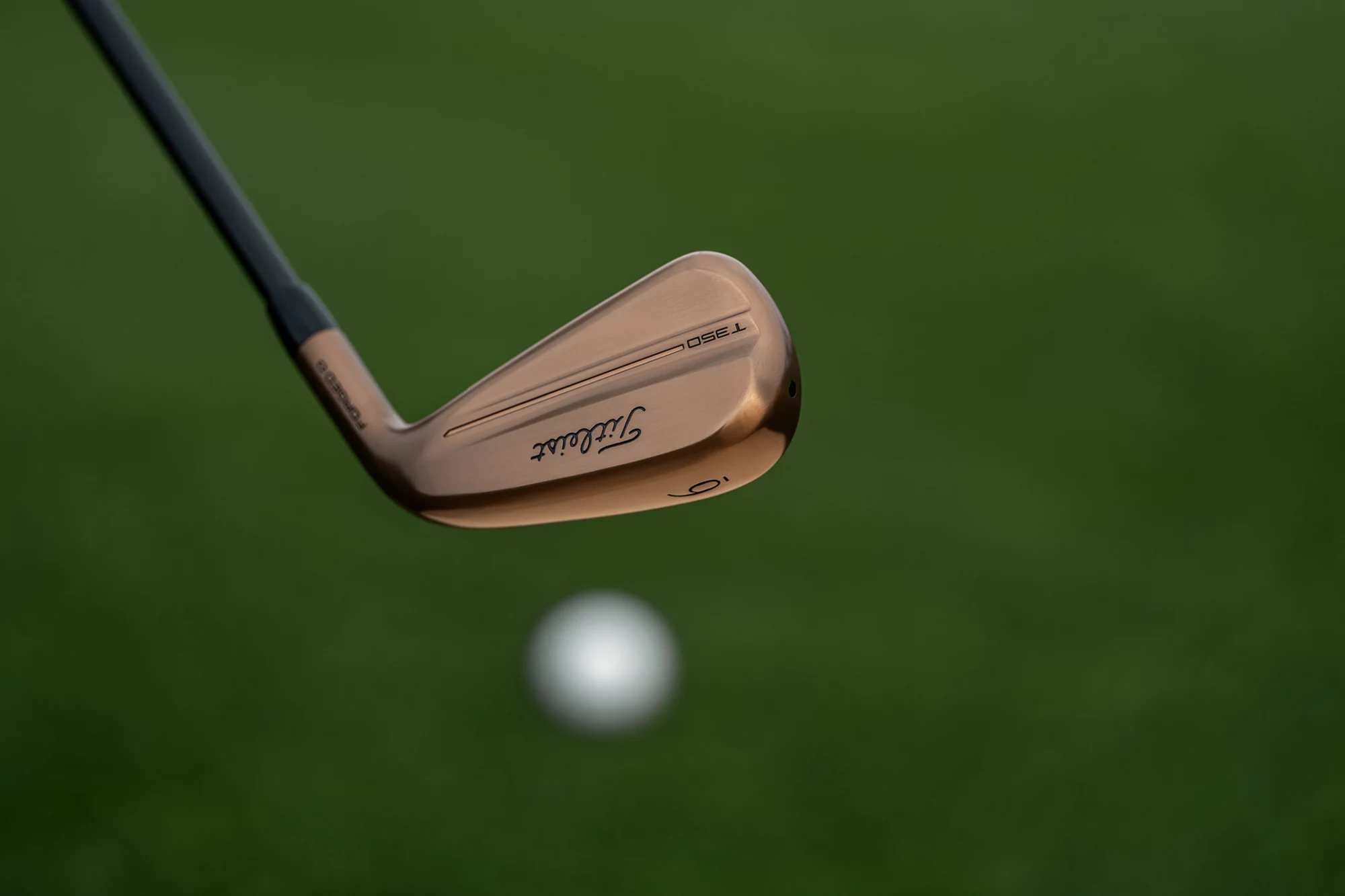
This is where I had to concede ground to the marketing team, because the T350 Oil Can genuinely does not look like a traditional game improvement iron. The topline has a slight camber that creates the illusion of something slimmer than the numbers suggest. The offset is present but not dramatic. It is reasonably well hidden and will not alarm a mid-handicapper stepping up from players' irons. The overall silhouette is clean and uncluttered, free of the busy cavity lines and aggressive chrome ridges that plague most irons in this category.
Player's view of the T350 6-iron addressing a golf ball
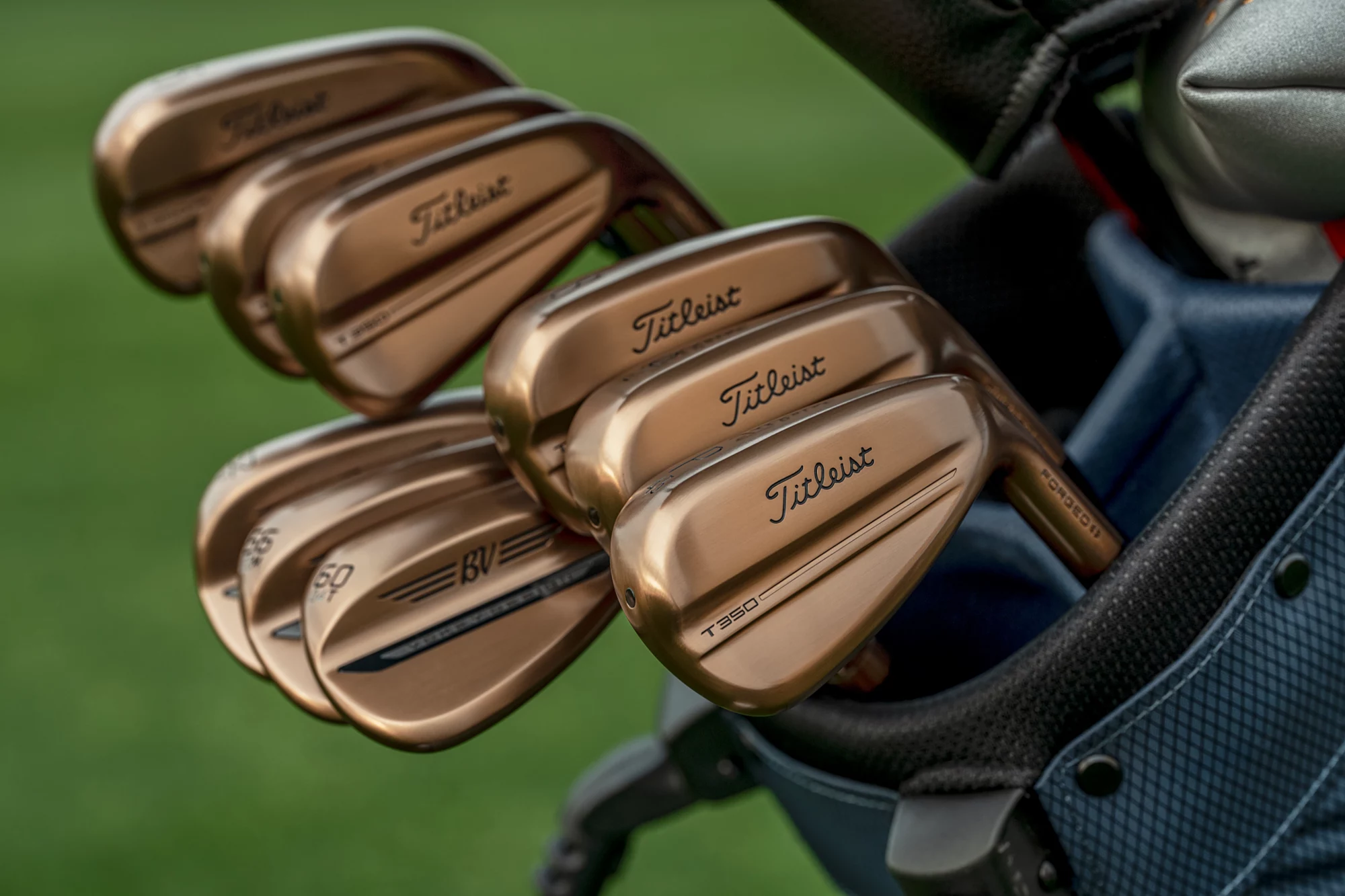
The Oil Can finish itself is striking. That warm copper tone against the dark Onyx shafts gives the set a cohesive, premium look that stands apart from anything else on the rack. The 5-iron shows a bit more sole and blade length, which is unavoidable at this size, but by the time you reach the 7- and 8-irons, these genuinely look like a larger version of the T250. Titleist designed that similarity intentionally to support blended sets, and it works. If you are running T250s in your scoring irons and want something more forgiving in the long irons, these blend seamlessly.
Sound & Feel
Feel has been a major focus for Titleist across the entire T-Series refresh, and the T350 benefits noticeably. The old T300 had a plasticky, hollow thud on mishits that betrayed its game improvement DNA. The T350 is a clear step up. There is a crisp, medium-pitched pop at impact, louder than a T100 or T150, certainly, but refined enough that it does not feel cheap. On center strikes, it is solid and purposeful with a satisfying sense of energy transfer. You know when you flush one.
I will not pretend it replicates forged-iron feel. It does not. Hollow-body construction has inherent limitations, and if you are coming from a compact forged head, you will notice the difference immediately. But within its class, the T350 feels better than most. Off-center, the sound changes enough to provide feedback without punishing you the way a blade would. The sensation on a toe strike is slightly muted rather than harsh, which matches the forgiveness story. The club is telling you it missed, but also telling you the ball is still heading somewhere useful. For golfers who are sensitive to sound, the T350 and T250 blend well together, sharing a similar acoustic profile, though both are noticeably louder than the T100 or T150.
Performance
Ball Speed & Distance
The T350 Oil Can runs strong lofts. The 7-iron sits at 29 degrees, and delivers distance accordingly. During testing, I picked up five to seven yards across the set compared to my gamer irons, but the more meaningful gain was on mishits rather than pure strikes. A flush 7-iron carried 181 yards with a 1.42 smash factor, and even toe-side misses at 7 to 12 millimeters off-center held within three to four percent of peak ball speed. The forged face insert with Max Impact Technology does exactly what Titleist claims: it maintains speed across a broad area of the hitting zone.
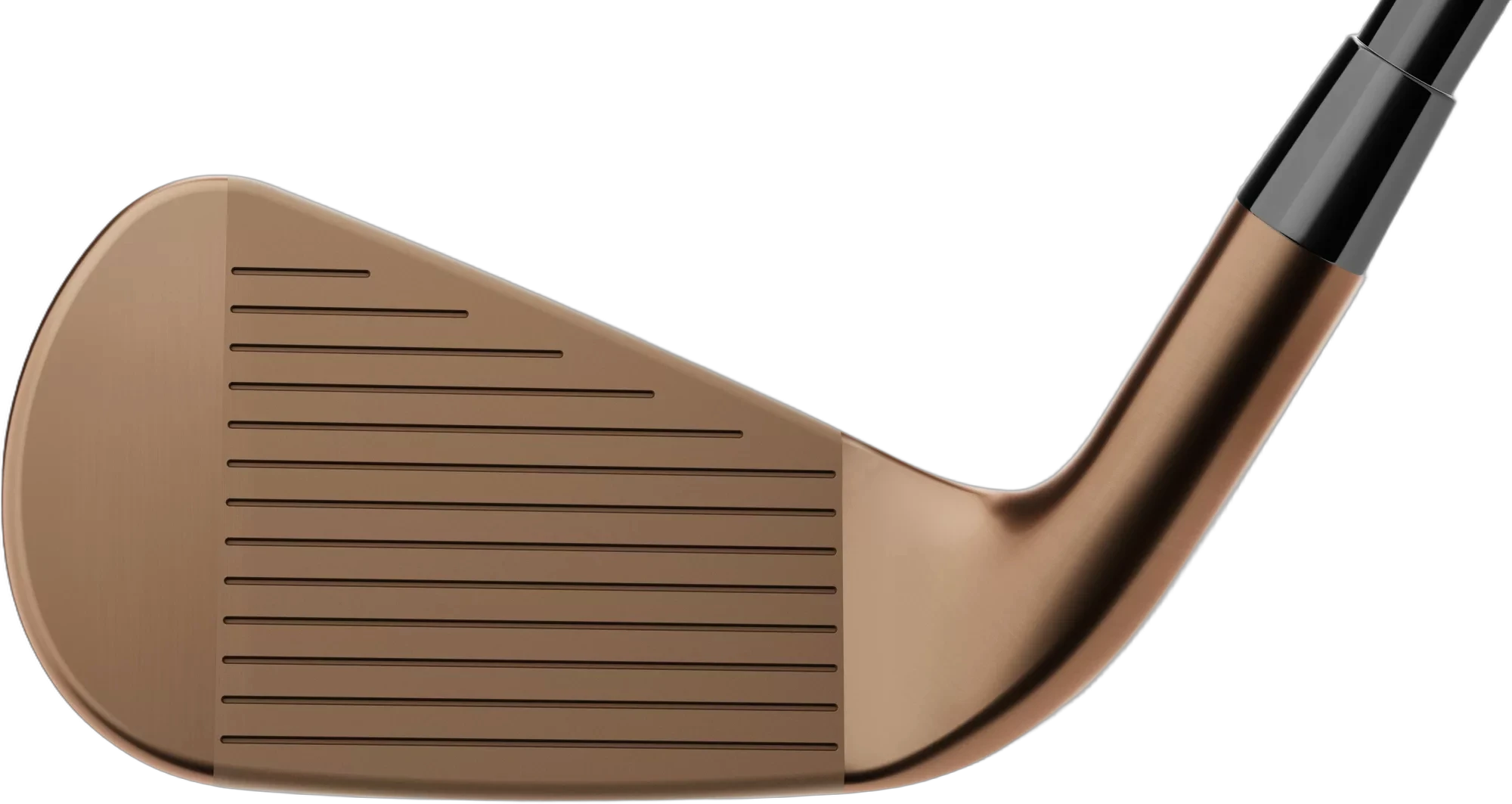
Close-up of the T350 face showing precise milled grooves
Compared side by side with the T250 at the same swing speed, the T350 produced roughly 3 mph more ball speed (114.5 vs. 111 mph average) and about seven yards more carry. That gap comes largely from the loft difference, 29 degrees versus 30.5, rather than some magical technology advantage, and it is worth being honest about that. You are getting distance through loft as much as through engineering. But the T350 also showed slightly higher efficiency (smash factor), which suggests the larger face and CG placement are contributing real gains beyond the loft story.
Launch & Spin
High launch is the T350's calling card, and it delivers convincingly. Despite having the strongest lofts in the T-Series lineup, it produced the highest peak heights , 99 feet with a 19.2-degree launch angle at mid-80s swing speed. That sounds counterintuitive, but the tungsten weighting and CG positioning push the ball up aggressively. The descent angle consistently landed around 46 to 48 degrees, which is steep enough to hold greens even on firmer surfaces.
Spin sits in the low-to-mid 5,000 rpm range with a 7-iron. I recorded 5,640 rpm as a representative number. That is lower than a players' iron at this loft, which means workability is limited. You are not going to flight the ball down into a stiff breeze with any precision, and intentional fades will meet resistance. But the trade-off is practical: lower spin means less ballooning in crosswinds, and the steep descent angle compensates for the reduced spin when it comes to stopping power on greens. For a golfer in the 10 to 24 handicap range, that trade-off makes sense almost every time.
One important caveat: at slower swing speeds (below 75 mph), spin drops into the high 3,000s, and descent angles dip below 40 degrees. At that point, you are not getting functional stopping power, and a weaker-lofted iron or hybrid setup would serve you better.
Dispersion & Shot Shape
The T350 has a mild draw bias built into the design through CG placement, which I noticed most in the longer irons. If you are a chronic slicer, that is a feature. If you are trying to work the ball both ways, the T350 will resist you. This is emphatically not a shot-shaping iron.
Gloved hand reveals the T350's clean oil can back design
Where the club truly earns its price is on mishits. Heel and toe strikes at 15 to 20 millimeters off-center retained enough speed and direction to stay on or near the green. The split tungsten weighting maximizes moment of inertia across the face, and the real-world result is that your worst swings produce shots that are still playable. I hit several toe shots that I knew immediately were mis-struck, only to watch the ball clear hazards and find the putting surface. The left-to-right dispersion was tight and consistent, with no noticeable difference in spread between the T350 and smaller-headed irons in controlled testing.
The Variable Bounce sole, designed with input from the Vokey team, deserves mention as well. The softened trailing edge glides through turf cleanly on standard fairway and light rough lies, reducing the fat shots that plague higher-handicap players. From very tight, hardpan-style lies, it is less forgiving. The shallower sole angle can catch, but on typical course conditions, turf interaction is genuinely impressive.
Verdict
The Titleist T350 Oil Can Irons deliver on every core promise: high launch, consistent carry, full-face forgiveness, and a visual package that punches well above the game improvement category. The Oil Can finish elevates an already good-looking iron into something genuinely special, and the construction quality throughout — from the forged face to the tungsten weighting to the Onyx shaft pairing — reflects the premium price point.
The strong lofts are a trade-off worth acknowledging. You are gaining distance partly through engineering and partly through less loft, and shot-shaping ambitions should be checked at the door. The sound is louder than a compact iron, and feel, while improved over the T300, will never replicate forged precision. At slower swing speeds, spin drops to a point where these irons stop being functional in the long-iron range, so a proper fitting is essential.
But for a mid-to-high handicapper who wants maximum forgiveness wrapped in Titleist's fit and finish — and who appreciates a limited-edition aesthetic that will develop character over time — the T350 Oil Can is a compelling, well-built option. I went in skeptical of big irons. I came out with them still in the bag.