Mizuno Pro M-13 Irons
Mizuno — Mizuno Pro M-13 Irons · By Troy · Jan 7, 2026
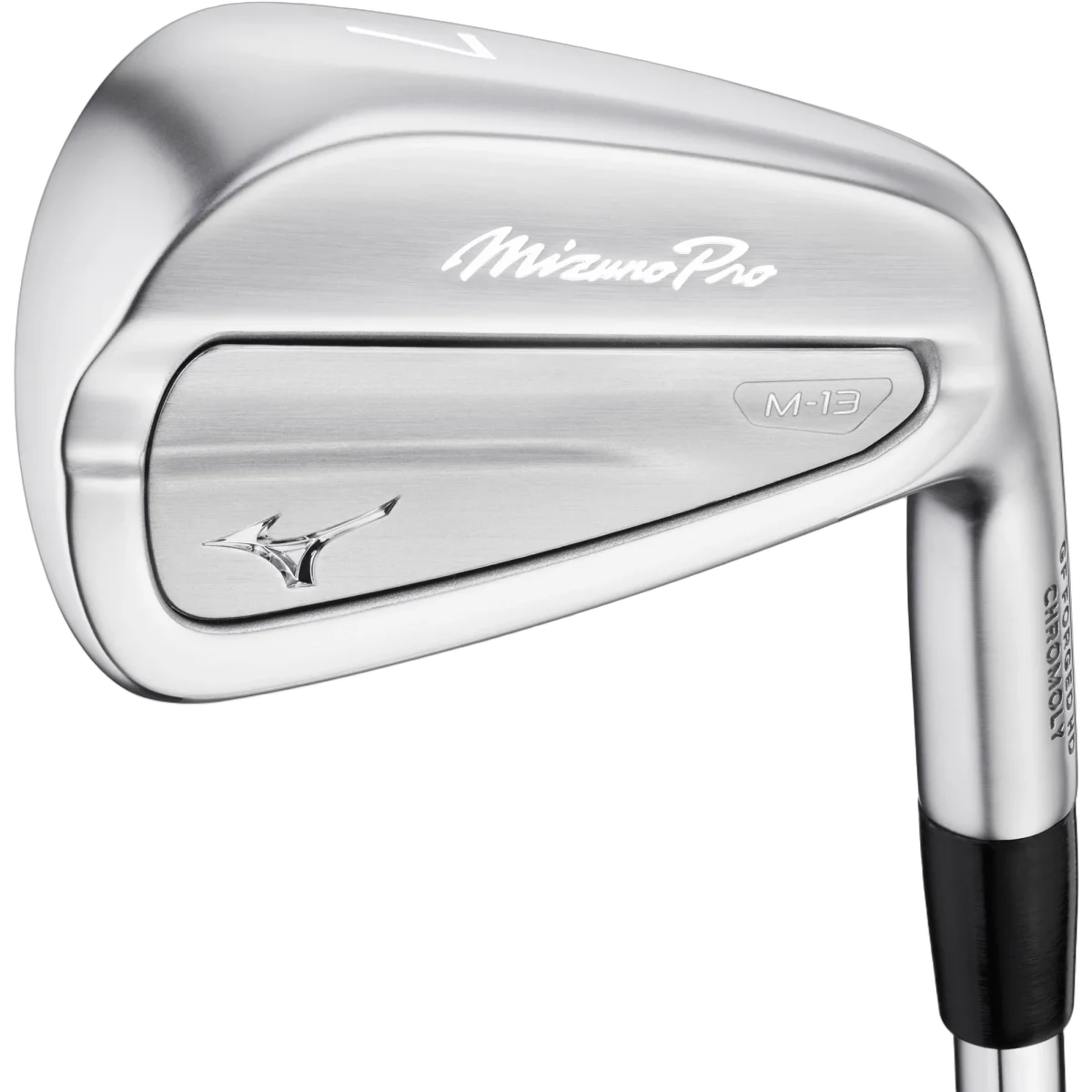
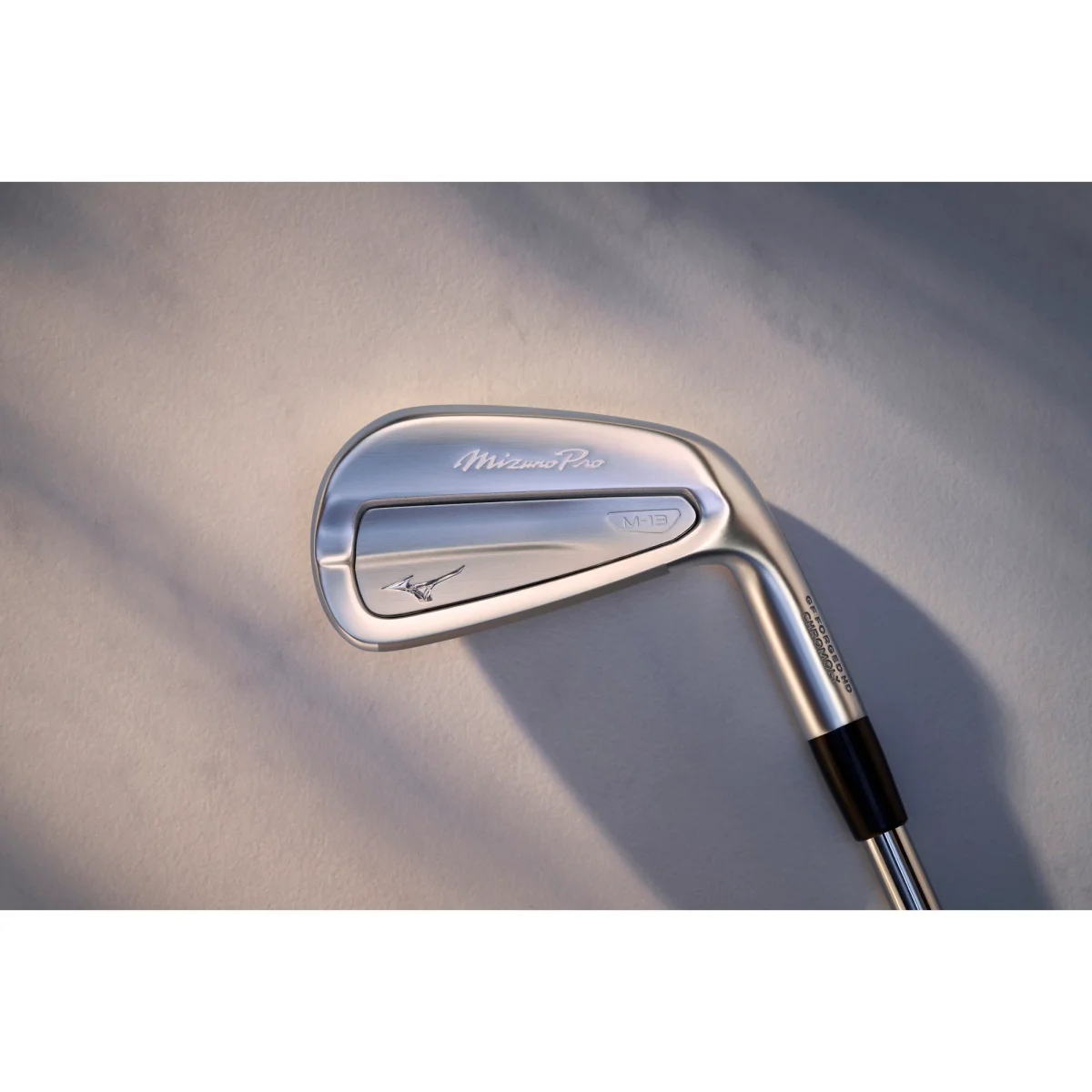
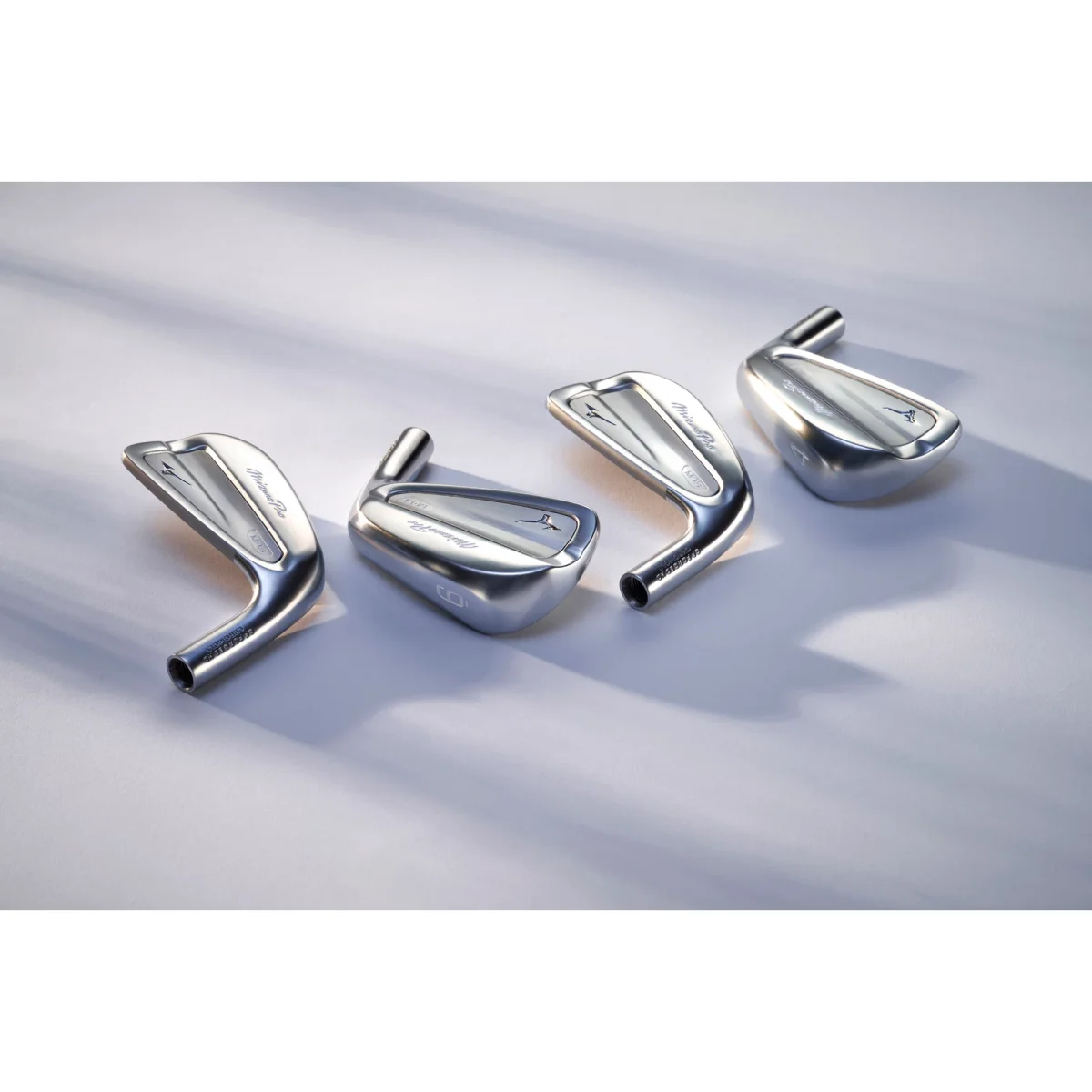
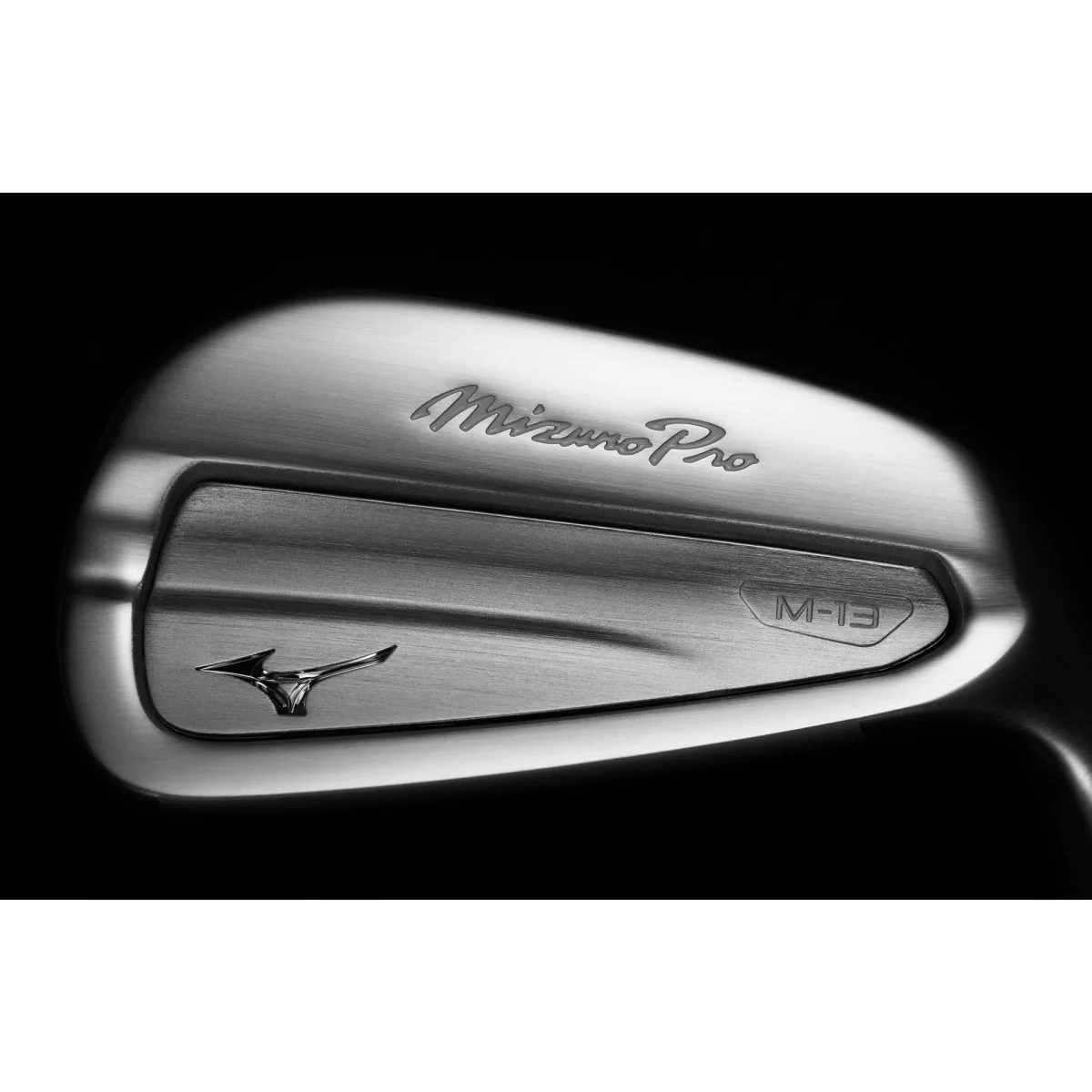
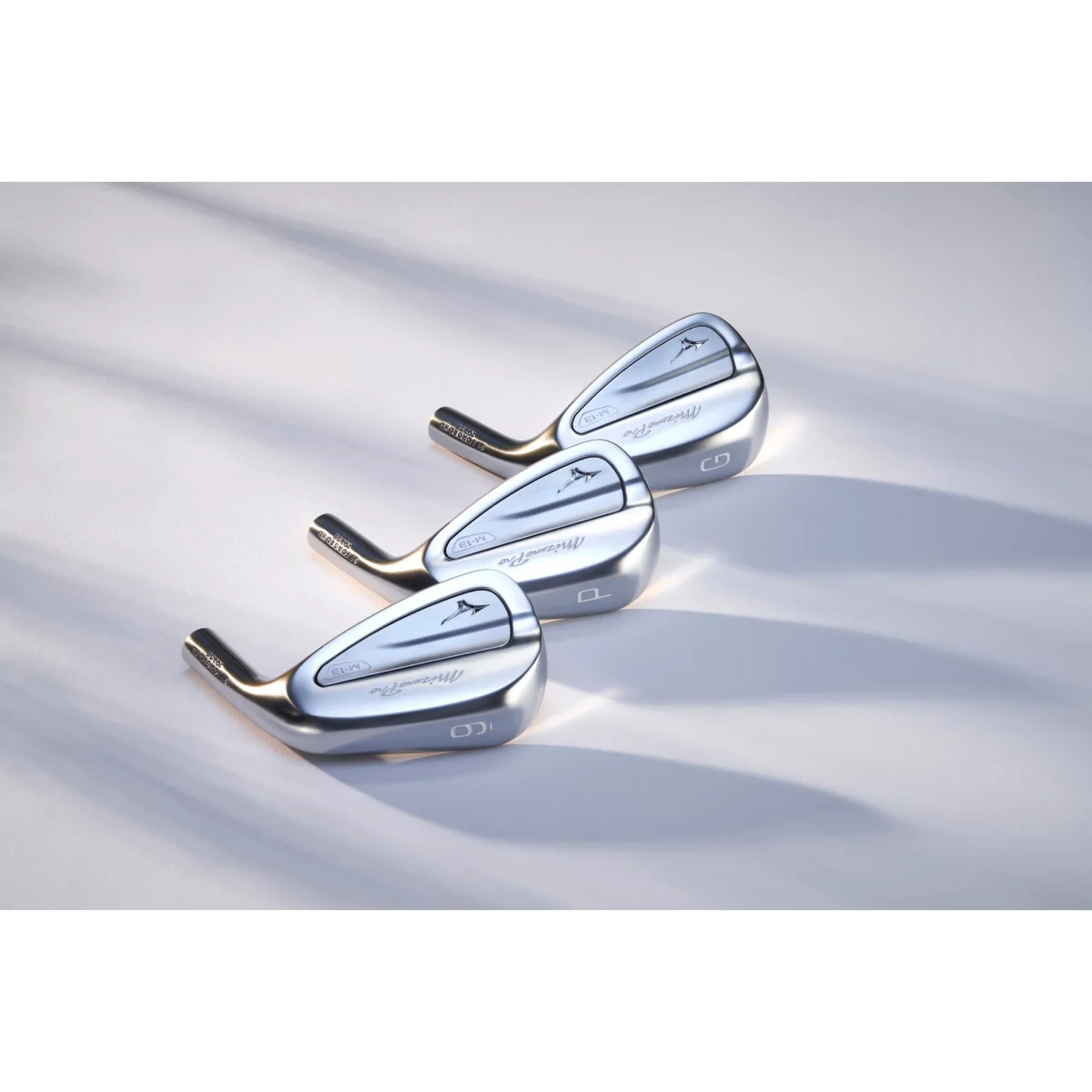
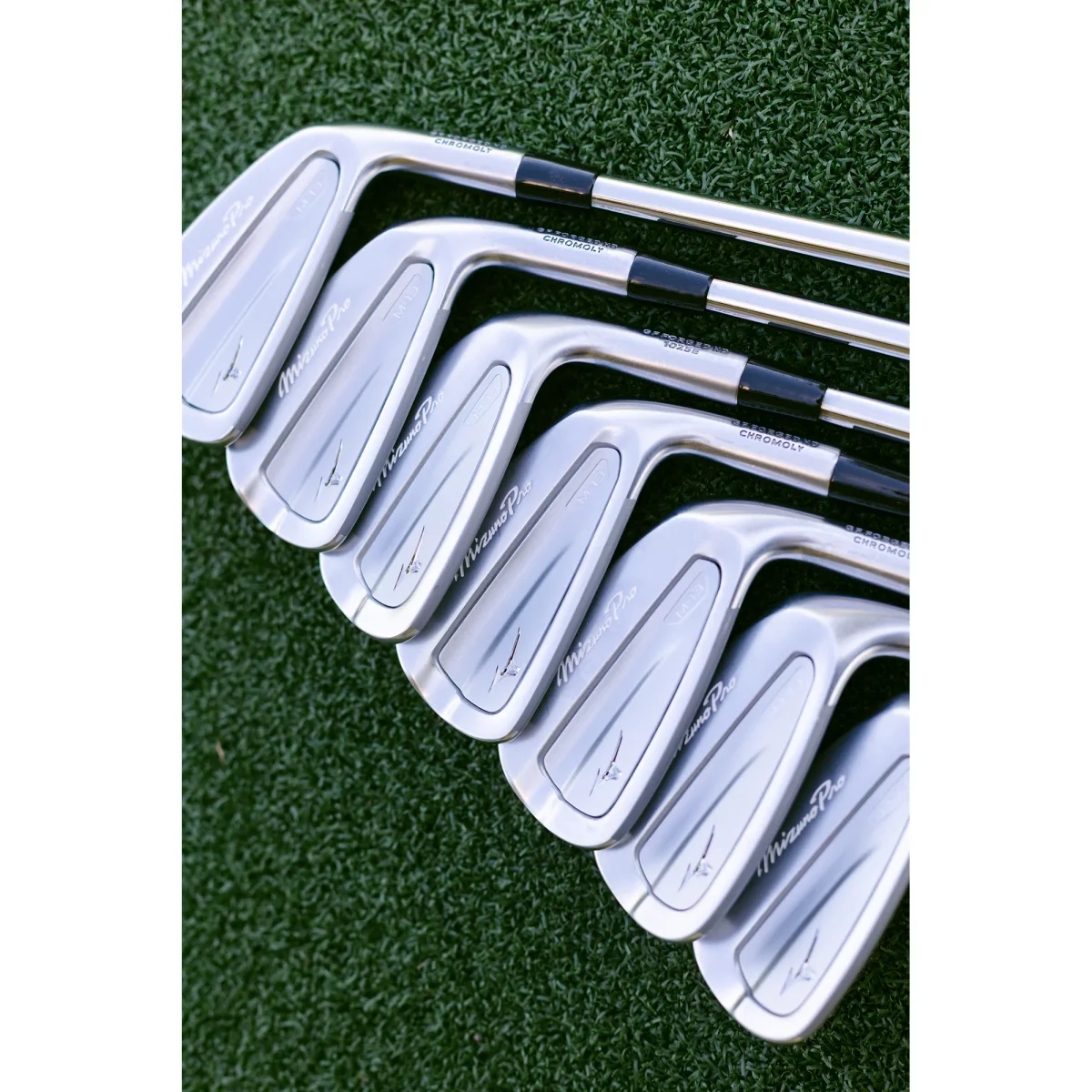
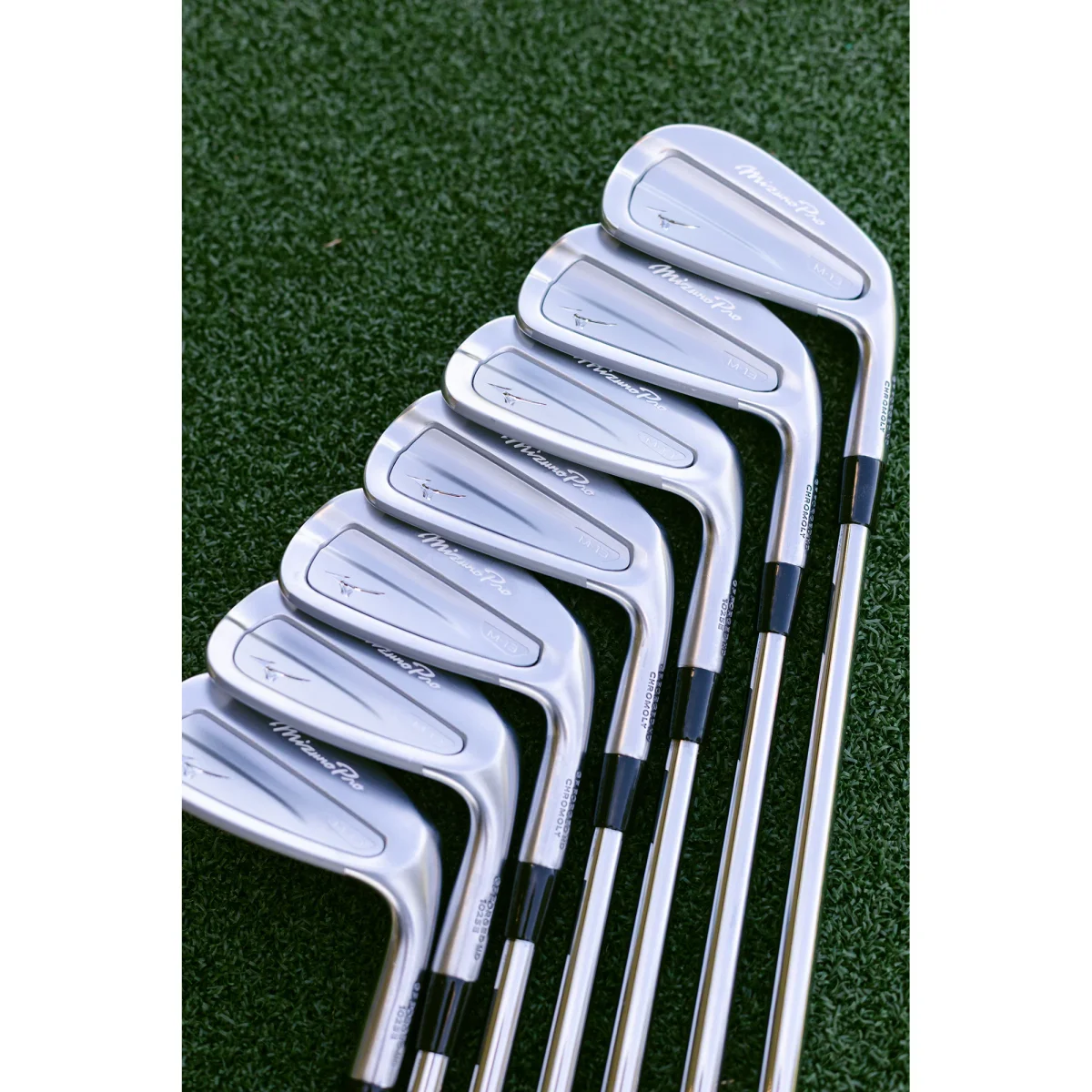
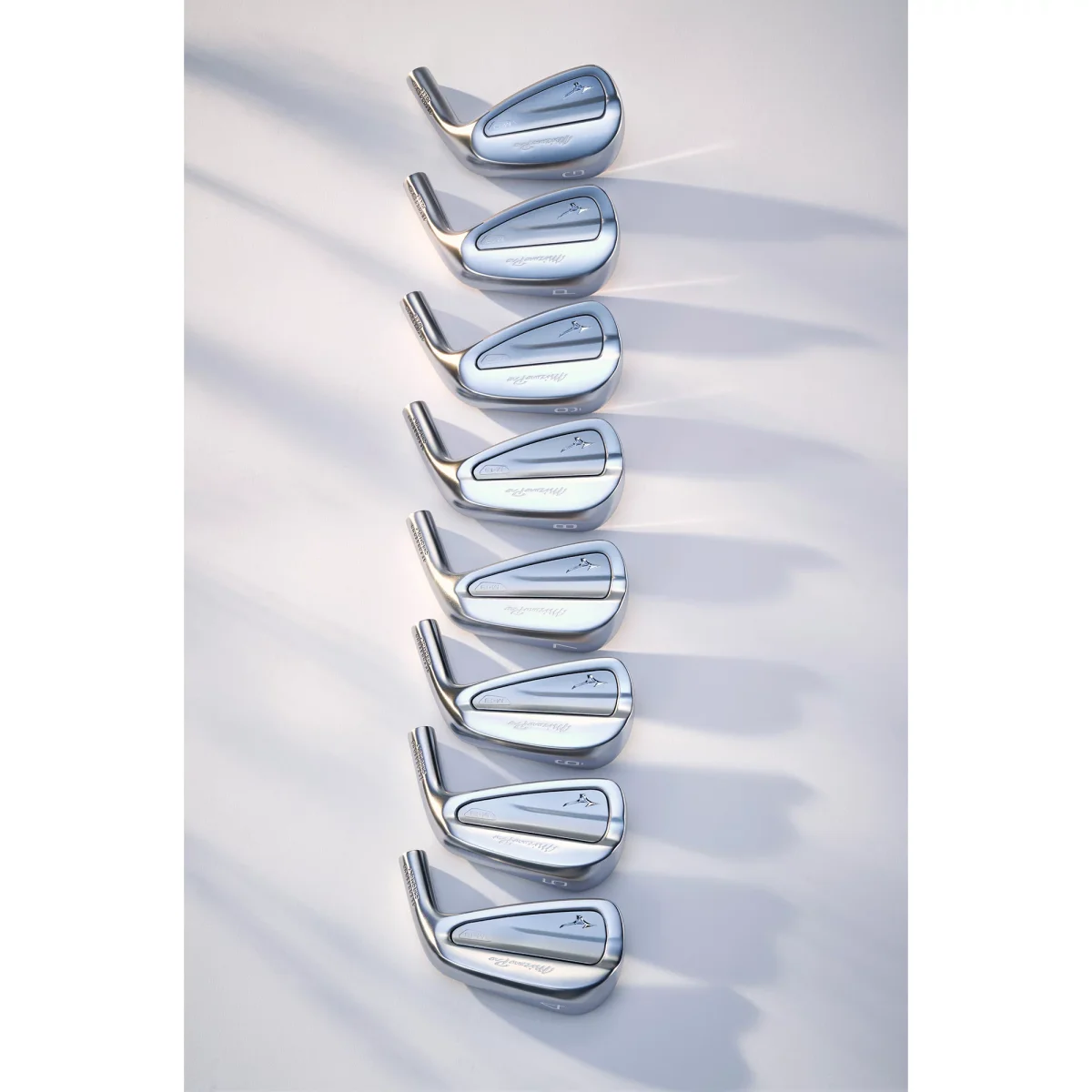
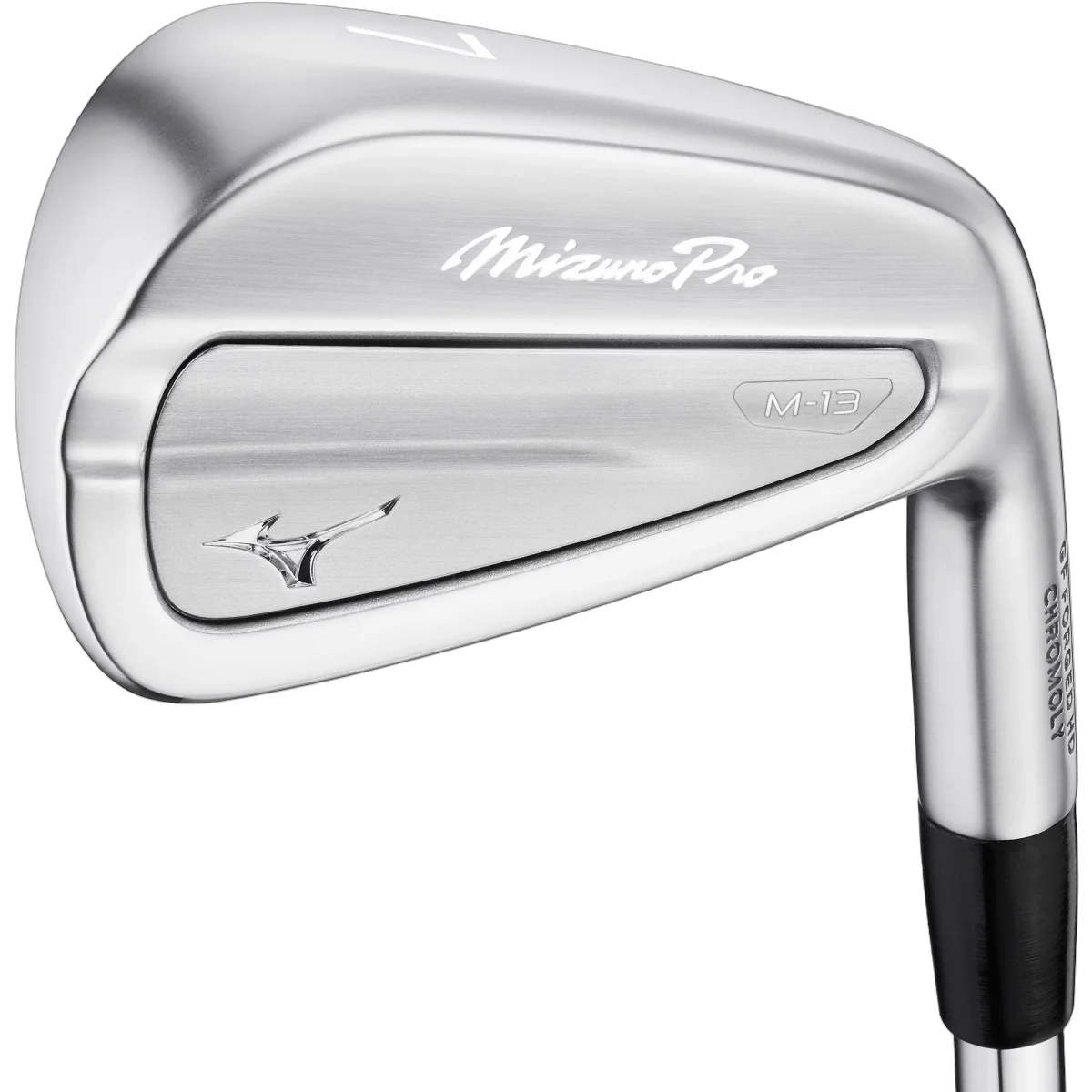
Three constructions, one seamless set. Mizuno's new Modern Series delivers the feel of a blade, the flight of a players-distance iron, and the best turf interaction the brand has ever put on a cavity.
The Big Picture
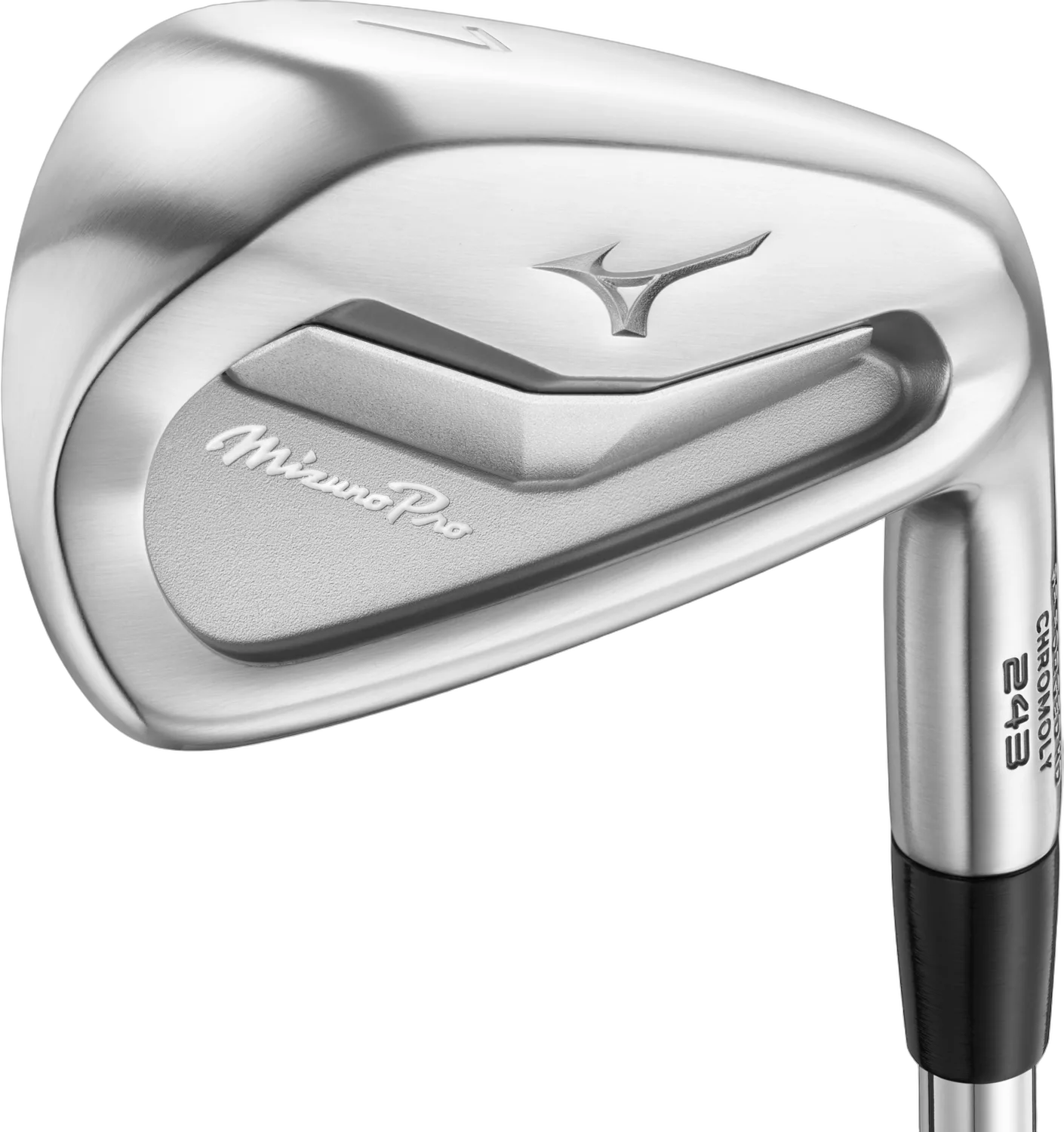
The Mizuno Pro M-13 is the opening statement of Mizuno's new "Modern Series," a line built to sit between the purist Signature models (S-1 blade, S-3 cavity) and the more forgiving JPX 925 family. It succeeds the Pro 243, the iron I rated highest in the catalog, and the mission is clear: deliver more ball speed, more forgiveness, and a more consistent flight profile without sacrificing the look and feel that Mizuno Pro players demand.
Where the 243 used a two-tier construction (Chromoly in the long irons, carbon steel in the scoring clubs), the M-13 goes to three. The 4 and 5-iron are Grain Flow Forged HD 4120 Chromoly with a 431 stainless steel back piece and a new Contour Ellipse CORAREA face, a variable-thickness design that's thicker at center, thins in an elliptical pattern, then thickens again at the perimeter. This dramatically expands the high-speed zone for distance and forgiveness on the clubs where you need it most. The 6 through 8-iron use a similar Chromoly and stainless construction but swap the Ellipse design for the proven Micro-Slot technology from the 243, with a higher CG position to counter the additional height that more loft introduces, keeping apex heights consistent across the set. The 9-iron through gap wedge are pure one-piece Grain Flow Forged HD 1025E carbon steel, prioritizing feel and control where scoring matters.
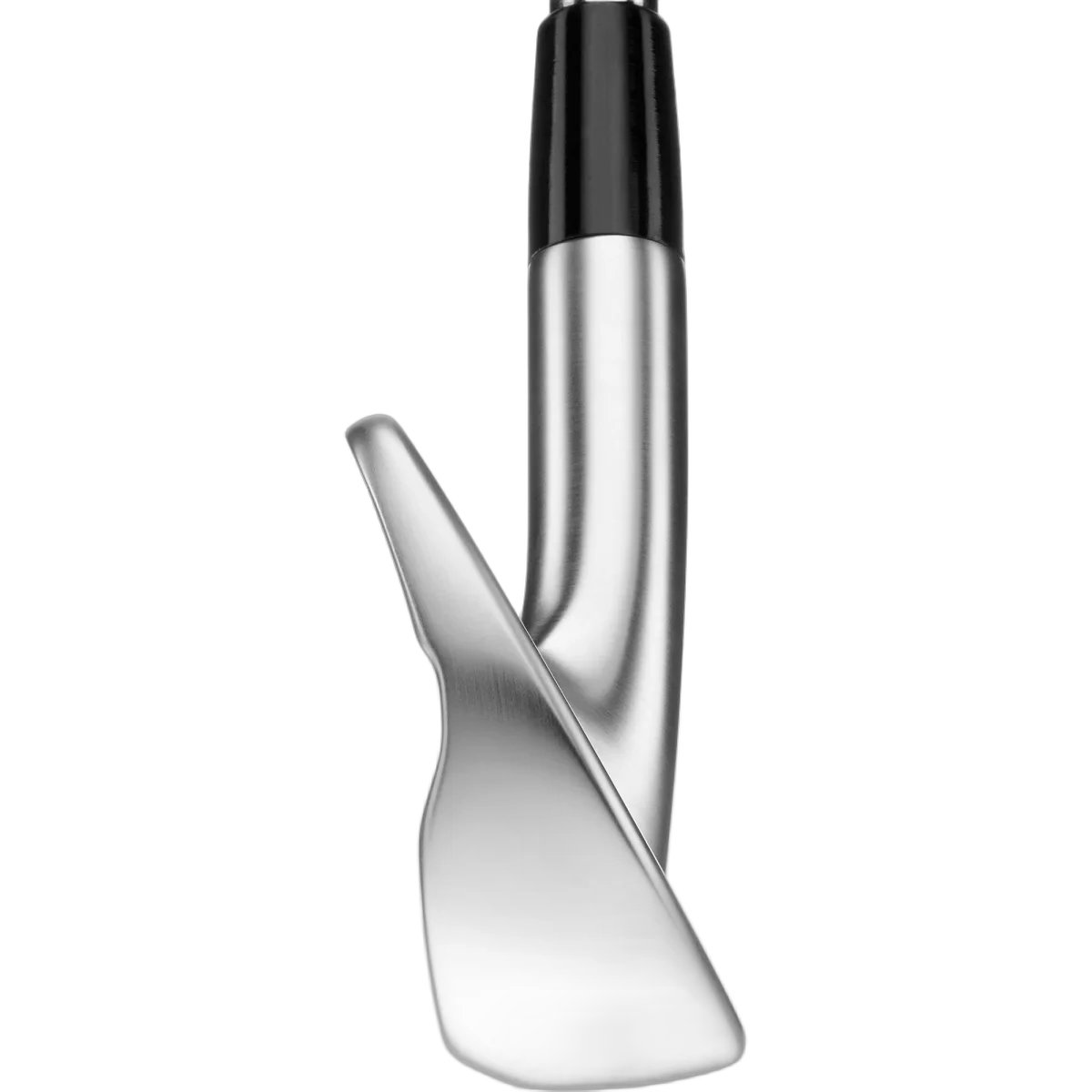
Every iron gets the Triple Cut Sole, a three-angle grind with a beveled leading edge for clean entry and a beveled trailing edge to reduce turf drag, along with copper underlay and Harmonic Impact Technology. Available at approximately £240 per iron (roughly $1,680 for a 4-PW steel set), positioning it at a premium to the 243 it replaces.
At Address
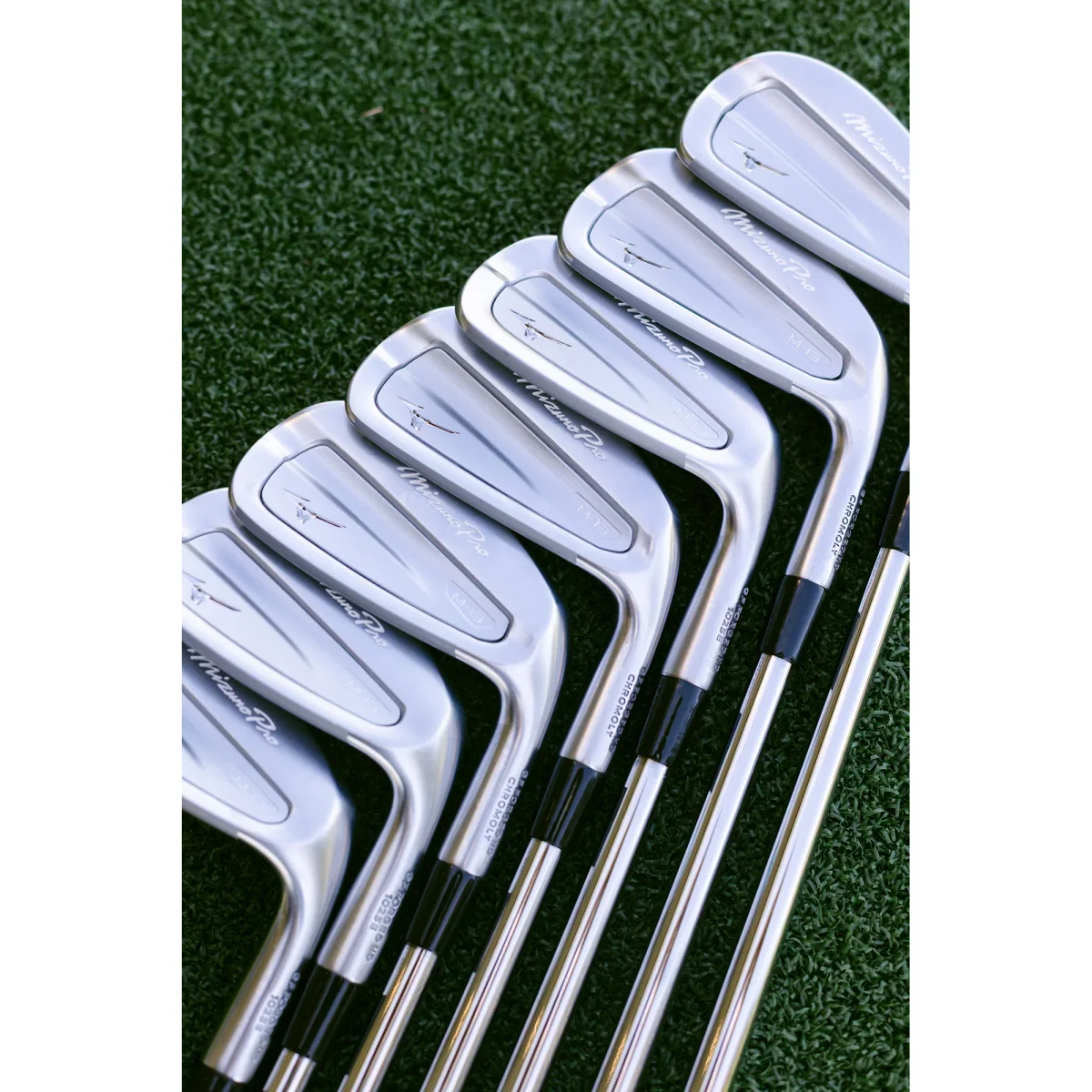
The M-13 is gorgeous, and it's not just Mizuno bias talking. From address, the toe sits very close to where the grooves end, and a shallower curve from sole to top line makes everything look sharper and straighter, characteristic Japanese iron shaping at its best. There's a clever optical trick in the top line: the front edge blends with the darker hitting face while the rear edge stays sharp, making the face look taller and creating a clean, boxy appearance without adding actual size.
Customer photo of iron set viewed from address position on grass
The profile is sleek enough that you'd never guess this iron houses three different constructions. The 5-iron, the 7-iron, and the 9-iron all look like they came from the same mold, with no visual disconnect as you move through the set. There's a small amount of offset, enough to encourage a natural release without being obtrusive, and the sole widths are moderate enough that better players won't feel like they've stepped down a category.
One minor aesthetic gripe: the rear badge stamped "M-13" doesn't quite carry the elegance of the classic MP or TP branding. It's a small thing, and you never see the back at address, but long-time Mizuno devotees will notice.
Sound & Feel
This is where I need to be honest, because the data here is nuanced. The M-13 feels outstanding. There's a sense of speed and power off the face, particularly from the mid-irons down, that the 243 didn't quite deliver. The ball comes off with authority. Face awareness is exceptional: you know exactly where you struck it on every swing, and the feedback is immediate and informative. The Triple Cut Sole contributes to an impeccably smooth pass through the turf that makes the whole swing feel effortless and connected.
But long-time Mizuno players may notice something: it's fractionally different. Not worse, different. One of the most detailed testers in our source set spent 12 hours with these irons and couldn't quite shake the feeling that the classic sharp-but-soft Mizuno click he'd grown up with wasn't registering the same way. The copper underlay and Harmonic Impact Technology are doing their job, the M-13 is audibly outstanding, but the Contour Ellipse face in the long irons and the multi-material construction throughout introduce a character that's more powerful, more forward-moving than the intimate, melting sensation of a pure 1025E one-piece forging.
The scoring irons are the exception. The 9-iron, pitching wedge, and gap wedge, forged from a single piece of 1025E steel, deliver exactly the buttery, responsive feedback Mizuno is famous for. This is where the three-construction approach pays dividends: the clubs where feel matters most are built purely for feel.
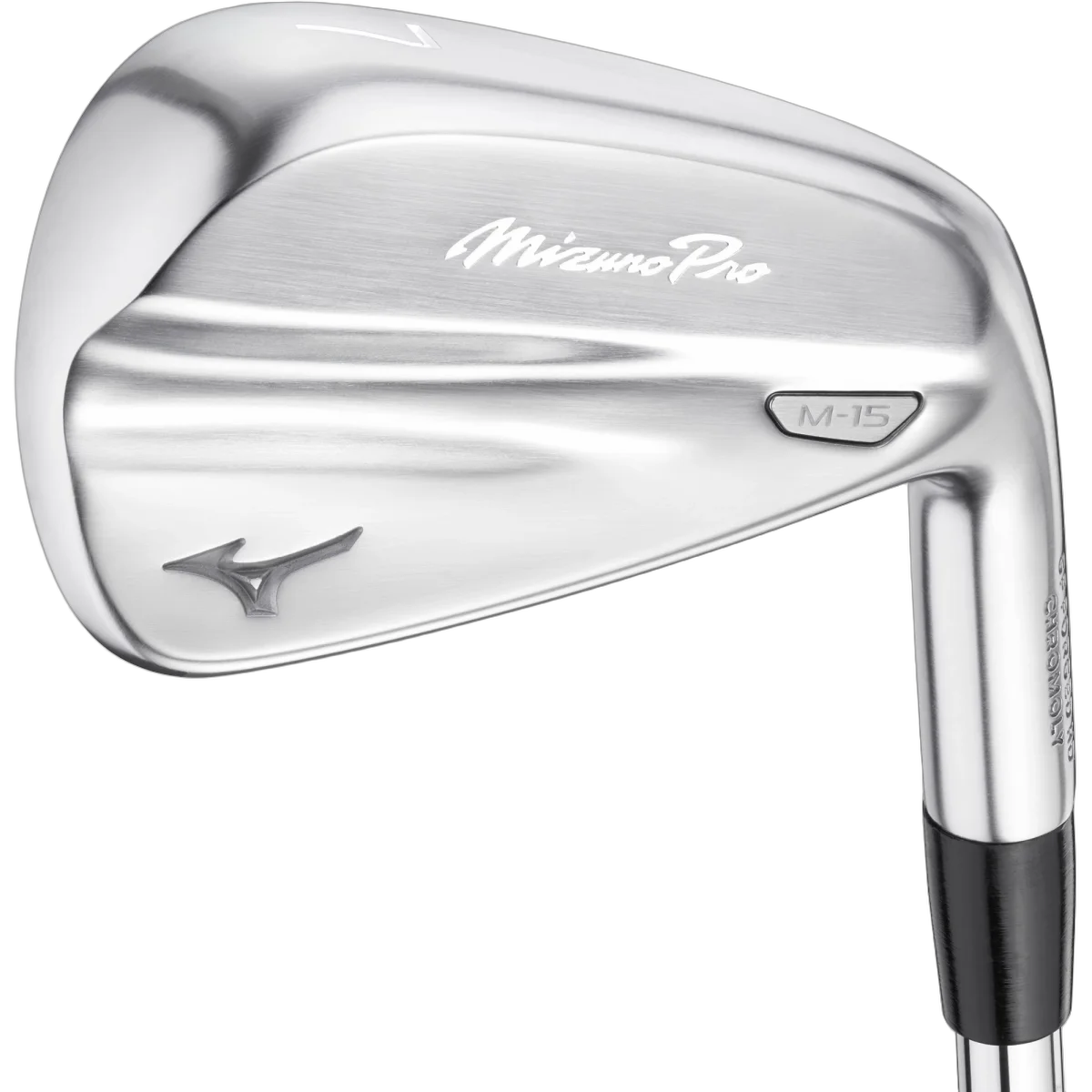
Compared to the 243, the M-13 feels faster and bolder in the long and mid irons but gives up a touch of that soft, deeply traditional sensation from center. The 243 felt closer to the 241 blade; the M-13 feels closer to the M-15 hollow-body. It's a trade-off, and depending on what you prioritize, you'll land on different sides of it.
Performance
Ball Speed & Distance
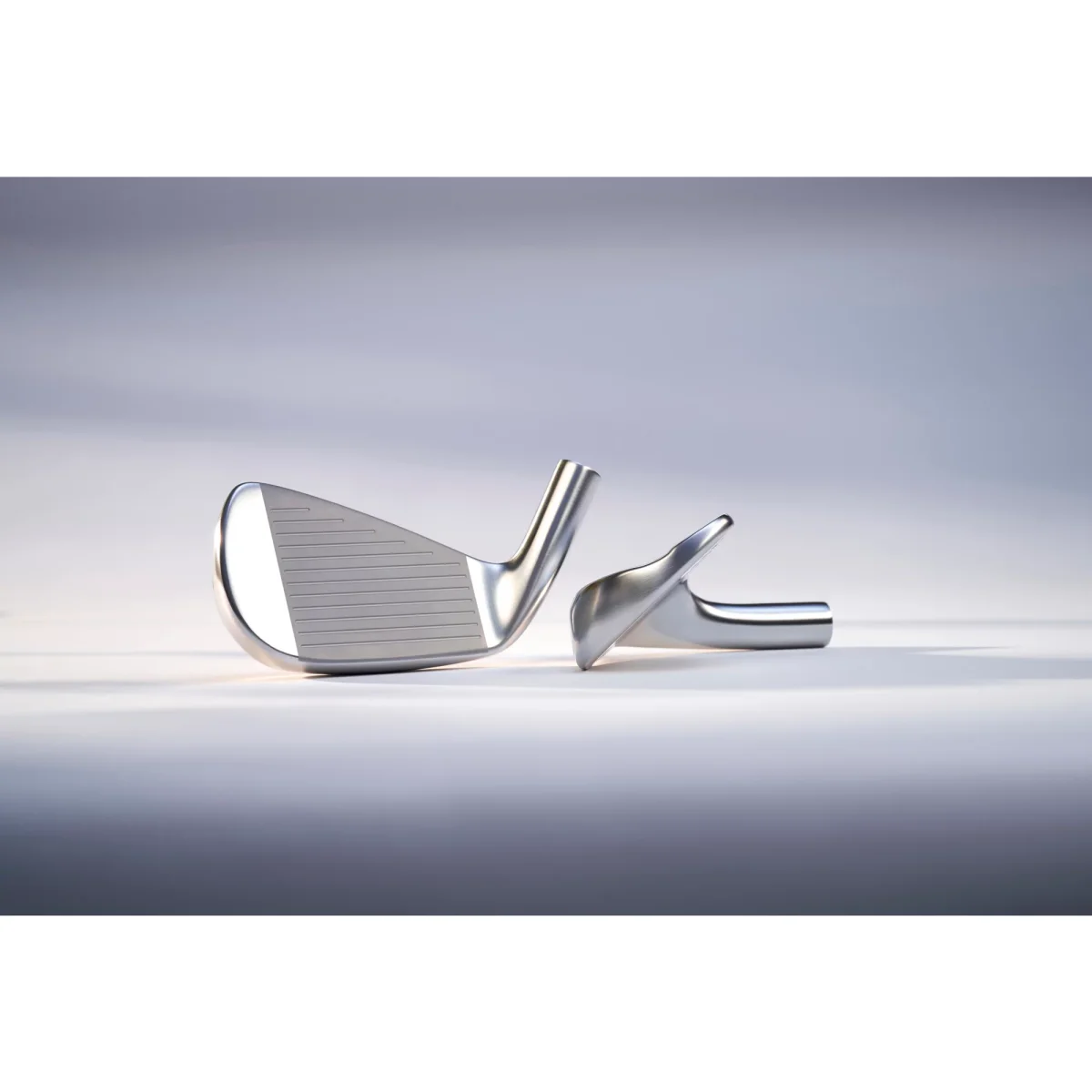
The M-13 is meaningfully faster than the 243. Every measured category, ball speed, carry, peak height, has improved over its predecessor, and the gains aren't subtle. The Contour Ellipse face in the 4 and 5-iron, with areas up to 35 percent thinner than the 243's construction, generates noticeably more speed without creating the hot, hollow sensation that turns off feel-oriented players.
Two iron heads showing face grooves and profile angles
With the 7-iron (32 degrees, same as the 243), I saw carry distances consistently in the 173-190 yard range depending on strike quality, with ball speeds around 127 mph on centered hits. The flight has a different character than the 243. The ball moves forward through the air more aggressively, cutting rather than floating, more akin to a players-distance iron than a traditional cavity-back. It takes some adjustment; you may find yourself flying targets until you recalibrate.
In the M-13 versus M-15 head-to-head, the M-13 actually produced marginally higher ball speed on average (the M-15's 29-degree loft only translated to about 4 yards more carry), suggesting that the Contour Ellipse and Micro-Slot technologies are generating genuine speed rather than relying on loft jacking to create the illusion of distance. That's an important distinction and a credit to Mizuno's engineering.
Launch & Spin
Spin and launch consistency are the M-13's headline achievements. Across nine tracked shots, launch angle varied by only 1.2 degrees, 18.9 to 20.1, which is remarkably tight for a cavity-back and speaks directly to the "flighted" CG design where each construction section is optimized to produce a consistent apex throughout the set.
Spin rates sat around 5,400-6,400 RPM with the 7-iron, noticeably higher than the M-15's 4,700 average and in a healthier window for holding greens. The M-13 spun approximately 700 RPM more than the M-15 on average, which translated to better stopping power and more predictable distance control, particularly in the scoring irons where the one-piece 1025E construction delivered spin rates above 7,500 RPM even on high-toe strikes.
The three-construction approach works exactly as intended: the 4 and 5-iron launch high enough to hold greens despite their stronger lofts, the 6-8 irons maintain that same apex without ballooning, and the scoring clubs produce the penetrating, spinning flights that better players want for attacking pins. You're not constantly fighting flight inconsistencies as you move through the bag.
Dispersion & Shot Shape
Forgiveness is a genuine step forward from the 243. The Contour Ellipse face in the long irons expands the usable hitting area significantly. Thin strikes that would have cost you real distance in the 243 now hold their numbers. One tester hit a 7-iron high on the toe and still produced 173 yards carry with 7,587 RPM spin, which is extraordinary retention from a miss of that magnitude on a compact head. The opposite side of the face showed similar resilience: nearly identical carry distances from off-center strikes throughout testing.
Mizuno Pro M-13 back cavity with branding on light surface
In head-to-head dispersion against the M-15, the M-13 produced a tighter grouping. The more compact head and higher spin provided better directional control, with an average of 3 yards offline versus the M-15's 1 yard (though the M-15's dispersion ring was also impressively tight). The verdict across multiple testers was consistent: the M-13 offers enough forgiveness that it doesn't just serve low-handicappers. A mid-handicapper with reasonably consistent ball-striking can absolutely game this iron and benefit from the help it provides without feeling like they've compromised on aesthetics.
Workability is strong. The compact head, minimal offset, and responsive face let you flight it down, move it left, and move it right with confidence. One tester noted the M-13 felt "more better-playery" than expected, more feedback, more control over trajectory than the typical players-cavity delivers. Higher swing speeds produced more RPM without the spin dulling, suggesting the M-13 rewards effort and technique rather than neutralizing inputs.
Verdict
The Mizuno Pro M-13 is one of the most complete irons I've tested. The three-construction approach isn't just marketing — it solves a real problem, delivering optimized performance at every loft without asking you to combo-set from multiple models. The long irons launch and forgive. The mid-irons bridge seamlessly. The scoring irons feel like pure Mizuno blades. The Triple Cut Sole provides the best turf interaction in the brand's history. And the flight consistency across the set — a near-identical apex from 4-iron through gap wedge — is something few competitors can match without resorting to significantly larger profiles.
It's not perfect. The feel, while excellent, has evolved from the 243's blade-like intimacy toward something more powerful and forward — and long-time Mizuno devotees may notice the shift. The pricing at roughly $1,680 for a steel set is steep, even for this category. And the "M-13" branding on the back badge doesn't carry the same visual elegance as the classic MP markings.
But those are quibbles against an iron that does virtually everything well. For the golfer who wants Mizuno Pro aesthetics with genuinely modern performance — single-figure players who demand feel and control, mid-handicappers who want a players iron they can grow into, or anyone upgrading from the 243 who wants more speed without giving up the compact profile — the M-13 is an immediate contender for iron of the year.