Callaway Apex Ai300 Irons
Callaway — Callaway Apex Ai300 Irons · By Lauryl · Feb 8, 2026
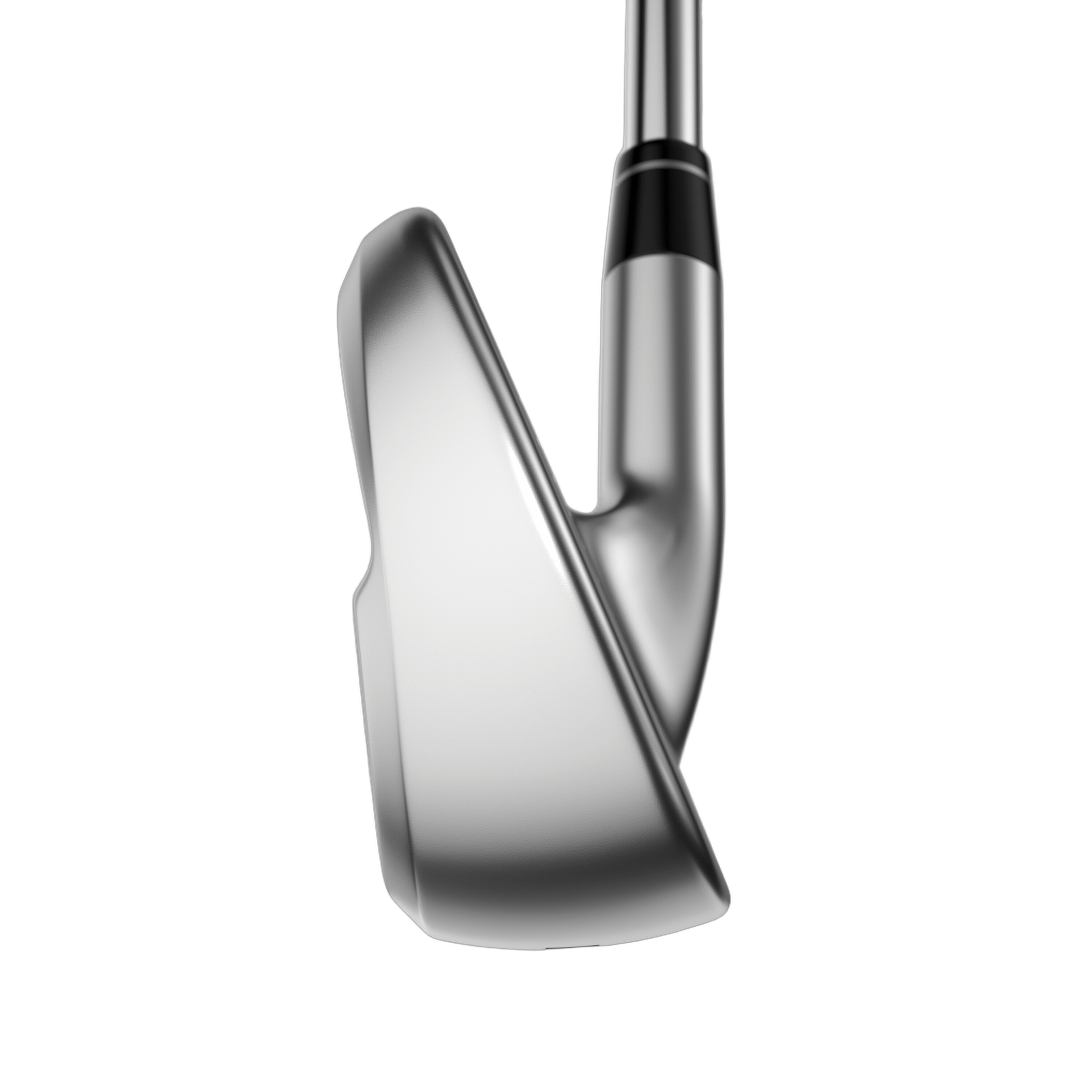
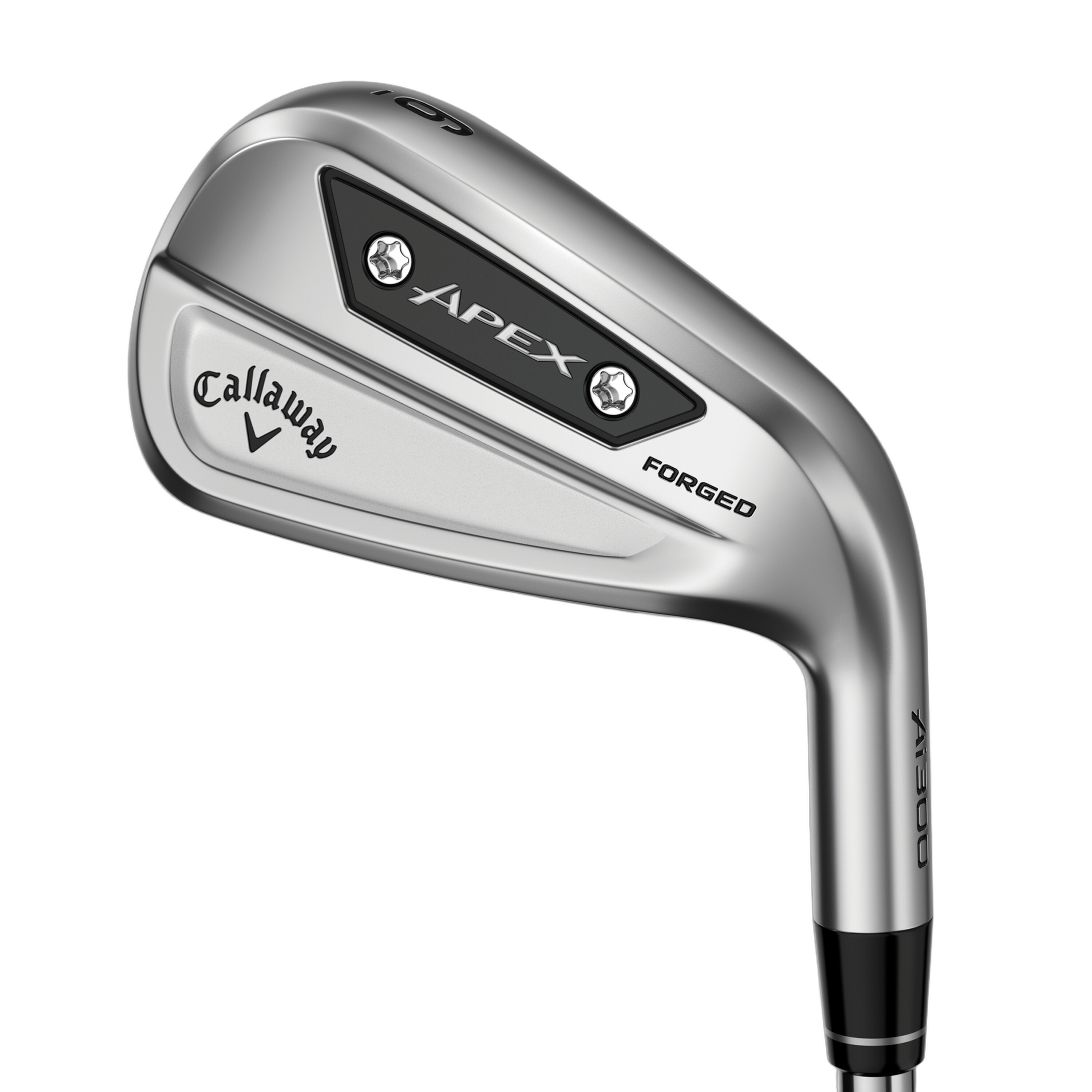
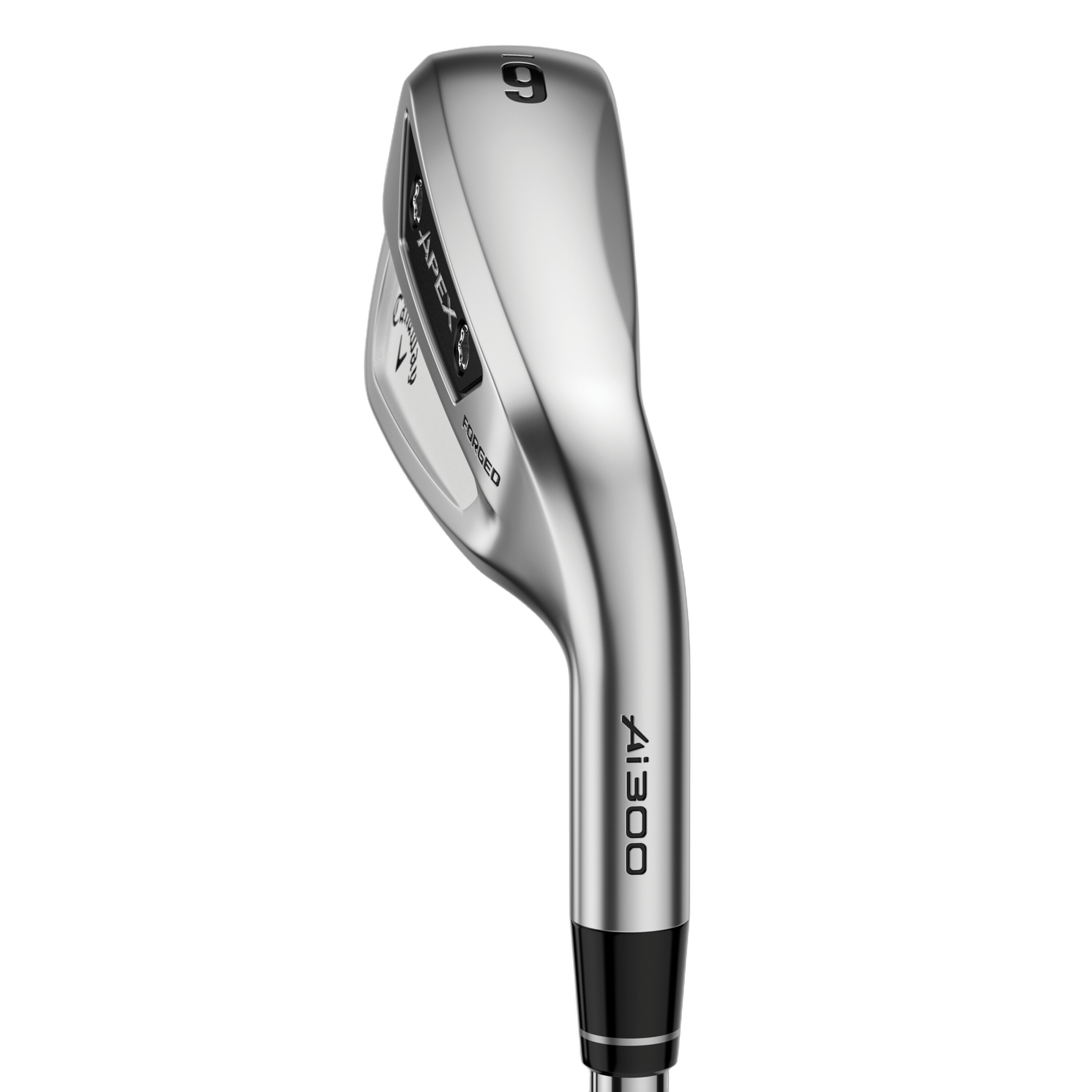
The most forgiving Apex iron ever made brings game-improvement performance to a premium forged package -- but is there room for it in an already crowded Callaway lineup?
The Big Picture
The Apex line has been a cornerstone of Callaway's iron offerings since 2014, and for 2024 the range expands further with the Ai300 slotting in as the most forgiving model in the family. Where the Ai200 targets low-to-mid handicappers with a hollow-body players' distance design, the Ai300 takes a different path: a forged cavity-back construction aimed squarely at mid-to-high handicappers who want game-improvement performance without giving up the feel and aesthetics that make Apex irons special.
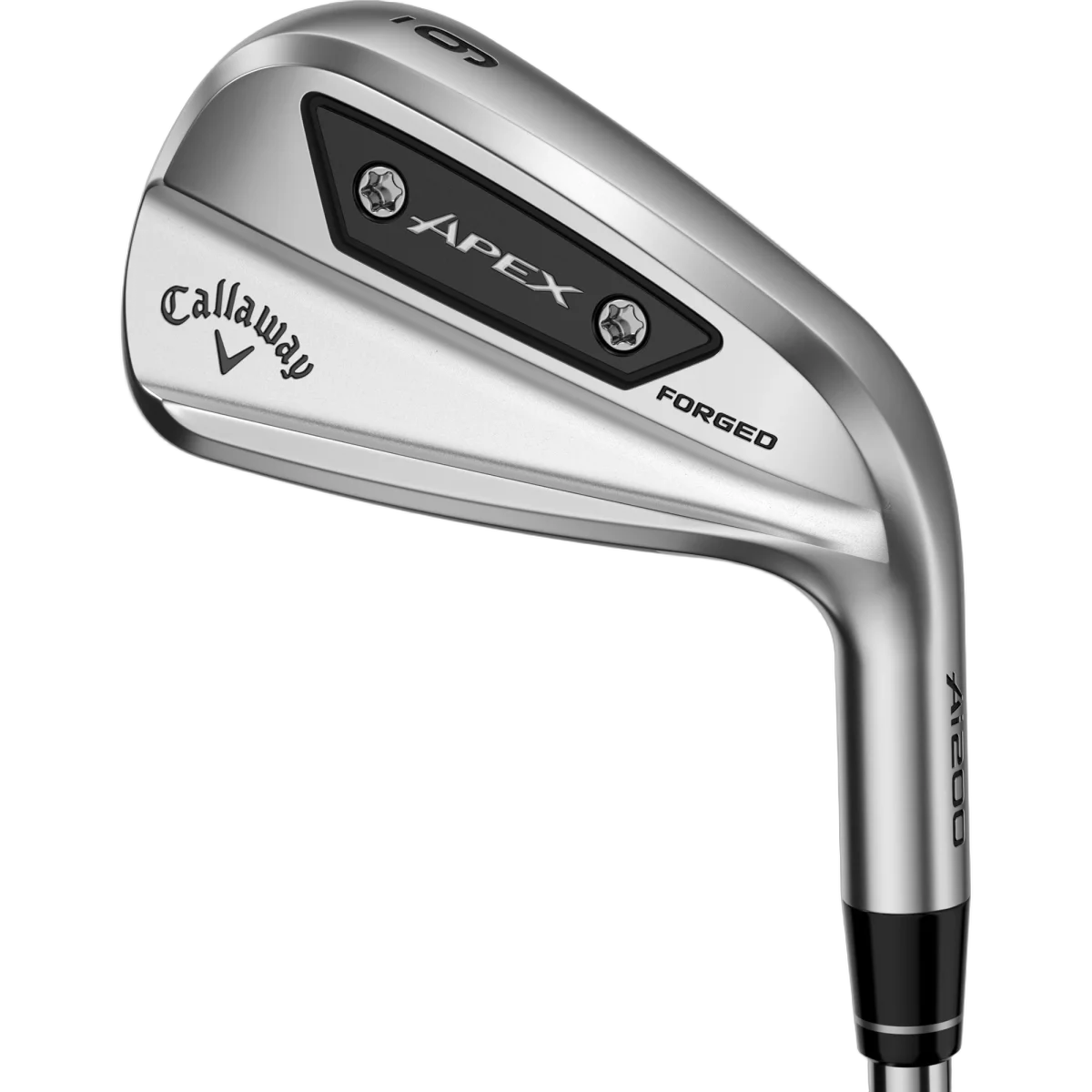
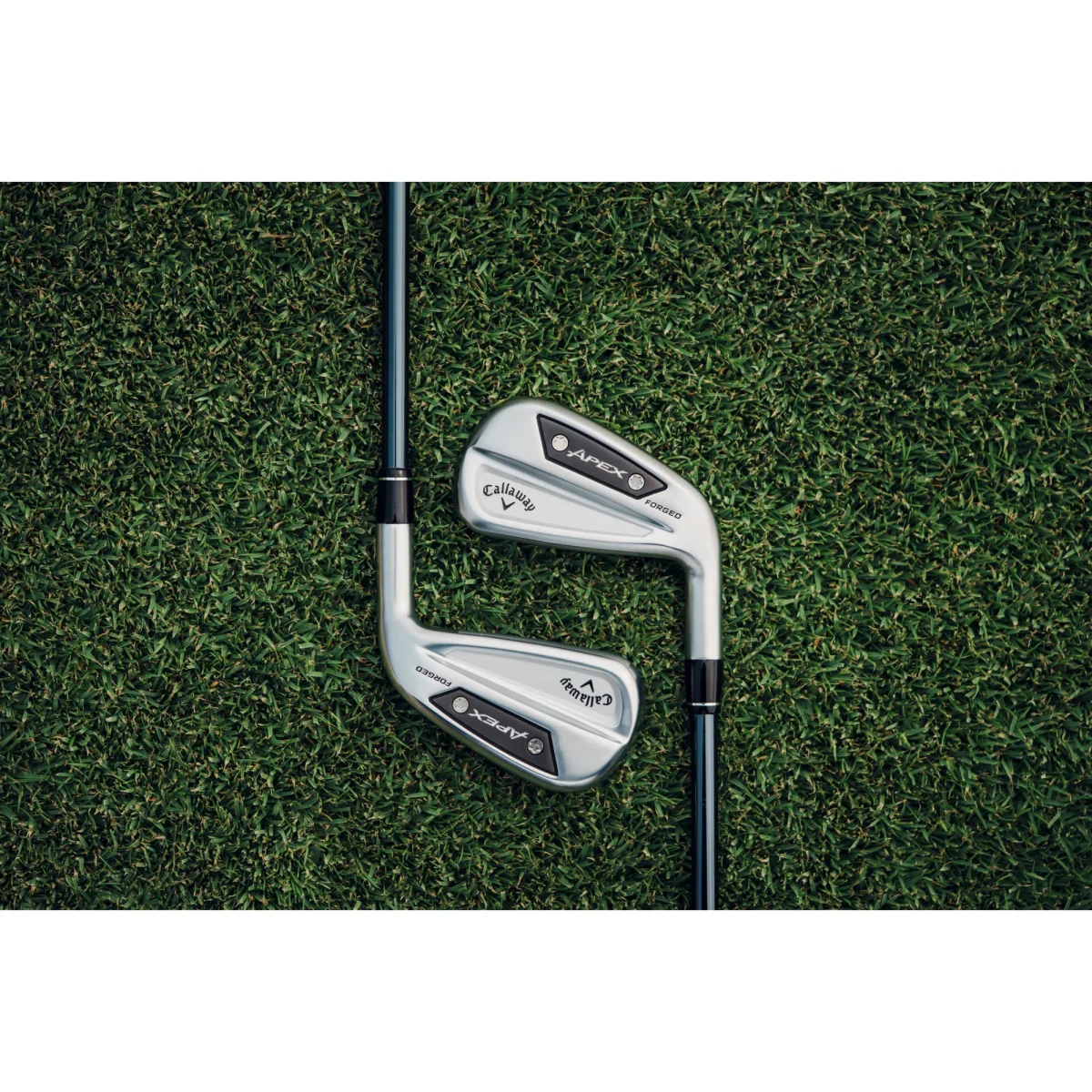
Two Apex Ai300 irons resting on grass showing back cavity design
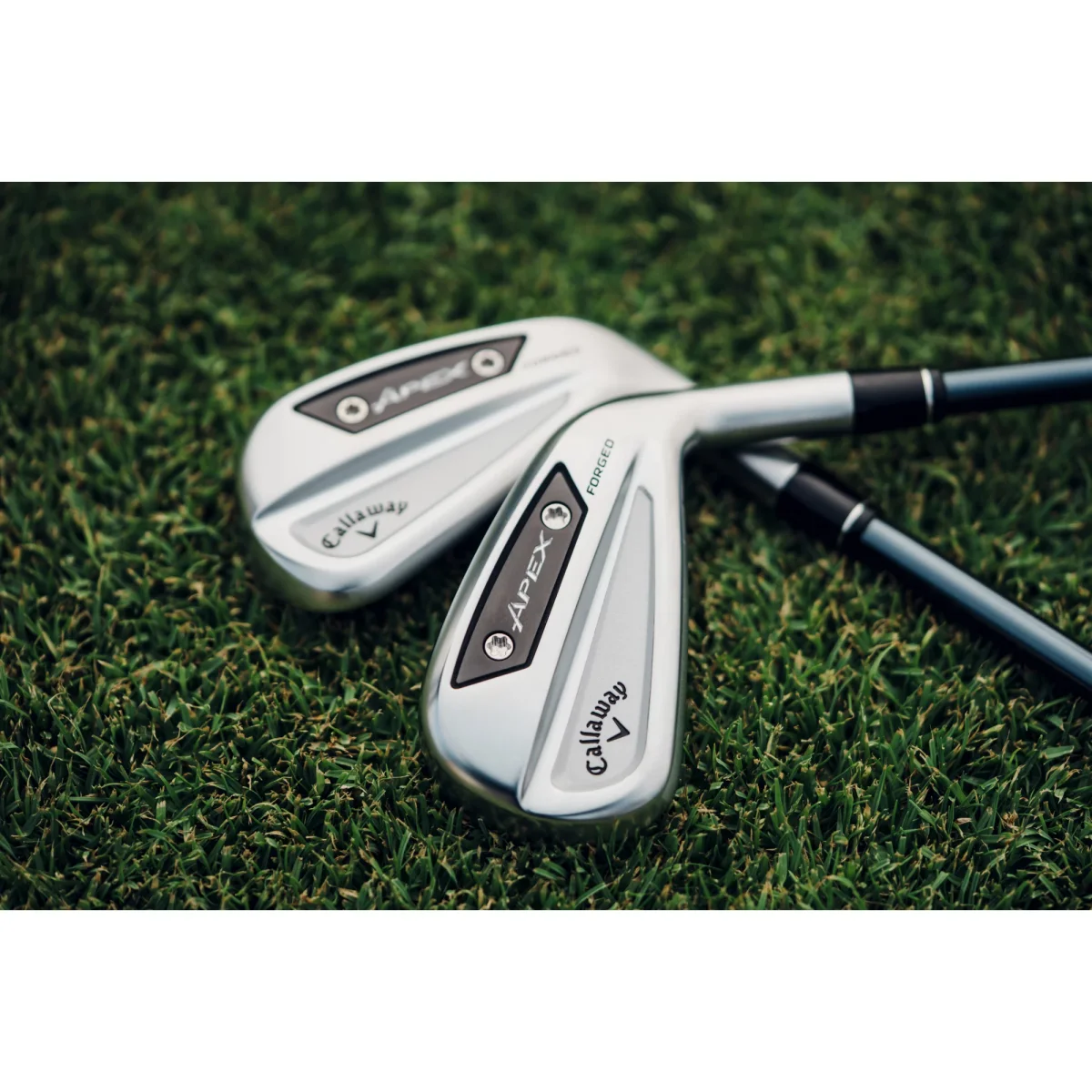
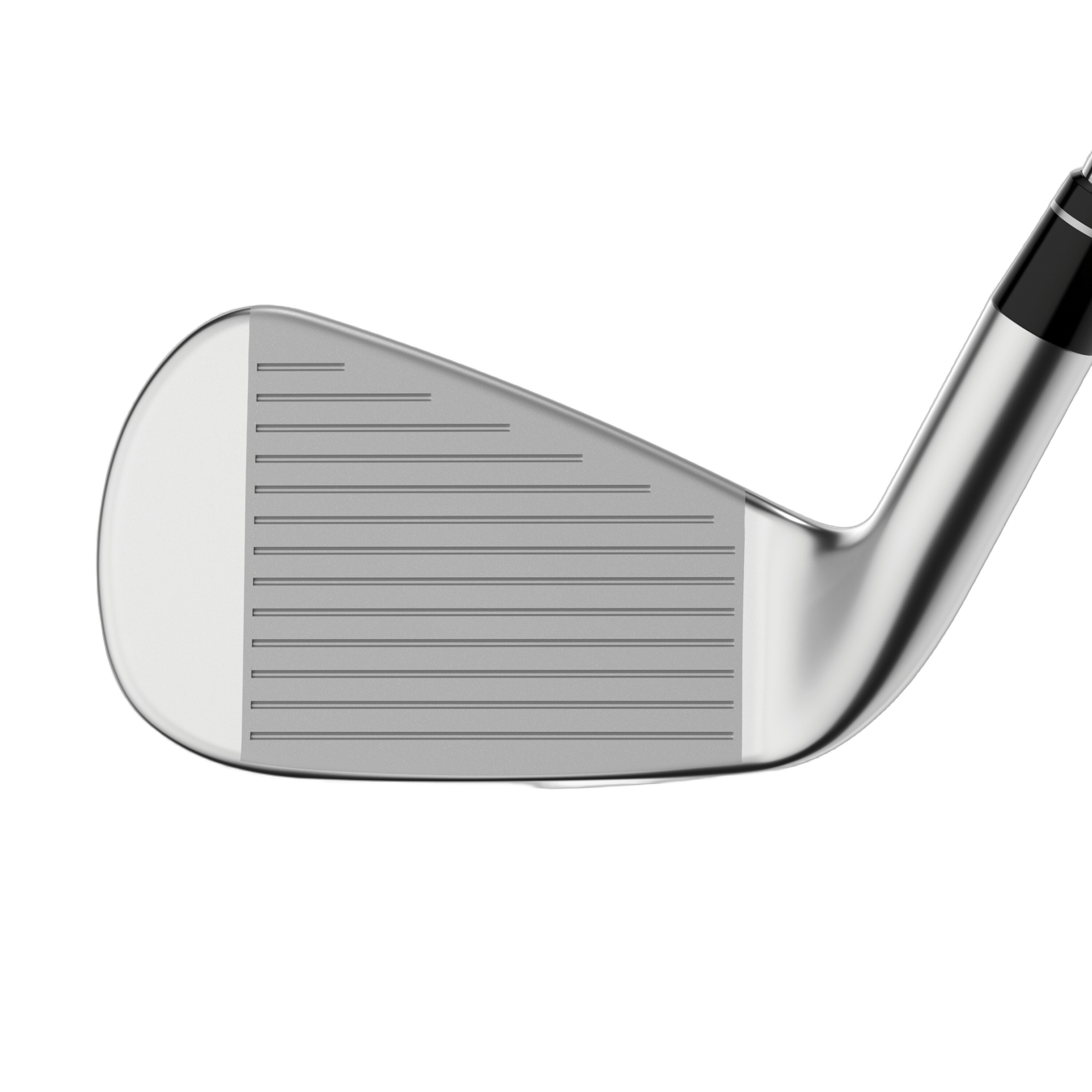
The technology story is familiar if you follow Callaway. The Ai Smart Face uses real golfer swing data processed through artificial intelligence to optimize face thickness across the hitting area, producing more consistent ball speeds and spin rates -- especially on the off-center strikes that define most amateur swings. A forged 455 face cup delivers power across the face, while strategically positioned MIM (metal injection molding) back weights fine-tune center of gravity for optimal launch in each iron. A Dynamic Sole design rounds out the package, improving turf interaction for golfers who do not always find the ball cleanly.
The target audience is broad: think handicaps in the mid to high teens, roughly 12-25, though any golfer who prioritizes forgiveness and easy launch will find something to like here.
At Address
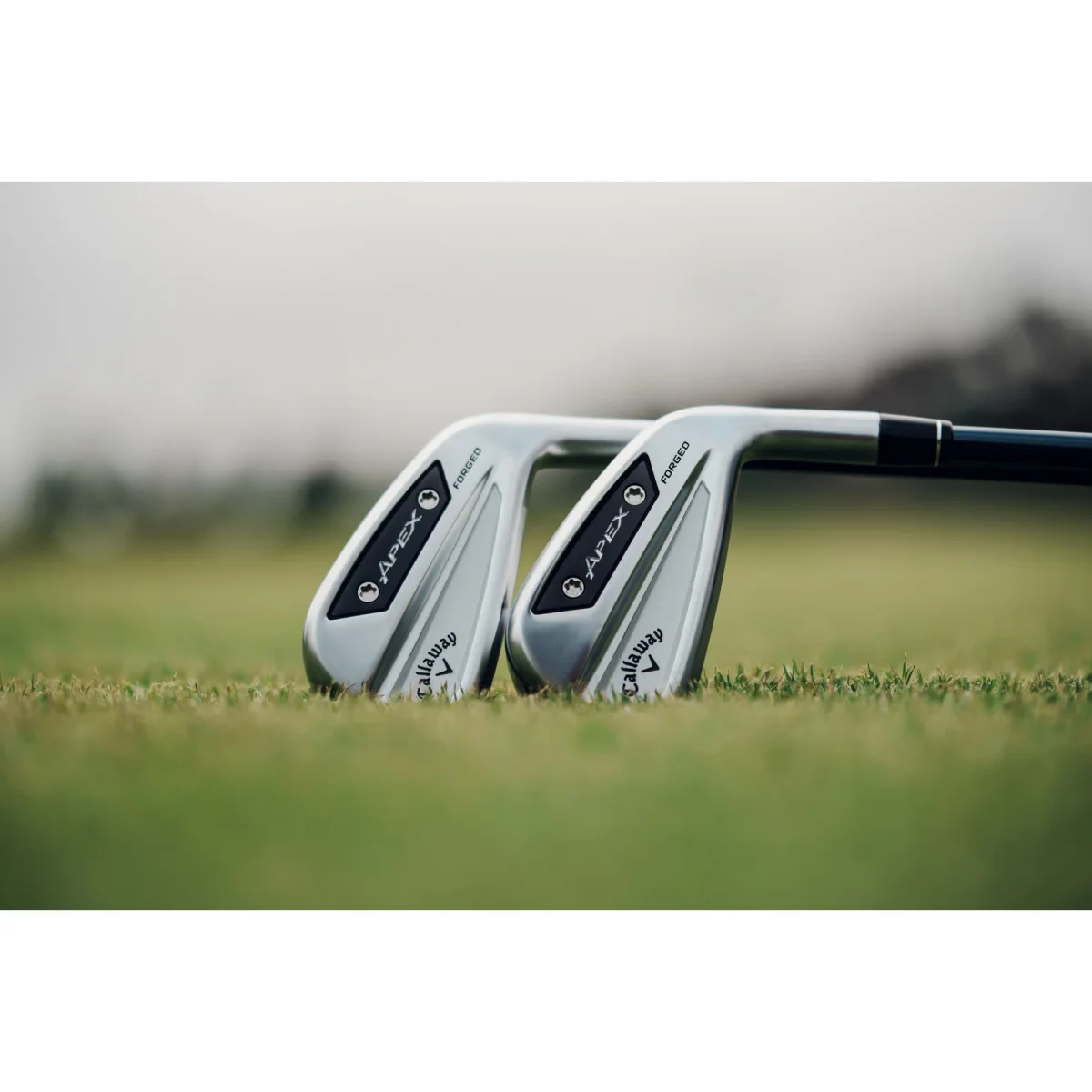
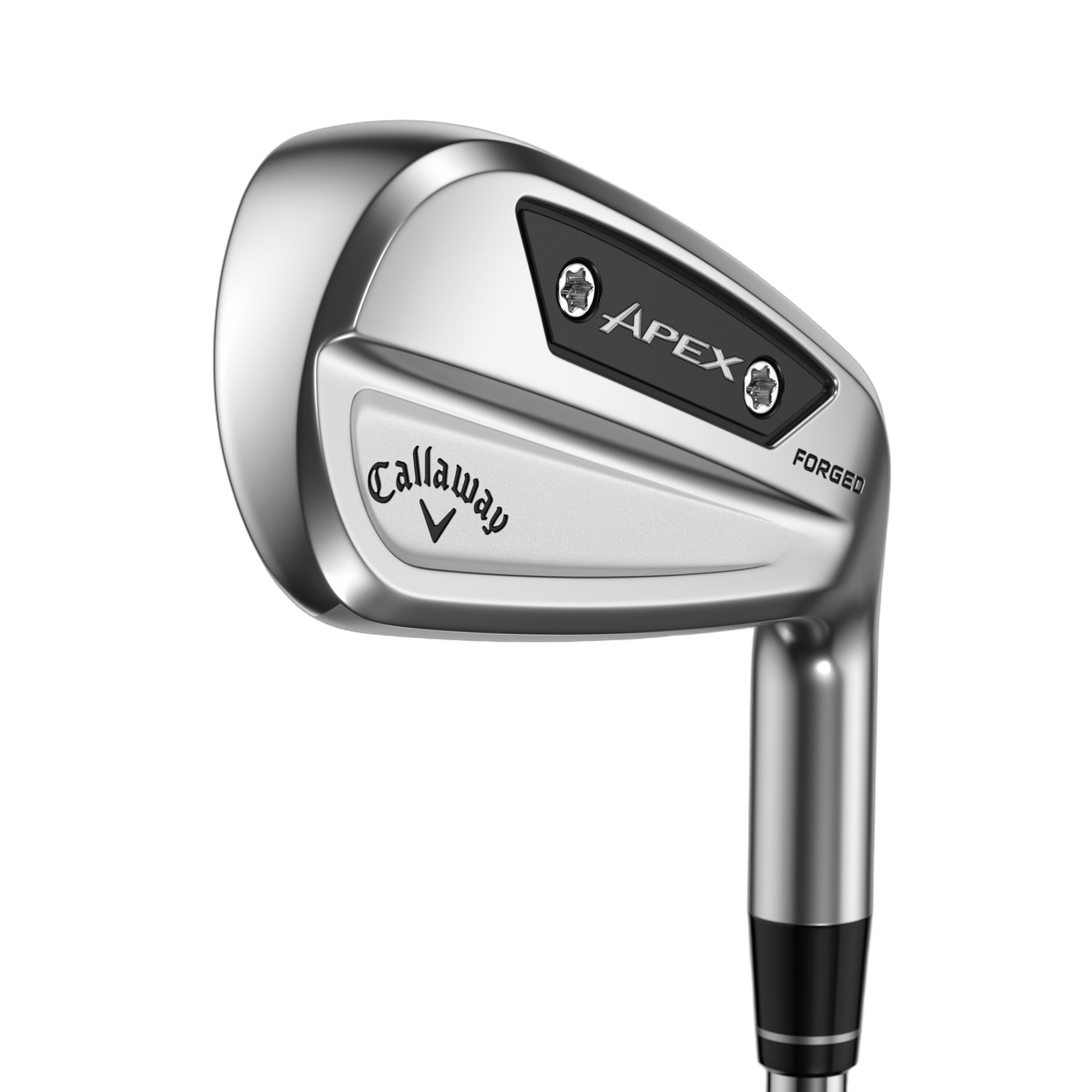
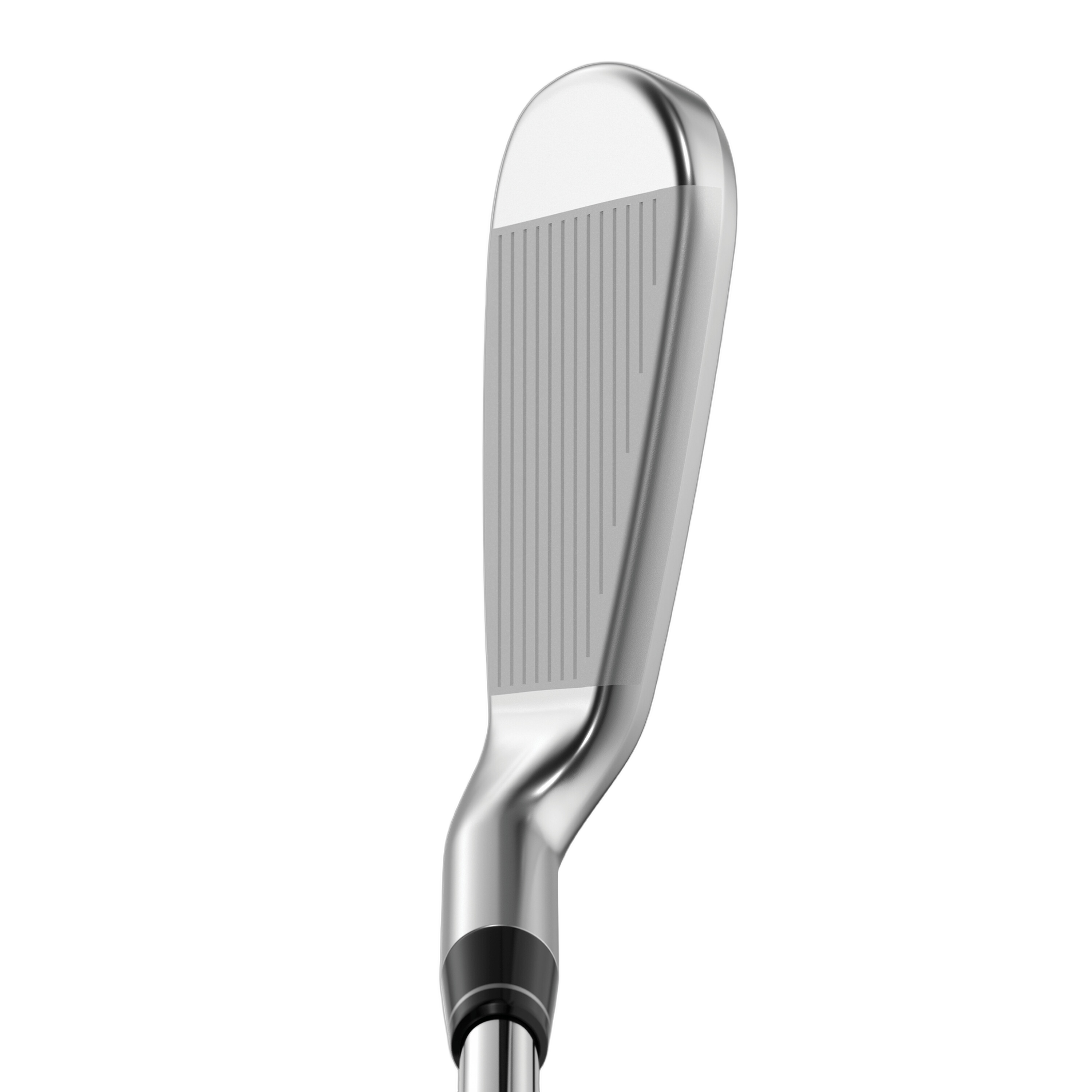
The Ai300 is unmistakably a game-improvement iron when you set it behind the ball. The blade length is longer than the Ai200, the topline is thicker, and the offset is clearly visible. For some golfers, that profile will inspire immediate confidence -- there is plenty of face to work with, and the weight distribution you can see in the sole and back of the head tells you this club wants to get the ball airborne.
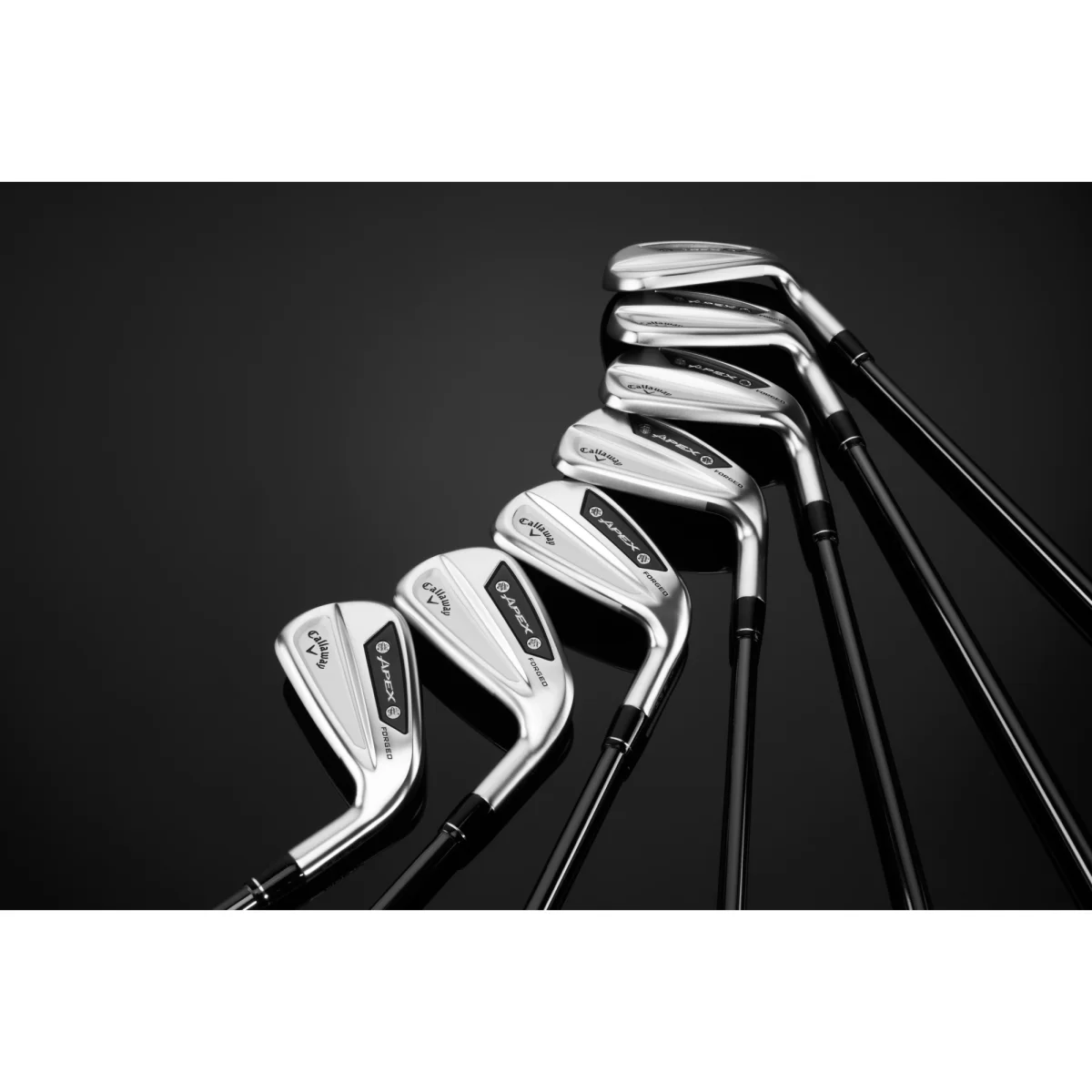
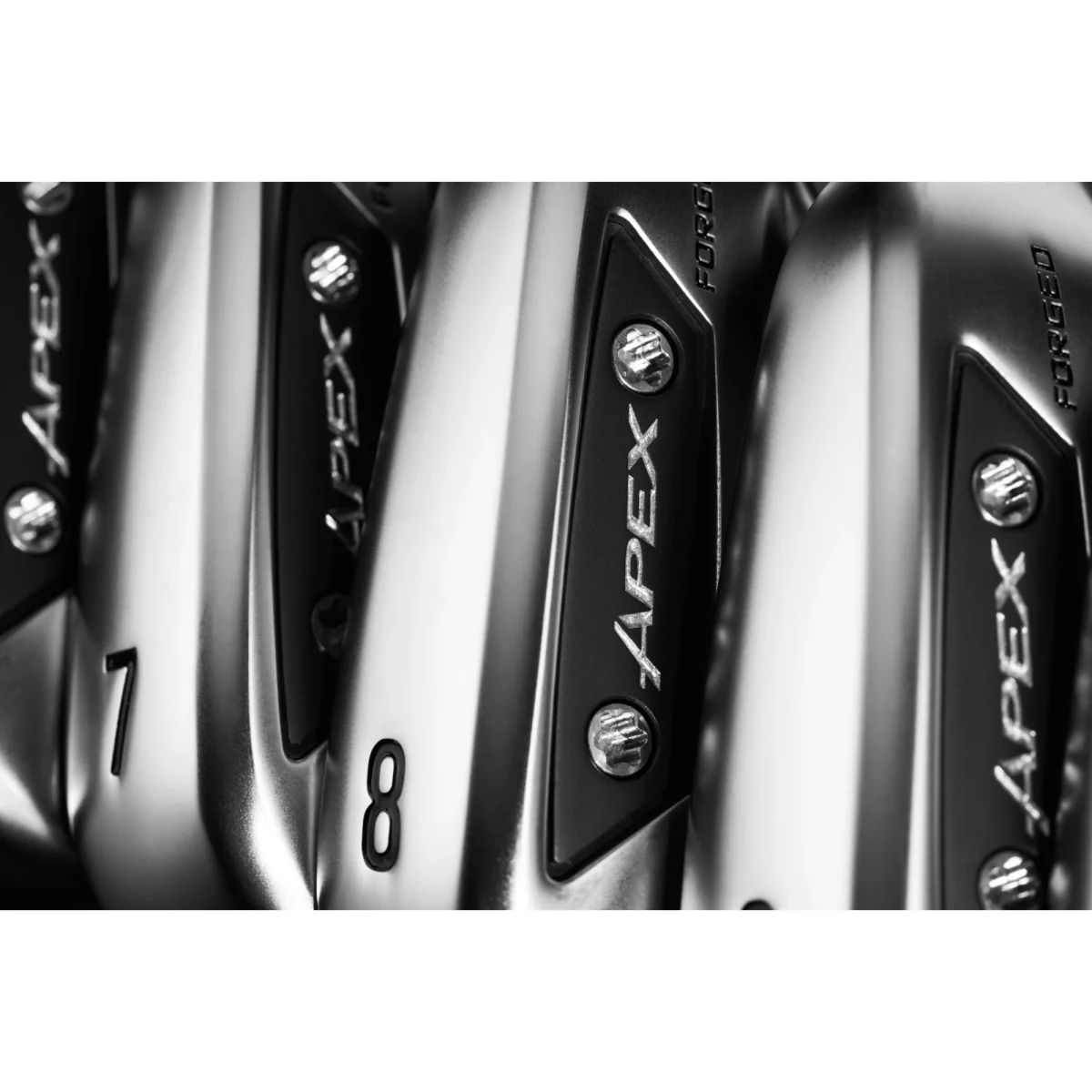
Despite the larger footprint, Callaway has managed to keep the aesthetics relatively clean. The satin finish is smart and understated, and the cavity back does not look as bulky as you might expect from the specs alone. The MIM weight in the back maintains visual continuity with the rest of the Apex line, making combo sets with the Ai200 or even the Apex Pro models visually seamless. That said, better players accustomed to compact heads will find the profile noticeably chunkier than what they are used to, and the offset will be a dealbreaker for some.
Sound & Feel
Here is where the Apex badge earns its keep. Despite being a cavity-back game-improvement iron, the Ai300 feels remarkably soft and responsive at impact. The forged 455 face cup paired with urethane microspheres inside the head produces a sound that is quiet, a touch sharp, and on the clicky side compared to the Ai200 -- though it does not actually feel clicky. It is a premium feel that genuinely approaches what you get from the Ai200, which is impressive given the completely different construction method.
Straight-on face view showing grooves and top line of iron
Center strikes deliver that satisfying, dense sensation that tells you this is a quality forged iron. Mishits on the heel and toe are a bit firmer but not harsh -- in fact, the Ai300 is the most consistent-feeling iron across the face in the entire 2024 Apex lineup. You get useful feedback about strike quality without your hands paying for it on a cold morning. For a game-improvement iron, the feel punches well above its weight class.
Performance
Ball Speed & Distance
The combination of the forged 455 face cup, cavity-back construction, and Ai Smart Face generates serious ball speed for this category of iron. I was seeing carry distances around 213 yards with the longer irons and solid numbers throughout the bag. The 4-iron sits at 20 degrees of loft, which is on the stronger side, and the distance reflects that -- but Callaway has not gone to the extremes of some competitors.
What stood out more than raw yardage was the consistency. The Ai Smart Face is doing real work here: ball speeds stayed remarkably stable even as strike quality varied, and I noticed that shots which should have been penalized more heavily -- catches off the toe, a bit thin, slightly heavy -- still produced competitive carry numbers. Ball speeds and overall distance are comparable to Callaway's non-Apex game-improvement irons like the Paradym Ai Smoke, which means the Ai300 competes with the longest irons in the category.
Launch & Spin
The Ai300 launches high. With the MIM weights positioning the center of gravity low in the head, getting the ball airborne is effortless, even in the long irons. I saw peak heights of 75 feet with the 9-iron and consistently elevated flights throughout the bag. This is ideal for higher handicappers who struggle with trajectory -- the ball gets up, carries its number, and drops with enough angle to hold the green.
Spin rates run on the lower side for a game-improvement iron, which I expected given the stronger lofts. I was seeing spin in the low-to-mid 4000s with the 7-iron, though the shorter irons produced noticeably more spin for greenside control. The Ai300 does produce slightly higher spin than the Ai Smoke -- about 343 rpm more in testing -- along with a steeper descent angle of roughly half a degree. For golfers with moderate swing speeds, that extra spin and steeper landing translates to noticeably better stopping power on approach shots.
Dispersion & Shot Shape
The forgiveness on the Ai300 is genuinely impressive. Throughout the bag, shots that should have scattered stayed in a remarkably tight window. I tend to leak shots out to the right, and with these irons a slice became more of a fade -- the draw bias built into the head through the offset design does real work in straightening out ball flight for players who fight a left-to-right miss.
Back cavity view showing Apex badge with Callaway and Forged branding
Mishit performance was equally strong. I was still generating respectable distance and height when catching the ball a touch heavy or a little thin. The Dynamic Sole played a role here too, keeping the club moving through the turf on fat contact rather than digging and killing speed. The thick sole and easy launch also meant these irons performed well from thick rough, which is a genuine bonus for higher handicappers who find themselves off the fairway more often.
That said, workability is limited. The Ai300 is the least workable iron in the Apex family, and if you want to shape shots both ways on demand, this is not your club. It is designed for repeatability, not creativity.
MSRP: ~$999 (steel) / ~$1,299 (graphite) -- varies by configuration
Verdict
The Callaway Apex Ai300 delivers on its promise of game-improvement performance wrapped in Apex-level feel and aesthetics. The forgiveness is substantial, the launch is effortless, and the Ai Smart Face produces the kind of shot-to-shot consistency that helps mid-to-high handicappers hit more greens. The feel and sound are a genuine cut above what most cavity-back game-improvement irons offer, and the ability to combo these with Ai200 models makes building an optimized set straightforward.
The question is whether the Ai300 justifies its existence alongside the Ai200 and the Paradym Ai Smoke. The Ai200 covers most mid-to-high handicappers with more versatility in a sleeker package, and the Ai Smoke delivers similar performance numbers at a lower price point. The Ai300 fills a specific niche: golfers who want maximum forgiveness and the largest profile in the Apex line, but who also care about forged feel and premium aesthetics. If that describes you, these irons deliver. If you are on the fence, the Ai200 is probably the smarter pick.