Mizuno Pro 243 Irons
Mizuno — Mizuno Pro 243 Irons · By Lauryl · Jan 16, 2026
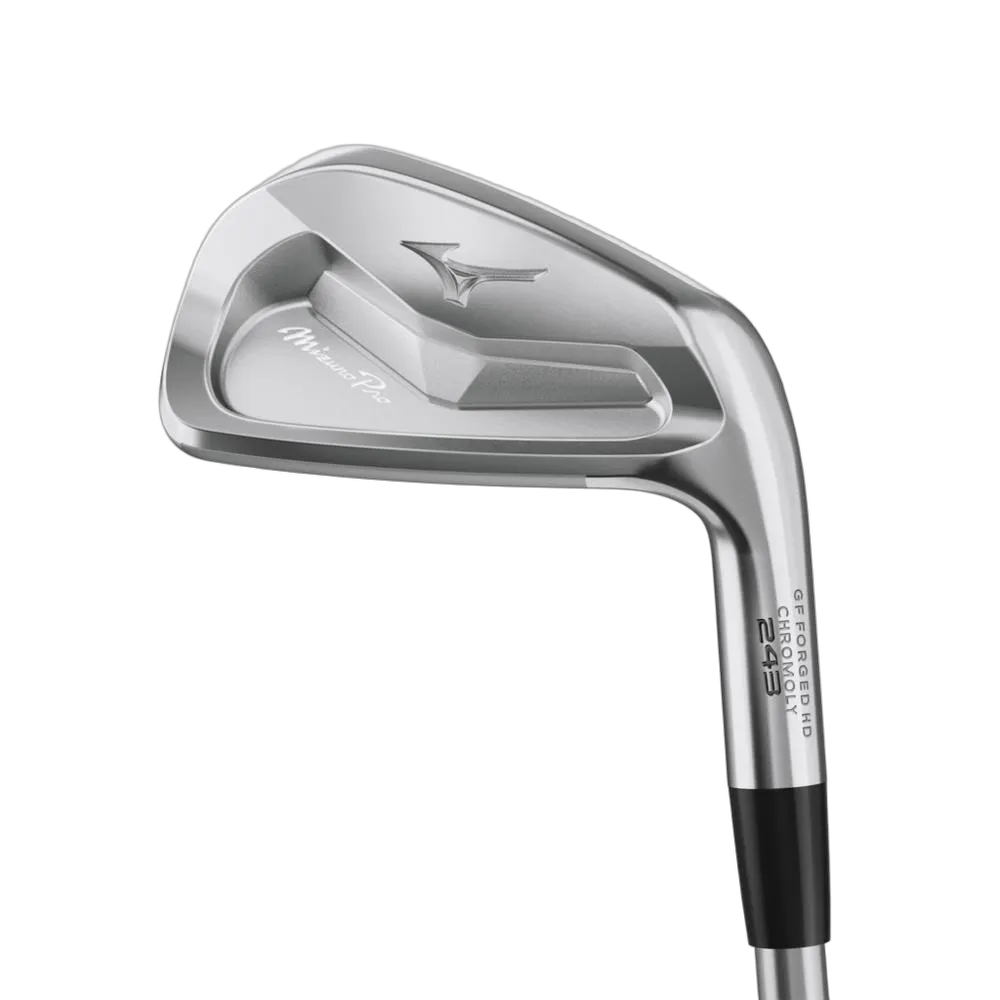
A forged player's cavity that punches well above its weight class.
The Big Picture
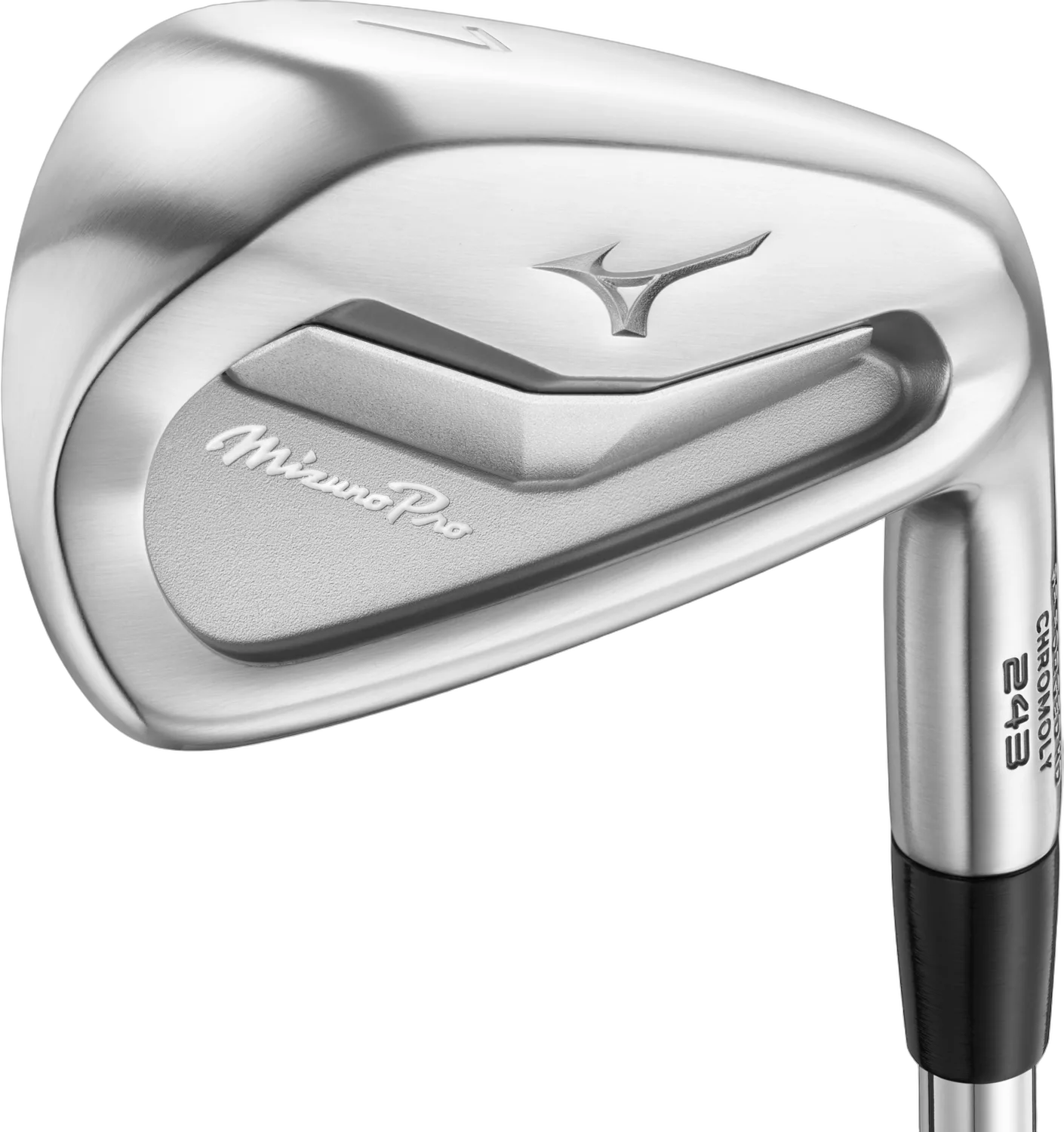
Mizuno has built a reputation on one thing above all else: feel. The Pro 243 sits in the middle of their three-tier Pro lineup, slotted between the 241 muscle-back blade and the 245 hollow-body distance iron, and it's the one that most serious golfers will actually end up gaming. It's a compact cavity-back forged from a single billet of grain flow forged HD steel in Hiroshima, Japan, with a soft copper underlay beneath the face and a proprietary Flow Micro-Slot structure cut into the sole and face. That micro-slot is the key engineering story here: it's designed to preserve ball speed and tighten spin consistency across the face without blowing up the head size or sacrificing the clean, compact profile that draws players to this category in the first place.
The target player is a mid-to-low handicapper who wants the look and control of a players' iron but isn't ready to give up the safety net of a well-designed cavity. Think single-digit to low-teens handicaps, golfers who strike the ball well enough to appreciate feedback but still benefit from some insurance on their off-center hits.
At Address
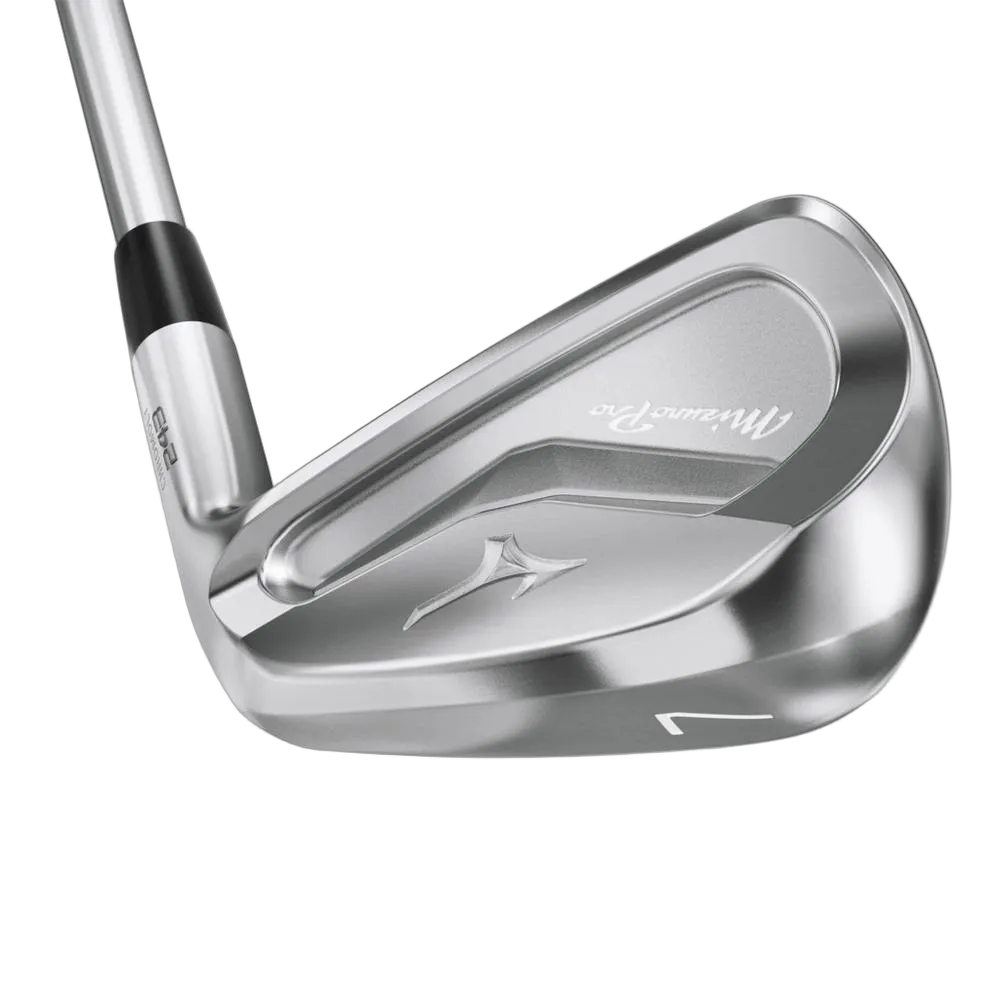
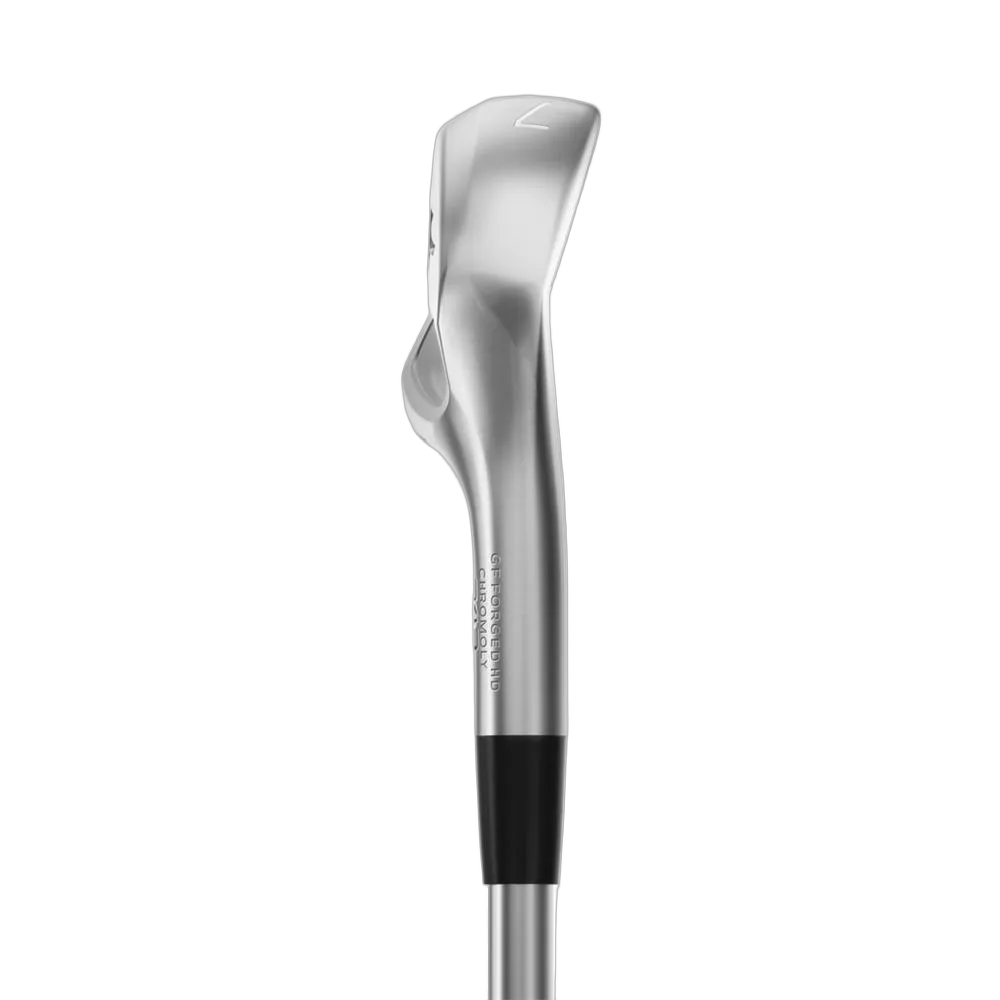
These irons are beautifully put together. The full satin brush finish is sleek without being reflective, no flash, no distractions. Behind the ball, the 243 presents a compact, thin topline that reads like a blade. You feel like you're holding a proper player's iron, which is exactly the confidence boost Mizuno is going for. The sole is slightly thicker than some previous Mizuno cavities, a concession to fitting the micro-slot technology, but a new bounce angle and wrap-around sole grind do an excellent job of disguising it visually. There's a subtle alignment feature integrated into the design, though it's understated enough that purists won't be bothered.
Address view showing compact topline and thin blade profile
Sound & Feel
This is where Mizuno earns its keep, and the 243 doesn't disappoint. Center contact produces a soft, solid thud, not the thin click of a hollow body or the harsh ping of a cast iron, but that dense, muted compression that forged iron purists live for. It's pleasing without being loud. Slightly off-center strikes still retain a good amount of that quality, though you do get feedback that tells you where you missed. That's the deal with a true players' cavity: it talks to you, but it doesn't yell.
If I'm being picky, and a few testers have noted this, the 243 carries a touch more click than some of Mizuno's softest offerings. It's not harsh by any stretch, but side-by-side with a pure muscle-back blade, there's a fractionally harder note at impact. For the vast majority of golfers, this is splitting hairs. The feel is exquisite and distinctly Mizuno.
Performance
Ball Speed & Distance
The Flow Micro-Slot structure is doing real work here. It's unbelievable how much technology Mizuno packed into this head while keeping it looking like a traditional forged cavity. In testing, the 7-iron produced carry distances around 177 yards with total distances in the 170-yard range, which puts the 243 right in line with, and in some cases ahead of, competitors in the compact players' iron category. Spin consistency across the face is remarkably tight, which translates to more predictable gapping throughout the set.
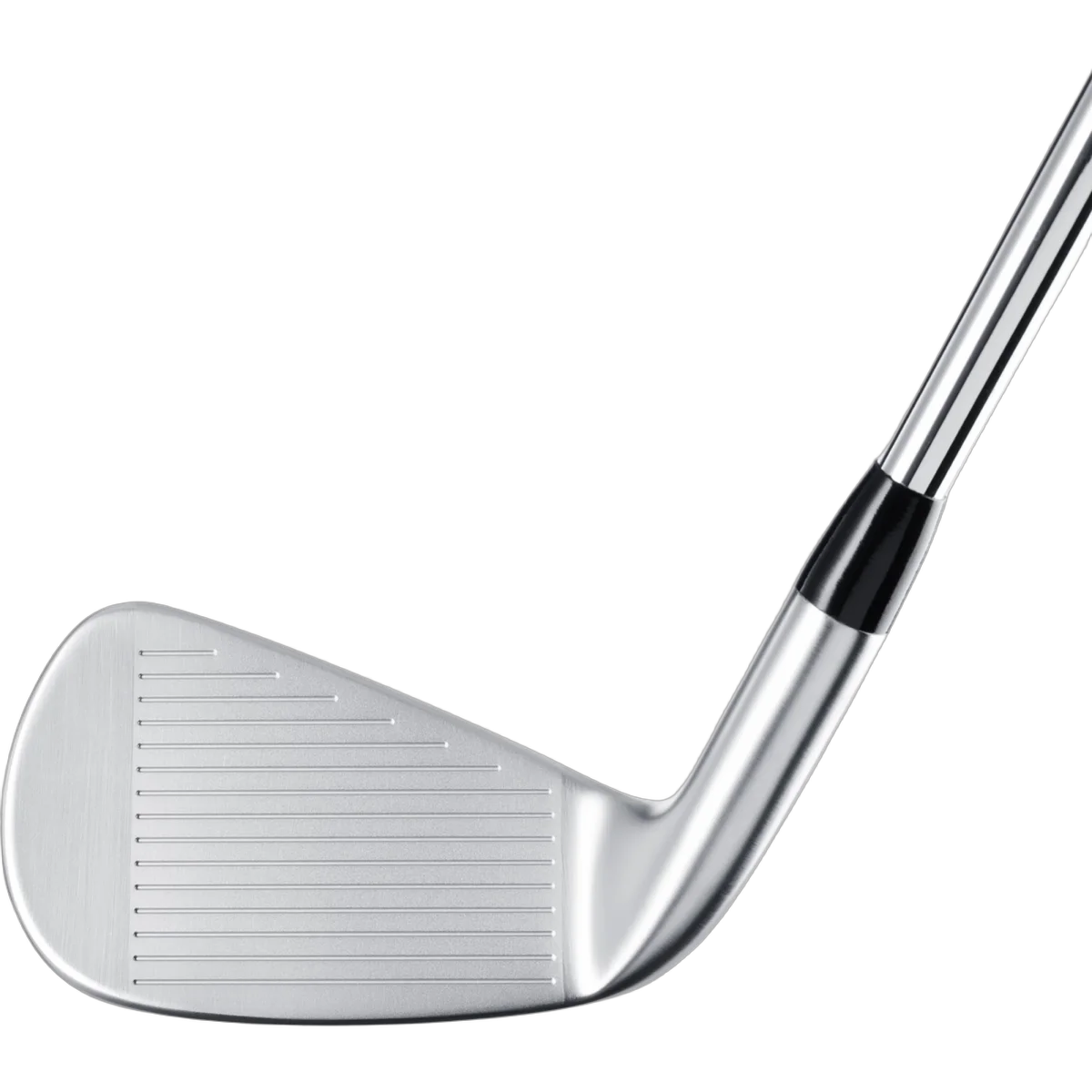
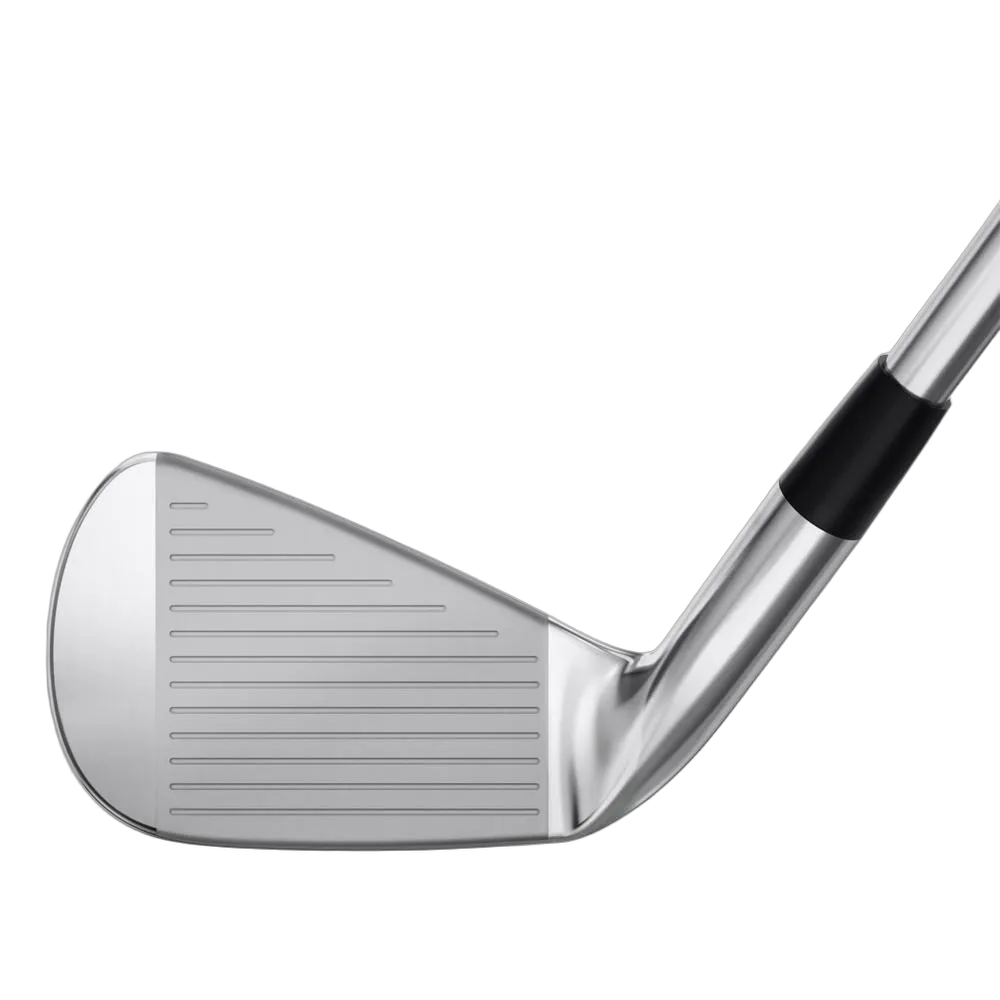
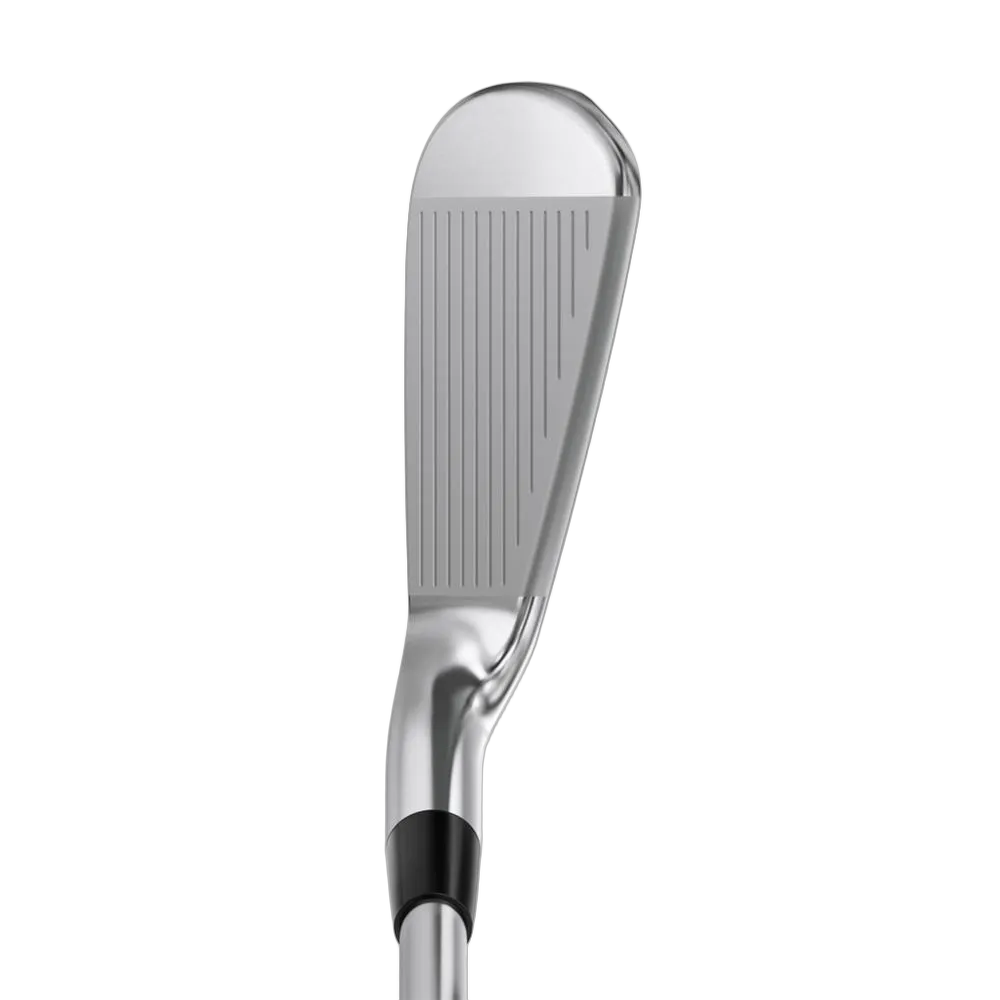
Clean face view showing grooves and compact blade shape
Where the 243 really surprised me was on mishits. Shots that caught the toe more than I'd care to admit still flew straight and far, with the hot face compensating for imperfect contact. Instead of the big hooks that smaller irons tend to produce on toe strikes, I was getting gentle draws that stayed in play. That's the micro-slot earning its engineering budget.
Launch & Spin
The 243 launches high for a players' cavity, with a spin profile that sits on the lower side, around 1,000 rpm less than what you'd see from a traditional blade at the same loft. Peak heights reached about 22 yards, giving you enough stopping power on approach shots without ballooning in the wind. The combination of higher launch and lower spin creates an efficient ball flight that carries well and lands at a steep enough angle to hold greens.
For players with slower swing speeds, the high launch is a genuine advantage. You're getting flight and distance without needing to generate it all yourself. Faster swingers will appreciate that the 243 still allows you to flight the ball down, hit it high, or work it right and left with relative ease. It's a blade player's level of control with a cavity's launch characteristics.
Dispersion & Shot Shape
Forgiveness is legitimately good for this size of head. The 243 is more forgiving than you might expect from its compact profile, and the dispersion patterns I saw were tight enough to inspire real confidence on approach shots. This isn't a game-improvement iron pretending to be a players' club. It genuinely plays like a compact cavity should, with honest feedback on bad swings but without the punishing distance loss that blades deliver on mishits.
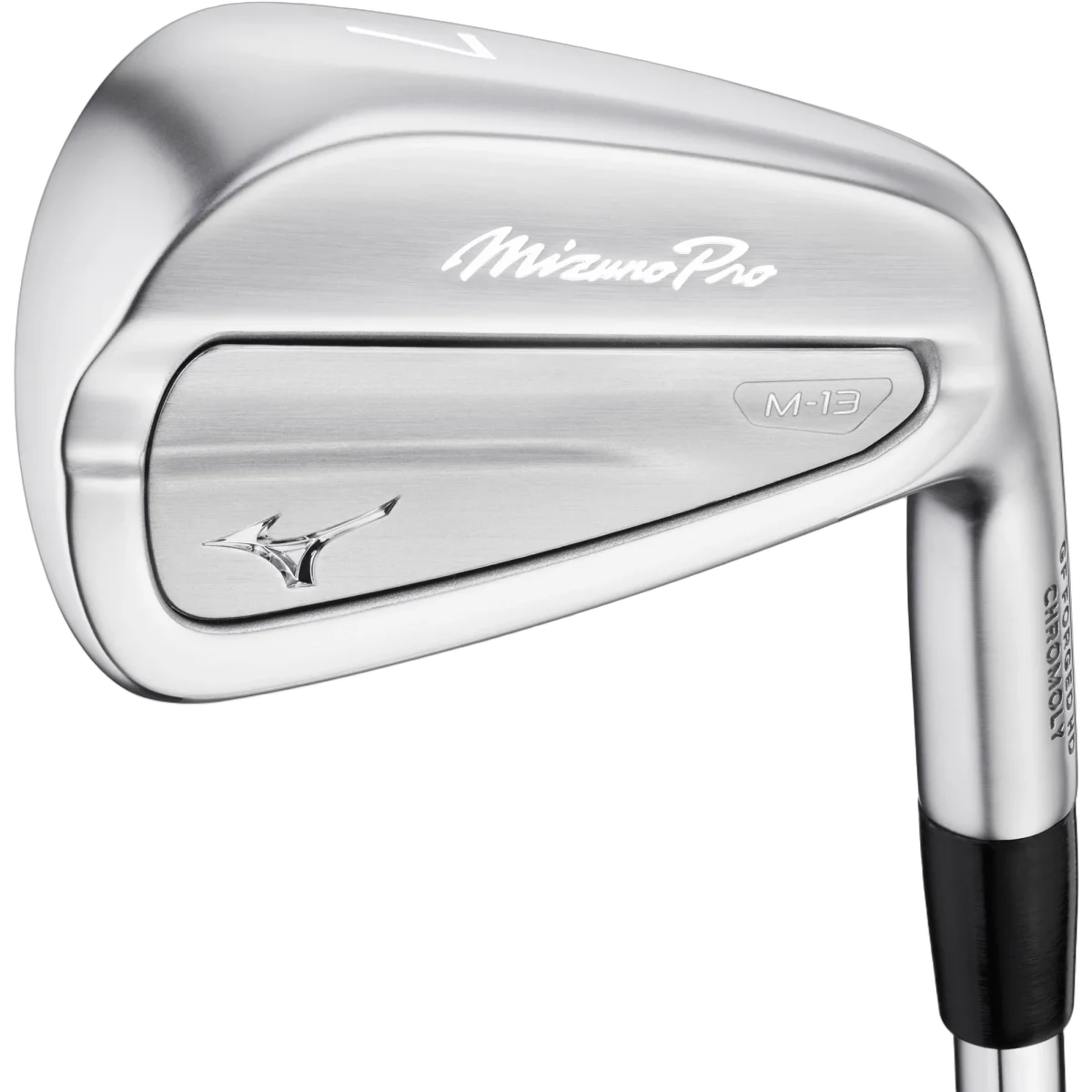
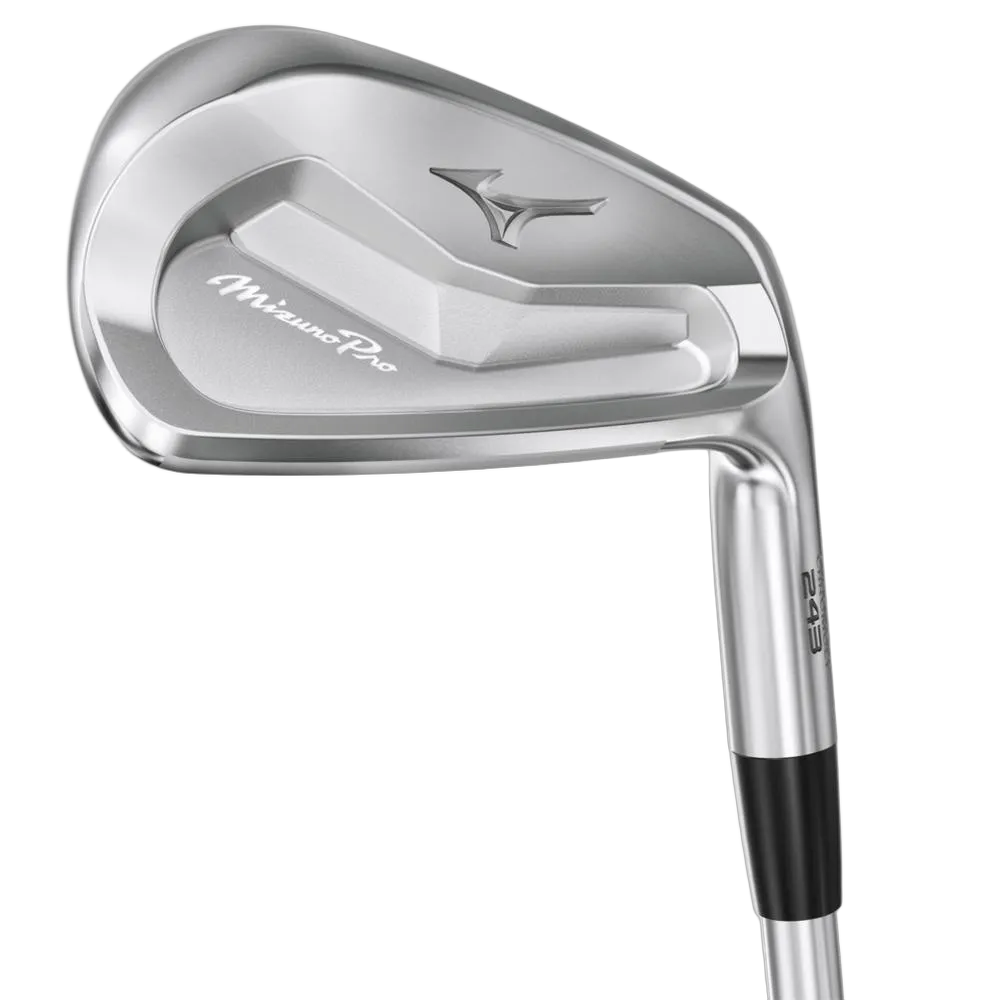
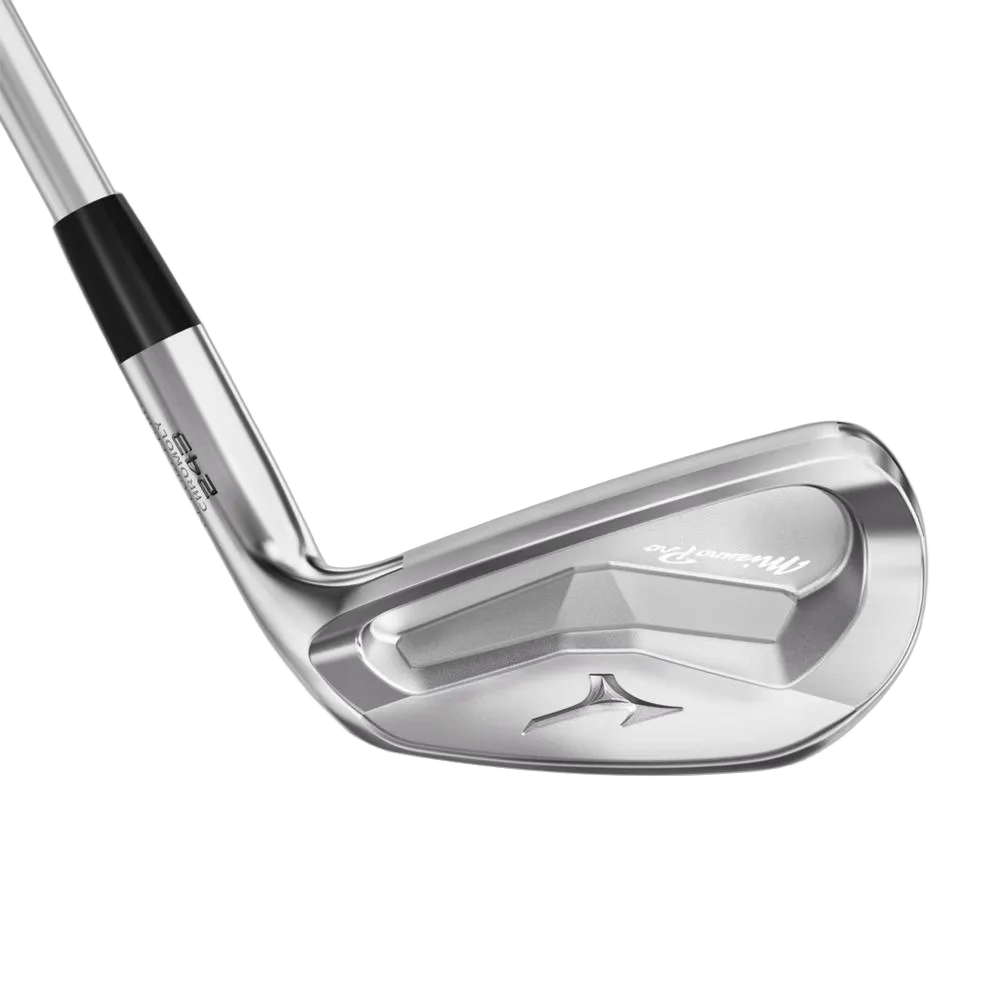
Back view with Mizuno Pro branding and cavity design
Shot shaping is intuitive and responsive. The 243 doesn't fight you when you want to move the ball, and it doesn't add curvature you didn't ask for on straight swings. That predictability is what separates a well-designed players' iron from the rest of the pack.
MSRP: $1,400 (steel shafts)
Verdict
The Mizuno Pro 243 is a players' cavity that gets the balance right. It delivers Mizuno's signature forged feel, packs genuine distance and forgiveness into a compact head, and looks the part at address. The micro-slot technology adds meaningful ball speed retention on off-center hits without compromising the aesthetics or the feedback that better players demand.
The weaknesses are minor. At $1,400 MSRP with steel shafts, it's a premium price point — though not out of line with the competition. And if you're coming from Mizuno's softest muscle-backs, you may notice a slightly firmer note at impact. Neither of these is a dealbreaker for the target player.
If you're a mid-to-low handicapper who wants a compact, beautiful iron that performs beyond its visual profile, the 243 belongs on your fitting shortlist. It goes up against the best in the category and holds its own.