Mizuno Pro M-15 Irons
Mizuno — Mizuno Pro M-15 Irons · By Troy · Dec 19, 2025
A hollow-body iron that looks like a blade, performs like a rocket, and still feels like a Mizuno. The M-15 is the most approachable Pro iron the brand has ever made.
The Big Picture
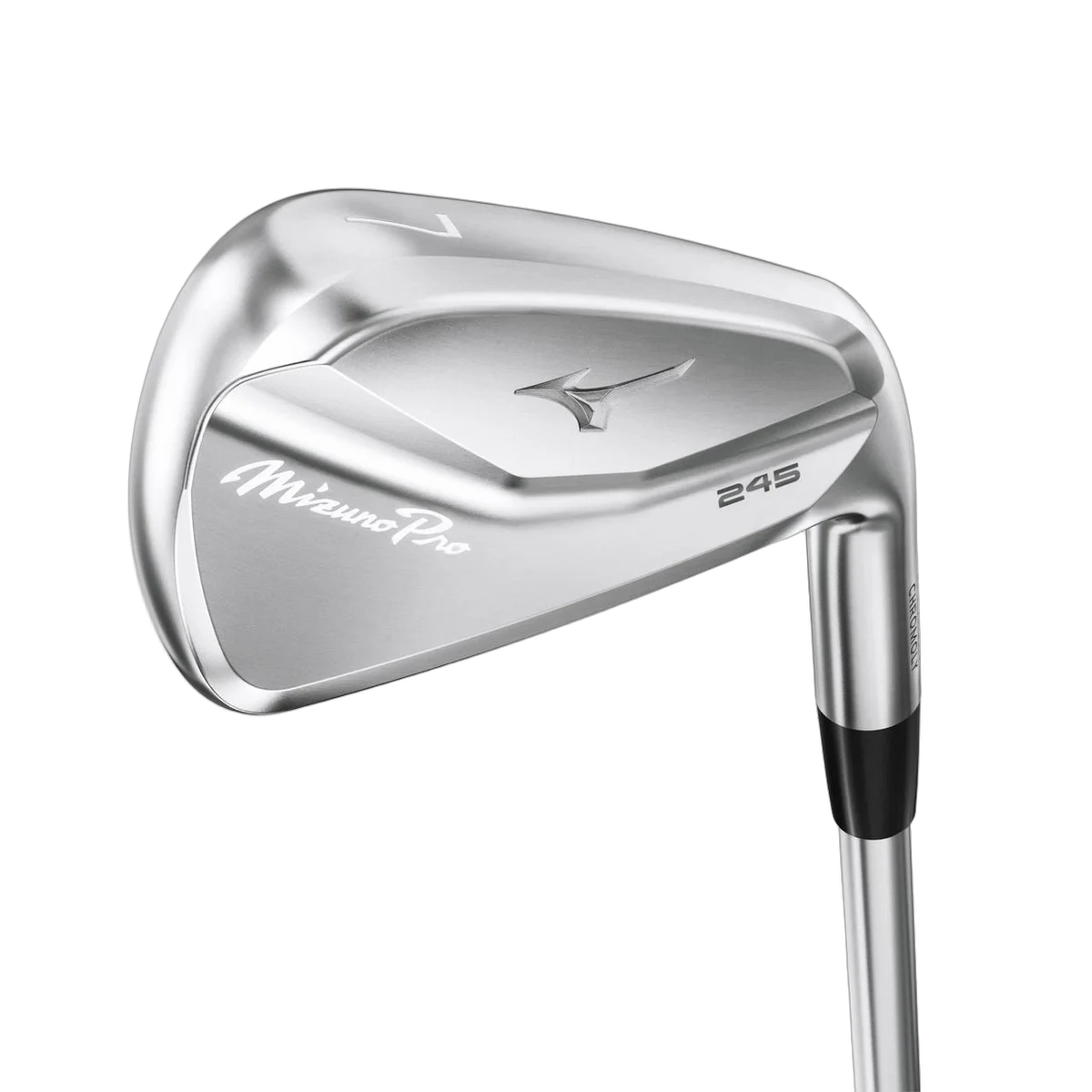
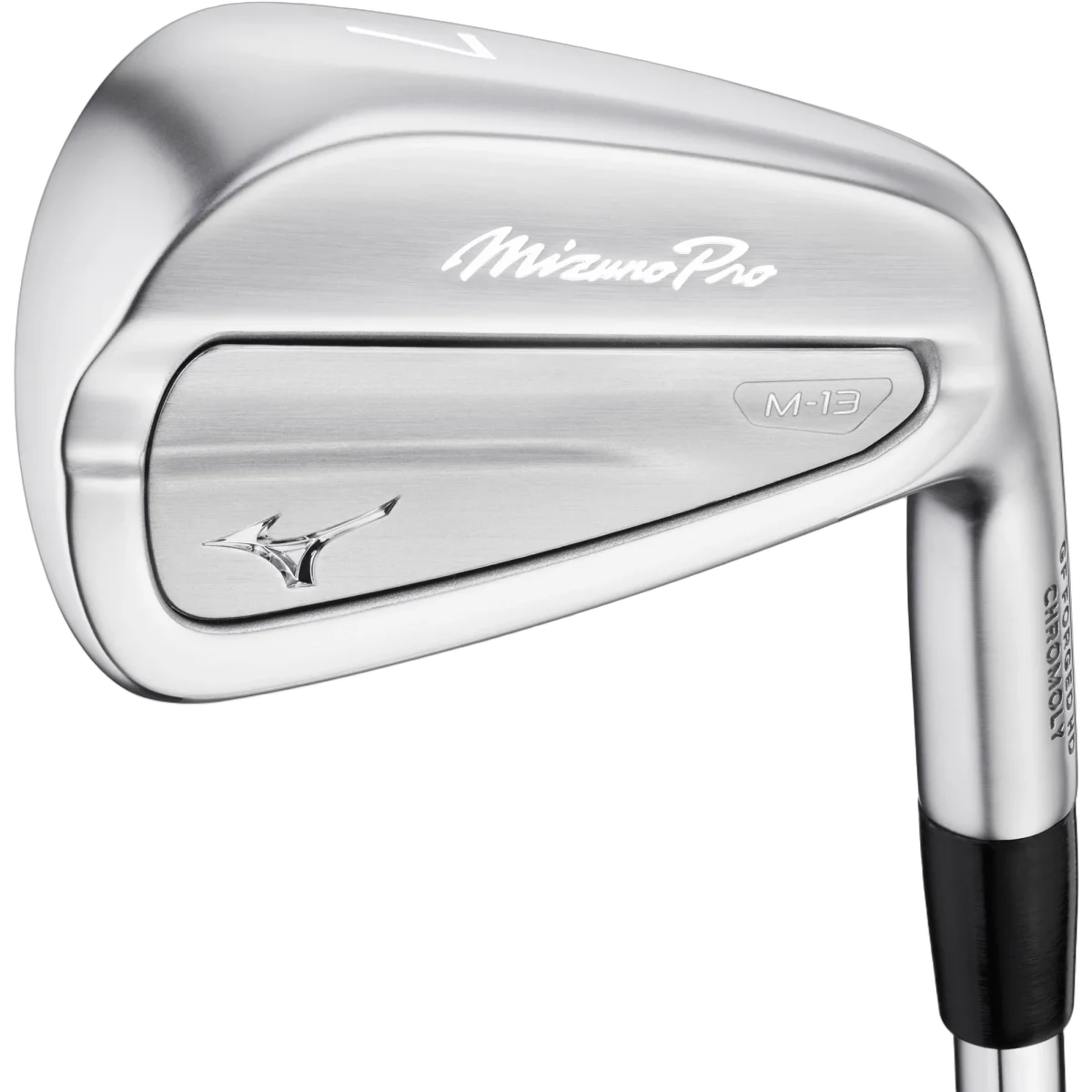
The Mizuno Pro M-15 succeeds the Pro 245 as the most forgiving, longest-hitting iron in the Pro lineup, now sitting within Mizuno's new "Modern Series" alongside the M-13 cavity-back. Where the M-13 targets feel-first players willing to give up some distance for that blade-like feedback, the M-15 is built for golfers who want Mizuno Pro aesthetics with genuine players-distance performance, think TaylorMade P770/P790 territory, but with the forging heritage and visual restraint that only Mizuno delivers.
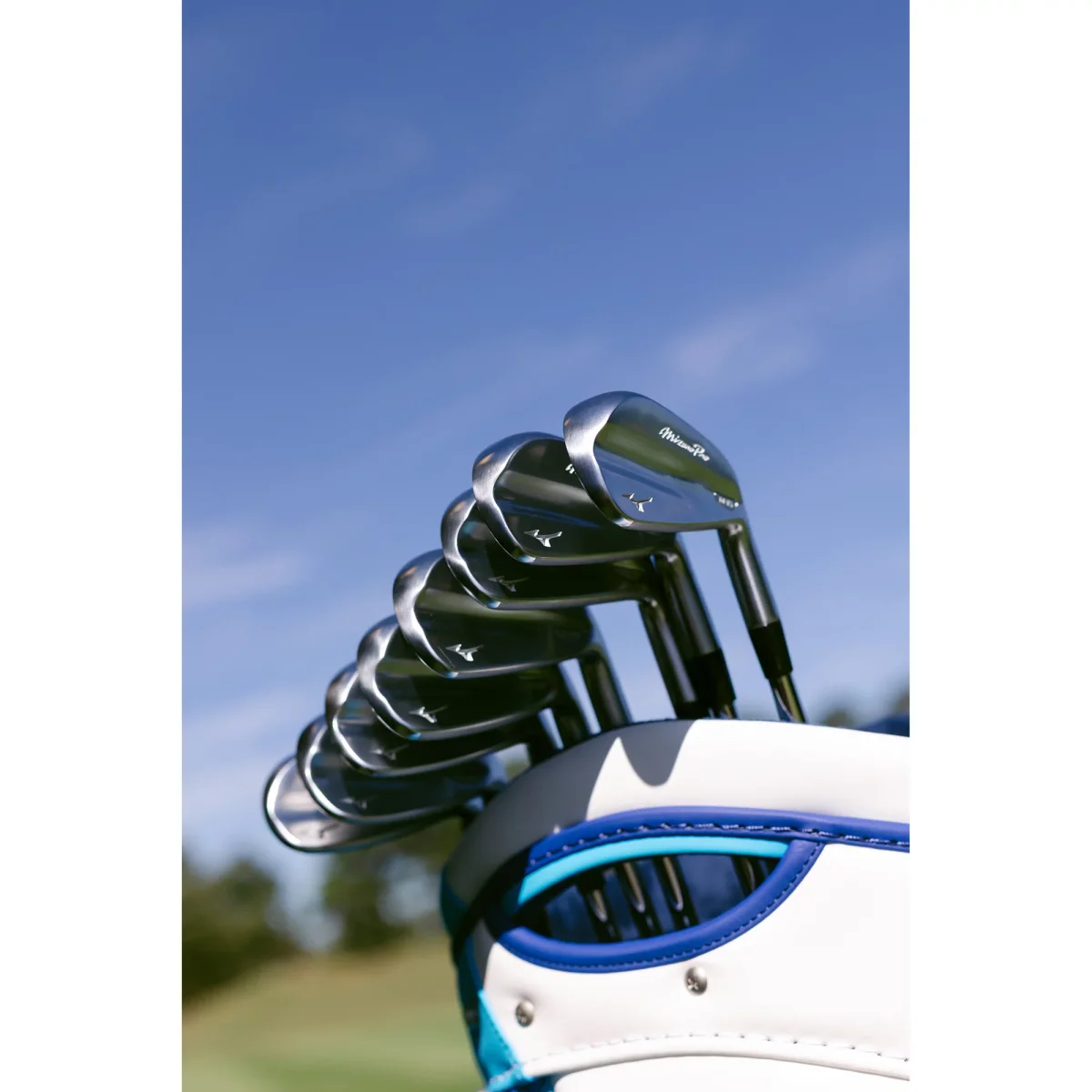
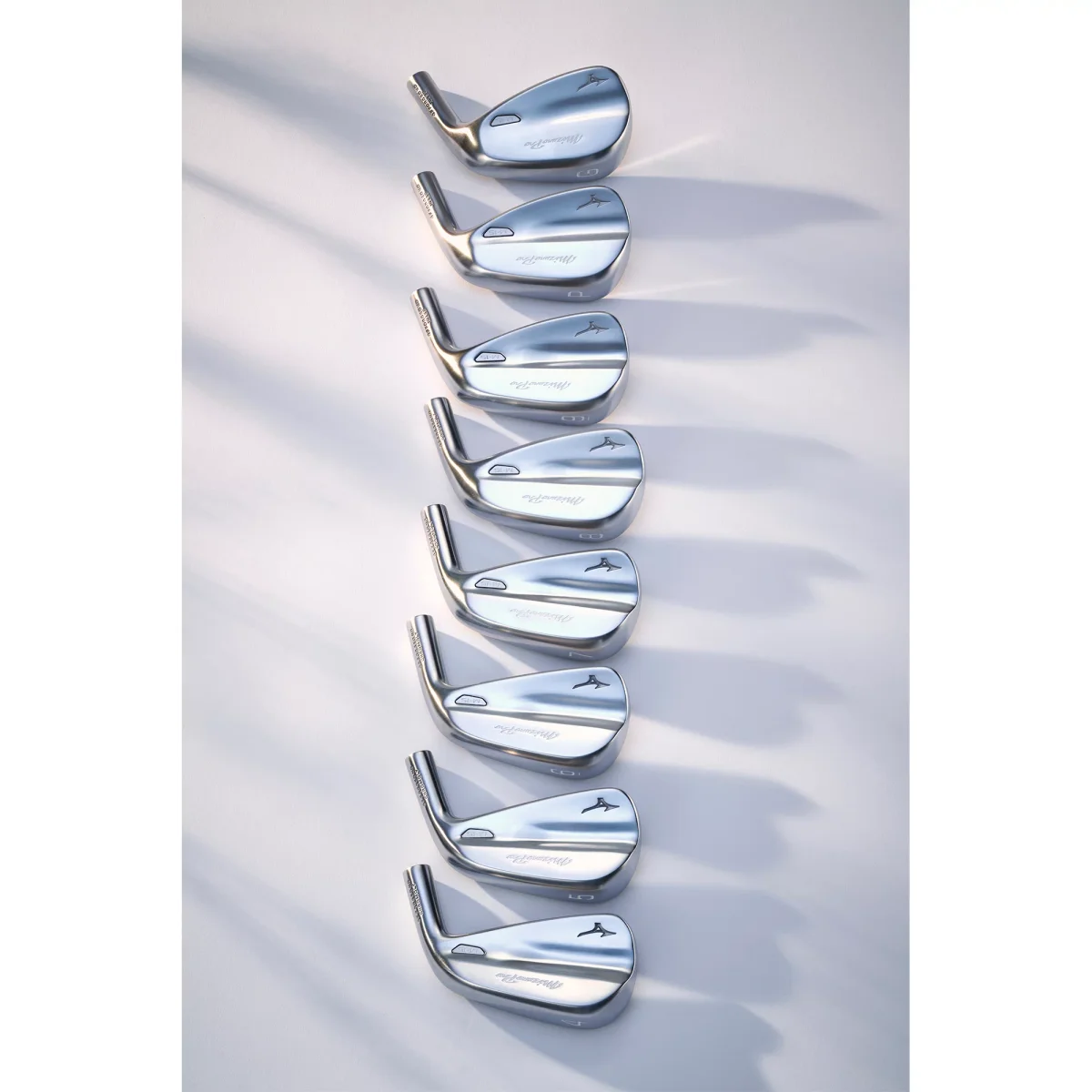
The construction is split into two tiers rather than the M-13's three. The 4 through 8-iron use a multi-material hollow-body design: Grain Flow Forged HD 4135+ Chromoly face and neck paired with a 431 stainless steel back piece, featuring the Contour Ellipse CORAREA face (variable thickness for wider ball-speed consistency) and substantial tungsten weighting, approximately 51 grams in the long irons, 50.3 grams in the mid-irons, strategically suspended within the head to lower CG and boost launch without adding visual bulk. The 9-iron through gap wedge transition to a partial-hollow construction using 1025E carbon steel body with a 17-4 stainless steel back piece, prioritizing spin control and feel where scoring matters.
Every iron gets the copper underlay, Harmonic Impact Technology, refined sole geometry with added bounce, and a nickel chrome satin finish. The 7-iron sits at 29 degrees, three degrees stronger than the M-13's 32, which is important context for the distance numbers that follow.
At Address
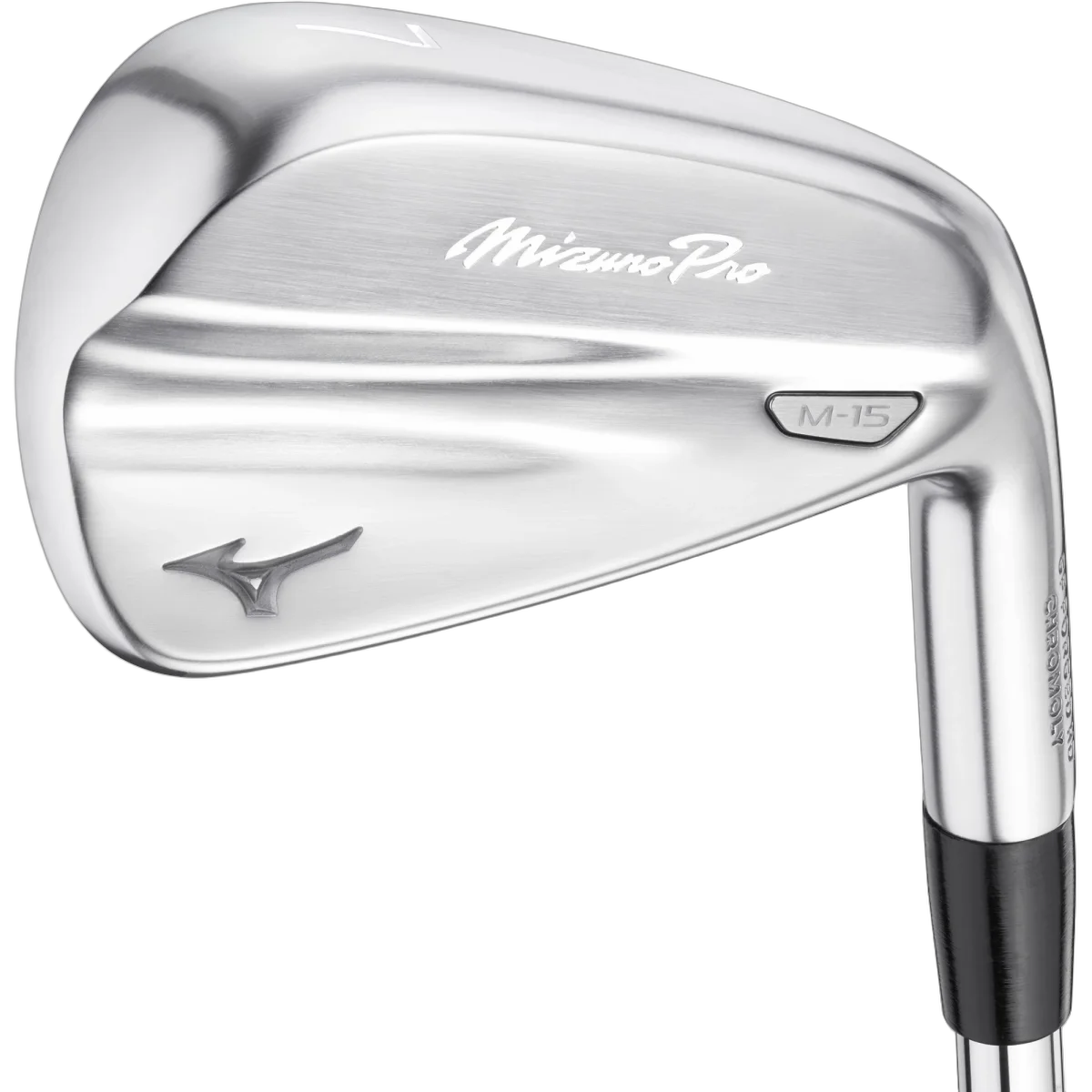
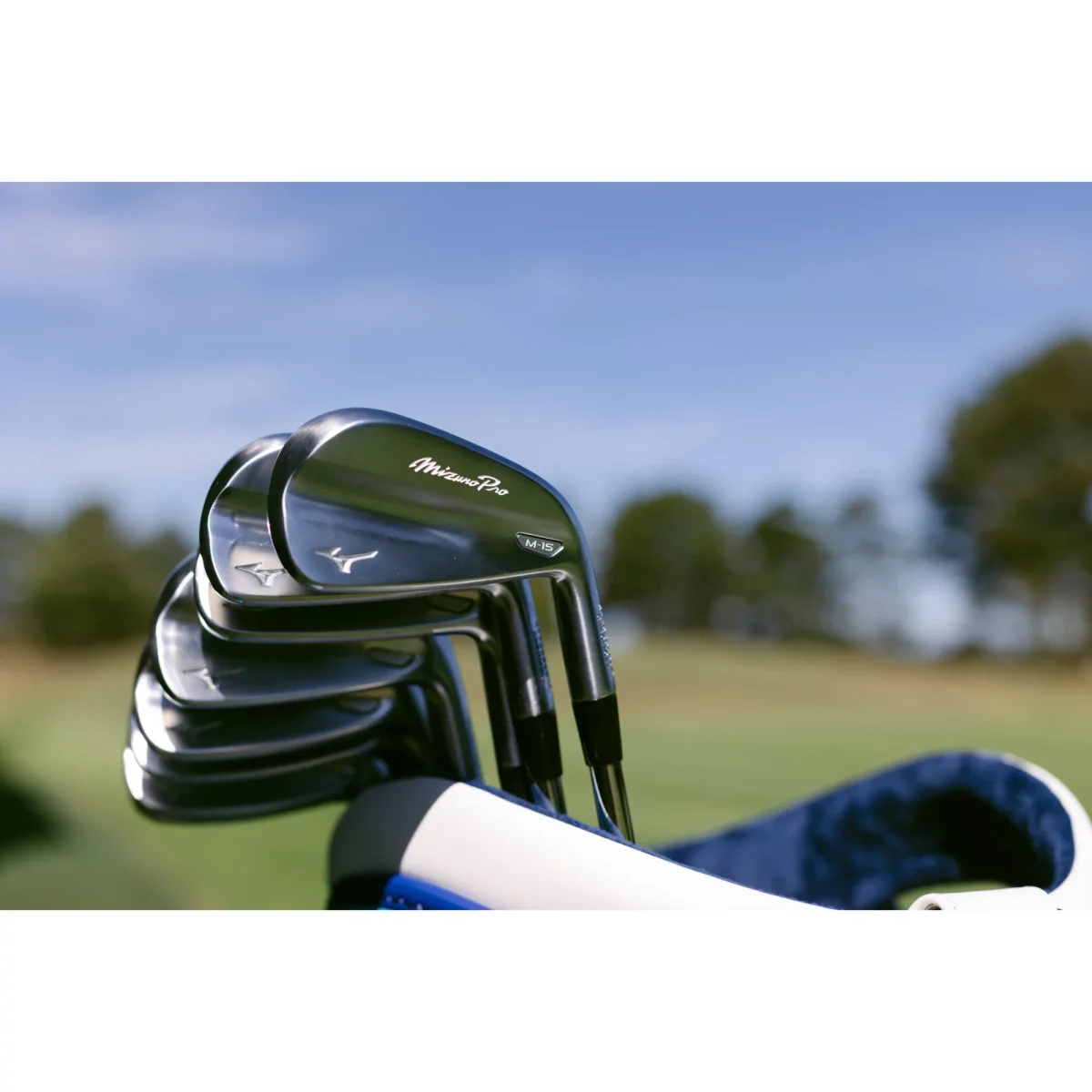
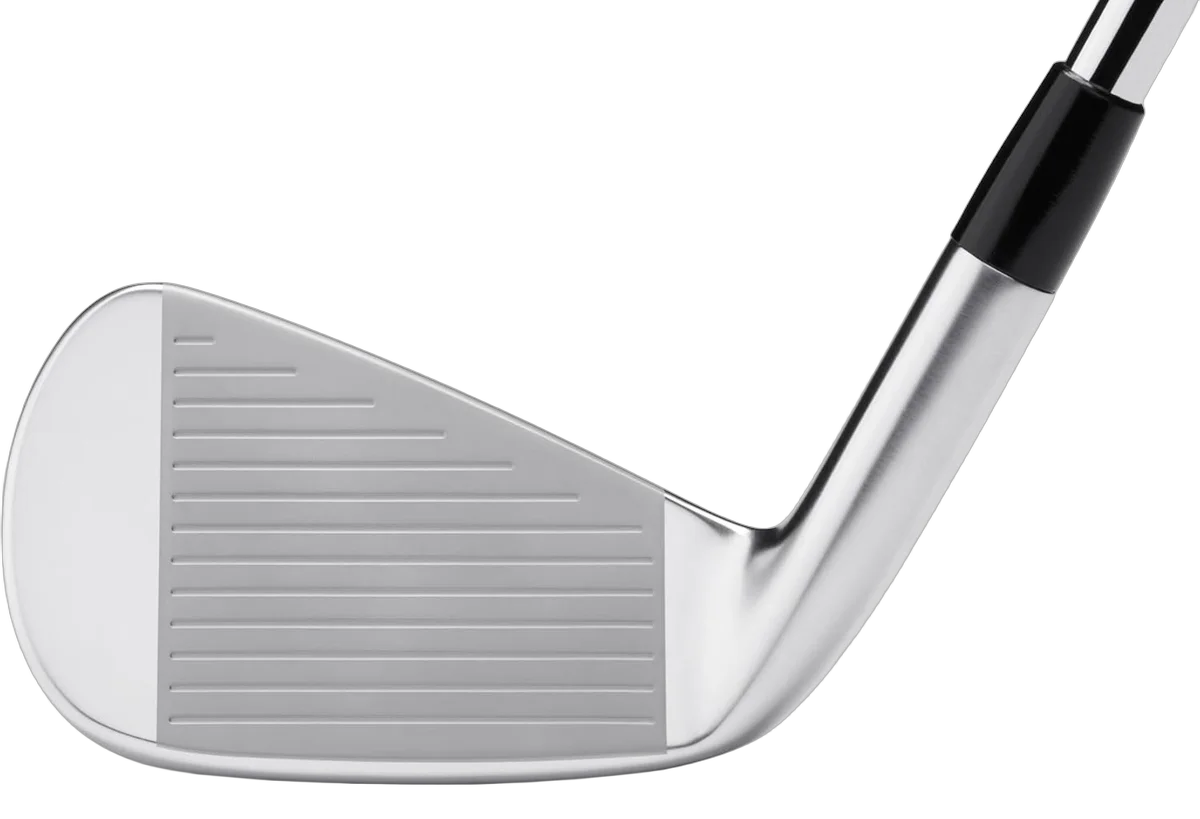
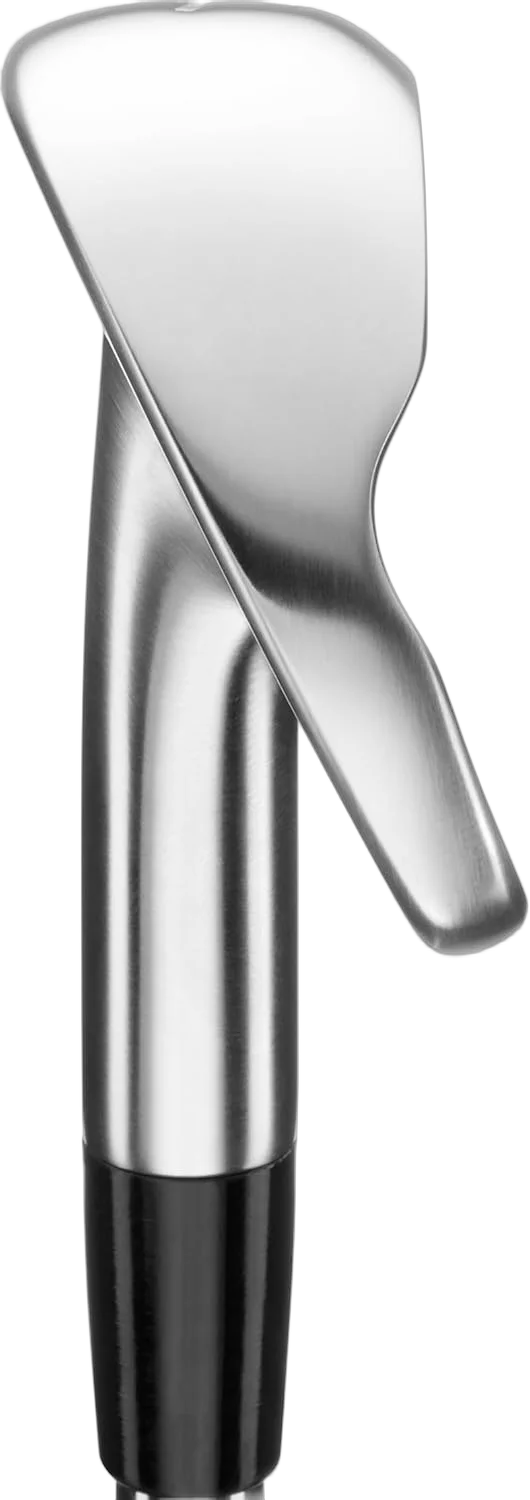
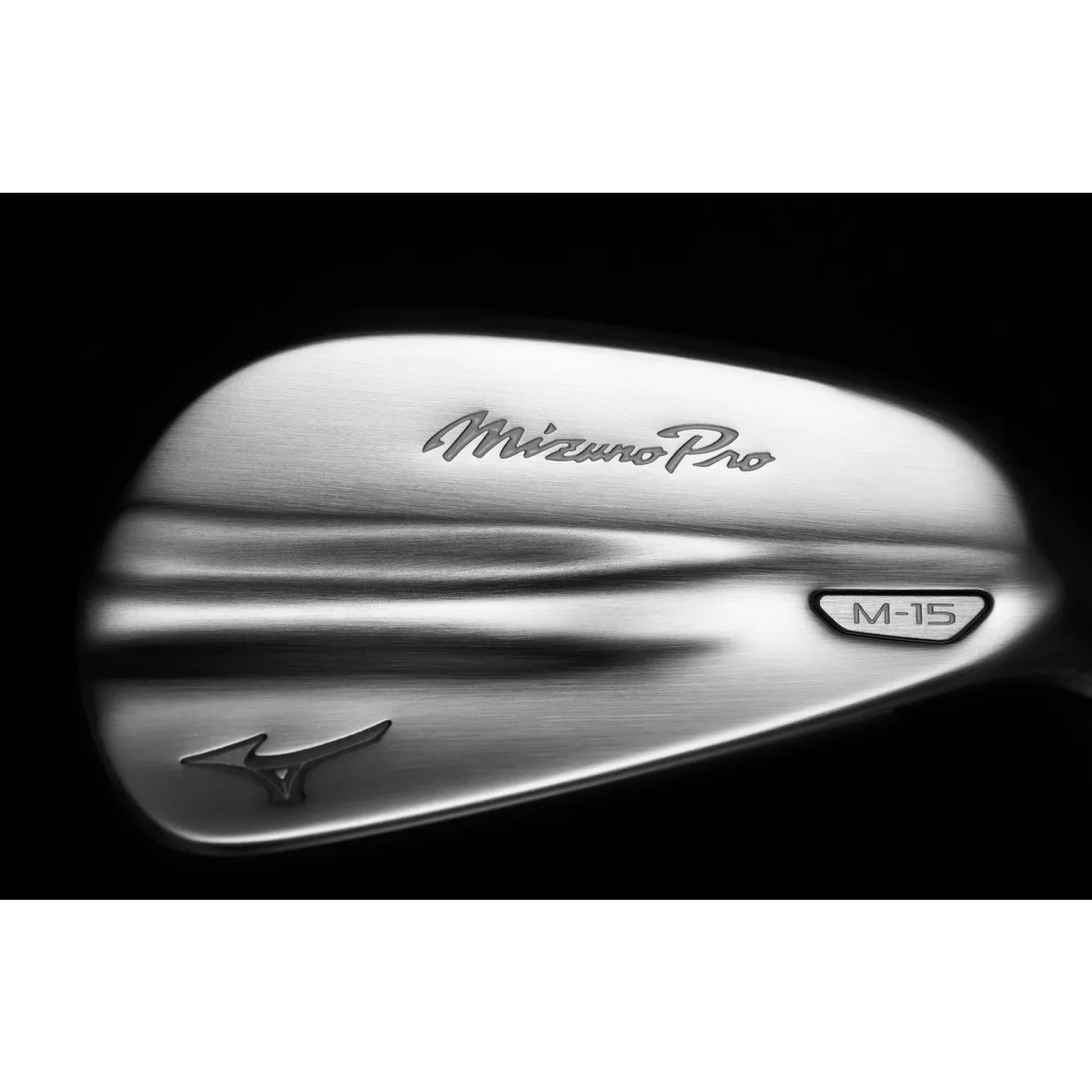
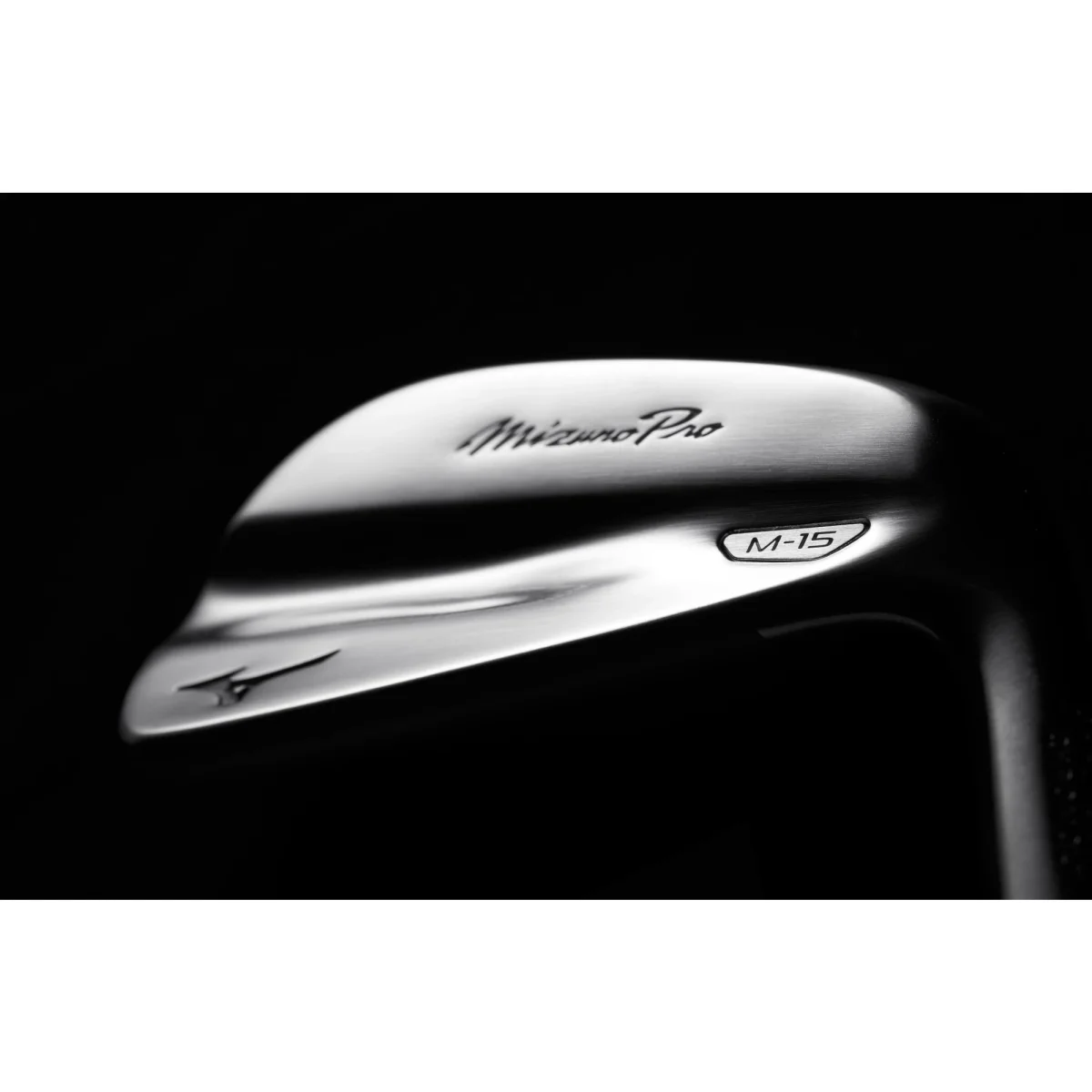
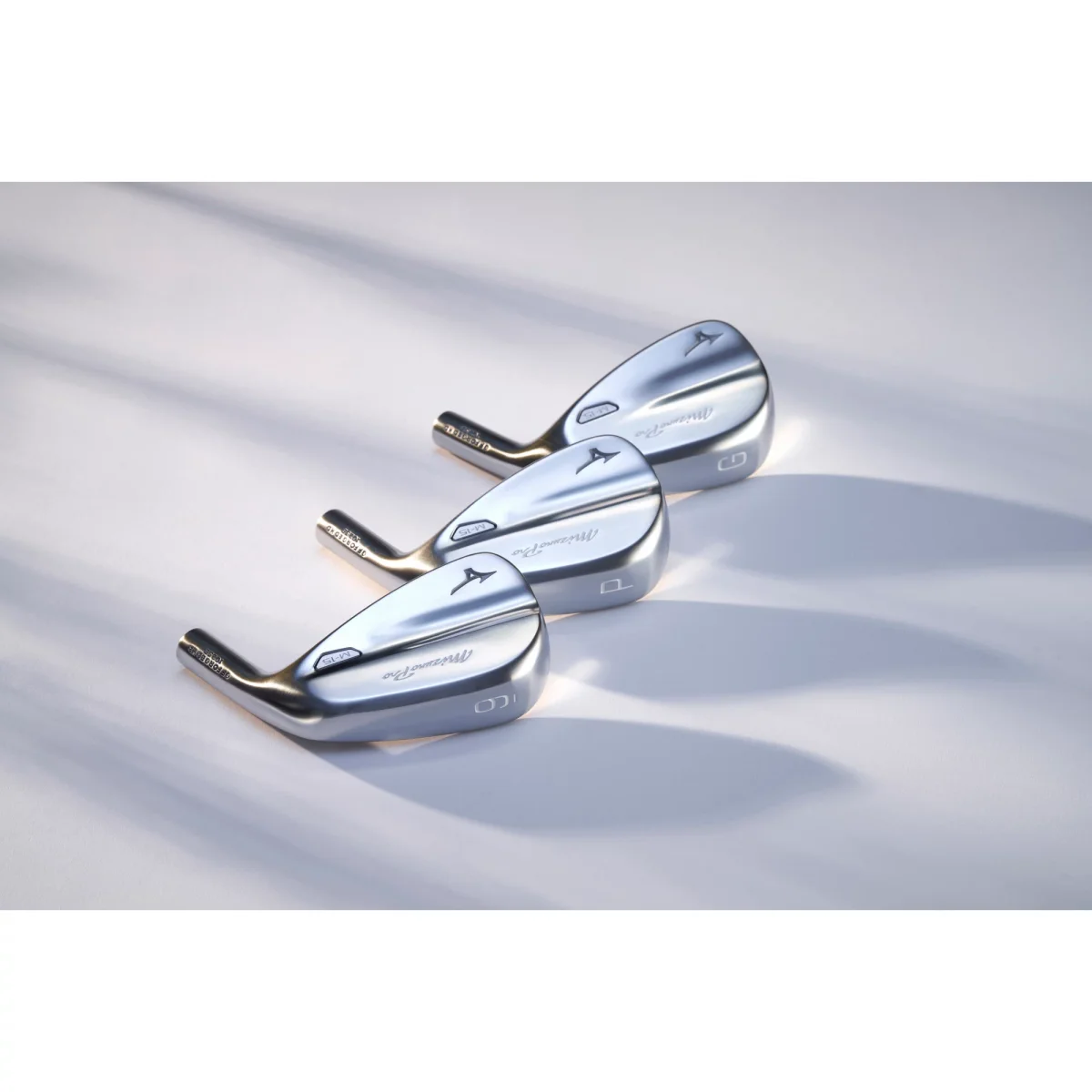
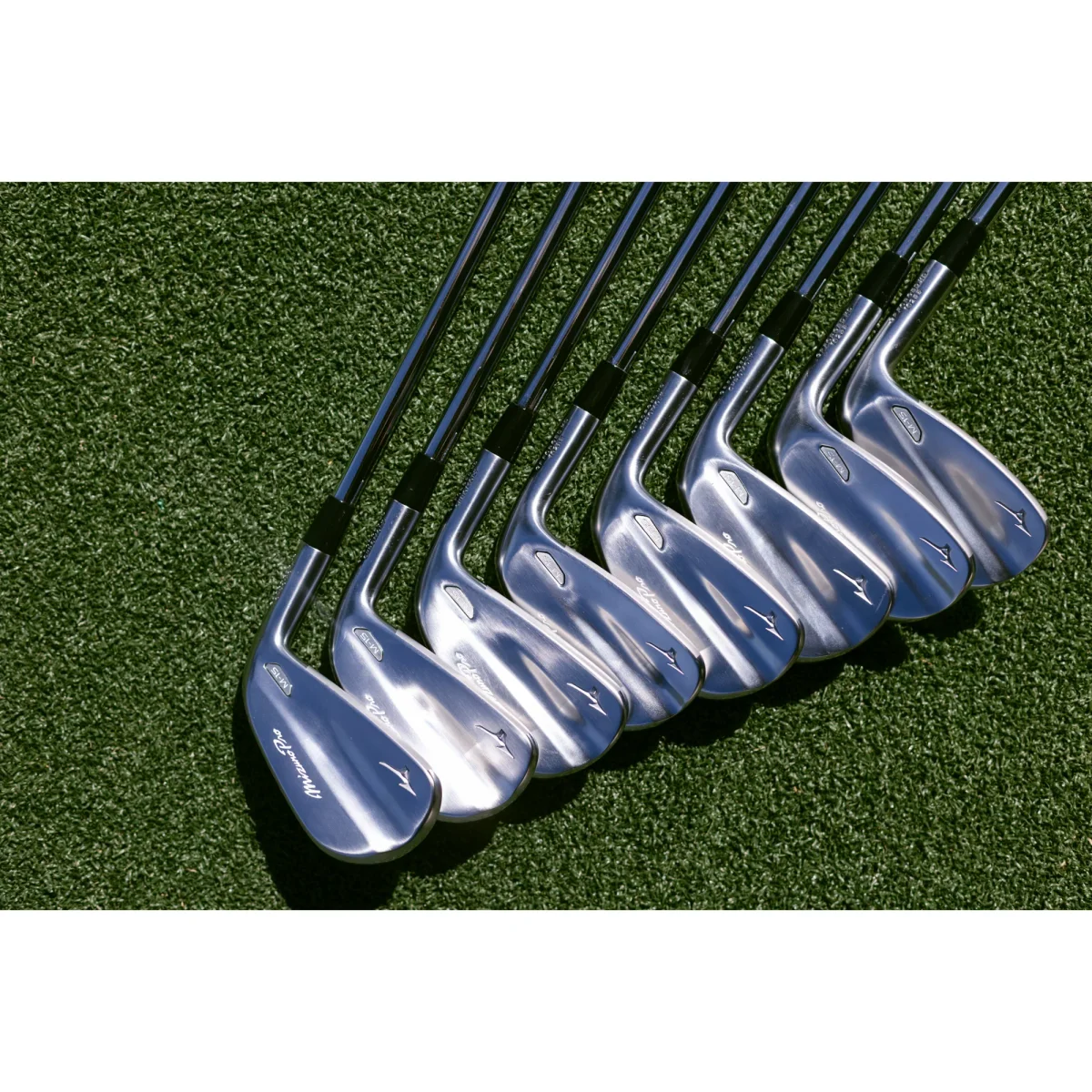
The M-15 pulls off a genuinely impressive visual trick: it looks like a blade from the bag, but reveals just enough substance at address to inspire confidence. The slightly thicker top line compared to the M-13 is noticeable if you set them side by side, but in isolation it reads as a compact players iron, not a chunky distance club. The muscleback-inspired rear design is especially smart, with subtle M-15 branding on the heel that's exactly how badge placement should be done.
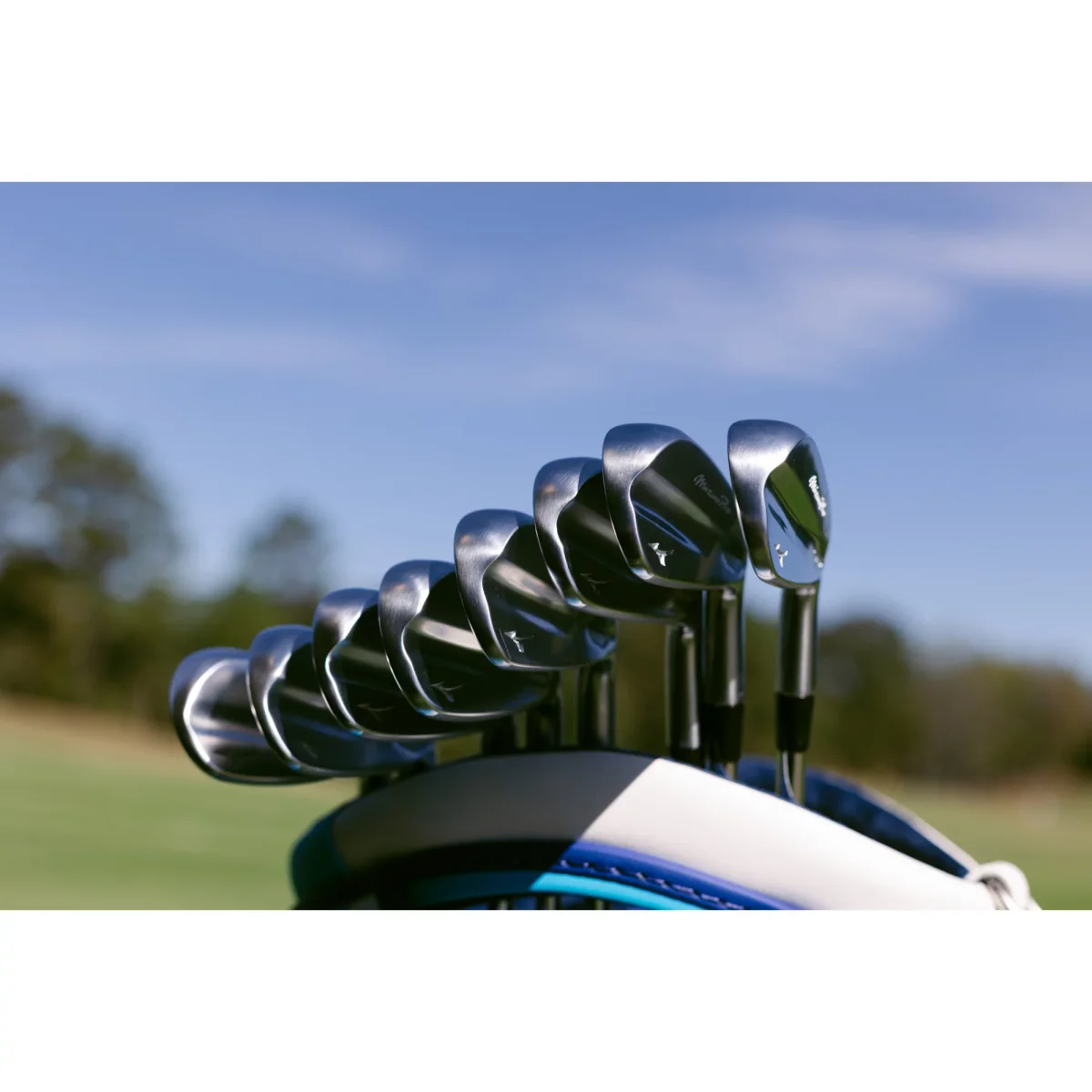
Toe-down profile view showing thin topline and compact head shape
Minimal offset throughout the set means better players won't feel like they've stepped down a category. The matte face against the shinier chrome toe and heel creates a lovely framing effect at address, the ball sits in a defined hitting zone that builds trust. The sole isn't particularly wide for a hollow-body, which contributes to the players-iron illusion but may give less turf forgiveness than competitors with broader soles.
One fitting expert's reaction captured it perfectly: he initially thought the M-15 was the blade and the M-13 was the cavity-back, based purely on how the M-15 looked from address. When you're hiding hollow-body construction that effectively, you've done something special.
Where the M-13 and M-15 diverge visually is in the longer irons. The 4 and 5-iron reveal more material behind the ball, and the top line thickens enough that blade purists may notice. If you really want the thinnest possible profile throughout, the M-13 is the cleaner choice. But for most golfers, the M-15 presents a profile that conceals its forgiveness remarkably well.
Sound & Feel
This is where the M-15 lives in the M-13's shadow, and where you need to decide what matters most to you.
Pure strikes feel crisp, responsive, and unmistakably Mizuno. The Grain Flow Forging process delivers that continuous-grain feedback from neck to face, and the copper underlay smooths the vibration profile into something genuinely premium. On a centered hit, you know immediately, it's buttery, solid, and deeply satisfying. Multiple testers described the feel as "sensational" and "peak Mizuno," and I don't disagree.
But the hollow-body construction introduces a character shift from the M-13 that's impossible to ignore when hitting them back to back. The M-15 feels springier, more powerful, with a subtle click off the face that one tester likened to the TaylorMade P770/P790 family. It's not harsh, it's genuinely excellent for a hollow-body iron, but it's a different sensation than the dead-soft thud of the M-13's cavity-back construction. If you've never hit the two side by side, you'll think the M-15 feels fantastic. If you hit the M-13 first, you may find the M-15 slightly flat by comparison.
Mishit feedback is honestly handled. You know when you've caught it off-center, but the punishment is proportional rather than brutal, a slight sting and directional information without the hand-jarring vibration that pure blades deliver on thin strikes. The scoring irons, built from 1025E steel in a partial-hollow construction, deliver the softest feel in the set and provide genuine precision feedback for approach shots.
Performance
Ball Speed & Distance
The M-15 is fast. Genuinely, "wait, that can't be right" fast.
Ball speeds consistently reached 122-127 mph with the 7-iron across multiple testers and launch monitors. One fitting session averaged 123.2 mph with a 1.42 smash factor, numbers that had the fitter calling it potentially the best iron performance he'd tested in years. Another tester recorded 117.8 mph average on Trackman with a 1.42 smash, noting it was the fastest 7-iron he could recall testing. The Contour Ellipse face and hollow-body construction are generating real speed, and the ball-speed consistency across the face is impressive: mishits didn't see dramatic speed dropoffs.
Carry distances reflected that speed. Average carries ranged from 173 to 182 yards with the 7-iron depending on the tester, with individual shots reaching 184-187 yards. One tester who averages 160 yards with a typical 7-iron carried the M-15 173 yards, a full club longer, attributable partly to the stronger loft but partly to genuine ball-speed gains.
That loft context matters. At 29 degrees, the M-15's 7-iron is three degrees stronger than the M-13's 32-degree 7-iron. The head-to-head data tells the real story: the M-15 carried approximately 4-6 yards farther than the M-13 despite producing nearly identical ball speeds. The distance gap is driven primarily by lower spin from the stronger loft, not dramatically more ball speed. The M-15 is a fast iron, but it's not magic, it's a 29-degree club carrying 29-degree distances.
Launch & Spin
Launch is effortless, particularly in the long and mid-irons. The 51 grams of tungsten in the 4-7 irons produces the high, strong flights that compact heads typically struggle to deliver. Multiple testers commented on the combination of height and forward penetration, the ball gets up without ballooning, cutting through the air with authority.
Spin is the M-15's most polarizing characteristic. The 7-iron averaged 4,700-5,000 RPM across testing, noticeably lower than the M-13's 5,400-5,800 range. One tester saw a high of only 5,000 RPM across nine shots, with lows dipping to 4,449. For context, most fitters want to see 6,000-6,500 RPM from a 7-iron for reliable green-holding. The M-15 will carry and roll, and on firm greens, stopping the ball may require adjusting your approach strategy.
This echoes the Pro 245's spin concerns we documented in that review, though the M-15 isn't quite as extreme, sub-4,000 RPM readings that plagued the 245's 5-iron didn't appear in M-15 testing. The tungsten weighting is helping maintain launch angles even as spin drops, preventing the distance-bunching problem that limited the 245's long-iron performance.
The scoring irons (9-GW), with their partial-hollow 1025E construction and higher CG position, produce noticeably more spin and stopping power. The transition from hollow-body to partial-hollow creates a spin step-up that helps distance control where it matters most.
Dispersion & Shot Shape
Forgiveness is the M-15's strongest selling point relative to its appearance. Off-center hits leak slightly but never feel wildly offline, and distance loss on mishits is minimal. One tester nearly shanked a 7-iron and still carried it 168 yards. Another recorded a dispersion of only 5 yards left-to-right across multiple shots, remarkable for any iron, let alone one that carries to 182.
Close-up of back showing Mizuno Pro branding and M-15 badge
The tungsten weighting creates measurably straighter ball flights than the M-13. Head-to-head dispersion testing showed the M-15 producing a tighter grouping despite the M-13 being the "players" model. The M-15 wants to go straight, mishits don't curve dramatically, they just go slightly offline on a relatively straight line. For mid-handicappers who struggle with consistency, this is a significant benefit.
Workability is reduced compared to the M-13, which is the expected trade-off. You can still shape shots and flight the ball down, but the M-15 is built to straighten out your misses rather than respond to your inputs. Better players who want to work the ball both ways will find the M-13 more responsive; the M-15 rewards a repeatable swing with repeatable results.
Verdict
The Mizuno Pro M-15 is the most impressive iron Mizuno has produced for the golfer who wants Pro-level aesthetics without Pro-level demands. It looks like a blade, produces ball speeds that rival dedicated distance irons, launches effortlessly thanks to substantial tungsten weighting, and forgives mishits with a generosity its compact profile doesn't advertise.
The feel is excellent — not M-13 excellent, but comfortably at the top of the hollow-body category. The construction is sophisticated, with each section of the set purpose-built for its role. And the visual restraint is remarkable: Mizuno has hidden genuine players-distance technology inside a profile that better players will be proud to put behind the ball.
The spin question needs honest acknowledgment. At 4,700-5,000 RPM with a 7-iron, the M-15 sits below where many fitters would like to see their players, and green-holding on firm surfaces may require adjustment. Ball selection and shaft fitting become important levers — a higher-spinning shaft and premium ball can bring those numbers into a more comfortable range.
Where the M-15 gets complicated is its relationship with the M-13. GolfMagic's testing found the distance and forgiveness gap between the two surprisingly small — a matter of a few yards — while the M-13's advantages in feel, spin, and control were more pronounced. If the M-15 offered a dramatic performance leap, the feel trade-off would be easier to justify. As it stands, the M-13 may be the better value for golfers who can handle its marginally smaller profile.
But for mid-handicappers who want maximum confidence in a Mizuno Pro package, or better players who need genuine help in the long irons without sacrificing aesthetics in the scoring clubs, the M-15 delivers a combination that very few competitors can match. It's a players iron with distance — and that distinction matters.