Mizuno Pro 245 Irons
Mizuno — Mizuno Pro 245 Irons · By Troy · Jan 11, 2026
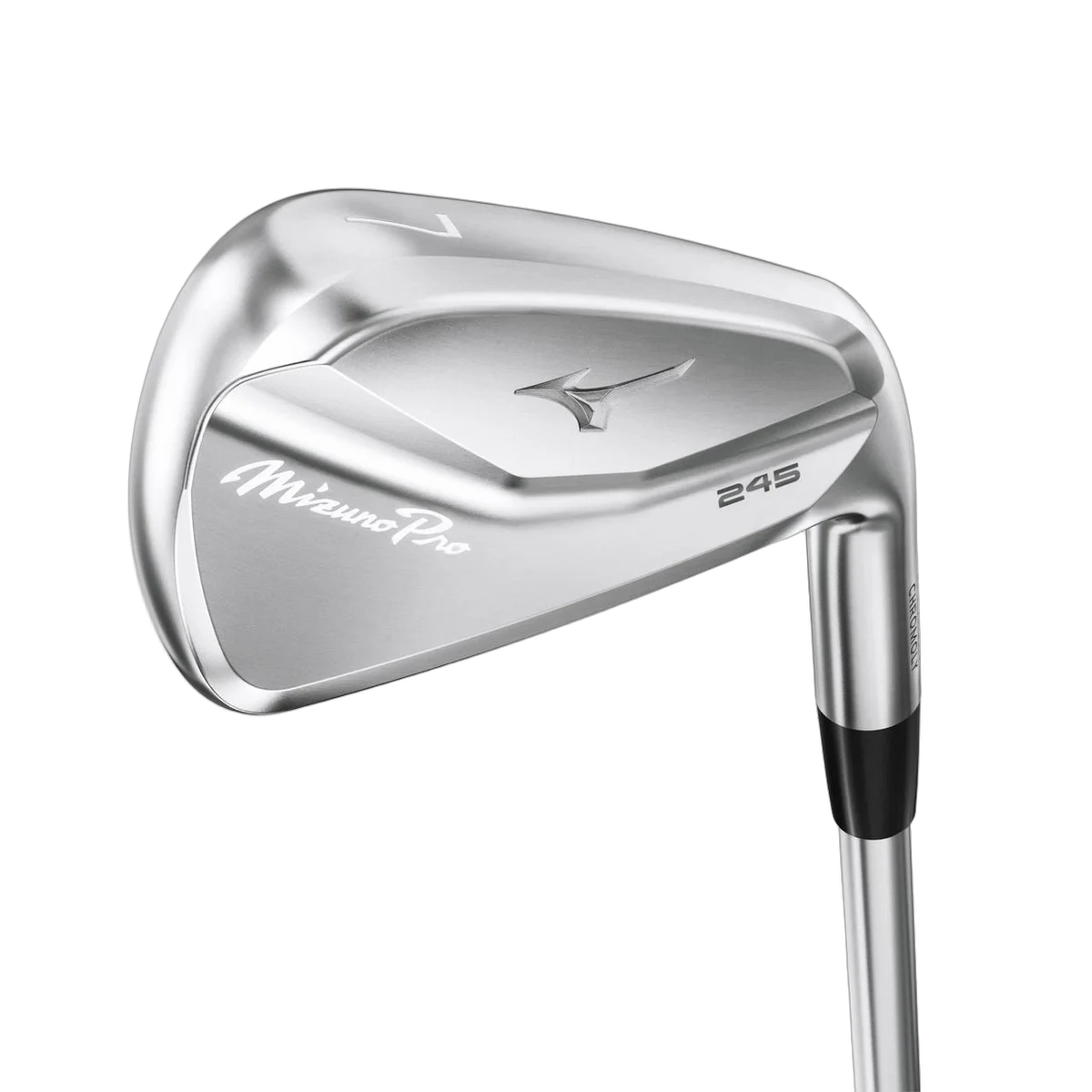
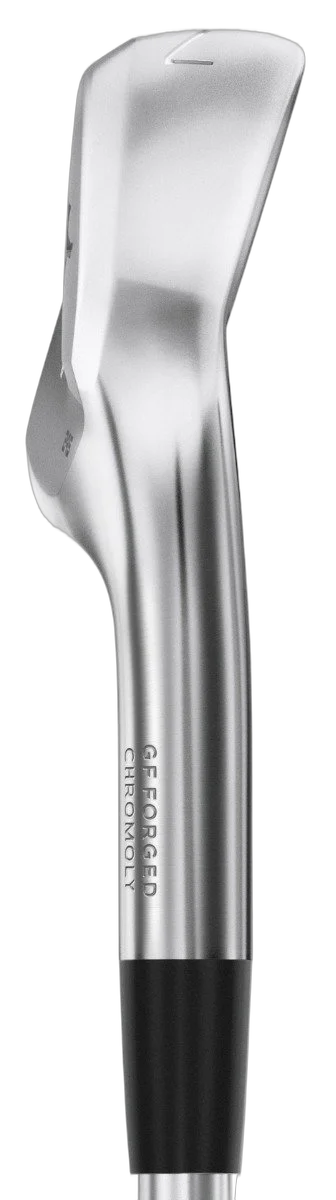
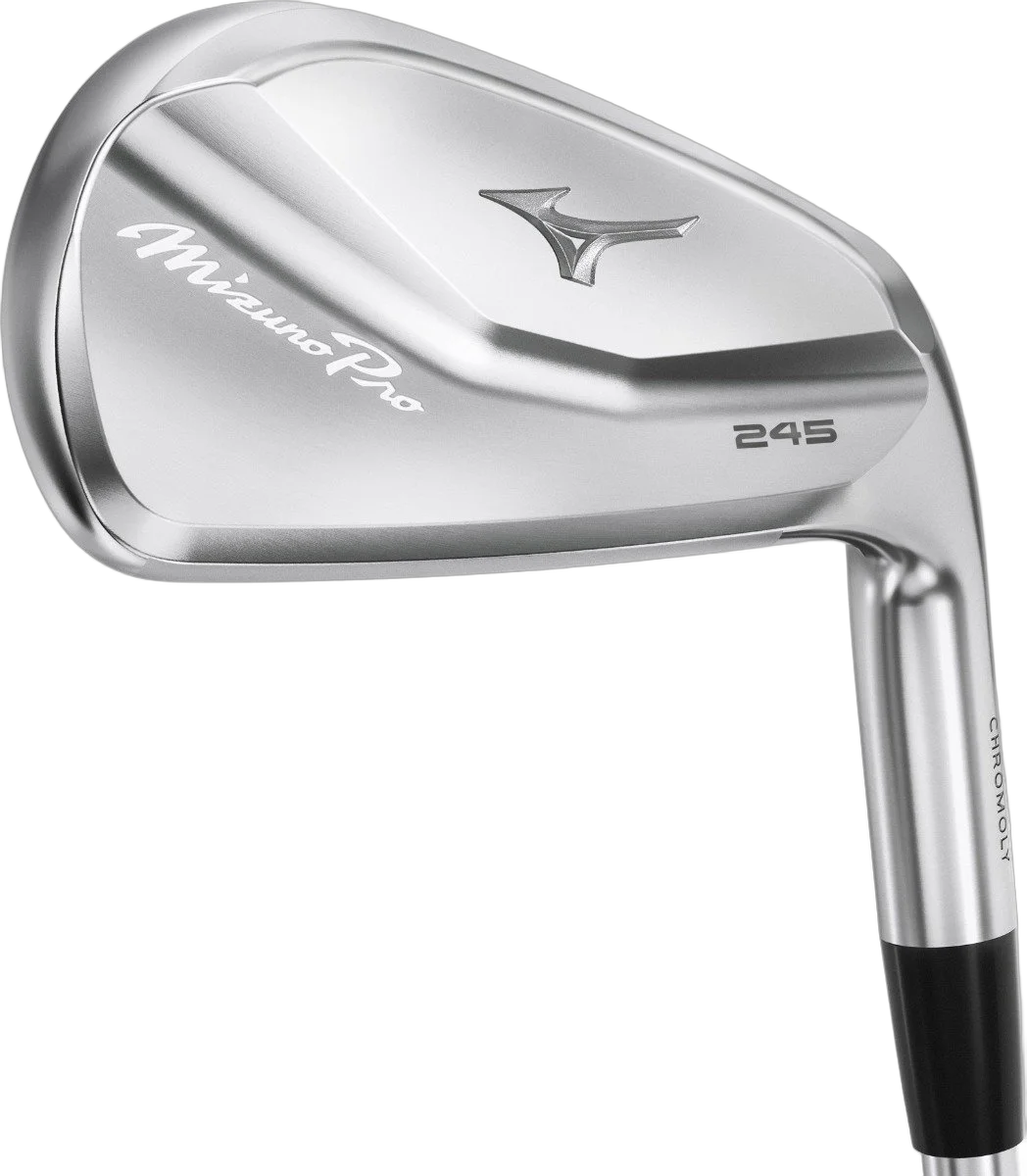
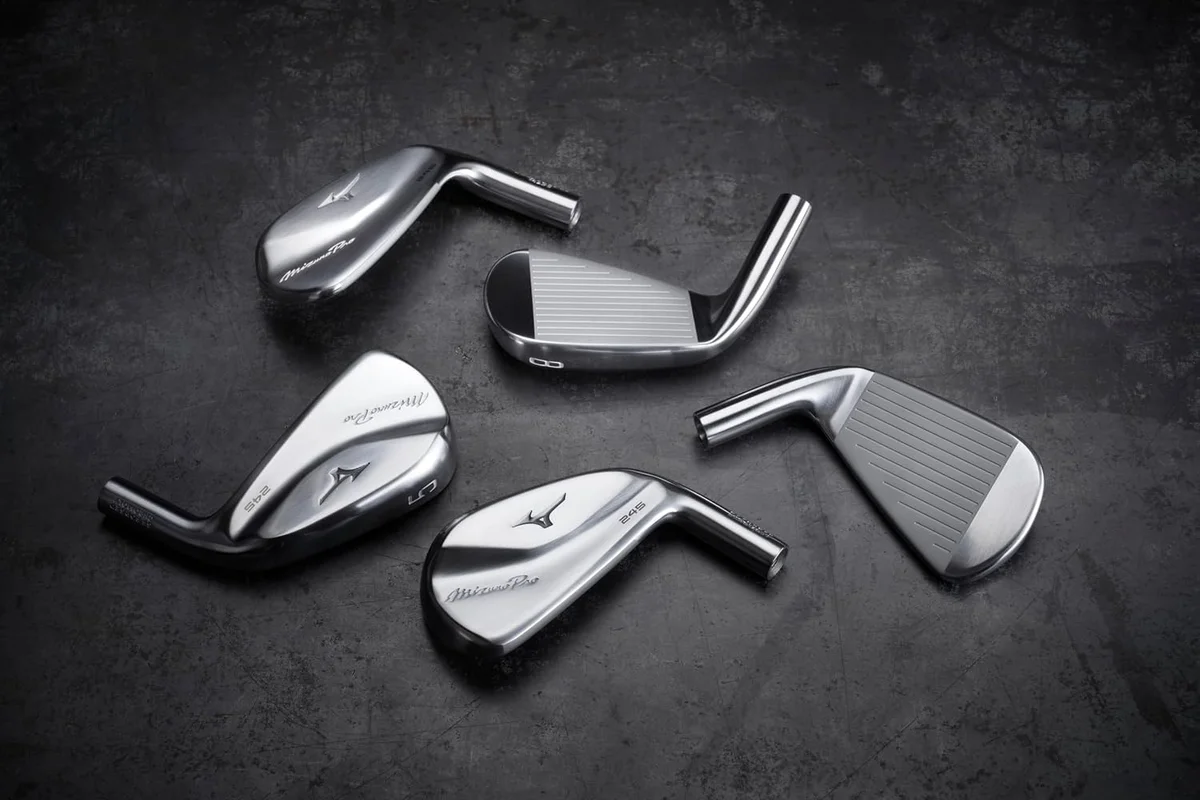
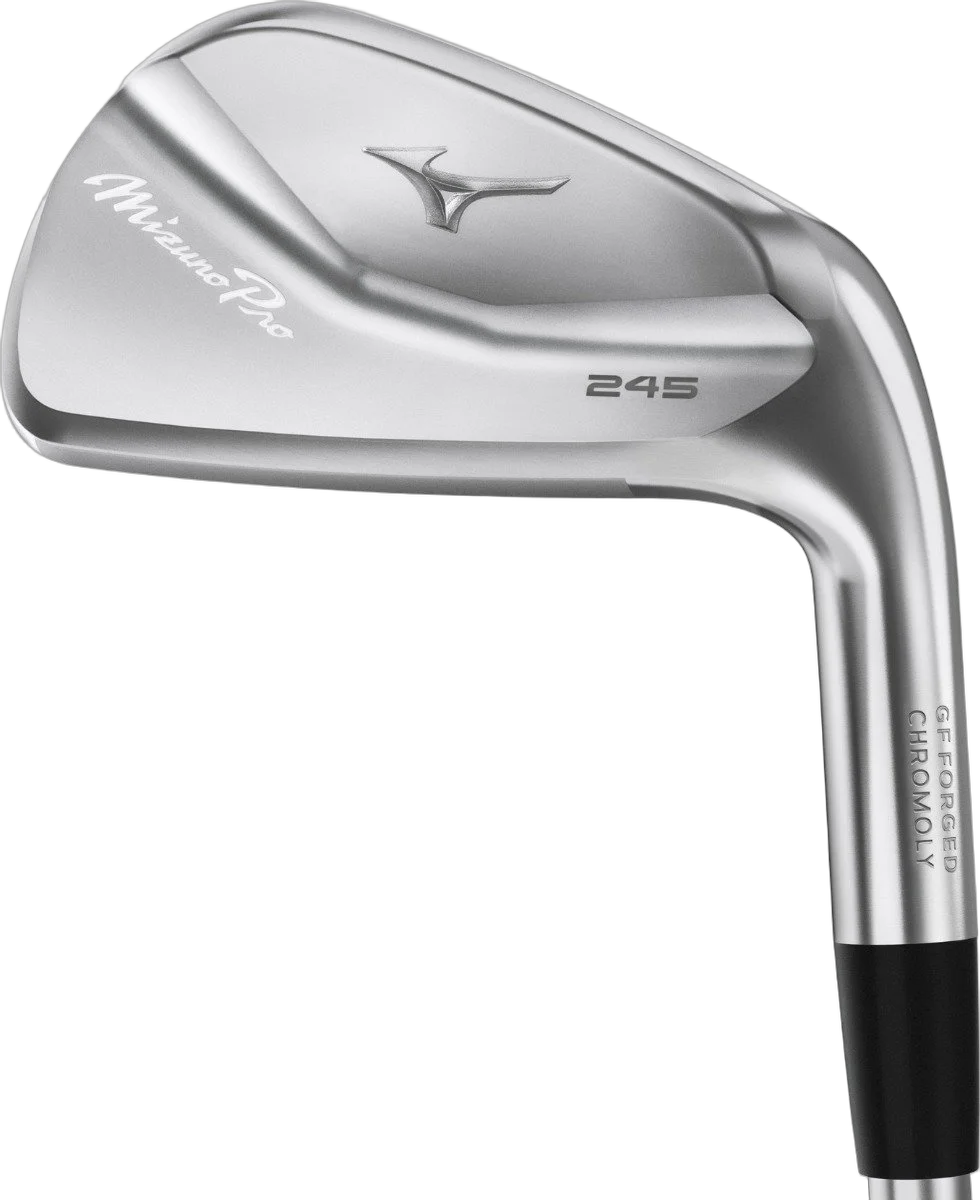
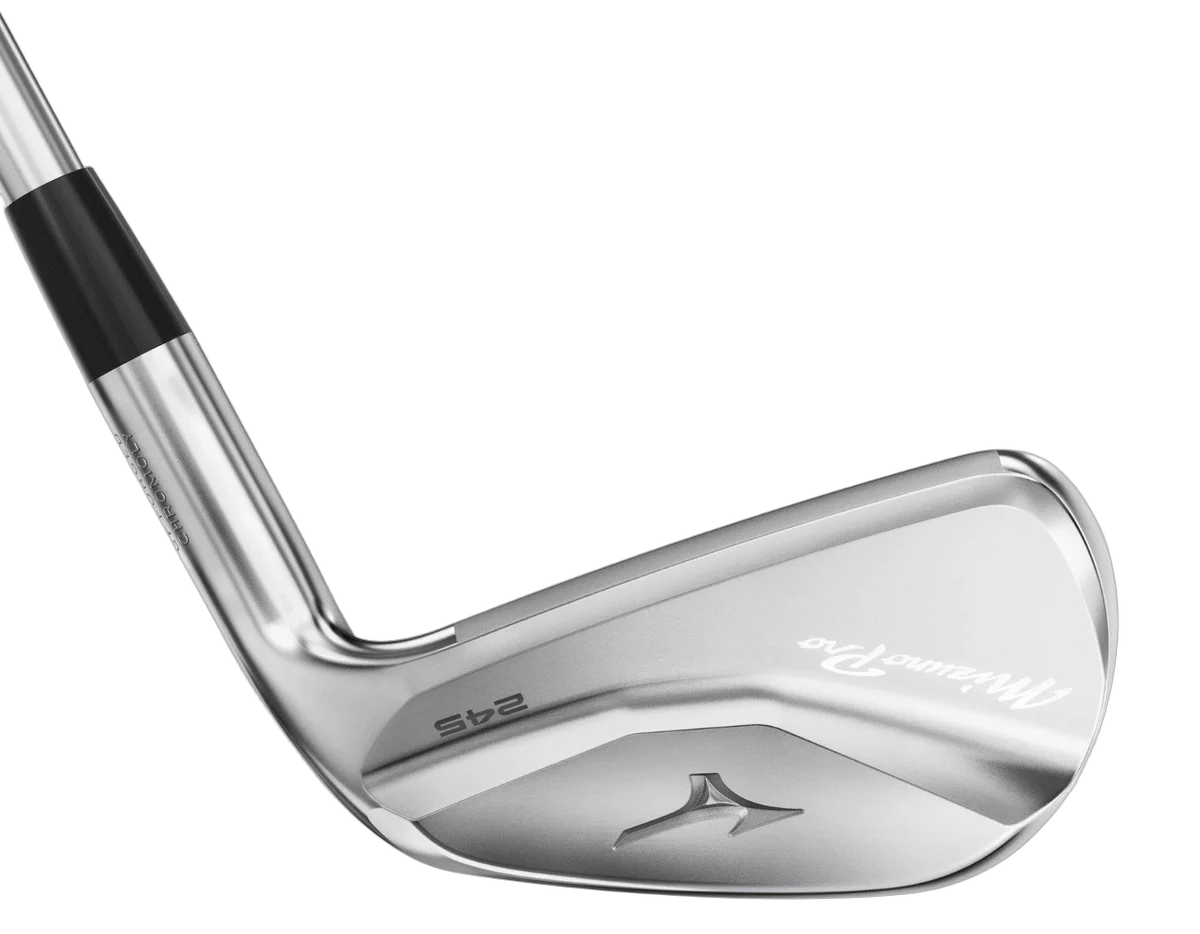
A hollow-body iron that looks like a blade, feels like a forging, and hits like a cannon. Mizuno's best trick yet.
The Big Picture
The Mizuno Pro 245 is doing something genuinely difficult: cramming hollow-body, players-distance technology into a chassis so compact it could pass for a muscle-back in the bag. This is the most forgiving, longest iron in the Mizuno Pro lineup, sitting above the 243 cavity-back and the 241 blade, and it's designed for golfers who want blade aesthetics with real-world forgiveness, roughly single-figure through mid-teen handicappers who refuse to sacrifice looks for performance.
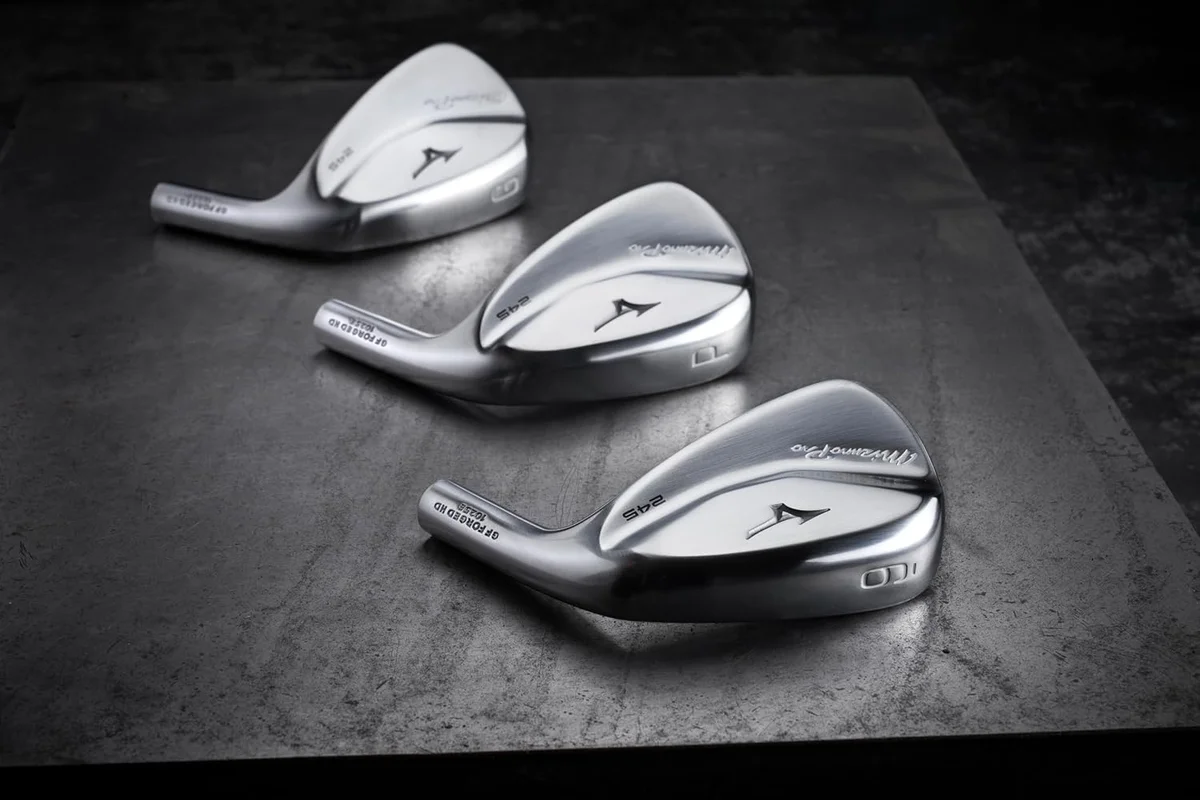
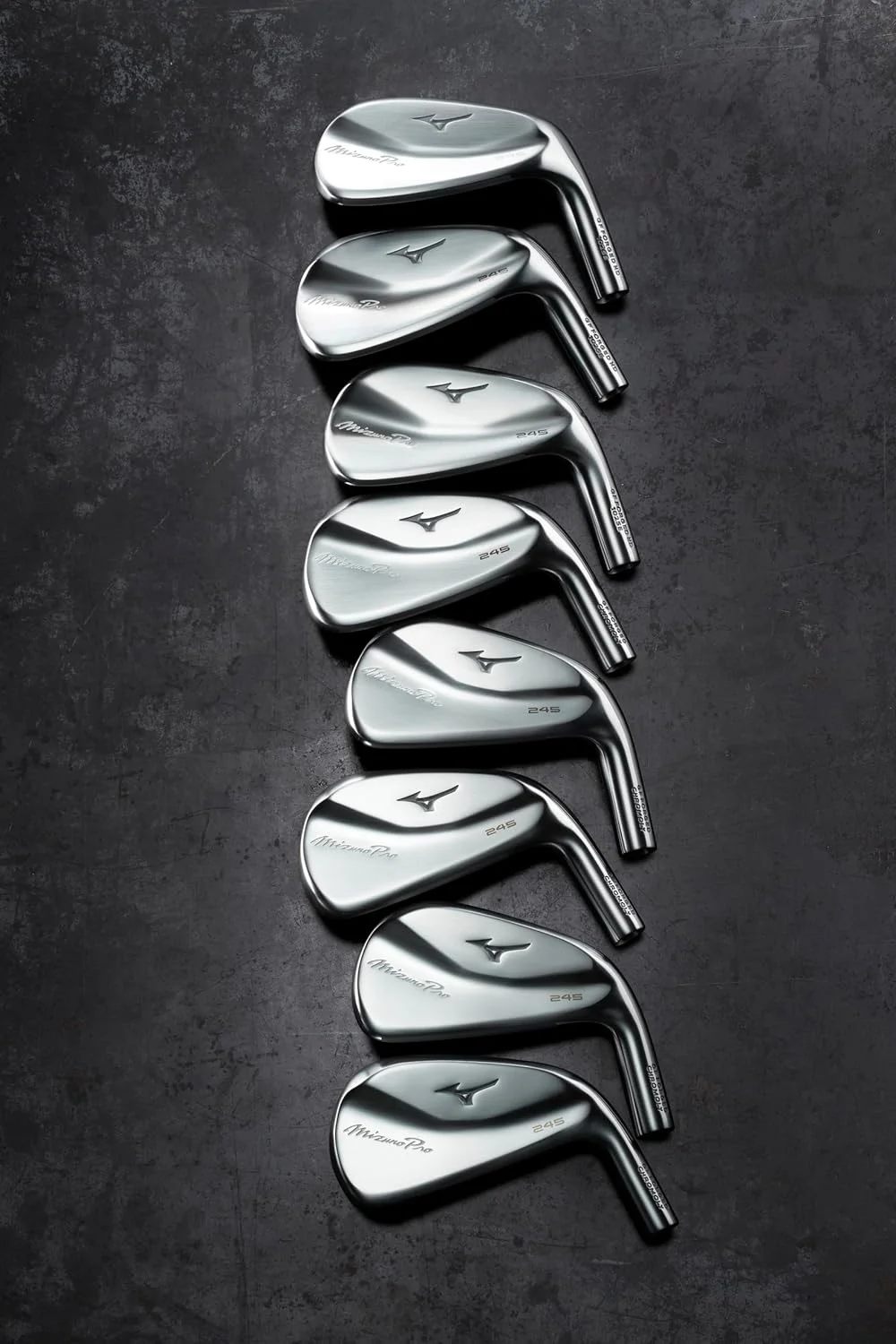
Three iron heads lined up on concrete showing progressive sizing
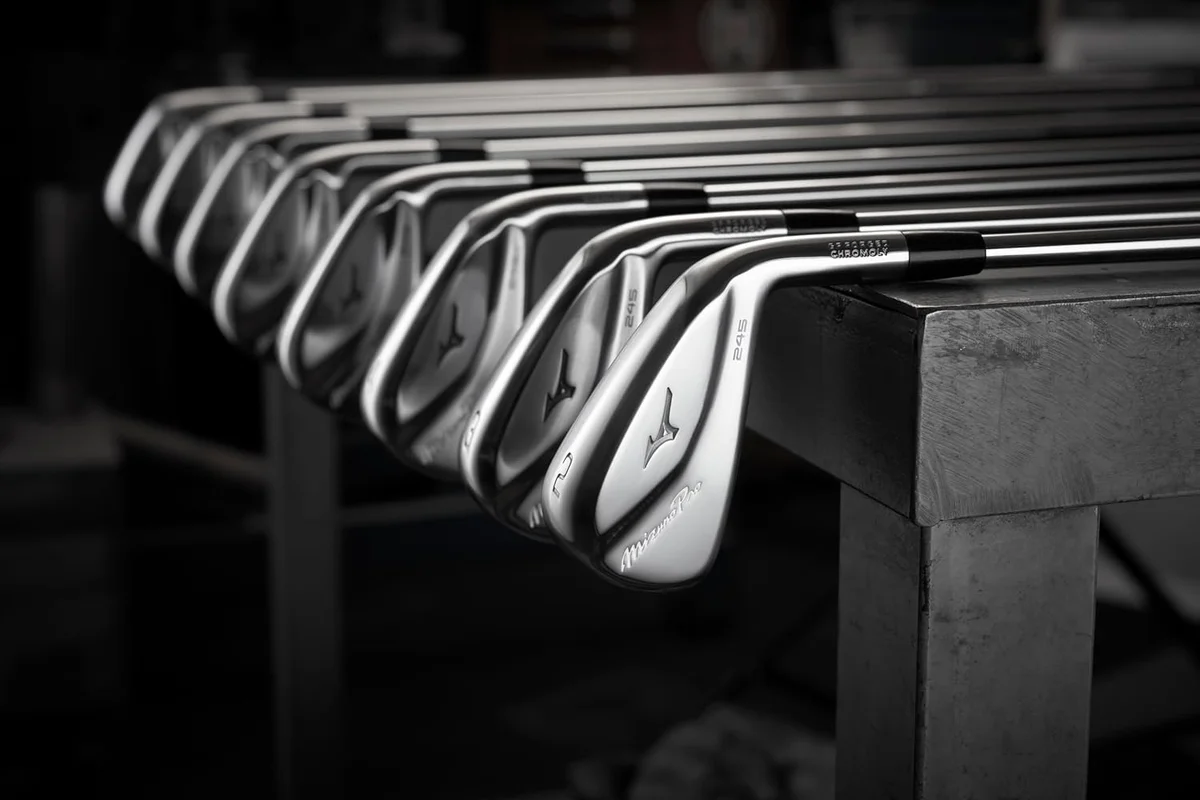
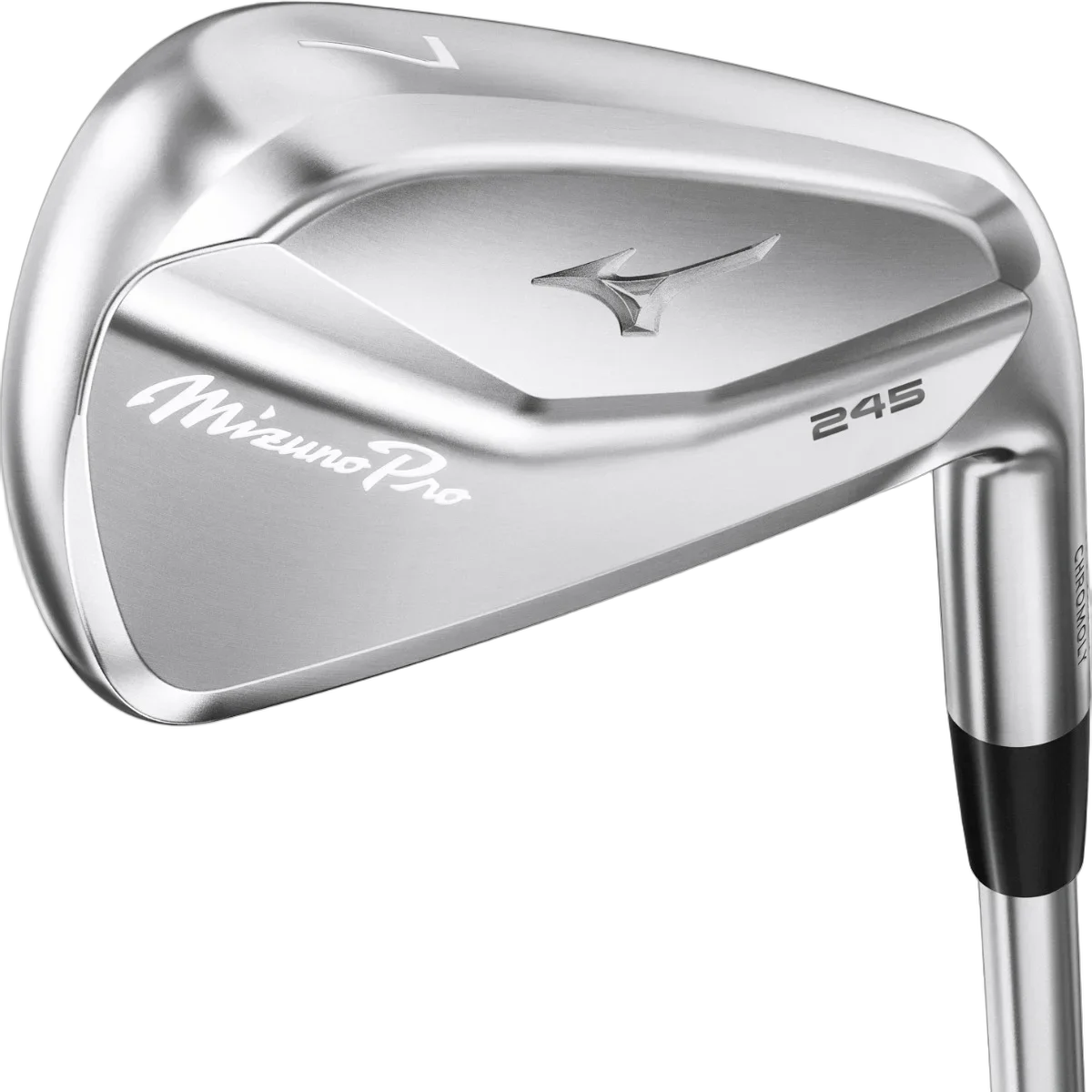
The construction is complex. The 2-8 irons are hollow-body, Grain Flow Forged from 4135 Chromoly steel with a multi-thickness CORTECH face and a laser-welded 431 stainless steel back piece engineered for elevated ball speed and launch. Inside each long and mid iron (2-7) sits a suspended 47-gram tungsten weight, 1.6 times the amount in the previous Pro 225, positioned low to optimize CG depth while leaving an air pocket beneath it that allows the sole to flex on low-face strikes. The 9 through gap wedge transitions to a partial-hollow 1025E carbon steel construction with a 17-4 stainless back piece for penetrating flight and more control in the scoring clubs. Throughout the set, the copper underlay and Harmonic Impact Technology carry over from the 241 and 243, and Mizuno added an extra degree of bounce in the long irons and two degrees in the scoring irons at the direct request of their tour players. Available at approximately $1,400 for a steel set, matching the Titleist T200 and TaylorMade P790, the two irons it competes against most directly.
At Address
This is where the 245 earns its reputation. The profile is staggeringly sleek for a hollow-body iron. The blade length is the longest in the Pro range and the top line the thickest, but neither is chunky, even moving into the long irons, better players won't be put off. The full satin brush finish matches the 241 and 243, and the sole widths stay moderate enough that workability-conscious golfers won't feel like they're swinging a shovel.
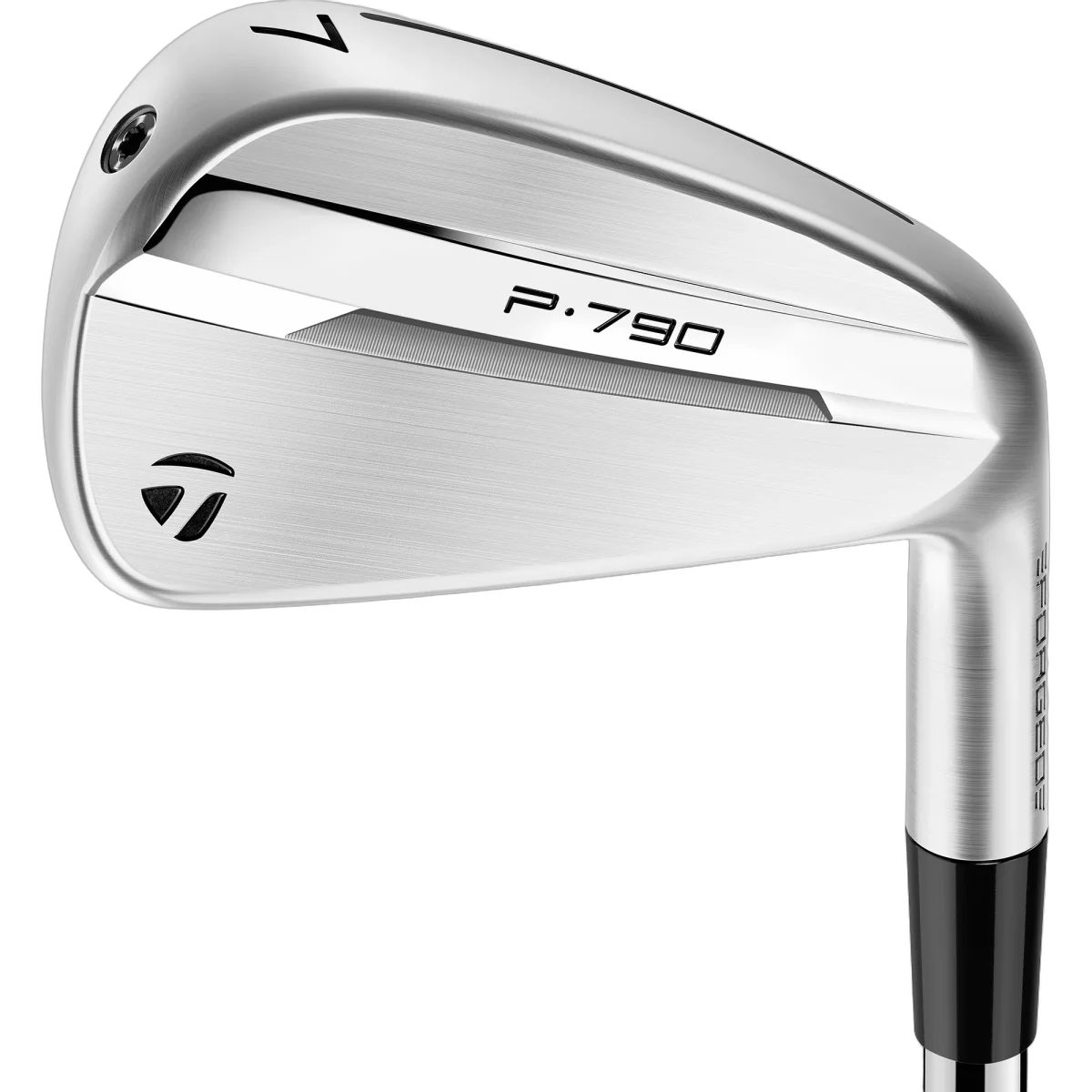
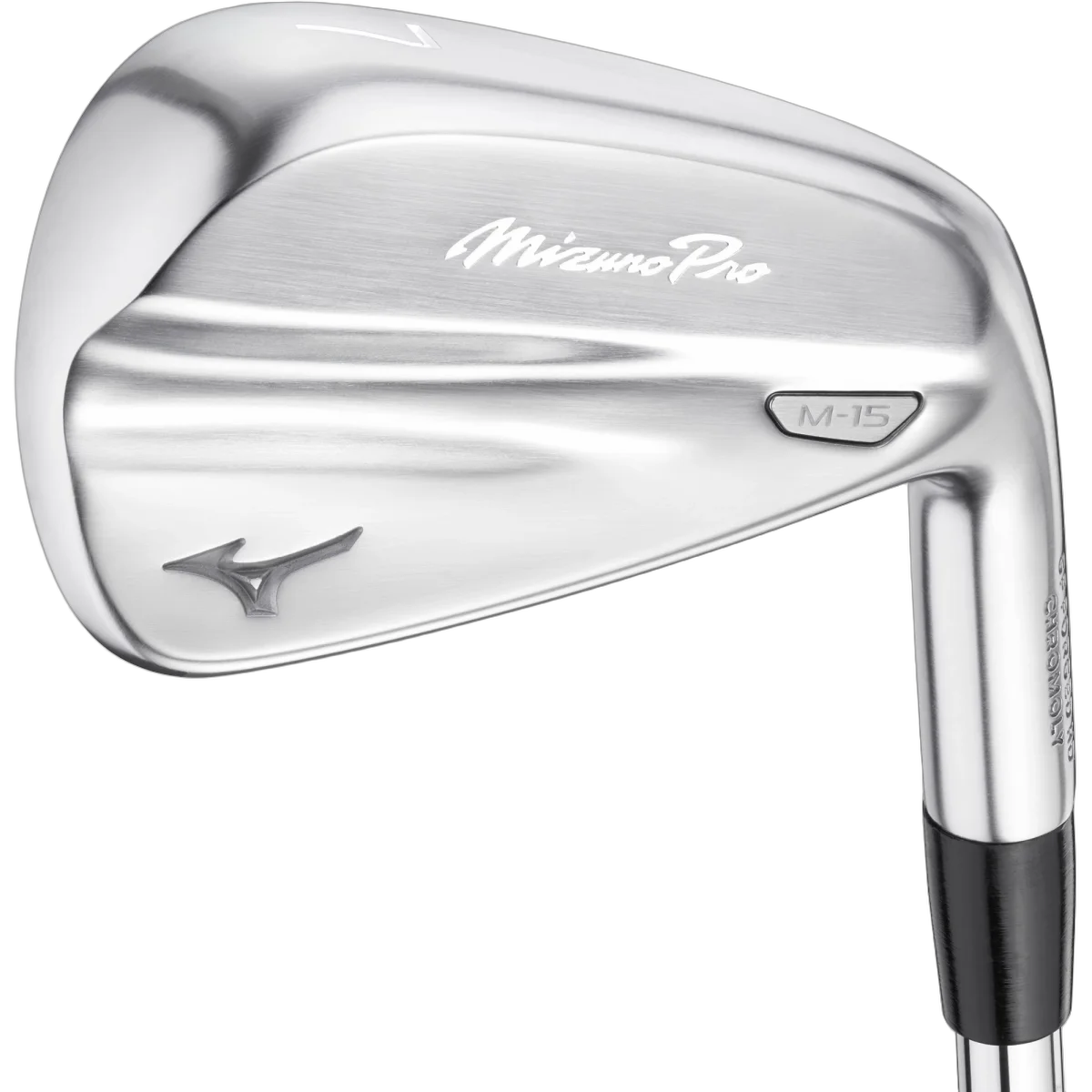
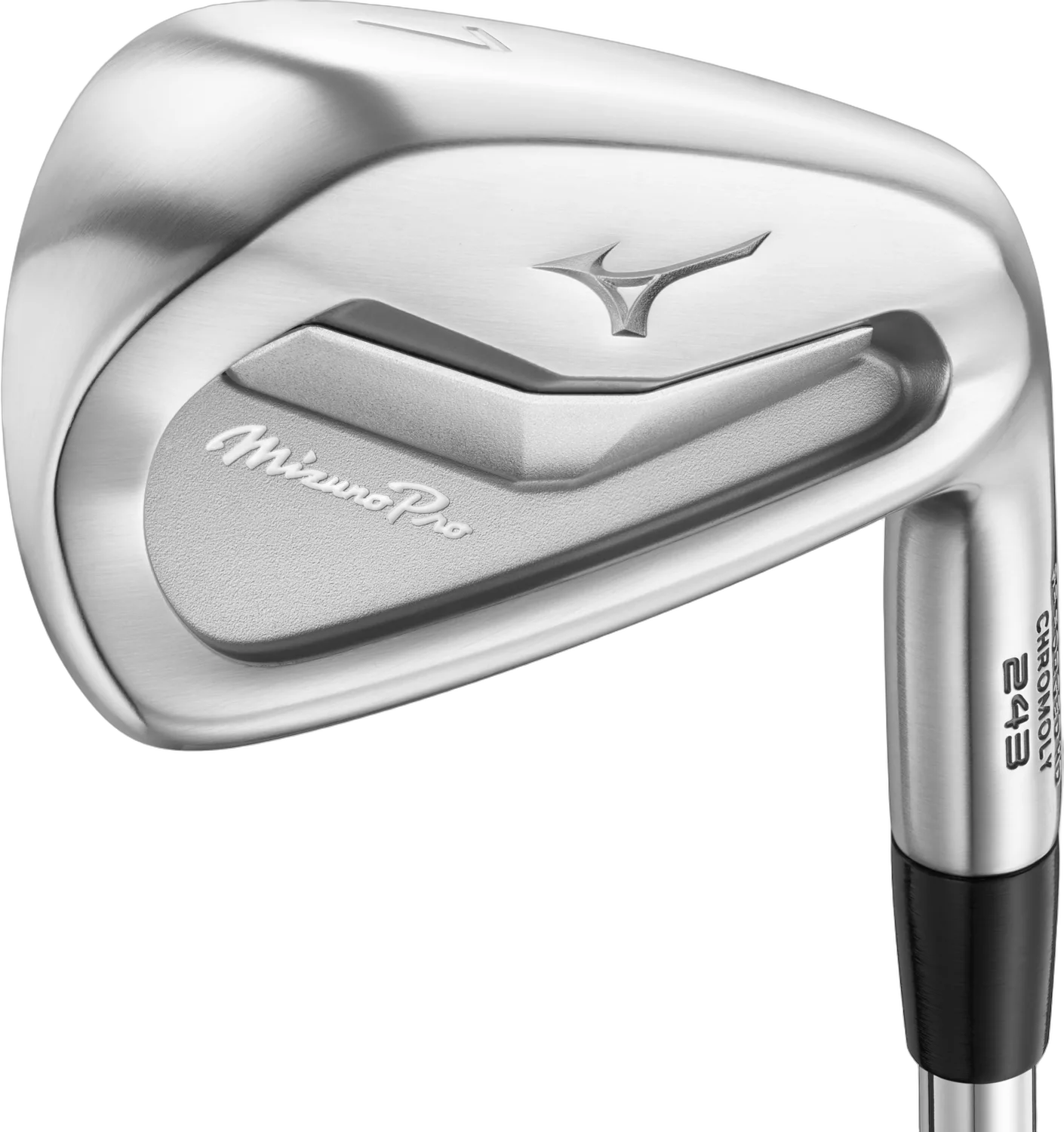
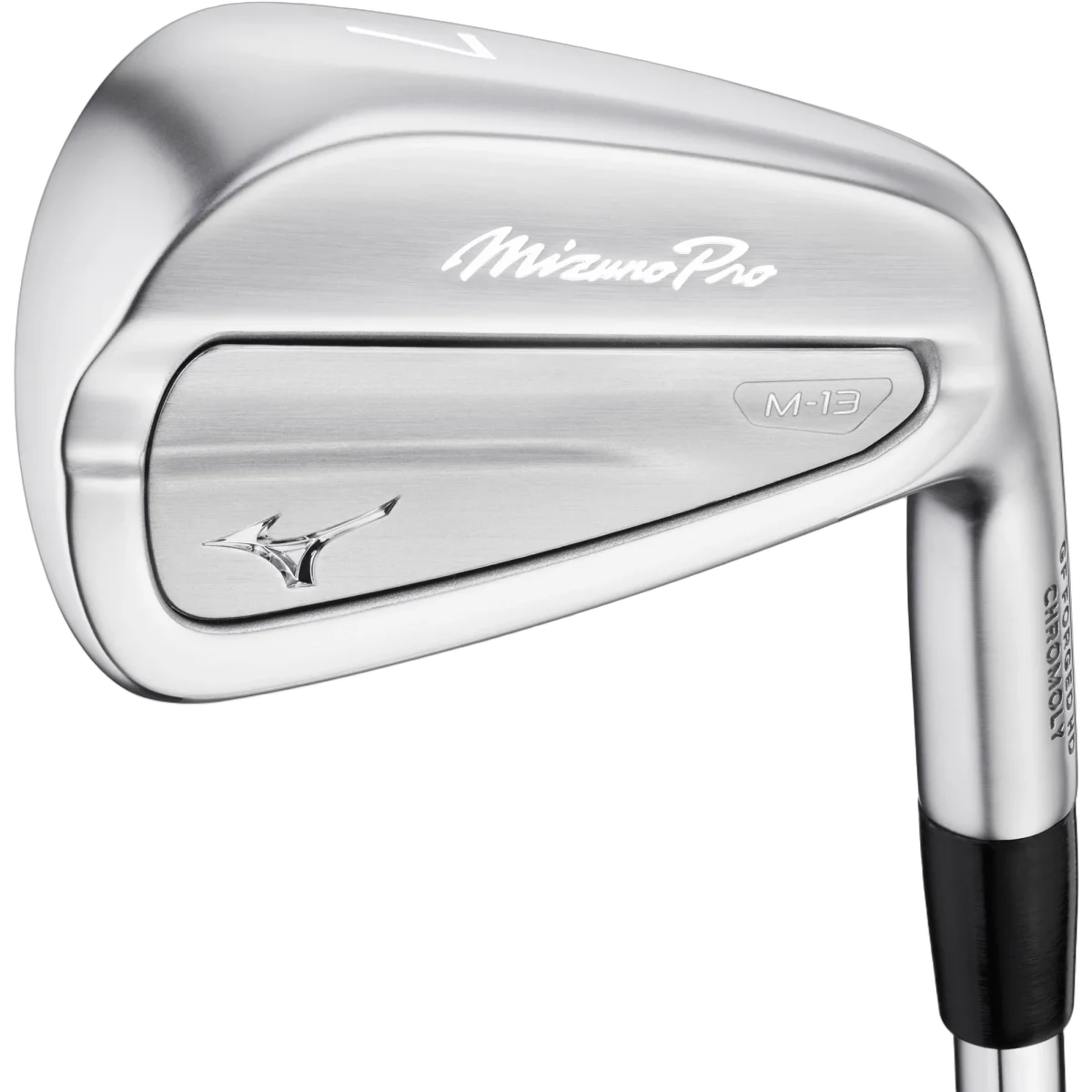
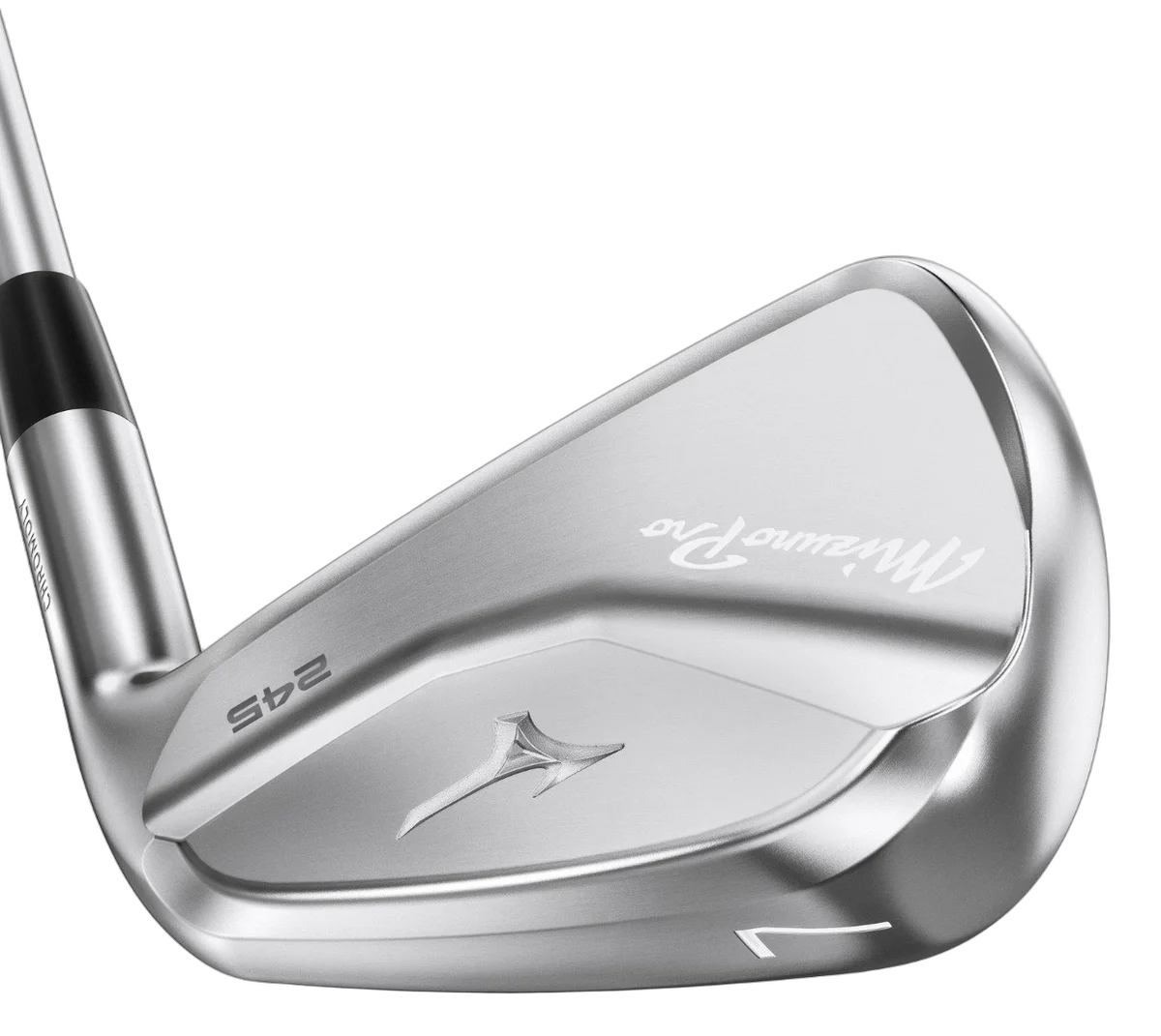
That said, the 245 doesn't fool everyone. Compared to the razor-thin 241 blade or the compact 243, the seven iron reveals a noticeably thicker top line and more visible mass behind the head. The five iron makes the hollow-body construction fairly apparent. But this is still, without question, the best-looking iron in its category, visually superior to the P790, T200, and Ping i525 by a meaningful margin. If aesthetics matter to you as much as performance, the 245 belongs at the top of your fitting list.
The offset is minimal throughout, which is refreshing in a players-distance iron. Combined with the compact profile, the address position gives you the confidence of a blade without the anxiety of one.
Sound & Feel
Here's where the 245 departs from its siblings, and it's the one area where expectations need managing. This is not a 241. It's not even a 243. The impact feedback is louder, firmer, and bolder, with a sense of speed off the face that the pure-forged models don't produce. You can tell you're hitting a hollow-body iron.
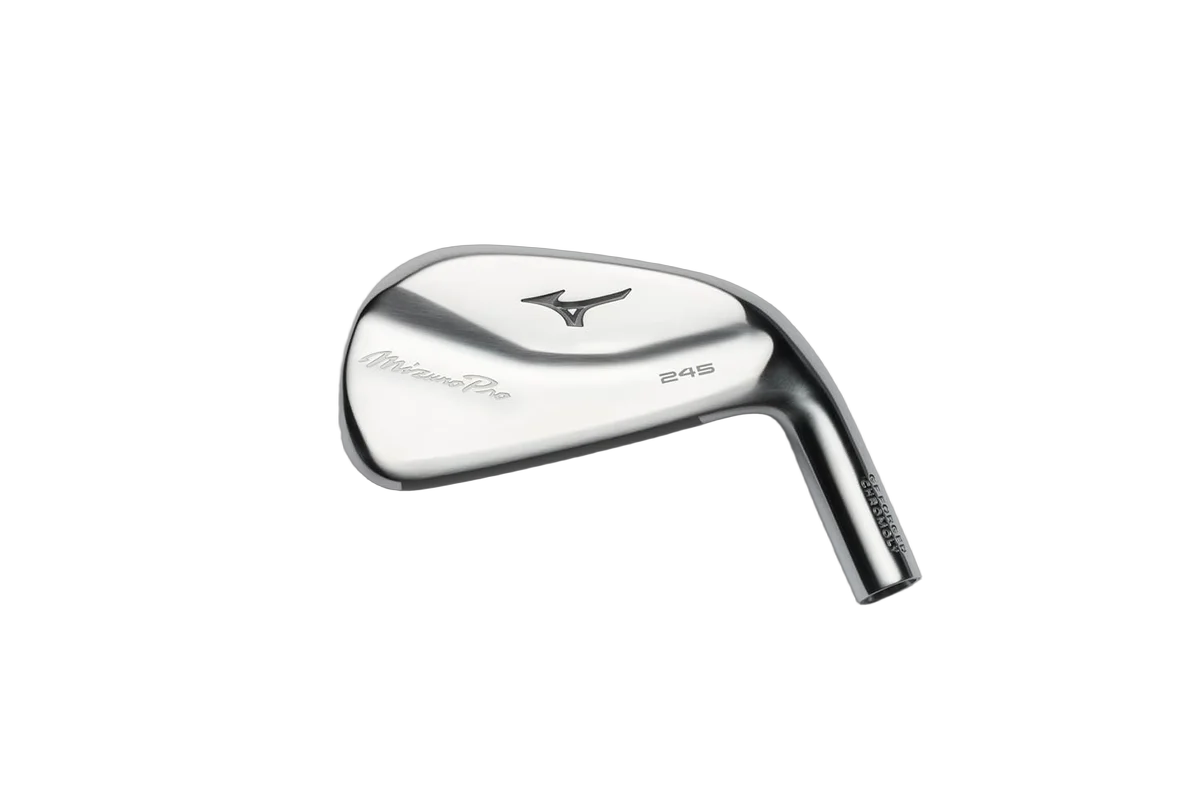
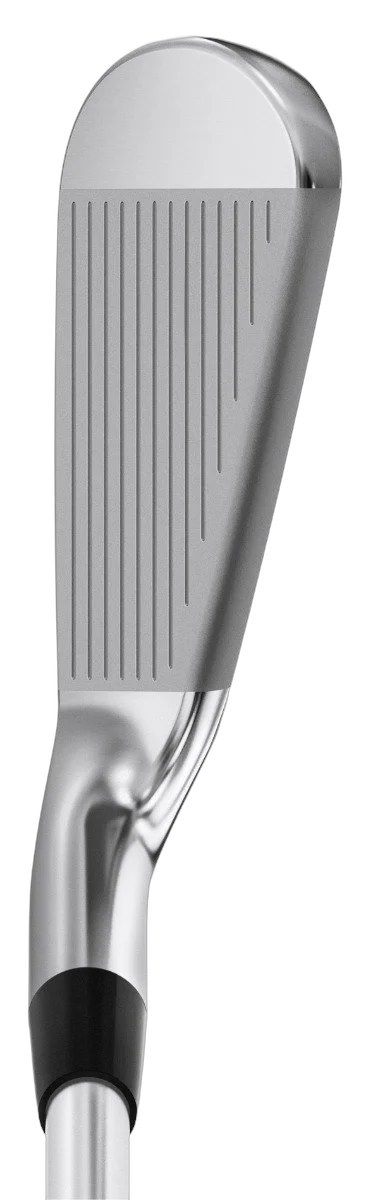
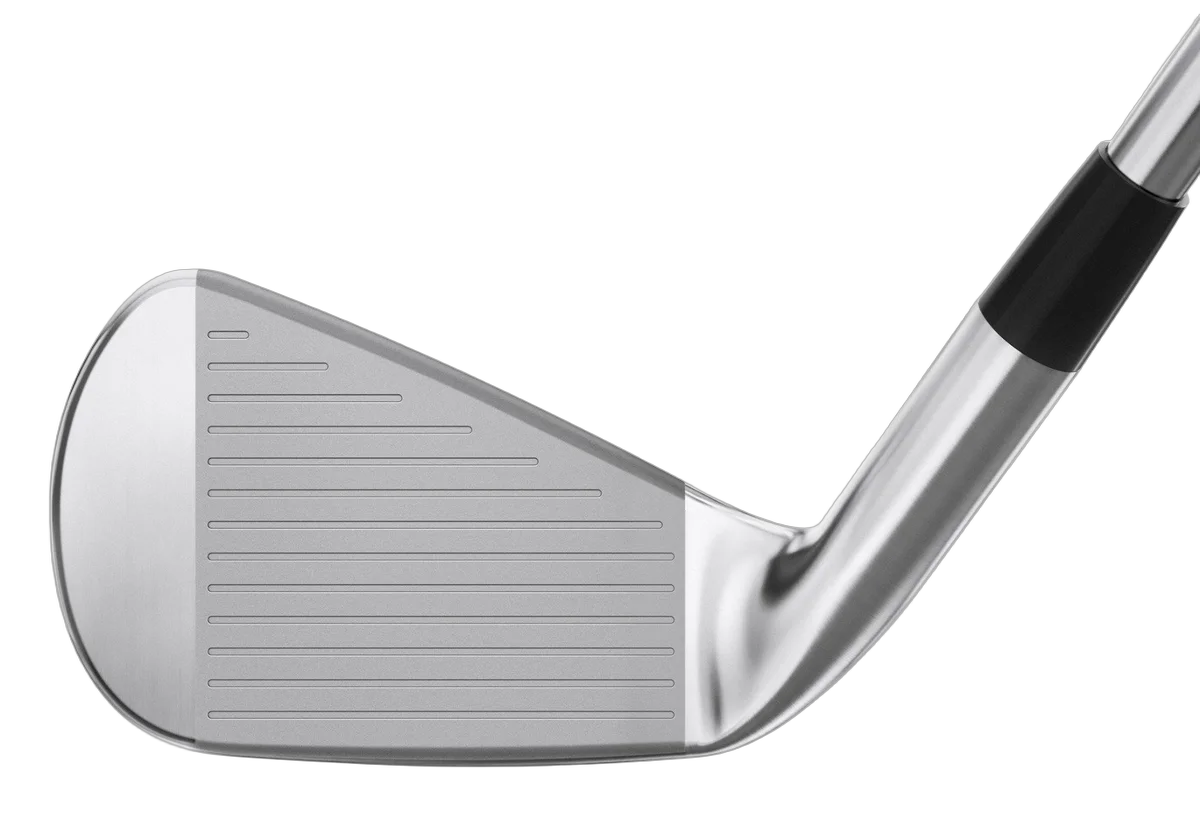
Face-on view showing thin topline and precision milled grooves
But within that category, the 245 is exceptional. It doesn't feel clicky or harsh the way many hollow-body competitors do. The forged Chromoly face, copper underlay, and Harmonic Impact Technology combine to produce something closer to a solid, muted pop than the tinny ping of a typical hot-face iron. On center strikes, one tester described it as feeling like a "fully forged one-piece golf club" despite knowing it's hollow, high praise for an iron with this much technology inside. With a softer-compression ball, the feel improves further, approaching genuinely soft territory.
Mishits tell a different story. Low-face strikes still feel decent thanks to the suspended tungsten and sole flex, but extreme misses, particularly thin shots in the long irons, will sting in a way the 243 simply doesn't. The 243 provides a buttery, deep sensation even on slight misses; the 245 trades some of that feel refinement for raw ball speed. It's a fair trade if distance and forgiveness are your priorities, but feel purists should test both back-to-back before committing.
Performance
Ball Speed & Distance
The 245 is fast. Measurably faster than the 243, and in a different universe from the 241 blade. The multi-thickness face, hollow-body construction, and suspended tungsten combine to produce ball speeds that approach game-improvement territory while maintaining a players-iron profile.
The numbers are impressive across the board. With a 7-iron (30 degrees, effectively a traditional 6-iron loft), I saw carry distances consistently in the 184-190 yard range, with one well-struck shot reaching 207 yards carry using a firmer, higher-spinning ball optimized for the stronger loft. Ball speeds reached 128-131 mph on centered strikes and, critically, barely dropped on thin hits. Two consecutive thin 7-iron shots both returned 184 yards carry and 5,900 RPM spin, matching the flush numbers almost exactly. That's the suspended tungsten and sole-flex technology earning its keep.
The pitching wedge (43 degrees) pushed into 140-150 yard territory, functioning more like a traditional 9-iron. The 5-iron (24 degrees) carried 197-208 yards depending on strike quality, with ball speeds around 136-137 mph. Compared to the Pro 241, expect roughly 15 yards more carry with the 7-iron, though the loft difference (30 vs. 34 degrees) accounts for a significant portion of that gap.
The distance is real, but the loft jacking is real too. This is something to be honest about. A 30-degree 7-iron carrying 190 yards isn't magic, it's a 6-iron carrying 6-iron distances. The value proposition isn't mythical extra yardage; it's getting those distances in a compact, forgiving package that looks nothing like a game-improvement iron.
Launch & Spin
Spin is the 245's most polarizing characteristic. The iron runs low, consistently, measurably low. Seven-iron spin sat around 4,600-5,900 RPM depending on strike and ball selection, with the lower end of that range appearing on flush strikes with softer balls. The 5-iron dropped below 4,400 RPM regularly, and during one detailed test, the 5-iron produced only 3,700 RPM, low enough that the ball was struggling to stay in the air, causing distance bunching at the top end of the set where the 5-iron carried only 183 yards despite the 7-iron hitting 166.
This is the 245's genuine weakness. If you're a player who already produces low spin, whether from a positive attack angle, faster swing speed, or simply how you deliver the club, the long irons may not give you enough flight to hold greens. Multiple testers noted lower-than-expected peak heights, particularly with the 4 and 5 irons. The ball flight sits flatter than comparable hollow-body irons, and the run-out can be significant. One tester saw 7-iron total distances of nearly 200 yards with only 190 carry, meaning 10 yards of rollout from an iron shot.
The solution matters. A higher-spinning ball (something like a Srixon Z-Star Diamond) can add 700-800 RPM and meaningfully improve the flight profile. Alternatively, bending the lofts a degree or two weak will recover spin and height while still leaving you with more distance than a traditional-loft players iron. Both are fitting conversations worth having.
Launch was adequate but not exceptional. Heights ran a touch lower than expected given the tungsten weighting, though the suspended design did help elevate low-face strikes. The 9-GW partial-hollow construction provided noticeably more penetrating, controlled flights in the scoring clubs, a smart design choice that prevents the short irons from ballooning.
Dispersion & Shot Shape
Forgiveness is the 245's strongest suit, and where it genuinely separates from the 241 and 243. The combination of hollow-body construction, suspended tungsten, and a hot multi-thickness face means mishits retain speed and direction in a way the more traditional models simply can't match. Toe strikes that would produce distance-killing hooks in a blade flew straight and traveled near-full distance. Thin shots, normally the bane of players irons, barely registered as mishits in the data.
Back cavity detail with Mizuno Pro 245 branding and Chromoly hosel
On-course testing at Golfshake showed this repeatedly: a slightly off-center 9-iron from 145 still found the green with enough height and spin to stop. A 4-iron off the fairway produced consistent, usable flights despite less-than-perfect strikes. In head-to-head dispersion testing against the JPX 925 Forged, the 245 produced a tighter shot pattern despite giving up some ball speed to the JPX, with side dispersion of plus-or-minus 11 feet versus plus-or-minus 15 feet from the 925.
Workability is more limited than the 243 or 241. The lower spin and hotter face make it harder to flight the ball down or shape shots on command. This is a point-and-shoot iron. For most golfers in the target handicap range, that's a feature. For single-digit players who rely on trajectory control, the 243 is the better choice in the mid and short irons, with the 245 potentially earning a combo-set role in the long irons where its launch and forgiveness advantages are most valuable.
Verdict
The Mizuno Pro 245 is the best-looking players-distance iron on the market, and it's not particularly close. The compact profile, minimal offset, and satin finish produce an aesthetic that makes the P790 look chunky and the T200 look industrial. For golfers who've resisted hollow-body irons because they didn't want to stare down at a thick, offsety club, the 245 eliminates that objection entirely.
The performance backs up the looks — mostly. Ball speed and forgiveness are outstanding. Mishits barely register in the carry numbers. The feel, while not classic-Mizuno soft, is the best in the hollow-body category. And the turf interaction, improved significantly from the 225 with added bounce throughout the set, is genuinely excellent.
The spin concern is real, though, and it's what keeps this from an elite rating. Long-iron spin dropping below 4,000 RPM means some golfers will see distance bunching at the top of the set, and the lower-than-expected peak heights may limit green-holding ability for players who don't generate a lot of spin naturally. This is a fitting-dependent iron more than most — ball selection, loft bending, and shaft choice all matter enormously in optimizing the flight window.
For the right player — someone who wants blade looks with genuine forgiveness, doesn't struggle with getting the ball too high, and is willing to work with a fitter to dial in the spin profile — the 245 is outstanding. It's also an ideal combo-set partner: run the 245 in the 4-6 irons for launch and forgiveness, transition to the 243 for the 7-PW for feel and control. Just be aware that the spin profile differences between the two models mean your fitter needs to check gapping carefully at the transition point.