Mizuno JPX 925 Hot Metal Pro Irons
Mizuno — Mizuno JPX 925 Hot Metal Pro Irons · By Andy · Jan 8, 2026
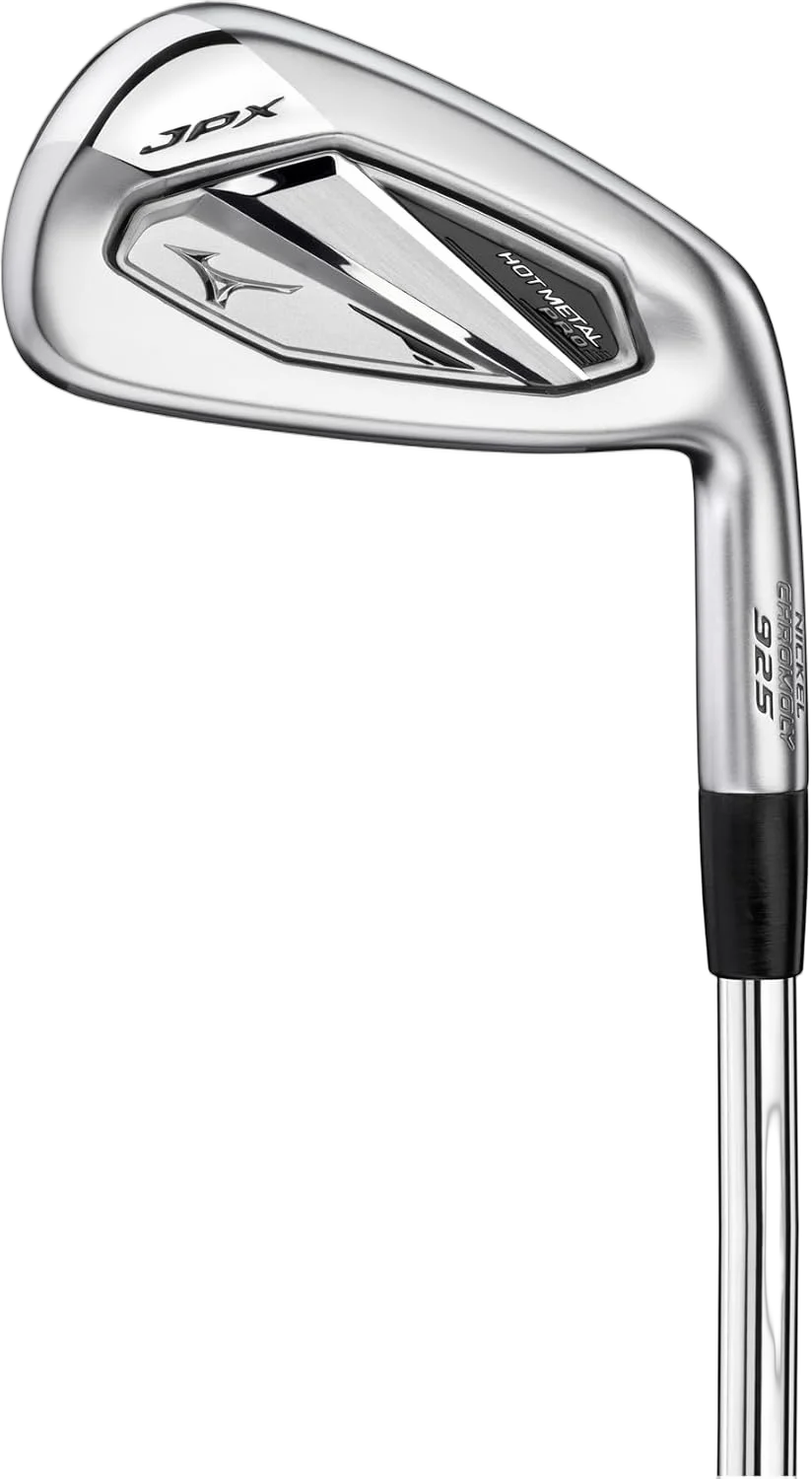
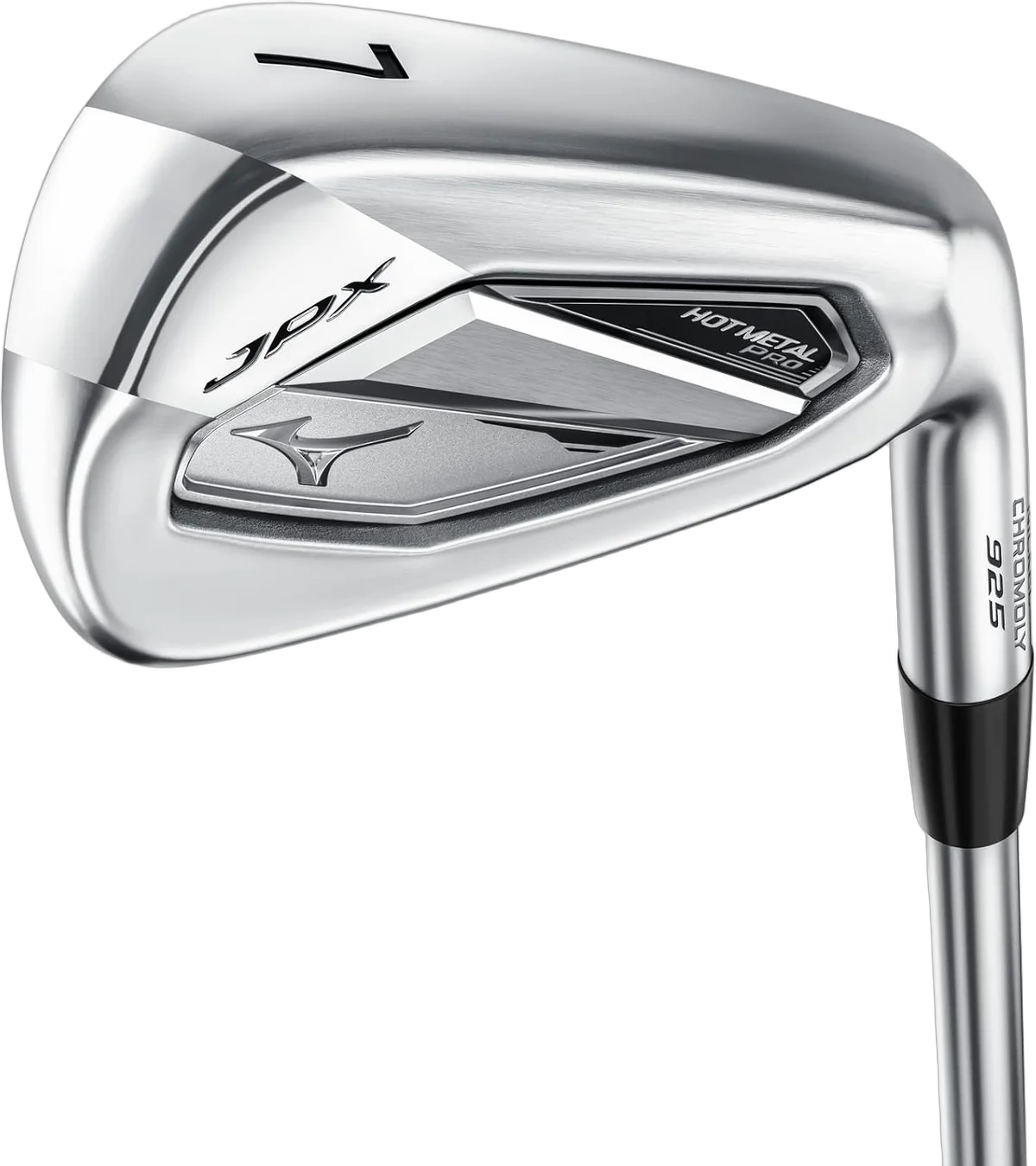
The most Mizuno-feeling game-improvement iron on the market, now with a slimmer profile and serious ball speed.
The Big Picture
The Mizuno JPX 925 Hot Metal Pro sits in a compelling middle ground. It takes the raw power of the standard JPX 925 Hot Metal and compresses it into a more refined package aimed at the golfer who wants distance help but does not want to look down at a chunky, offset-heavy iron. This is the fourth generation of Hot Metal Pro, and Mizuno's formula remains consistent: pair the Chromoly 4140M face material with a slimmer topline, reduced offset, and tighter shaping to appeal to the player who straddles the line between game-improvement and players-distance irons.
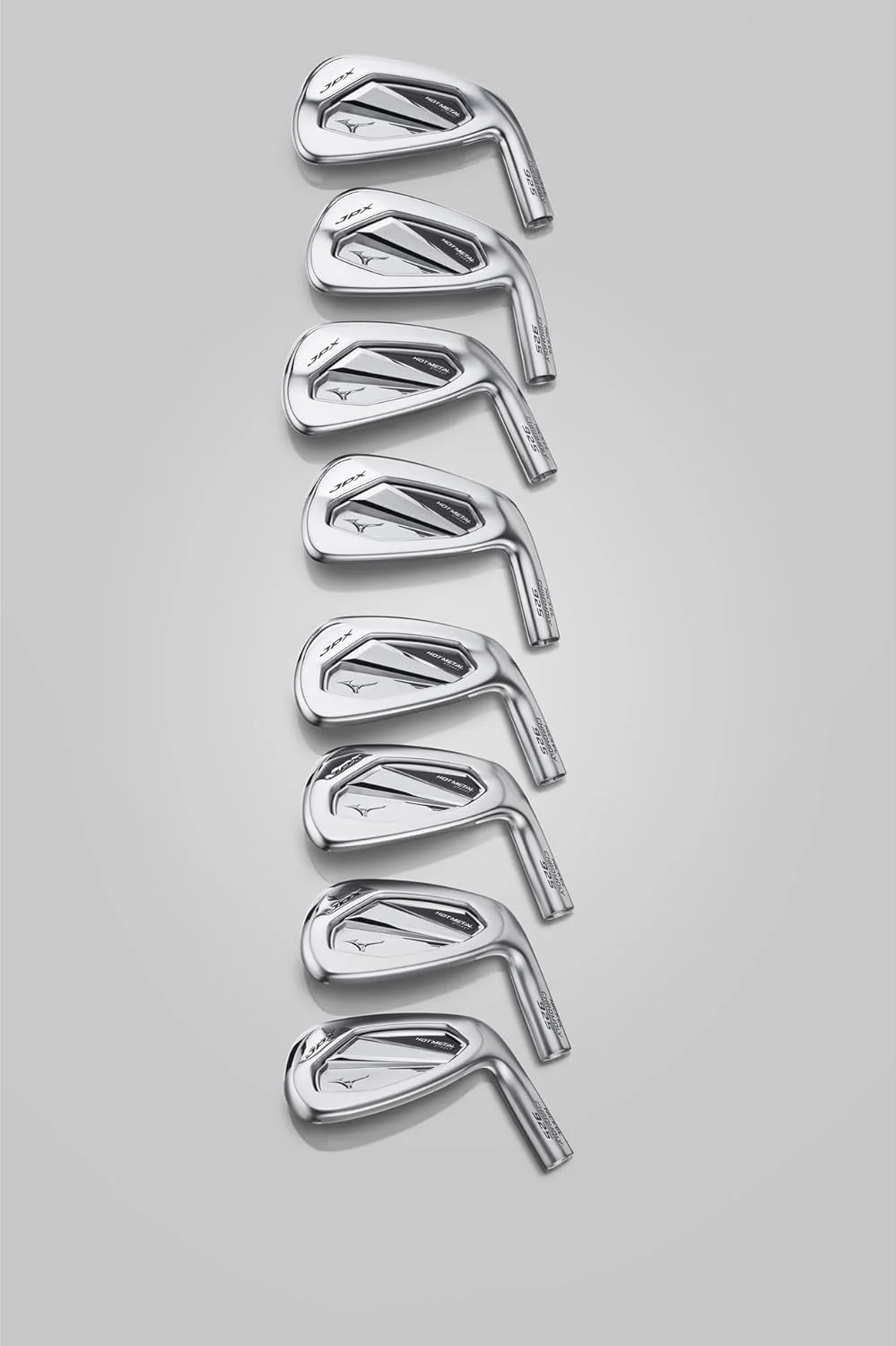
Full Mizuno JPX 925 Hot Metal Pro iron set laid out in sequence
New for this generation is a Contour Ellipse face design that varies thickness from low-heel to high-toe, targeting the most common miss zones on irons. Mizuno claims the face is 30 percent thinner than the JPX 923 Hot Metal Pro at its thinnest points, reaching just 1.2mm. The 5 through 7 irons also feature tungsten weighting positioned low in the head for higher launch and a lower sweet spot. Combined with a Seamless Cup Face construction and variable sole thickness, the 925 Hot Metal Pro aims to deliver maximum ball speed and height without the visual bulk that better players tend to reject.
At Address
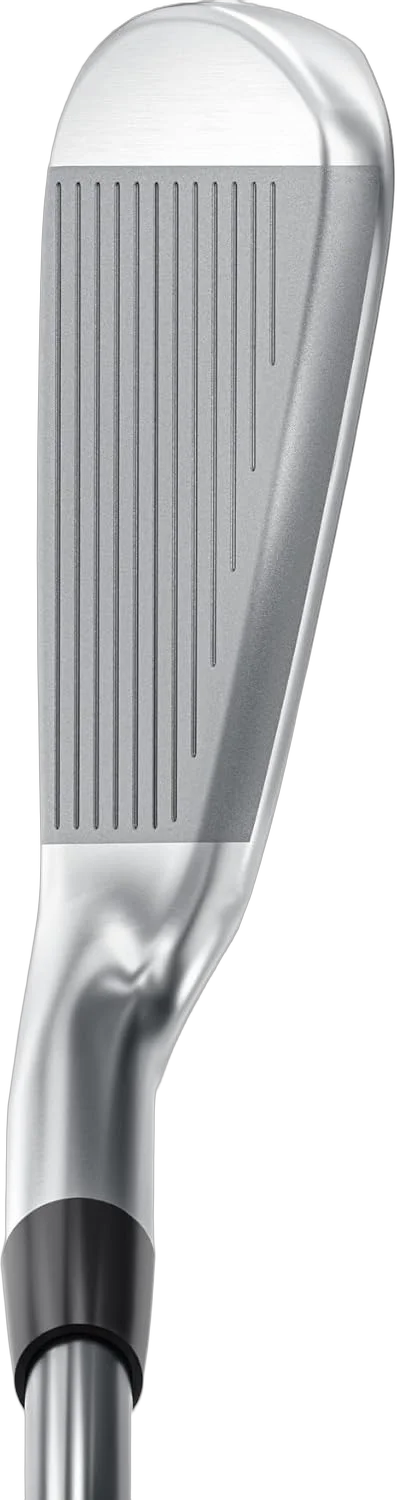
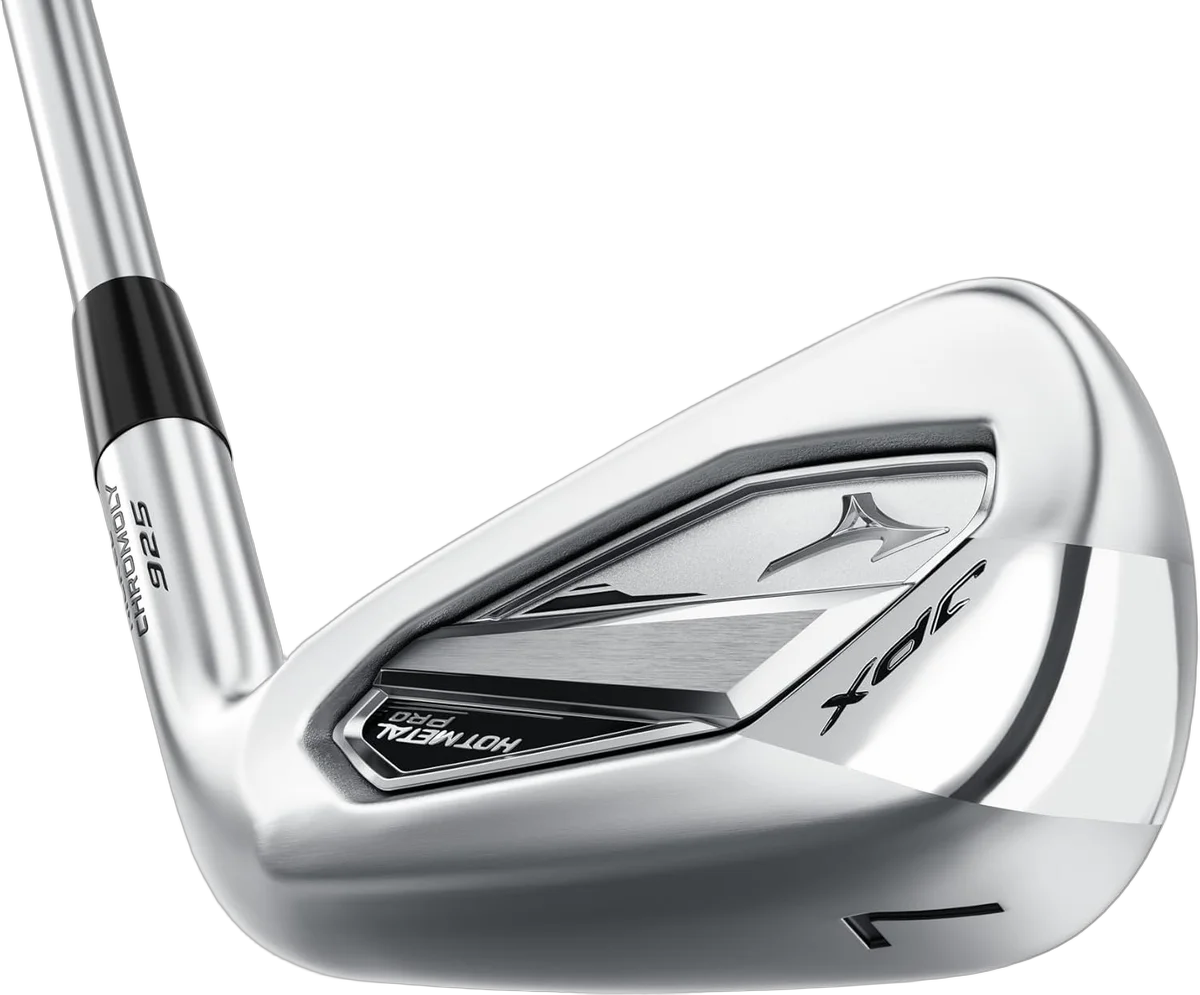
This is where the Hot Metal Pro separates itself from the standard Hot Metal. The topline is visibly thinner, the offset is dramatically reduced (up to 0.74 inches less than the standard model according to Mizuno's specs), and the heel-to-toe length is 4.5mm shorter when comparing 7-irons. The result is an iron that looks closer to a players-distance club than a game-improvement iron, which is exactly the aspiration story Mizuno is selling.
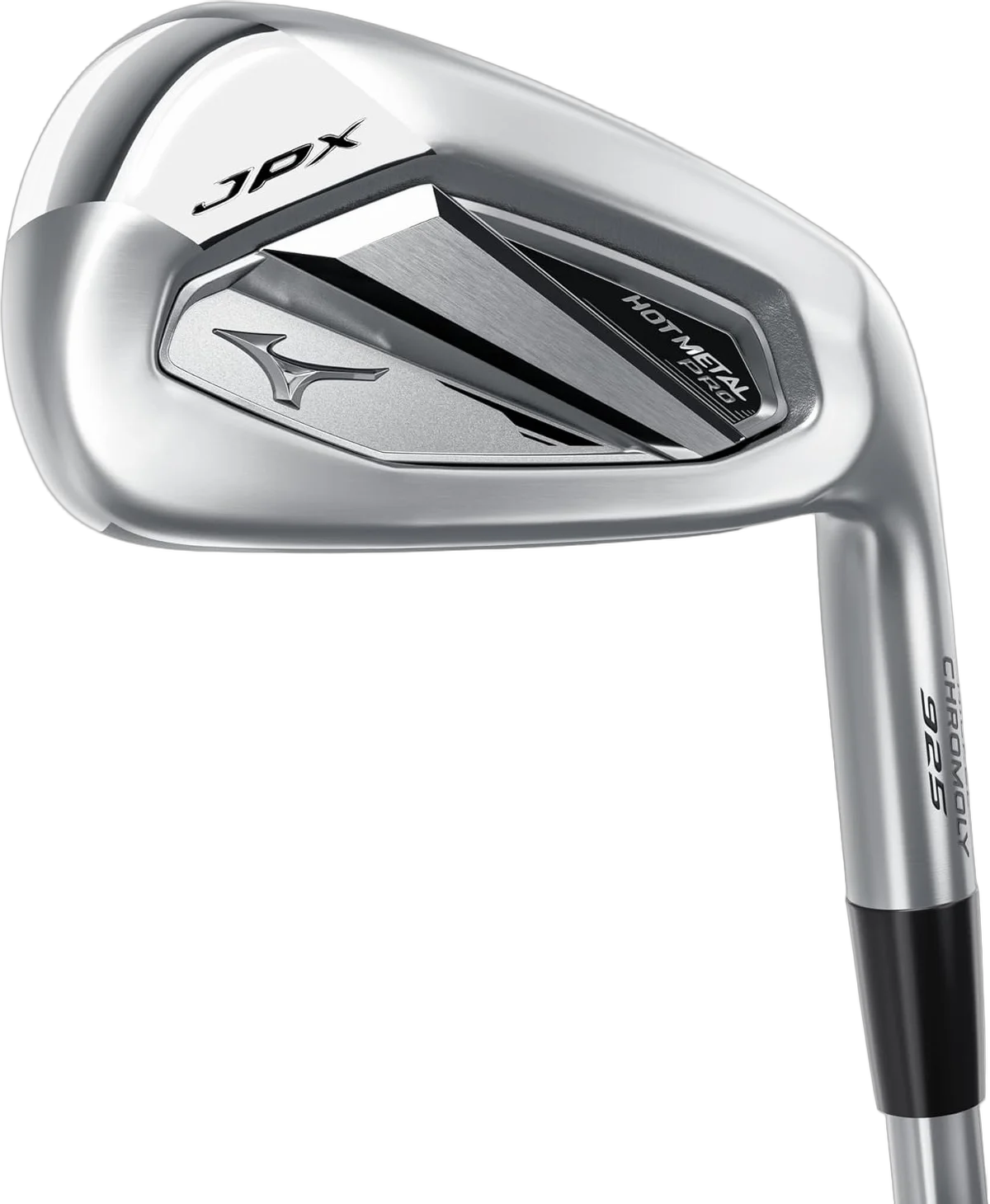
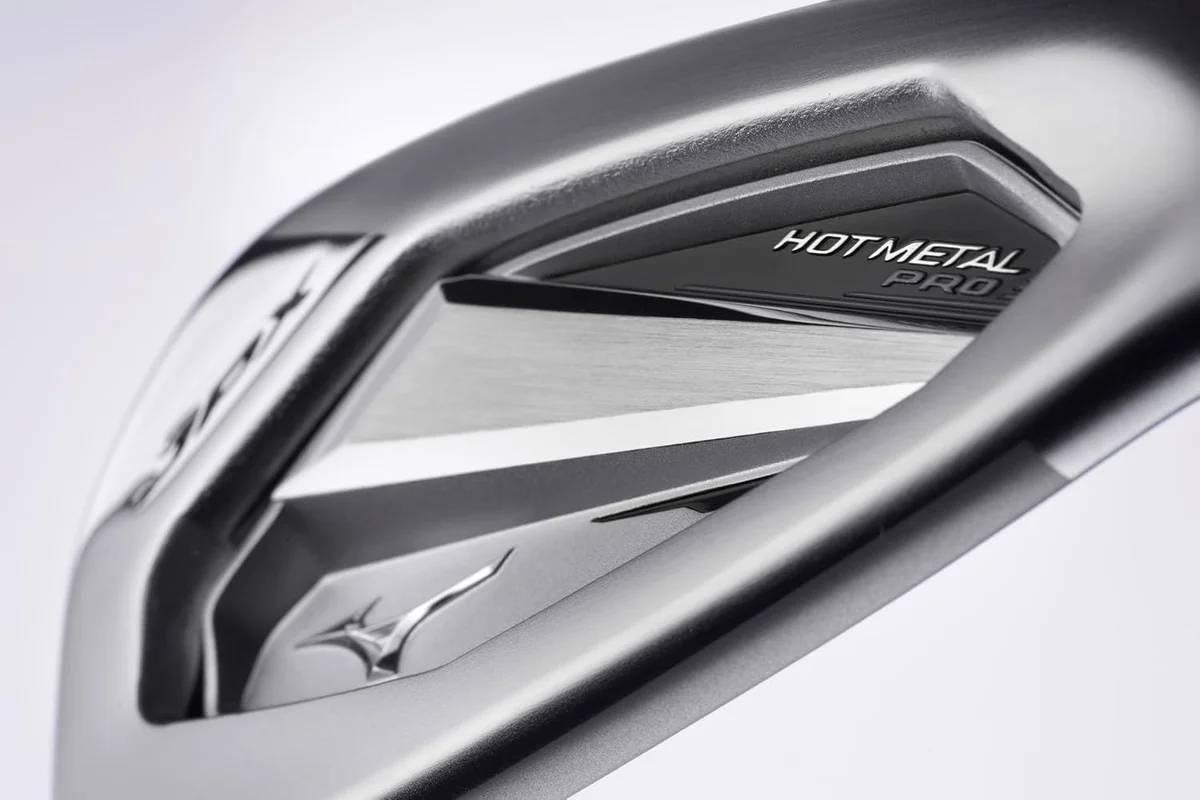
The shape is quite rounded, which is a matter of personal preference. I would have liked slightly straighter lines, but behind the ball, the reduced offset and compressed profile inspire confidence without looking intimidating. The one aesthetic miss is the black badge on the back of the head. It looks somewhat out of place on an iron that is meant to appeal to golfers who generally prefer a clean, simple look. That said, once the club is down behind the ball, the badge disappears from view and becomes irrelevant.
Sound & Feel
Mizuno introduced Harmonic Impact Technology (HIT) in this generation, which uses strategically placed ribs, a visible Sound Bar on the back of the iron, and a balanced stability frame to tune the acoustics. The goal is to move the Hot Metal Pro closer to the softer feedback of Mizuno's forged irons like the Pro 245 or JPX Forged models.
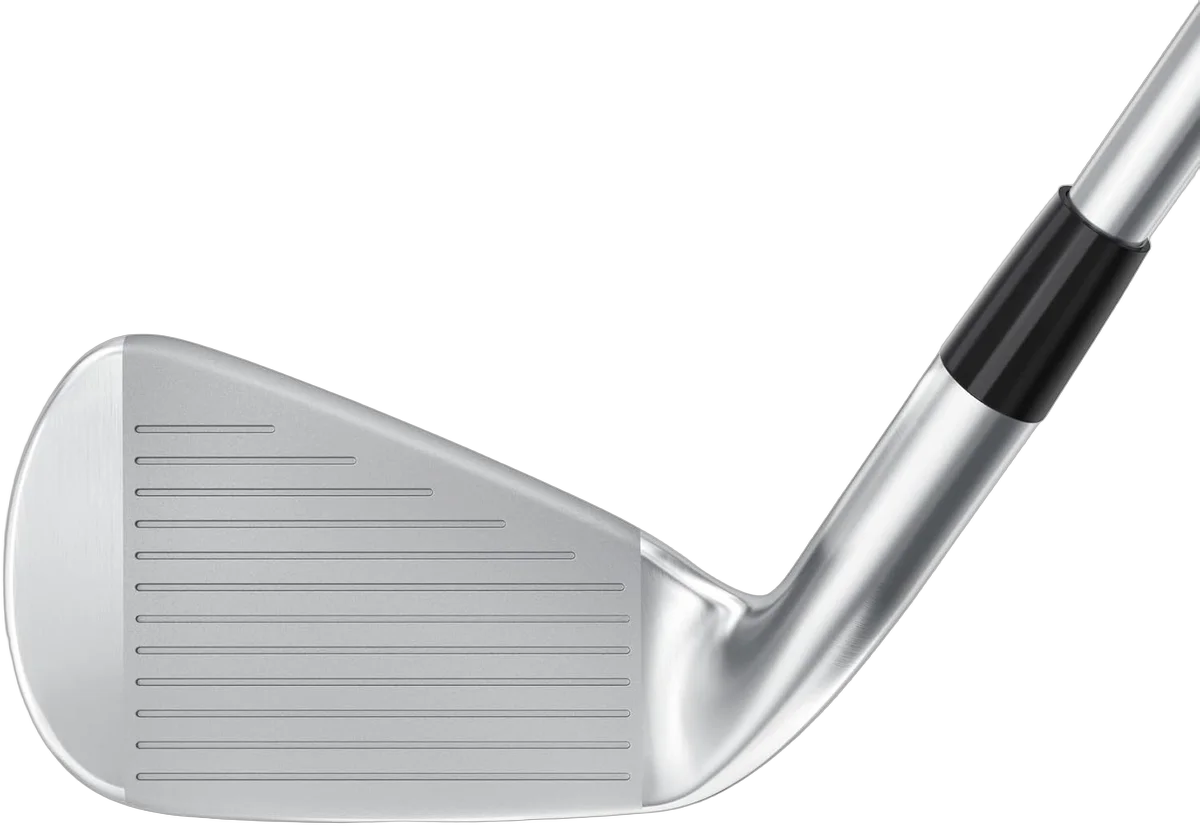
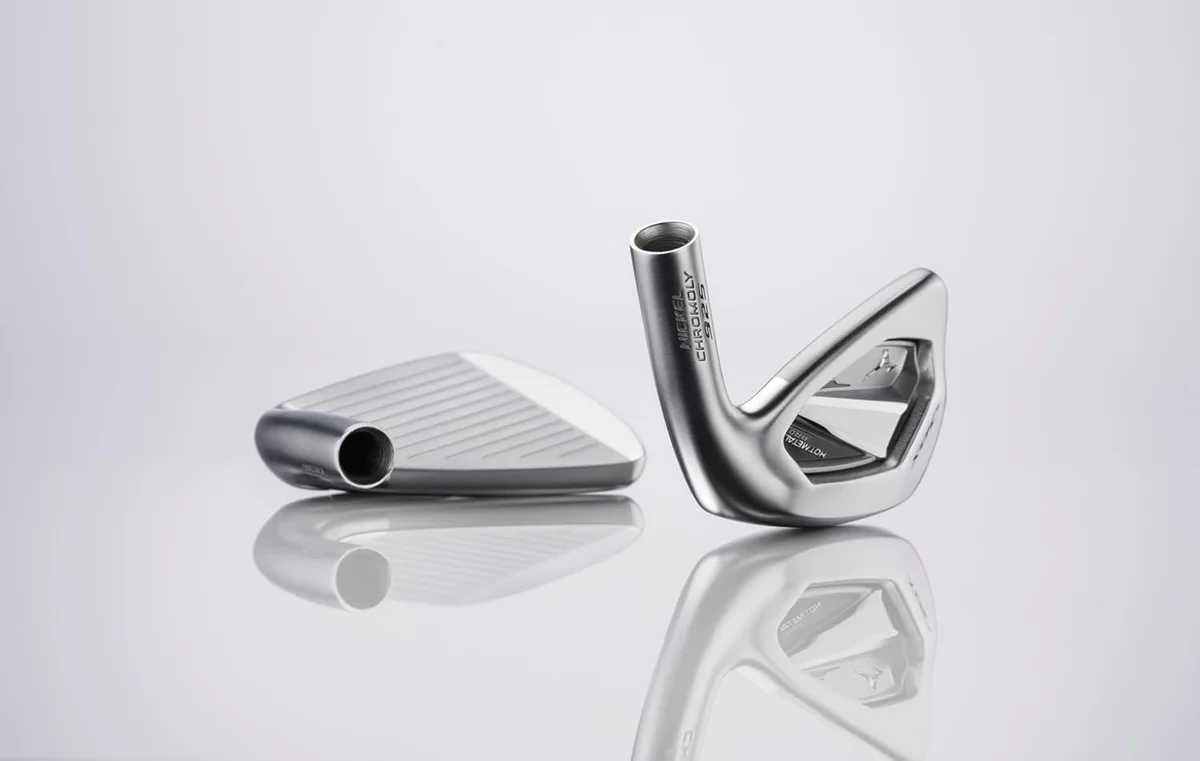
Mizuno JPX 925 Hot Metal Pro face showing vertical grooves
The honest assessment: I did not hear a dramatic difference. The Hot Metal Pro is louder than average at impact, with what I would describe as a powerful "thump-clack" sound. It is not unpleasant, and it communicates the kind of energy being transferred into the ball, but it does not remind me of a forged Mizuno iron. The feel is medium-firm and solid, with a slight improvement over the standard Hot Metal in terms of how connected the strike feels through the hands. Feedback on mishits is clear. The sound dulls and you can feel the impact location, which is useful for diagnosing your swing even without a launch monitor.
If Mizuno had not made the HIT technology a headline feature, I would not have any complaints about the sound. It is simply that expectations were set high, and the reality, while good, does not quite reach forged-iron territory.
Performance
Ball Speed & Distance
This is where the Hot Metal Pro delivers emphatically. The Chromoly 4140M face generates serious ball speed, and the thinner Contour Ellipse design means that off-center strikes retain more speed than the previous generation. I measured a ball speed standard deviation decrease of about 0.9 mph compared to the 923, which does not sound dramatic until you consider the 923 already had a deviation of only 3.6 mph. Getting nearly a full mph tighter across the face is a legitimate improvement.
In terms of raw numbers, I was carrying my 7-iron about 167 yards on average, with the 5-iron pushing out to 203 yards with a launch angle around 19 degrees. These are long irons by any standard, and the consistency from shot to shot was impressive. In testing, over two-thirds of golfers gained extra distance compared to their current irons, and my experience aligns with those results.
Launch & Spin
High launch is a defining trait of the 925 Hot Metal Pro. The tungsten weighting in the long and mid irons drops the sweet spot lower in the head, which produces a higher launch with a steeper landing angle. This is critical because, as iron lofts have gotten stronger across the industry to generate more distance, maintaining height has become the key differentiator between good and great game-improvement irons.
Spin sits in the low-to-mid range, which is expected for an iron in this category. The variable sole thickness and Seamless Cup Face work together to improve stability on low-face strikes, helping maintain both launch and spin when you catch the ball thin. The result is an iron that gets the ball up in the air easily, holds its line, and lands at an angle steep enough to stop on the green.
Dispersion & Shot Shape
Forgiveness is strong, though meaningfully less than the standard Hot Metal. This is the conscious trade-off for the slimmer profile and reduced offset. The Hot Metal is built for mid-to-high handicaps; the Hot Metal Pro is built for mid-to-low handicaps who strike the ball reasonably well but want more distance than a traditional players iron provides.
Mizuno JPX 925 Hot Metal Pro back cavity with branding
The reduced offset also opens up some workability. I could shape the ball in both directions with deliberate effort, which is not always possible with game-improvement irons. The ball does not fight you when you try to move it, and the lower offset keeps the face from closing aggressively through impact. For the golfer who is transitioning from game-improvement irons toward something more player-oriented, the Hot Metal Pro provides a comfortable stepping stone.
Verdict
The Mizuno JPX 925 Hot Metal Pro is an excellent iron for the golfer who wants Mizuno quality, serious distance, and a visual profile that does not scream "game improvement." The ball speed is impressive, the launch characteristics solve the height problem that plagues strong-lofted irons, and the forgiveness is sufficient for any mid-handicapper and most single-digit players who prioritize consistency over workability.
The sound and feel, while good, do not live up to the promise of the Harmonic Impact Technology marketing. If you are buying these expecting forged-iron feedback, temper that expectation. And the back badge is a minor cosmetic misstep that Mizuno could easily address in the next generation.
If you told me to go play a round with anything in the game-improvement category, I would grab the Hot Metal Pro without much deliberation. It is the most Mizuno-feeling iron in the forgiving category, and I cannot see any golfer who fits the target profile being disappointed when they finally address the ball with it.