Wilson DYNAPWR Carbon Driver
Wilson — Wilson DYNAPWR Carbon Driver · By Andy · Feb 10, 2026
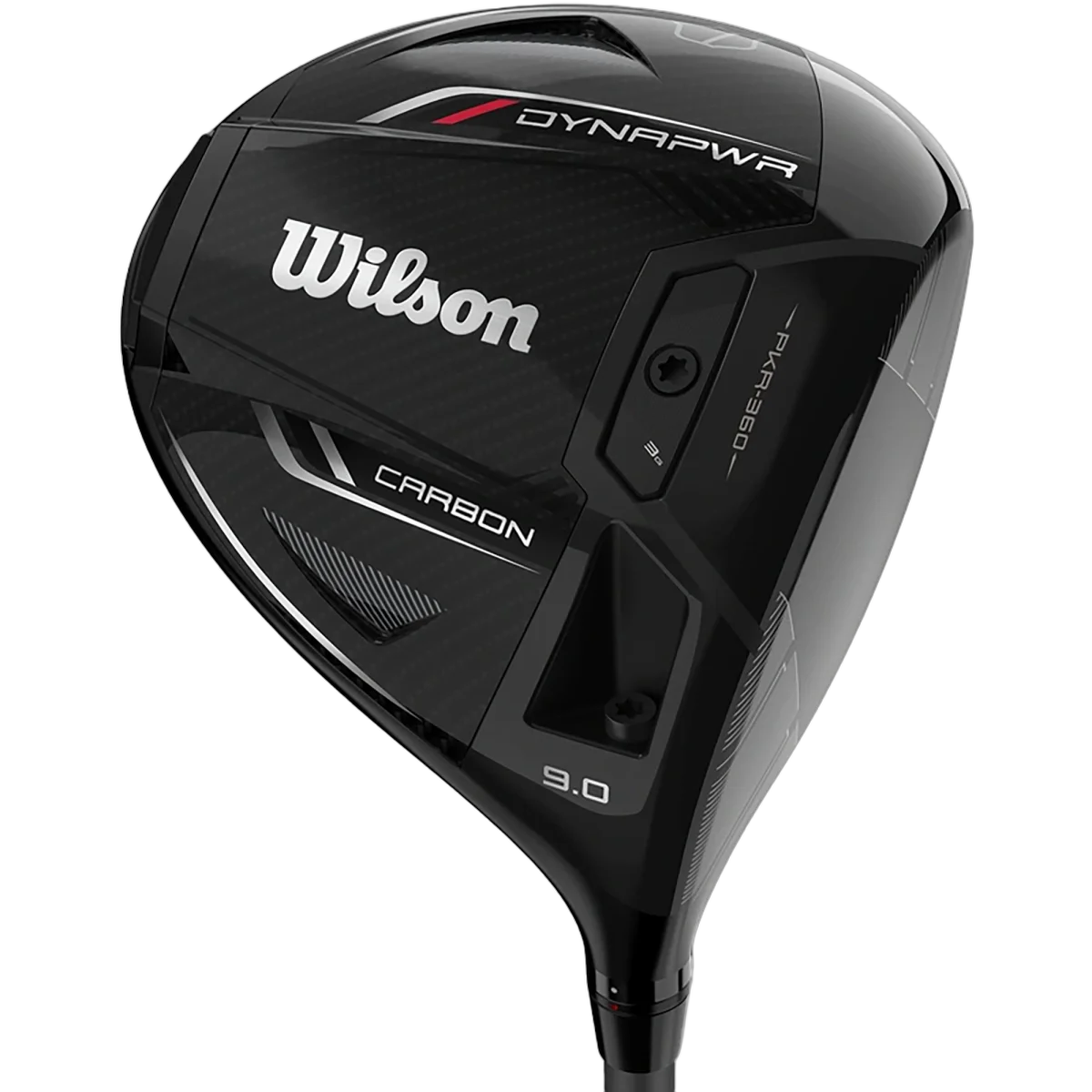
Wilson's AI-designed face and open hosel construction deliver ball speeds that compete with drivers costing far more -- this is a genuine performance driver at a mid-range price.
The Big Picture
Wilson has been on a quiet tear in the driver space, and the DYNAPWR Carbon is the clearest evidence yet that the brand deserves a seat at the table alongside TaylorMade, Callaway, and Titleist. This is the core model in the DYNAPWR family -- a 460cc head built for golfers who want a blend of forgiveness, competitive ball speed, and enough adjustability to dial in their preferred flight without needing a tour van.
The headline technology is PKR-360, Wilson's AI-driven face optimization system. After more than 1,000 hours of computational time and roughly 2,000 face iterations, the algorithm landed on a variable-thickness face design that expands the effective sweet spot and maintains ball speed across a wider hitting area. Wilson also introduced what it calls Open Hosel Construction -- essentially a clearing out of excess material from the hosel infrastructure that allows the face to flex more freely at impact. It sounds like a small detail, but the cumulative effect on ball speed is real.
The head features 58% carbon fiber surface area, which frees up mass for redistribution to more performance-critical locations. Swappable sole weights -- 3 grams and 9 grams -- let you toggle between a front-weighted, low-spin configuration and a rear-weighted, higher-MOI setup. The adjustable hosel adds another layer of tunability, offering plus-2 and minus-1 degrees of loft adjustment. Available in 8, 9, and 10.5 degree loft options, the DYNAPWR Carbon covers a wide range of swing profiles.
At $549 MSRP, this driver sits below the premium tier pricing of competitors like the TaylorMade Qi35 and Callaway Elyte, and that positioning is one of its most compelling attributes.
At Address
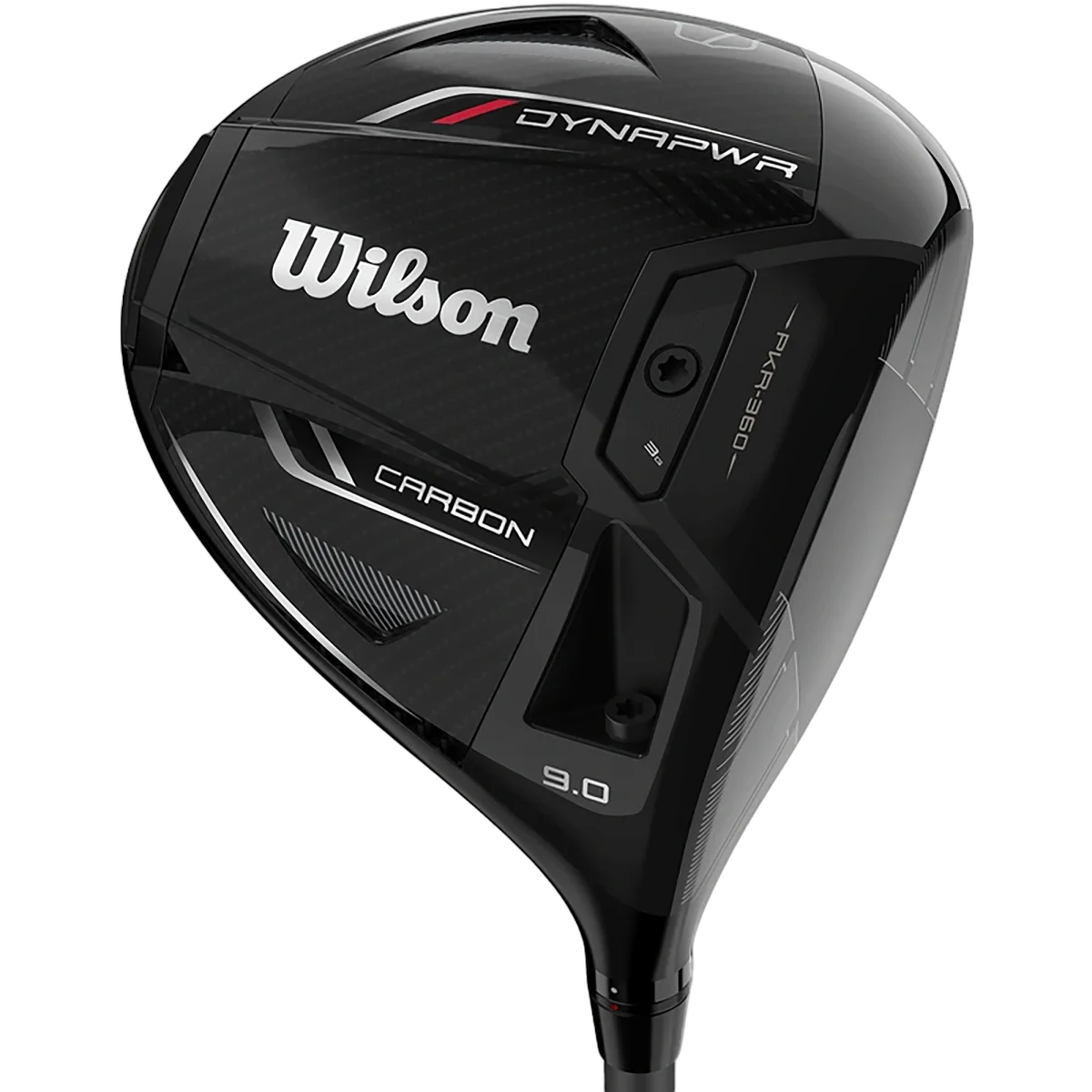
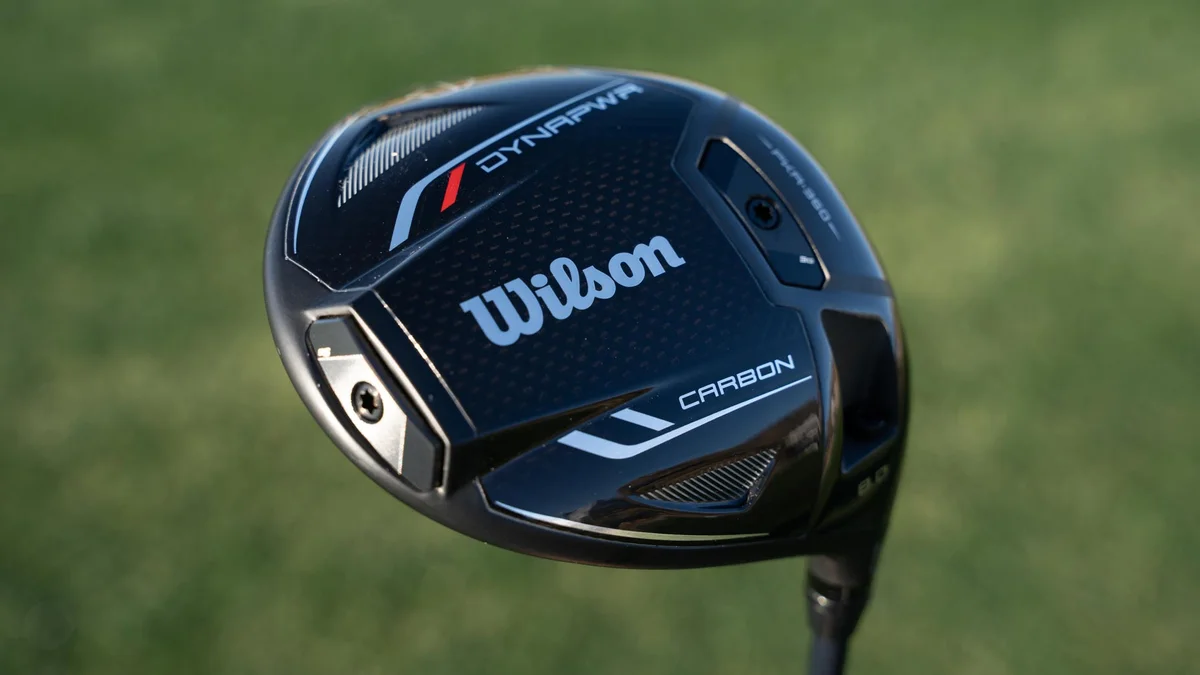
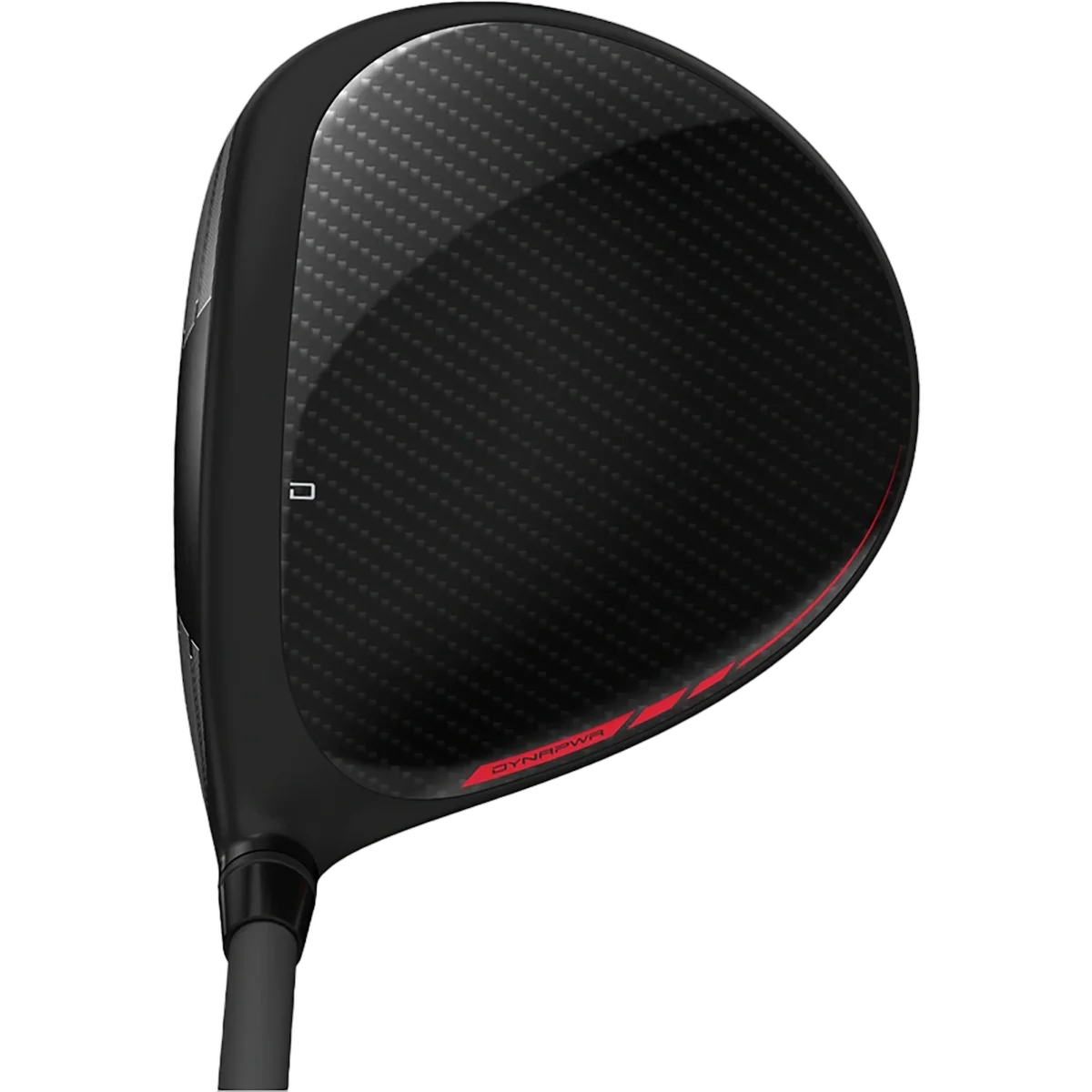
The DYNAPWR Carbon is one of the better-looking drivers Wilson has produced. The glossy carbon fiber crown is prominent and sophisticated -- it gives the head a modern, almost motorsport-inspired aesthetic without looking busy. Wilson kept the branding relatively discreet, which lets the materials speak for themselves. Compared to previous Wilson drivers, the shelf appeal here is a significant step forward, and it genuinely holds its own against the best-looking heads in the category.
Top-down address view with carbon fiber crown and red accent
At address, the 460cc profile sits confidently behind the ball without appearing oversized or bloated. Wilson's tour staff had input on the shaping, and it shows -- there is a compactness to the outline that belies the full-size volume. The crown is clean with good alignment cues, and you can see a touch of loft at address, which is inviting rather than intimidating. It is the kind of setup that makes you feel like the fairway is wide open.
Sound & Feel
Wilson put serious engineering effort into the acoustics of the DYNAPWR Carbon, using precision rib placement throughout the internal body to tune the frequencies at impact. The result is a crisp, powerful sound that has a slightly higher pitch than some competitors -- it is not the deep, muted thud you get from some carbon-crowned drivers, nor is it the metallic ping of a titanium crown. It sits in a satisfying middle ground that provides clear feedback without being harsh.
Center strikes produce a sweet, confident crack that lets you know immediately when you have found the middle. There is a lively quality to the feel through impact -- the face feels fast, and the feedback loop between sound and sensation is well-calibrated. Off-center hits produce a slightly duller tone that tells you where you missed without punishing your hands. Wilson clearly spent time running simulations on materials and face patterns to get this right, and the effort paid off.
Performance
Ball Speed & Distance
This is where the DYNAPWR Carbon makes its strongest case. In my testing, ball speeds were genuinely competitive with the best drivers on the market -- we are talking numbers in the 165 mph range with an aggressive swing, which puts this head right alongside the TaylorMade Qi35 and Callaway Elyte. The PKR-360 face optimization and Open Hosel Construction work in concert to produce face flex that translates efficiently into ball speed, and the consistency of those numbers across multiple swings was impressive.
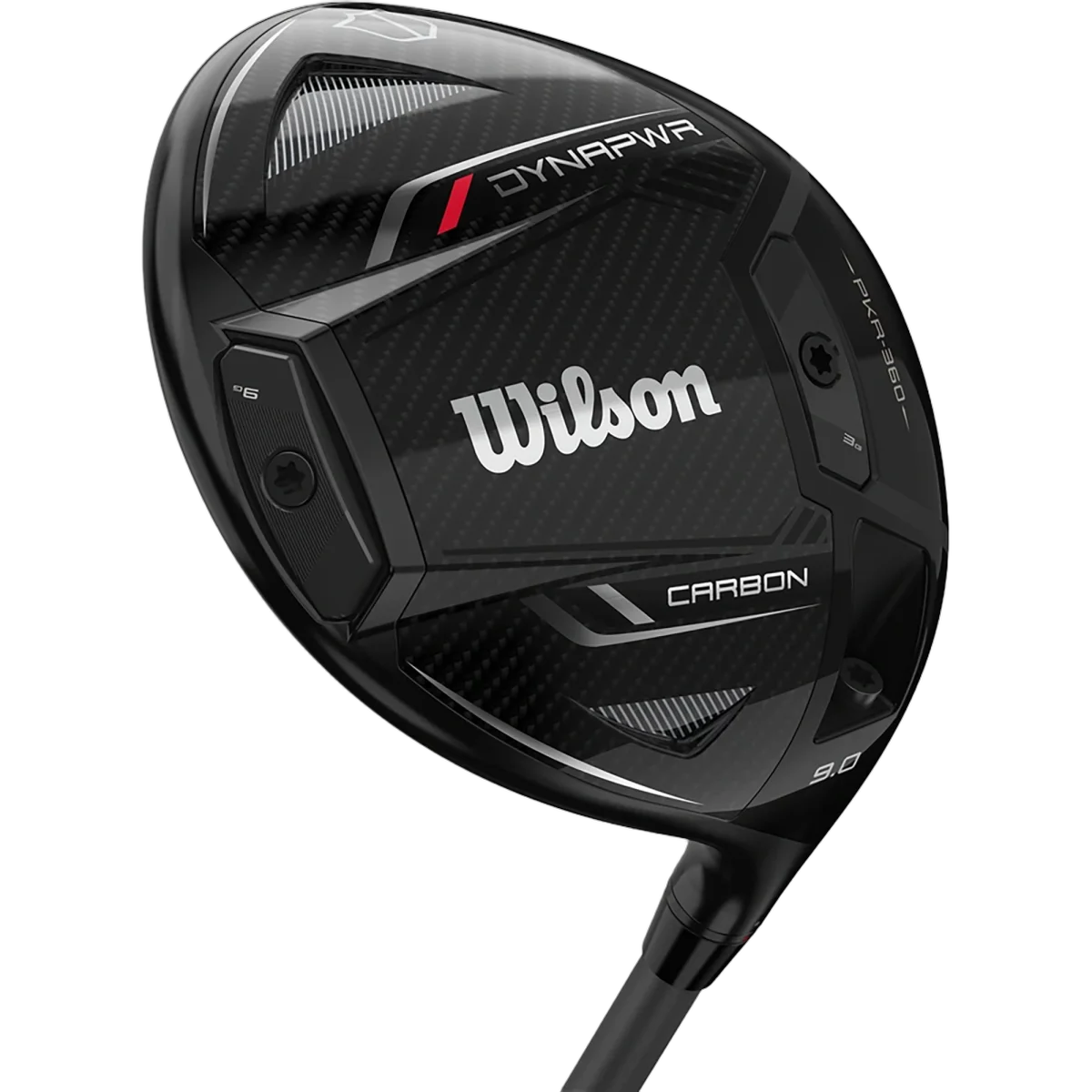
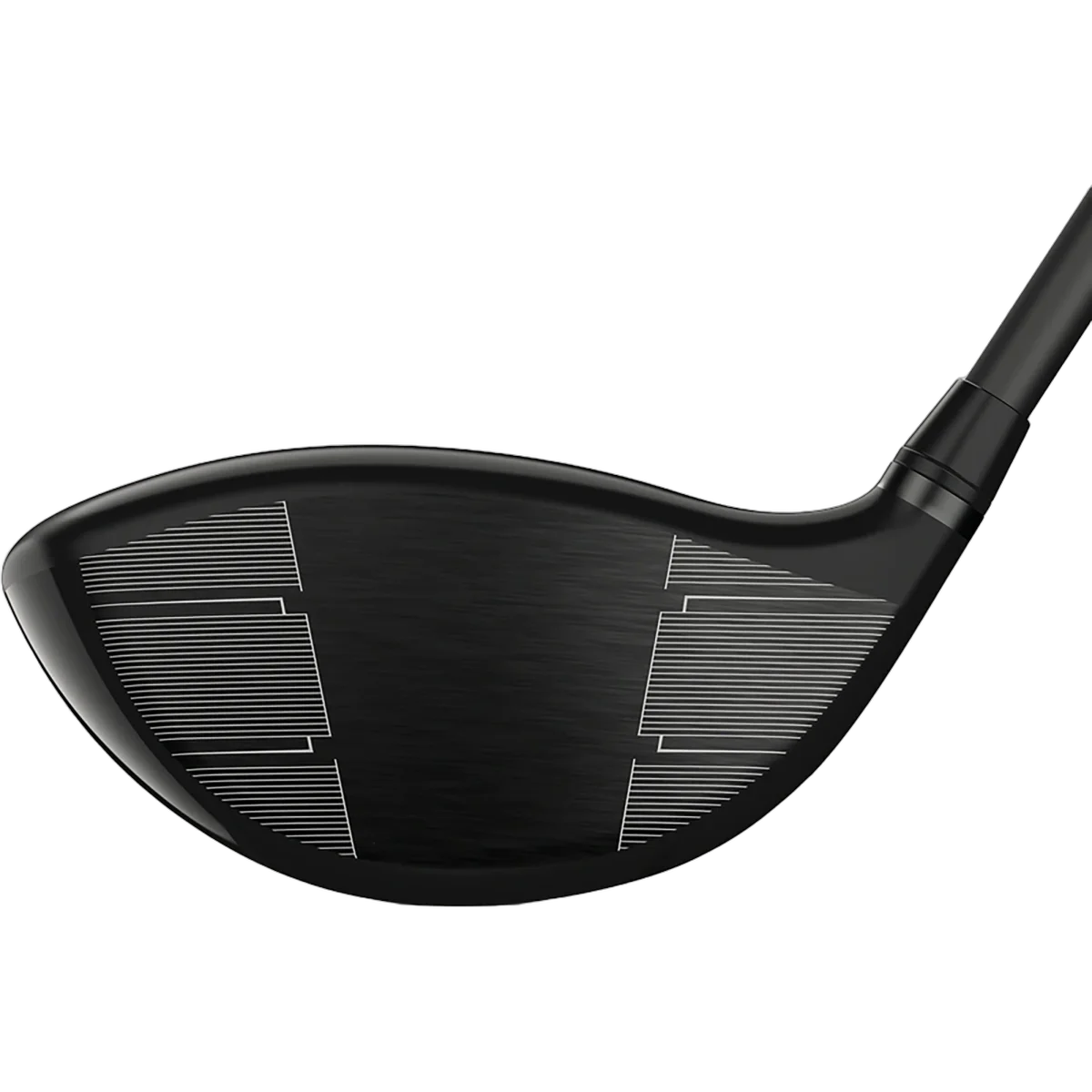
Open face showing the dark milled hitting area and groove pattern
Carry distances averaged around 280 to 285 yards in my sessions, which is elite territory for a driver in this price range. What struck me most was how well the driver maintained distance on imperfect strikes. Shots that drifted toward the heel or high on the face still carried within a few yards of center contact, and the roll-out was excellent thanks to the relatively low spin profile. The AI-optimized sweet spot is not just marketing -- the effective hitting area on this face is genuinely generous.
Launch & Spin
The DYNAPWR Carbon produces a mid launch with low-to-mid spin, a combination that generates a penetrating ball flight with plenty of carry and good rollout on landing. In my testing, launch angles sat around 11.5 to 12 degrees with spin rates in the 2,400 to 2,700 rpm range depending on the weight configuration.
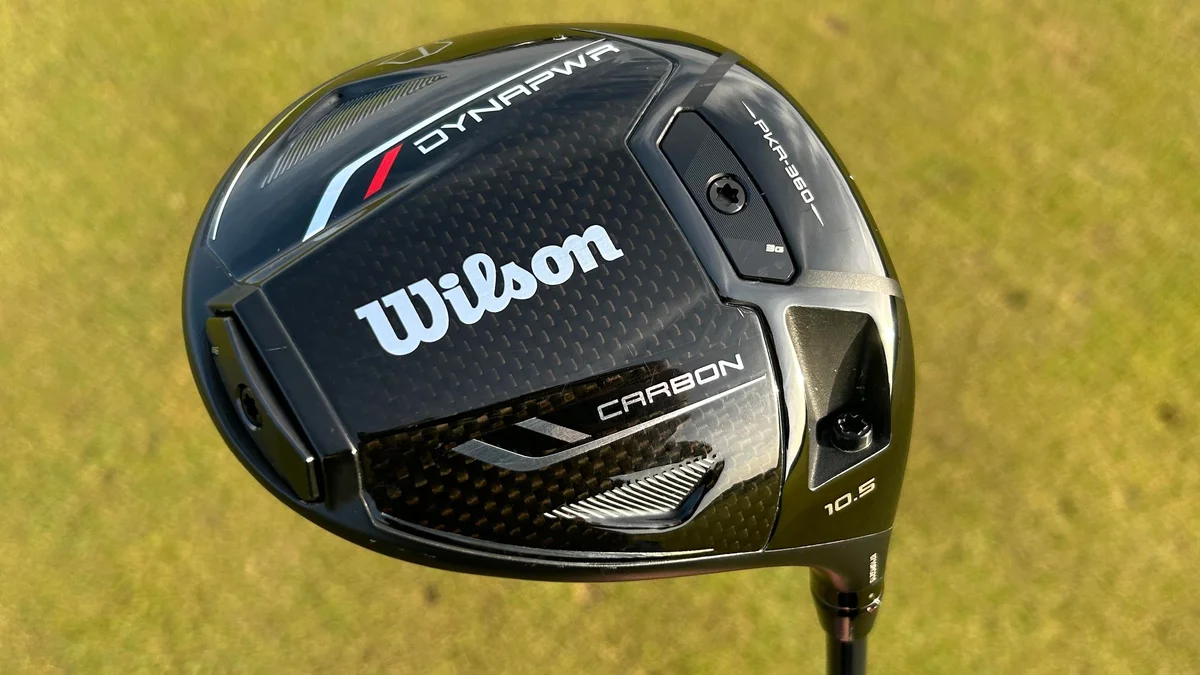
The swappable sole weights offer meaningful spin influence. With the heavier 9-gram weight in the front port, spin dropped roughly 150 rpm compared to the rear-weighted setup, producing a flatter, more boring flight that maximizes total distance in calm conditions. Moving the heavier weight to the back bumped spin slightly and increased stability, which is the better configuration for golfers who need help getting the ball in the air or who want maximum forgiveness. The adjustable hosel adds further control over launch conditions, and between the two systems, there is enough range to fit a wide variety of swing speeds and attack angles.
Dispersion & Shot Shape
Forgiveness is strong for a driver in the "core" category. With the heavier weight in the rear position, the DYNAPWR Carbon produced tight left-to-right dispersion in my testing -- among the best I have seen from any driver this year. The high MOI from the rear-weighted configuration does its job, keeping the face stable through off-center contact and limiting the lateral spread on mishits.
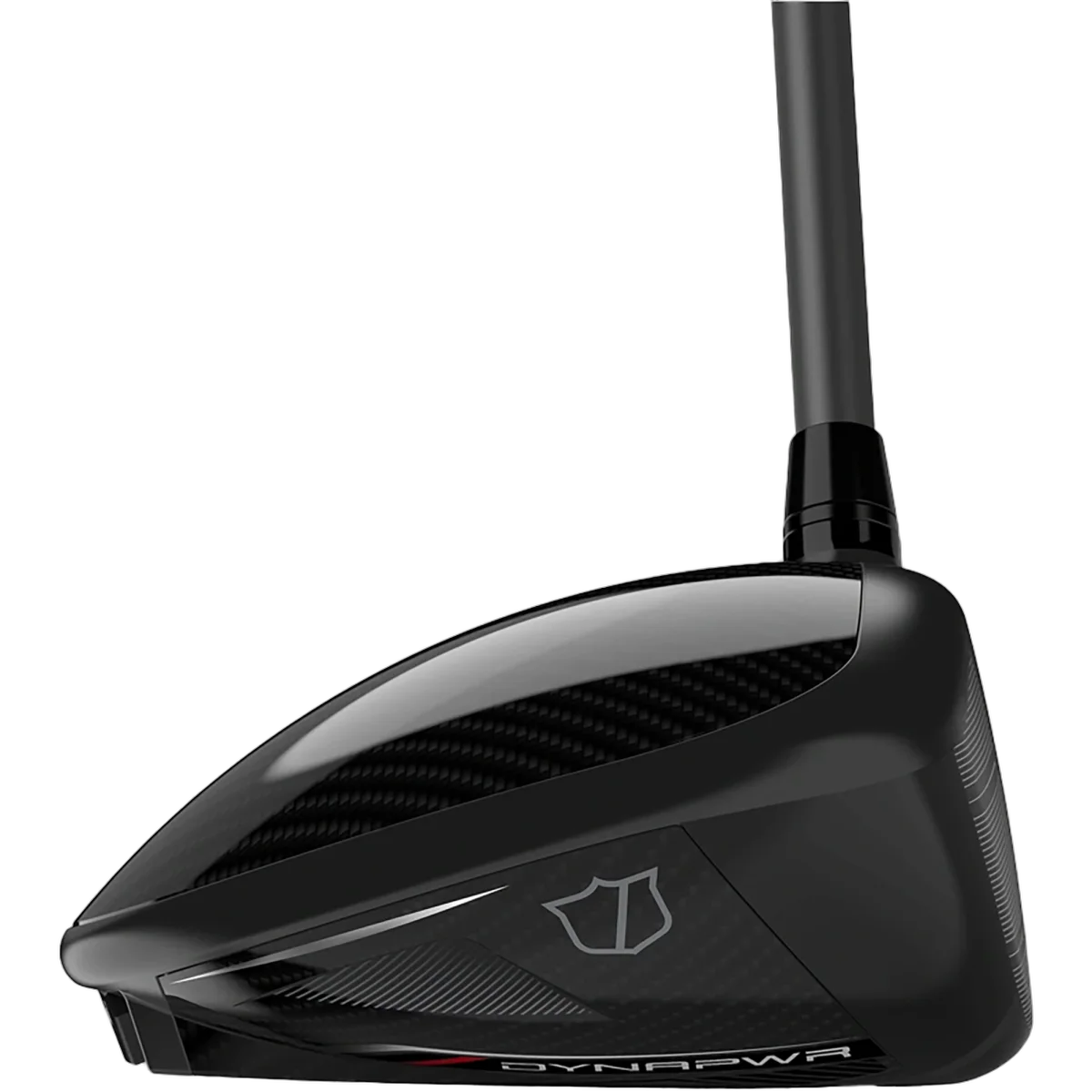
Detailed sole view with Wilson branding and PKR-360 weight port
The overall shot shape tendency is neutral. This is not a draw-biased driver, nor does it push the ball right -- it goes where you aim it, which I appreciate. Golfers who need draw bias will want to look at the DYNAPWR Max instead. The Carbon is designed for players who can produce a reasonably repeatable swing and want the driver to stay out of the way rather than impose a correction. The weight swapping does provide some ability to influence shape -- front weighting slightly favors a fade tendency while rear weighting promotes a touch of draw -- but the magnitude is subtle compared to dedicated draw or fade models.
Verdict
The Wilson DYNAPWR Carbon is a driver that punches well above its price point. Ball speeds compete with the most expensive heads on the market, carry distances are excellent, the spin profile is versatile through the swappable weight system, and the forgiveness is strong enough to keep average golfers in play on their less-than-perfect swings. The appearance is a genuine upgrade from previous Wilson models, and the sound and feel are dialed in.
Strengths: exceptional ball speed for the price, competitive carry distance, versatile spin tuning through swappable weights, tight dispersion with the rear-weighted configuration, sophisticated appearance, and a satisfying acoustic profile.
Weaknesses: brand perception still lags behind the big three for some golfers, the neutral shot shape may not help players who need built-in draw correction, and the weight swapping system -- while effective -- requires a wrench and some experimentation to optimize.
This driver is best suited for mid-handicap golfers who want legitimate tour-level ball speed and distance without paying tour-level prices. It is also an excellent option for golfers who are willing to look past brand names and let the performance data speak for itself. Wilson has built something genuinely impressive here, and the DYNAPWR Carbon deserves serious consideration from anyone shopping for a new driver.