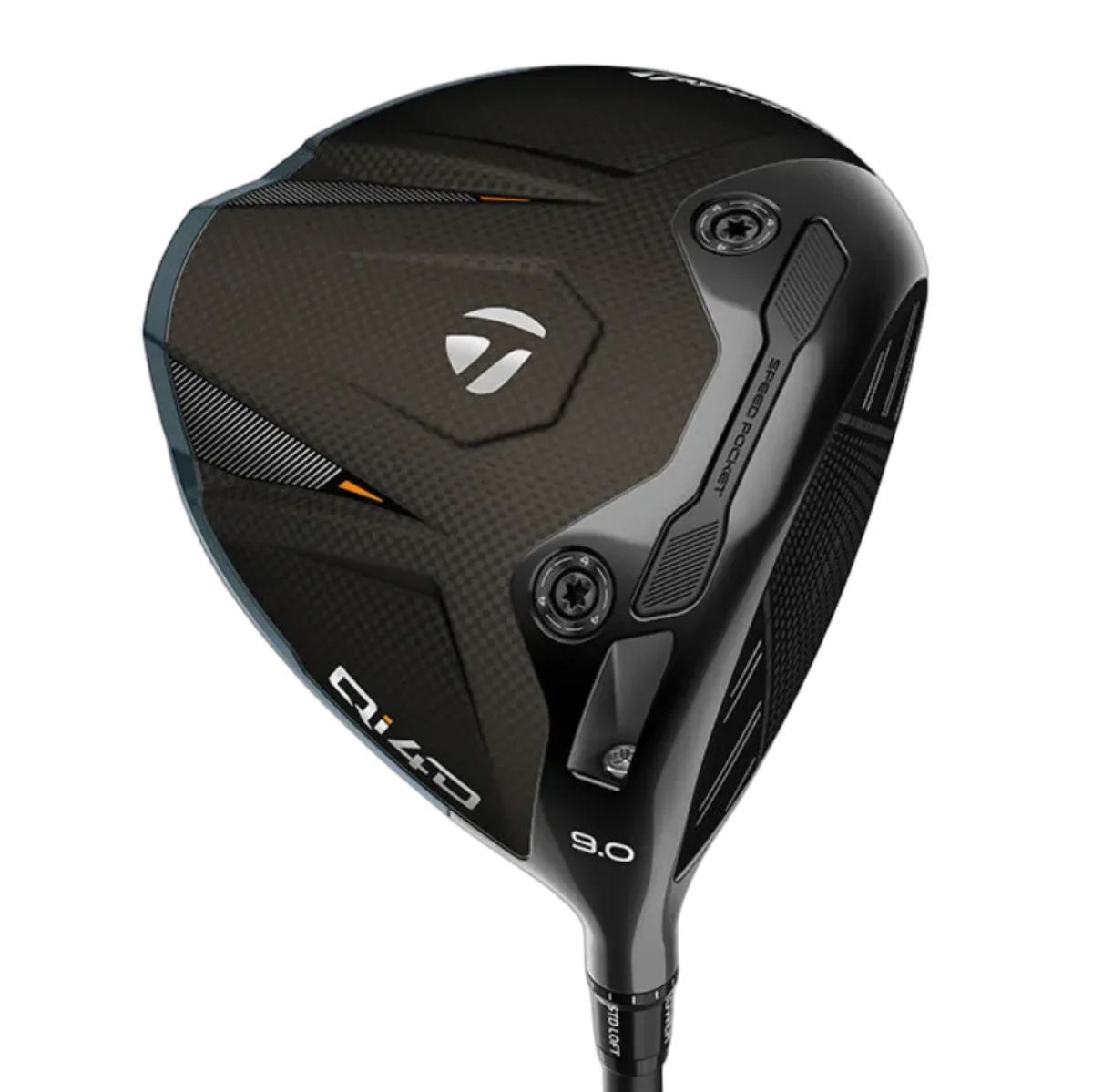
TaylorMade Qi35 Driver
TaylorMade — TaylorMade Qi35 Driver · By Lauryl · Feb 4, 2026

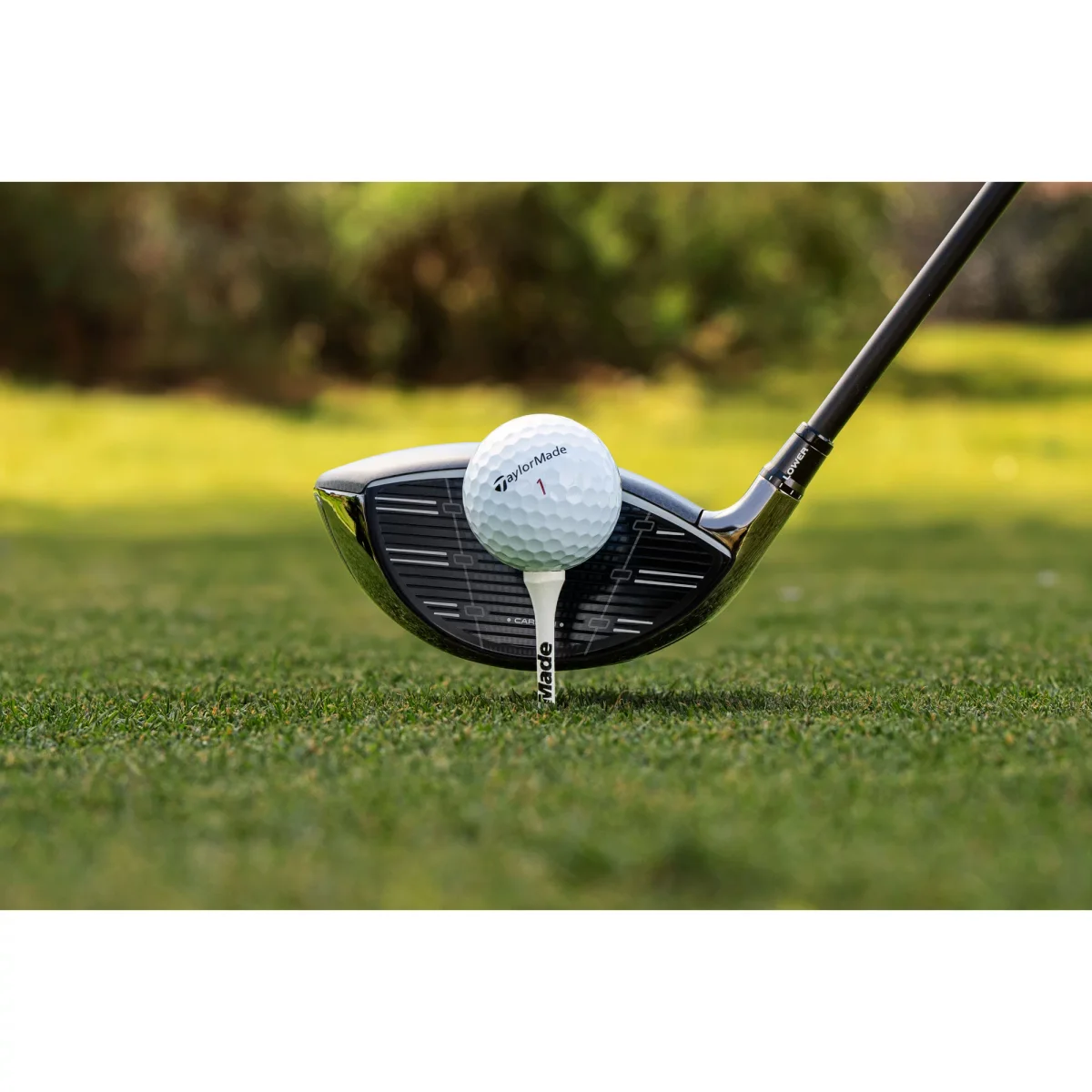
TaylorMade's quest for inertia continues with a driver that pushes forgiveness to the limit -- but the gains come with trade-offs worth understanding.
The Big Picture
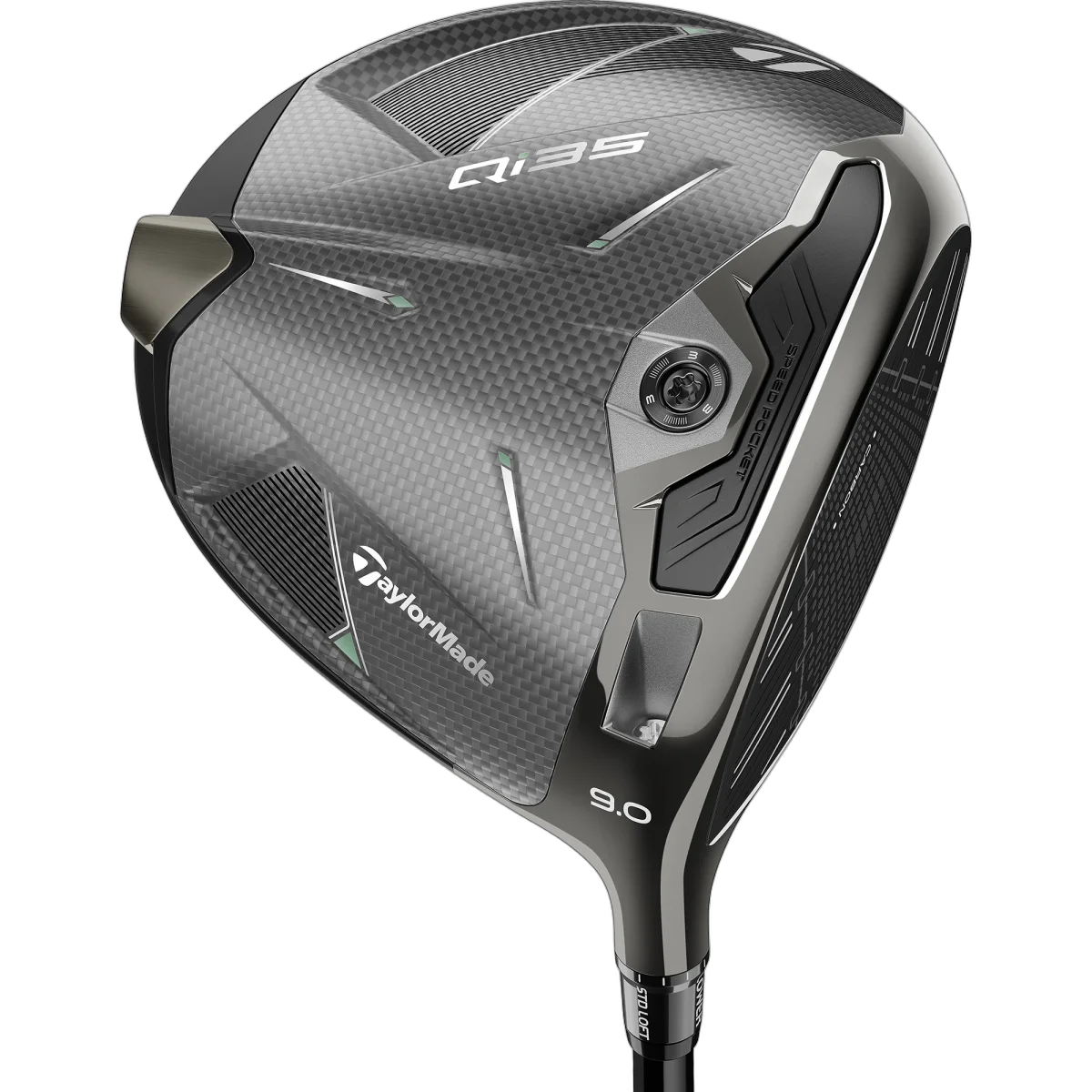
The Qi35 is TaylorMade's 2025 flagship driver and the successor to the Qi10 family. The name stands for "Quest for Inertia," and TaylorMade has taken that mission literally -- the Qi35 boasts a combined MOI (heel-toe plus low-high) of over 10,000 g-cm², which the company claims is the highest in the game. That is a significant jump from the Qi10, which itself was no slouch in the forgiveness department.
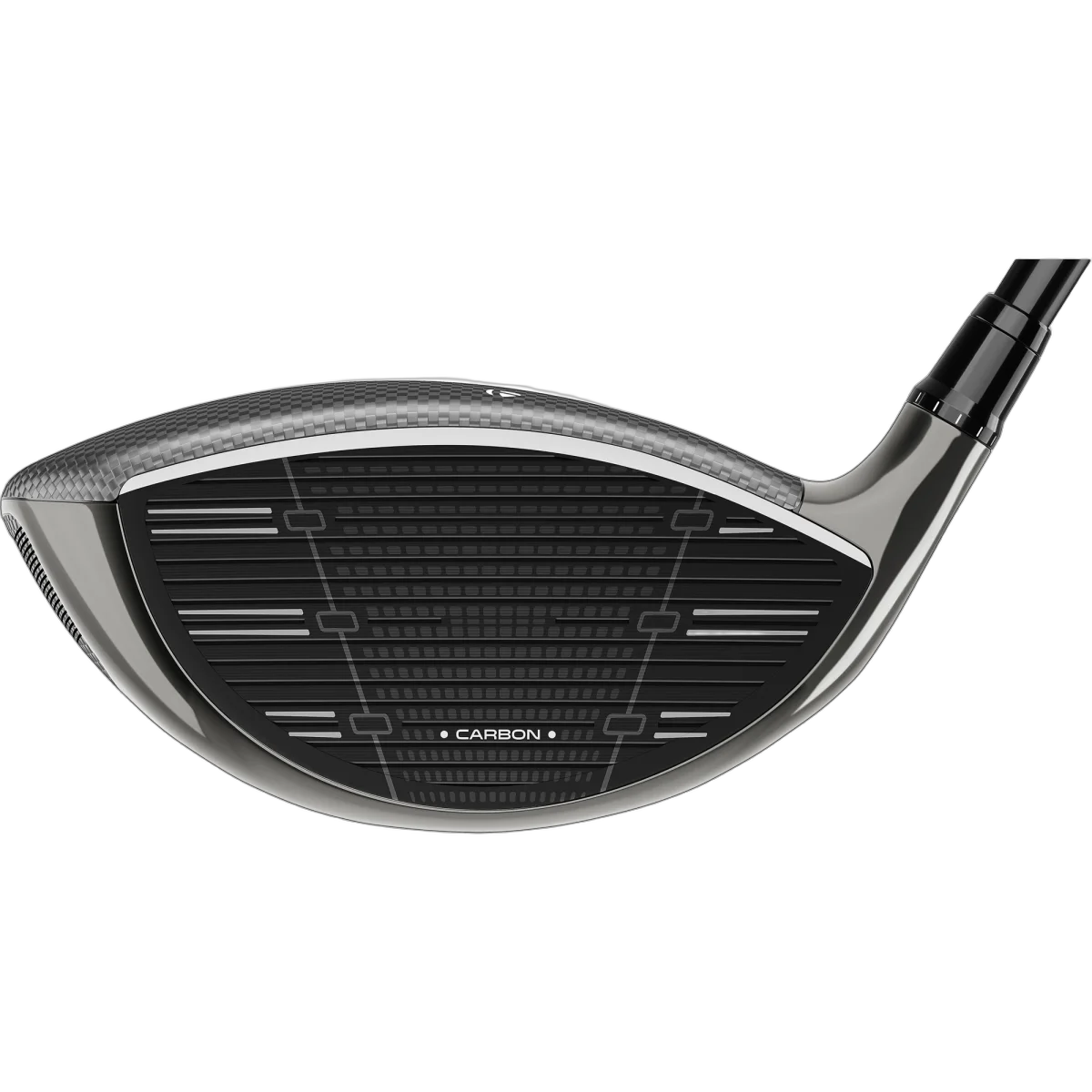
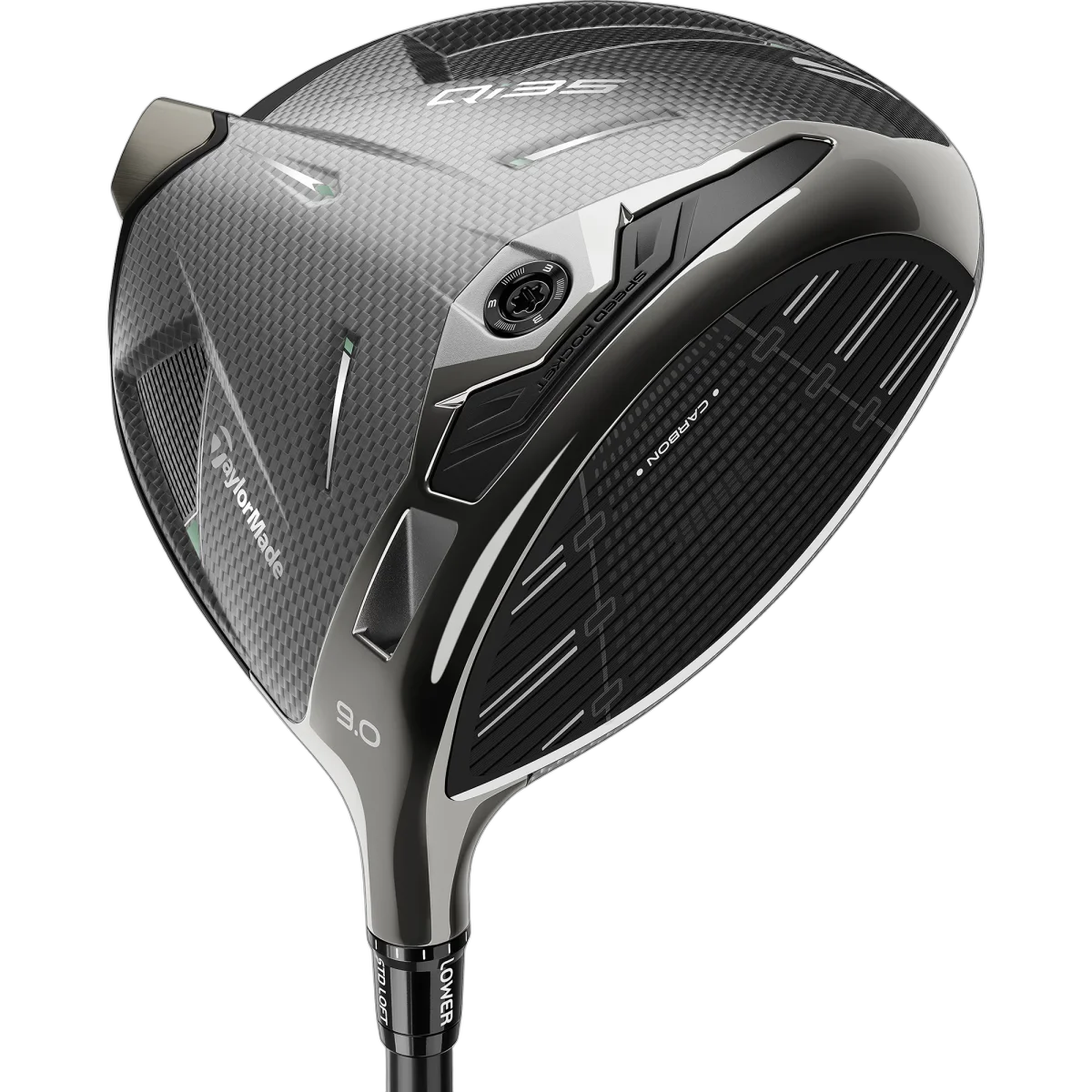
The engineering story centers on TaylorMade's 60X Carbon Twist Face, a full carbon fiber face construction that debuted with the Stealth line and has been refined through each subsequent generation. The Qi35 face is lighter than its predecessor, which frees up mass to be redistributed to the perimeter of the clubhead for that record-breaking MOI figure. Behind the face sits an all-new Infinity Carbon Crown that extends further across the top of the head, again saving weight where it matters least and adding it where it matters most.
At $599.99 MSRP for standard builds when it launched, the Qi35 sits at the premium end of the driver market. With the driver now available around $499.98, it has become a more reasonable proposition -- but it is still not cheap. The question is whether that extreme forgiveness translates into meaningful on-course improvement over the excellent drivers available for less.
At Address
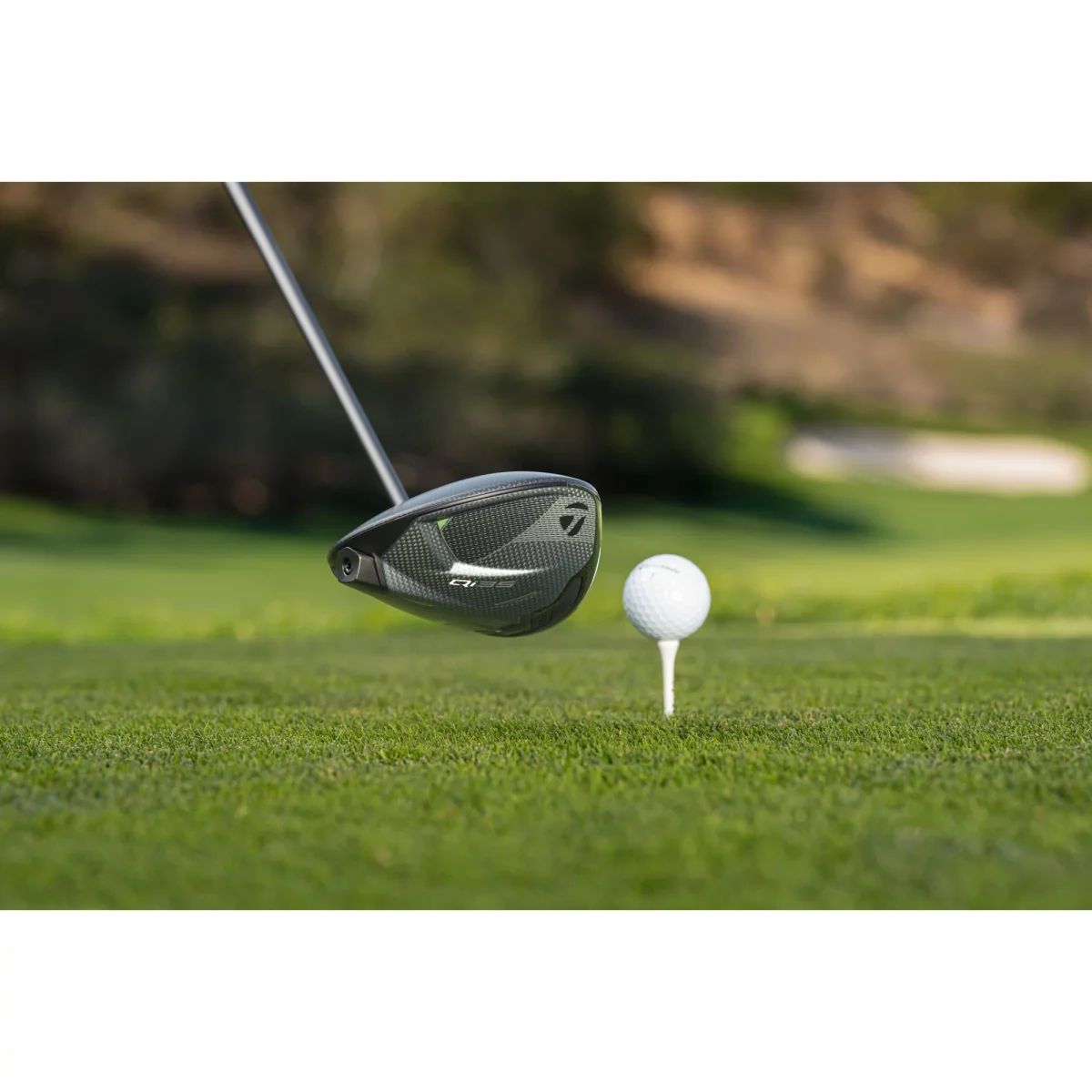
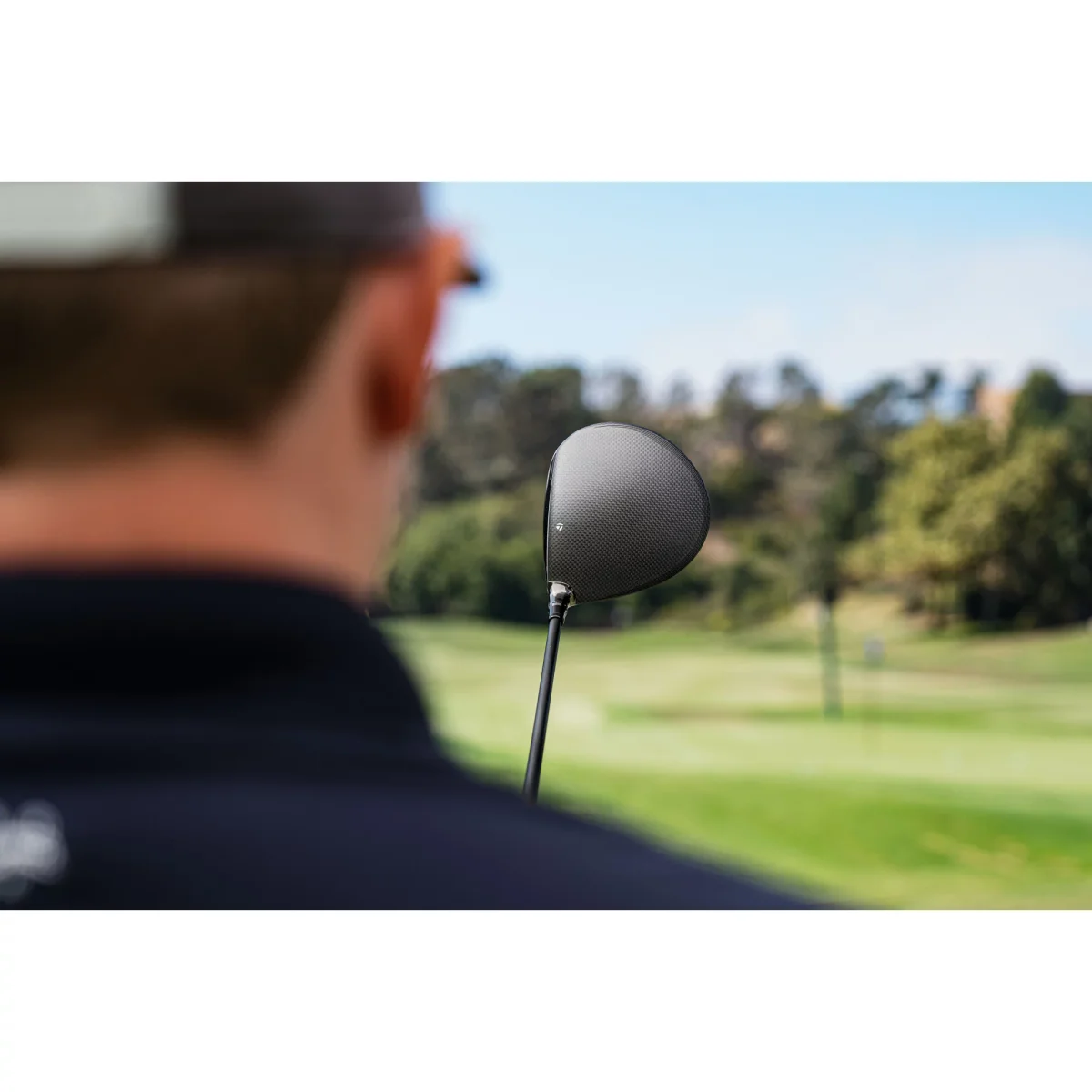
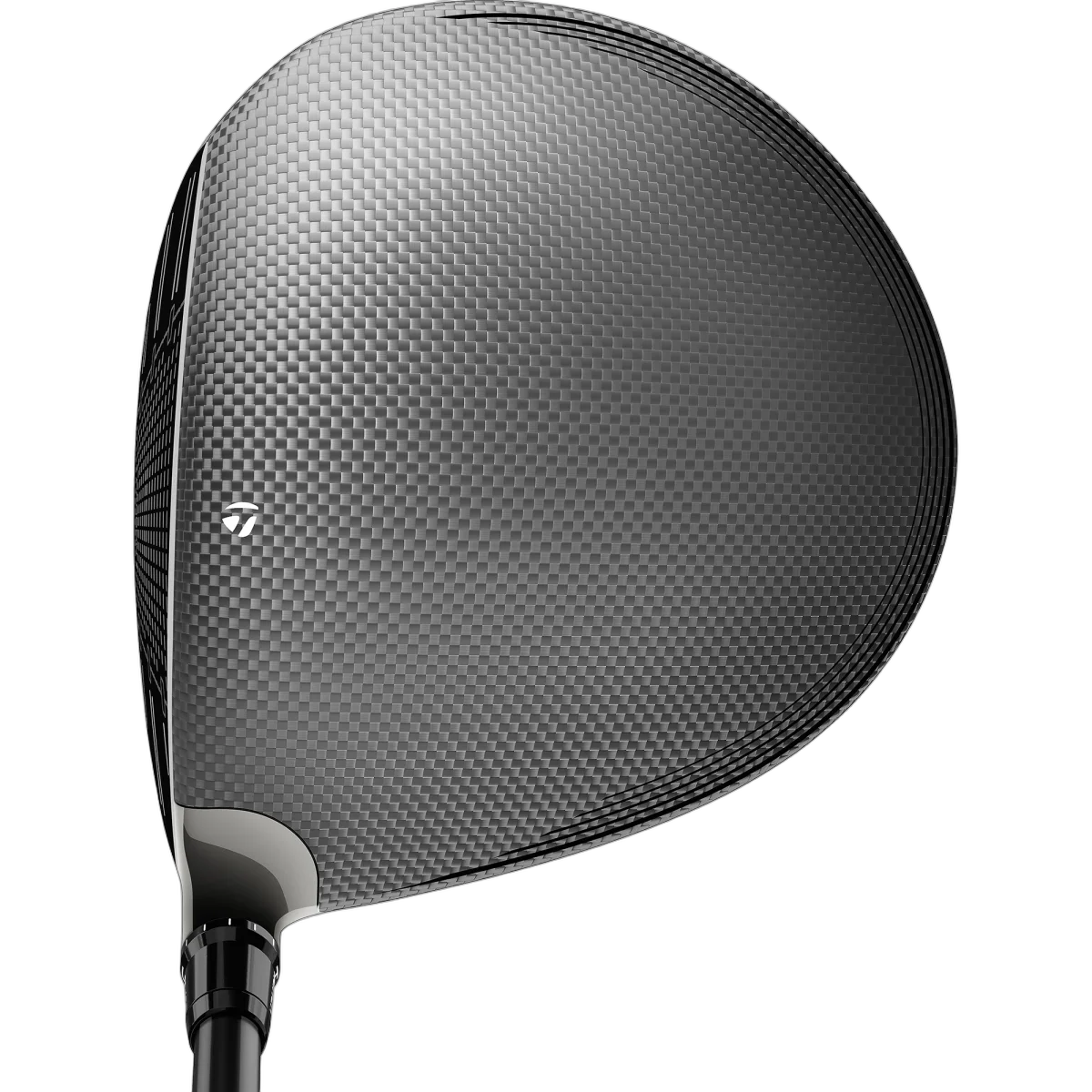
The Qi35 presents a clean, modern look behind the ball. The Infinity Carbon Crown is a deep charcoal black with a subtle texture, and the head shape is round and symmetrical in a way that frames the ball well at address. TaylorMade has kept the visual clutter to a minimum -- there is a small alignment feature on the crown, but it is understated compared to some competitors.
Driver positioned behind ball on tee at address on grass
The 460cc head looks every bit its full size, though TaylorMade has managed the proportions well enough that it does not appear bloated. The carbon face has a slightly different visual character than titanium -- there is a matte quality to it that takes some getting used to if you have spent years looking down at metallic faces. After a few range sessions, though, it becomes a non-issue. The overall impression at address is one of stability and confidence. This is a driver that looks like it wants to help you.
Sound & Feel
This is where the Qi35 will divide opinion. The carbon face produces a sound at impact that is distinctly different from a titanium-faced driver. Center strikes generate a muted, mid-pitched tone -- some would call it solid, others would call it dull. It lacks the sharp, metallic crack that many golfers associate with a well-struck drive. I found it perfectly acceptable after an adjustment period, but I know golfers who have tried carbon-face TaylorMade drivers and simply cannot get past the acoustics.
Feel on pure strikes is firm and responsive. You get a sense of energy transfer through the hands, and there is enough feedback to know when you have caught the middle. Mishits are where the high MOI earns its keep -- off-center contact feels surprisingly similar to center hits, which is both a blessing and a slight curse. The forgiveness is real, but the reduced feedback means you sometimes do not realize how far off-center you struck the ball until you check the launch monitor data. For the target audience of mid-to-high handicappers, that trade-off is almost certainly worth it. Better players who rely on feel to diagnose their swings may find the lack of distinction between good and mediocre contact frustrating.
Performance
Ball Speed & Distance
The 60X Carbon Twist Face is doing real work in the Qi35. In my testing, ball speeds on center strikes averaged around 164 to 167 mph with a swing speed in the 105 to 108 mph range, which translated to carry distances between 275 and 282 yards depending on conditions. Those numbers are competitive with the best drivers in the category, though not class-leading.
Close-up of the Qi35 carbon face with groove pattern
Where the Qi35 separates itself is on mishits. Ball speed retention across the face is genuinely impressive. Strikes an inch off-center -- heel or toe -- lost only 2 to 3 mph of ball speed compared to center contact in my sessions, which is better than most competitors by a meaningful margin. That consistency across the face means your average drive is longer, even if your best drive is not. For a golfer who does not hit the center of the face on every swing (which is most of us), this matters more than peak performance.
Total distance with a mid-trajectory setup was consistently in the 290 to 300 yard range on my home course, factoring in rollout. The carbon face has a hot, springy quality that seems to maintain energy transfer even on less-than-perfect contact.
Launch & Spin
The Qi35 launches in the mid range out of the box -- I measured launch angles between 10.5 and 12.5 degrees with the standard 10.5-degree loft setting and the stock Fujikura Speeder NX shaft in stiff flex. Spin rates settled around 2,300 to 2,600 rpm on center strikes, which is a healthy window for maximizing carry without ballooning.
One area where the Qi35 impressed me is spin consistency. The Spinsistency-style engineering -- TaylorMade does not use that exact branding, but the concept is similar -- keeps spin rates from spiking on low-face contact. Shots struck low on the face, which typically generate higher spin due to the gear effect and dynamic loft increase, came in only 200 to 400 rpm above center-strike averages. That is a meaningful reduction in the kind of high-spin, distance-killing drives that plague most golfers.
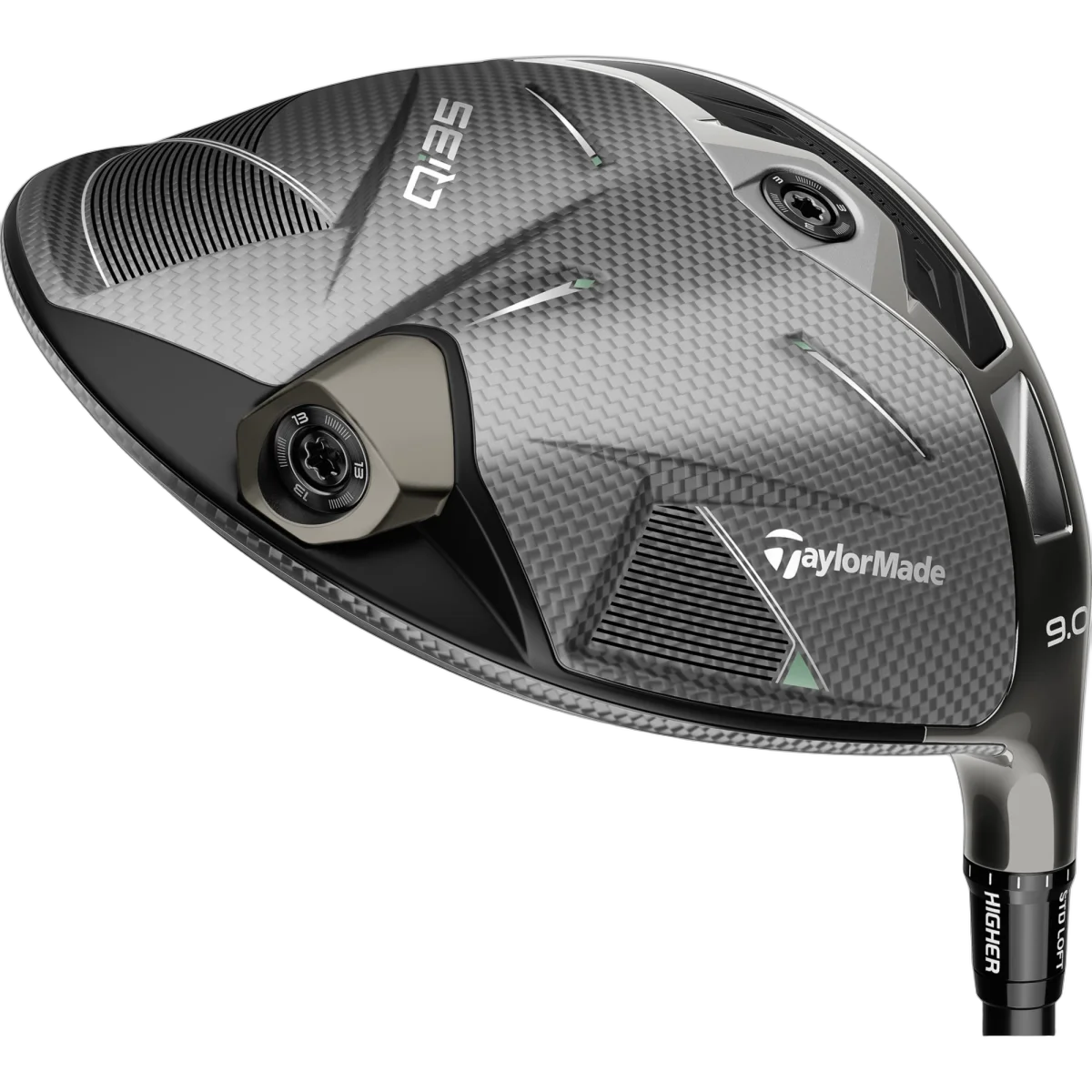
The adjustable hosel offers plus or minus two degrees of loft adjustment, giving you a reasonable range to fine-tune launch conditions. Combined with the right shaft, there is enough adjustability to dial in the flight for most swing types.
Dispersion & Shot Shape
Dispersion is the Qi35's calling card, and the numbers back up the marketing claims. My testing showed a total lateral spread of roughly 28 to 32 yards across a full session, which is tighter than most drivers I have hit in this category. The extreme MOI resists face rotation on off-center hits, which keeps mishits from curving as dramatically as they would with a lower-MOI head.
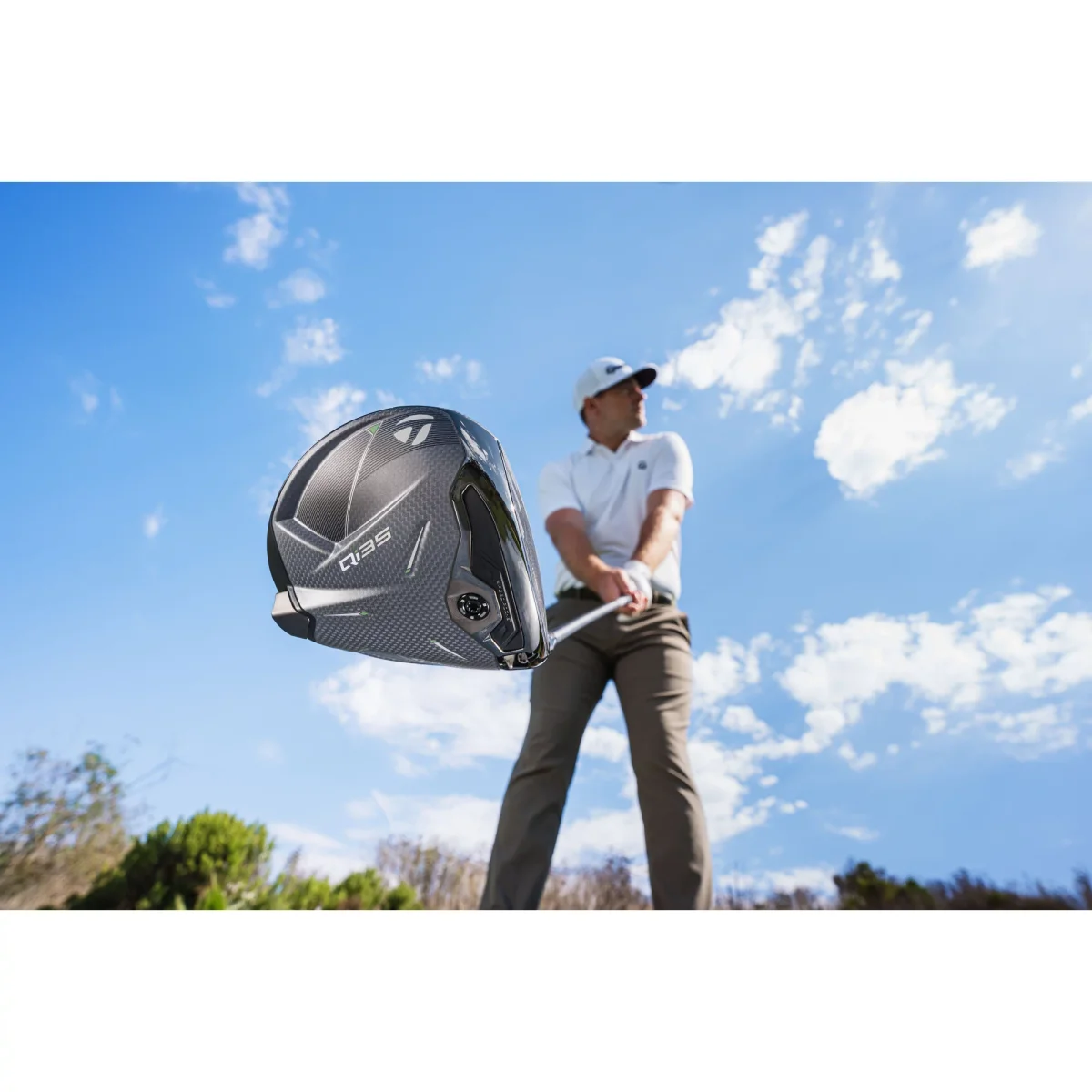
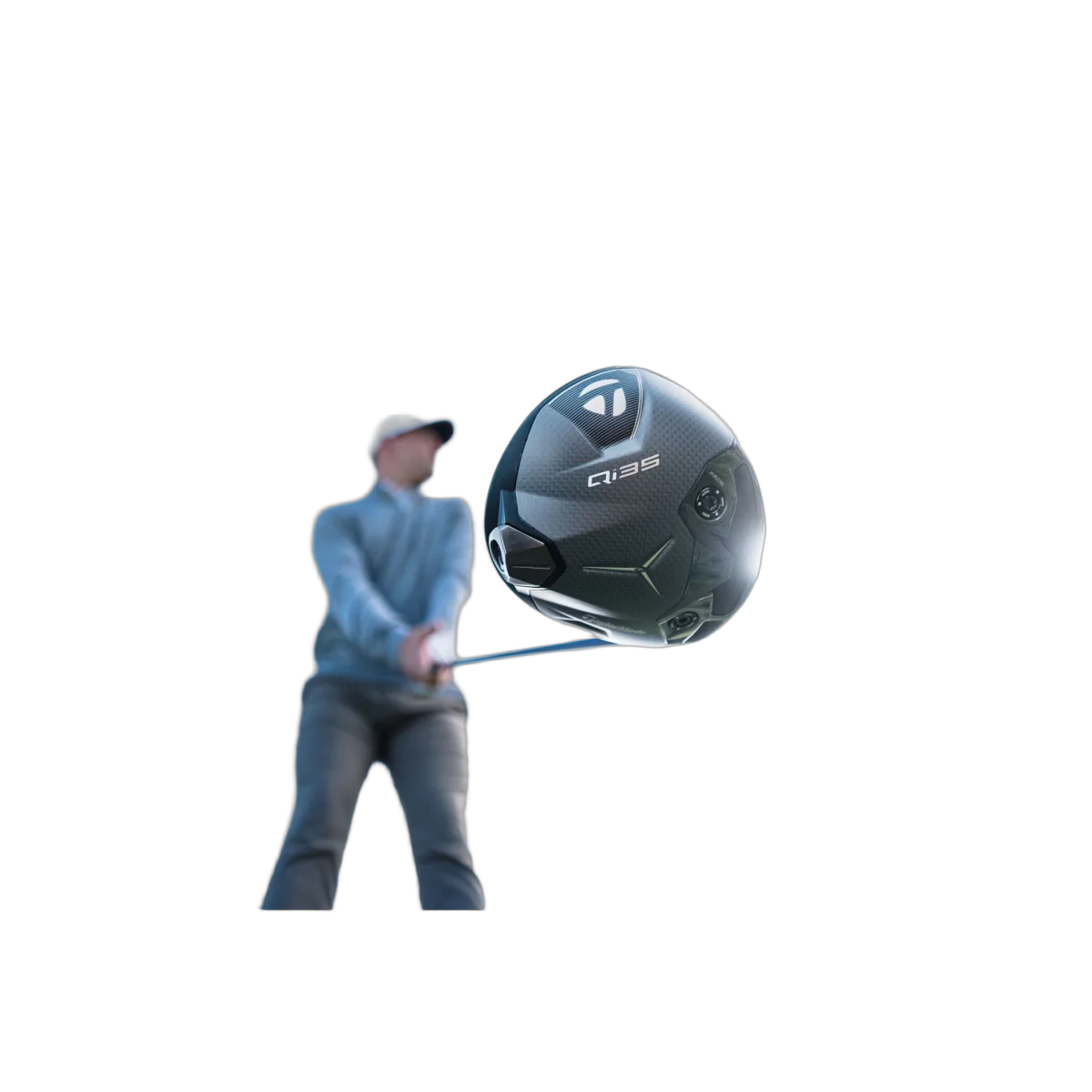
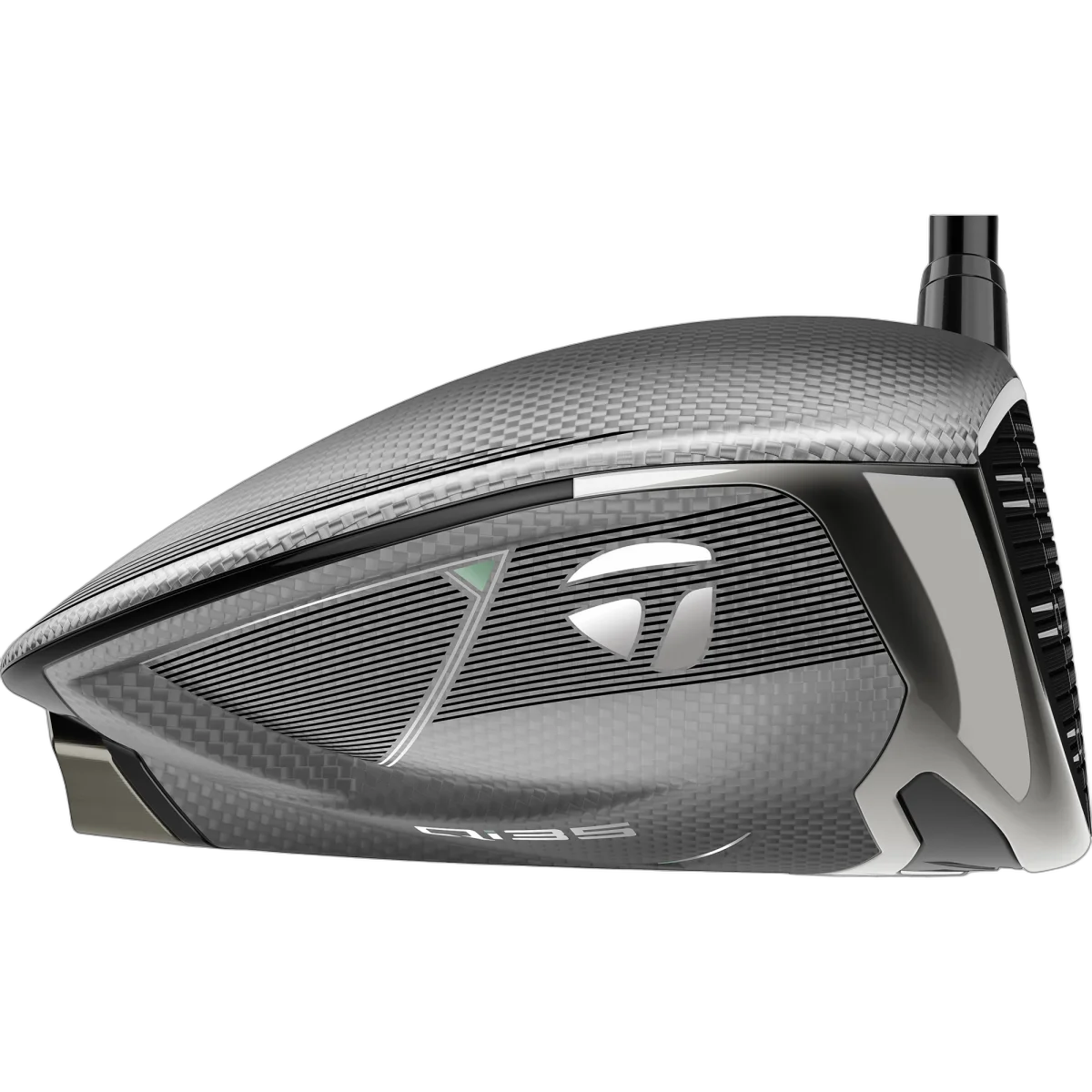
Rear angle view showing Qi35 branding and sole geometry
The flip side of that high MOI is limited workability. I found it genuinely difficult to shape the ball more than 5 to 8 yards intentionally in either direction. If you like to work the ball off the tee -- hitting a draw around a dogleg or a fade off a tight tee box -- the Qi35 will fight you. It wants to go straight, and it is stubborn about it. For the golfer who slices the ball 30 yards, that stubbornness is a gift. For the low-handicapper who wants shot-shaping control, it is a limitation.
The movable weight track on the sole allows some bias adjustment between draw and fade, which helps set a baseline shot shape. But this is a set-it-and-forget-it adjustment, not an on-course tool.
Verdict
The TaylorMade Qi35 is a forgiveness-first driver that delivers on its central promise. The record-breaking MOI translates into real-world benefits: tighter dispersion, better ball speed retention on mishits, and more consistent distance across the face. If your primary goal is to hit more fairways and reduce the penalty on your bad swings, this driver accomplishes that as well as anything on the market.
Strengths: exceptional forgiveness and ball speed retention across the face, tight dispersion, consistent spin rates even on mis-hits, clean and confidence-inspiring appearance, and meaningful distance on off-center strikes.
Weaknesses: the carbon face sound will not appeal to everyone, limited shot-shaping capability for better players, the muted feedback makes it harder to diagnose strike quality by feel alone, and the premium price point -- even discounted -- puts it above several excellent alternatives.
The Qi35 is best suited for mid-to-high handicap golfers who value consistency over control, and who want a driver that minimizes the damage on their worst swings rather than maximizing the reward on their best. It is also a solid option for seniors or anyone whose swing speed has dropped and who needs every bit of ball speed they can get on off-center contact. Better players who prioritize feel and workability should look at the Qi35 LS or consider alternatives from PING or Titleist.