TaylorMade Qi Max Irons
TaylorMade — TaylorMade Qi Max Irons · By Troy · Dec 26, 2025
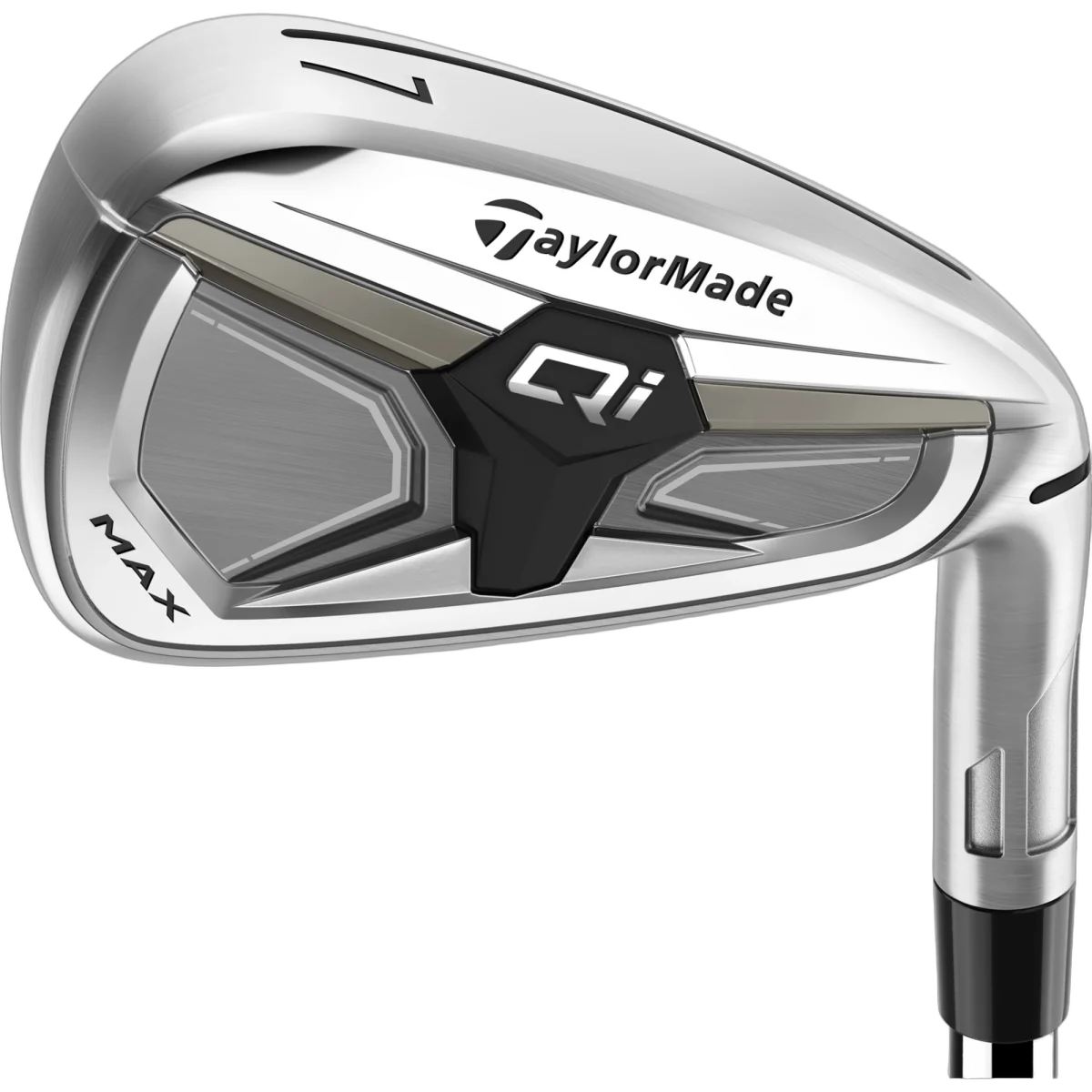
Straight distance in a package that finally looks the part for game improvement.
The Big Picture
TaylorMade took a year off from releasing a new iron alongside the Qi35 carbonwood family in 2025, opting instead to let the original Qi iron ride out another season. That patience paid off. The Qi Max is a ground-up refinement of everything that made its predecessor a category leader, targeting what TaylorMade calls "straight distance", reduced cut spin without resorting to a traditional draw bias, alongside improved sound and feel courtesy of a new internal Sound Stabilization Bar and ECHO damper material.
This is a game-improvement iron built for high handicappers and mid handicappers who want maximum forgiveness without having to apologize for what's in the bag. There's also a Qi Max HL model with lofts three degrees weaker and lighter overall construction for slower swing speeds, which is a smart acknowledgment that stronger lofts don't help everyone. But the standard Qi Max is the flagship here, and it's where I spent most of my testing time.
At Address
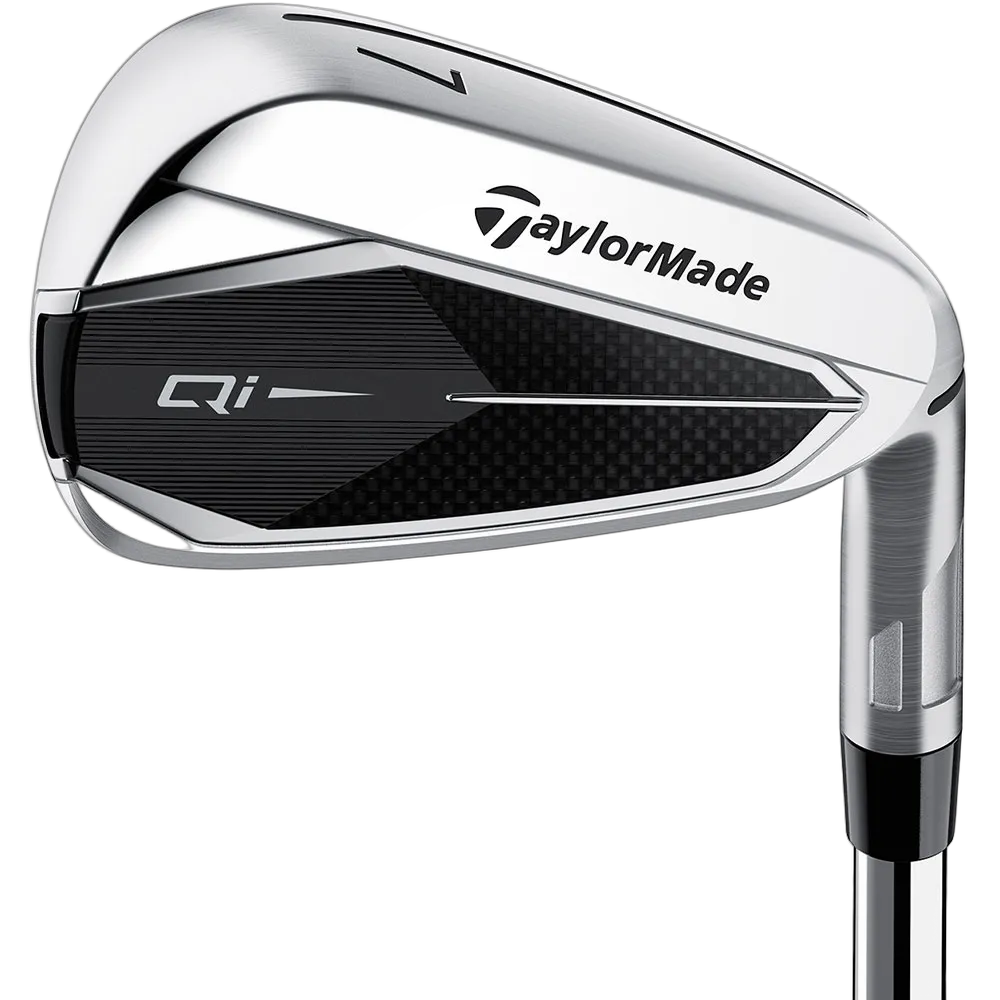
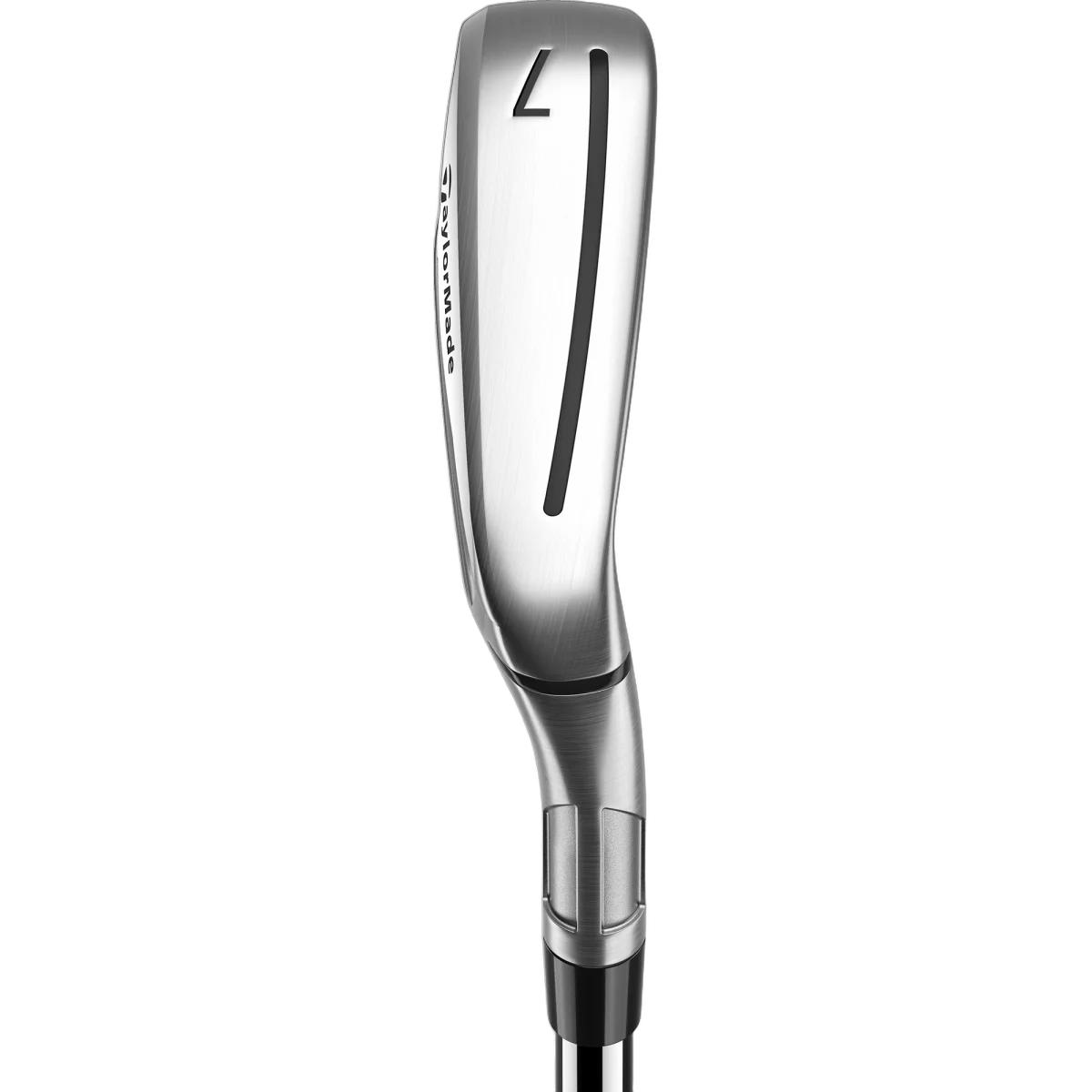
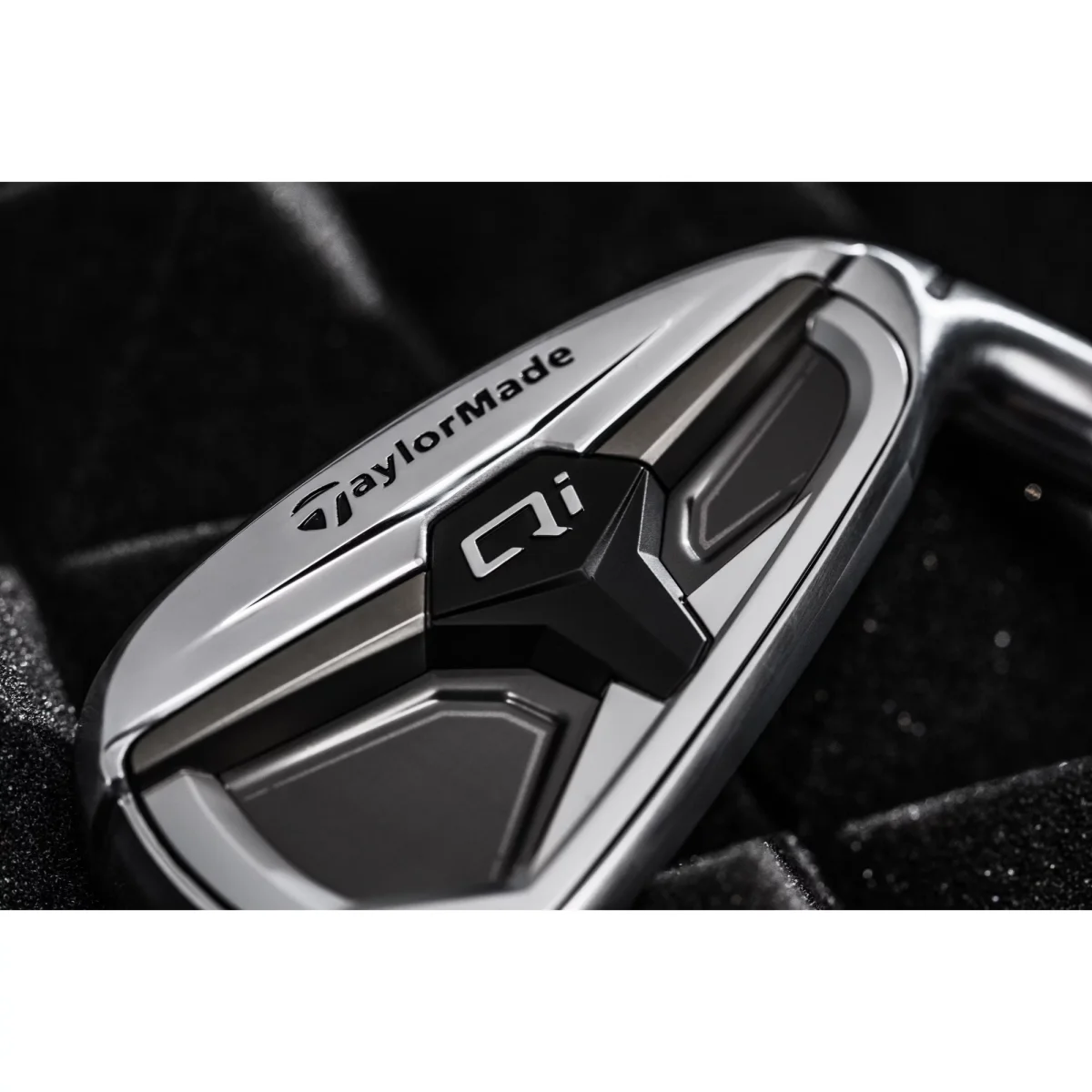
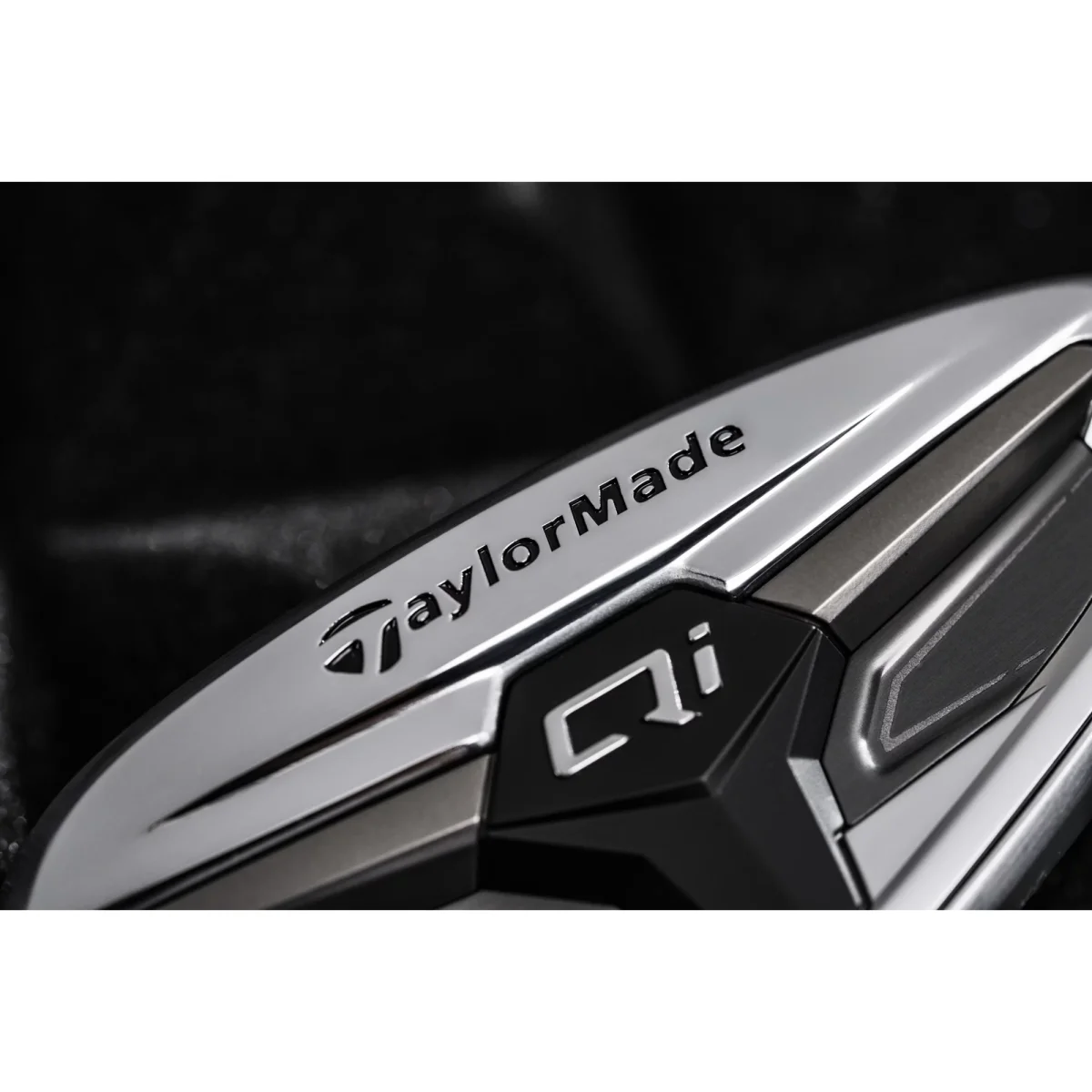
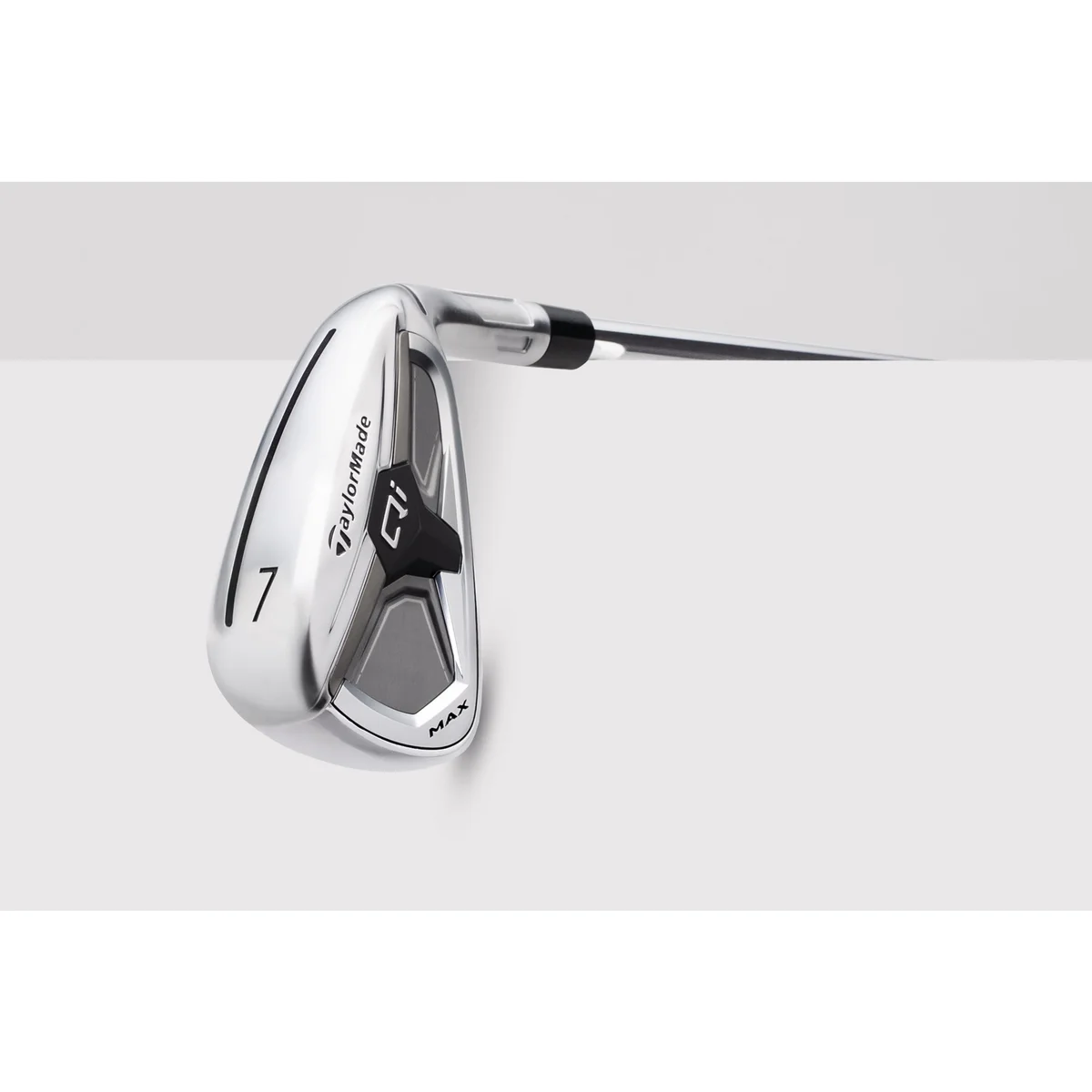
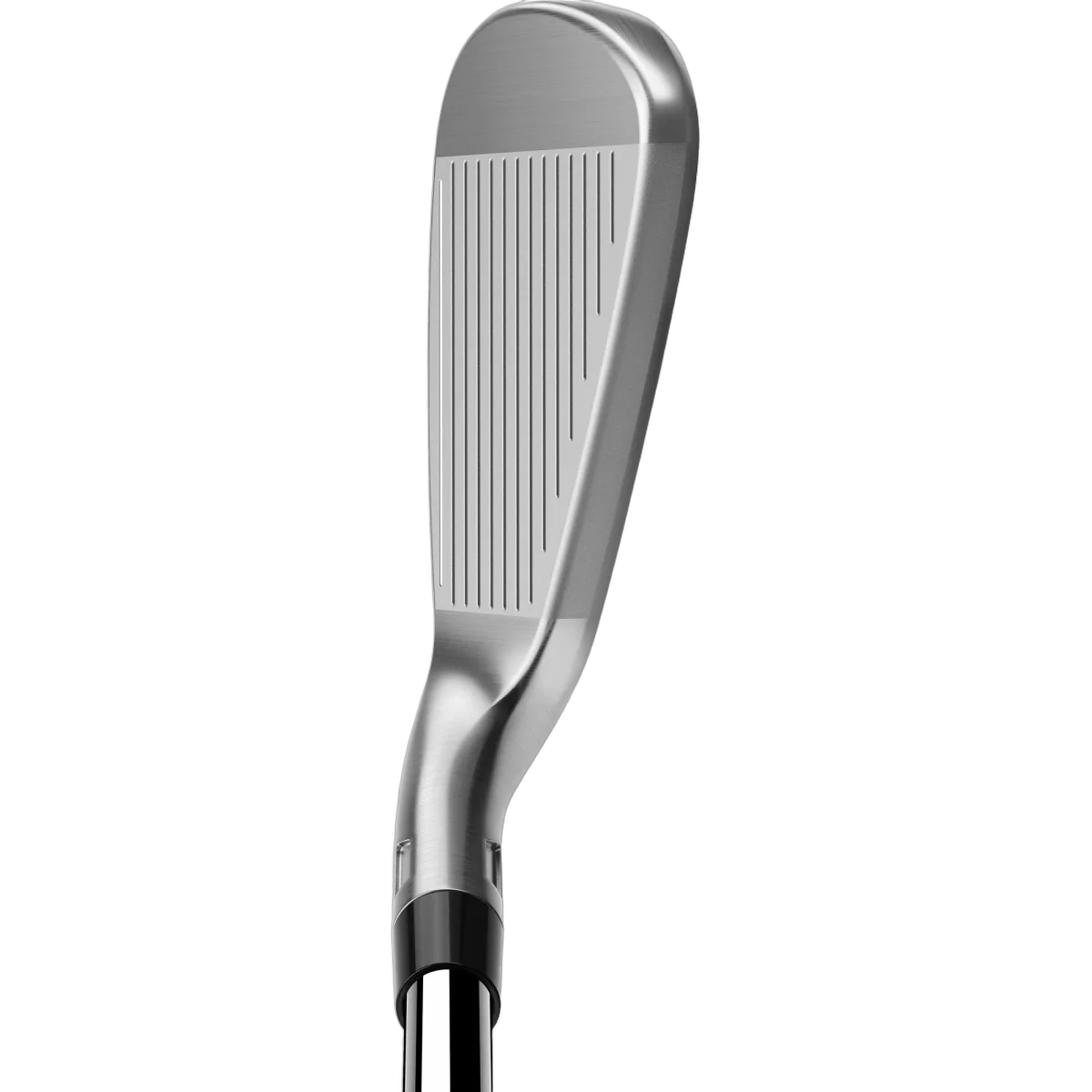
TaylorMade has clearly heard the feedback about game-improvement aesthetics. The Qi Max presents a young, modern design that doesn't scream "I need help" when you pull it from the bag. The topline is chunky, there's no getting around that, especially in the HL model, but it's well-proportioned. The sole is generous through the long irons, which is actually a good thing when you need turf interaction confidence on a 5-iron. At address, the profile is a refined players' shape by game-improvement standards, with a slightly thinner topline and shorter blade length than many competitors.
Top-down view of 7-iron showing topline and TaylorMade branding
They still have work to do to match Srixon and Mizuno in shelf appeal, but they're ahead of Cobra and Callaway in this category. The overall impression is clean and fresh without being over-badged or trying too hard.
Sound & Feel
This is where things get complicated. TaylorMade made sound and feel the headline marketing story for Qi Max, touting the new Sound Stabilization Bar and ECHO damper as game-changers. The bar connects the topline to the lower internal structure, while the ECHO damper material is positioned to reduce vibrations and deliver what TaylorMade claims is incredible feel for a game-improvement iron.
The reality is more nuanced. The Qi Max sounds and feels like a game-improvement iron, because it is one. There's a slightly high, clicky note at impact that's characteristic of the category, and no amount of internal damping is going to make a multi-piece, hollow-body construction feel like a one-piece forging. Is it better than some GI irons I've hit? Yes. Is it a staggering leap forward? No. If TaylorMade hadn't leaned so heavily into the "superior feel" messaging, I'd probably be less critical. For the target market, golfers who don't hit forty different irons a year, this is perfectly fine. But for anyone coming from forged players' irons expecting a revelation, temper your expectations.
Performance
Ball Speed & Distance
Here's where the Qi Max earns its keep. I have never seen numbers like this from a 7-iron. Ball speeds topped out above 150 mph with relative ease, and carry distances of 160 to 164 yards were consistent and repeatable. Total distances pushed toward 180 yards in the right conditions. For context, those are numbers I'd typically associate with a strong 5-iron, not a 7.
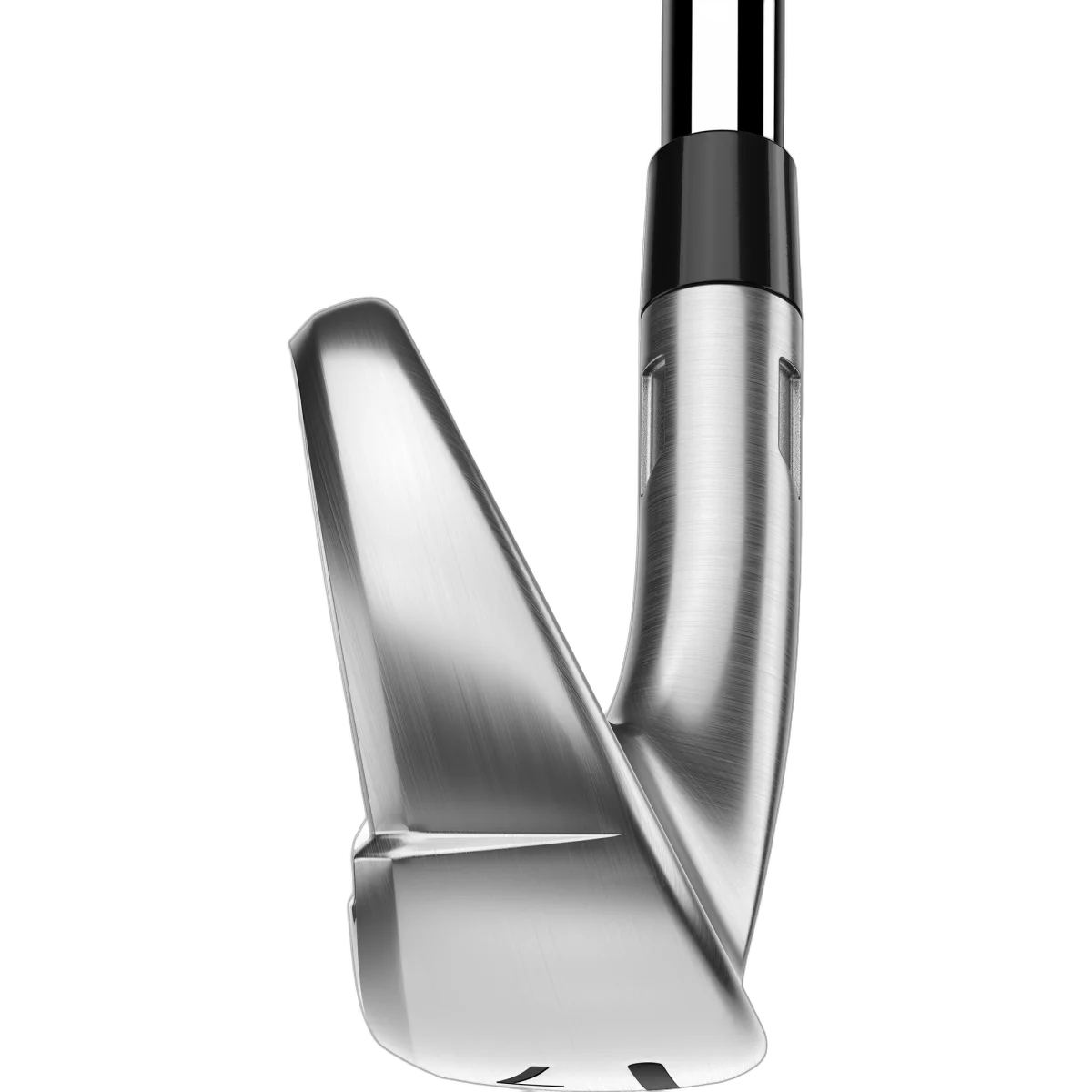
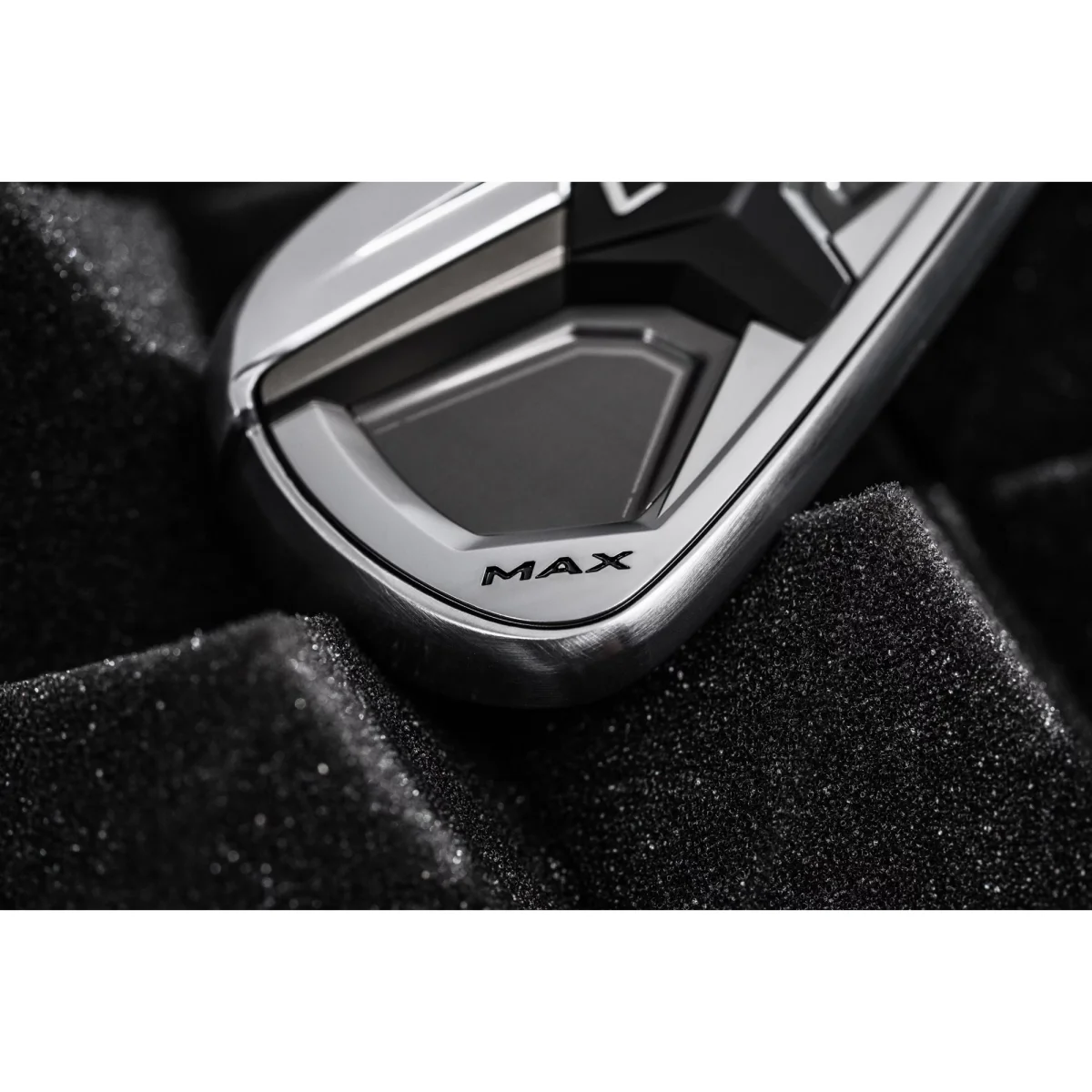
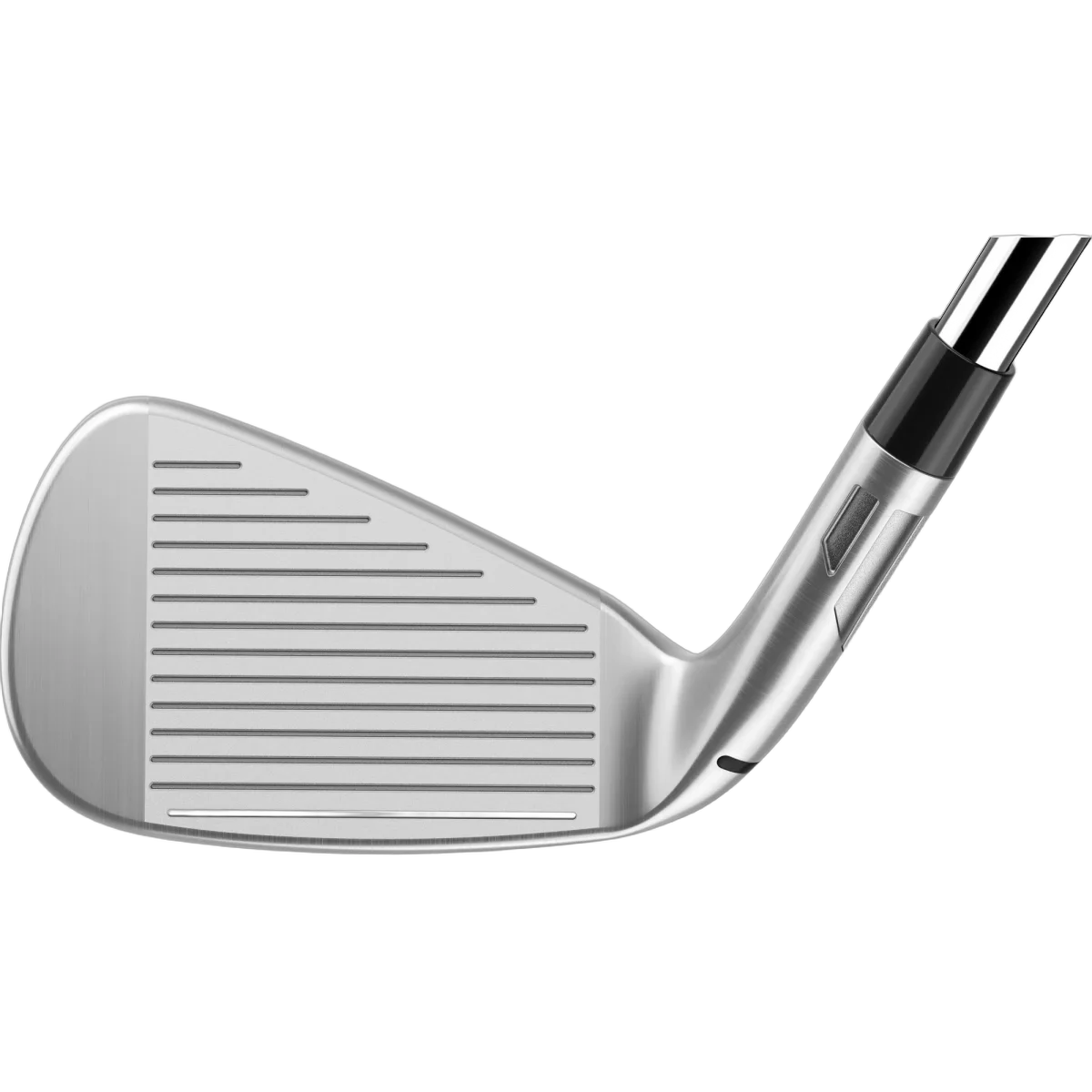
Close-up of iron face showing grooves and thin topline
The patented face technology that controls face flexibility from heel to toe is the engine behind those numbers. It's designed to reduce cut spin, not add draw bias, which results in straighter flight lines rather than a manufactured left-to-right correction. Low-face strikes get preserved by the Speed Pocket in the sole, a technology TaylorMade has refined across multiple generations now. The result is a remarkably consistent distance output regardless of where on the face you make contact.
Launch & Spin
Launch conditions are favorable for the target player, with a high launch angle that produces towering ball flights and steep landing angles. I was seeing approximately 7,000 rpm of spin with the 7-iron, numbers you'd associate with a pure players' iron, except they came attached to 20 extra yards of carry. That's the trick TaylorMade has pulled off here: enough spin to stop the ball on the green, paired with enough ball speed to send it there in the first place.
The spin profile does sit on the lower end, around 5,000 rpm was the baseline in some configurations, which means golfers with slower swing speeds should seriously consider the HL model or a loft adjustment to ensure adequate stopping power. Strong lofts can be a trap in this category if you don't have the speed to generate sufficient launch.
Dispersion & Shot Shape
Dispersion is where the Qi Max truly shines. The "straight distance" technology delivers on its promise, I was seeing tight shot groupings with minimal left-right scatter. The draw bias that multiple testers confirmed doesn't feel forced; it's a subtle correction that keeps the ball from leaking right without manufacturing a hook. For a golfer who fights a slice, this is genuinely helpful.
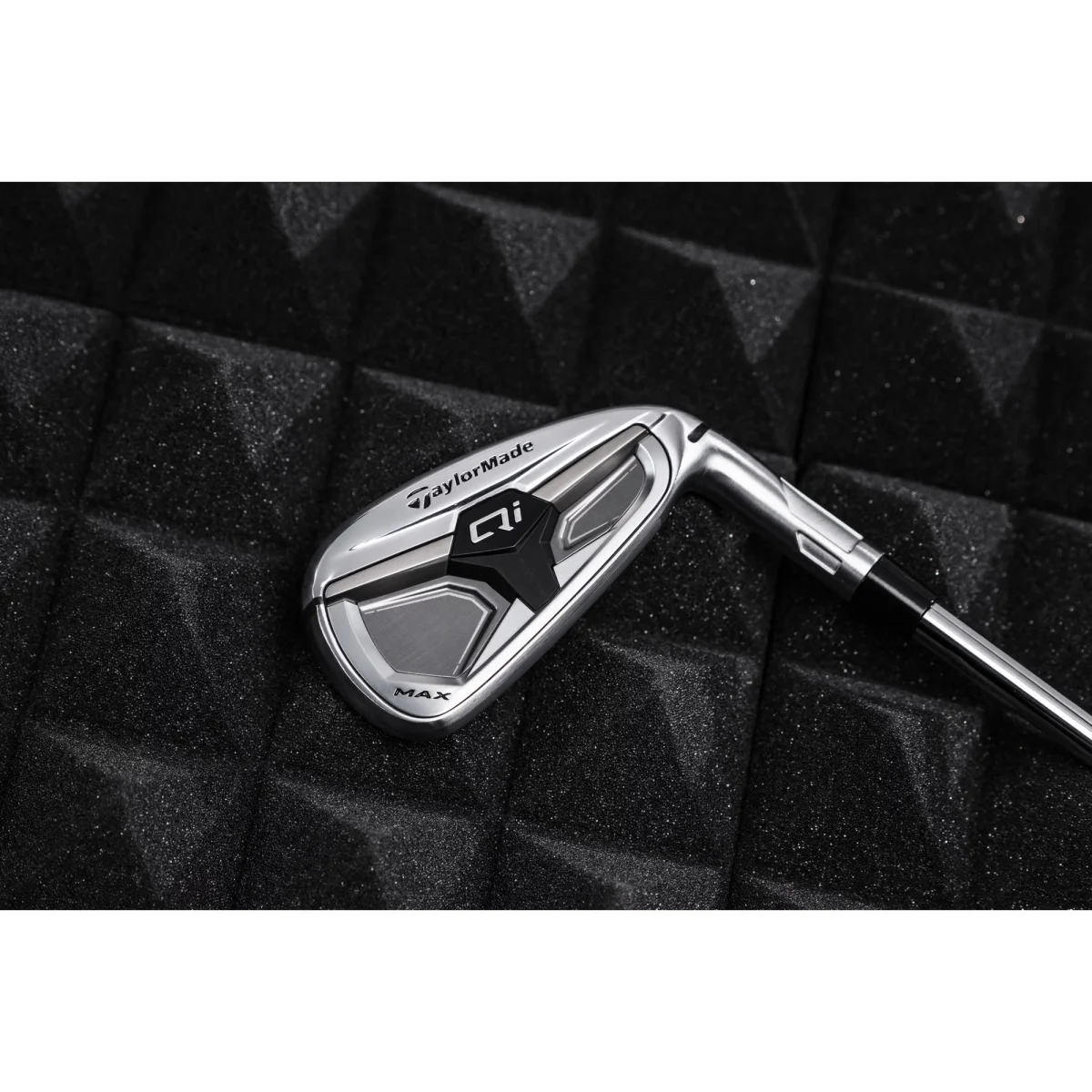
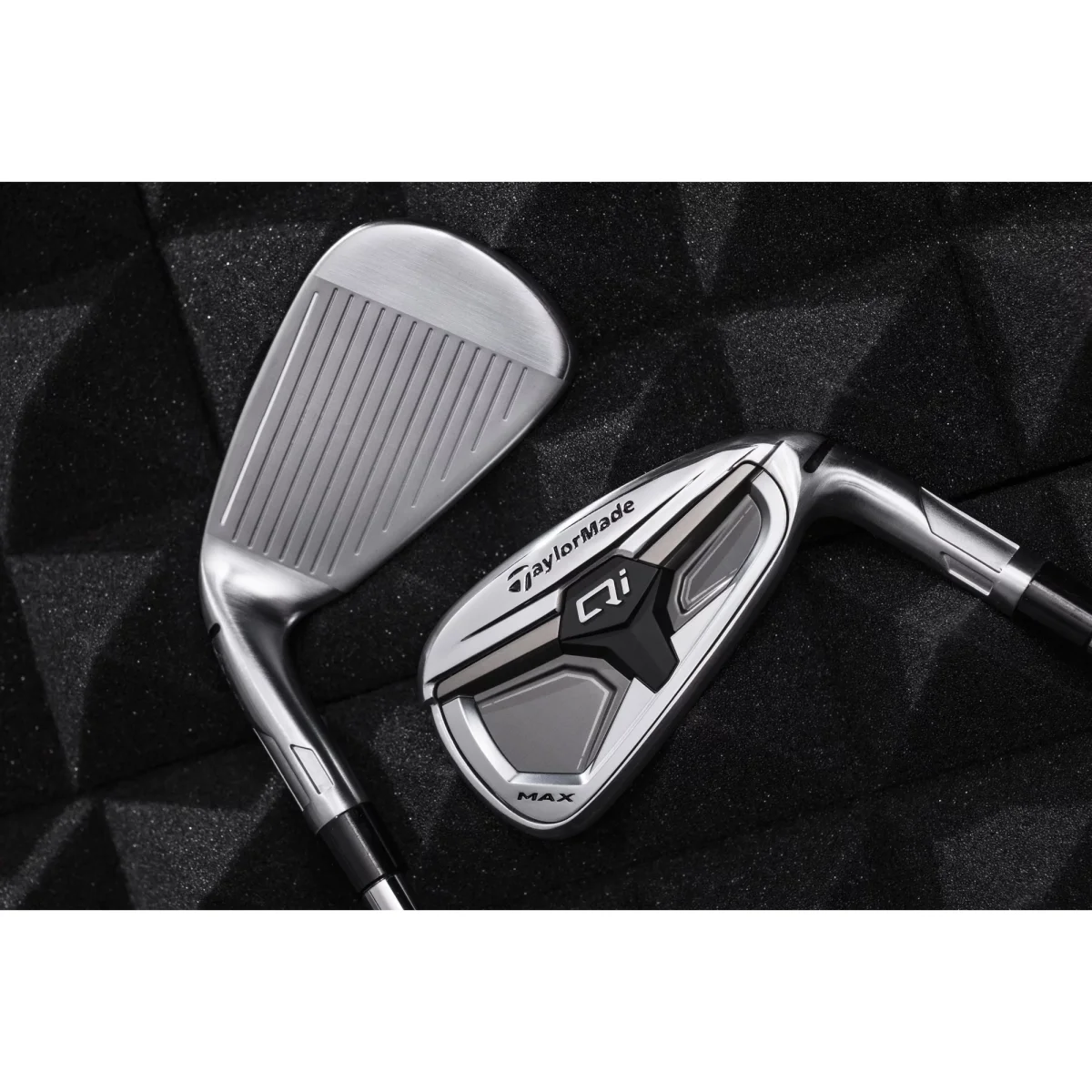
Face and cavity back of two Qi Max irons on dark background
The individual head optimization and FLTD CG positioning ensure that each iron in the set produces appropriate launch and landing angles, which prevents the common GI problem of long irons flying too low and short irons going too far. The overall forgiveness package is exceptional.
MSRP: ~$1,000 (steel shafts)
Verdict
The TaylorMade Qi Max is a seriously impressive game-improvement iron that delivers on its core promise of straight, long distance in a head that looks better than most in the category. The ball speed and distance numbers are staggering, the forgiveness is class-leading, and the aesthetics represent a genuine step forward for TaylorMade's iron line.
The weakness is feel. Despite TaylorMade's marketing push, the sound and feedback remain firmly in game-improvement territory — perfectly adequate for the target player, but not the breakthrough the brand suggests. And the strong lofts mean slower-swing golfers should look carefully at the HL model or get properly fitted to ensure their landing angles are steep enough for green-holding shots.
For high handicappers looking for straight and consistent distance, the Qi Max family deserves serious consideration. Just get fitted — the difference between the Max and Max HL could make or break your on-course results.