PING i540 Irons Review
PING — PING i540 Irons · By Troy · Apr 14, 2026
A players' distance iron that finally balances explosive ball speed with genuine stopping power.
The Big Picture
The players' distance iron category has exploded since the original TaylorMade P790 arrived in 2017, and every manufacturer has been chasing the same ideal: compact, better-player looks married to hollow-body distance and forgiveness. PING has been iterating on this formula since the i500 in 2018, and the i540 represents the fourth generation of that pursuit.
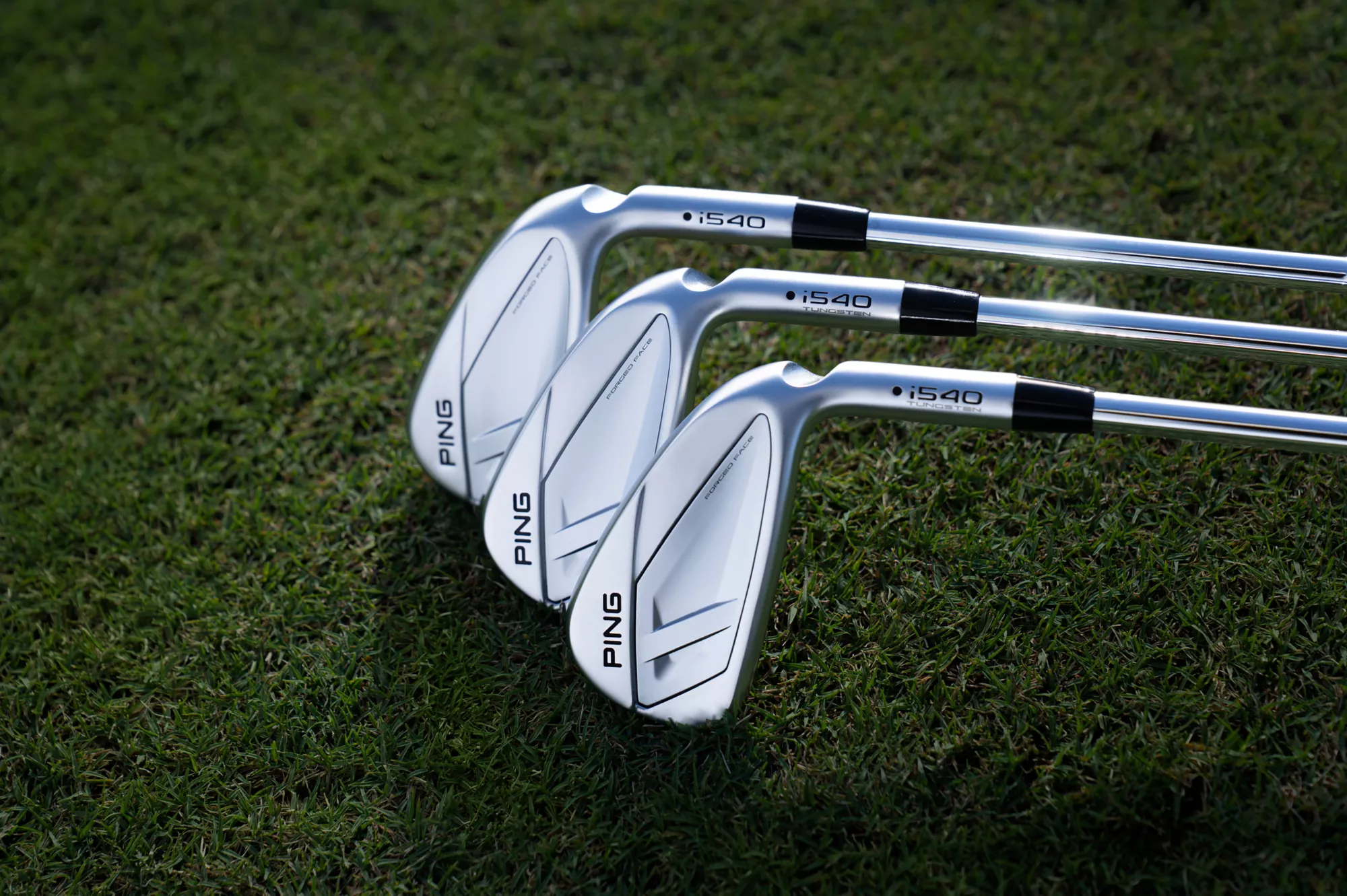
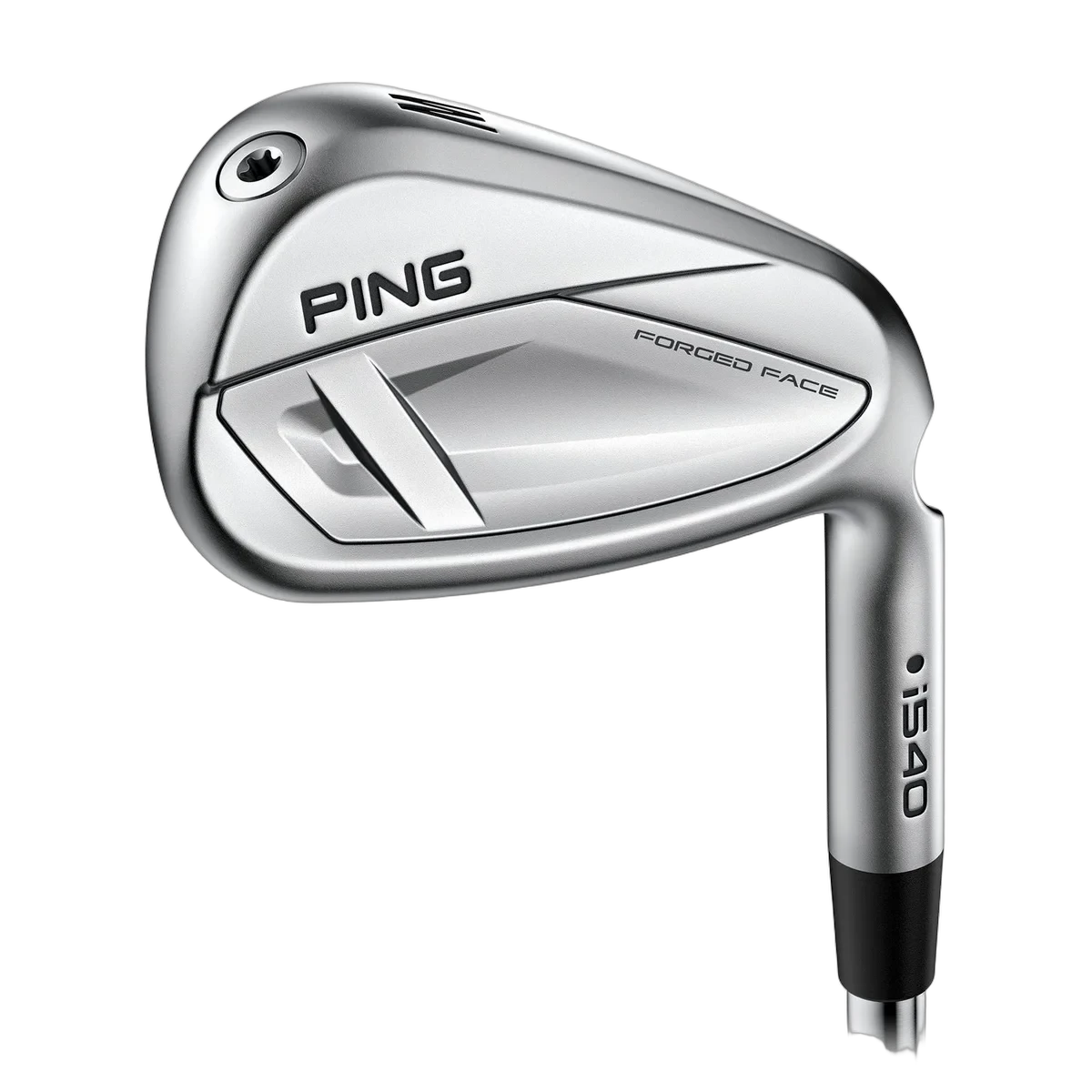
Three PING i540 irons laid out on the fairway grass
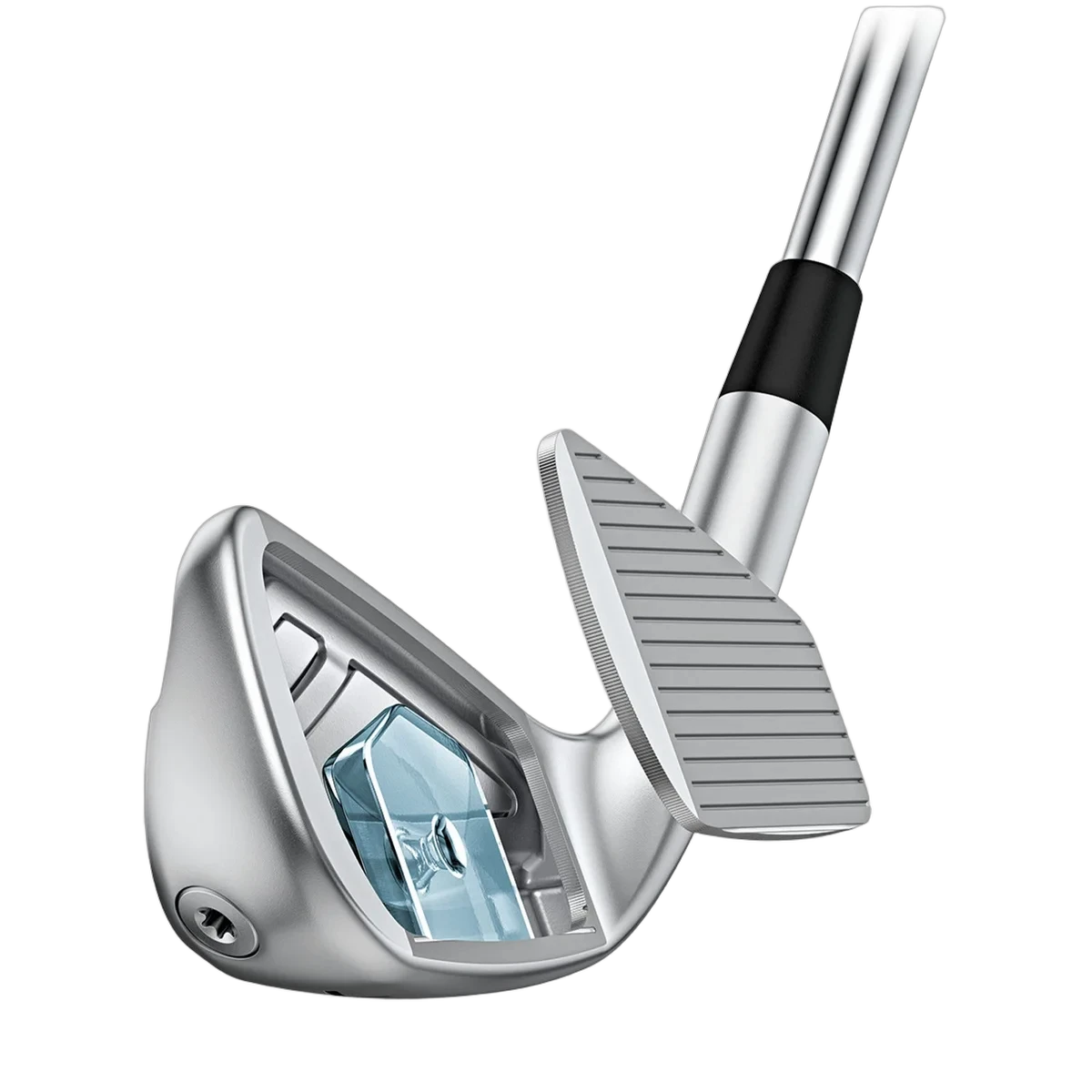
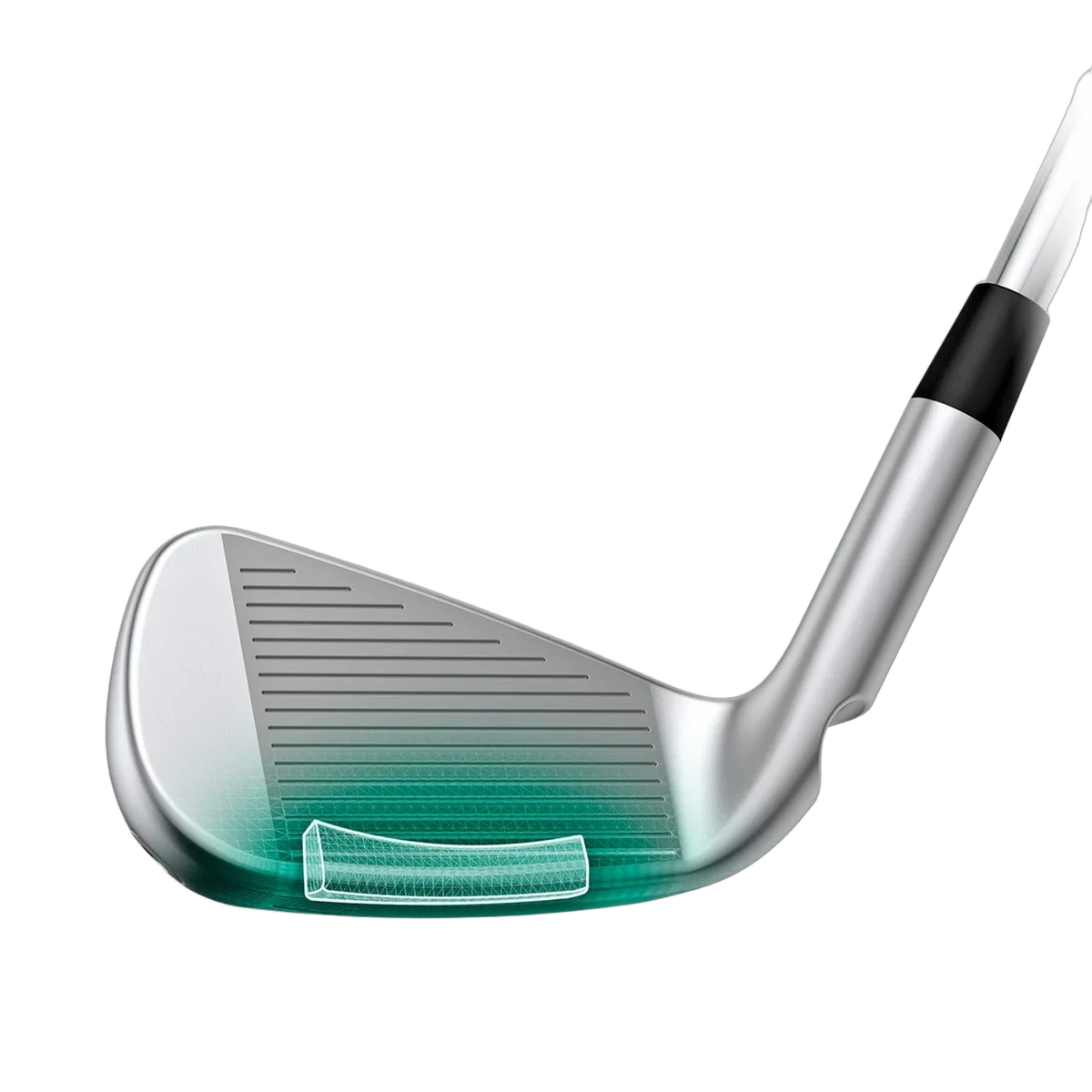
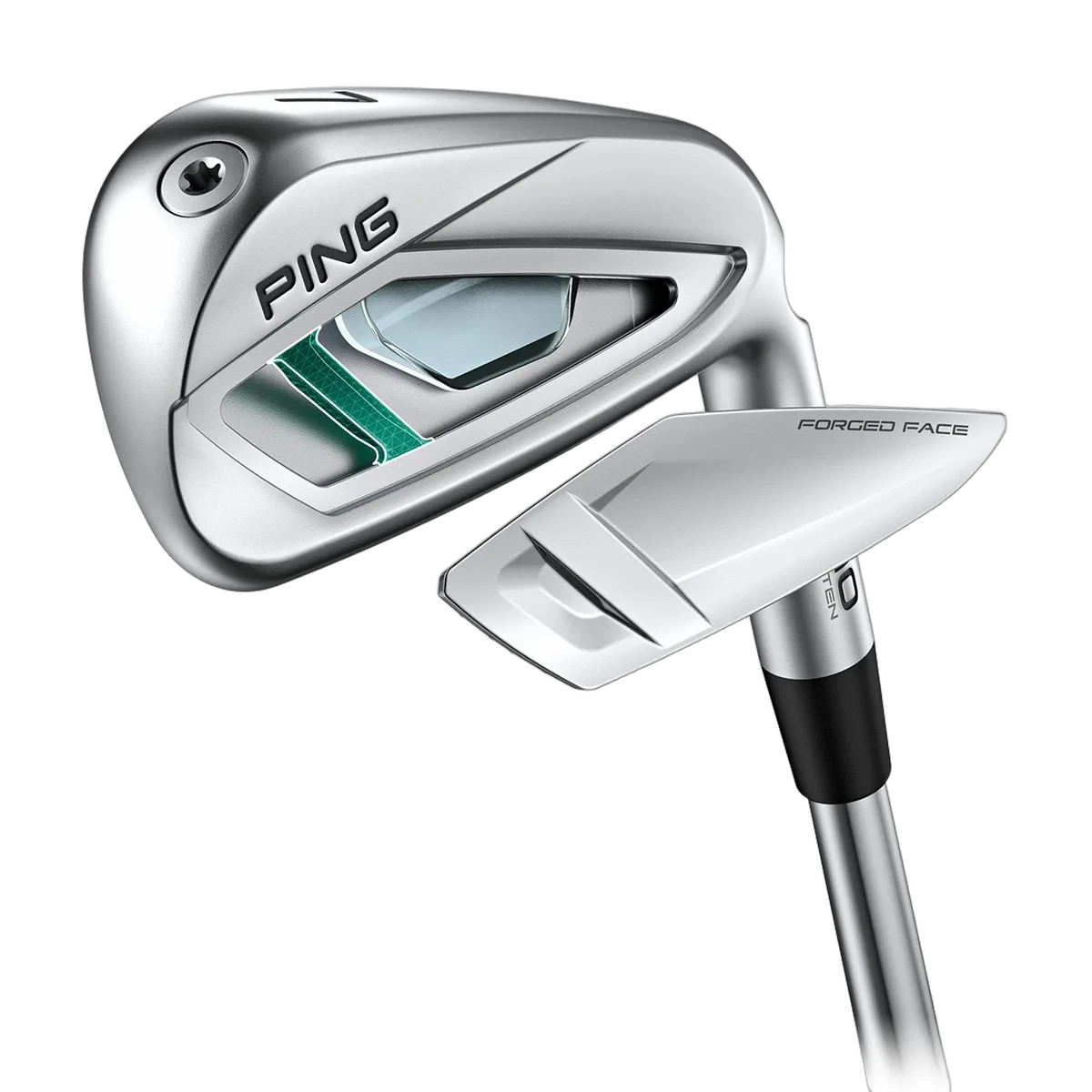
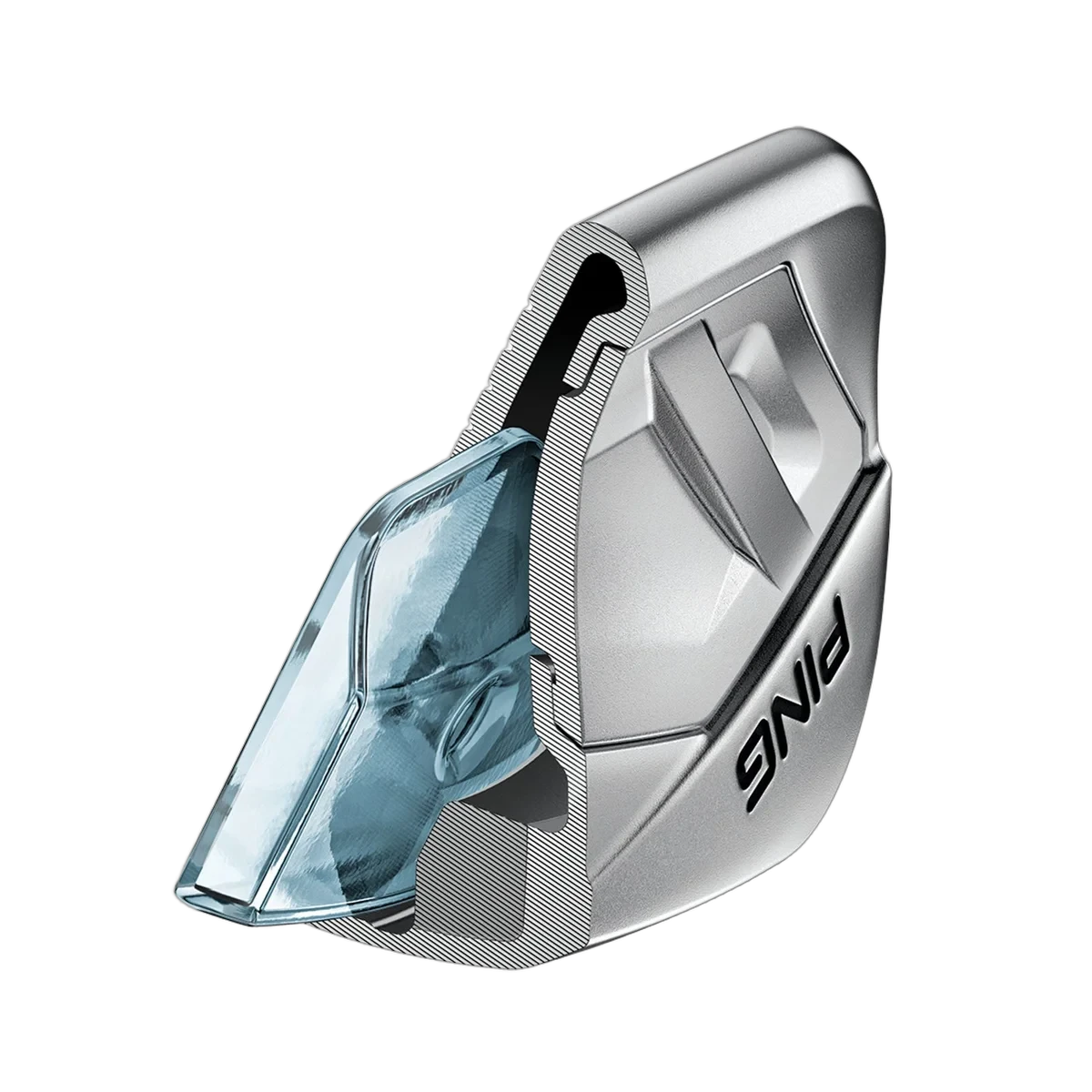
What makes the i540 compelling is the engineering beneath the surface. The forged C300 maraging steel face is nine percent thinner than the previous i530, allowing more face flex and faster ball speeds. A cast Hyper 17-4 stainless steel body provides the structural backbone, while up to 24 grams of tungsten weighting in the 4- through 7-irons pushes the center of gravity lower than any previous model in the line. The headline technology, though, is inR-Air -- a pressurized TPU air pocket seated behind the face, designed to dampen vibrations and refine sound without restricting face flex. It replaced the hot melt PING used in the i530, saving weight while addressing the hollow-body acoustic problem that has plagued this category.
The i540 is built for mid-to-low handicap golfers who want a compact, confidence-inspiring iron that still delivers meaningful distance and forgiveness. It sits neatly between the tour-oriented i240 and the full game-improvement G740 in PING's lineup. Available from 4-iron through gap wedge, it comes in three loft configurations -- standard, Power Spec (stronger), and Retro Spec (weaker) -- giving fitters serious flexibility.
At Address
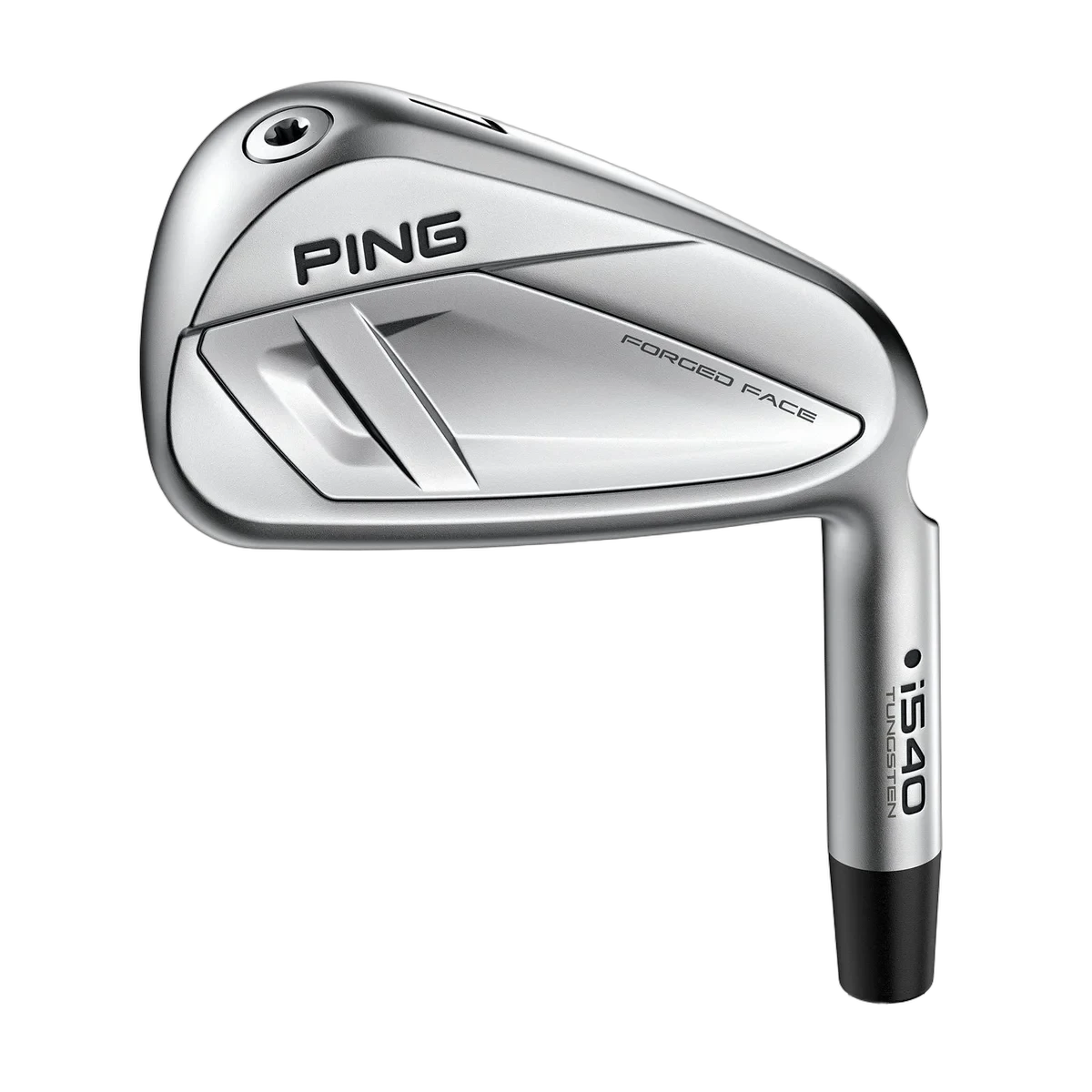
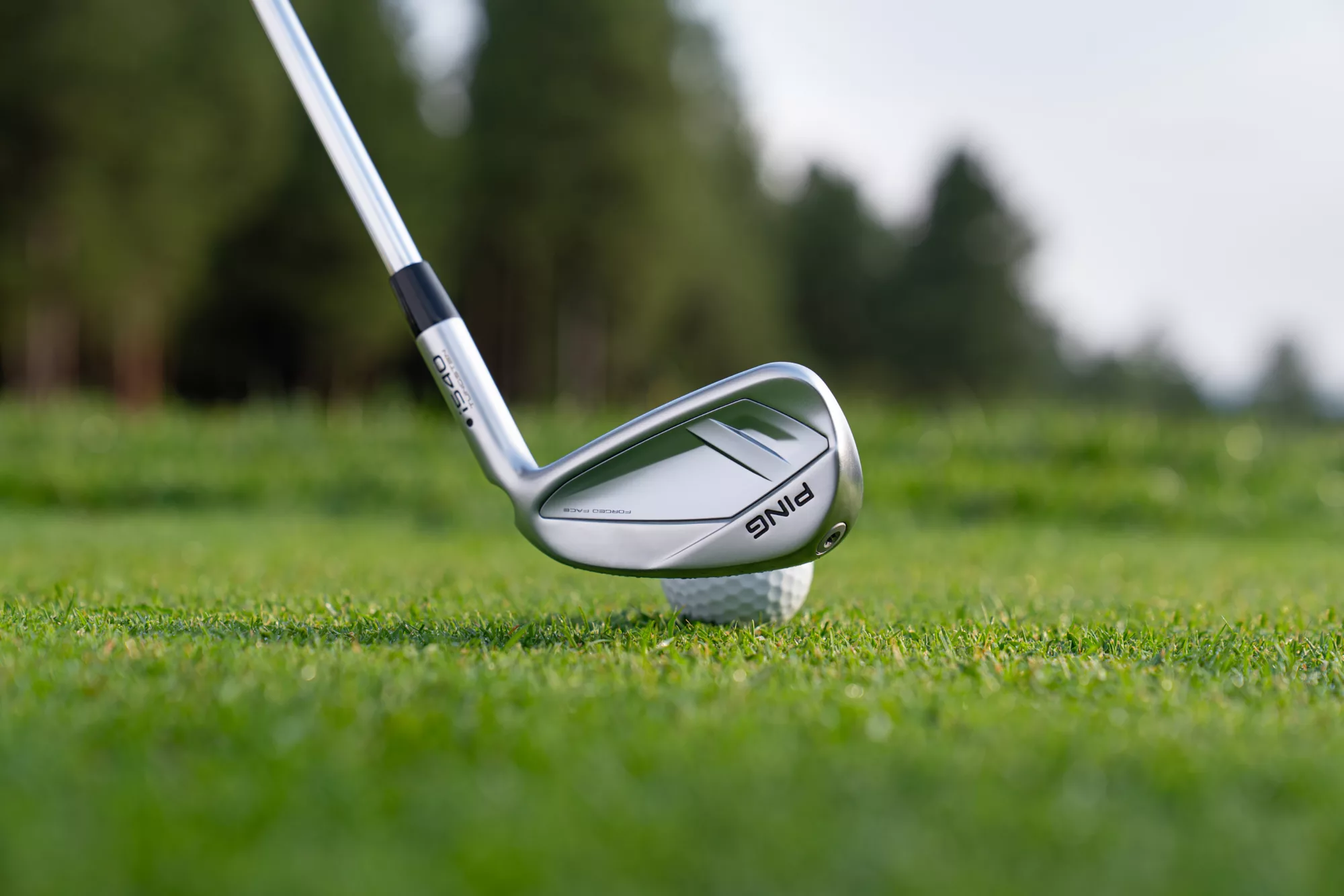
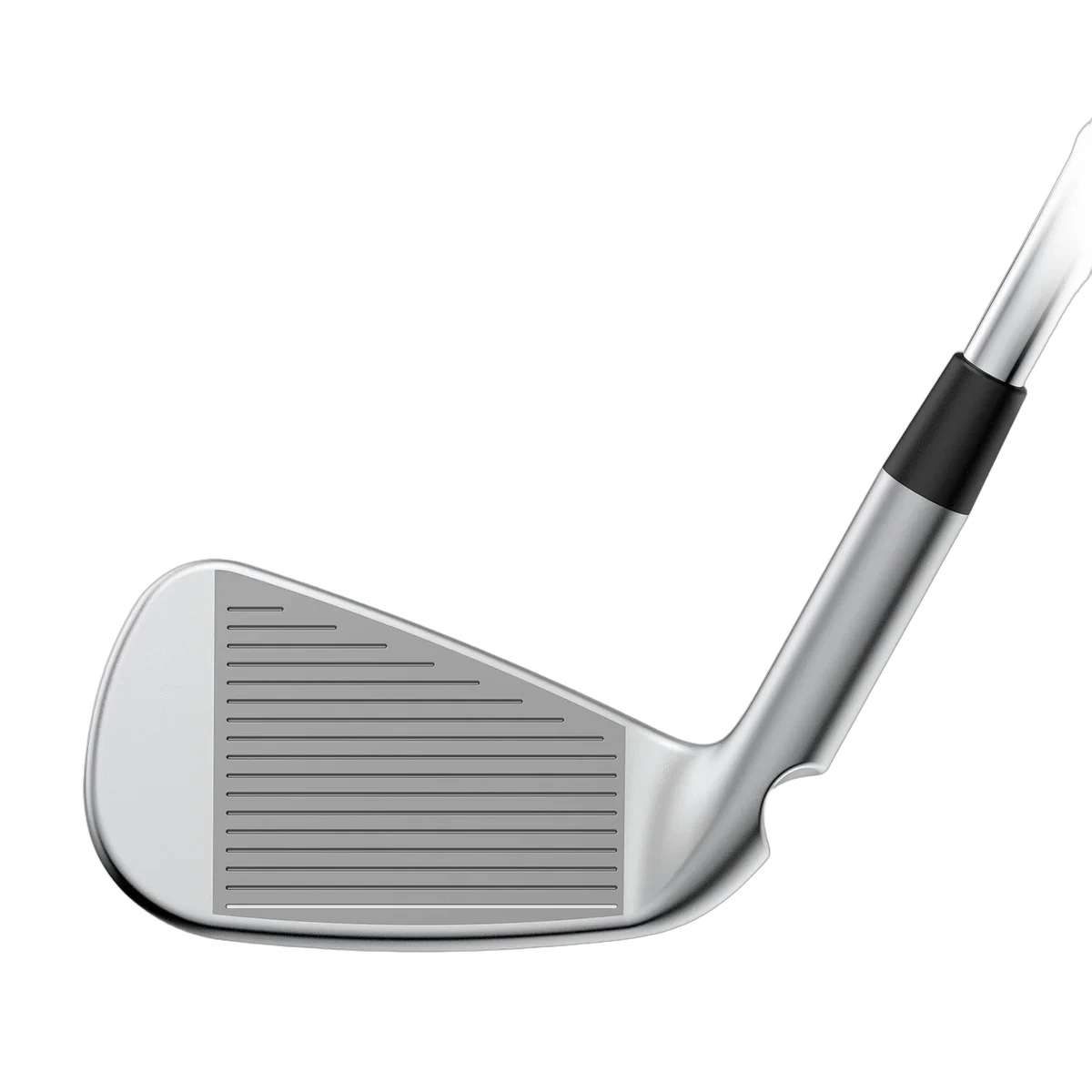
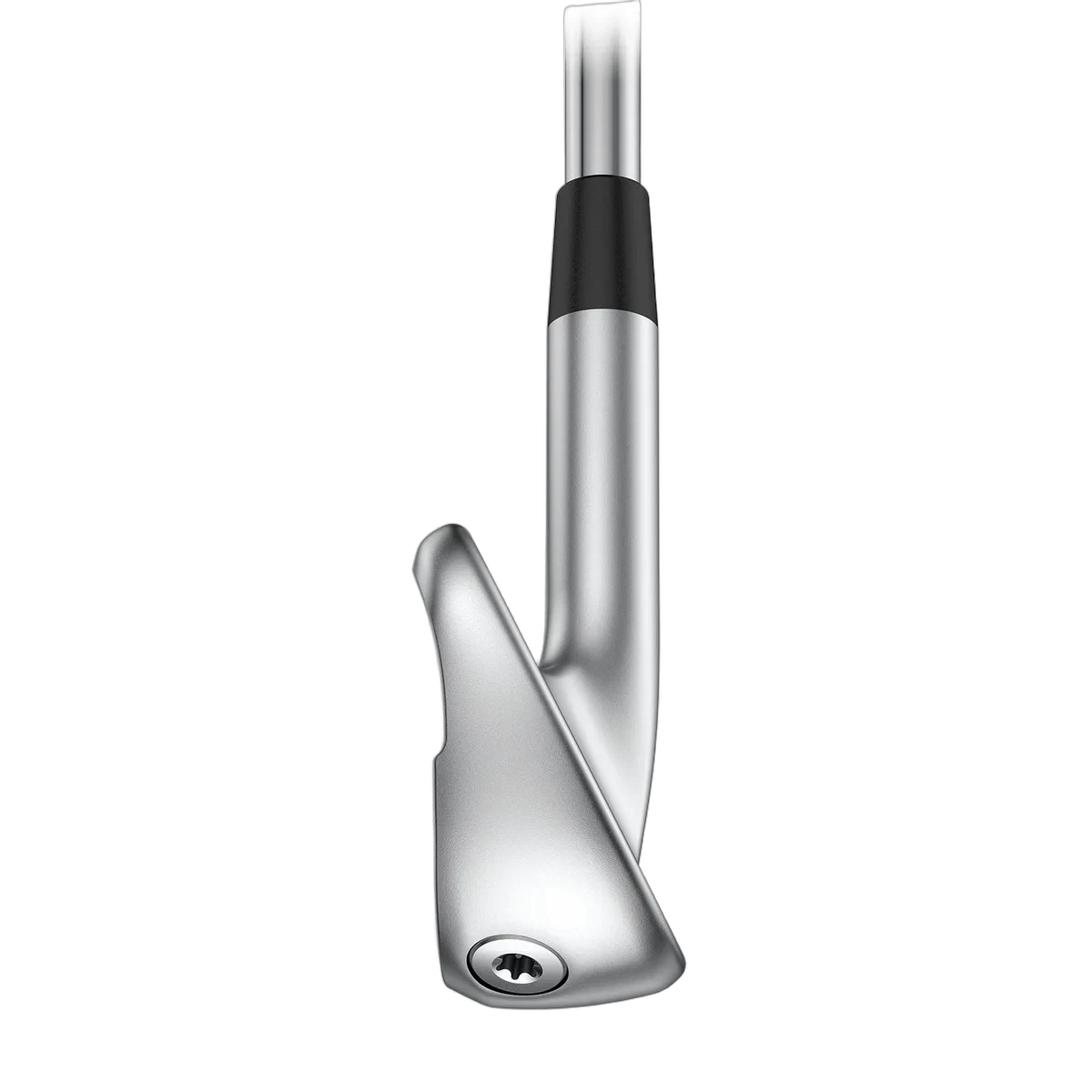
The i540 represents a genuine aesthetic step forward for PING. The first thing I noticed was the visual similarity to the iDi driving iron -- the shape feels modern and purposeful in a way that previous i-series models did not always achieve. The topline is trim without being intimidating, the heel-to-toe length is compact, and PING has managed to hide the wider sole effectively. Set the club behind the ball and it reads like a players' iron, not a distance machine.
There is noticeable offset throughout the set, particularly as you move into the longer irons. That is standard PING DNA and will not surprise anyone familiar with the brand. The Hydropearl 2.0 finish has a low-glare satin quality that looks premium, though I did find it marks up more easily than I expected during testing.
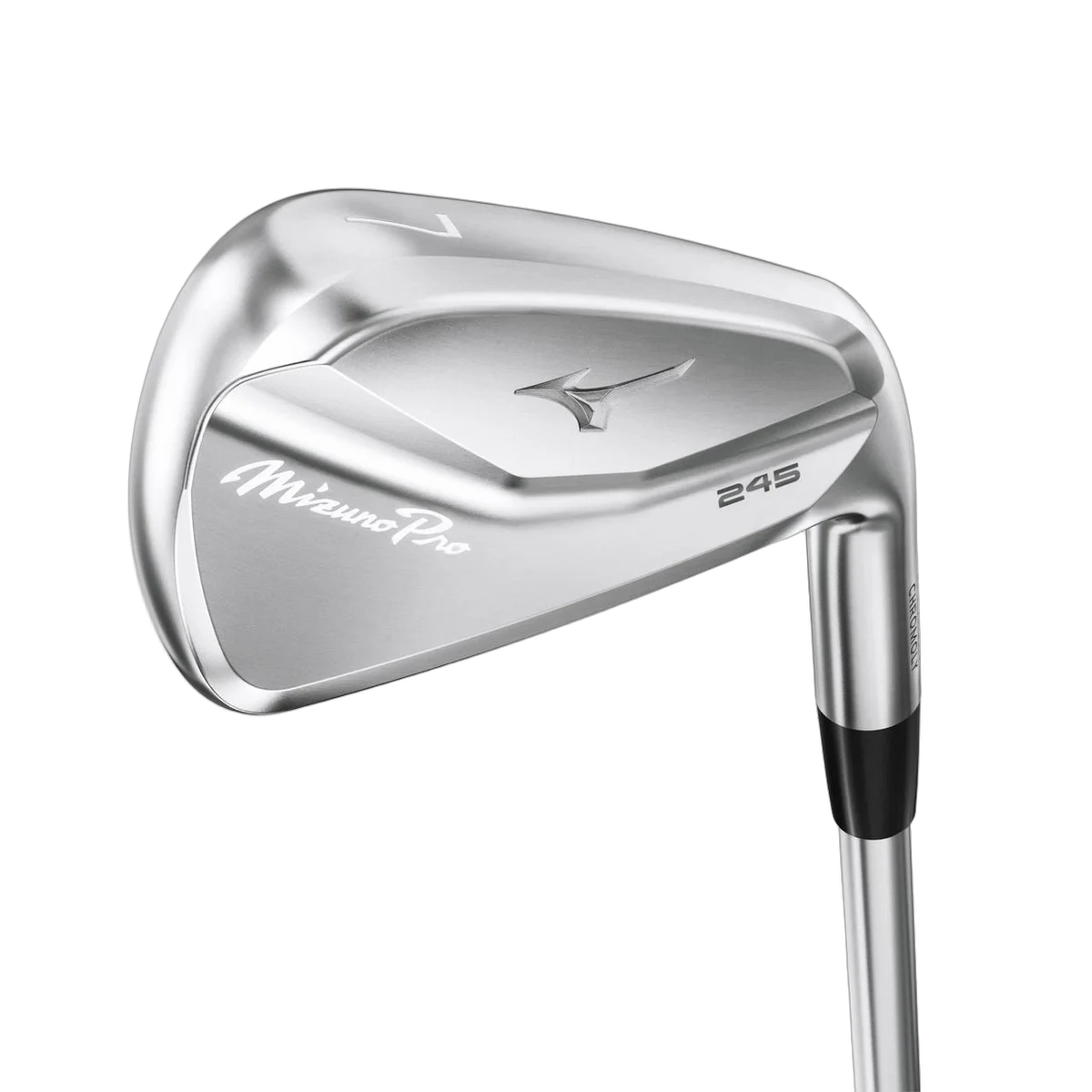
The covered cavity on the back, while functional, does take away some of the clean, fully-forged shelf appeal you get from competitors like the Titleist T250 or Mizuno Pro 245. It is a minor aesthetic trade-off for meaningful performance gains.
Sound & Feel
This is where the i540 tells its most interesting story, and where opinions will split.
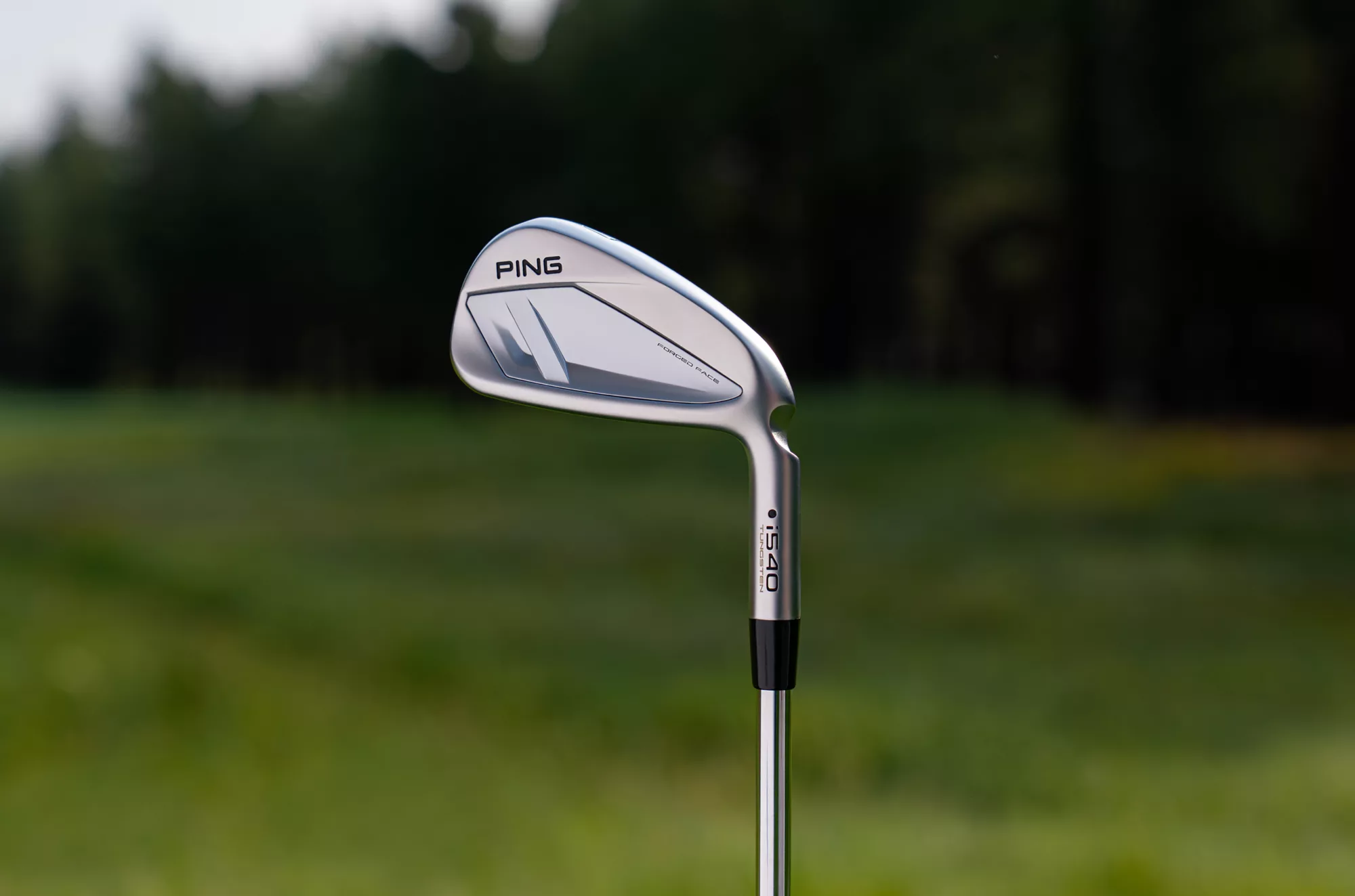
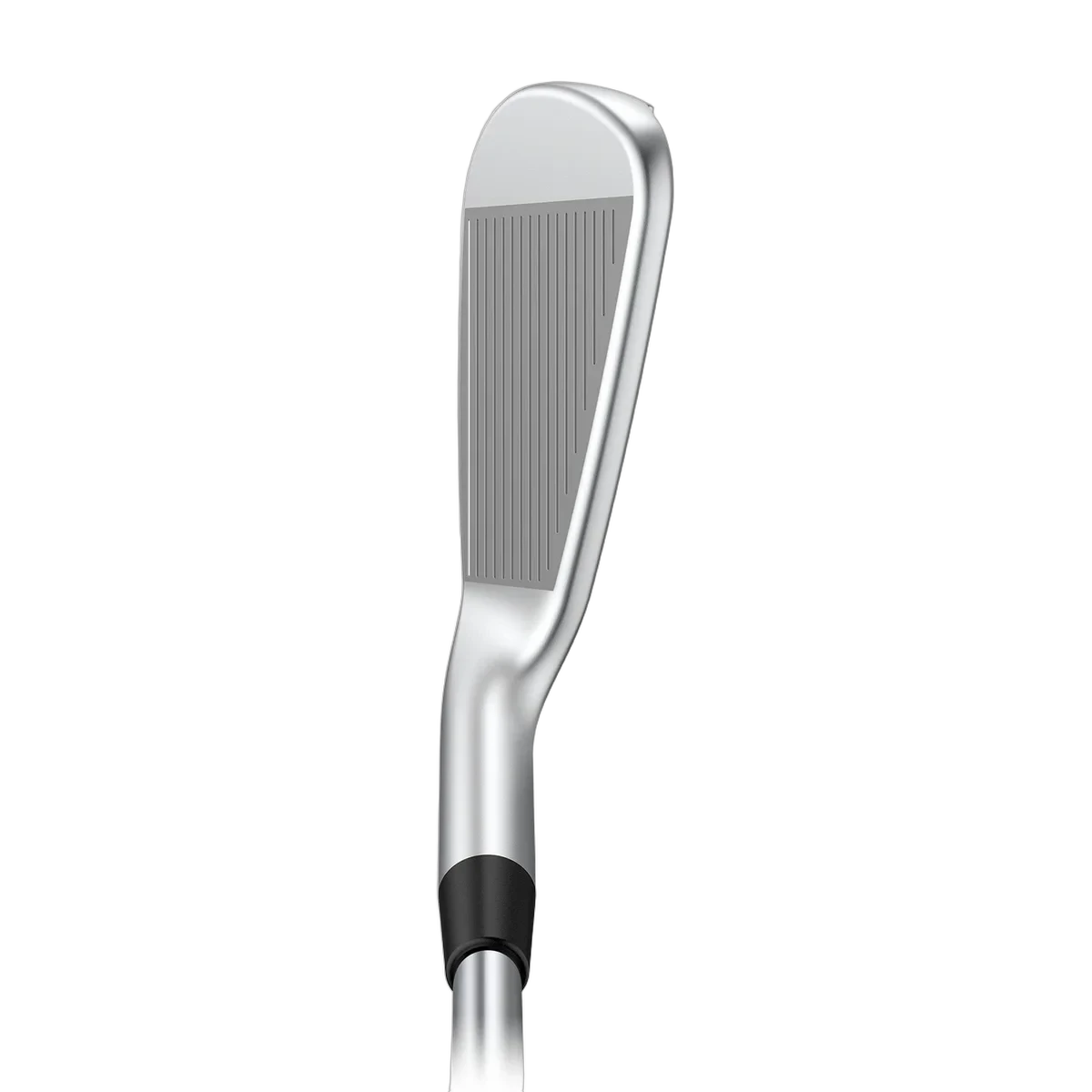
Clean face-on view showing grooves and compact blade length
The forged maraging steel face delivers a satisfying, lively sensation on center strikes. There is a spring to the impact -- a sense of speed transferring into the ball -- that is distinctly different from a traditional cavity back. I would not call the feel soft in the way a fully forged iron feels soft; it is more of a hot, fast feedback that tells you exactly where you made contact. Mishits are easy to identify without feeling punishing.
The inR-Air insert does improve things over the i530. The old model could sound clanky and harsh, especially indoors. The i540 is noticeably more refined -- more of a crisp crack than a metallic clang. That said, the sound is still on the high-pitched side compared to competitors in this space. Golfers particularly sensitive to acoustics should hit these before committing. For most players, the sound will be a non-issue, especially on the course where ambient noise takes over.
Performance
Ball Speed & Distance
The i540 is genuinely fast. Testing with a 6-iron, I was seeing ball speeds consistently around 140-142 mph, producing carry distances in the 193-210 yard range depending on strike quality. The pitching wedge carried a consistent 134-145 yards with spin around 7,291 rpm and peak heights above 100 feet.
The 4-iron was the showpiece for raw power -- carry distances in the 213-228 yard range on good strikes, the kind of numbers that make long par 4s and par 5s considerably more approachable.
What stands out is not just the peak distance but the consistency. On a sequence of 6-iron shots, carry distances clustered within a four-yard window -- 204, 209, 204, 205. That kind of repeatability is rare in this category and speaks to the lower CG doing its job. The variable-thickness face pattern extends speed retention further toward the heel and toe, so slight misses do not produce the dramatic distance drops you might expect.
Launch & Spin
The i540 launches high. Remarkably high for a players' distance iron with lofts this strong (the 7-iron is 29 degrees). I was seeing descent angles consistently above 45 degrees in the mid-irons, with several shots approaching 50 degrees. That steep descent is critical because spin rates run low -- around 4,300-4,600 rpm with a 7-iron and roughly 6,100 rpm with a 6-iron.
The low spin is the trade-off for all that ball speed, and it is worth understanding. On firm, fast greens, these irons rely on descent angle rather than backspin to hold the putting surface. In my testing, the combination worked well -- the ball came in steep enough to stop within a few yards of the pitch mark. But golfers who play on particularly firm courses may want to explore the Retro Spec loft option to add a degree or two and bring spin rates up.
One practical consequence of the explosive distance: gapping requires attention. I saw gaps as large as 38 yards between pitching wedge and 8-iron in one session. A proper wedge setup -- potentially adding a fourth wedge -- is essential to avoid dead zones in your scoring range.
Dispersion & Forgiveness
Forgiveness is where the i540 earns its keep. Ball speed retention on off-center hits is excellent, particularly on toe and low-face misses. A strike three-quarters of an inch off the toe only lost about two to three percent of ball speed, which translates to roughly five yards of carry distance. That is a meaningful improvement over the i530, which was better from the heel but gave up more on toe misses.
Back cavity with tungsten weight and face view of the i540
The dispersion pattern was tight throughout testing. Even intentionally poor swings produced shots that stayed in play. The one tendency I noticed was a slight rightward bias, especially in the longer irons -- shots would start right and hold there rather than drawing back. That is not necessarily a flaw; a short-right miss is far less penal than long-left on most holes. But golfers who already fight a slice should test carefully and ensure proper color-code fitting to dial in the lie angle.
Verdict
The PING i540 is one of the most impressive players' distance irons I have hit. It delivers genuine explosive ball speed in a compact, good-looking package while maintaining the kind of forgiveness that keeps mid-handicappers in the game. The high launch and steep descent angles solve the stopping-power problem that plagues many strong-lofted irons, and the consistency from shot to shot is outstanding.
The weaknesses are real but manageable. The sound remains slightly high-pitched for a premium iron. Spin rates run low enough to warrant attention during fitting. The strong lofts demand a well-planned wedge setup. And the price -- $225-$250 per club in steel or graphite -- puts the i540 firmly at the premium end of the market, especially compared to fully forged competitors from Titleist, Mizuno, and Srixon at similar or lower price points.
For the low-to-mid handicap golfer who wants distance without sacrificing control, who values consistency over raw feel, and who appreciates PING's understated engineering approach, the i540 is an outstanding choice. It will not replace the sensation of a pure forged blade, but it will put more approach shots on the green from further out -- and that is what lowers scores.