PING G425 LST Driver
PING — PING G425 LST Driver · By Andy · Jan 10, 2026
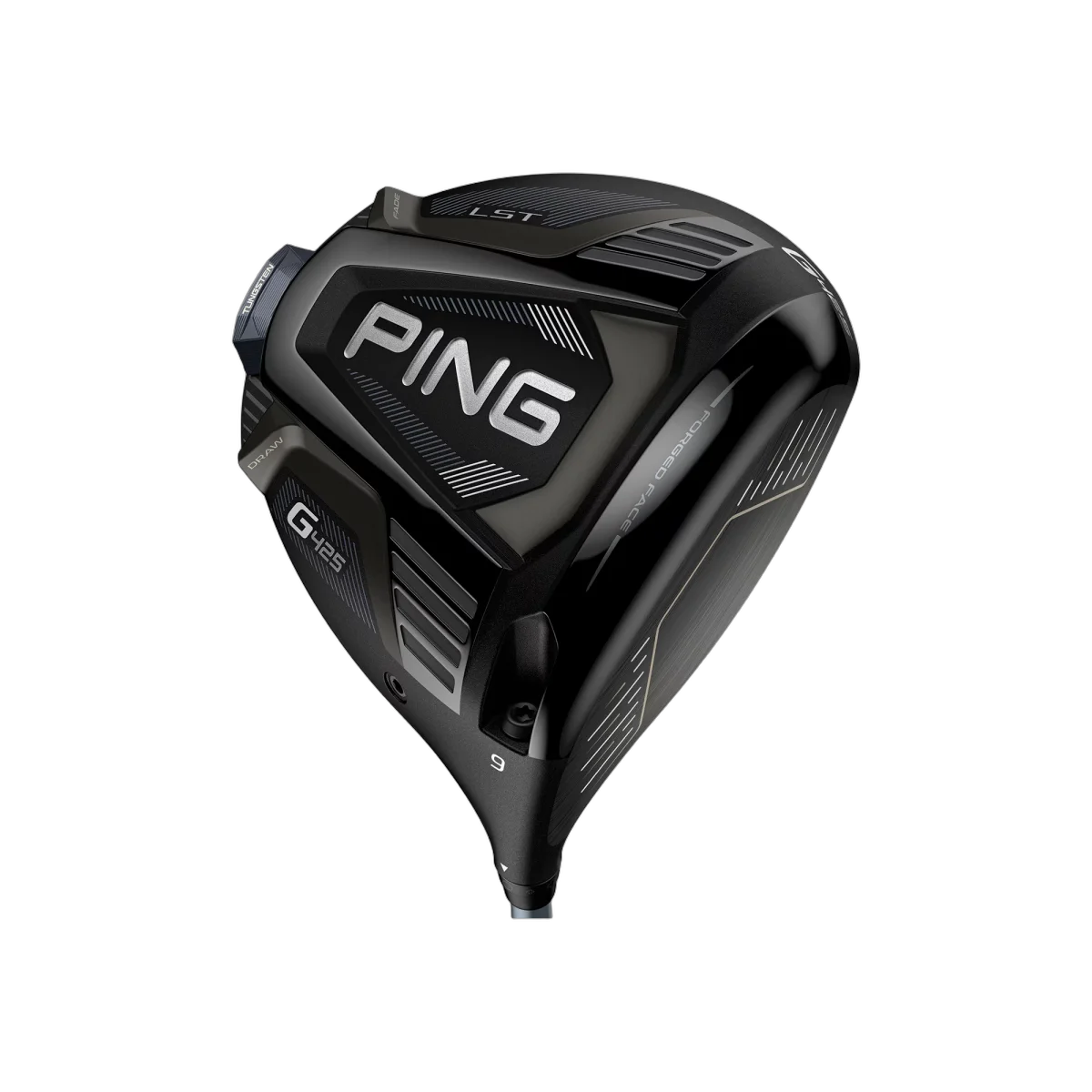
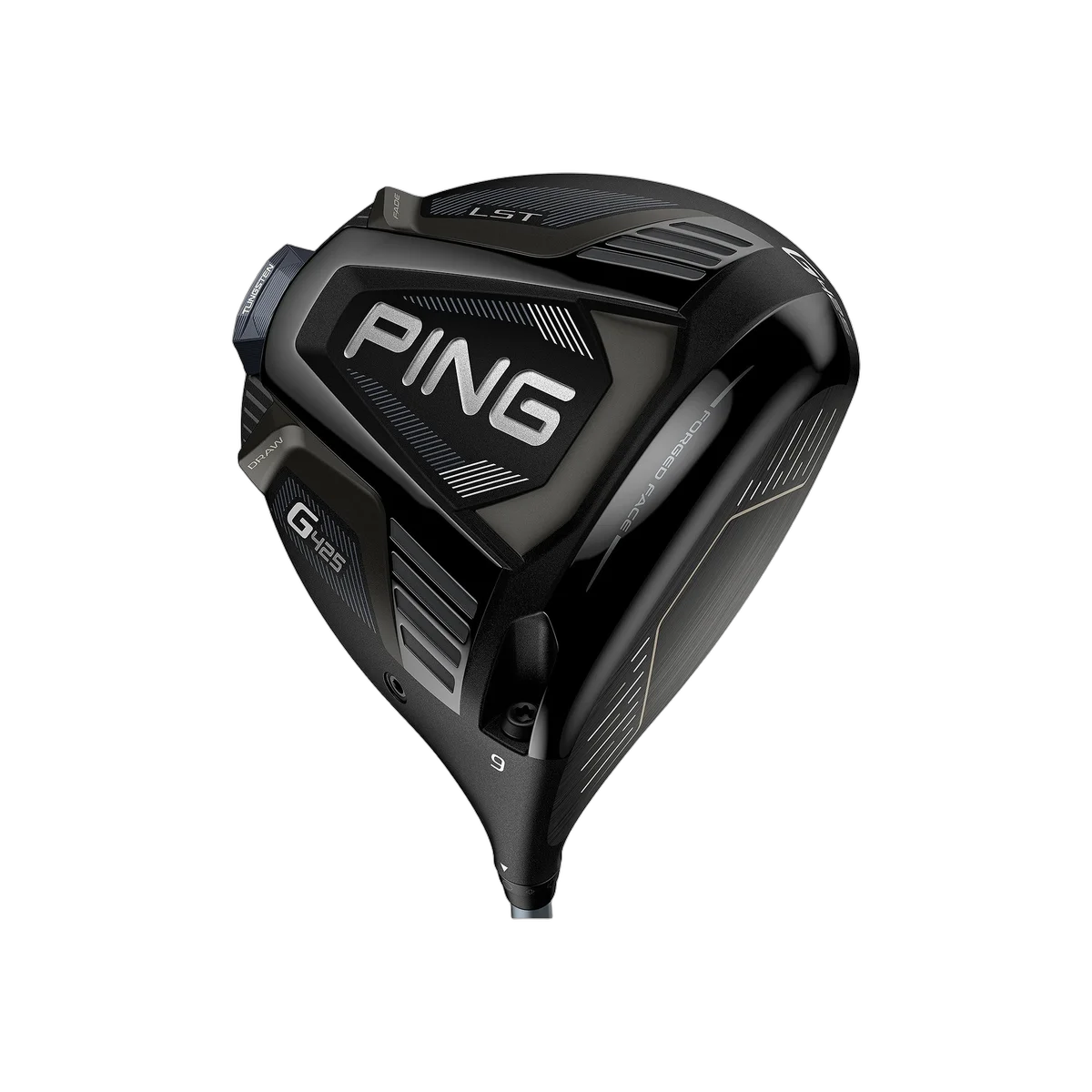
PING's low-spin option from the G425 generation remains a compelling choice for better players chasing a penetrating ball flight -- if you can live with its polarizing acoustics.
The Big Picture
The PING G425 LST is the low-spin variant in PING's G425 driver family, slotting alongside the forgiving G425 MAX and the standard G425 SFT. Where the MAX prioritizes stability and forgiveness through maximum MOI, the LST is designed for players who generate too much spin off the tee and need to bring that number down to optimize carry distance and rollout. It is the driver in the lineup built for speed and efficiency rather than pure forgiveness.
At 445cc, the LST head is slightly smaller than the 460cc MAX, which reflects its positioning as a players' driver. That reduced volume allows PING to redistribute mass in a way that promotes a lower, more forward center of gravity. The result is a driver that launches mid-to-low with reduced spin -- a combination that stronger players and faster swingers crave for maximizing total distance. A 16-gram movable tungsten backweight offers three positions (Draw, Neutral, Fade) for shot-shape tuning, and the Trajectory Tuning 2.0 adjustable hosel provides eight combinations of loft and lie angle.
The G425 LST has been succeeded by the G430 LST and now the G440 family, which means it is available on the used and pre-owned market at a fraction of its original MSRP. For a player who fits the profile -- moderate-to-fast swing speed, a tendency toward high spin -- the G425 LST represents serious value as a previous-generation option from one of the most trusted names in driver engineering.
At Address
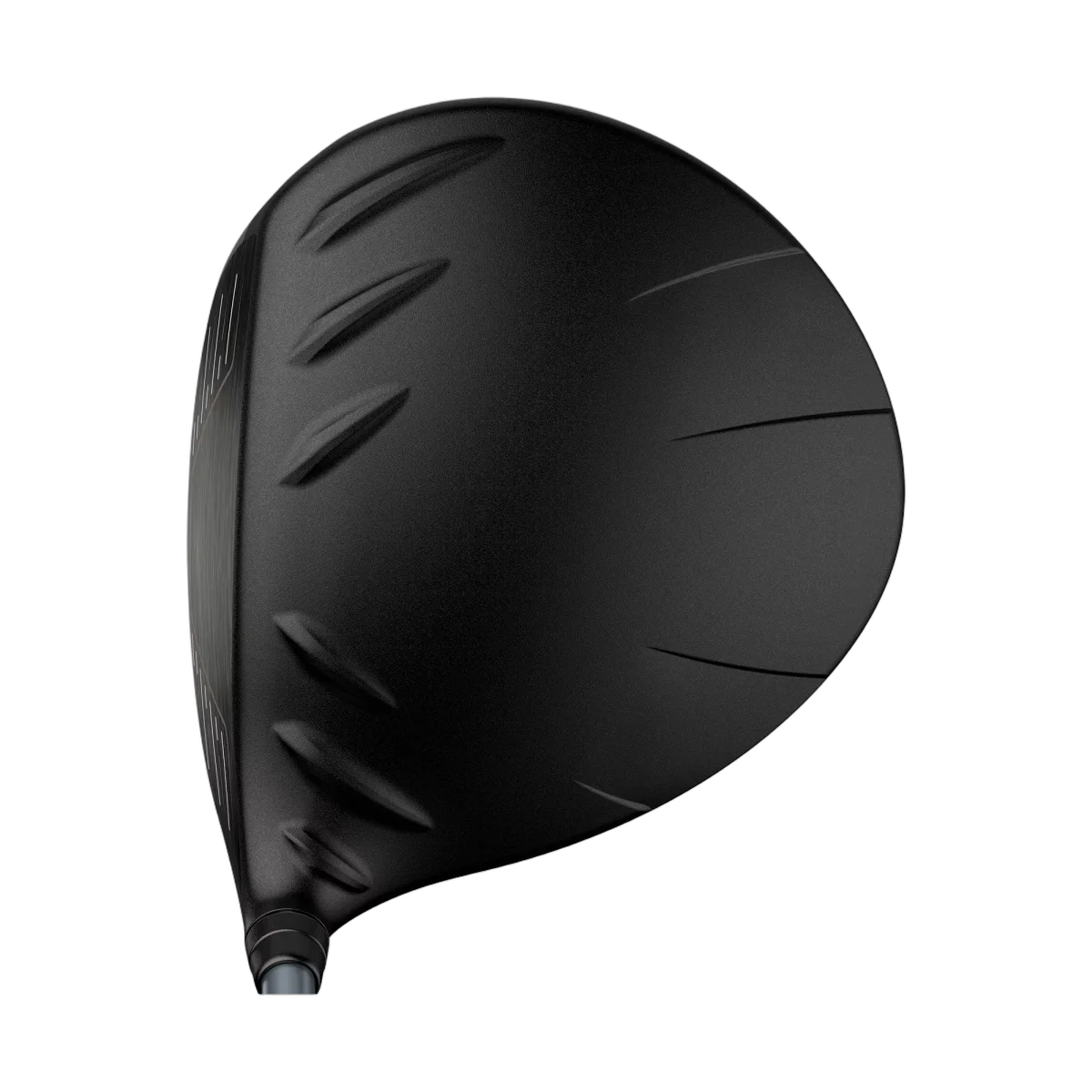
The 445cc footprint is noticeably more compact than the full-size MAX, and that is part of the appeal for the target player. The head shape is clean and traditional, with a slightly pear-shaped profile that better players tend to prefer over the stretched-out look of maximum-MOI designs. The matte black carbon fiber crown is understated and glare-free, with PING's signature turbulators adding subtle texture near the leading edge.
Top-down address view of matte black crown
There is nothing flashy about the G425 LST at address. The alignment cue is simple and effective, and the overall impression is one of precision rather than comfort. It looks like a driver that wants to be aimed, not one that promises to bail you out. For players who draw confidence from a compact, workable head shape, the LST delivers exactly the right visual message.
Sound & Feel
This is the section where the G425 LST -- and really the entire G425 generation -- divides opinion most sharply. PING drivers from this era were known for a loud, high-pitched impact sound that players either tolerated or actively disliked. Community feedback consistently describes the G425 family as having a "frying pan" quality at impact, and the LST is no exception. It is not a subtle driver acoustically. The sound is explosive and carries a metallic ring that lingers slightly after impact.
PING addressed this directly with the G430 generation, introducing redesigned internal rib structures that produced a markedly more refined acoustic profile. If you are coming to the G425 LST from a G430 or newer PING driver, the difference in sound will be immediately apparent -- and not in the LST's favor. However, if you are accustomed to the PING sound signature from drivers like the G410 or G400 series, the G425 LST will feel familiar.
Impact feel on center strikes is solid and responsive. The forged maraging steel face -- what PING calls the Facewrap design -- generates a lively sensation through the hitting zone that communicates speed effectively. Off-center hits are less forgiving than the MAX in terms of feel, which is expected from the lower-MOI design. You know when you miss the middle, and you know which direction you missed. For better players, that level of feedback is actually useful.
Performance
Ball Speed & Distance
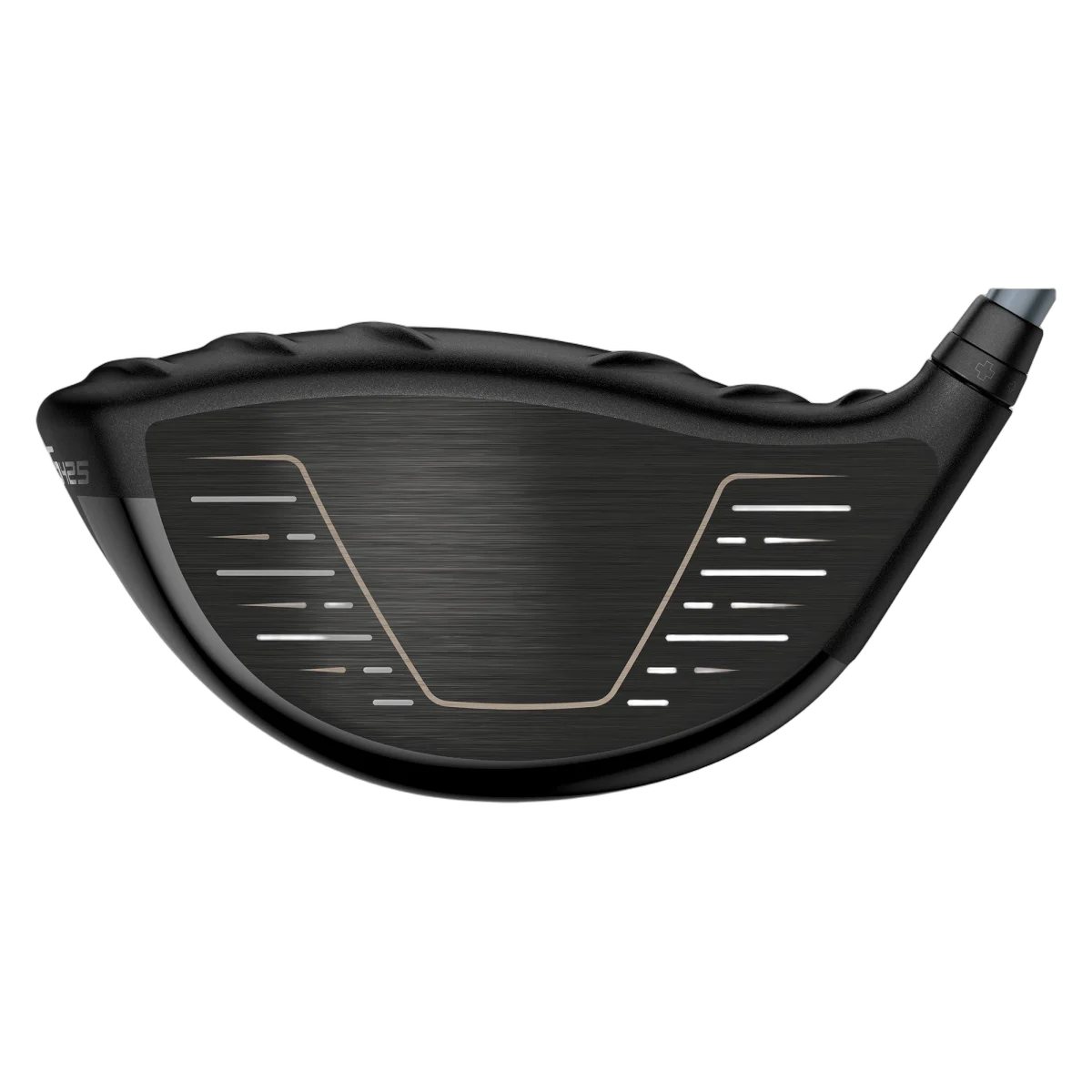
The G425 LST was built to convert swing speed into efficient distance, and it does that job well. The Facewrap design wraps a thin, flexible maraging steel face around the crown and sole, increasing the flex zone at impact for improved ball speed. For players who were already generating adequate launch with too much spin, the LST's ability to knock 200 to 400 rpm off the spin rate compared to the MAX translates directly into added carry and significantly more rollout.
Face view showing Dragonfly Technology and variable thickness pattern
In practice, the distance gains from the LST over the MAX are not about higher ball speed -- the face technology is shared across the G425 family. The gains come from spin optimization. A drive that launches at 11 degrees with 2,200 rpm of backspin will carry farther and roll more than the same ball speed at 2,600 rpm. For a player with a swing speed in the 100 to 110 mph range who was spinning the MAX too much, the LST can be worth 8 to 15 yards of total distance simply by putting the ball on a more efficient flight.
That said, if your swing speed is below 95 mph or you already struggle to get the ball airborne, the LST is not for you. The lower spin profile that benefits faster swingers will rob slower swingers of the carry distance they need.
Launch & Spin
The G425 LST produces a mid-to-low launch with a distinctly low spin profile -- that is its entire reason for existing. The forward CG placement promotes a flatter launch angle compared to the MAX, and the reduced spin keeps the ball from ballooning in windy conditions. This is a driver that produces a penetrating, boring ball flight that cuts through the air efficiently.
The stock Alta CB Slate 55 shaft is a counterbalanced, lightweight option that pairs reasonably well with the head, though many players fitting into the LST will benefit from upgrading to a heavier, lower-launching shaft to fully capitalize on the head's low-spin characteristics. The adjustable hosel allows for fine-tuning launch conditions, and cranking the loft up by a degree can help players who find the stock flight too low without meaningfully increasing spin.
Dispersion & Shot Shape
With a smaller footprint and lower MOI than the MAX, the G425 LST is inherently less forgiving on off-center strikes. Mishits toward the heel and toe will produce more curvature and a larger speed drop than the MAX, which is the fundamental tradeoff of the low-spin design. That said, the 16-gram tungsten backweight still provides meaningful stability, and the G425 LST is more forgiving than many players' drivers from competing manufacturers.
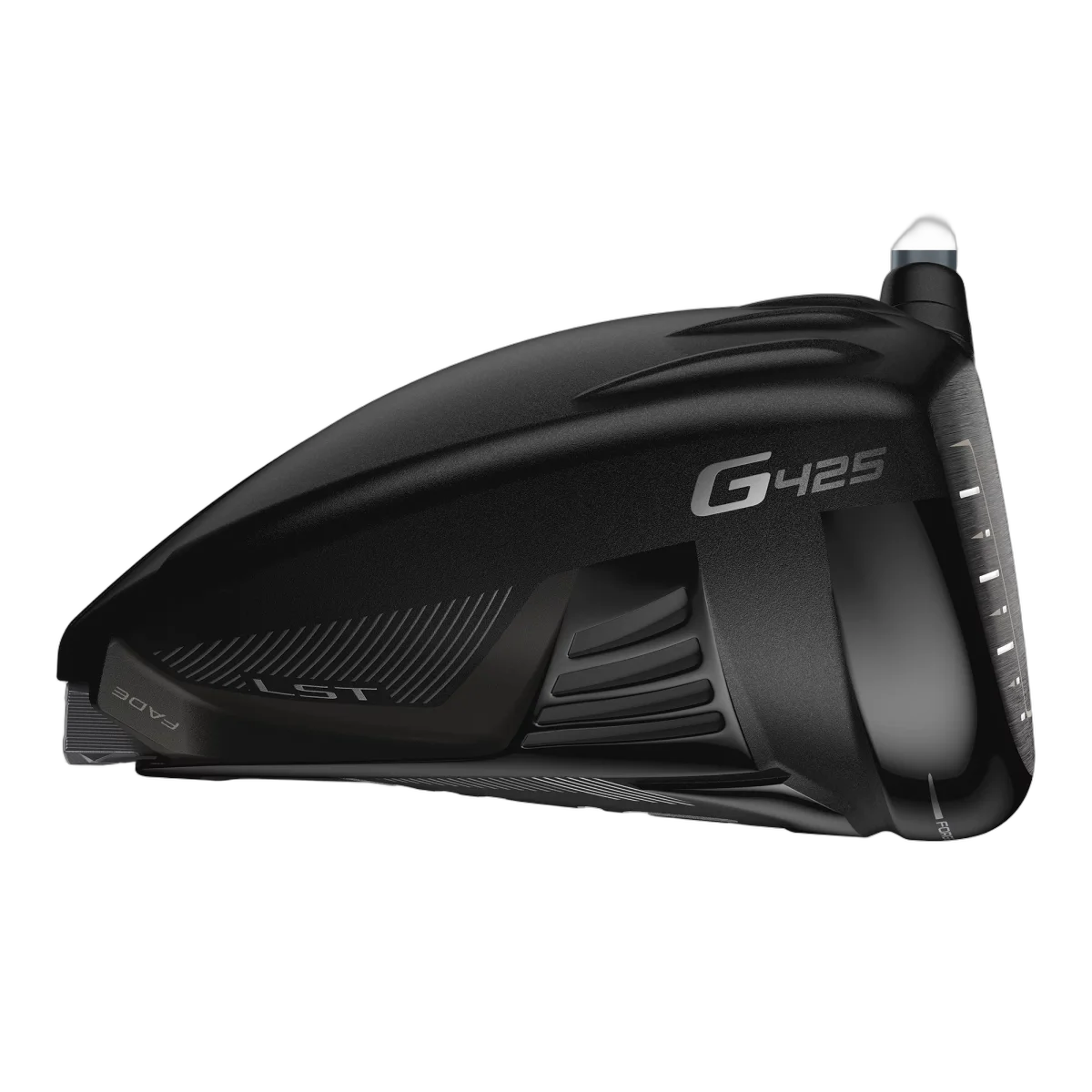
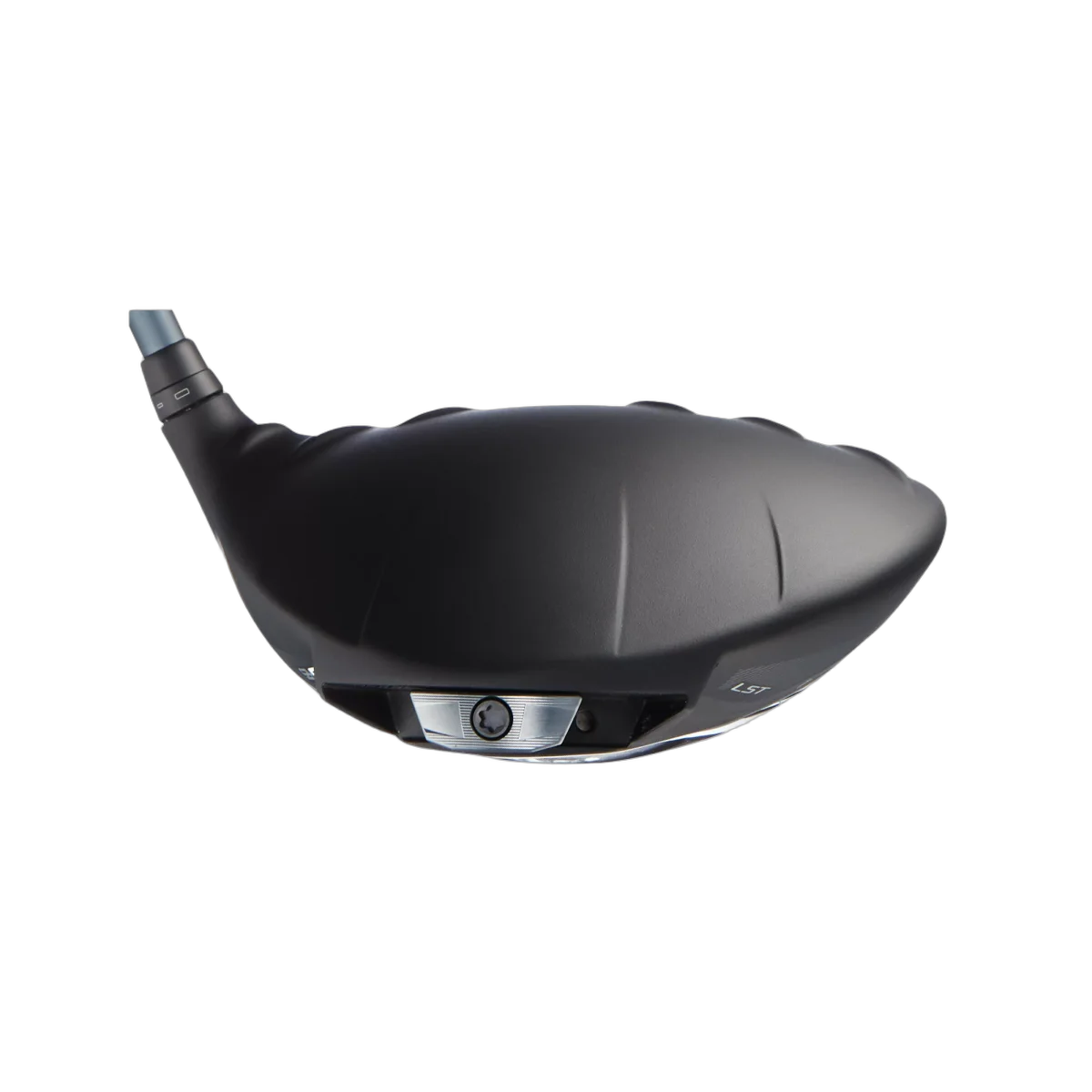
Sole view showing adjustable weight port and LST badge
The movable weight system offers useful shot-shape control. In the Draw position, the weight shifts toward the heel to promote a right-to-left flight. The Fade position does the opposite. Players who fight a specific miss pattern will find this adjustability valuable for setting up a consistent, repeatable shape. The LST also offers more workability than the MAX -- the lower MOI means it responds more readily to face angle changes at impact, allowing skilled players to shape shots intentionally when the situation calls for it.
Verdict
The PING G425 LST is a well-engineered, purpose-built driver for a specific type of player: someone with enough swing speed to support a low-spin design and enough consistency to take advantage of its more compact, less forgiving head. It does exactly what it promises -- reduce spin, flatten the flight, and maximize distance efficiency for players who generate too much backspin with standard or high-MOI drivers.
Strengths: excellent spin reduction for faster swingers, penetrating ball flight that performs well in wind, compact and confidence-inspiring head shape for better players, useful adjustability through the movable weight and hosel system, and strong value on the pre-owned market now that newer PING generations have arrived.
Weaknesses: the loud, metallic impact sound is a legitimate drawback that PING has since addressed in newer models, forgiveness is noticeably reduced compared to the MAX, and the low-spin profile is actively harmful for players without sufficient swing speed. This is a driver with a narrower fitting window, and players outside that window will get worse results than they would with the MAX or SFT.
The G425 LST is best suited for mid-to-low handicap players with swing speeds above 100 mph who are fighting high spin numbers off the tee. If you fit that description and you are shopping the pre-owned market, the G425 LST is one of the better values available -- a serious players' driver at a fraction of its original price.