Callaway Quantum Irons
Callaway — Callaway Quantum Irons · By Troy · Nov 29, 2025
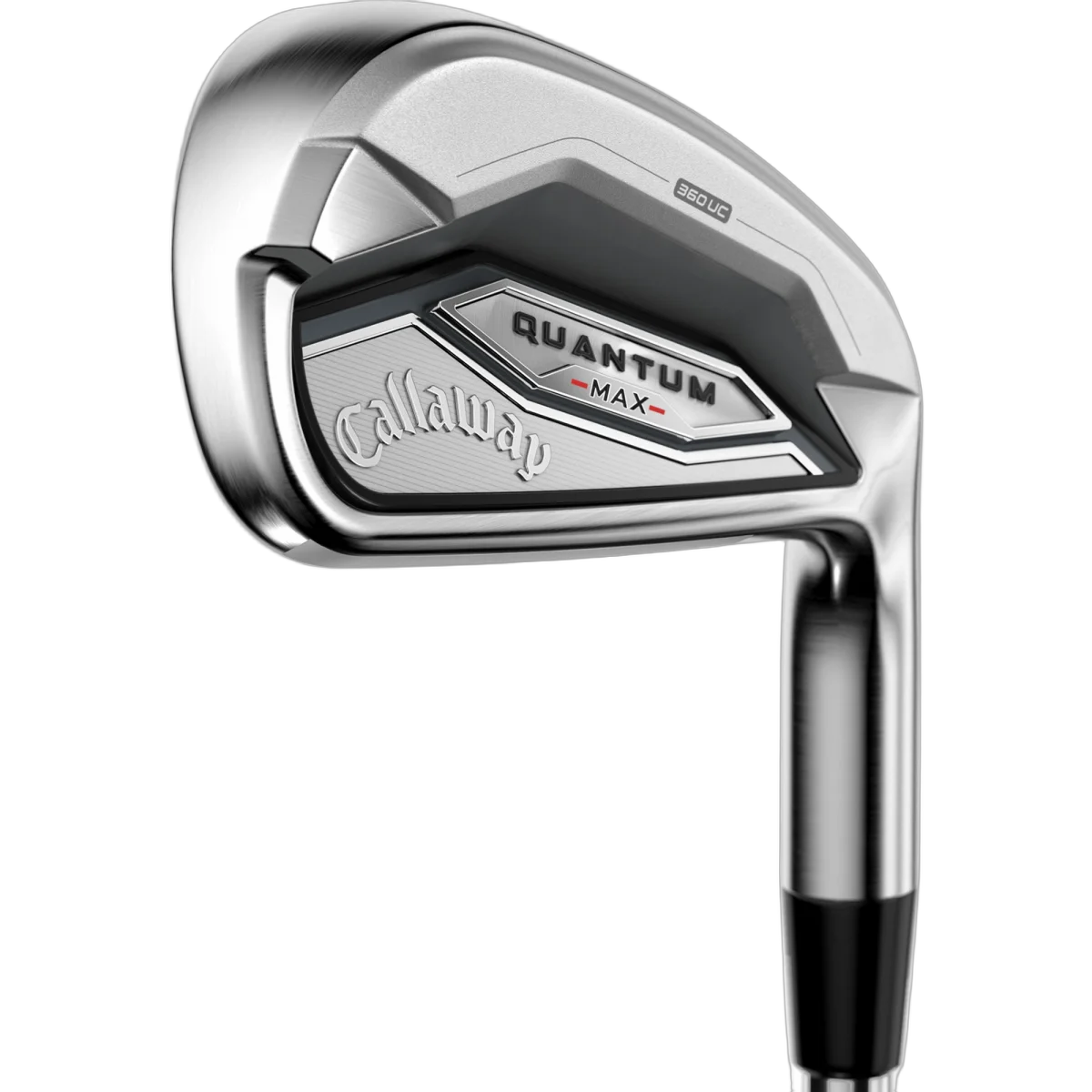
Callaway goes back to its roots with an unapologetically forgiving game-improvement iron that actually looks like a game-improvement iron -- and the tech inside is more sophisticated than the throwback appearance suggests.
The Big Picture
The Callaway Quantum irons represent a deliberate shift in philosophy. After years of shrinking profiles and trying to make game-improvement irons look like players' clubs, Callaway is reversing course. The Quantum lineup -- available in Max, Max OS, and Max Fast configurations -- is built around forgiveness, easy launch, and honest game-improvement shaping. These are big irons. They have pronounced cavities. They are what they are, and they are not pretending to be something else.
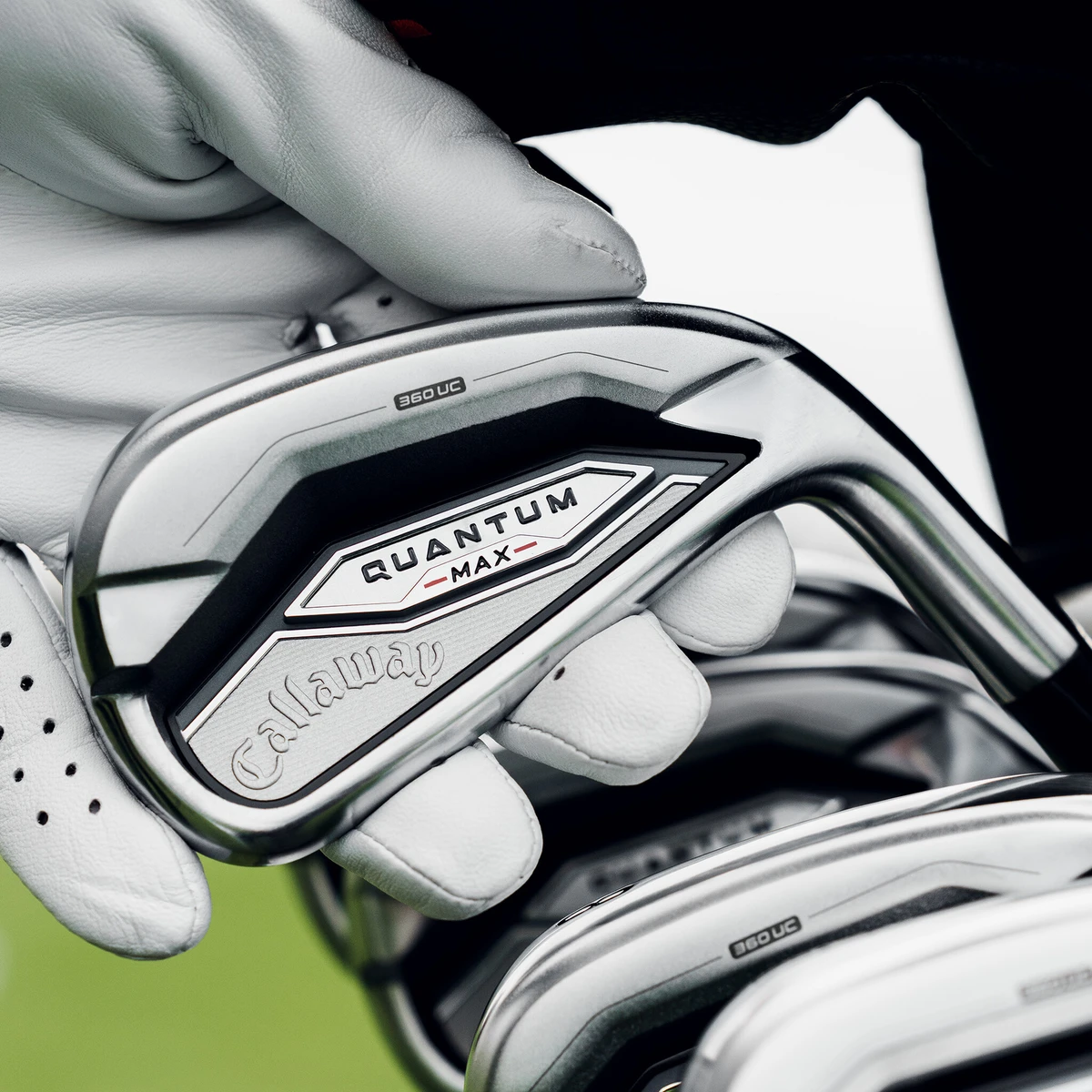
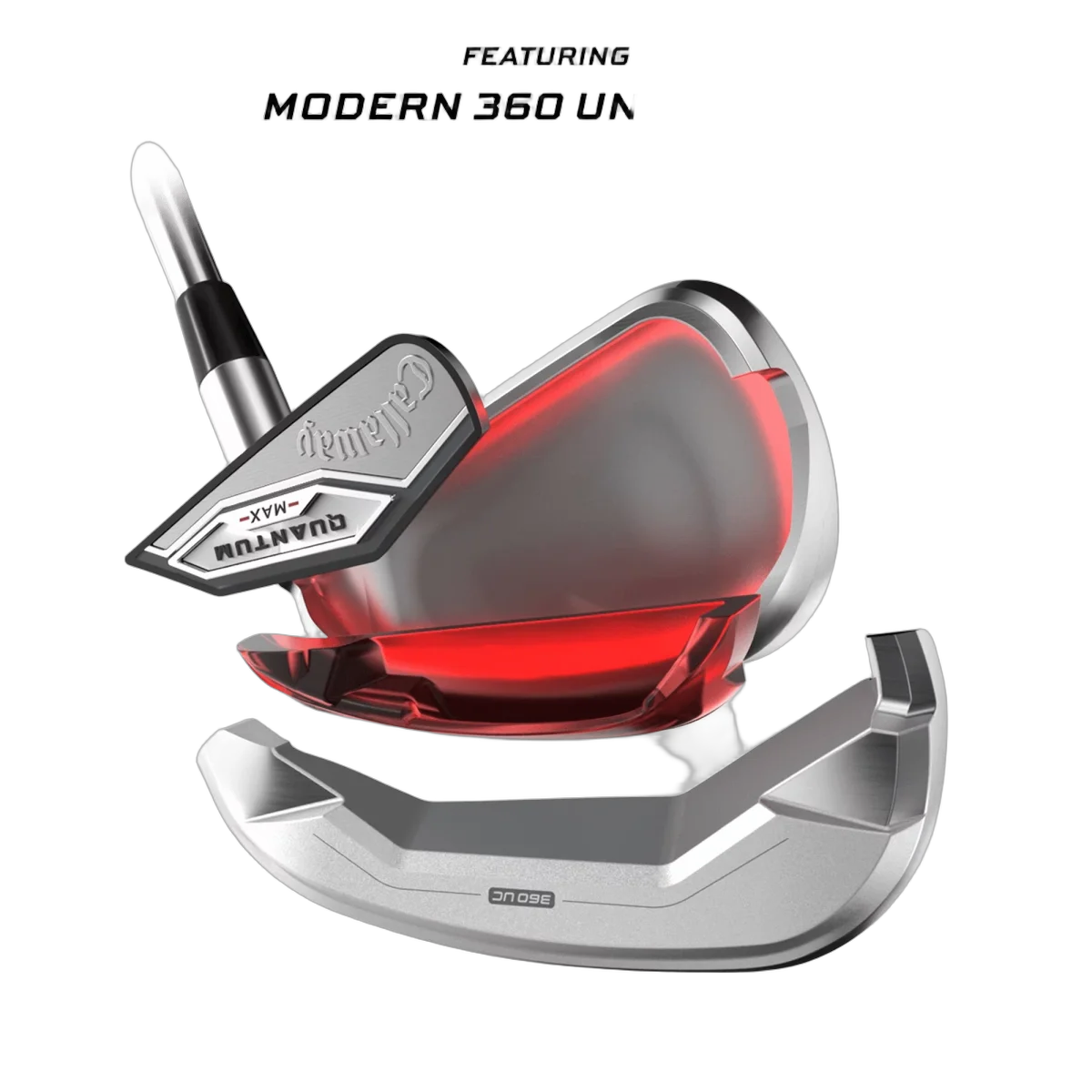
The headline technology is a new Modern 360 Undercut construction, which is an industry first. Instead of the traditional approach where the face is welded onto a cast body and hosel, Callaway has flipped the script: the hosel and face are a single piece of material, with the weld line pushed much further back around the sole. This creates a full 360-degree undercut near the bottom of the face, allowing the sole to flex significantly more at impact -- particularly low on the face, where amateur golfers strike the ball roughly 80 percent of the time.
Paired with the 360 Undercut is a progressive Tri-Sole design, carried forward and refined from the 2025 Elyte irons. Three distinct sole sections improve turf interaction through the strike, with each individual sole uniquely designed and fine-tuned throughout the set. An AI-optimized face completes the package, using hundreds of thousands of real amateur impact locations to shape the face geometry for where golfers actually hit the ball.
The Quantum family targets high-handicap golfers and those with moderate to slower swing speeds who need maximum help with launch, forgiveness, and consistency.
At Address
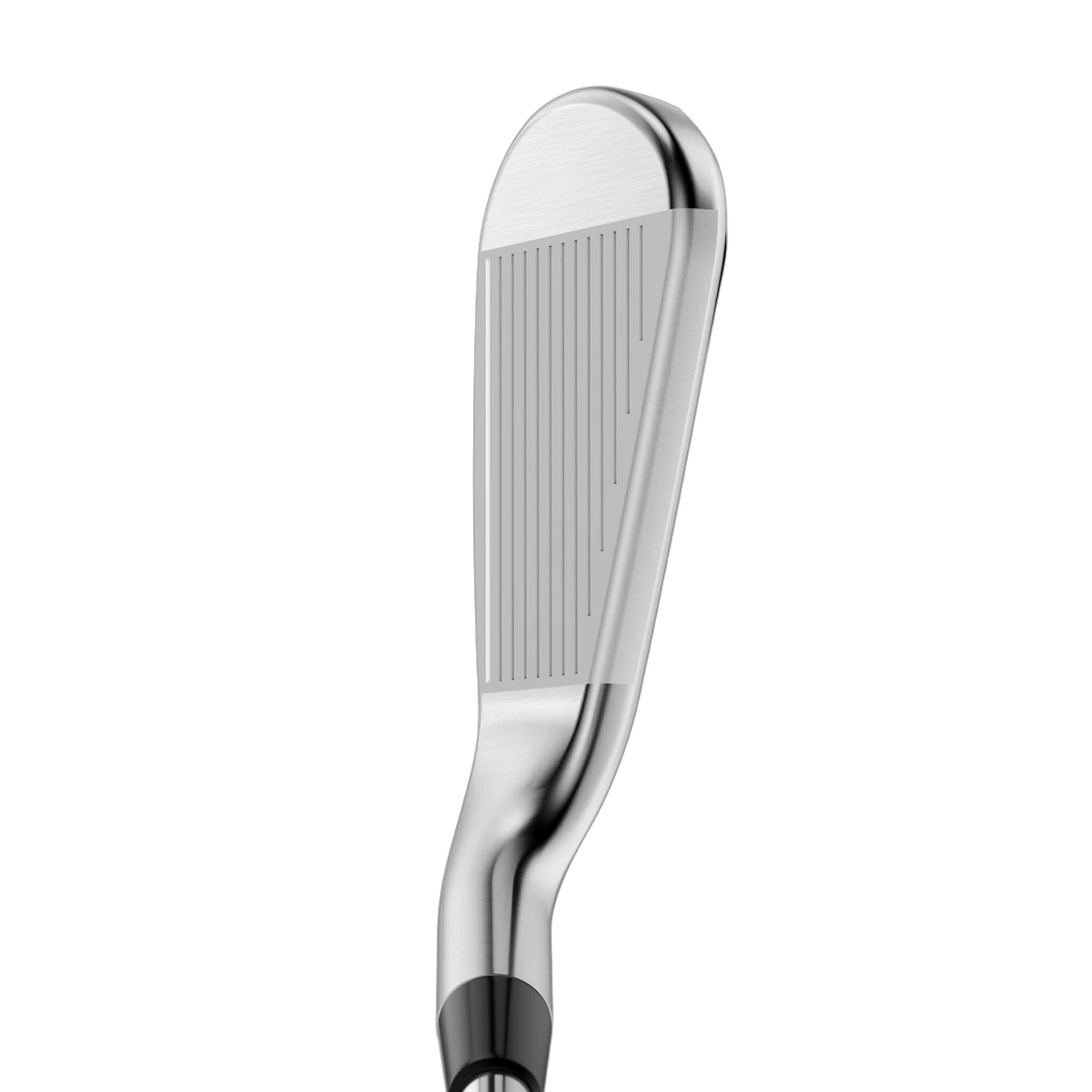
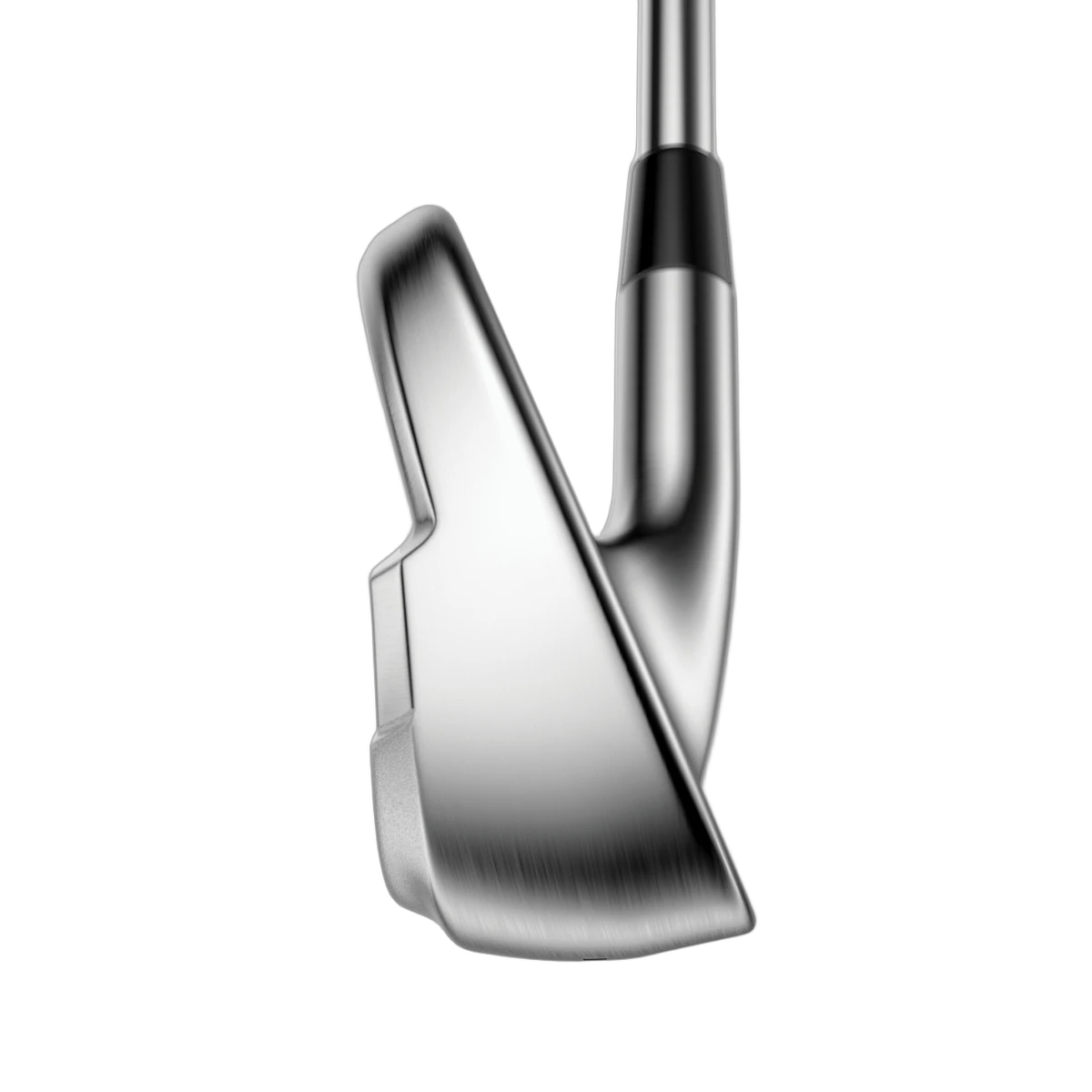
The Quantum Max is a big iron, and it does not hide that fact. The head size is generous, the topline is thick, and the offset is pronounced -- all of which are deliberate choices aimed at inspiring confidence for golfers who need to see some substance behind the ball. The weight distribution is visibly concentrated in the back and bottom of the head, which immediately communicates that this club wants to get the ball in the air.
Toe-side profile showing thick topline and generous offset
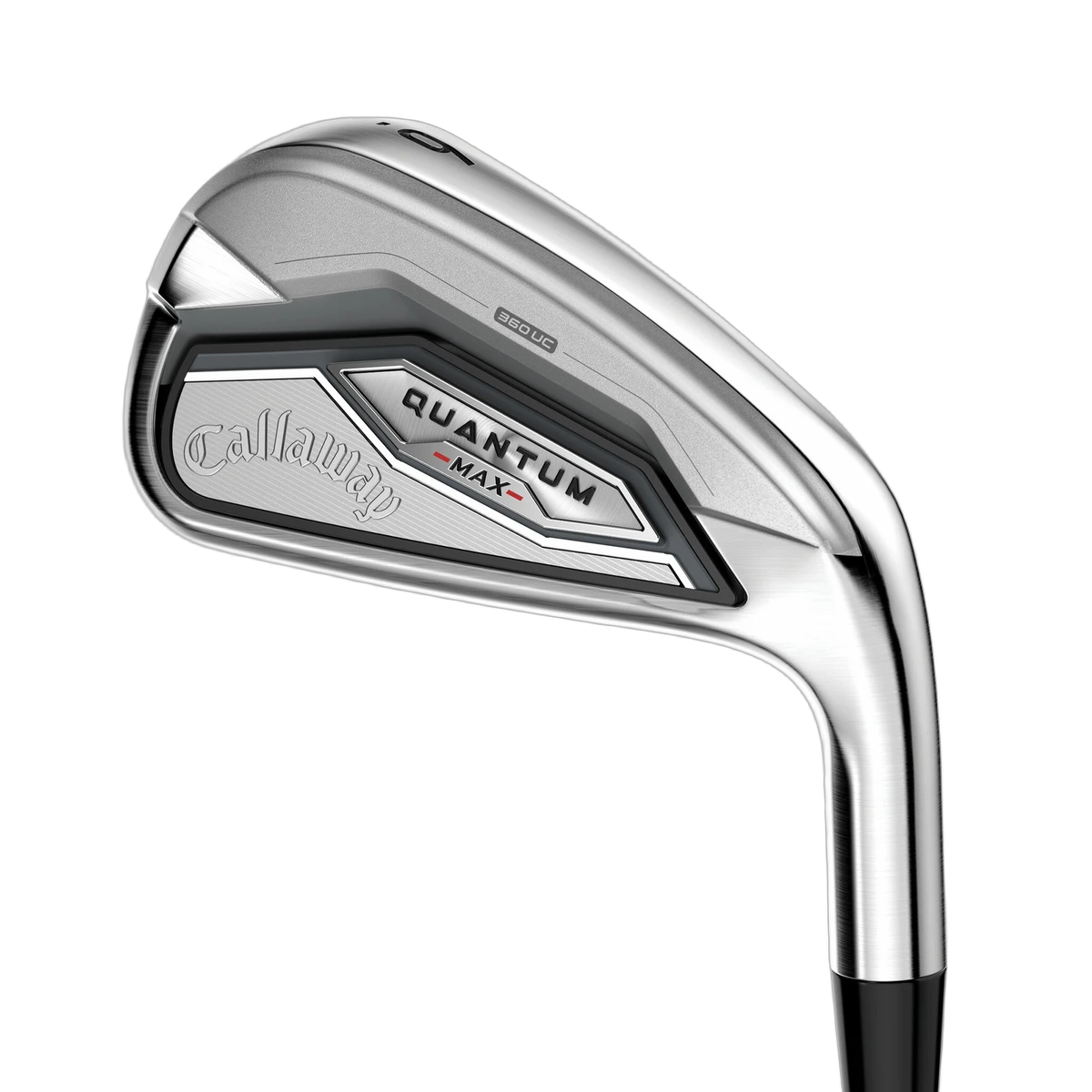
Despite the larger profile, the Quantum does not look like a shovel. Callaway has refined the shaping enough that it reads as a modern game-improvement iron rather than a throwback utility club. The chrome finish is clean, and the overall impression is of a well-built, purpose-driven tool. The Max OS variant takes the sizing up another notch for golfers who want maximum real estate, while the Max Fast delivers a lighter-weight build for slower swing speeds.
Sound & Feel
For a cast game-improvement iron at this size, the Quantum Max delivers a solid, confidence-building feel at impact. Callaway has filled the cavity with urethane microspheres to manage sound and vibration, and the result is a clean strike that avoids the harsh, tinny feedback that plagues some oversized irons. Center strikes feel solid and responsive, with good energy transfer that lets you sense the ball springing off the face.
The sound sits in a comfortable middle ground -- not quiet enough to feel dead, not loud enough to draw stares on the range. On mishits, the feel softens somewhat but does not punish. You know you missed it, but the feedback is informative rather than jarring.
Performance
Ball Speed & Distance
The Modern 360 Undercut is the performance engine here, and it does real work. By allowing more face flex -- particularly on the bottom half and toward the toe, where amateurs tend to miss -- Callaway claims to be cutting ball speed loss in half on low-center and low-toe strikes. In practice, this translates to shots that might normally come up a club short instead coming up only half a club short. The difference between the front bunker and the fat part of the green.
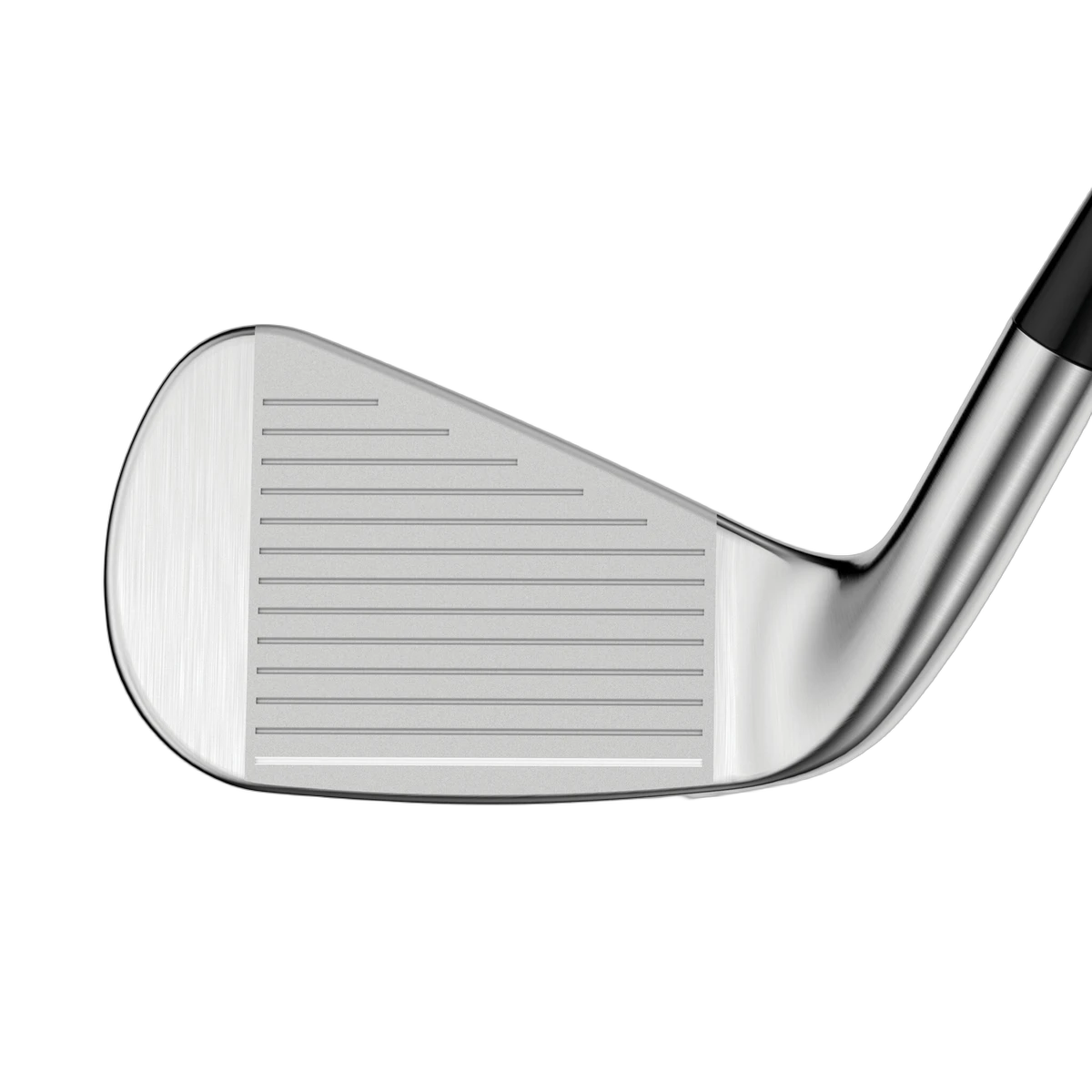
Face-on view showing grooves and clean topline of the iron
The 7-iron sits at 29 degrees, which is on the stronger side but actually weaker than previous Callaway game-improvement models. Callaway has deliberately weakened lofts across the Quantum lineup, betting that the improved ball speed from the 360 Undercut and Tri-Sole will offset the weaker lofts with real golfer swings -- even if a robot test would show less raw distance. It is a bold call, and initial results suggest it works.
Launch & Spin
Launch is high across the board, which is exactly what the target audience needs. The AI-optimized face combined with the low CG from the expanded undercut produces easy elevation even in the long irons, with peak heights that promote soft landings and greens held from distance. The 7-iron launch angle sits around 16-20 degrees depending on swing speed and delivery, with plenty of trajectory for even moderate-speed players.
Spin rates are thoughtfully calibrated. Callaway has been open about the fact that previous models like the Paradym did not spin enough, and the Ai Smoke improved on that. The Quantum pushes the spin story further -- I was seeing enough spin that approach shots were dropping and stopping rather than running through the green, which was a welcome change from the low-spin, roll-out behavior of some strong-lofted game-improvement irons. The weakened lofts contribute here: a 29-degree 7-iron naturally produces more spin than a 26-degree 7-iron, and Callaway is using that to the golfer's advantage.
Dispersion & Shot Shape
Forgiveness is the Quantum's calling card, and it delivers. The expanded face flex from the 360 Undercut, combined with the AI-optimized variable thickness pattern, keeps ball speed and trajectory remarkably stable across the face. Mishits that would normally produce significant distance loss instead stay in a playable window. The Tri-Sole design further helps by preventing the leading edge from grabbing on steep swings and allowing the club to skip through the turf on flippy contact, reducing the penalty on fat strikes.
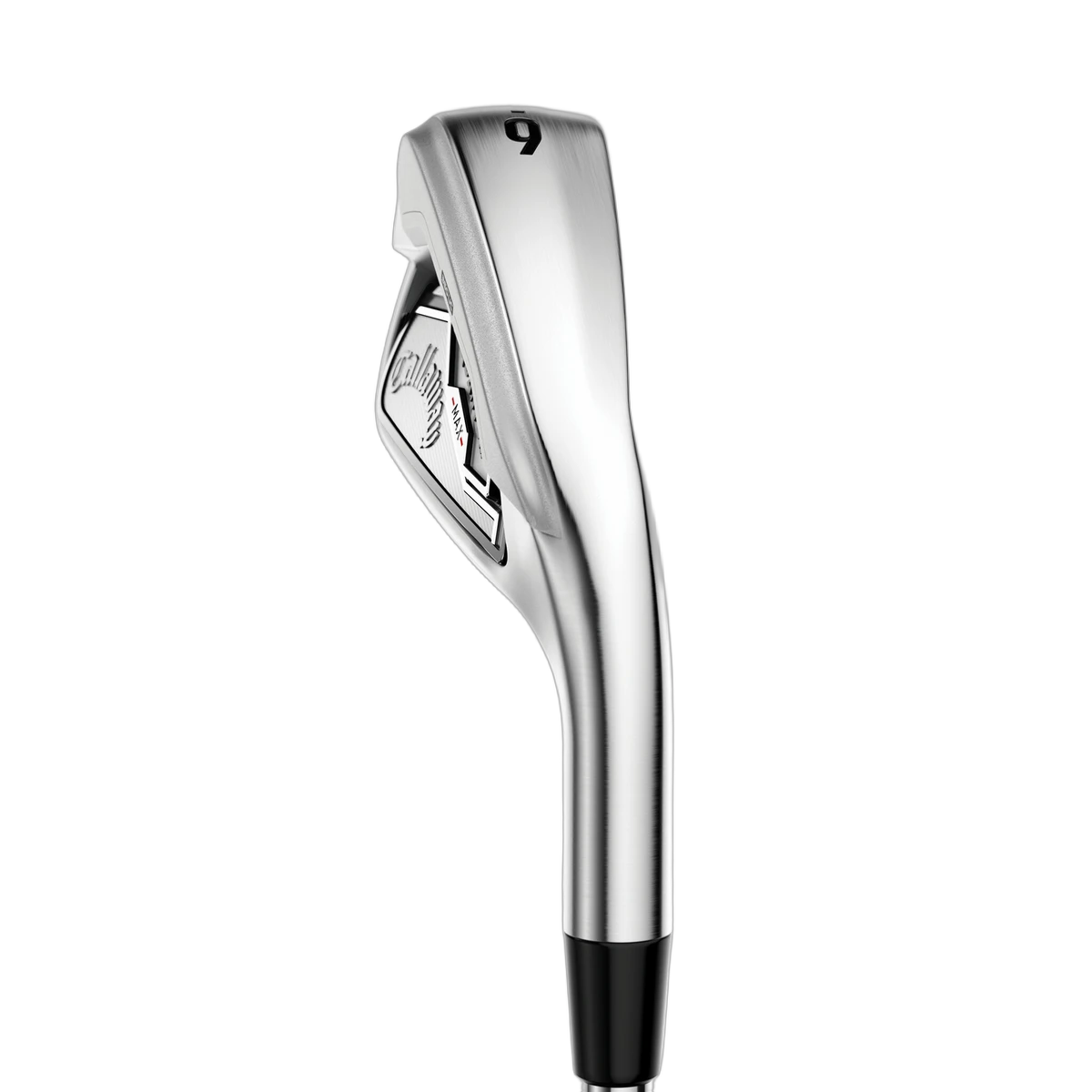
Back cavity of 6-iron showing Callaway Quantum Max badge detail
There is no draw or fade bias being imposed here -- the Quantum flies where you swing it, though the generous offset naturally helps golfers who fight a slice by encouraging a slightly more closed face through impact. Dispersion was tight for the category, with my approach shots clustering in a pattern that would produce significantly more greens in regulation compared to the previous generation.
MSRP: $1,149.99 (7-piece steel) / $1,249.99 (graphite) / $1,349.99 (Max Fast)
Verdict
The Callaway Quantum irons are a confident, well-executed return to Callaway's game-improvement roots. The Modern 360 Undercut is genuine innovation that measurably improves ball speed retention on amateur miss patterns, the Tri-Sole delivers real turf interaction benefits, and the decision to weaken lofts in favor of spin and playability is the right call for this audience. The feel and sound are solid for a cast cavity-back iron of this size, and the three-model lineup (Max, Max OS, Max Fast) covers a wide range of game-improvement needs.
The pricing is competitive at $1,149.99 for a seven-piece steel set, though the Max Fast at $1,349.99 pushes into premium territory. The honest game-improvement sizing will not appeal to golfers who want their irons to look like players' clubs -- if that matters to you, the Apex Ai300 is the alternative. But if you want maximum forgiveness, easy launch, and an iron that is engineered for where you actually hit it on the face, the Quantum delivers.