Wilson Staff Model CB Irons
Wilson — Wilson Staff Model CB Irons · By Andy · Feb 6, 2026
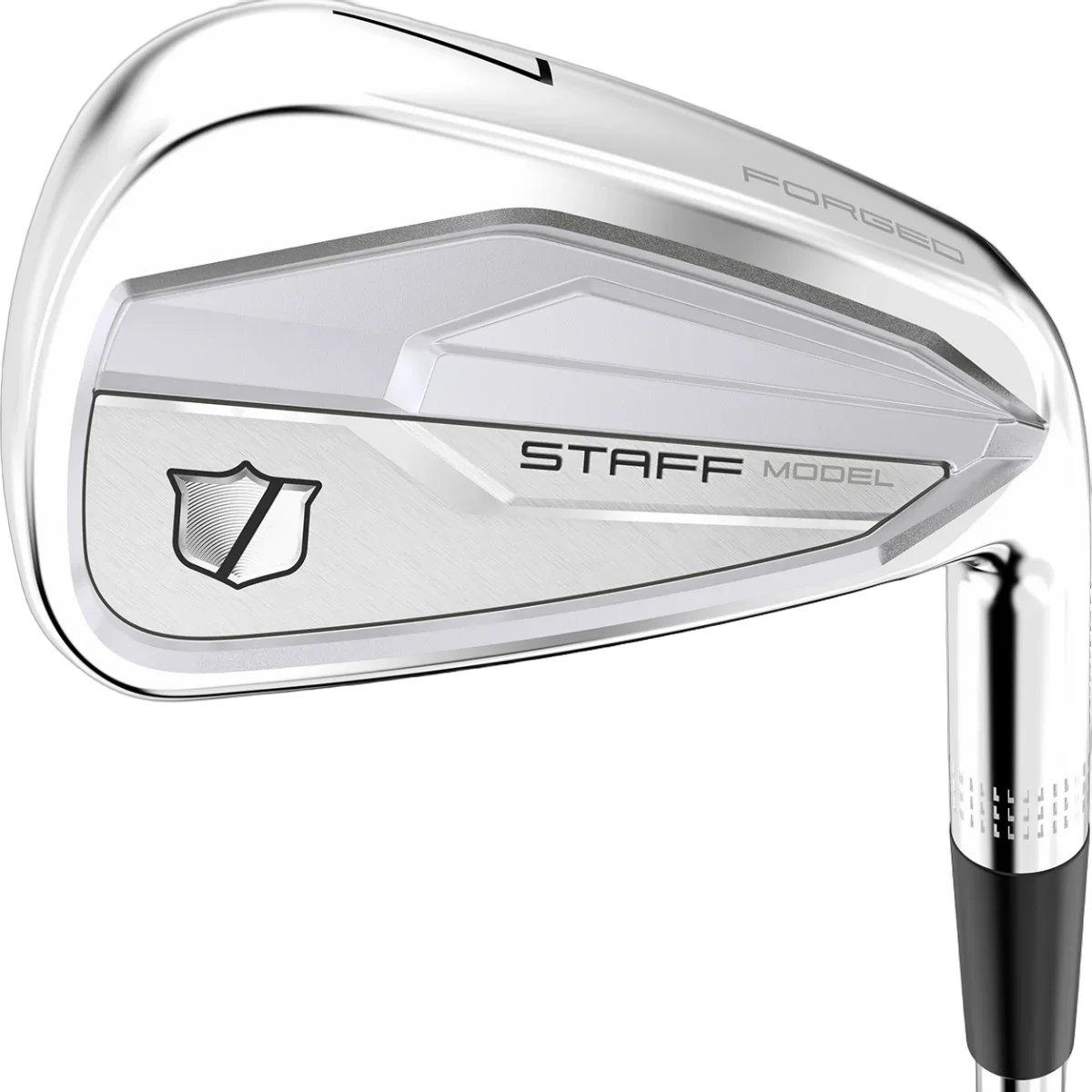
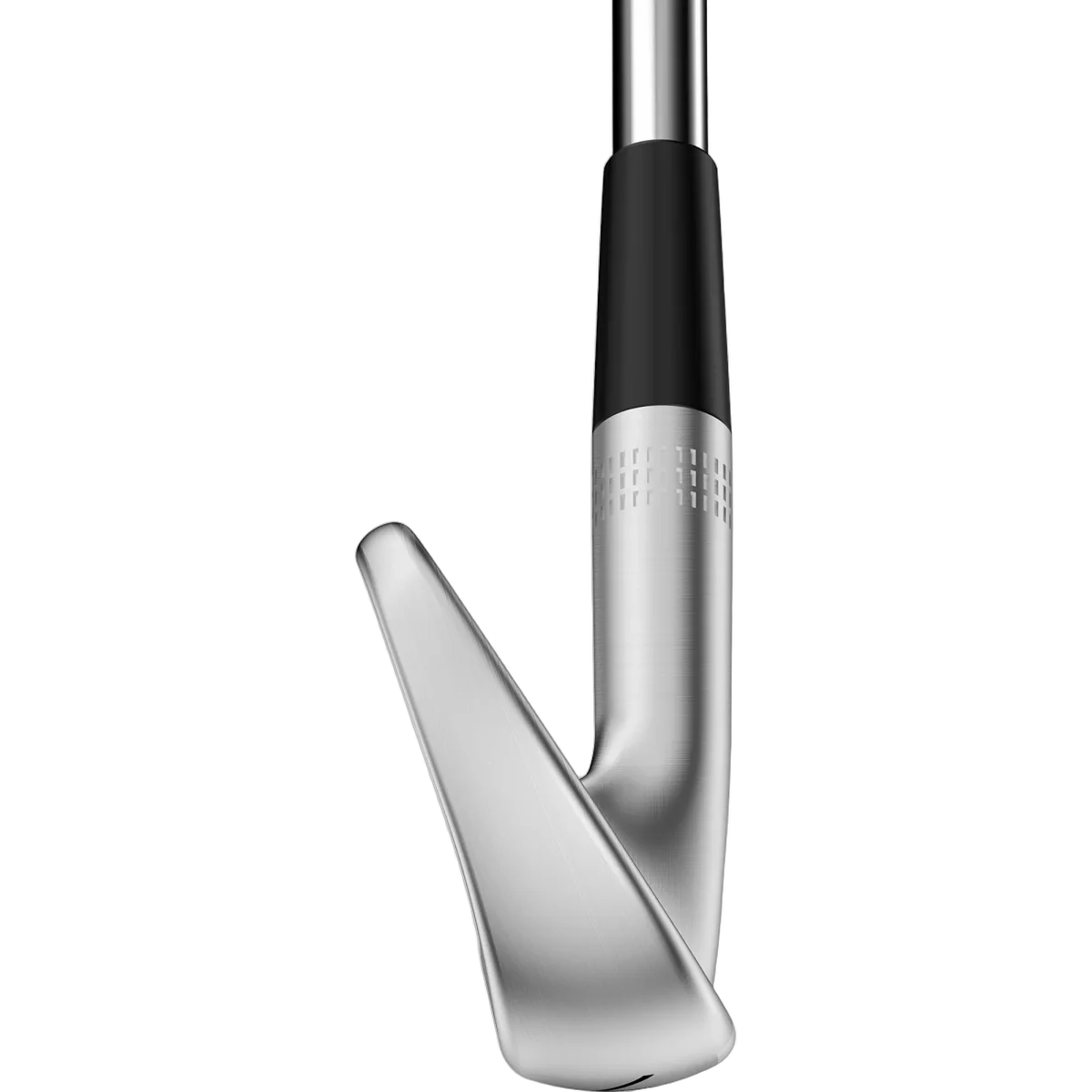
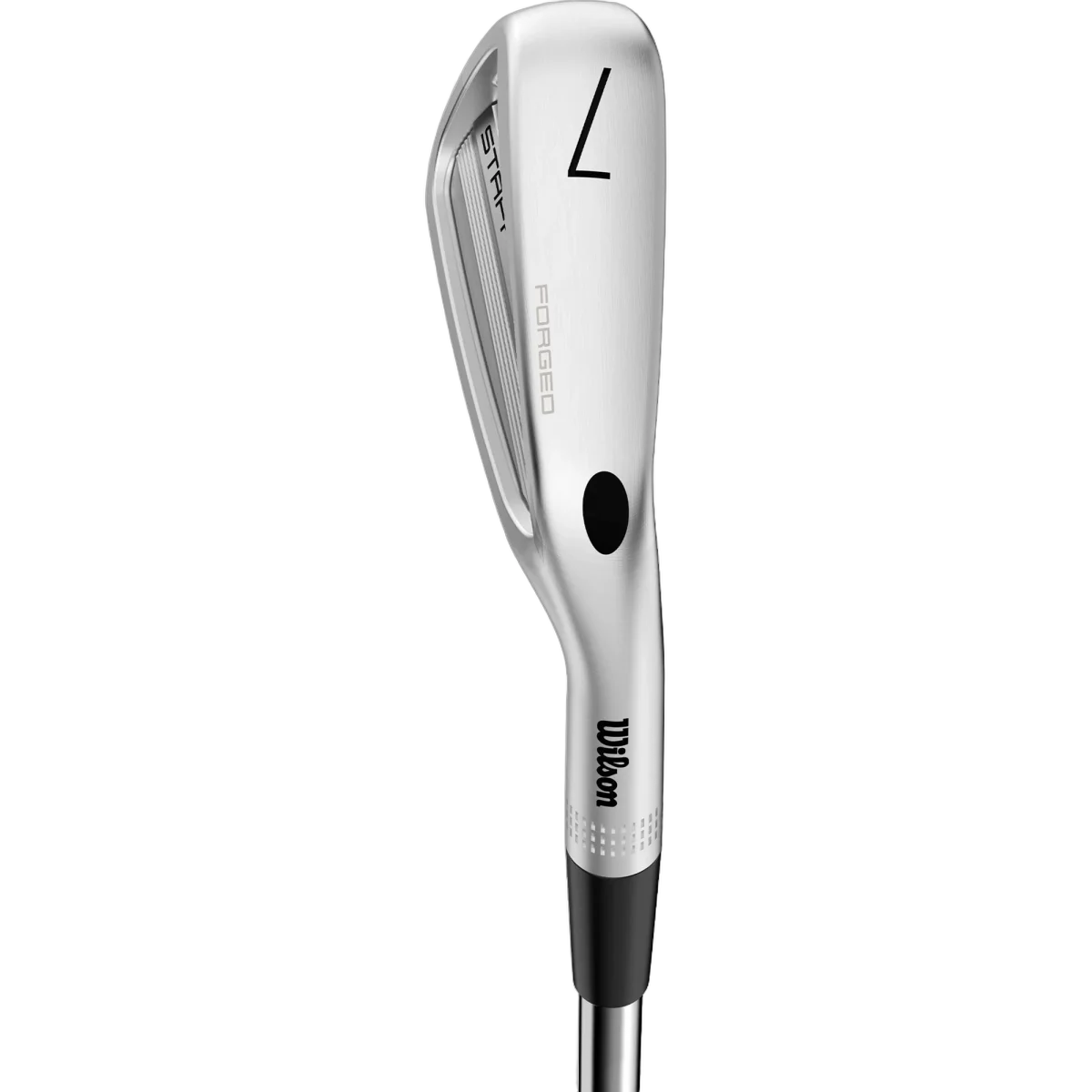
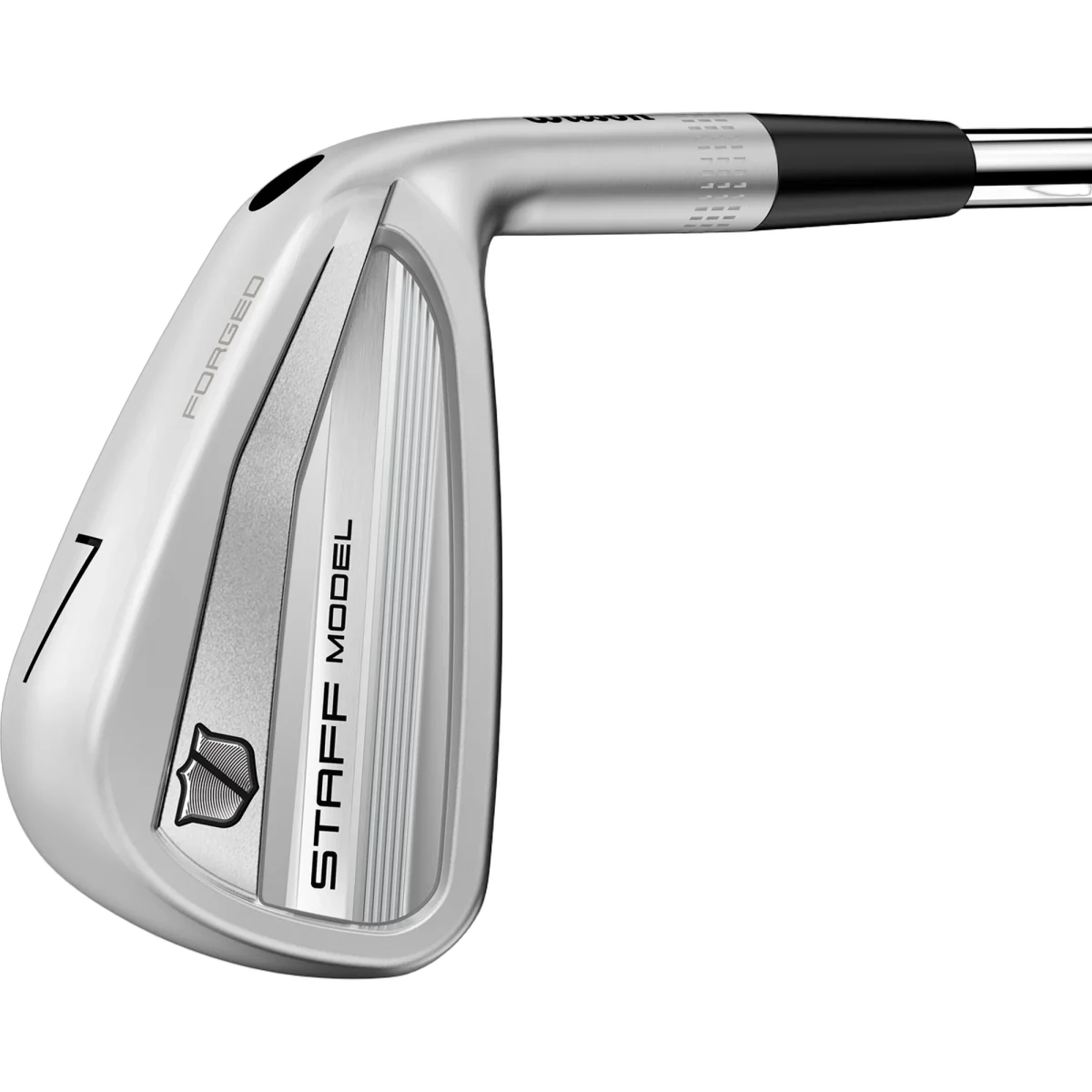
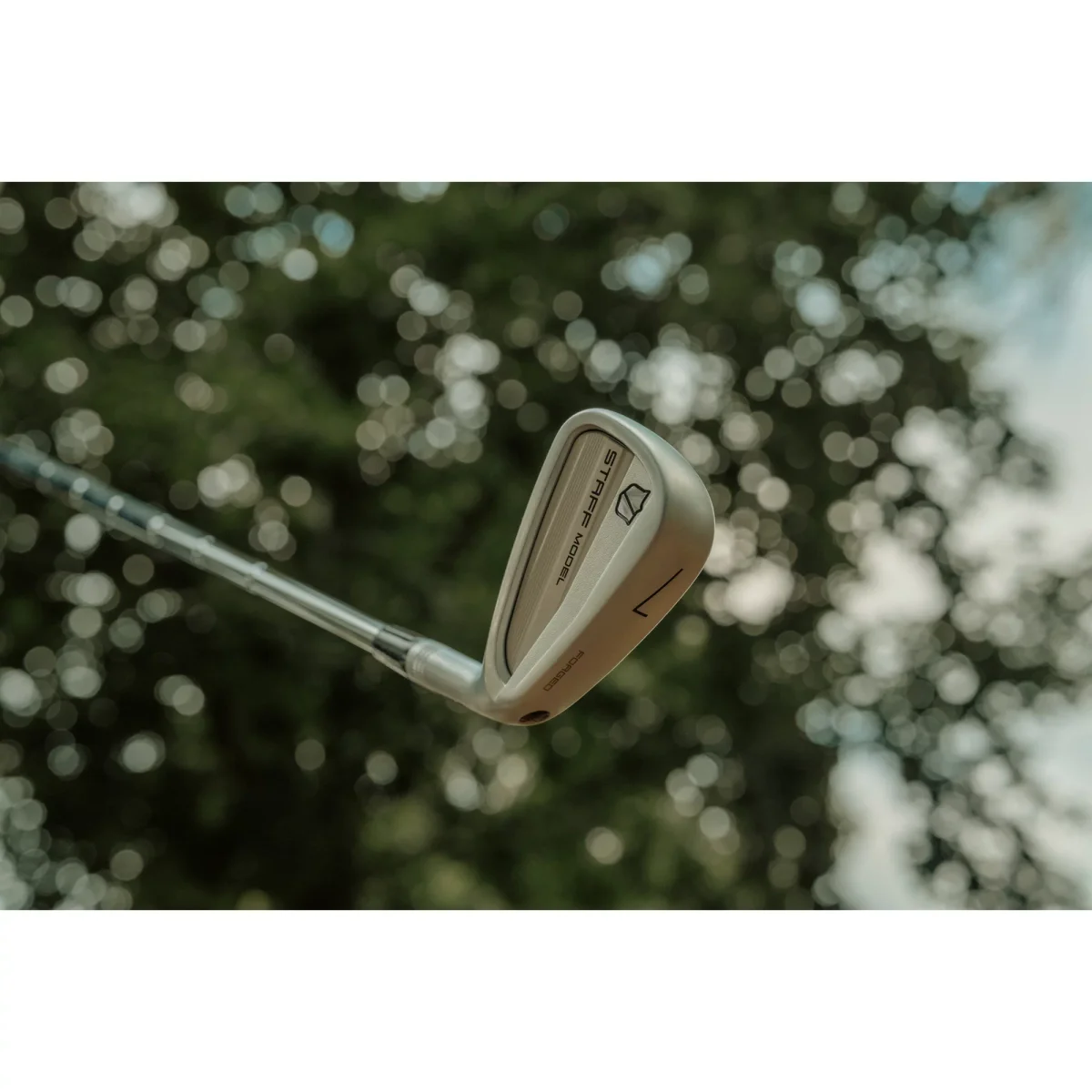
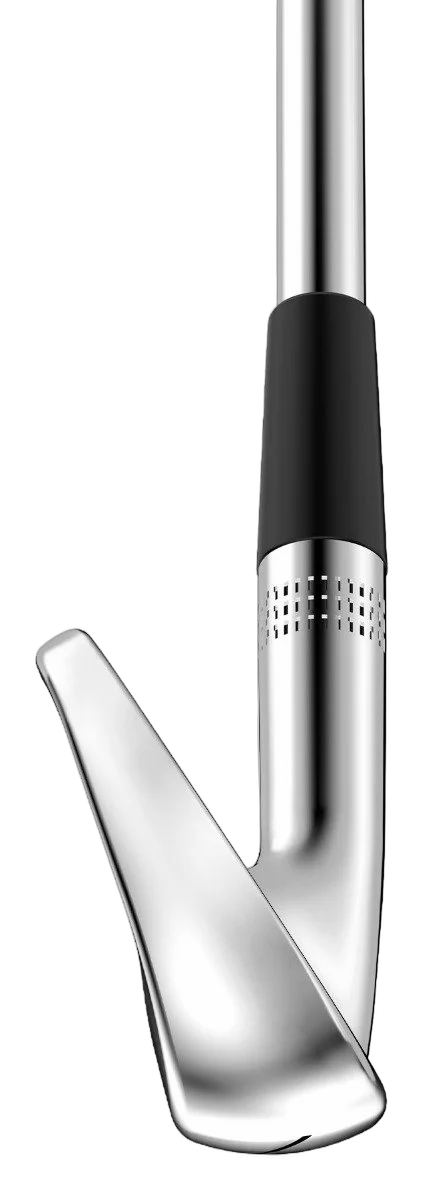
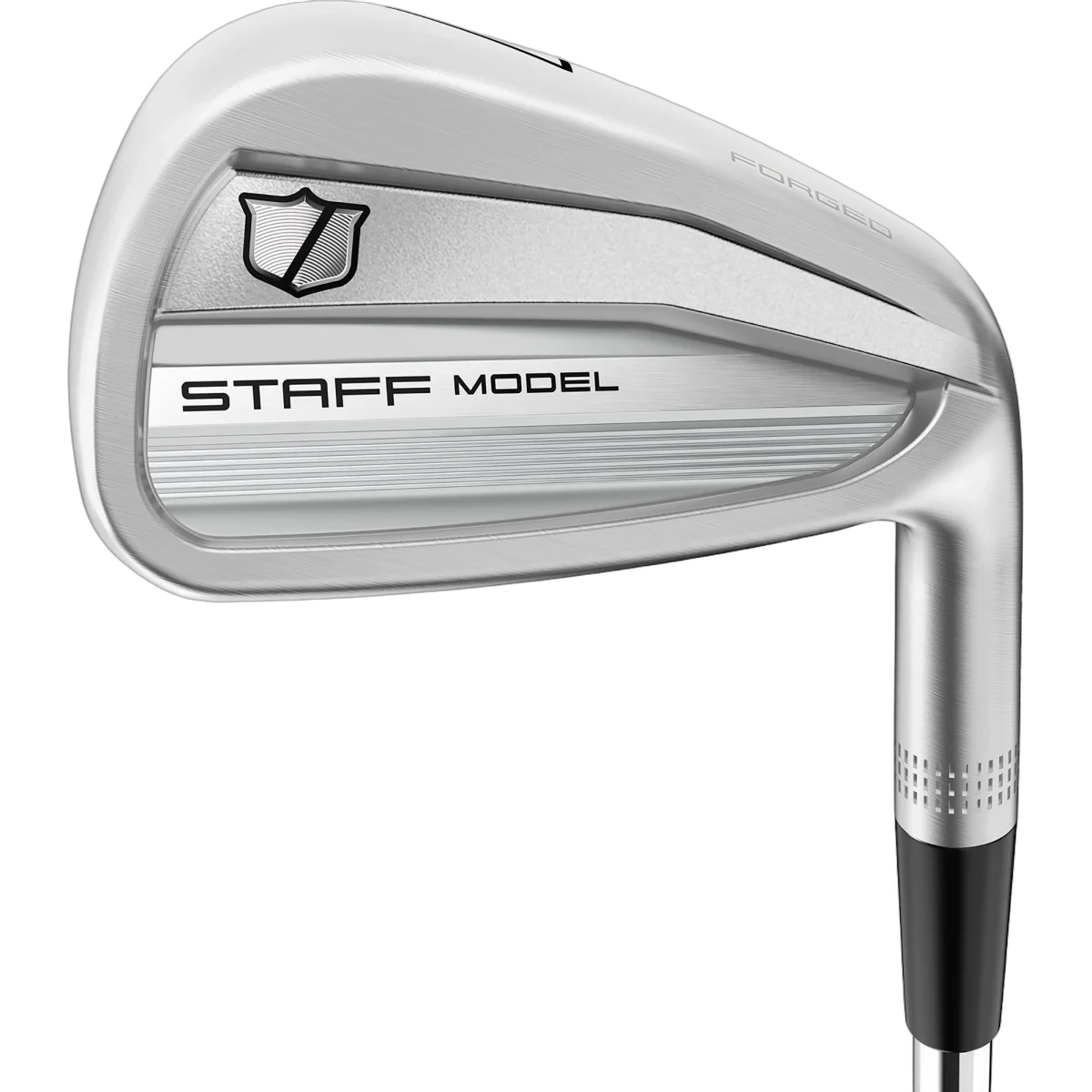
A forged cavity back that trades raw distance for dead-eye dispersion and tour-caliber feel.
The Big Picture
Wilson has been making irons since long before most of us were born, and with 62 major championship victories to their name, there is serious pedigree behind every new Staff Model release. The 2024 Staff Model CB irons carry that legacy forward, replacing the Tour V6 as the cavity back option in Wilson's players iron lineup. These sit neatly between the Staff Model Blade and the new XB, giving golfers a forged 8620 carbon steel head that blends workability and feel with just enough perimeter weighting to take the sting out of slight mishits.
The headline features are straightforward: precise toe weighting to eliminate the low-left miss, a Fluid Feel hosel that redistributes weight for improved CG alignment, and a precision-milled face for consistent spin and stopping power. Wilson is not chasing jacked lofts or hollow-body ball speed here. The 7-iron sits at a traditional 34 degrees. This is a club built for control, and it delivers on that promise.
At Address
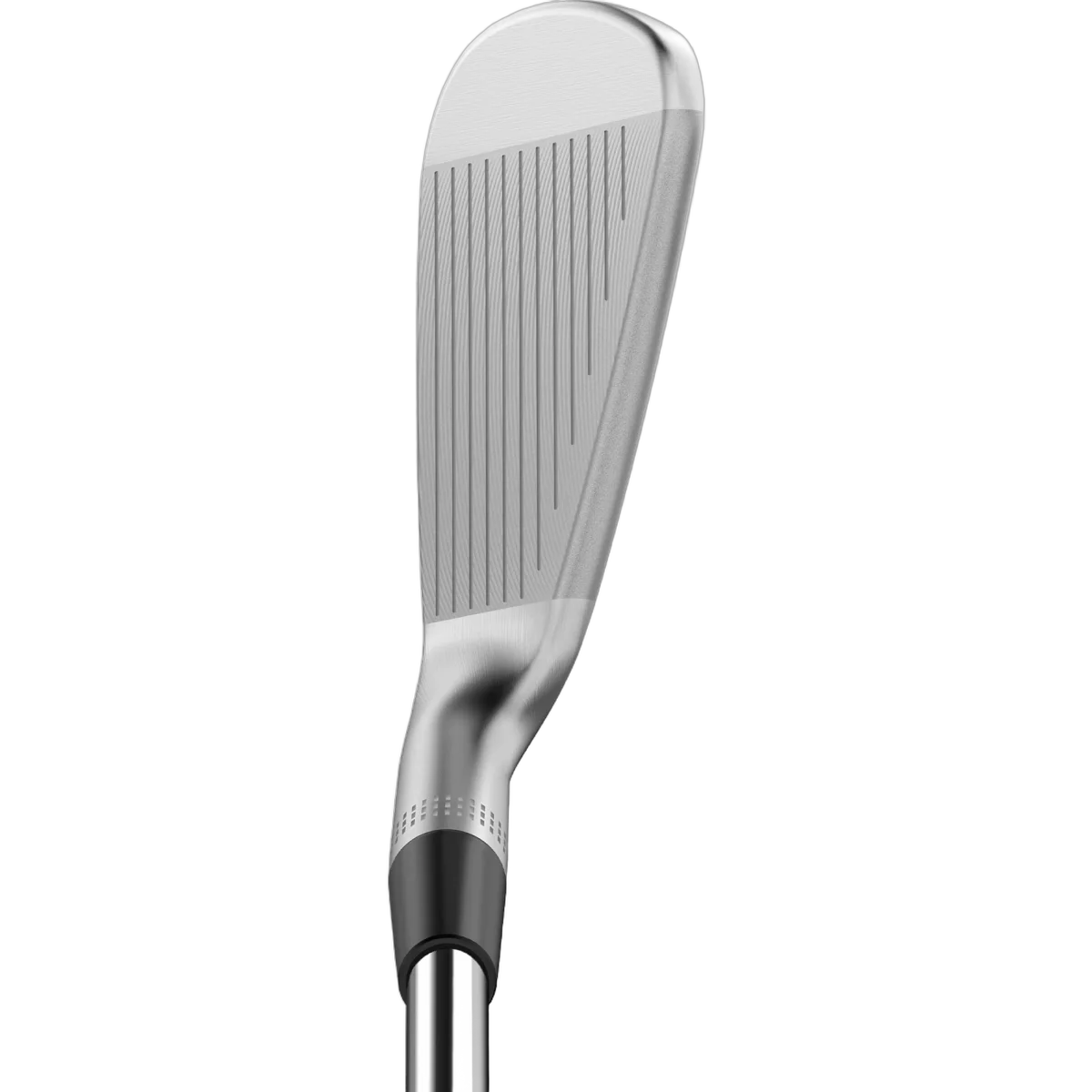
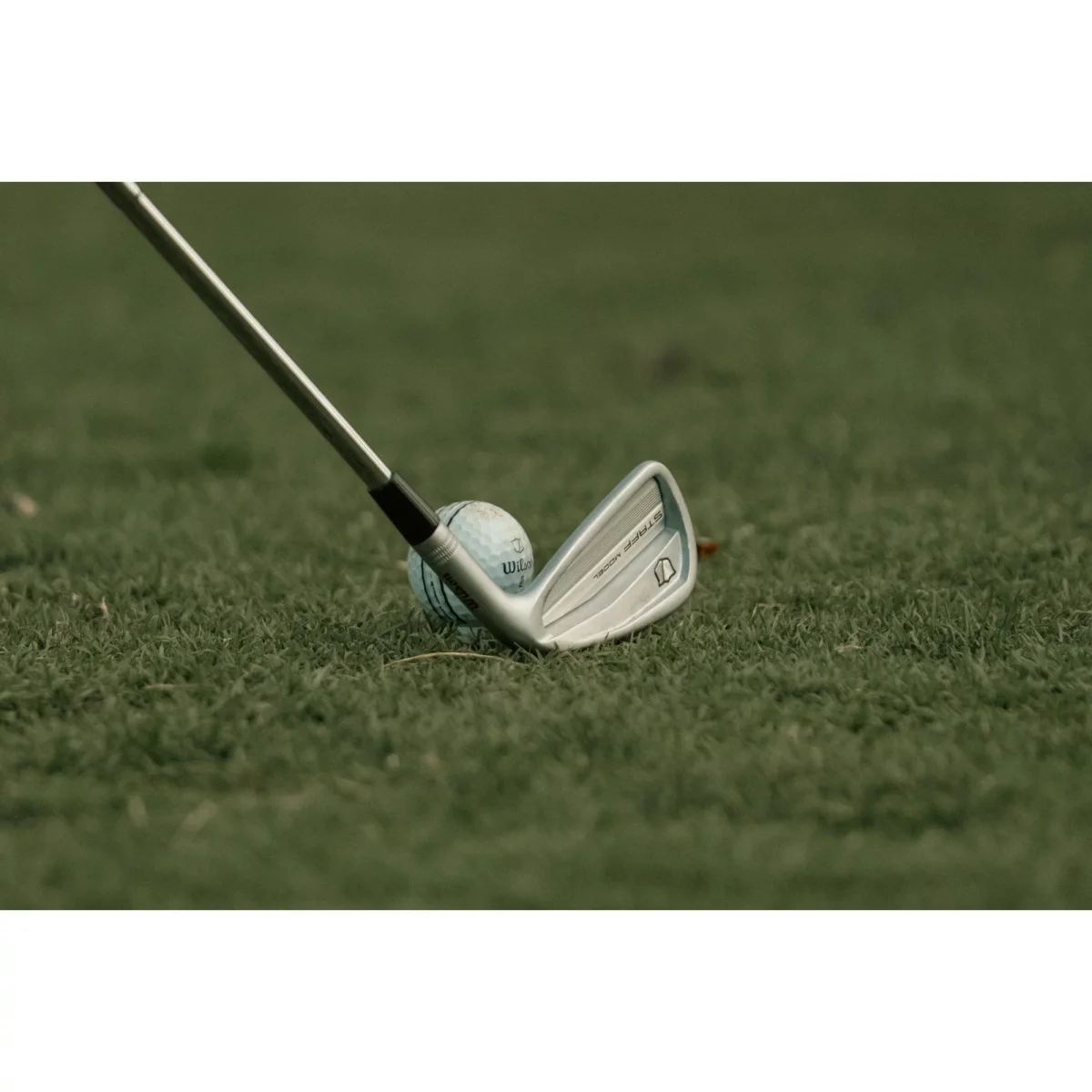
Behind the ball, the CB looks every bit the tour iron. The head is compact with a relatively thin topline and minimal offset. Blade length runs short heel-to-toe, which will suit the eye of a golfer who likes to square the ball up to a precise target. The new brushed satin finish is a significant cosmetic upgrade over the 2021 chrome look, lending an air of understated luxury that photographs well and, more importantly, eliminates glare in bright conditions.
Iron positioned behind a golf ball on turf at address
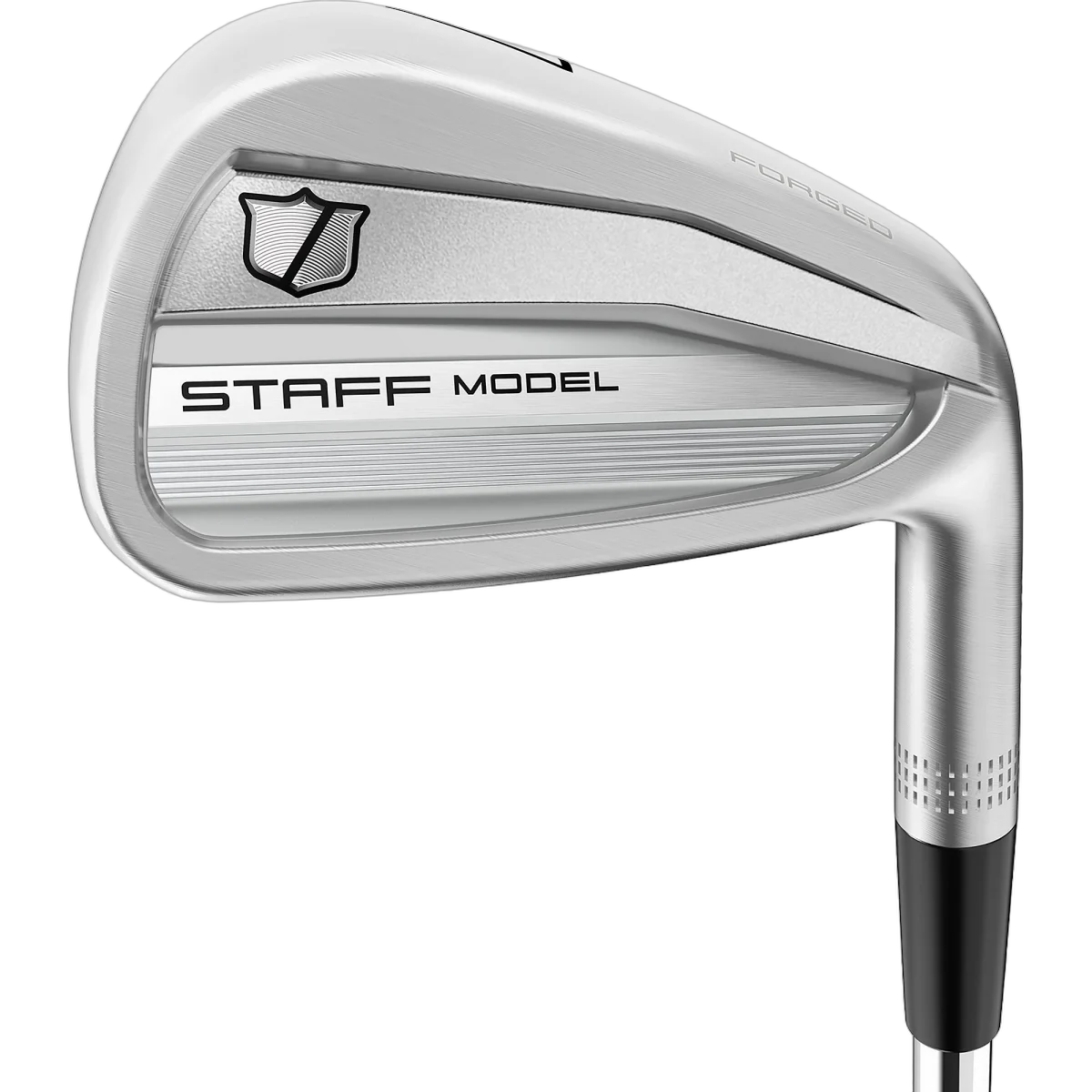
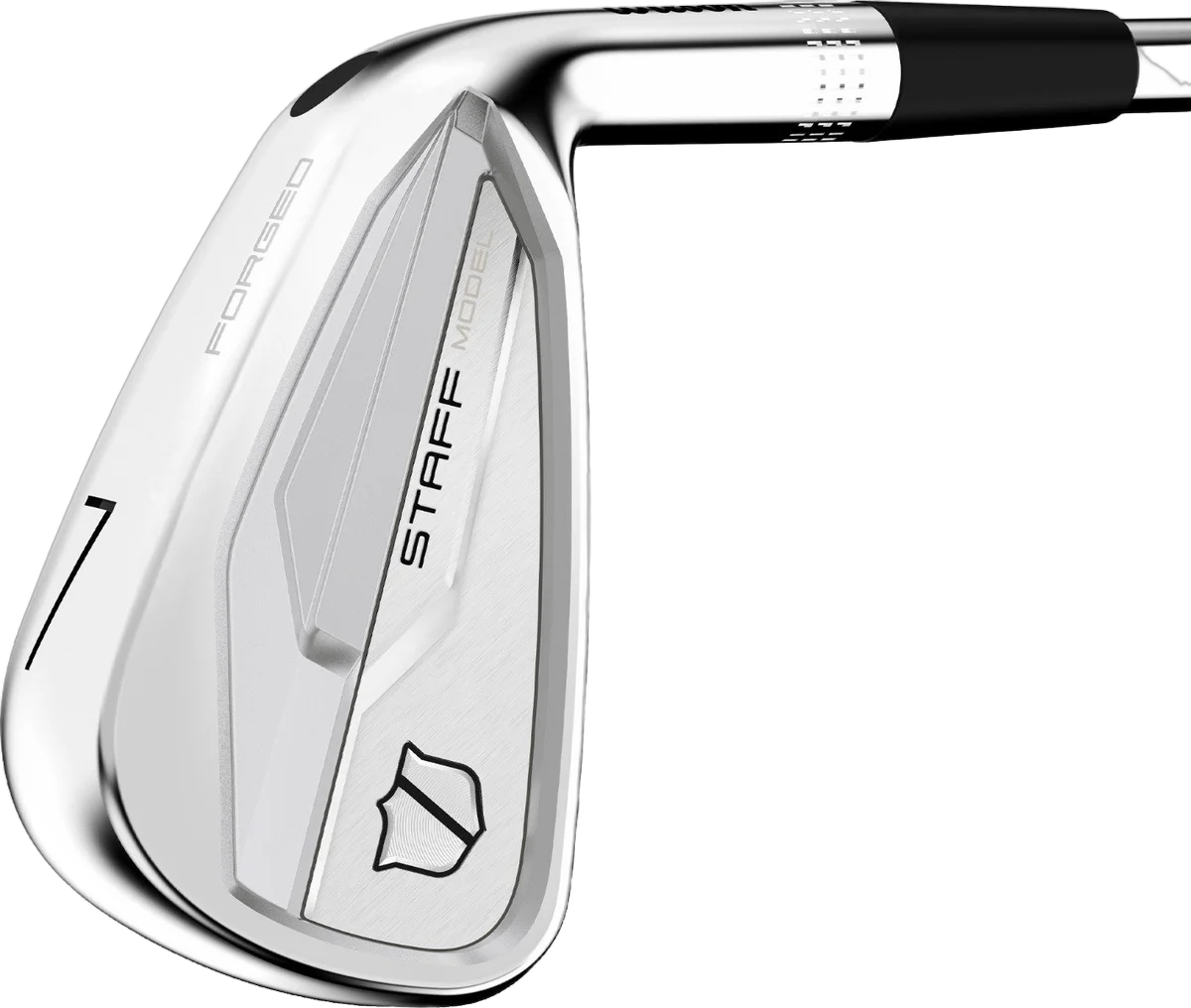
Wilson redesigned the logo, stripping the old W/S from inside the shield, and the result is a much cleaner aesthetic on the back of the head. When you set the CB next to the Staff Model Blade, the two are visually cohesive enough to blend seamlessly in a combo set. The topline on the CB is only marginally thicker, and the offset difference is negligible. If you are the kind of player who notices when your short irons look different from your long irons, Wilson has solved that problem.
Sound & Feel
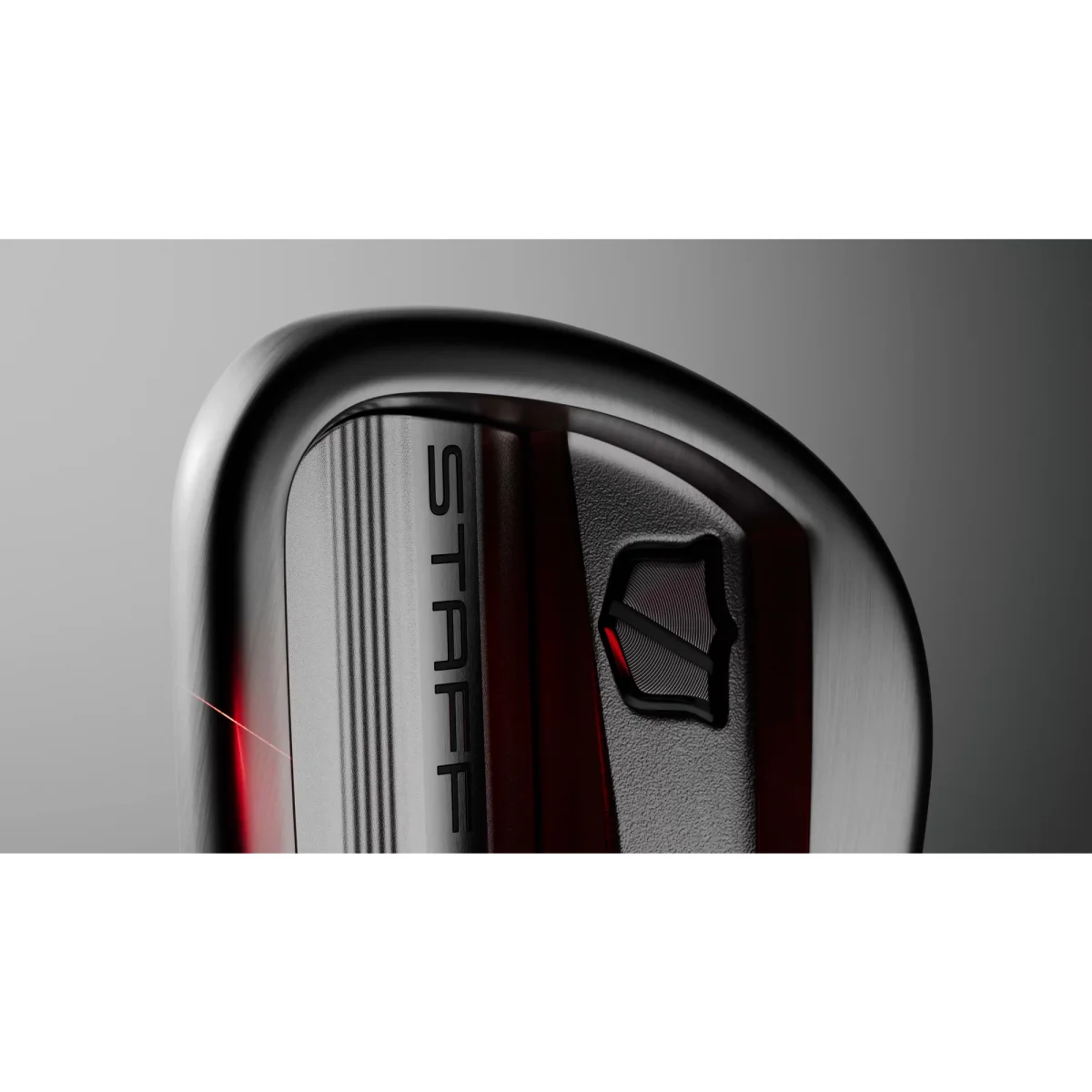
Impact feel is genuinely satisfying. The forged 8620 carbon steel delivers a soft, solid sensation on center strikes, not quite the buttery melt-off-the-face softness of a pure blade, but there is a pleasing density to the CB that I found myself chasing. The tungsten weighting and Tri-Brace Stabilizer structure in the cavity add a firmer, more solid character, and that translates to honest feedback without punishment. When I caught one thin, the vibration told me exactly where I missed without stinging my hands on a cold morning.
Off-center hits are where the CB really separates itself from the older Tour V6. The V6 was notorious for making your fingers ring on a poor strike; the CB dials that back considerably. Mishits tell you what happened, but they do not punish you for it. That balance of information and forgiveness is exactly what I want from a players cavity back.
Sound at impact is quiet and muted. No hollow ring, no metallic click, no distracting noise of any kind. It is slightly firmer than a pure muscleback but never harsh.
Performance
Ball Speed & Distance
This is not a distance iron, and it does not pretend to be. With a 34-degree 7-iron, you are playing traditional lofts, and the carry numbers reflect that. My 7-iron averaged around 138 yards carry. The 9-iron settled at 125 yards with a launch angle of 26 degrees. The 5-iron pushed 174 yards carry at 122 mph ball speed. Those are honest numbers for a players cavity back at these lofts, and I was perfectly comfortable with them.
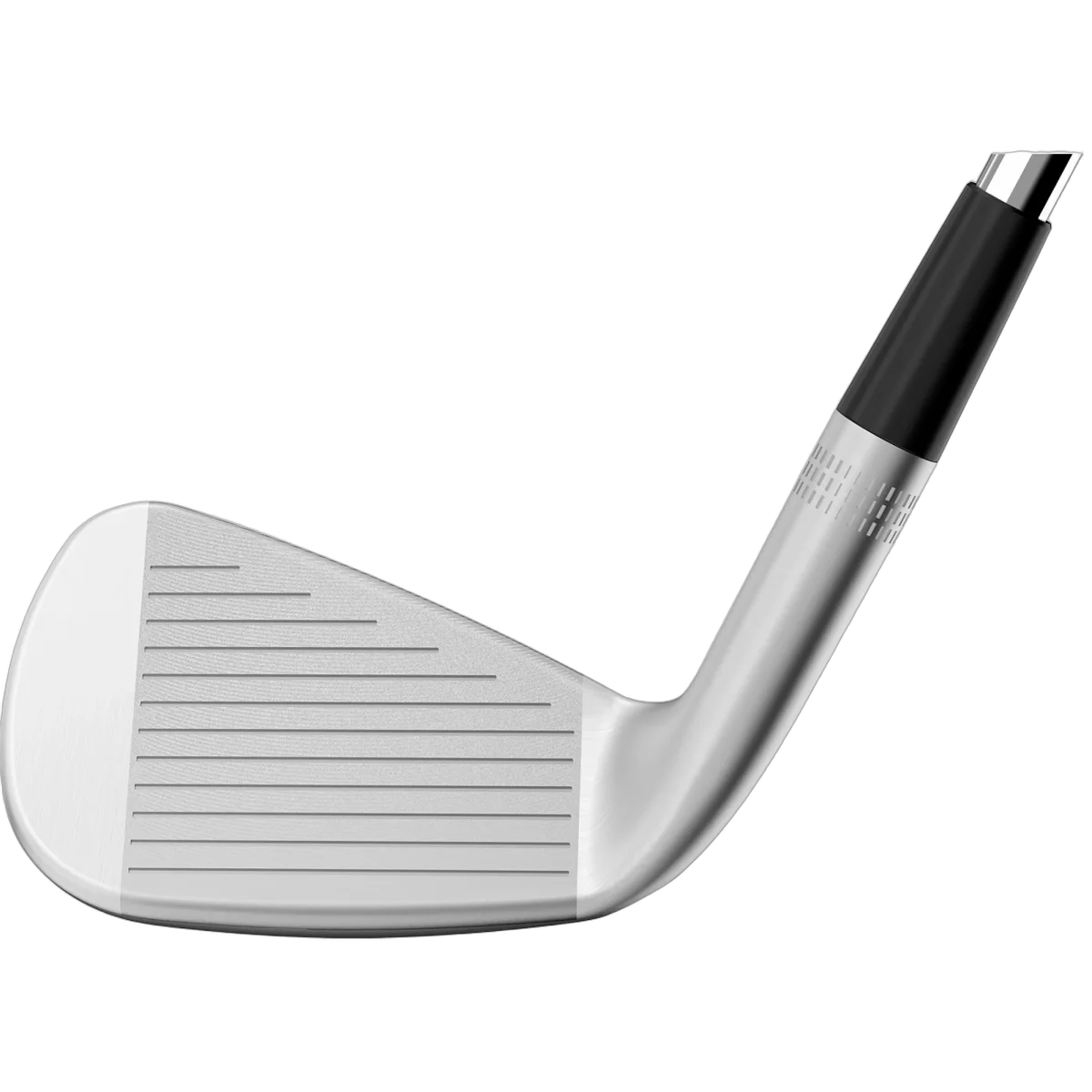
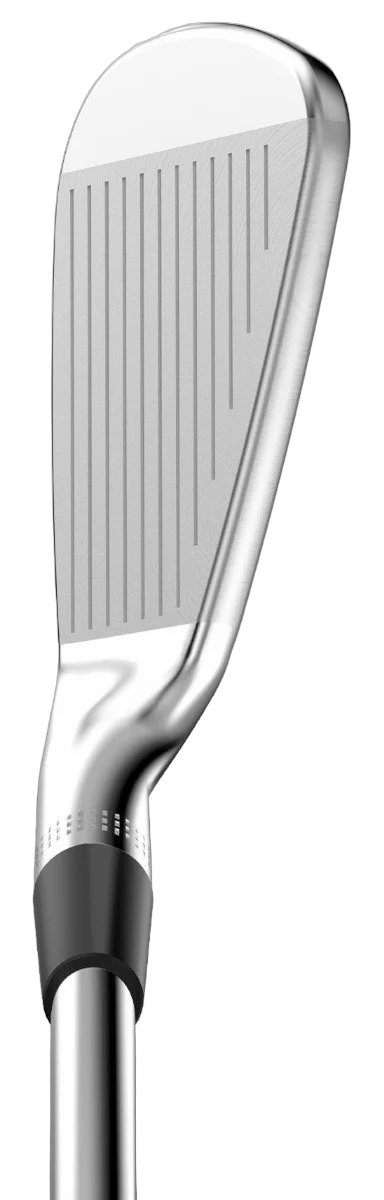
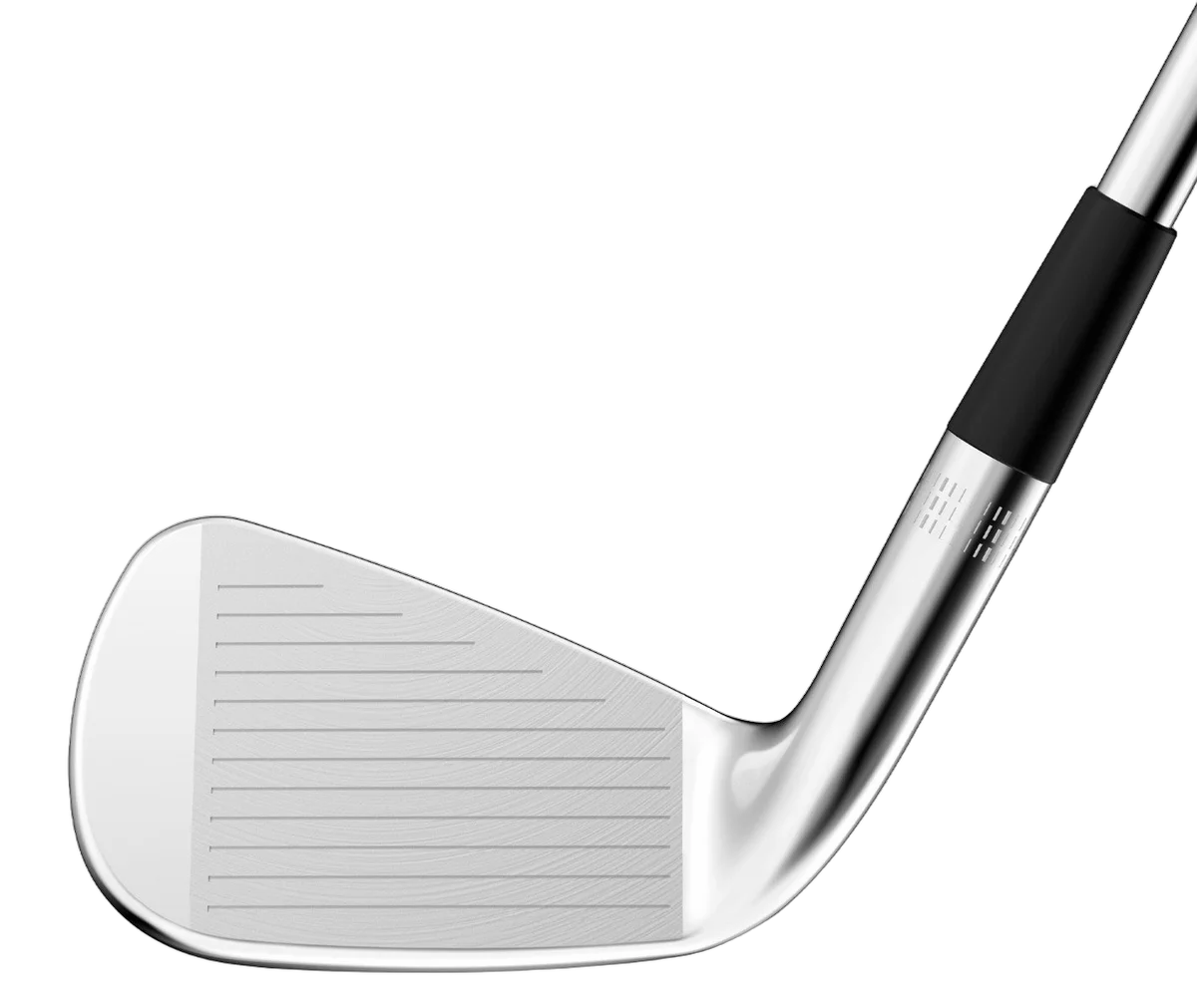
Close-up of the iron face showing milled grooves and clean topline
What impressed me was the stopping power. Roll-out was minimal across the set. The 9-iron rolled out just one yard on average. The 7-iron added only three yards of run. Even the 5-iron, launching lower at 16 degrees, only rolled eight yards. These irons stick when they hit the green, and that is worth more to me than an extra five yards of carry.
Launch & Spin
Spin rates with the 7-iron averaged around 6,000 rpm, which is right in the sweet spot for holding greens with authority. The precision-milled face clearly does its job here, generating consistent friction for repeatable spin numbers. Descent angles in the mid-irons hovered around 45 degrees with the 7- and 8-iron, dropping to about 40 degrees with the 6-iron. That steep descent means these irons will stop on firm greens where a stronger-lofted game improvement iron would skip and run.
Dispersion & Shot Shape
This is where the CB truly shines, and it is the reason for the rating. Dispersion was remarkably tight throughout the set, tighter than I have seen from most players cavity backs in this category. With the pitching wedge, my average miss was less than three yards left of target with a gentle draw. That pattern repeated into the mid-irons. The 6-iron off the tee showed only a four-yard spread over multiple shots. That kind of consistency builds real confidence when you are firing at tucked pins, because you know the ball is going to end up in a predictable window every single time.
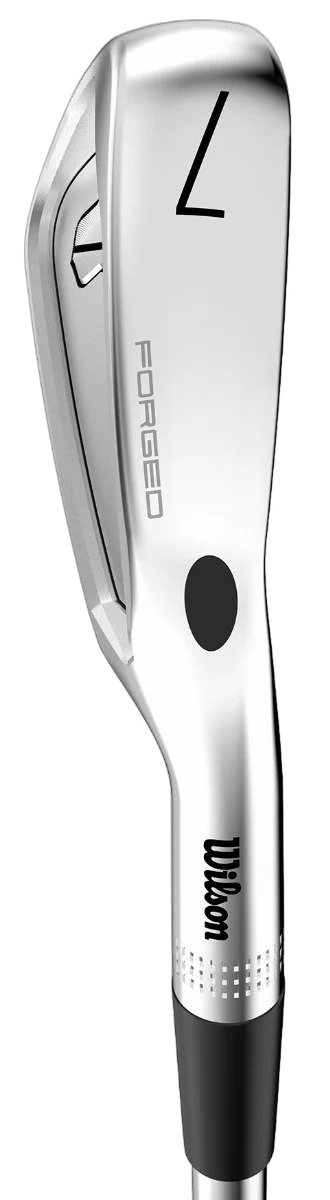
Back cavity view showing 7-iron with Forged branding and Wilson logo
The forgiveness surprised me for a head this compact. Slight misses from the center still started on a respectable line with less lateral movement than a pure blade. When I worked my way into the 4- and 5-irons, keeping the ball straight was noticeably easier than it would be with a muscleback. Wilson's Precision Toe Weighting genuinely stabilizes the face on off-center strikes. I could feel the difference on heel-side mishits especially.
For shot shaping, the CB is responsive and intuitive. The compact head and traditional lofts make it straightforward to move the ball in either direction. Draws, fades, trajectory changes, they all go where you tell them. It is not a blade-level shot-shaping tool, but it sits comfortably close.
Verdict
The Wilson Staff Model CB is a players cavity back that punches above its weight. The standout quality is distance control — the combination of tight dispersion, steep descent angles, and consistent stopping power is genuinely elite for this category. Feel and sound are above average without reaching pure-blade territory, forgiveness is better than the compact head suggests, and workability is strong enough to shape any shot you need. The trade-off is distance, and you need to be comfortable accepting that. If you have the swing speed to carry the ball where it needs to go and you value precision over raw yardage, the CB is a compelling choice.
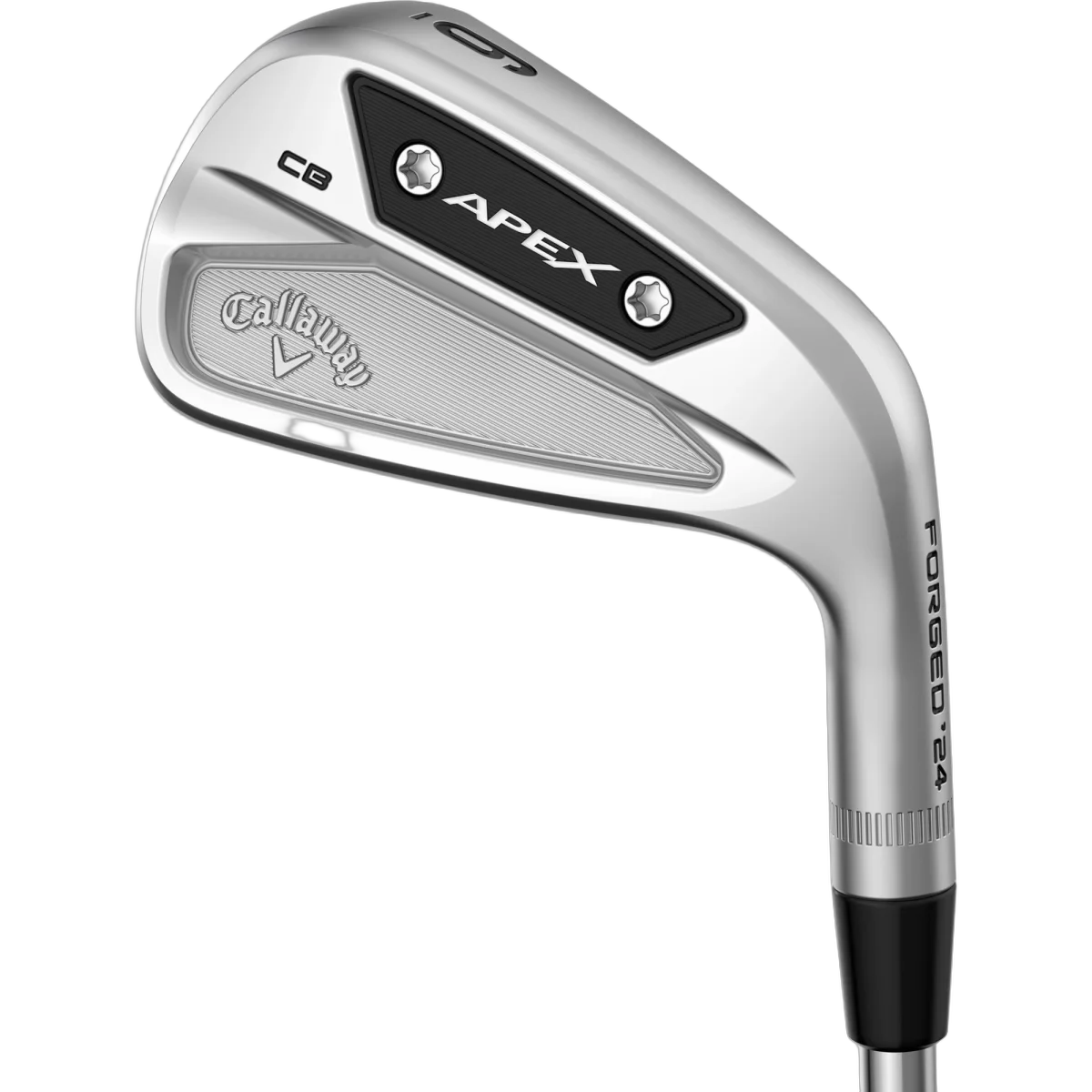
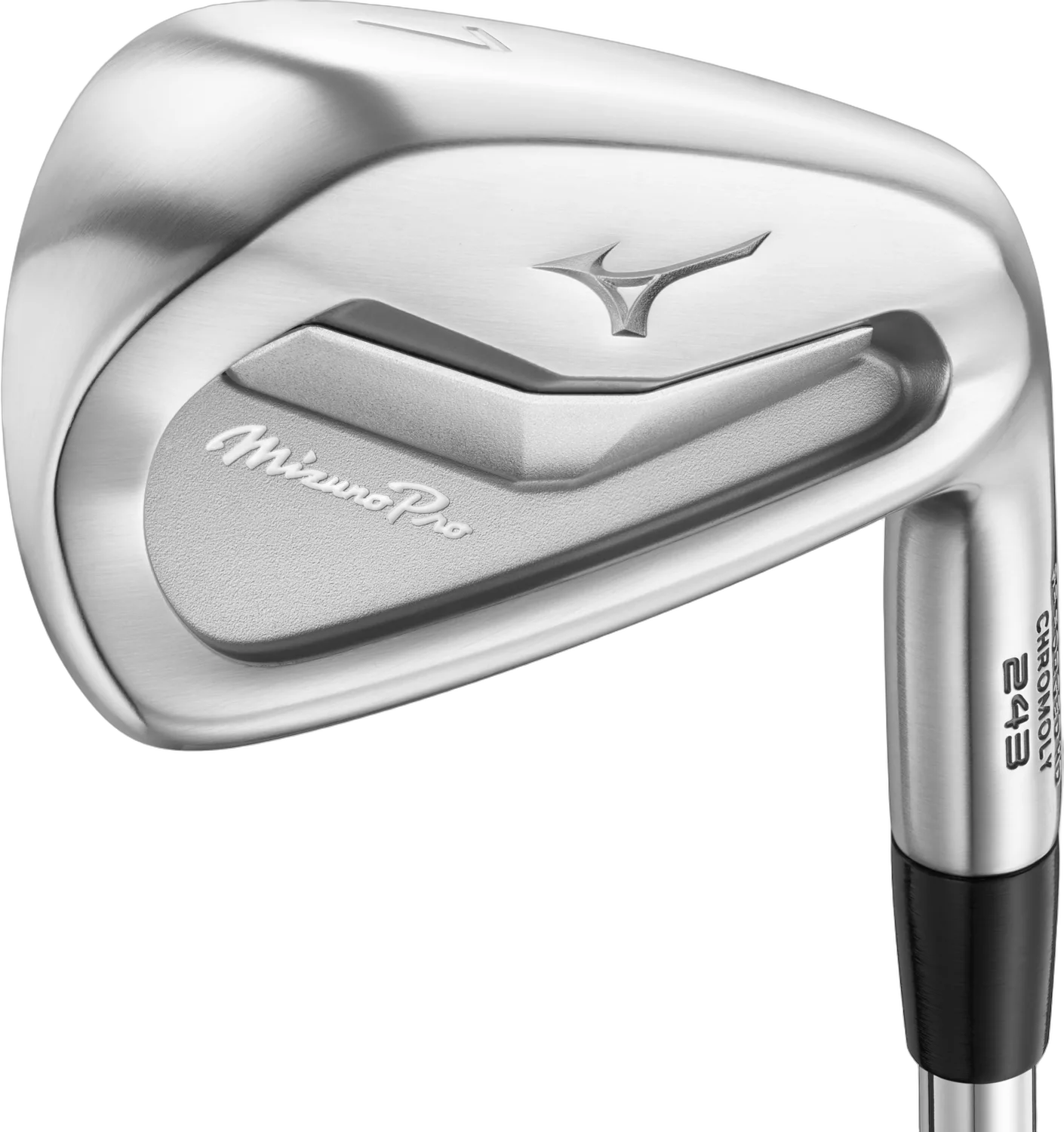
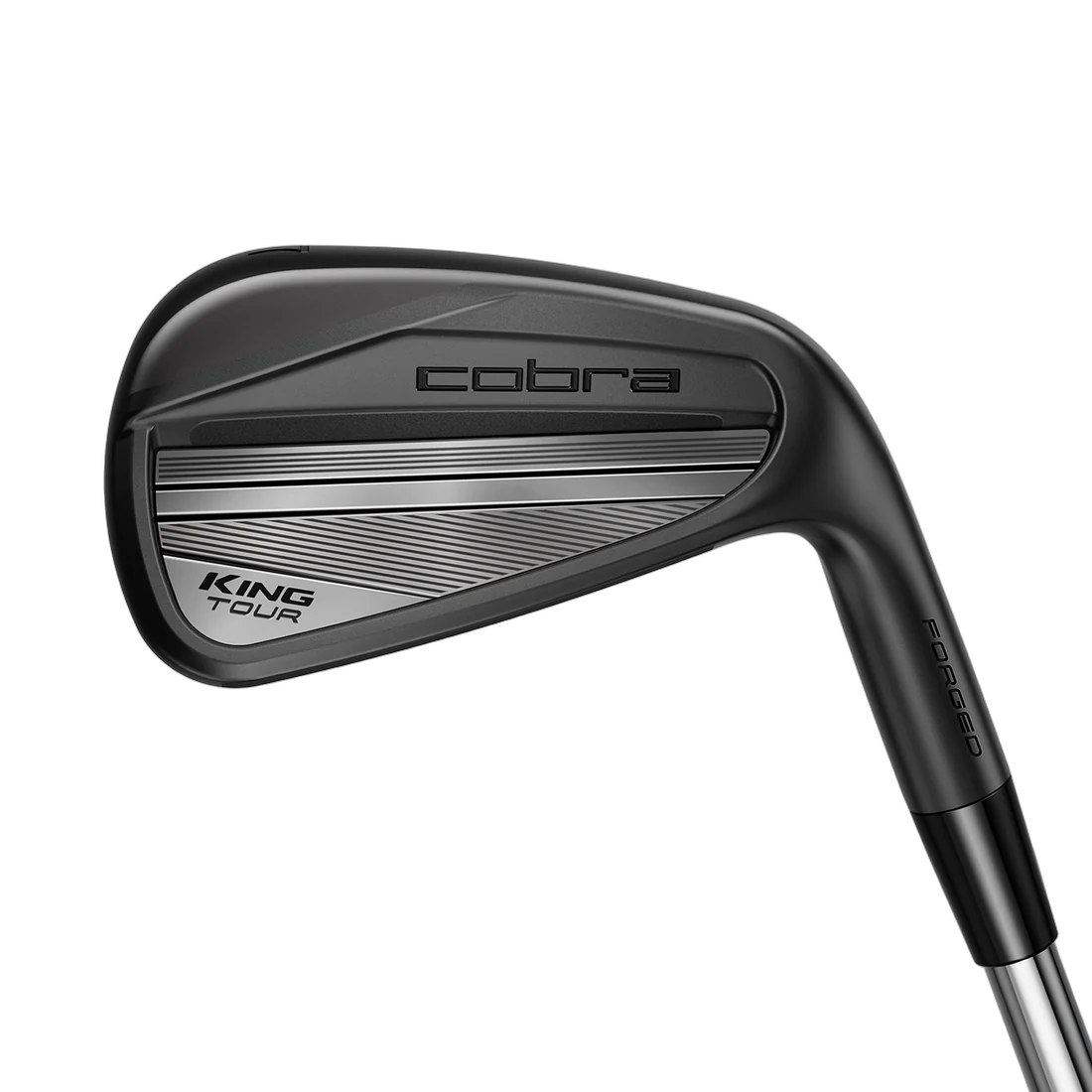
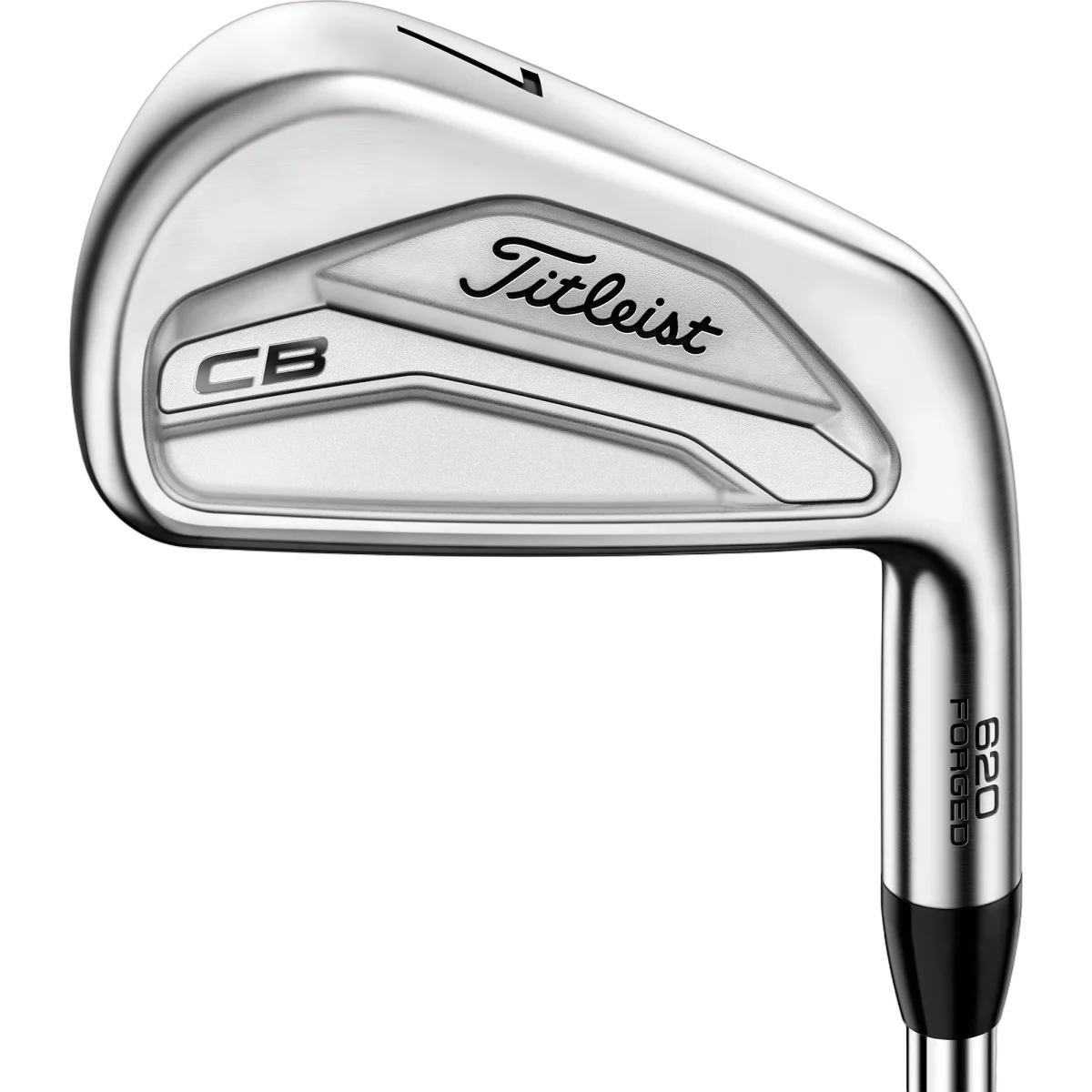
At $1,200 for a 4-PW steel set, the CB is competitively priced against the Callaway Apex CB, Mizuno Pro 243, and Cobra King Tour. Wilson also offers a wide selection of premium shaft and grip options at no upcharge, which adds real value. It pairs beautifully with the Staff Model Blade in the short irons or the XB in the long irons for a combo set that covers all your bases.
The only caution: if you are a high handicapper or inconsistent ball striker, the compact head and traditional lofts will expose your misses. This is a club for mid-to-low handicappers who find the center more often than they miss it and want dead-eye distance control at a competitive price.