Wilson Dynapower Carbon Fairway Wood
Wilson — Wilson Dynapower Carbon Fairway Wood · By Andy · Jan 25, 2026
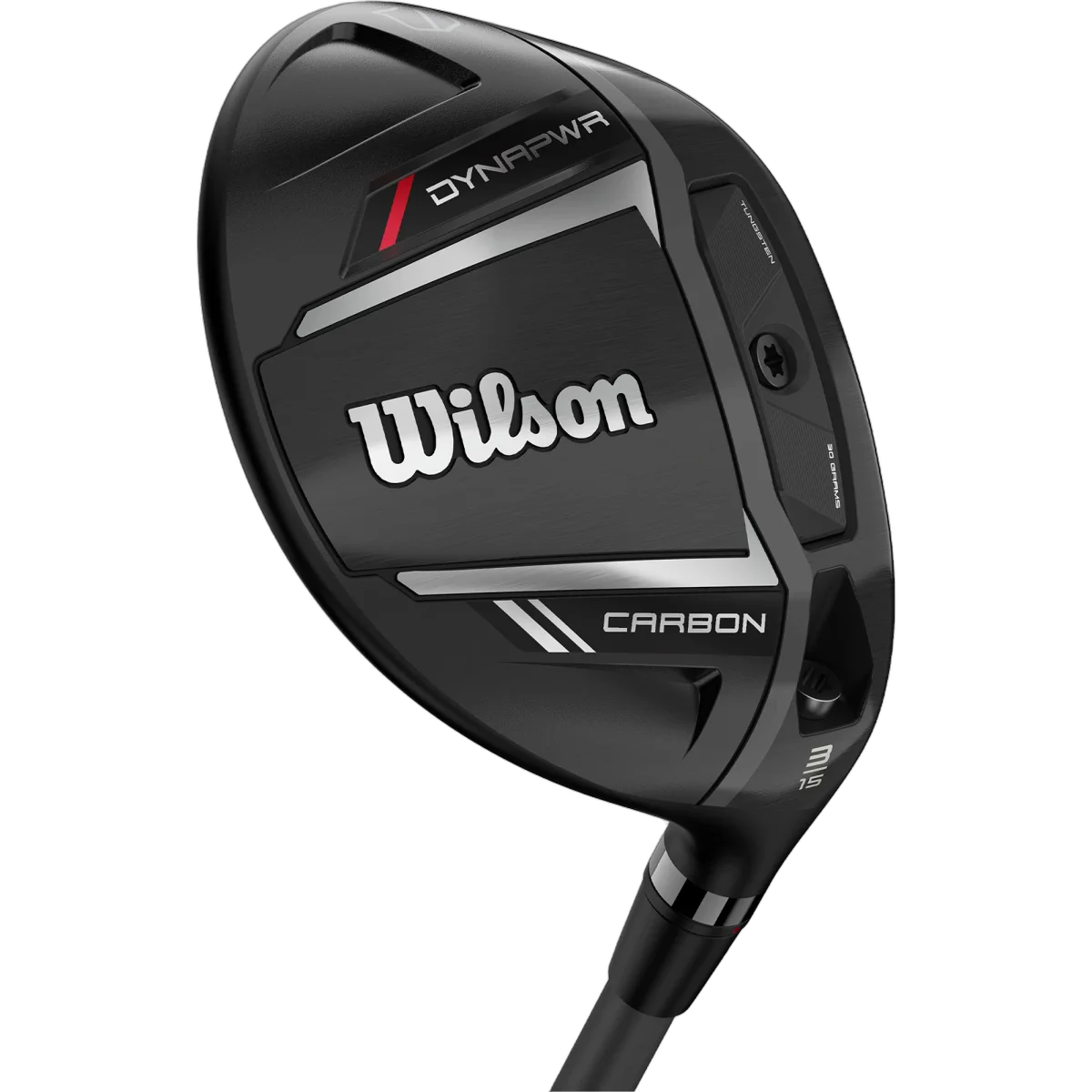
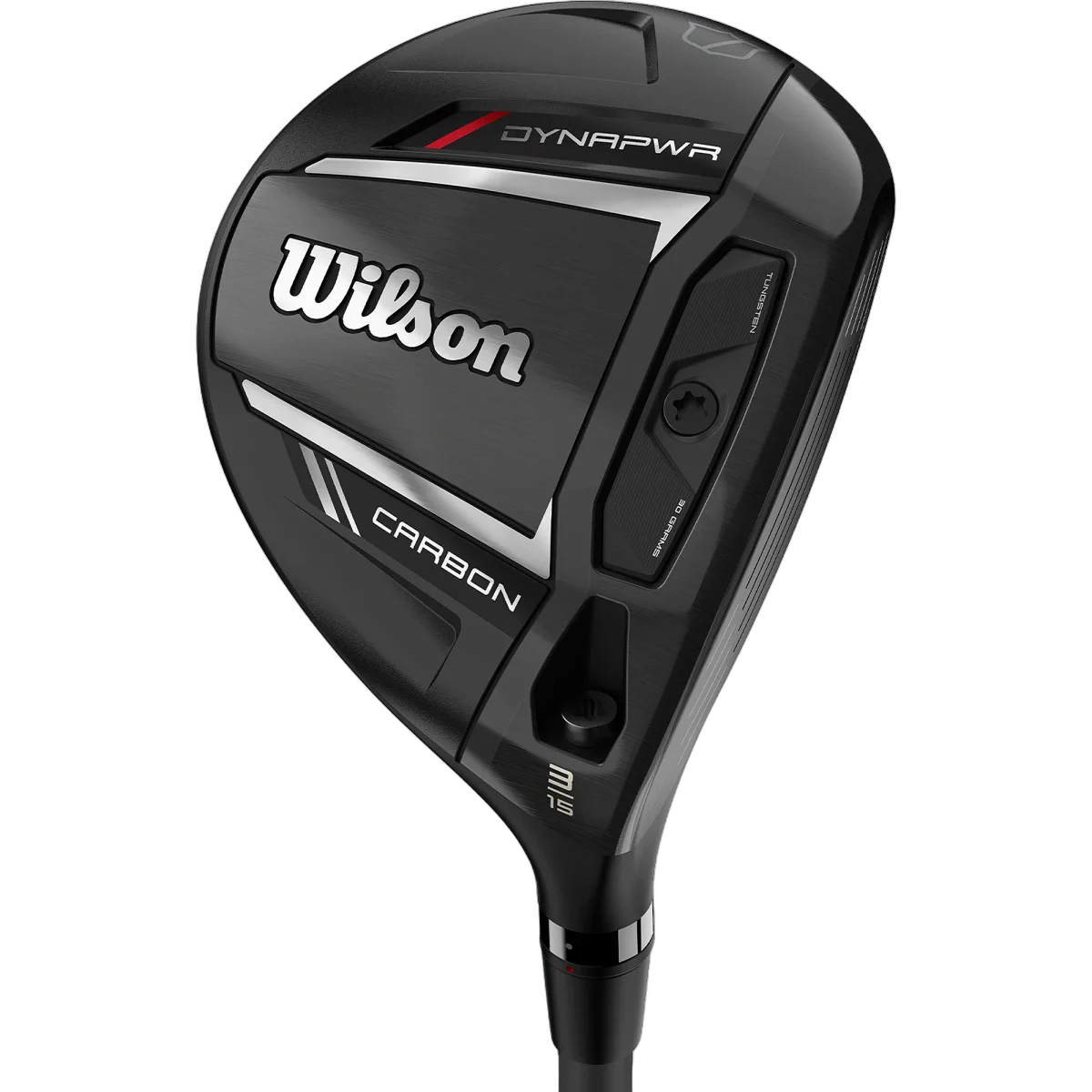
A low-spin, tour-inspired fairway wood that rewards good ball strikers with penetrating distance -- but demands precision in return.
The Big Picture
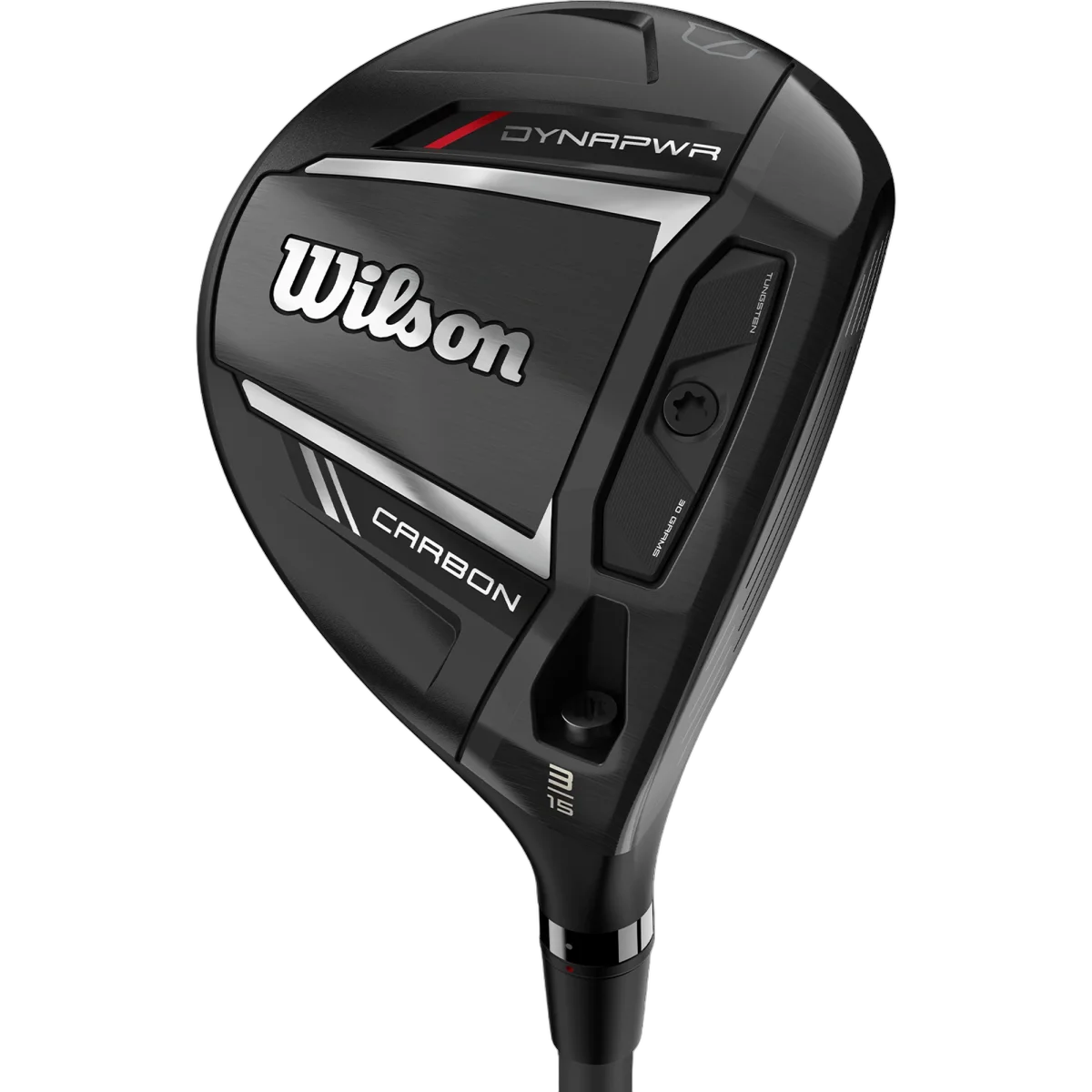
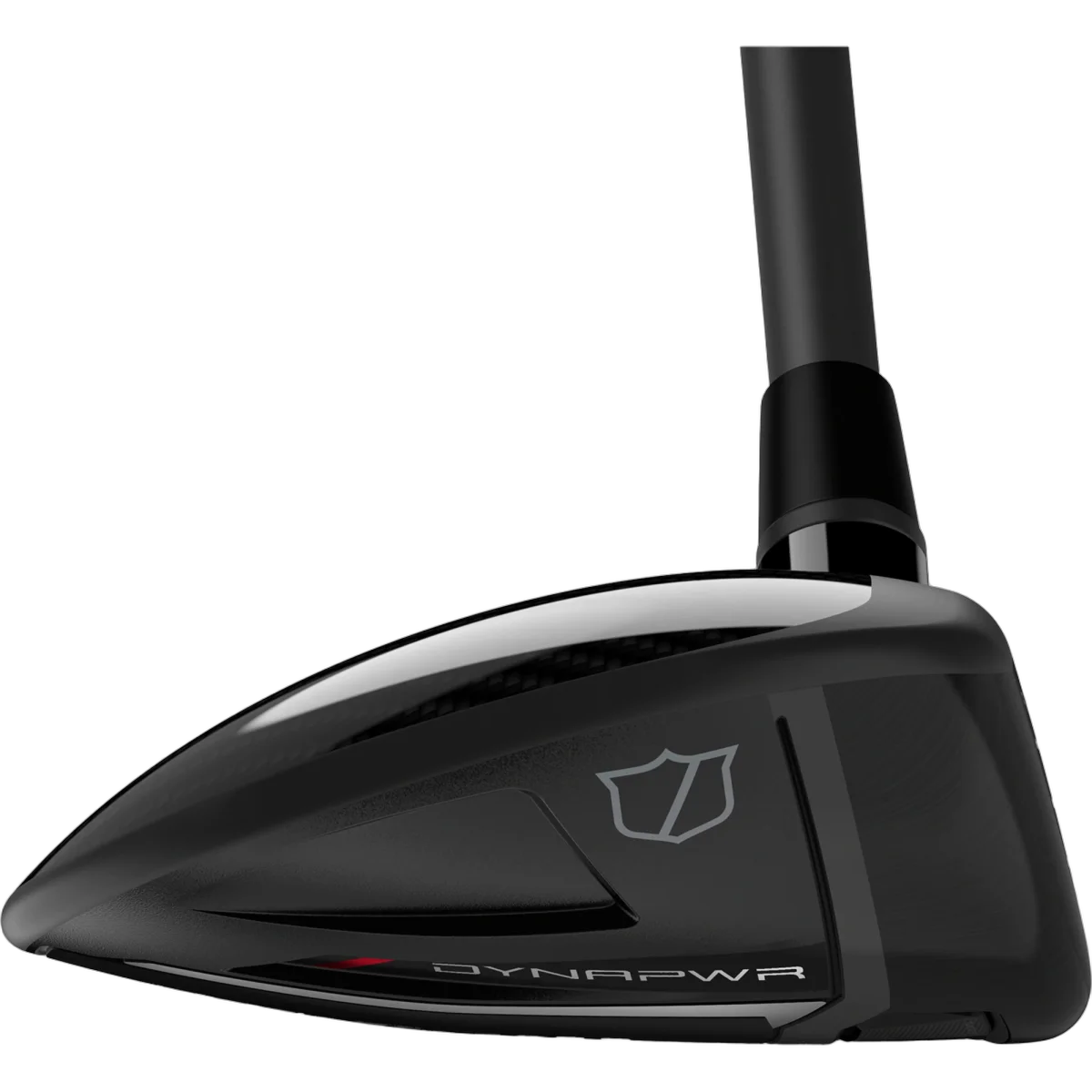
Wilson has quietly been building some of the most technologically sophisticated equipment in golf, and the Dynapower Carbon fairway wood is a prime example. This is the player's model in the Dynapower fairway lineup, designed specifically to reduce spin and produce a lower, more penetrating ball flight compared to the standard Dynapower. Where the regular model uses rear weighting for a higher launch, the Carbon moves mass forward and low, placing a 30-gram tungsten weight near the face to knock spin down and promote a more boring trajectory.
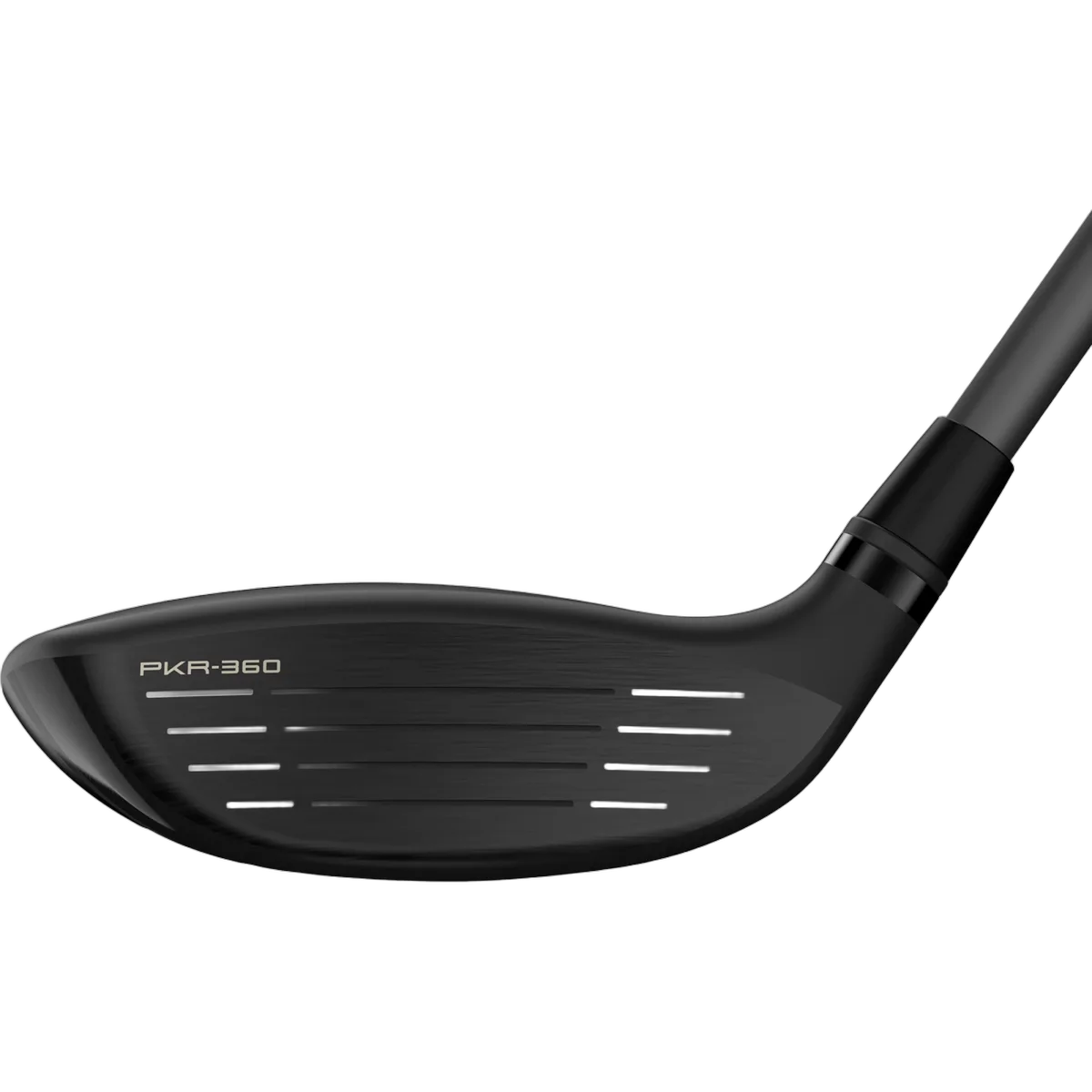
The face is Wilson's AI-optimized PKR 360 (Peak Kinetic Response) design, a variable-thickness construction made from forged 455 steel. Wilson's AI analyzed thousands of face thickness permutations to find the optimal configuration for each loft, and the result is a face that generates impressive ball speed on center strikes. A thin carbon-composite crown lightens mass at the top of the head and shifts the center of gravity lower -- 6 percent lower and 5 percent more forward than the previous generation Dynapower Carbon. Combined with a six-way adjustable hosel that allows 2 degrees of weakening and 1 degree of strengthening, there is meaningful tunability built into a compact, performance-oriented package.
The model I tested is the 3W+ at 13.5 degrees of loft -- a strong 3-wood configuration that sits between a traditional 3-wood and a driving wood. At 43.25 inches with a D2.5 swing weight, it is built to be swung aggressively off the tee or from the fairway by players with moderate to fast swing speeds.
At Address
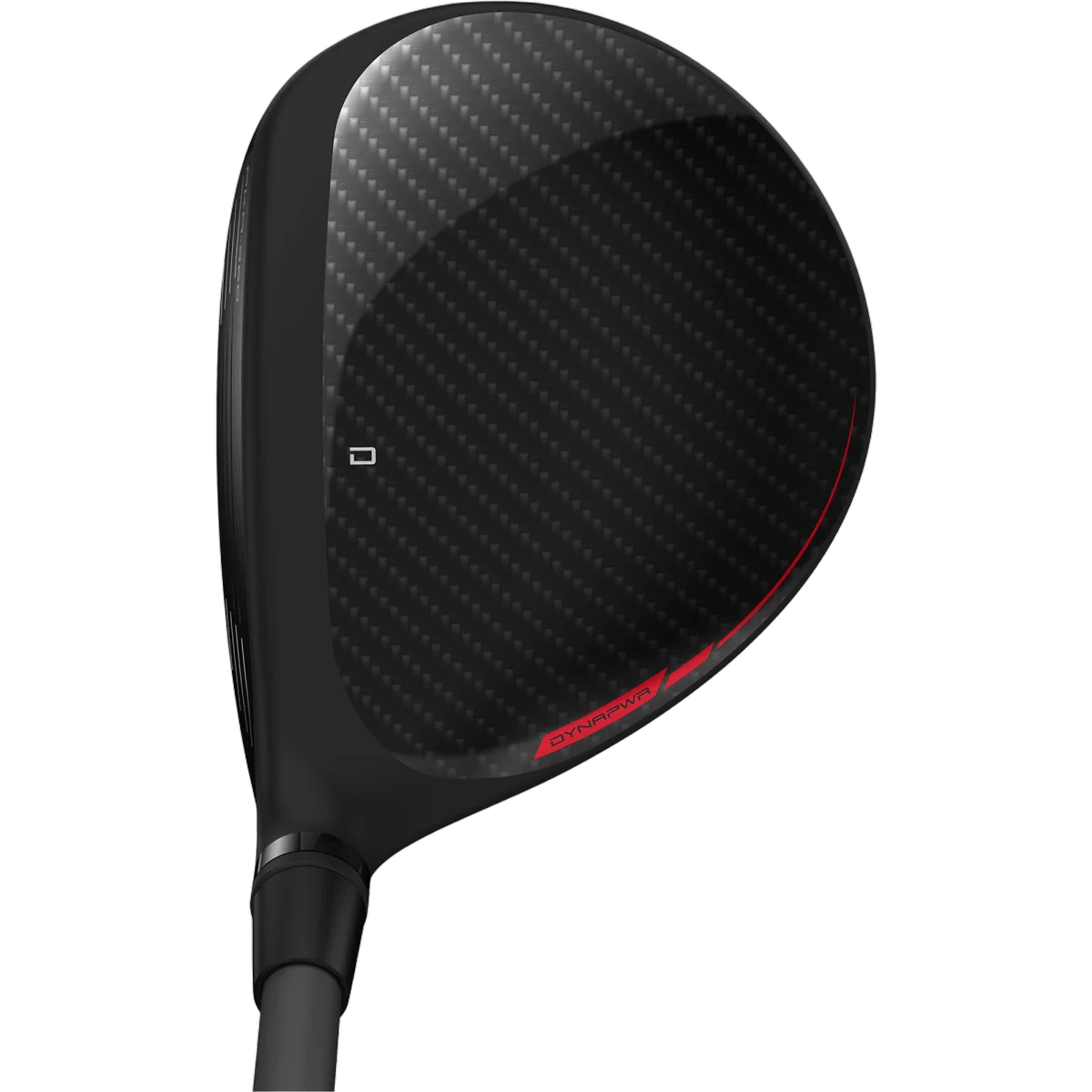
The Dynapower Carbon has a noticeably more compact footprint than the standard Dynapower fairway wood, and that compact shaping immediately signals that this is a player's club. The gloss carbon crown looks excellent, particularly in sunlight, with a subtle weave pattern visible beneath the finish. Wilson has kept a banner strip along the topline that frames the ball well and helps square the face at address. The black and red color scheme gives the club a stealth aesthetic -- understated but sharp, with minimal distractions.
Carbon crown from above with Dynapower branding and red accent
There is no oversized, confidence-inspiring head here. If you are a golfer who draws comfort from a generous footprint, the Carbon will feel small behind the ball. But for better players who prefer a workable, compact shape, the visual impression is one of precision and control. It sits low to the ground with a shallow face profile that looks ready to sweep the ball off a tight lie.
Sound & Feel
Wilson invested in the internal acoustics of the Dynapower Carbon, using precision rib placement throughout the internal body to tune the sound at impact. The result is a muted but powerful crack -- crisp and electric, louder than some carbon-crowned fairway woods but never over the top. There is a satisfying sharpness to center strikes that immediately tells you the ball is coming off hot.
The feel through impact is lively without being harsh. On pure strikes, the PKR 360 face delivers a sensation of explosive energy transfer -- the ball feels like it jumps off the face with minimal resistance. That said, mishits tell a very different story. Off-center contact produces a noticeably dead, flat sensation that leaves no doubt about the quality of your strike. This is honest, informational feedback, but golfers accustomed to more forgiving fairway woods may find it jarring.
Performance
Ball Speed & Distance
On center strikes, the Dynapower Carbon is a genuine distance machine. In my testing, the 3W+ produced carry distances averaging around 251 yards, with the best swings pushing well beyond that number. The combination of the forward-positioned tungsten weight, the low CG, and the PKR 360 face creates a package that delivers exceptional energy transfer when you find the middle of the face.
Black face insert with PKR-360 marking and score lines
The spin reduction compared to the standard Dynapower is dramatic. I saw spin rates around 3,630 rpm with the Carbon versus roughly 4,180 rpm with the standard model -- a difference of over 500 rpm that translated to approximately 10 yards of additional carry distance on average. That lower spin produces a penetrating ball flight that cuts through wind effectively and generates impressive rollout on firm fairways.
However, ball speed drops off sharply when strikes migrate toward the heel or toe. The compact head and forward CG positioning mean there is less MOI protecting you on mishits, and the distance penalty on off-center contact is significant compared to more forgiving fairway woods in this price range.
Launch & Spin
The Dynapower Carbon produces a low-to-mid launch with genuinely low spin -- this is one of the lowest-spinning fairway woods I have tested. The 13.5-degree 3W+ loft helps get the ball airborne, but even so, the trajectory sits noticeably flatter than most 3-woods. My best swings produced launch angles that cracked into double digits, but poor strikes sometimes barely got the ball off the ground.
The stock shaft options -- the UST LIN-Q M40X Red and the Fujikura Ventus TR Blue in 60 and 70 gram weights -- complement the low-spin head design well. The Ventus TR in particular promotes a stable, low-flight profile that pairs naturally with the Carbon's spin characteristics. Players with slower swing speeds should be cautious here; the combination of low loft, forward CG, and a performance shaft may not generate enough launch height to maximize carry distance.
The six-way adjustable hosel adds useful flexibility. Weakening the loft by a degree or two can help golfers who struggle to get the ball up, while strengthening it turns the 3W+ into an aggressive driving wood for tee shots on tight holes.
Dispersion & Shot Shape
This is where the Dynapower Carbon reveals its demanding nature. On well-struck shots, dispersion is tight and the ball flight is workable -- I could shape the ball both directions with relative ease, which is unusual for a fairway wood. The compact head and lower MOI make the Carbon responsive to face angle and path changes, rewarding skilled ball strikers with genuine shot-shaping capability.
Sole view with Wilson Carbon branding and adjustable weight port
But that workability comes at a cost. The club is unforgiving on mishits. Thin strikes struggle to get airborne, and heel-toe misses produce significant distance loss. In my testing, the spread between my best and worst shots was wider than with most competing fairway woods. This is not a club that will bail you out on your B-swing. It is a club that amplifies whatever you bring to it -- great swings produce great results, and poor swings are met with indifference.
Verdict
The Wilson Dynapower Carbon fairway wood is a compelling option for better ball strikers who prioritize distance, low spin, and shot-shaping ability over forgiveness. The PKR 360 face generates impressive ball speed on center strikes, the forward tungsten weighting delivers genuinely low spin numbers, and the compact head shape provides the workability that skilled players want from a fairway wood. The sound and feel are excellent -- crisp, powerful, and honest.
Strengths: outstanding distance on pure strikes, one of the lowest spin profiles in the fairway wood category, genuine shot-shaping capability, attractive compact design, adjustable hosel for fine-tuning, and a satisfying impact feel.
Weaknesses: significant ball speed drop-off on mishits, low launch that can be difficult for slower swing speeds to manage, compact head offers less visual confidence for mid-to-high handicappers, and the club punishes thin strikes more than most competitors.
This is a fairway wood built for the 5-handicap who wants to hit a stinger off the deck, not the 18-handicap who needs help getting the ball in the air. If you have the ball-striking consistency to find the center of the face regularly, the Dynapower Carbon rewards you with a level of distance and trajectory control that few fairway woods can match. If you do not, there are more forgiving options that will serve you better.