Titleist GT3 Fairway Wood
Titleist — Titleist GT3 Fairway Wood · By Andy · Dec 6, 2025
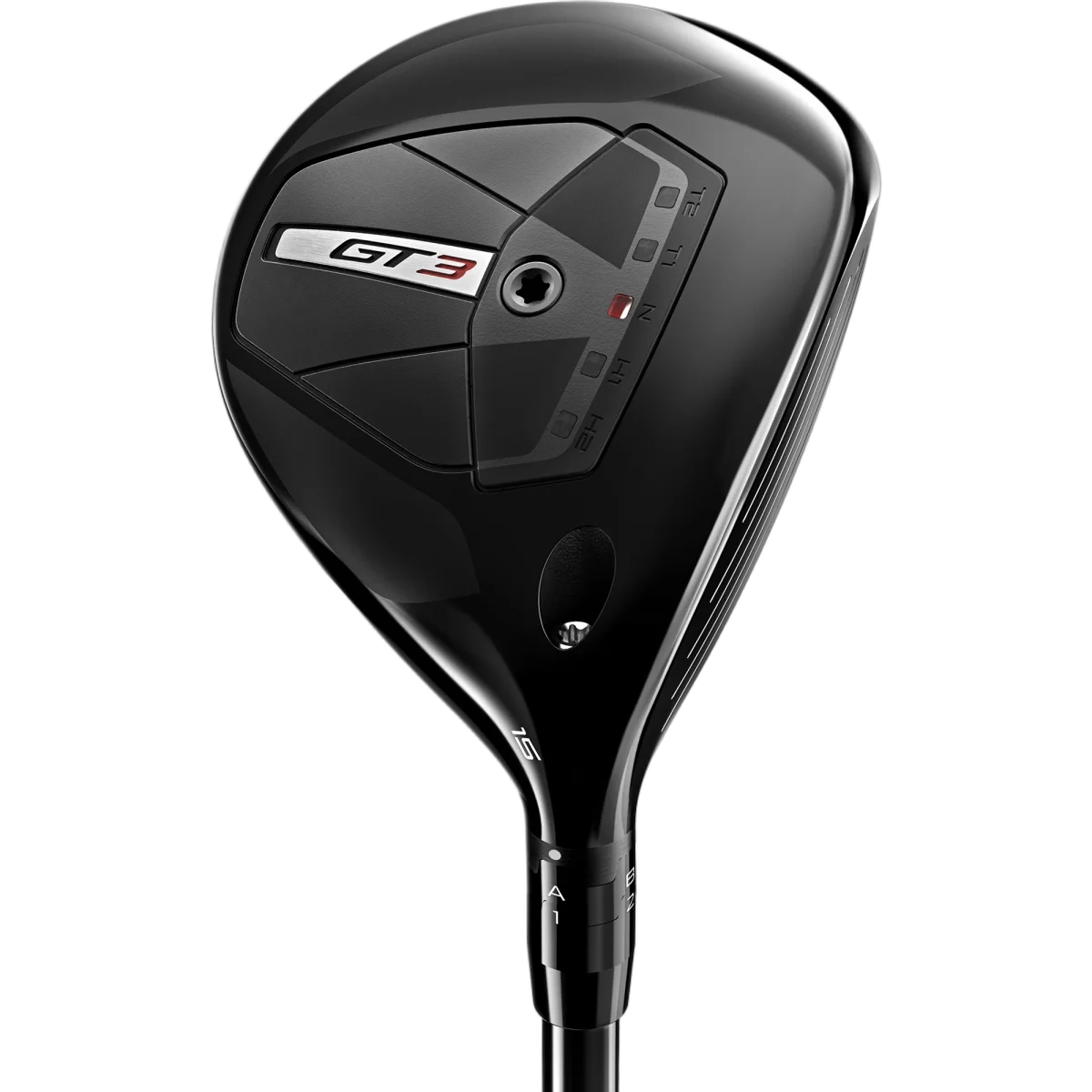
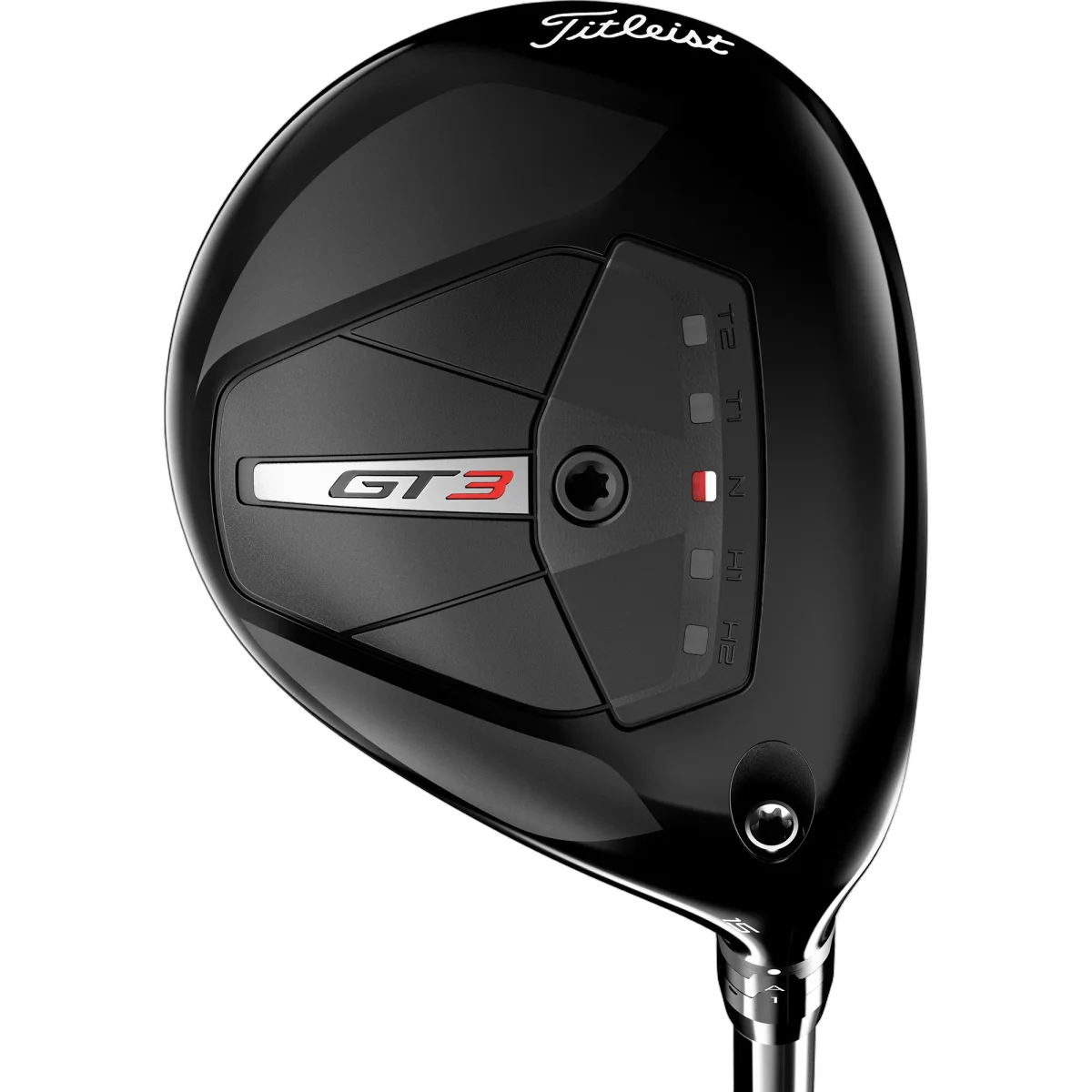
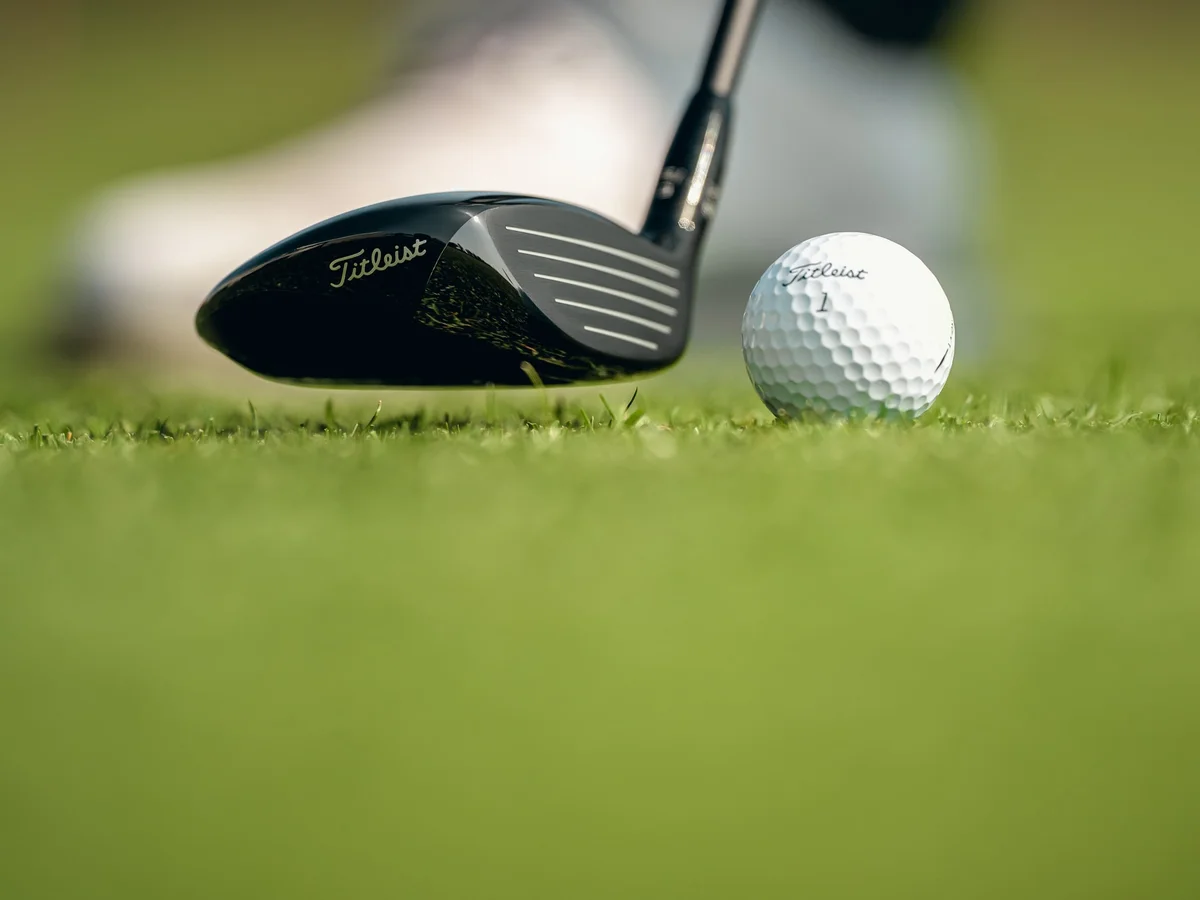
A shot-shaper's fairway wood that rewards precision and punishes complacency -- exactly as Titleist intended.
The Big Picture
The GT3 is the performance-oriented option in Titleist's GT fairway wood lineup, sitting between the ultra-forgiving GT1 and the low-spin GT2. Where the GT1 caters to golfers who need maximum help getting the ball airborne and the GT2 chases raw distance through spin reduction, the GT3 occupies a specific middle ground: controlled flight, fast ball speed, and more adjustability than either sibling.
The headline technologies here are the Seamless Thermoform Crown and the Forged L-Cup Face. The crown is made from a proprietary matrix polymer roughly five times lighter than steel, and because it integrates seamlessly into the head -- no visible seams or joins on the crown -- the weight savings are substantial. That freed-up mass gets redistributed low and deep in the head for higher launch without a corresponding spike in spin. The L-Cup face design wraps around the bottom of the clubhead, which preserves ball speed and maintains launch conditions on those inevitable low-face strikes that plague fairway wood players.
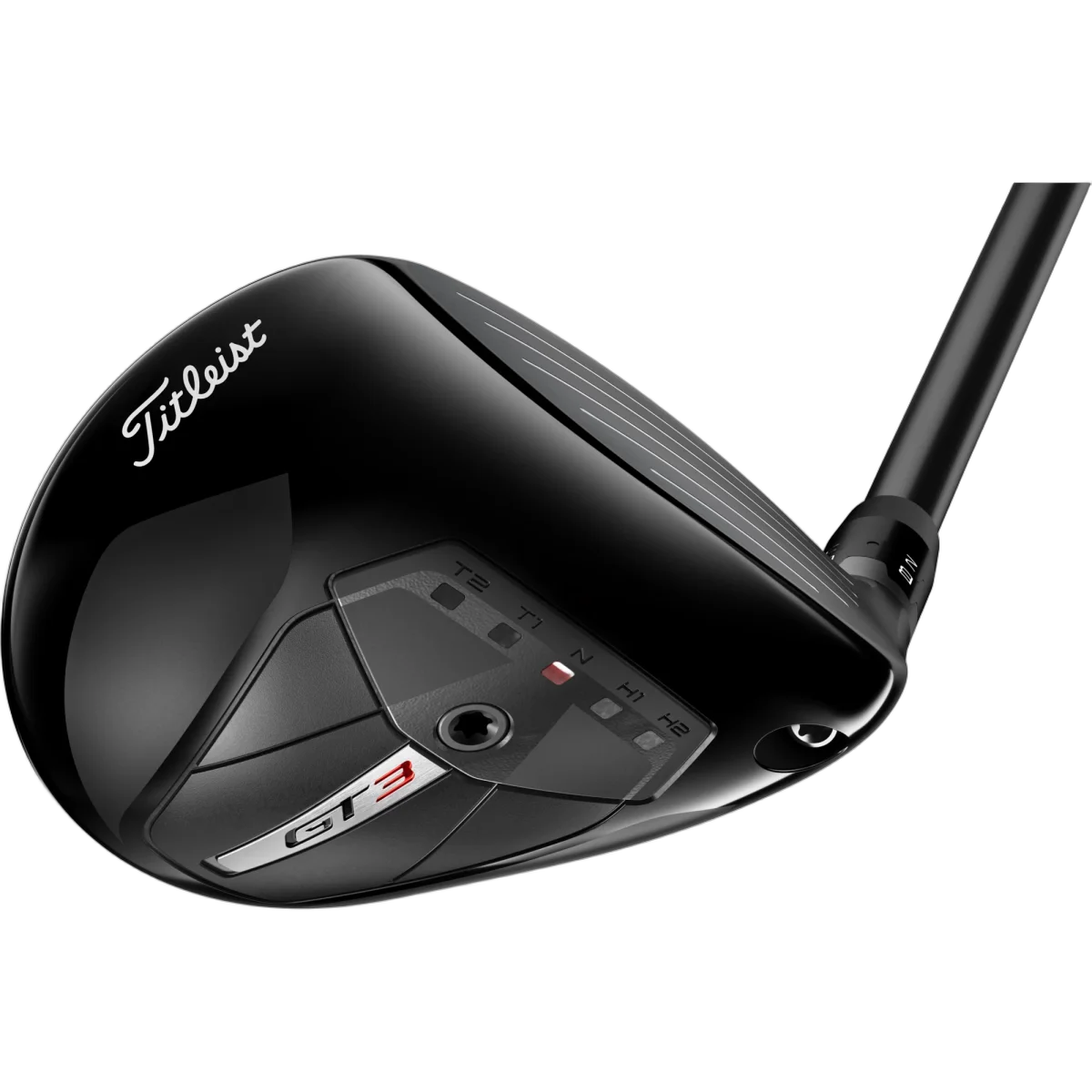
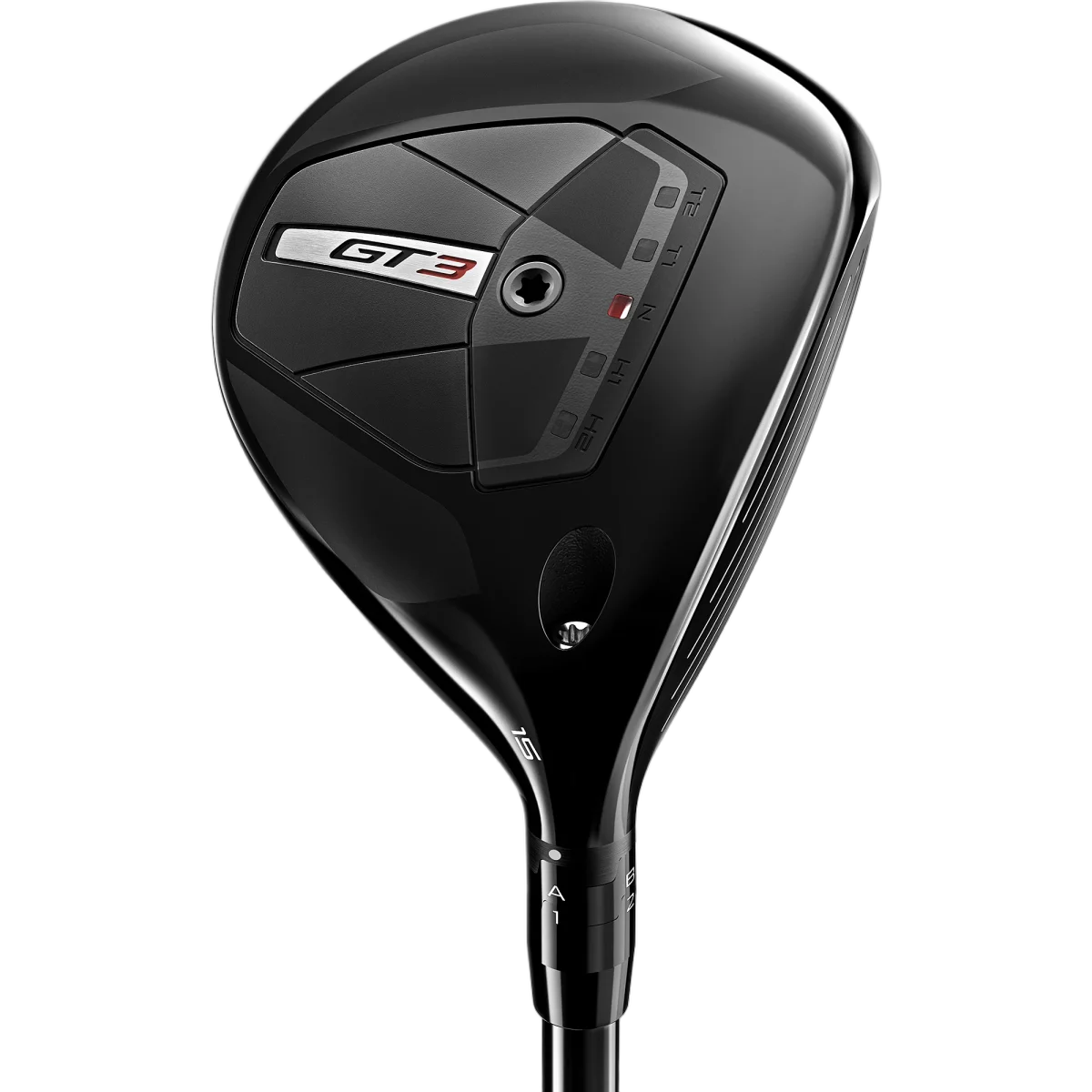
The GT3 also features a reimagined SureFit Adjustable CG Track system with five positions -- H2, H1, Neutral, T1, and T2 -- allowing you to shift the center of gravity from heel to toe to dial in shot shape. Combined with the SureFit adjustable hosel offering loft and lie changes of +1.5 and -0.75 degrees, this is one of the most tunable fairway woods on the market. Available in 15, 16.5, and 18 degree loft options, the GT3 retails at $400, though I have seen it closer to $330 with recent discounts as the GT line matures.
At Address
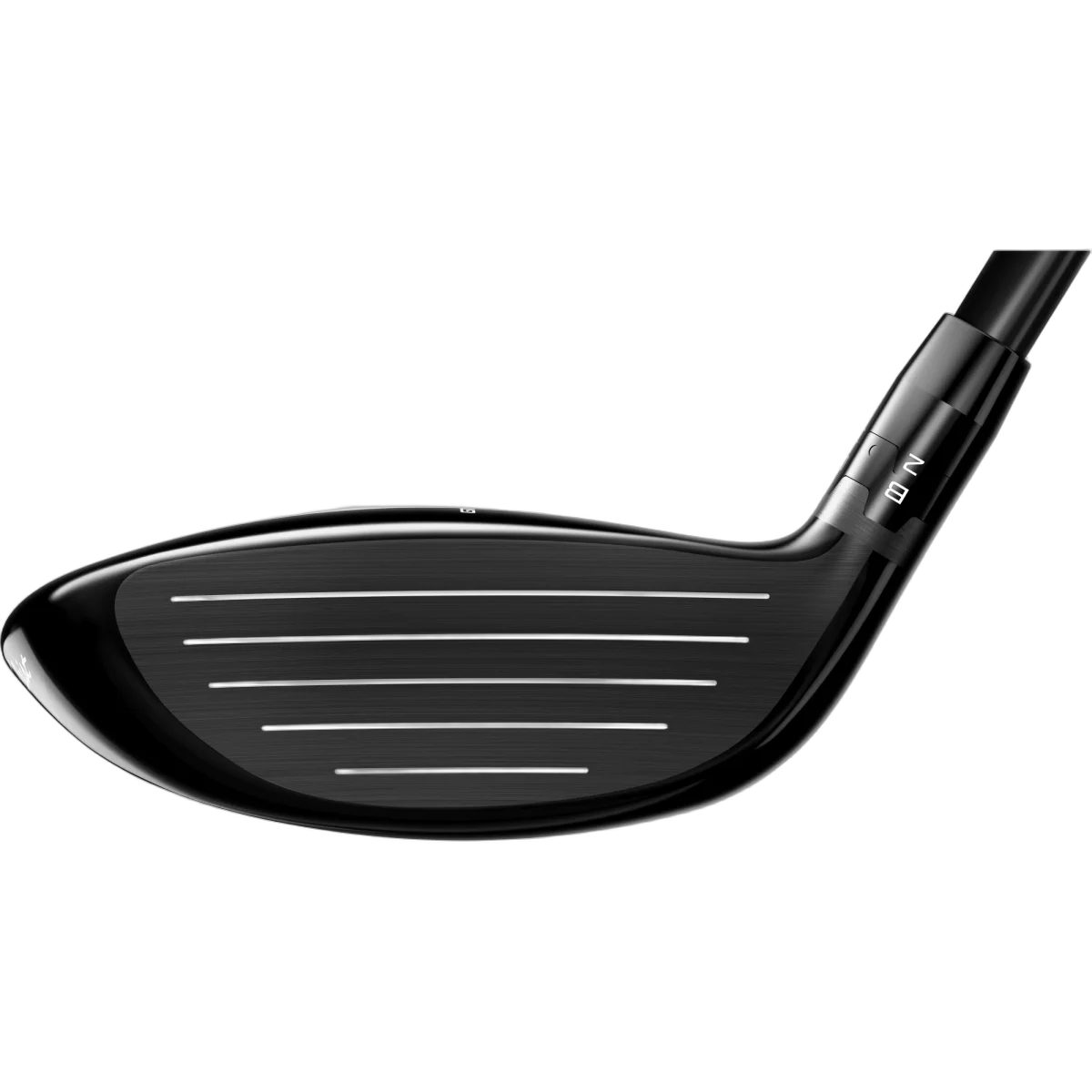
The GT3 has a compact, slightly pear-shaped profile that sits just below average in size compared to the broader fairway wood market. This is not a confidence-builder in the way a large-footprint game-improvement wood might be -- it is a club that looks like it expects you to hit it well. The face is noticeably deep, among the tallest I have measured in a fairway wood, which gives the GT3 a profile that invites a descending strike. If you are someone who sweeps fairway woods, that tall face might look a little imposing at first, but players who hit down on the ball will find it inviting.
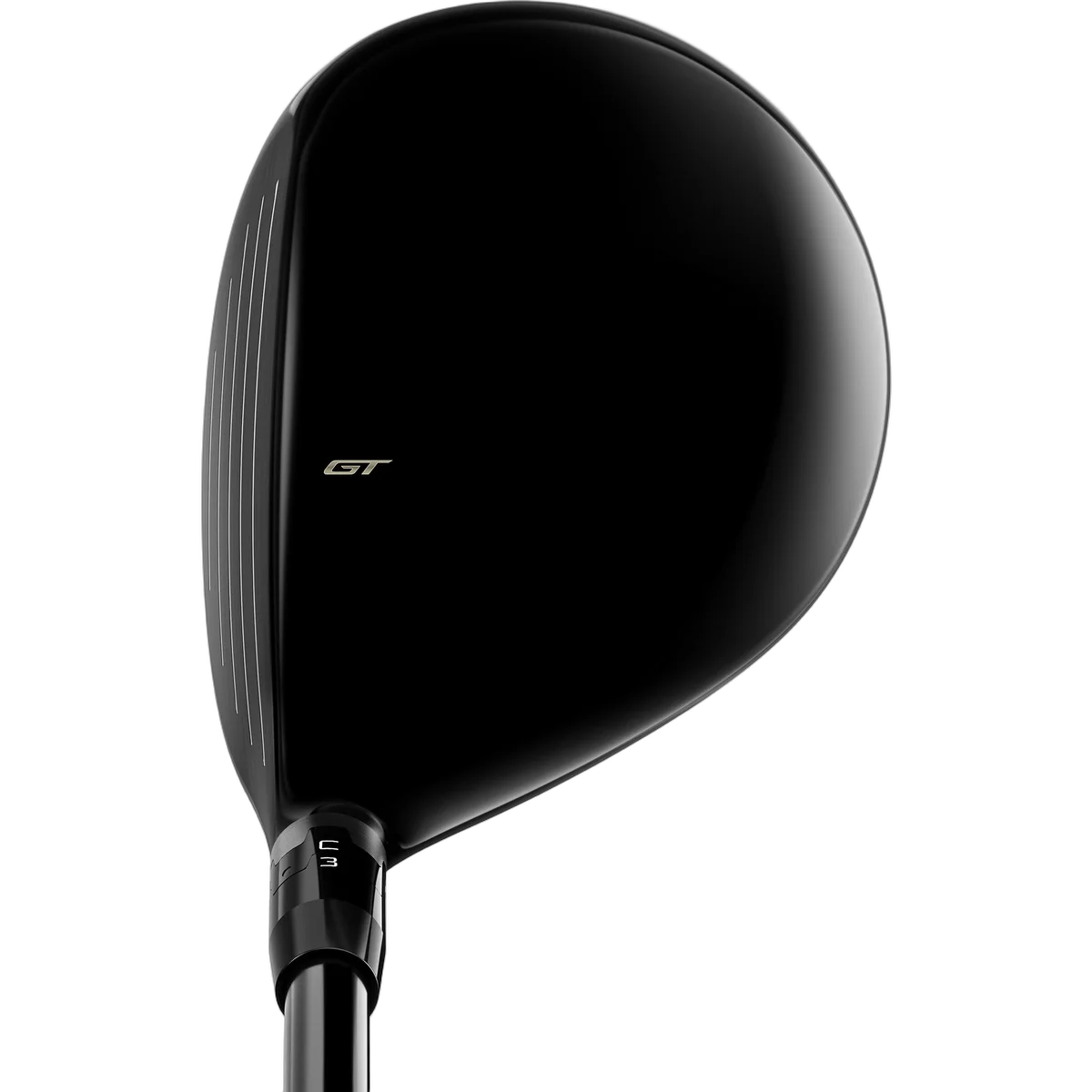
Crown view at address with GT branding and glossy finish
The gloss black crown is clean and traditional, with only a small "GT" alignment aid interrupting the surface. The Seamless Thermoform Crown leaves absolutely no visible trace -- no seams, no color breaks -- which is a genuine engineering achievement. It looks like a single piece of polished steel, even though the material underneath is polymer. Titleist's design language here is restrained and classic, and I appreciate that they resisted the urge to load up the crown with graphics or alignment features.
Sound & Feel
Impact sound on the GT3 is understated -- more thud than tink, with little metallic character. It is quiet enough that the audio distinction between pure strikes and misses is subtle, and if you are coming from a fairway wood with a louder, higher-pitched impact sound, the GT3 might initially feel muted. Give it a few sessions. Once your ears calibrate, the sound becomes informative: center strikes have a slightly crisper, fuller character, while heel and toe misses carry a softer quality that tells you something went wrong without being harsh.
The feel through the hands is precise and traditional, more reminiscent of a forged club than a modern multi-material construction. Despite all the polymer and face-wrapping technology under the hood, Titleist managed to preserve a solid, grounded impact sensation. You know exactly where the ball met the face on every swing. Mishits are honest -- you feel them clearly -- but the feedback is informational rather than punishing.
Performance
Ball Speed & Distance
In my testing with the 15-degree model, the GT3 produced carry distances in the 235 to 240 yard range at a swing speed around 105 mph, generating ball speeds in the 152 to 155 mph window. Those numbers are competitive with the best fairway woods in the players category, and the consistency was the real story. The L-Cup face design does genuine work on low-face strikes -- ball speed retention was strong, never dropping more than about 6 mph below my cleanest contact even on thin hits. That translates to playable trajectories on shots I would have expected to come out low and weak with less forgiving designs.
Open face view with scored grooves and adjustable hosel
Compared to the previous-generation TSR3, I picked up roughly 2 mph of ball speed on average, which translated to about four extra yards of carry. Not a transformative gain, but a measurable one, and those yards came with no sacrifice in control.
Launch & Spin
Titleist classifies the GT3 as a high-launch, mid-spin fairway wood, and that is accurate in my experience. Launch angles sat in the 13 to 14 degree range with the 15-degree loft, producing a ball flight that carried well but with a noticeably more penetrating trajectory than the GT1. Spin rates averaged around 4,000 to 4,200 rpm -- high enough to hold a green on approach shots from 230-plus yards, but low enough to avoid the ballooning that kills distance on windy days.
The spin profile is manageable and predictable. There is more spin here than in the GT2, which is the distance-optimized model, but the GT3 never felt like it was generating excessive spin. The flight was boring and repeatable, which is exactly what I want from a fairway wood I am going to lean on for approaches into par-5s and long par-4s.
Four stock shaft options cover a wide range of launch profiles: the Project X Denali Red for mid-to-high launch, the Mitsubishi Tensei 1K Blue for mid launch, the Project X HZRDUS Black 5th Gen for low-to-mid, and the Mitsubishi Tensei 1K Black for low launch. I tested with the Tensei 1K Blue in stiff, which paired well with the head's natural launch characteristics.
Dispersion & Shot Shape
The SureFit CG Track is a meaningful feature on the GT3, and I spent time testing each of the five positions. Moving from the Neutral position to H2 (maximum heel weighting) produced a noticeable draw bias of roughly five to seven yards. The T2 position (maximum toe weighting) shifted the ball flight the opposite direction by a similar margin. This is not a cure for a 30-yard slice, but it is enough adjustment to take a slight miss pattern and neutralize it, or to commit to a specific shot shape and have the equipment support it.
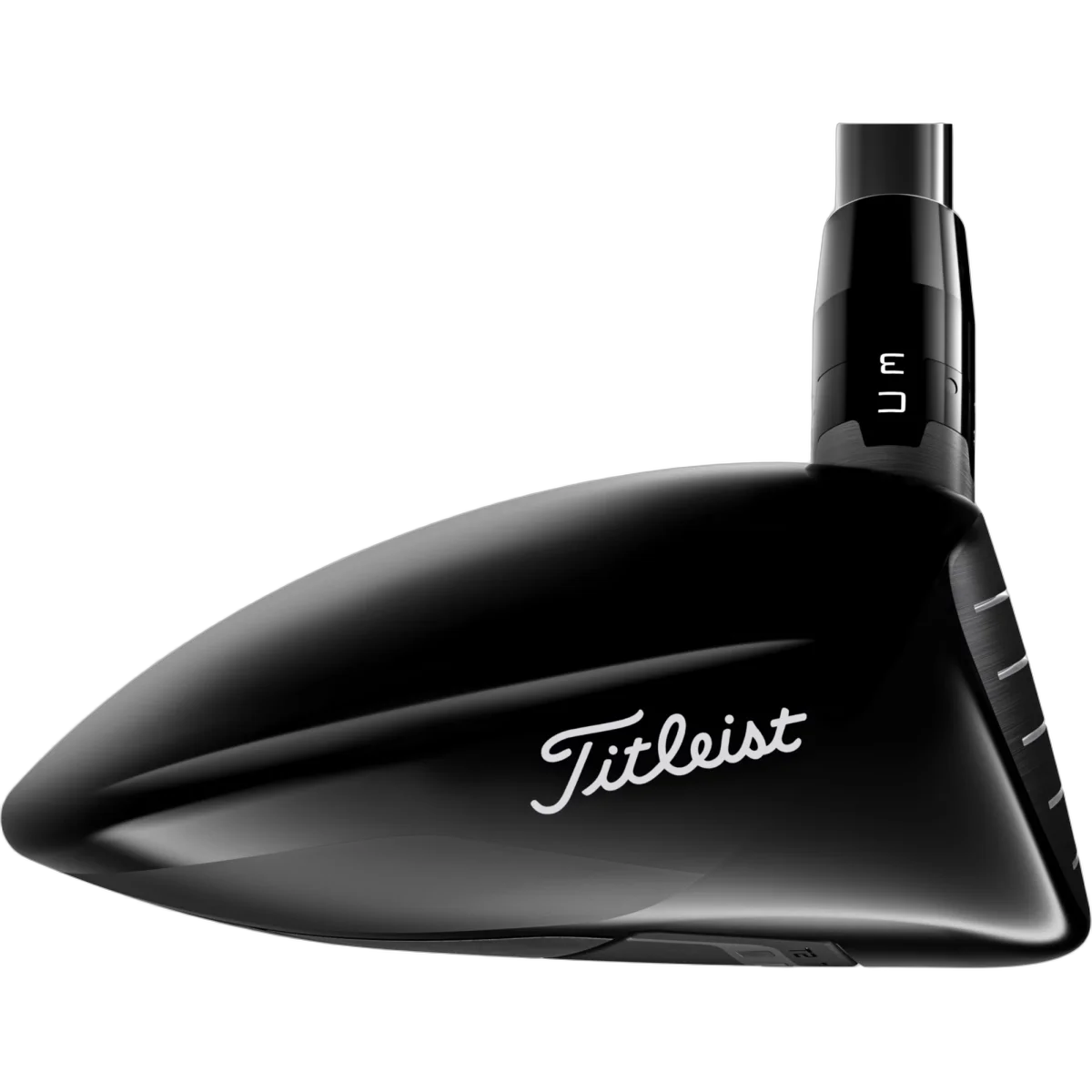
Sole showing GT3 badge and SureFit weight track system
Dispersion overall was tight for a fairway wood in this class. My misses tended to be directional rather than distance-based -- when I missed, the ball still traveled a competitive distance, just offline by 10 to 15 yards. That is a fair tradeoff for a club that also offers genuine workability. I could move the ball both directions with reasonable confidence, which is not something I can say about every fairway wood I have tested. The compact head and lower MOI compared to the GT1 mean the GT3 responds to face angle and path more readily, rewarding good swings and being less tolerant of poor ones.
This is the honest trade-off with the GT3: it is not the most forgiving fairway wood Titleist makes, and it is not trying to be. Golfers who need maximum margin for error should look at the GT1. The GT3 demands a certain level of ball-striking consistency to get the most out of it.
Verdict
The Titleist GT3 Fairway Wood is a precision instrument wrapped in classic Titleist aesthetics. It delivers competitive ball speed, a penetrating and repeatable ball flight, and more adjustability than almost any fairway wood on the market through its five-position CG track and adjustable hosel. The Forged L-Cup face does impressive work preserving performance on low-face strikes, and the Seamless Thermoform Crown is both a visual and engineering triumph.
Strengths: excellent ball speed consistency across the face, strong adjustability through the SureFit CG Track and hosel system, penetrating ball flight that performs well in wind, precise feel and honest feedback, clean traditional appearance, and genuine workability for skilled players.
Weaknesses: not the most forgiving option for players who struggle with consistent contact, the compact head may not inspire confidence for higher handicappers, the understated sound takes some adjustment, and the CG track adjustability -- while useful -- will not fix major swing flaws.
The GT3 is best suited for mid-to-low handicap players who value control and shot-shaping ability over maximum forgiveness. If you are a single-digit handicapper looking for a fairway wood that responds to your intentions and rewards good swings, the GT3 belongs on your short list. If you need the club to bail you out on mishits, look elsewhere in the GT lineup.