Titleist GT2 Fairway Wood
Titleist — Titleist GT2 Fairway Wood · By Andy · Feb 12, 2026
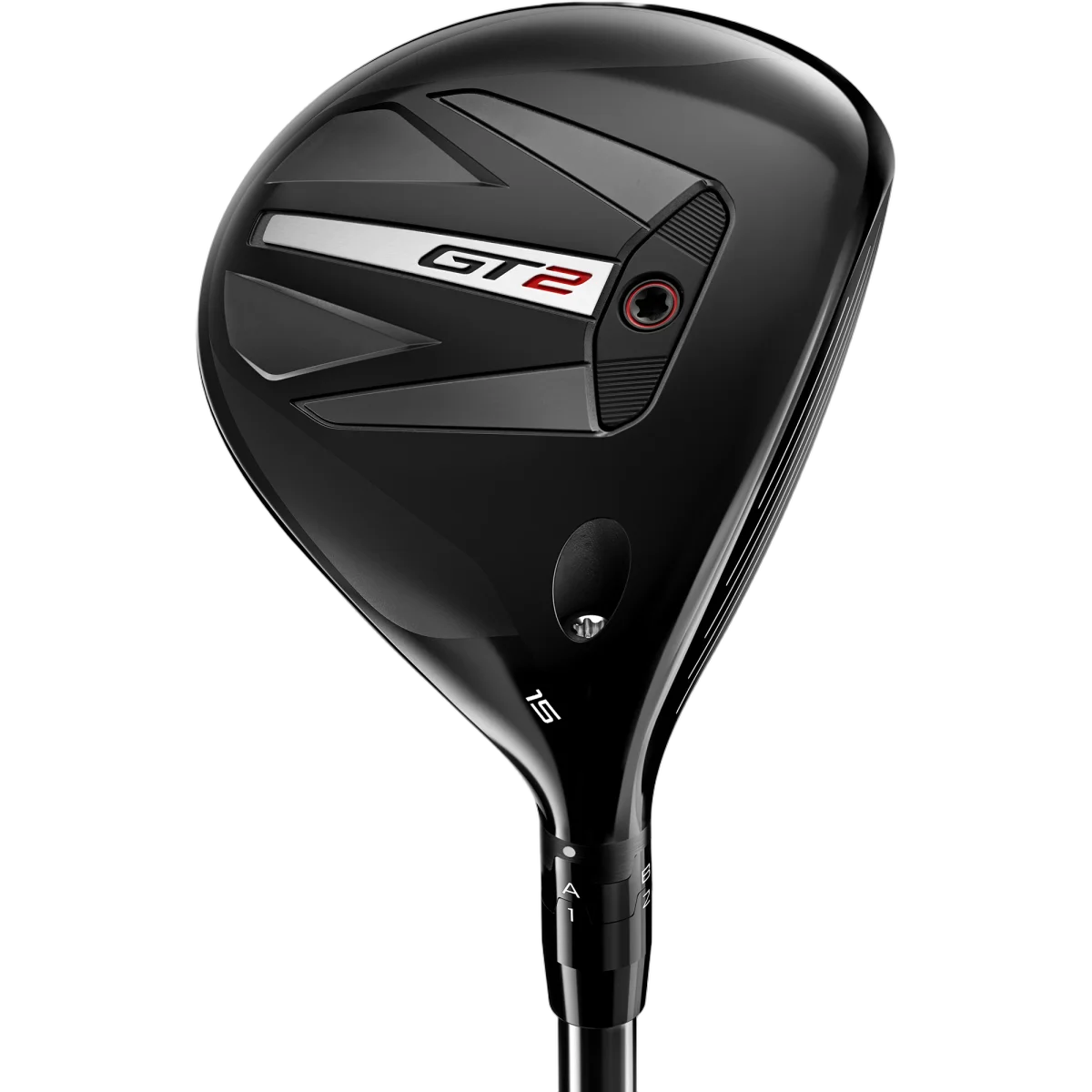
Titleist's "fast and forgiving" fairway wood delivers a compelling blend of distance, playability, and the refined aesthetics the brand is known for.
The Big Picture
The GT2 is the game-improvement entry in Titleist's GT fairway wood family, sitting alongside the more compact, lower-spinning GT3 aimed at better players. Where the GT3 prioritizes workability and a piercing flight, the GT2 is designed to be the easier-to-hit, higher-launching option -- the fairway wood you reach for when you need to find the green from 220 yards out and want to know the ball is going to get up in the air.
Titleist has historically been perceived as a brand that caters primarily to skilled players, but the GT2 represents a continued push to serve a broader range of handicaps without sacrificing the fit and finish that Titleist loyalists expect. The design philosophy here is straightforward: maximize ball speed across a larger area of the face, promote a reliable mid-to-high launch, and keep the overall package forgiving enough that slight mishits still produce usable results.
The GT2 is available in multiple loft configurations, and the 5-wood I tested came with a 52-gram shaft in R2 flex at a low-mid launch profile with 4.3 degrees of torque. At $329, it slots into the premium tier alongside offerings from Callaway, TaylorMade, and PING -- which means it needs to deliver on performance to justify the price.
At Address
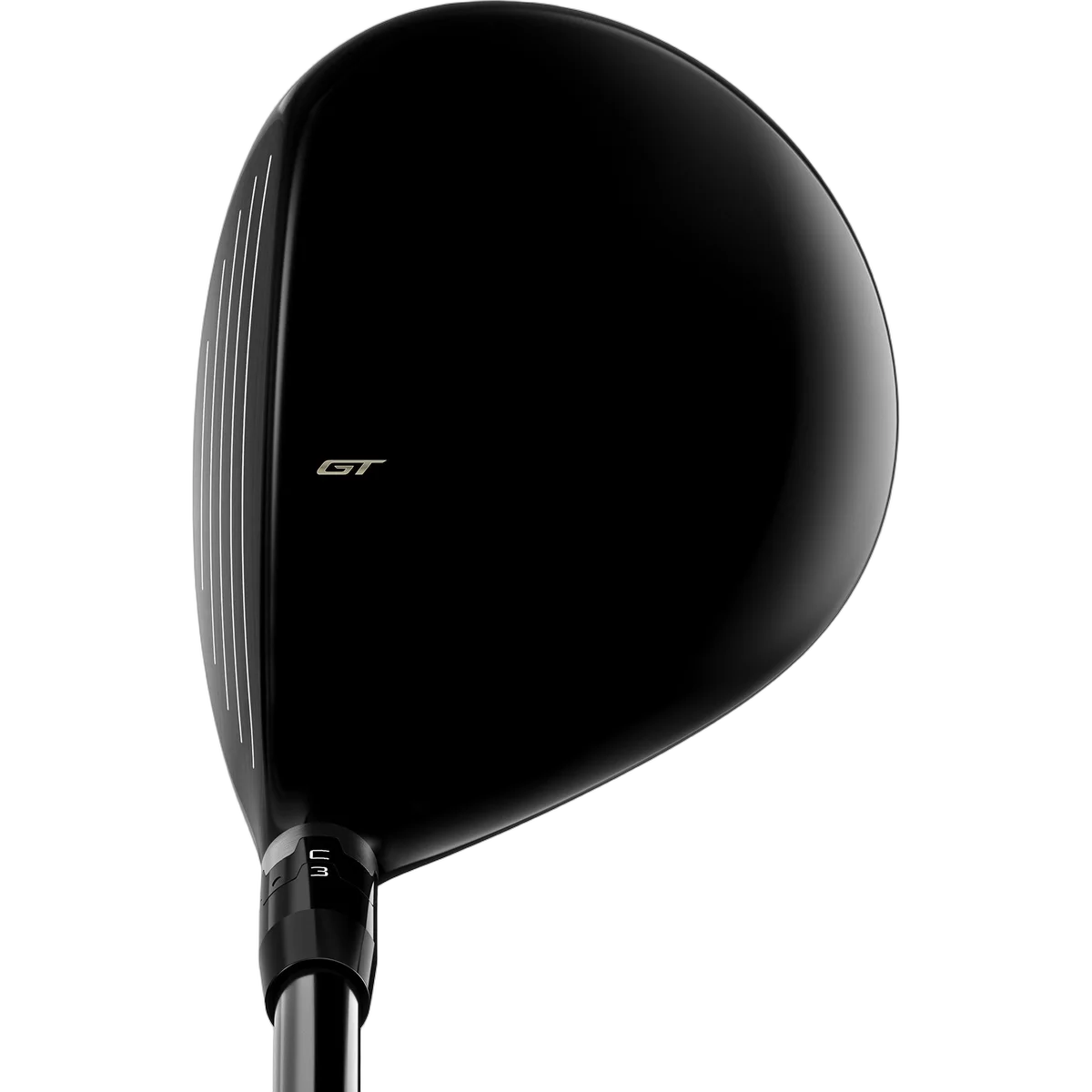
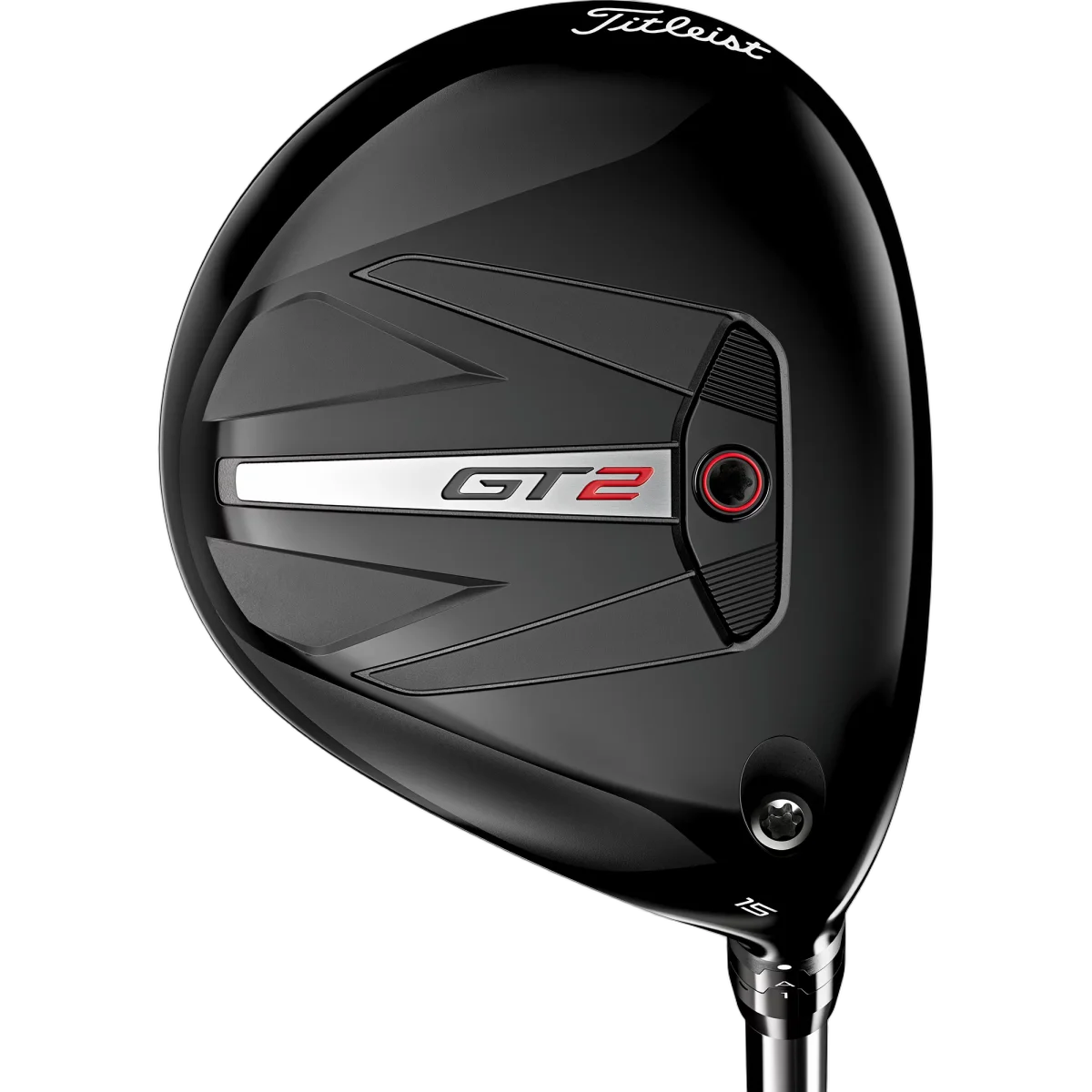
Titleist has always been deliberate about how their clubs look behind the ball, and the GT2 fairway wood continues that tradition. The head shape is clean and symmetrical, with a slightly deeper face profile than you might expect from a fairway wood in the forgiving category. It sits beautifully at address -- there is no visual bulk or awkward proportions that betray the added forgiveness engineered into the design.
GT2 fairway wood top-down address view with GT logo
The crown is smooth and uncluttered, with a subtle alignment feature that helps frame the ball without becoming a distraction. The overall footprint is moderately sized -- larger than the GT3 to accommodate the higher-MOI design, but not so oversized that it looks like a small driver head sitting on the turf. It inspires confidence without feeling like a training wheel, which is a balance that many fairway woods in this segment fail to achieve.
Sound & Feel
Impact feel on the GT2 is firm and responsive, with a satisfying crack that lets you know the ball is leaving the face with authority. There is a lively quality to the strike that suggests a hot face, and center hits produce the kind of feedback that makes you want to reach for this club again. It is distinctly Titleist -- measured and refined rather than loud or explosive.
On mishits, the GT2 is honest but composed. Strikes toward the toe or heel produce a slightly duller sound and a touch less vibration through the hands, which gives you useful feedback about contact quality. But the dampening is controlled enough that off-center hits never feel jarring or unpleasant. The overall acoustic signature is clean and sits in a pleasant mid-tone range that avoids both the tinny quality of some hollow-body designs and the overly muted feel of heavily dampened faces.
Performance
Ball Speed & Distance
The GT2 earns its "fast" billing. In my testing with the 5-wood, I saw carry distances consistently in the 215 to 225 yard range with a moderate swing speed, which is competitive with the best fairway woods in this class. Ball speeds off the center of the face were impressive, sitting in the 148 to 155 mph range depending on the quality of contact and conditions.
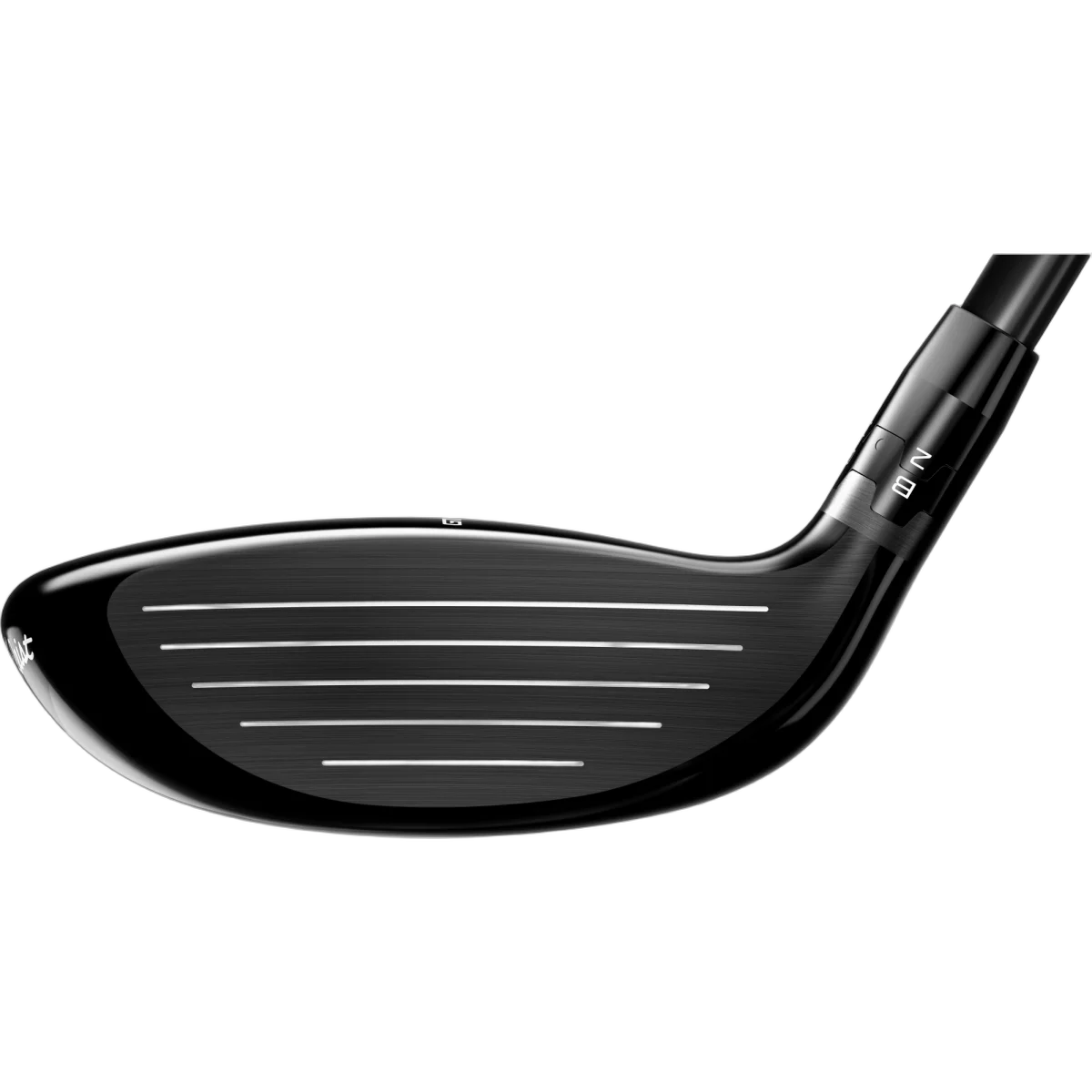
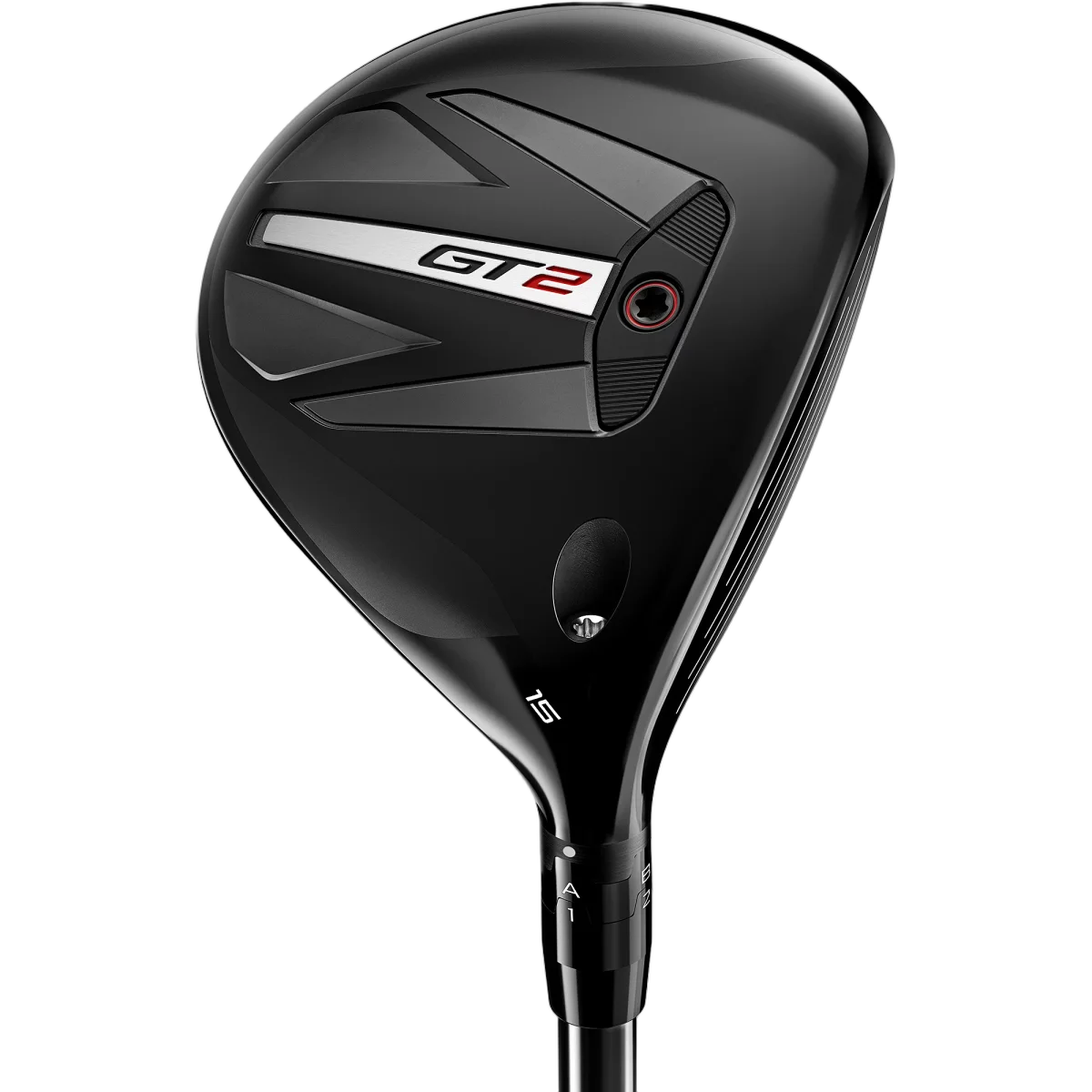
Titleist GT2 fairway wood face showing grooves
What stood out was the consistency of the distance output. Fairway woods can be volatile clubs -- the difference between a well-struck 5-wood and a slightly thin one can be 20 yards or more with some models. The GT2 narrowed that gap meaningfully. Strikes that I knew were slightly off-center still produced ball speeds within 3 to 4 mph of my peak numbers, which translated to only 8 to 12 yards of distance loss rather than the 15 to 20 I might see with a less forgiving head. That kind of reliability matters when you are trying to carry a hazard or reach a par 5 in two.
Launch & Spin
The shaft spec on my test club was set at a low-mid launch profile, and the results bore that out. Launch angles came in around 13 to 14 degrees with the 5-wood, which paired with spin rates in the 4,200 to 4,600 rpm range to produce a flight that carried well and landed with enough angle to hold a green. The spin was neither excessively high nor aggressively low -- it sat in that productive middle range where the ball stays in the air long enough to maximize carry without ballooning on windy days.
Golfers who tend to spin fairway woods too much will appreciate the controlled spin profile, though players who struggle to get the ball airborne should note that the low-mid launch designation on the stock shaft means this configuration is not optimized for maximum height. A higher-launching shaft option or a higher-lofted head would be worth exploring for slower swing speeds that need more help getting the ball up.
Dispersion & Shot Shape
Forgiveness is the GT2's calling card, and it delivers. My dispersion patterns were tight by fairway wood standards, with the majority of shots landing within a 15-yard lateral spread. The head resists twisting on off-center contact effectively, keeping mishits in play and reducing the severity of directional misses.
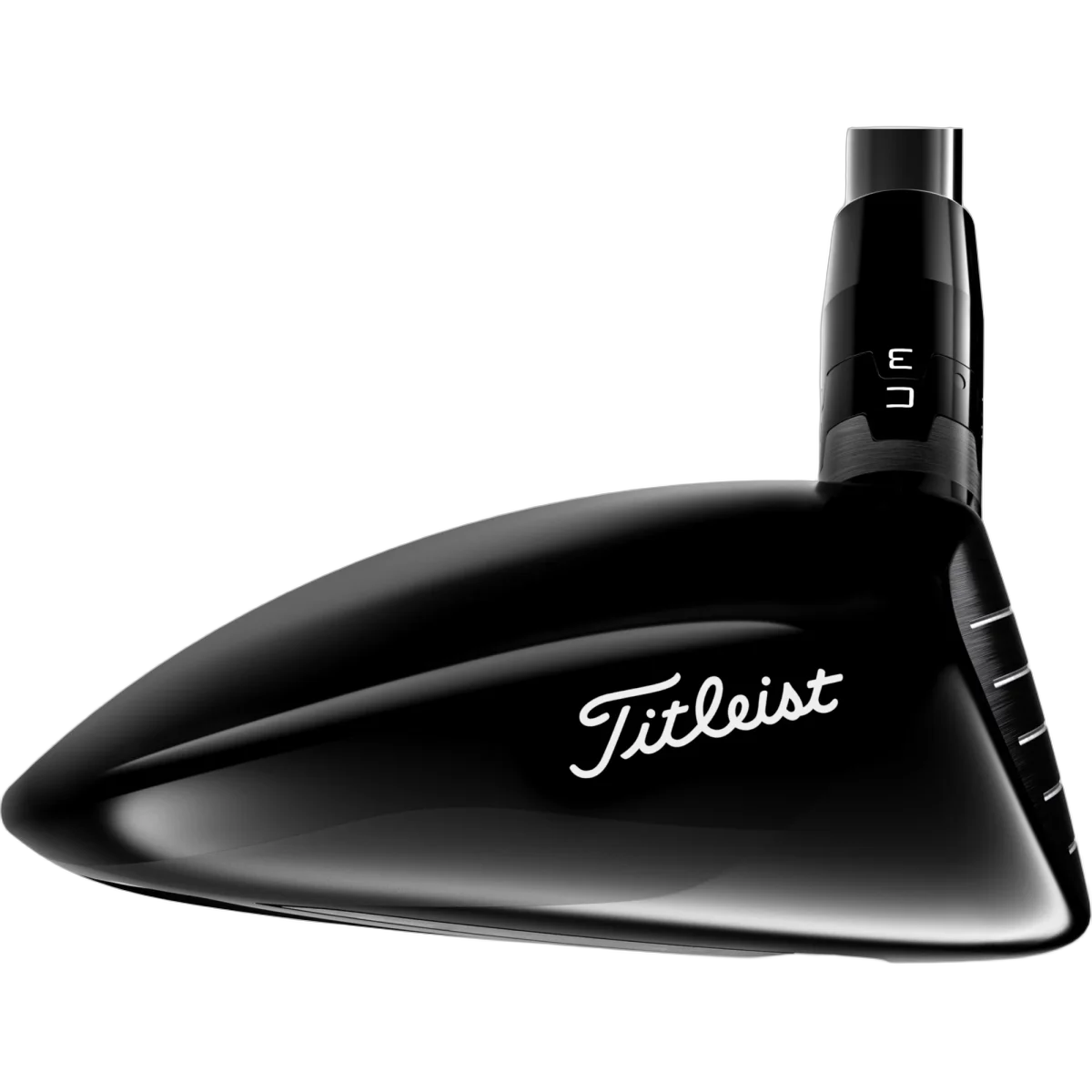
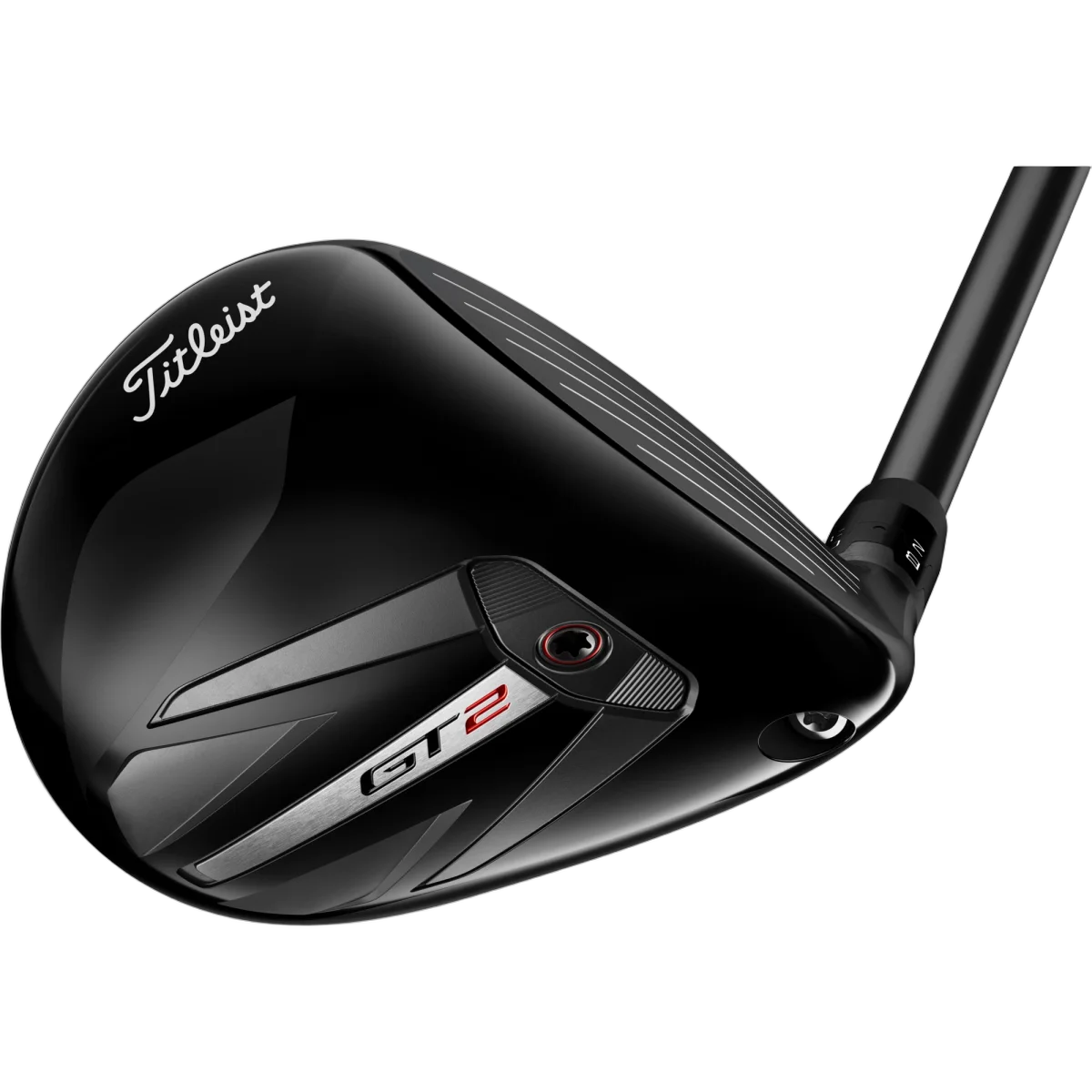
GT2 sole view showing weight port and branding
The natural ball flight I observed was a very slight draw, which is typical for a fairway wood in the game-improvement category. The GT2 does not offer the built-in adjustability of some competitors -- there is no movable weight system or adjustable hosel to fine-tune shot shape. What you get is a reliable, repeatable flight pattern that rewards a committed swing. Players who need significant draw or fade bias built into the head will need to explore shaft and fitting options rather than relying on head adjustability.
Off the deck, the GT2 performed well. The sole design allows the club to interact with the turf cleanly, and the moderate depth of the face makes it easier to get under the ball from a fairway lie than some of the shallower-faced models on the market. It was equally capable off a tee on tighter holes where I wanted accuracy over driver distance.
Verdict
The Titleist GT2 fairway wood is a well-executed entry in the forgiving fairway wood category that manages to deliver game-improvement performance without compromising on the look and feel that define the Titleist brand. It generates competitive ball speed and distance, launches reliably, and keeps dispersion tight enough to be a genuine scoring weapon from the fairway or the tee.
Strengths: consistent ball speed across the face, tight dispersion patterns, clean and confidence-inspiring appearance at address, refined sound and feel, and strong performance from both the fairway and the tee.
Weaknesses: the lack of built-in adjustability limits customization compared to competitors like PING's movable-weight system, the low-mid launch stock shaft may not suit slower swing speeds that need more help getting the ball up, and at $329 it sits at a premium price point where the competition is fierce.
The GT2 is well-suited for mid-handicap players who want a fairway wood they can trust to produce consistent results without requiring a perfect swing. It will also appeal to Titleist loyalists who want the brand's aesthetic and feel standards applied to a more forgiving fairway wood design. If you prioritize reliability and shot-to-shot consistency over maximum adjustability, the GT2 is a strong contender.