TaylorMade Qi4D Rescue
TaylorMade — TaylorMade Qi4D Rescue · By Troy · Feb 9, 2026
TaylorMade's latest hybrid pushes ball speed gains into a familiar shape, but the incremental upgrade story is starting to wear thin.
The Big Picture
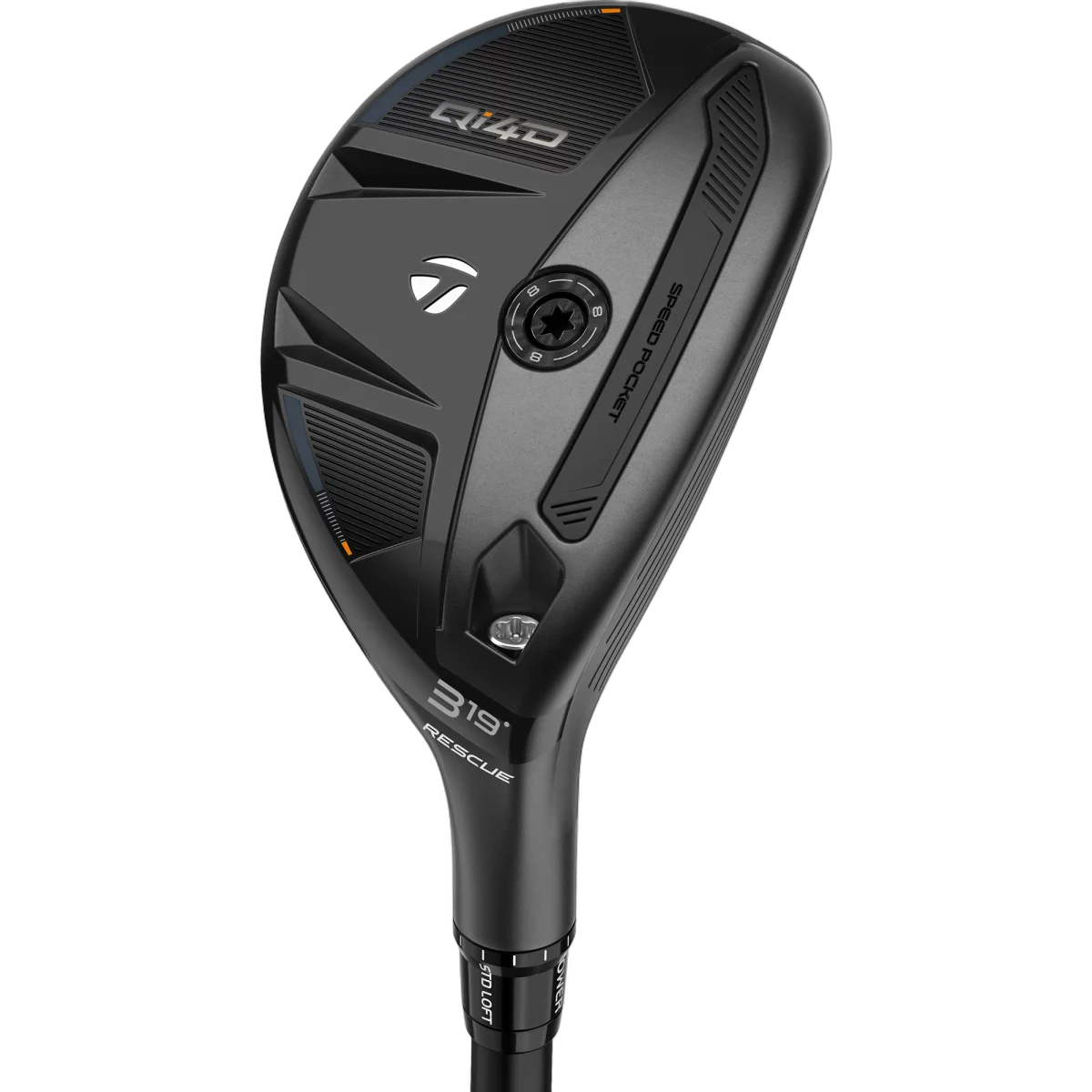
The Qi4D Rescue is TaylorMade's 2026 entry in the hybrid category, succeeding the Qi35 Rescue that launched just a year prior. TaylorMade has leaned heavily into face technology once again, with the Qi4D line featuring an updated iteration of their multi-material face construction designed to maximize ball speed across a wider area of the hitting surface. The promise is straightforward: more speed, more distance, and enough forgiveness to bail you out when contact wanders away from center.
At its core, the Qi4D Rescue is built around TaylorMade's continued investment in a hotter face. The engineering story centers on optimized face thickness mapping and refined internal weighting intended to push COR limits right up to the edge of what the rules allow. The rescue models sit alongside drivers, fairway woods, and irons in what TaylorMade positions as a cohesive family -- a full bag solution where each club shares a design philosophy emphasizing speed and launch optimization.
The target player here is the mid-to-high handicapper who uses hybrids as long iron replacements and needs reliable distance from a variety of lies. At $299.99, it sits at the premium end of the hybrid market, which raises the bar for what it needs to deliver -- especially given how competitive this category has become.
At Address
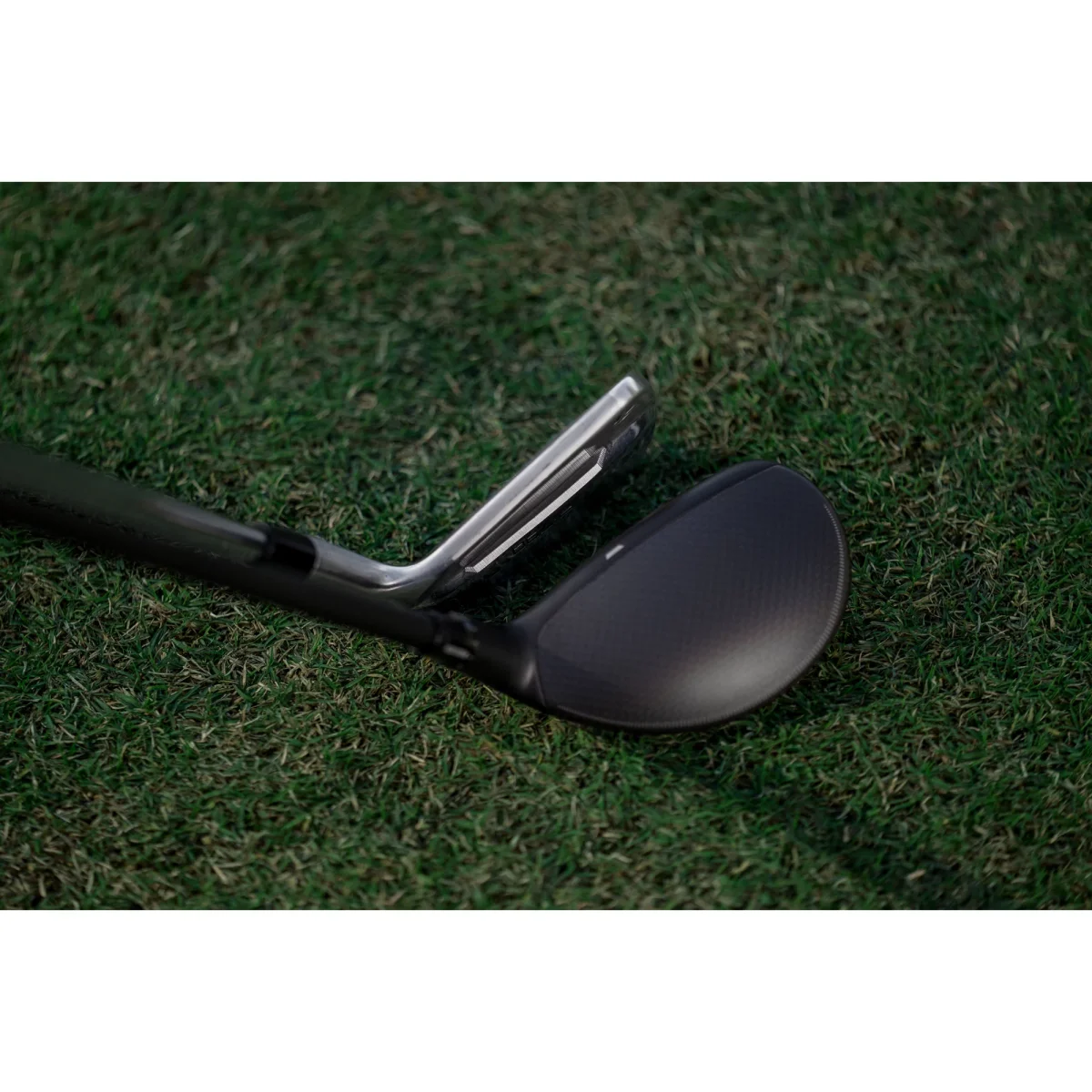
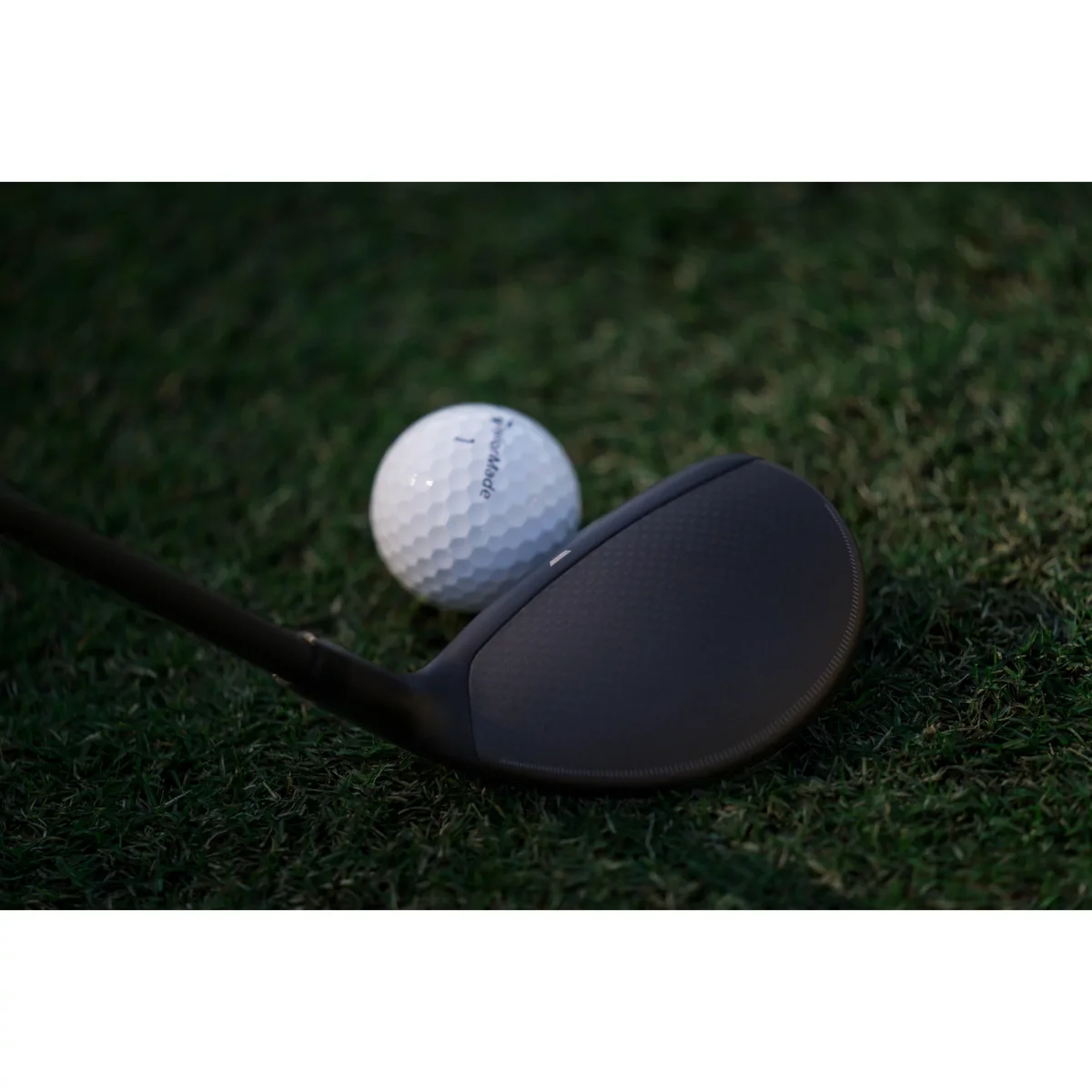
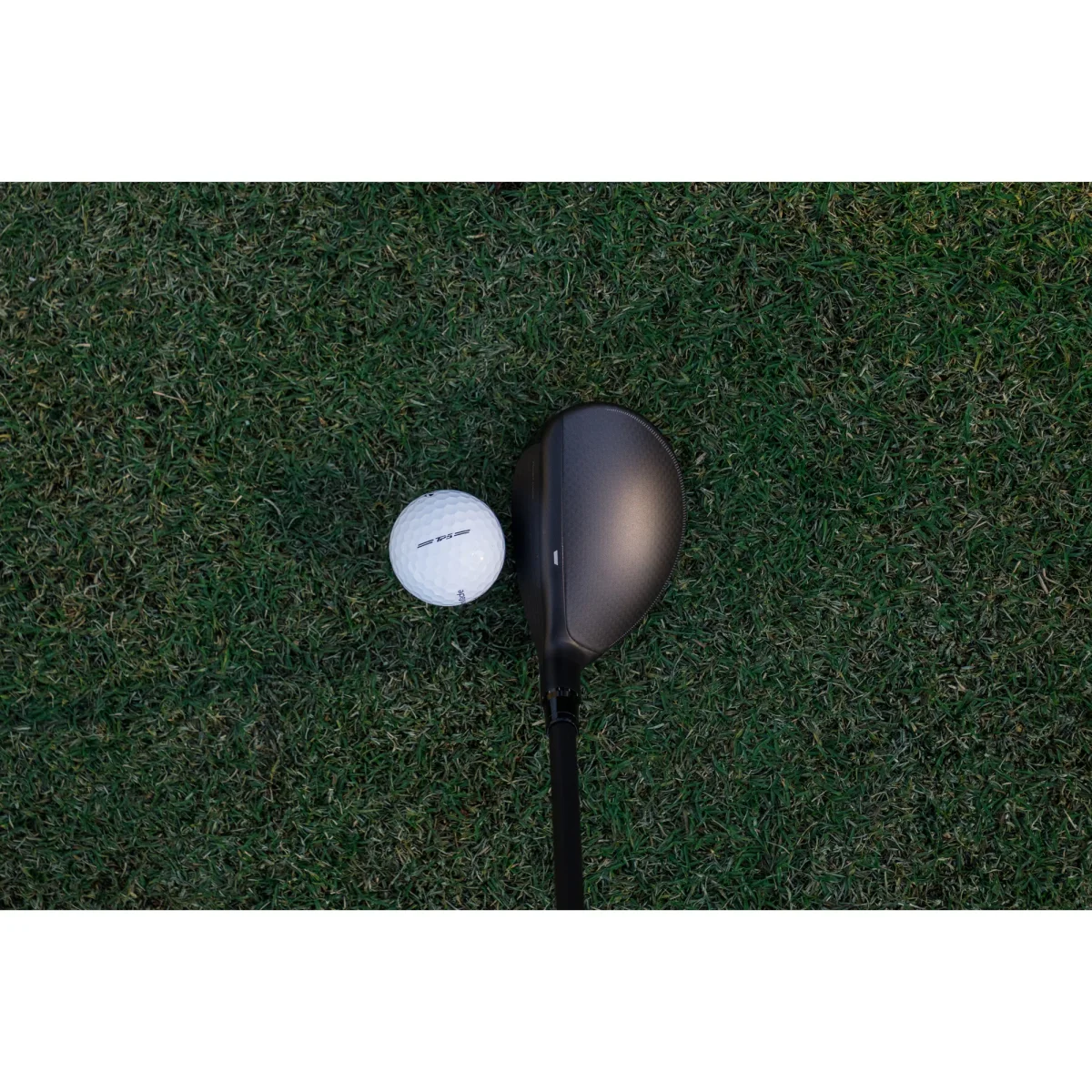
The Qi4D Rescue presents a fairly traditional hybrid profile at address. The head shape is compact without feeling undersized, with a slightly rounded crown that transitions smoothly into a modest offset. TaylorMade has kept the aesthetic clean, with a dark crown finish that minimizes glare and a subtle alignment feature that helps frame the ball at setup.
Qi4D rescue resting on grass in address position
The overall footprint is confidence-inspiring. It does not look like a miniature fairway wood, nor does it feel like a bloated iron -- it sits in that hybrid sweet spot where the shape alone suggests versatility. The sole geometry is designed to promote turf interaction from a variety of lies, with enough camber to glide through light rough without digging. For golfers who have historically struggled to get comfortable with hybrids, the Qi4D Rescue looks approachable and ready to work.
Sound & Feel
Impact feel on the Qi4D Rescue is solid and responsive on center strikes. There is a satisfying firmness through the ball that communicates speed without feeling harsh or tinny. The acoustic signature is a medium-pitched crack -- not as muted as some of TaylorMade's previous hybrid offerings, but far from loud or intrusive. It is a sound that reads as "fast," which is clearly intentional.
Off-center hits retain a reasonable amount of feedback without becoming punishing. You can feel when you have caught it a groove thin or toward the toe, but the sensation does not make you wince. The face has a lively quality through impact that gives the impression of energy transfer, and on well-struck shots, the feel is genuinely rewarding. Compared to the Qi35 Rescue, the acoustic refinement is subtle -- this is an evolution, not a revolution, in the feel department.
Performance
Ball Speed & Distance
The headline claim with the Qi4D line is increased ball speed, and in the hybrid, that claim has some merit. Early sim testing suggests the Qi4D Rescue produces ball speeds roughly 2 mph faster than the Qi35 Rescue at comparable club head speeds -- a modest but real gain that translates to a few extra yards of carry. For a category where golfers are often trying to cover specific yardage gaps, even 3 to 5 yards of additional carry can be meaningful.
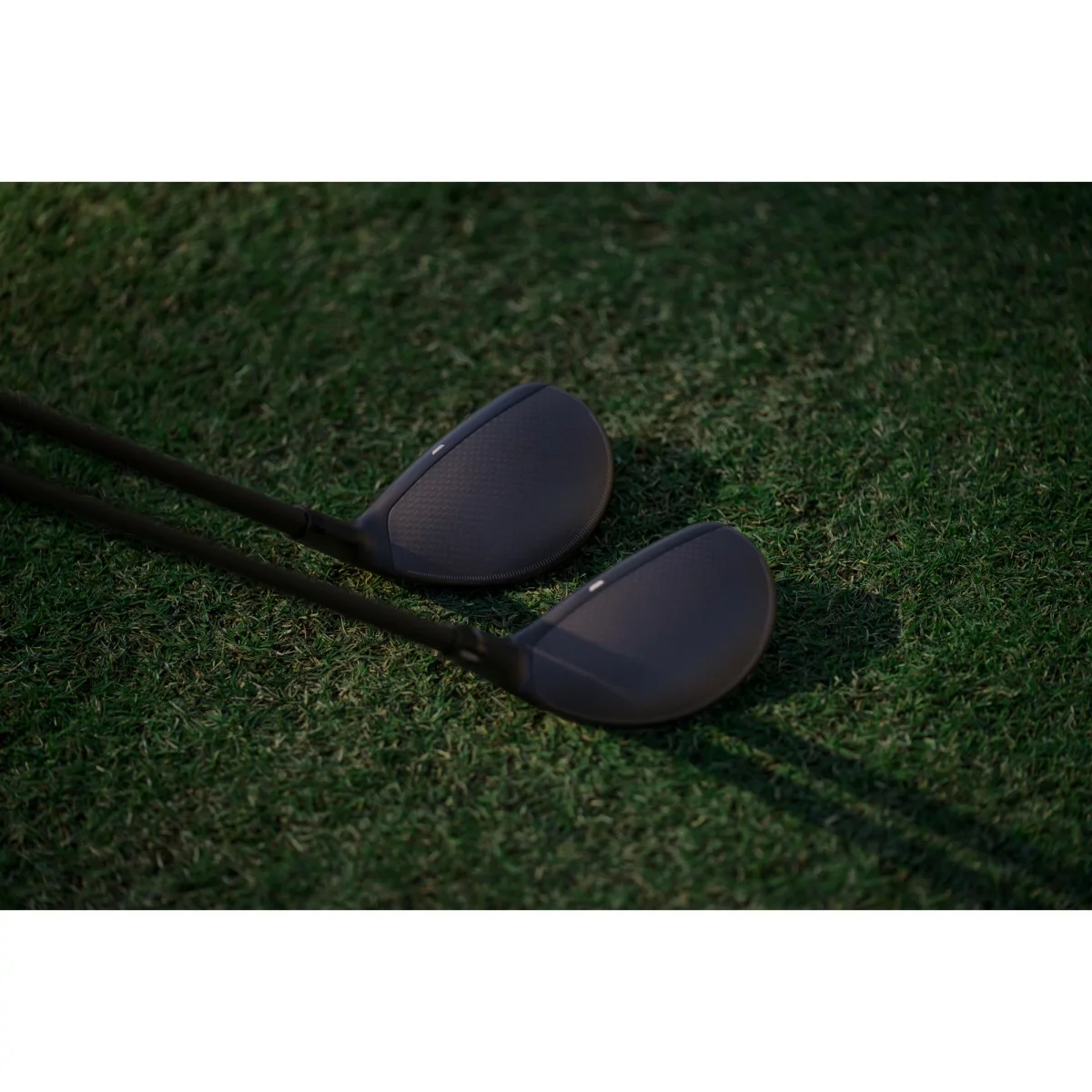
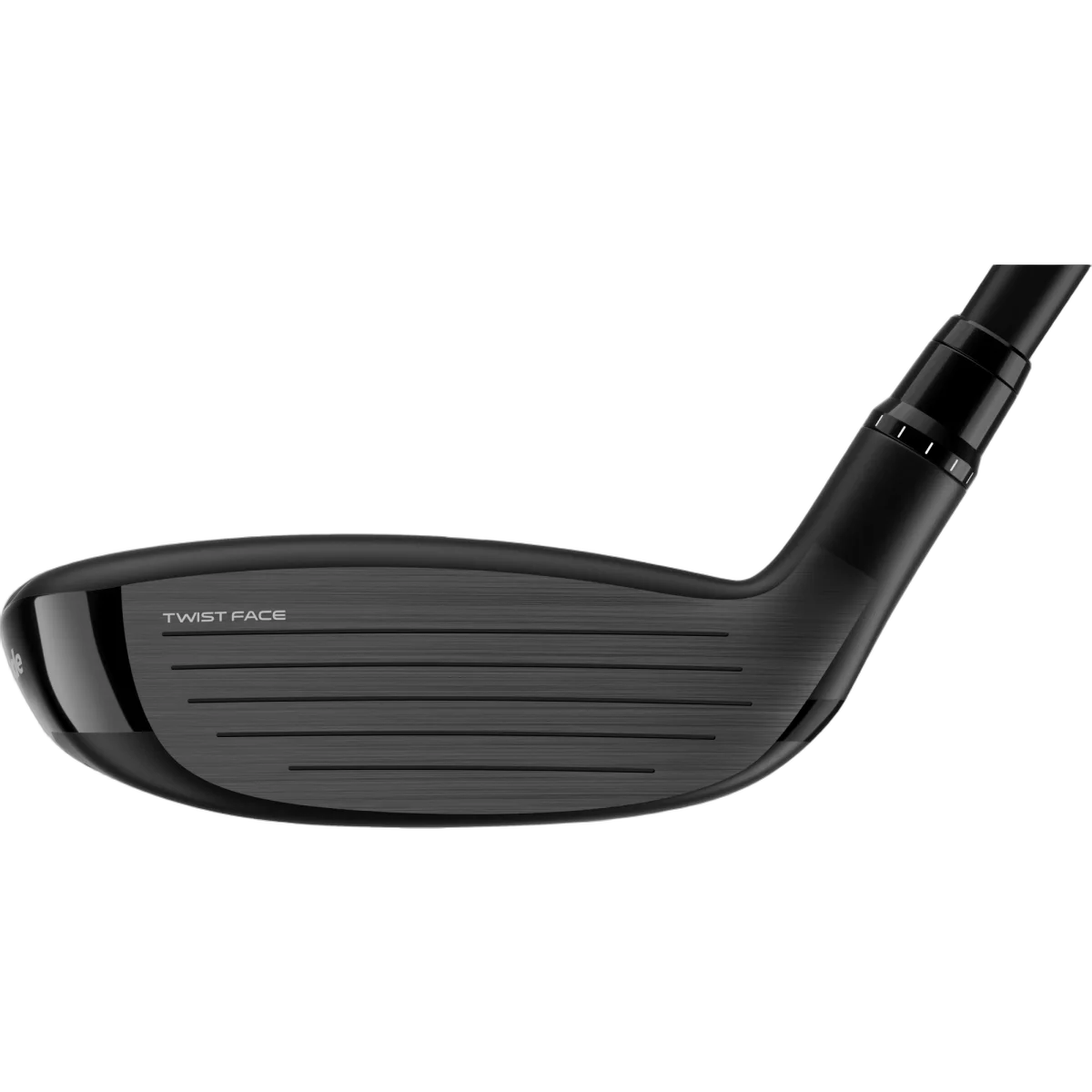
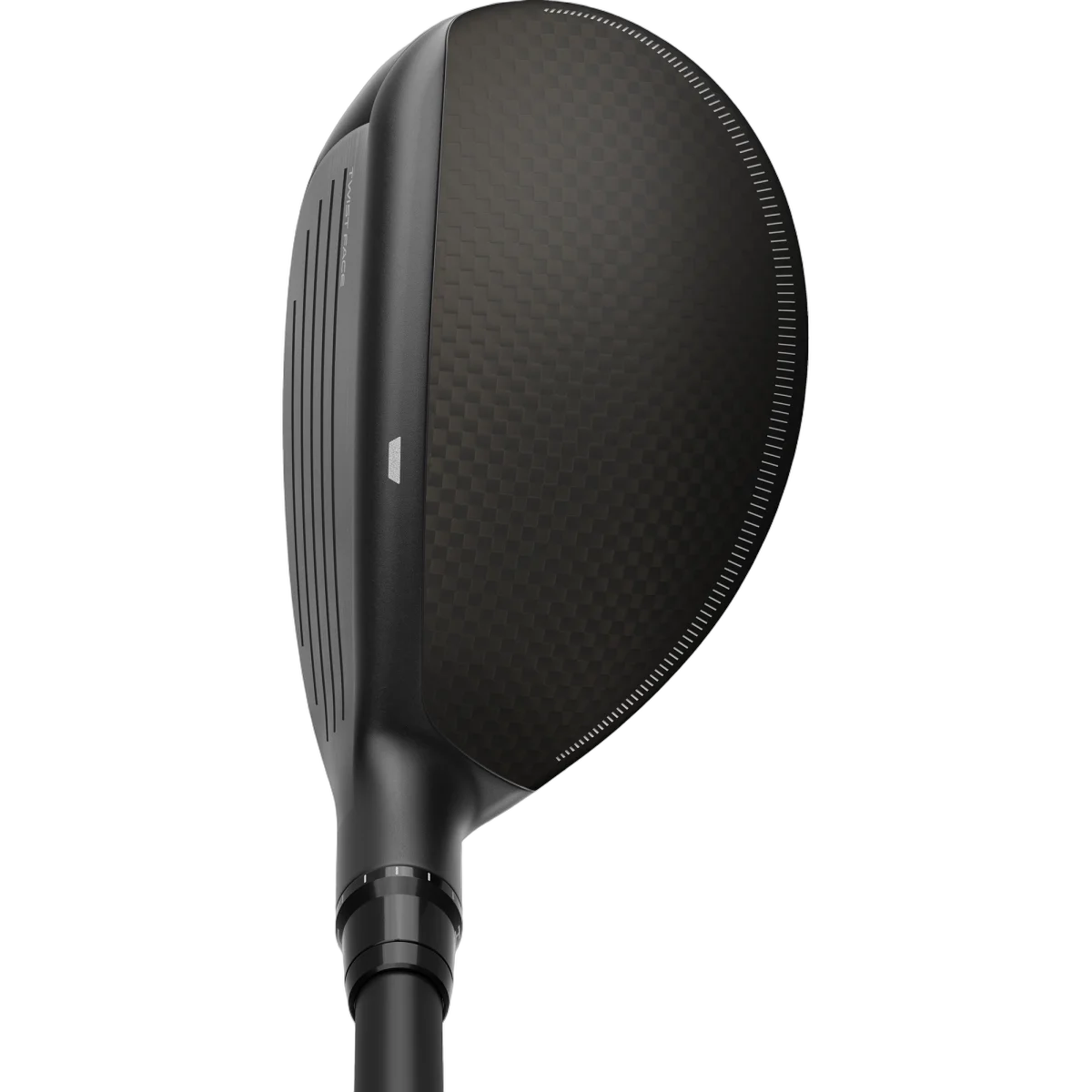
Close-up of Qi4D Twist Face showing groove pattern
The face technology is doing the heavy lifting here. TaylorMade's approach to variable face thickness has matured over several generations, and the Qi4D benefits from tighter manufacturing tolerances that allow the face to flex more efficiently, particularly on strikes that miss the geometric center by half an inch or so. The result is a hybrid that maintains respectable ball speed across a wider portion of the face than its predecessor.
That said, the gains are incremental. Golfers coming from a Qi35 Rescue or even a Qi10 Rescue should temper expectations. The difference on a launch monitor is measurable but not transformative. Where the distance story becomes more compelling is for players upgrading from hybrids that are two or three generations old, where the cumulative improvements in face technology and CG placement add up to a noticeable jump.
Launch & Spin
The Qi4D Rescue launches into a mid-high window that should suit the majority of hybrid users. The CG positioning promotes easy launch from both the tee and the turf, which is critical for the golfer who reaches for a hybrid precisely because they struggle to get long irons airborne.
Spin rates sit in a range that balances carry distance with stopping power. The hybrid is not a low-spin rocket -- it produces enough spin to hold a green from distance, which is the entire point of carrying a rescue club. Players with faster swing speeds may find the spin sits a touch higher than they would like, in which case shaft selection becomes important. The stock shaft that ships with the Qi4D line is serviceable for moderate swing speeds, but golfers generating higher club head speeds should explore aftermarket options to optimize the flight window. As with any hybrid, the shaft matters enormously -- no two shafts will produce the same results for different swing types.
Dispersion & Shot Shape
Forgiveness is solid, as you would expect from a premium hybrid in this category. The high-MOI design resists twisting on off-center strikes, and the resulting dispersion pattern is tighter than what you would get from a comparable long iron. Heel and toe misses still find playable areas of the fairway or green complex, which is ultimately what a rescue club needs to do.
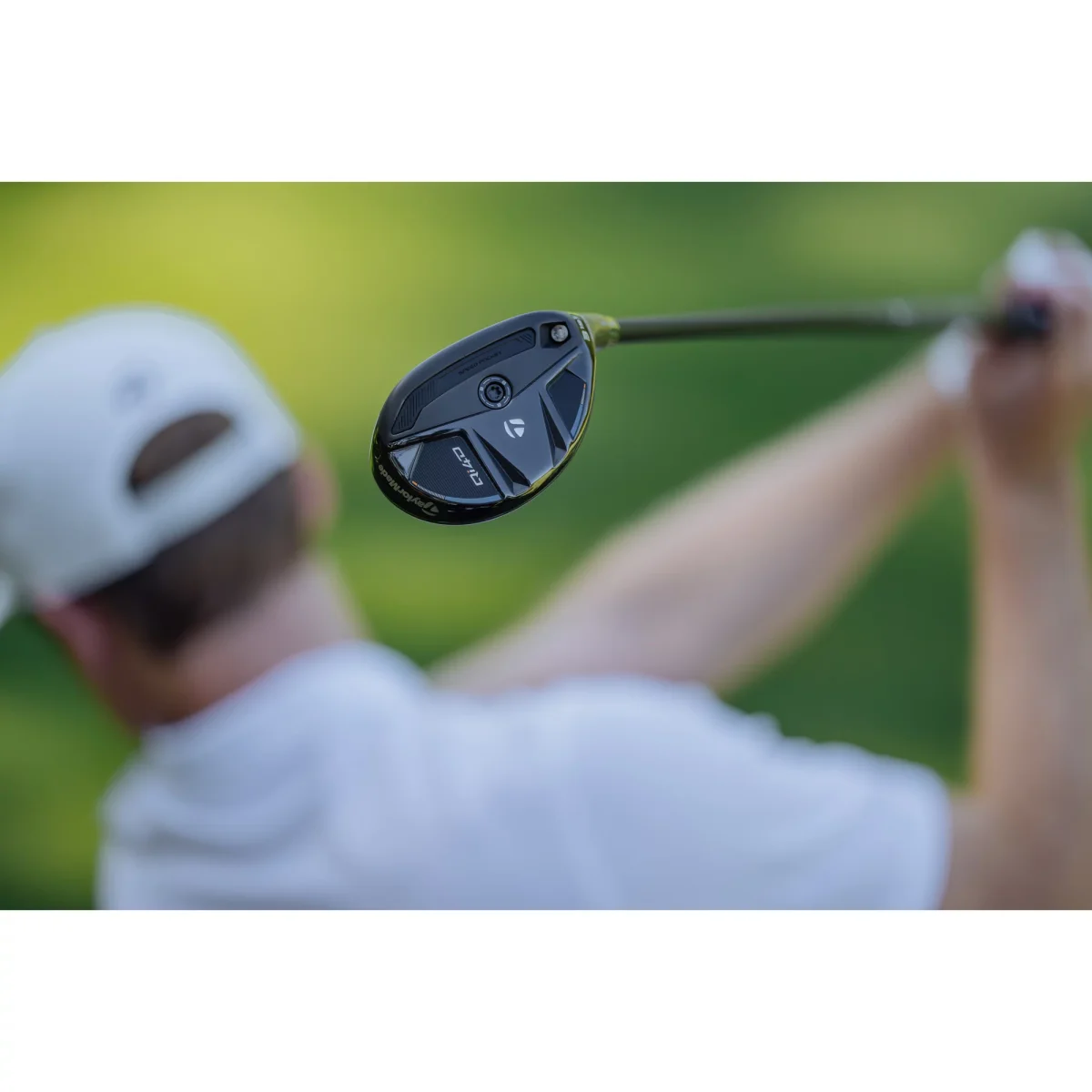
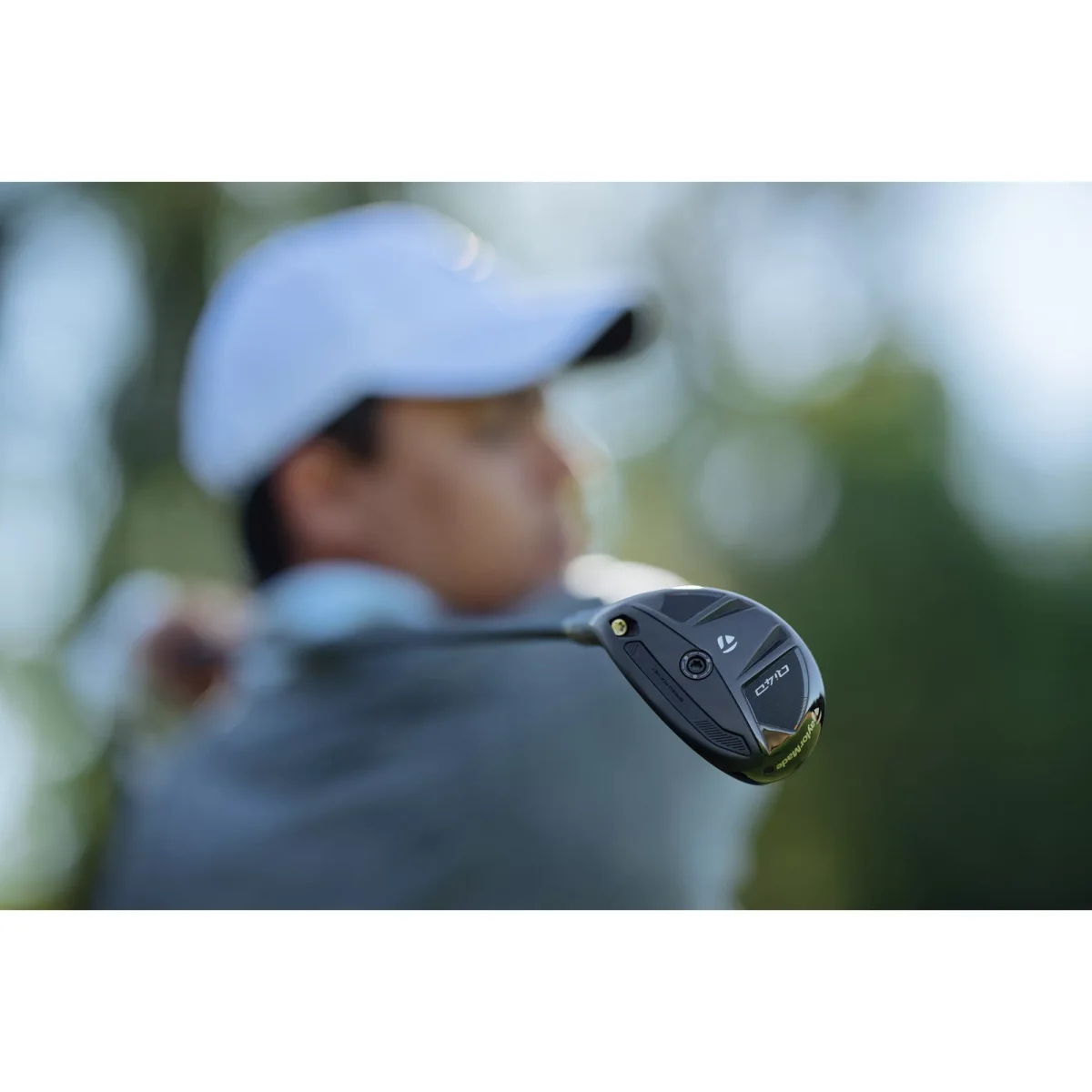
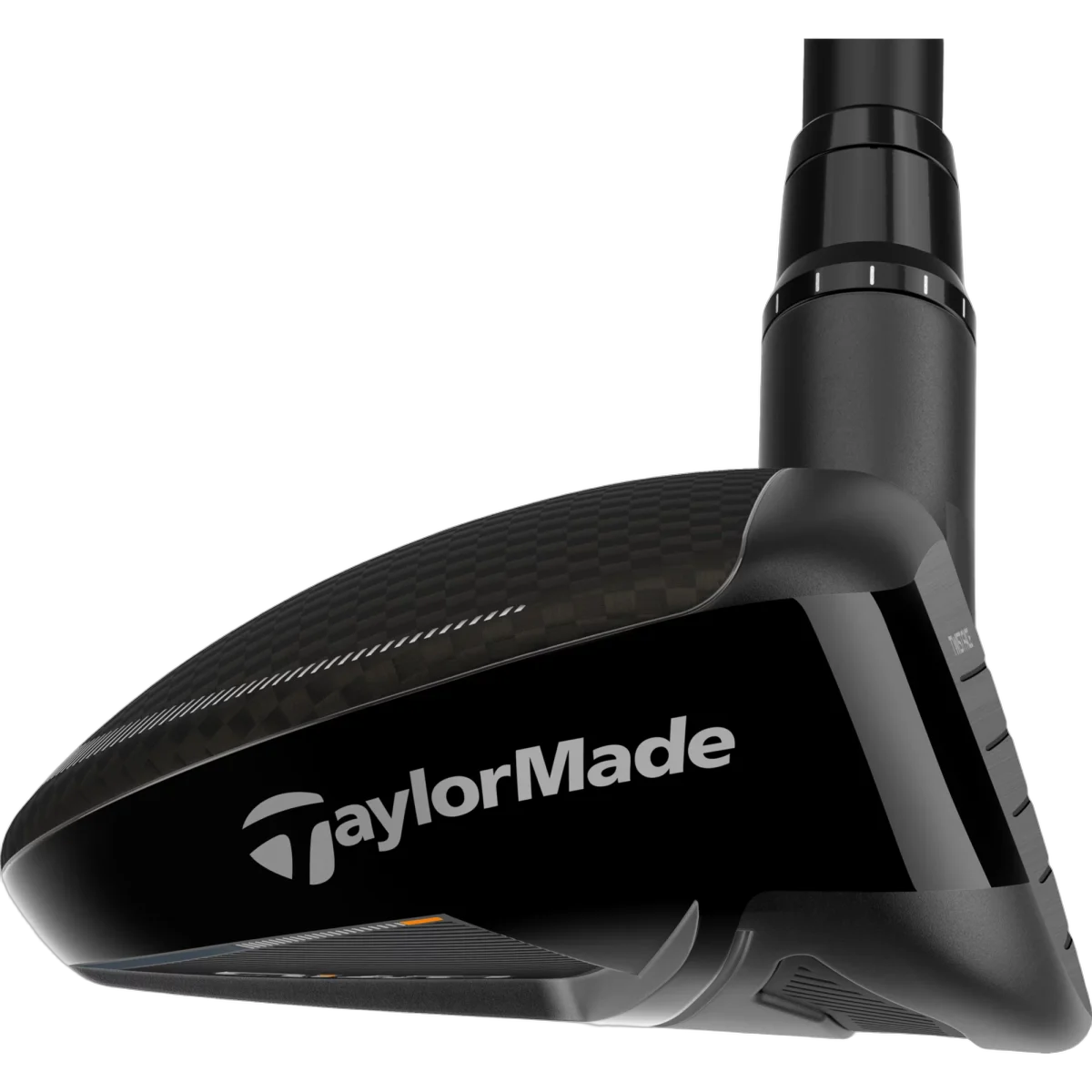
Rear view showing TaylorMade branding on carbon crown
Shot shaping is limited by design. This is a hybrid built for consistency, not workability. It wants to produce a straight ball flight with a gentle draw bias, and fighting against that tendency takes deliberate effort. For the target player, that is a feature, not a limitation. The golfer who pulls a hybrid from the bag on a 200-yard approach is not trying to hit a cut -- they are trying to get the ball on or near the green with a repeatable flight, and the Qi4D Rescue delivers on that front.
Verdict
The TaylorMade Qi4D Rescue is a competent, well-built hybrid that delivers on its core promise of increased ball speed and reliable performance from a variety of lies. The face technology produces measurable speed gains over its predecessor, the launch conditions suit a broad range of players, and the forgiveness is what you would expect at this price point.
The challenge for TaylorMade is the "so what?" factor. The improvements over the Qi35 Rescue are real but incremental, and at $299.99, the Qi4D sits at a price where golfers are right to ask whether the upgrade justifies the cost. If you are playing a hybrid from two or three generations ago, the Qi4D Rescue is a meaningful step forward. If you bought a Qi35 last year, the case for upgrading is thin.
The mixed sentiment around this club reflects a broader fatigue with annual product cycles that promise revolution but deliver evolution. TaylorMade makes excellent equipment, and the Qi4D Rescue is no exception -- but the law of diminishing returns is real, and the year-over-year gains are getting harder to feel on the course. For golfers in the market for a new hybrid without brand loyalty pulling them in a specific direction, the Qi4D Rescue deserves a look -- but so do its competitors, several of which offer comparable performance at a lower price.