Titleist GT3 Hybrid
Titleist — Titleist GT3 Hybrid · By Andy · Dec 28, 2025
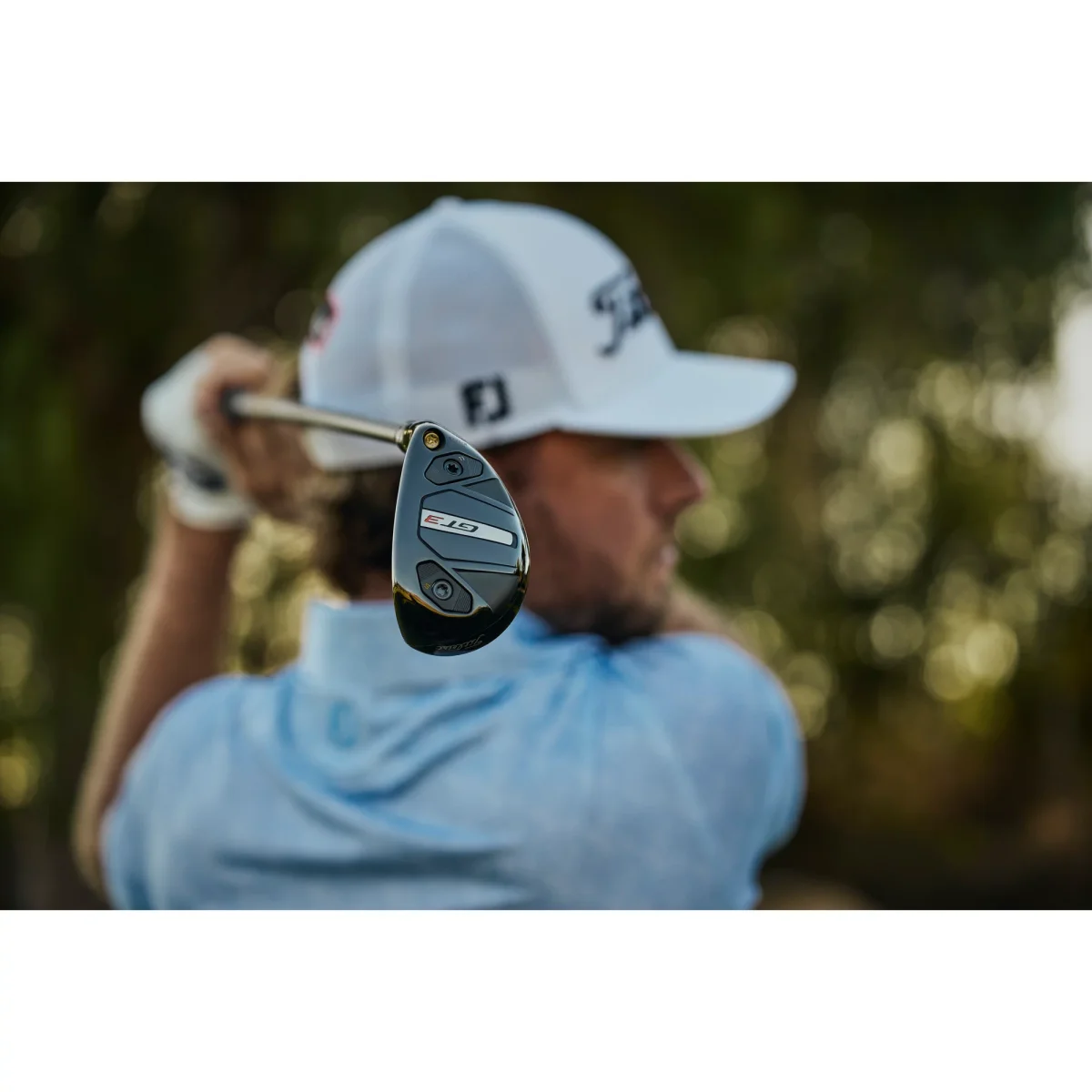
A compact, workable hybrid that gives better players the ball speed they need without sacrificing the control they demand.
The Big Picture
The hybrid category has long been split into two camps: oversized, high-launching rescue clubs for players who need help getting the ball airborne, and compact, lower-spinning options for players who want a hybrid that behaves more like a long iron. The Titleist GT3 Hybrid plants its flag firmly in the second camp, and it does so with more conviction than any Titleist hybrid before it.
The GT3 is the player's model in Titleist's GT hybrid lineup, sitting alongside the more forgiving GT2. It replaces the TSR3 hybrid, and the improvements are meaningful. Despite being six percent smaller in overall head volume, the GT3 delivers a 15 percent increase in MOI compared to its predecessor -- a remarkable engineering achievement that means this compact head is substantially more stable on off-center strikes than the club it replaces. Available in 19, 21, and 24 degree lofts, the GT3 covers the long-hybrid range that most better players are looking to fill between their fairway woods and mid-irons.
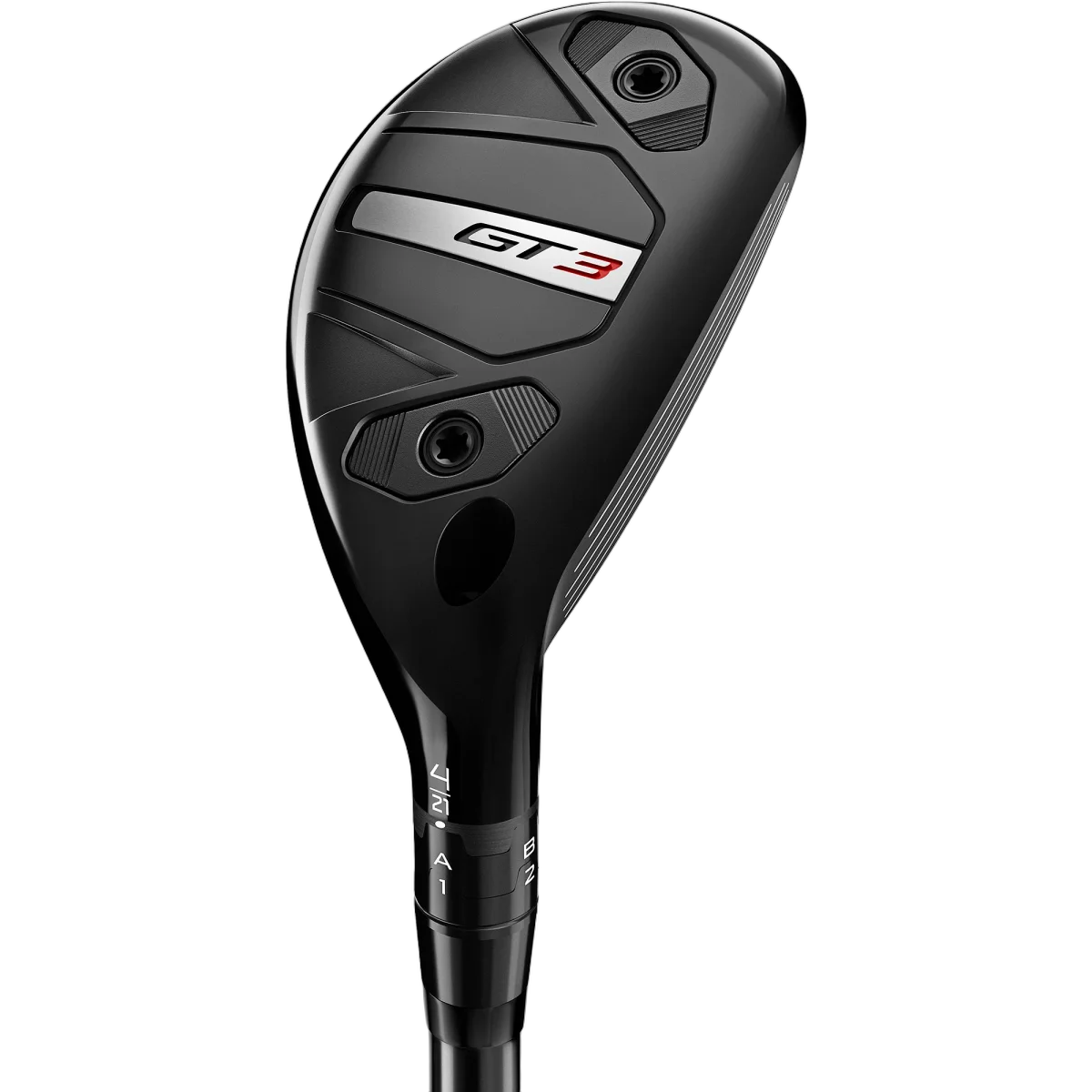
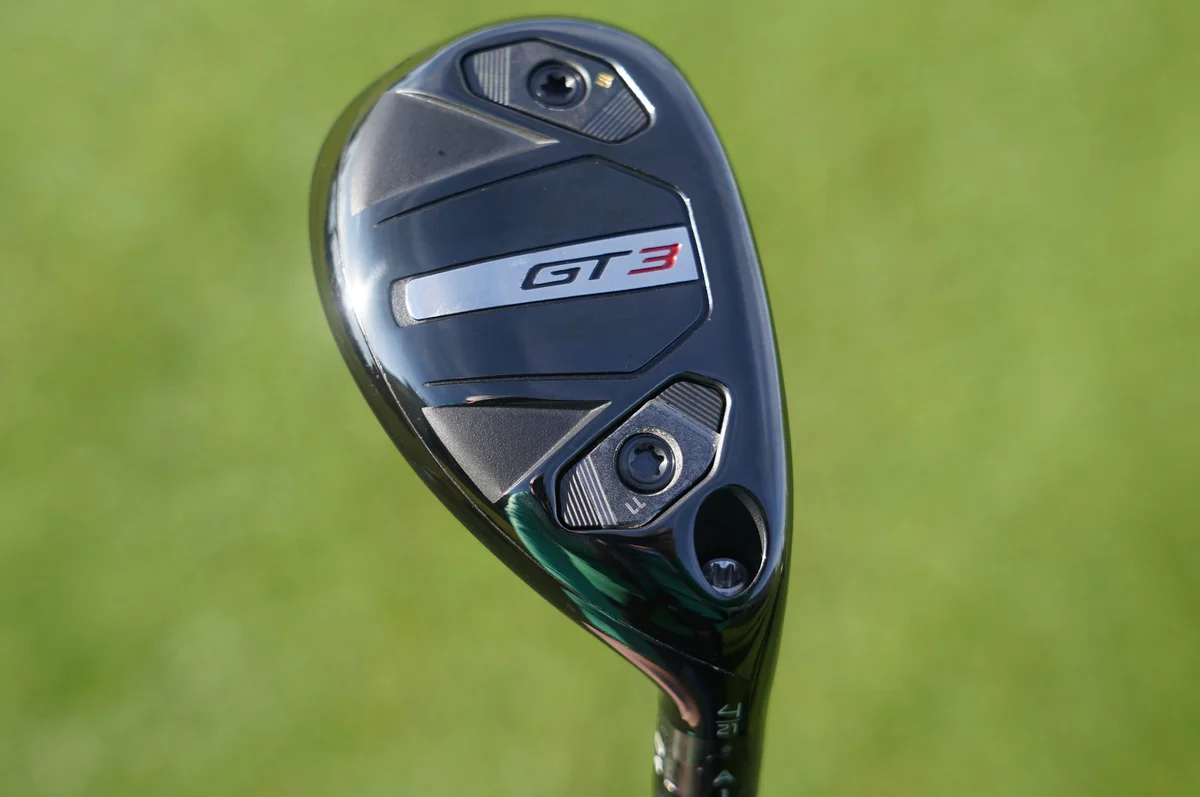
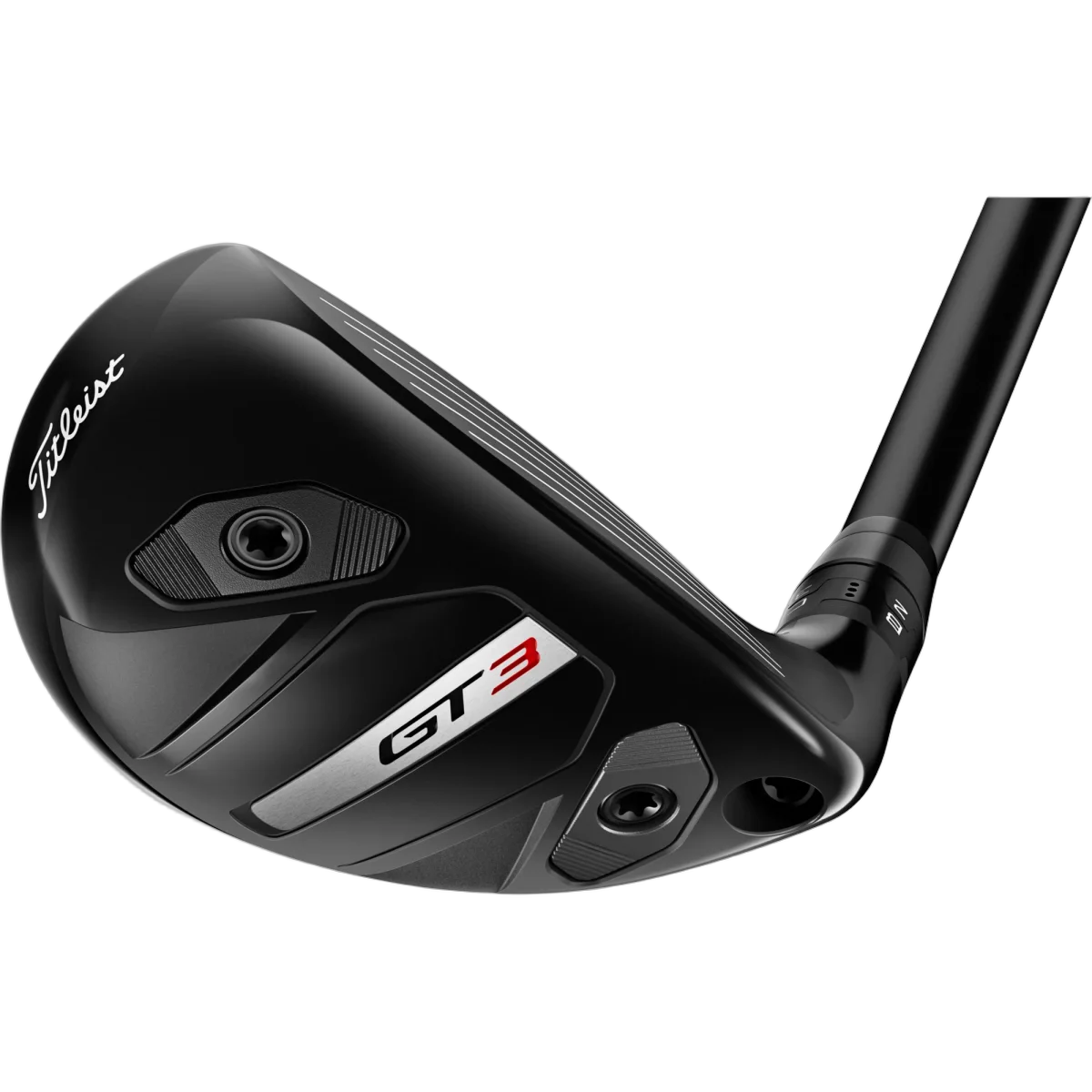
The headline feature is a new heel-toe weighting system. The stock neutral configuration places an 11-gram weight in the heel and a 5-gram weight in the toe, but swapping those weights shifts the center of gravity toward the toe for a more fade-biased flight. Combined with the SureFit adjustable hosel that offers sixteen different loft and lie combinations, the GT3 gives you serious ability to fine-tune ball flight without needing a tour van. At $330, it sits at the premium end of the hybrid market, but the build quality and adjustability justify the investment for the right player.
At Address
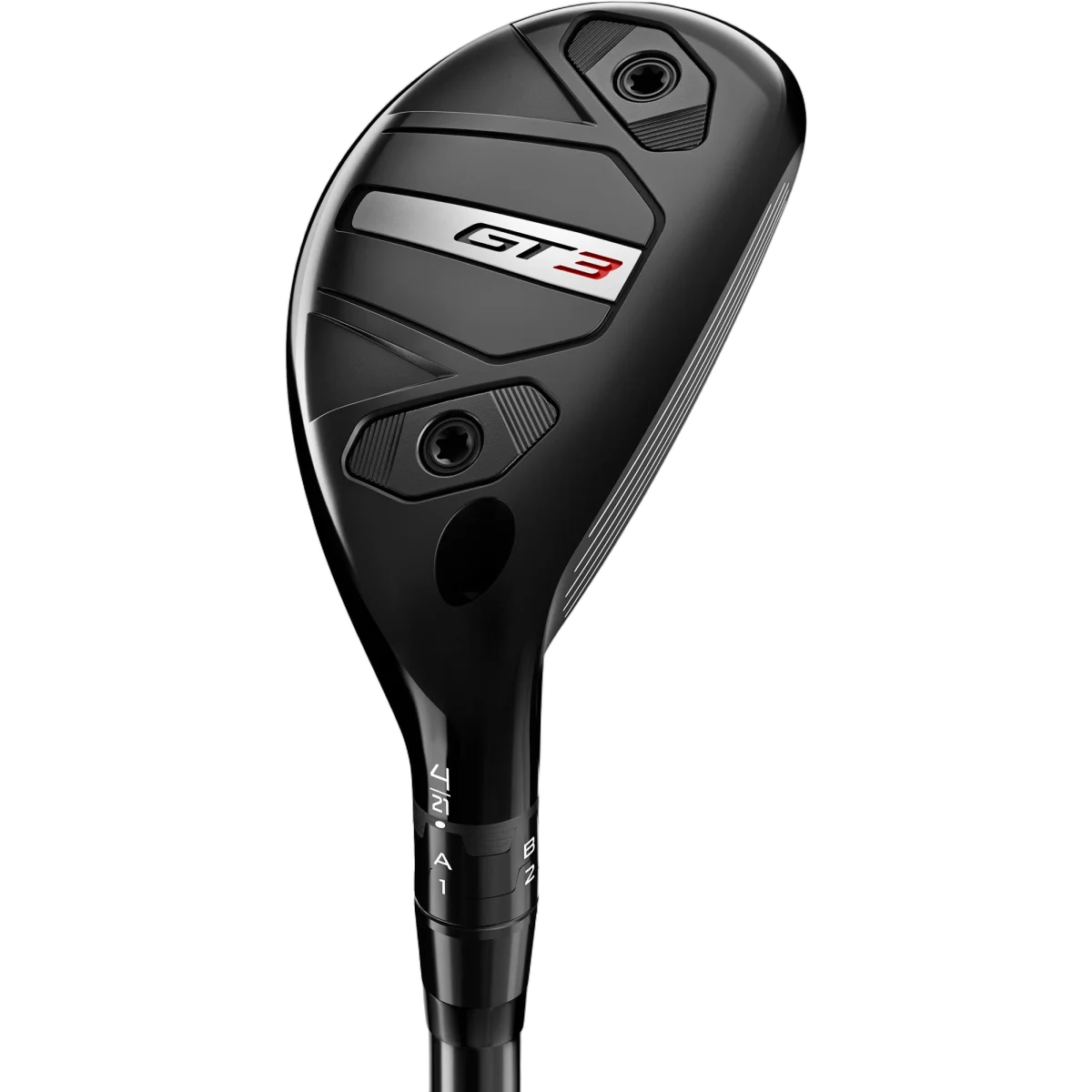
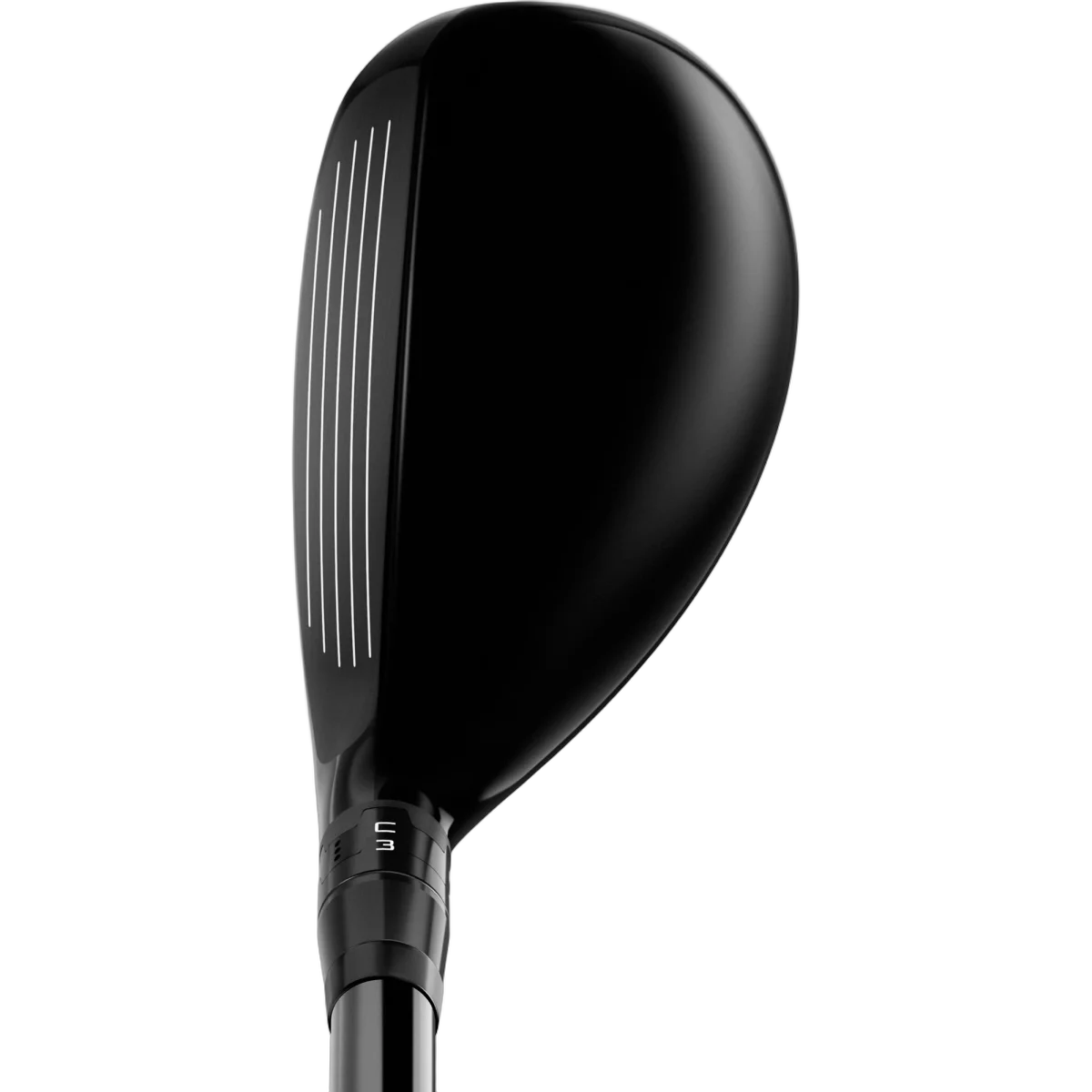
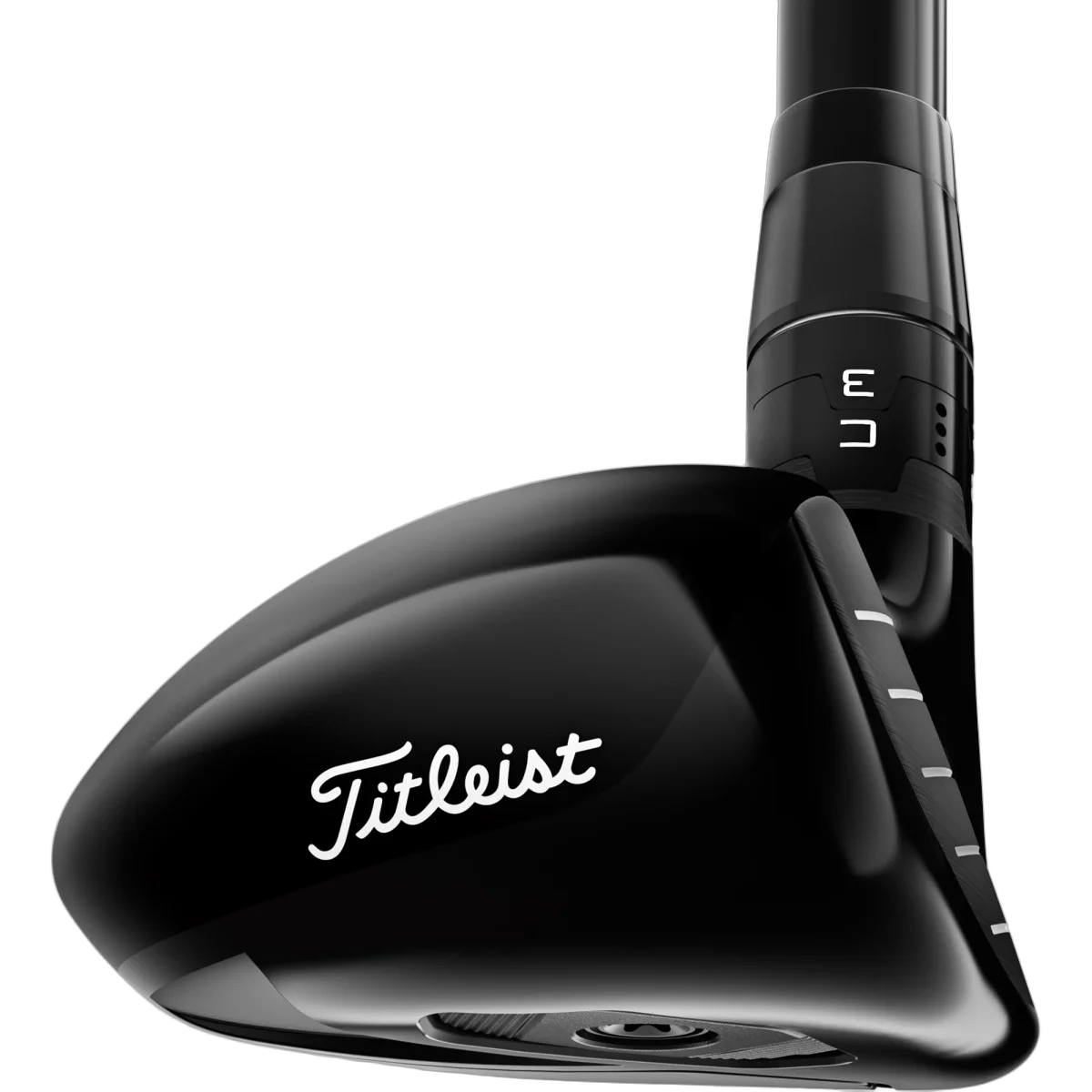
The GT3 makes a strong first impression. The gloss black crown has a compact, pear-shaped profile that immediately communicates precision and workability rather than forgiveness-at-all-costs. This is not a hybrid that tries to look like a miniature fairway wood. It is smaller, more refined, and it sits behind the ball with a purpose that will appeal to players transitioning from long irons.
Top-down address view of the glossy black compact crown shape
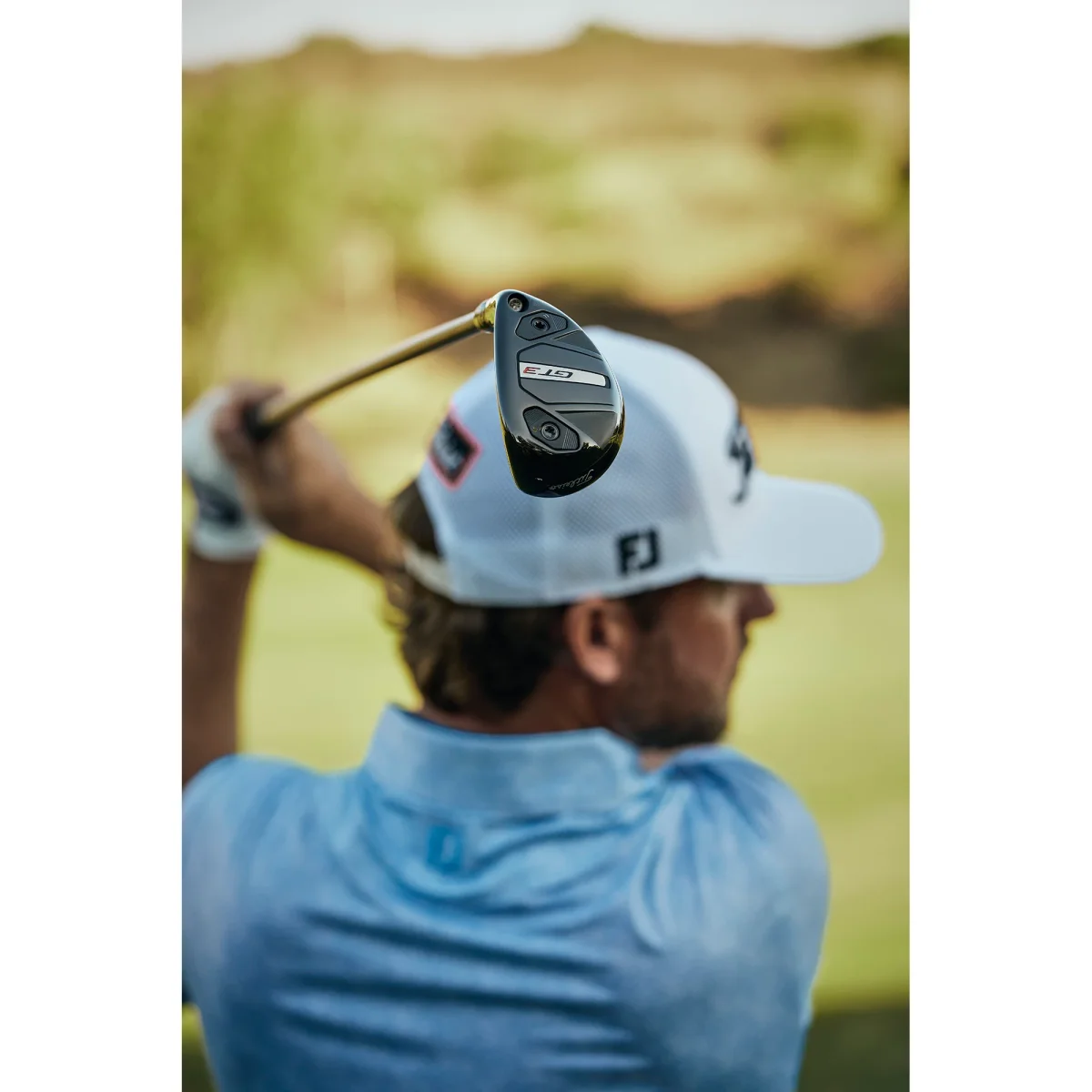
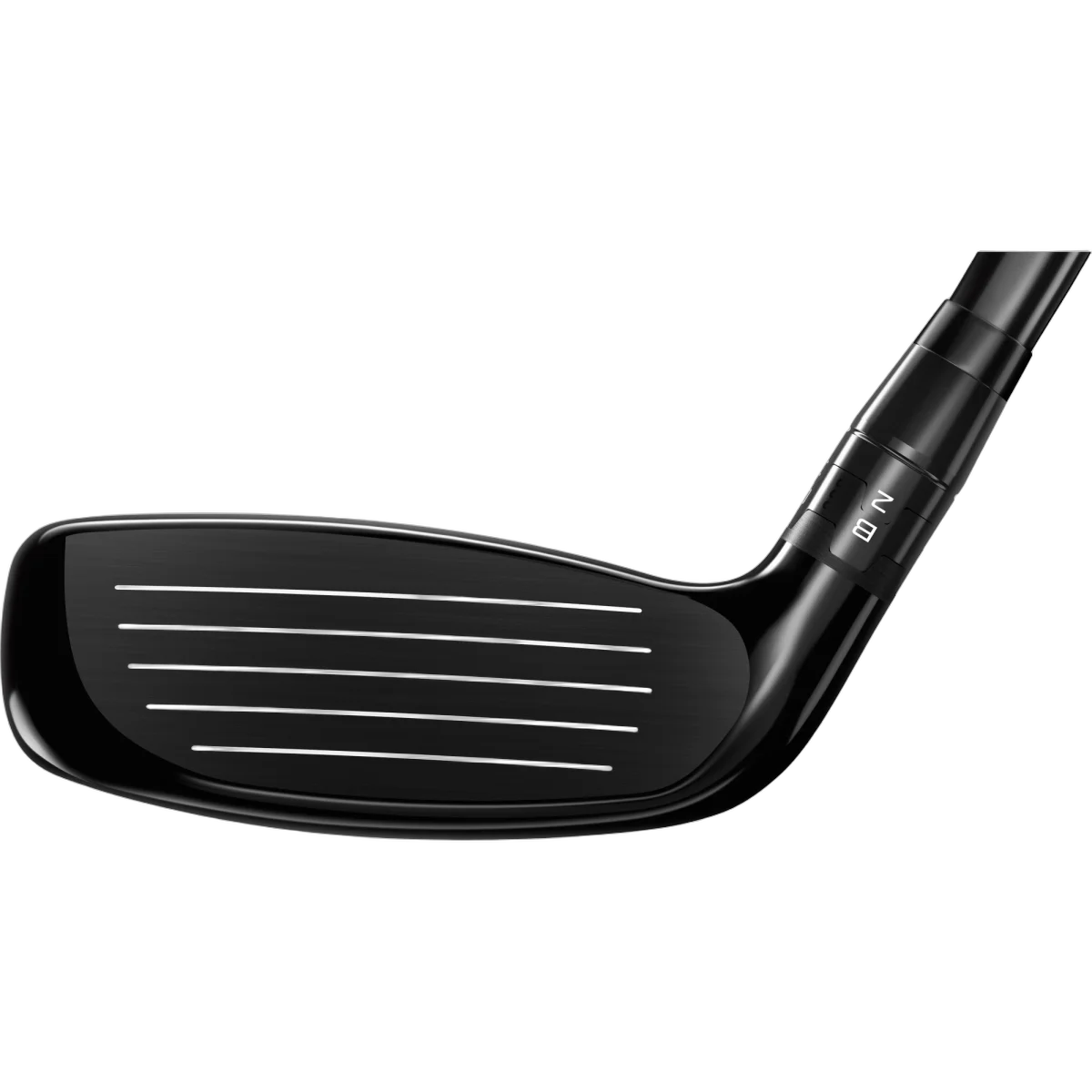
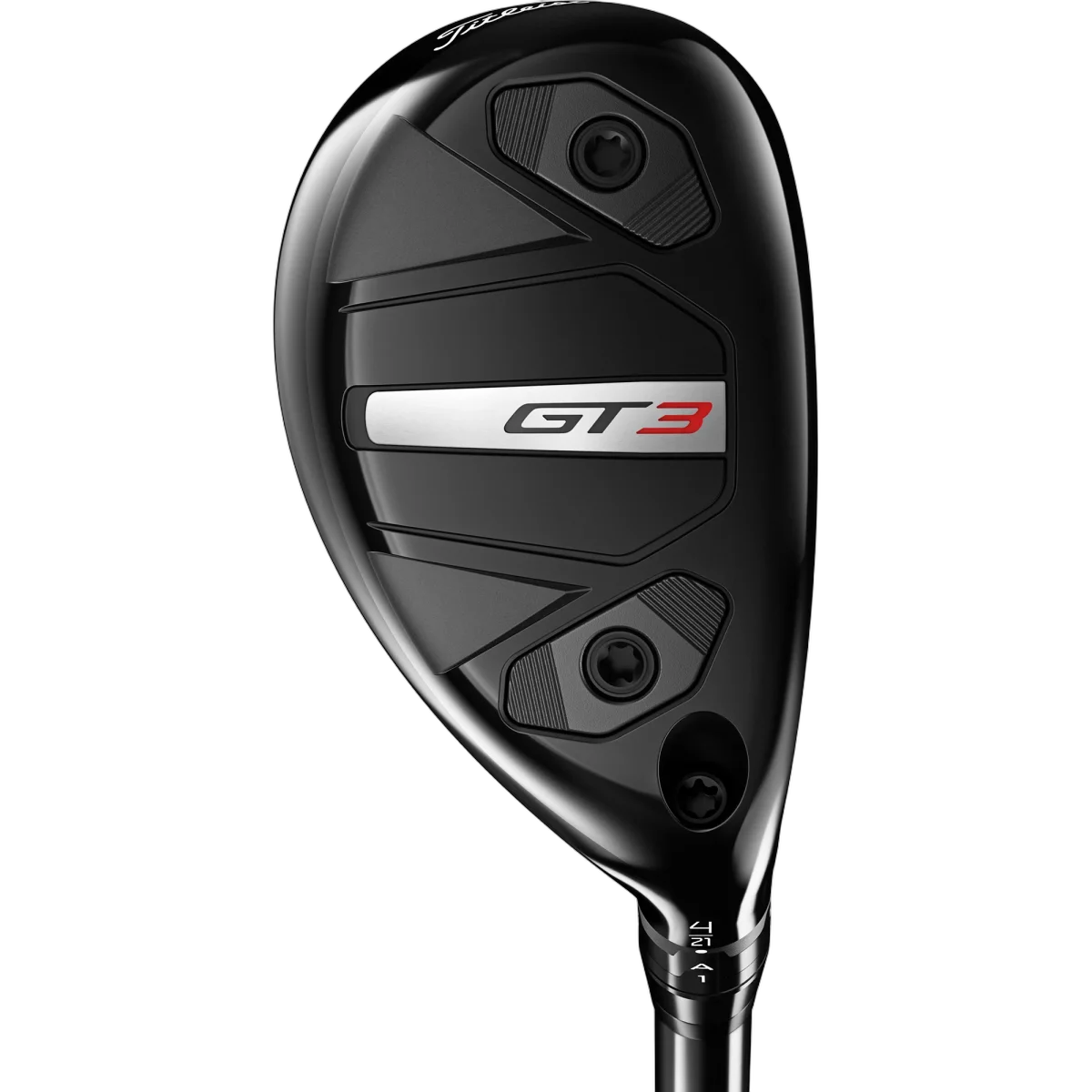
Face on, the GT3 has a slightly rectangular look with white scoring lines that contrast sharply against the black face. Titleist refined the sole contour for this generation, and the result is a club that hugs the turf more naturally than the TSR3 did. That improved sole interaction translates into confidence through the hitting zone -- the club sits flush and square without requiring any manipulation at address. For stronger players who have been skeptical about the shape and bulk of traditional hybrids, the GT3 offers a profile that feels much closer to a utility iron while retaining the performance advantages of a hybrid design.
Sound & Feel
Titleist clearly invested in the acoustic profile of the GT3, and the result is a hybrid that sounds as precise as it looks. Center strikes produce a short, muted click -- not a loud metallic crack, and not a dull thud. The sound is tuned to be short and sweet, just enough auditory feedback to confirm contact quality without any lingering resonance. On well-struck shots, there is a firm, powerful sensation through the hands that tells you the ball is coming off with authority.
What impressed me most was the subtlety of the feedback. Mishits are distinguishable from center strikes, but the difference is informational rather than jarring. A slight toe miss produces a marginally different pitch and a touch less firmness, but the feedback stays controlled. The overall character is one of restraint and refinement. This is a hybrid that sounds expensive, if that makes sense -- nothing is harsh, hollow, or tinny. Players coming from long irons will appreciate how natural the impact feel is.
Performance
Ball Speed & Distance
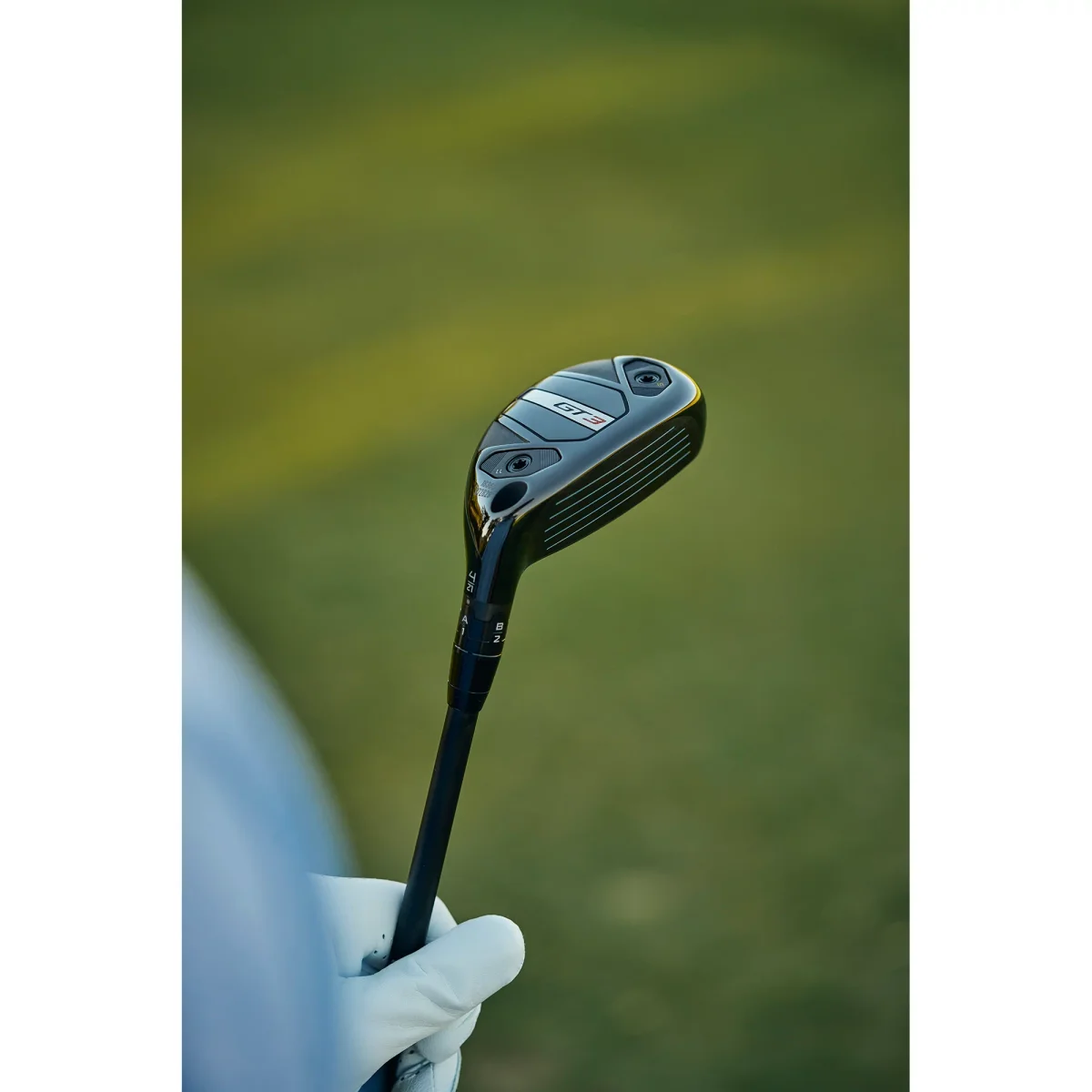
The GT3 delivers impressive ball speed for its compact size. In my testing with the 21-degree model, I averaged 231 yards of carry with a smash factor hovering around 1.49. Those are strong numbers for a hybrid of this size, and they reflect the engineering work Titleist has done to maximize face performance within a smaller footprint. The forward CG positioning contributes to the ball speed gains, pushing energy transfer into a range that competes with larger-headed hybrids.
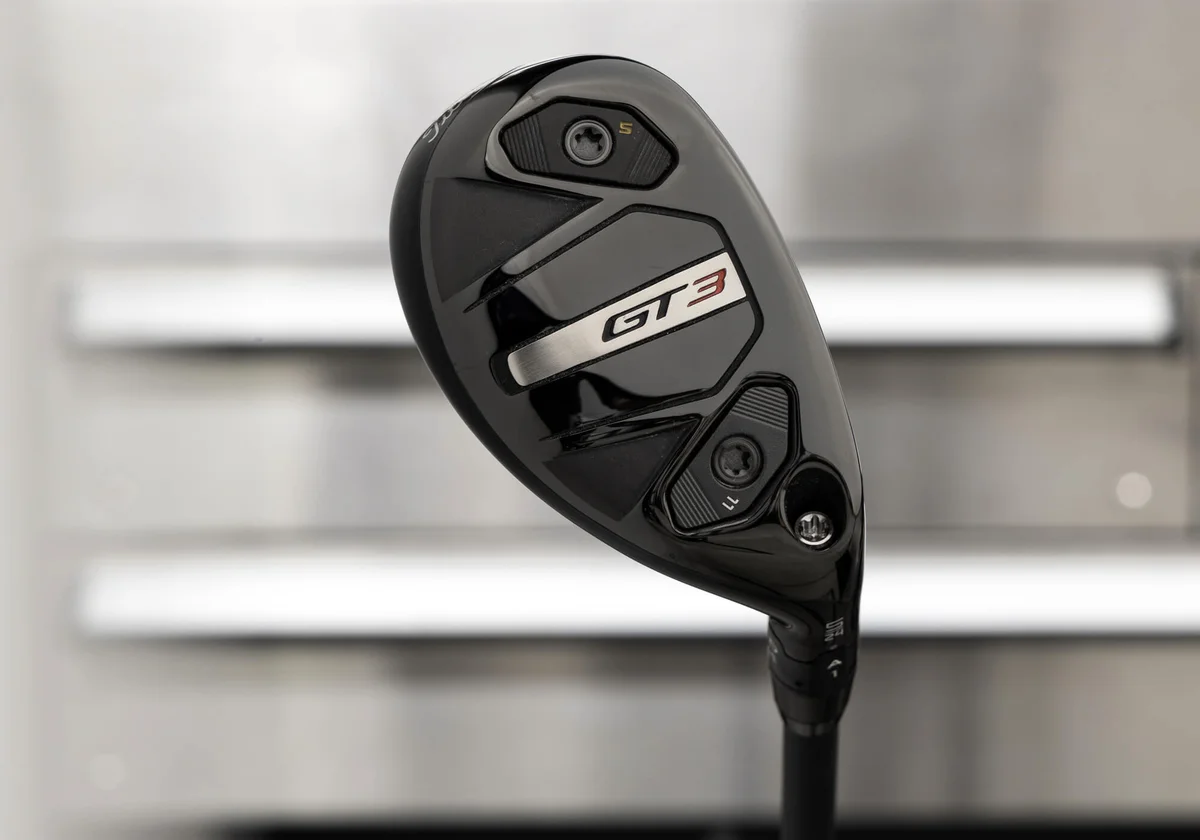
Clean face view showing grooves and compact iron-like head shape
What separates the GT3 from the TSR3 is consistency. That 15 percent MOI increase shows up in the data. Low-face strikes and heel-side misses retained significantly more ball speed than I expected from a compact head. Where the TSR3 could punish you with a noticeable distance drop on anything other than center contact, the GT3 holds its carry numbers together much more effectively across the hitting area. I saw carry distance penalties of only 8 to 12 yards on my worst strikes -- tight for a player's hybrid.
Launch & Spin
The GT3 produces a mid-height, penetrating ball flight with a controlled spin profile. This is not a high-launching rescue club. The flight sits noticeably lower and flatter than what you would get from the GT2 or most game-improvement hybrids, which makes it an excellent option off the tee on tight par fours as well as from the fairway on long approach shots.
Spin sits in the mid range -- enough to hold a green on a well-struck approach, but not so much that the ball balloons in the wind. Players who struggle with hybrids that launch too high and spin too much will find the GT3's flight profile refreshing. The stock Mitsubishi Tensei 1K Blue 65 shaft complements the head well, promoting a smooth, stable launch without adding unnecessary spin. For players with faster swing speeds who want an even more penetrating flight, the HZRDUS Black 5th Gen 80 and Tensei 1K Black 85 shaft options push the ball flight lower and reduce spin further.
Dispersion & Shot Shape
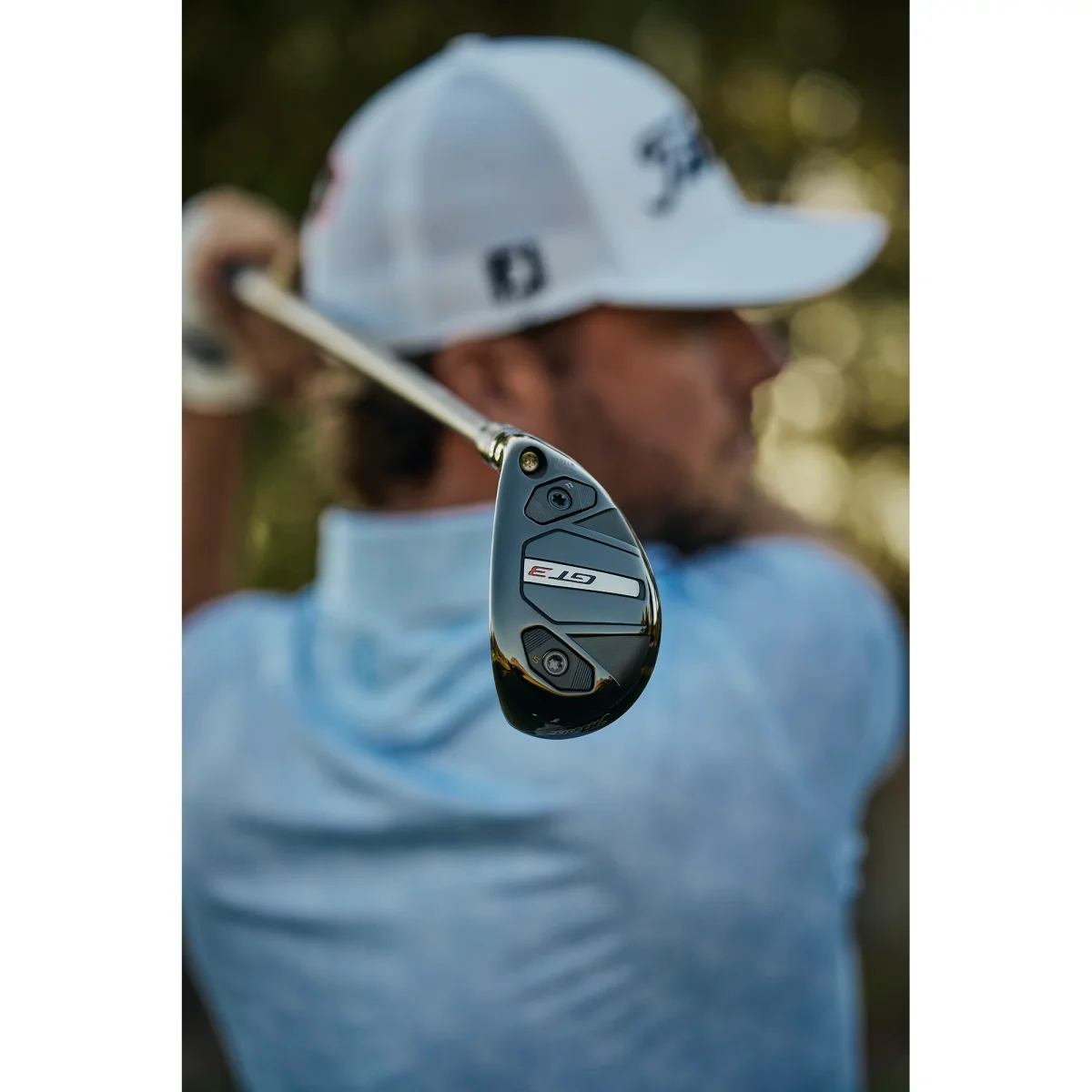
This is where the GT3 genuinely earns its stripes as a player's hybrid. The heel-toe weighting system provides meaningful shot-shape influence. In the stock neutral configuration with the 11-gram weight in the heel, the GT3 produces a slight draw tendency that most players will find manageable. Swapping the weights -- putting the 11-gram weight in the toe and the 5-gram weight in the heel -- shifts the bias toward a fade. The difference is noticeable on a launch monitor, and it was evident on the course as well.
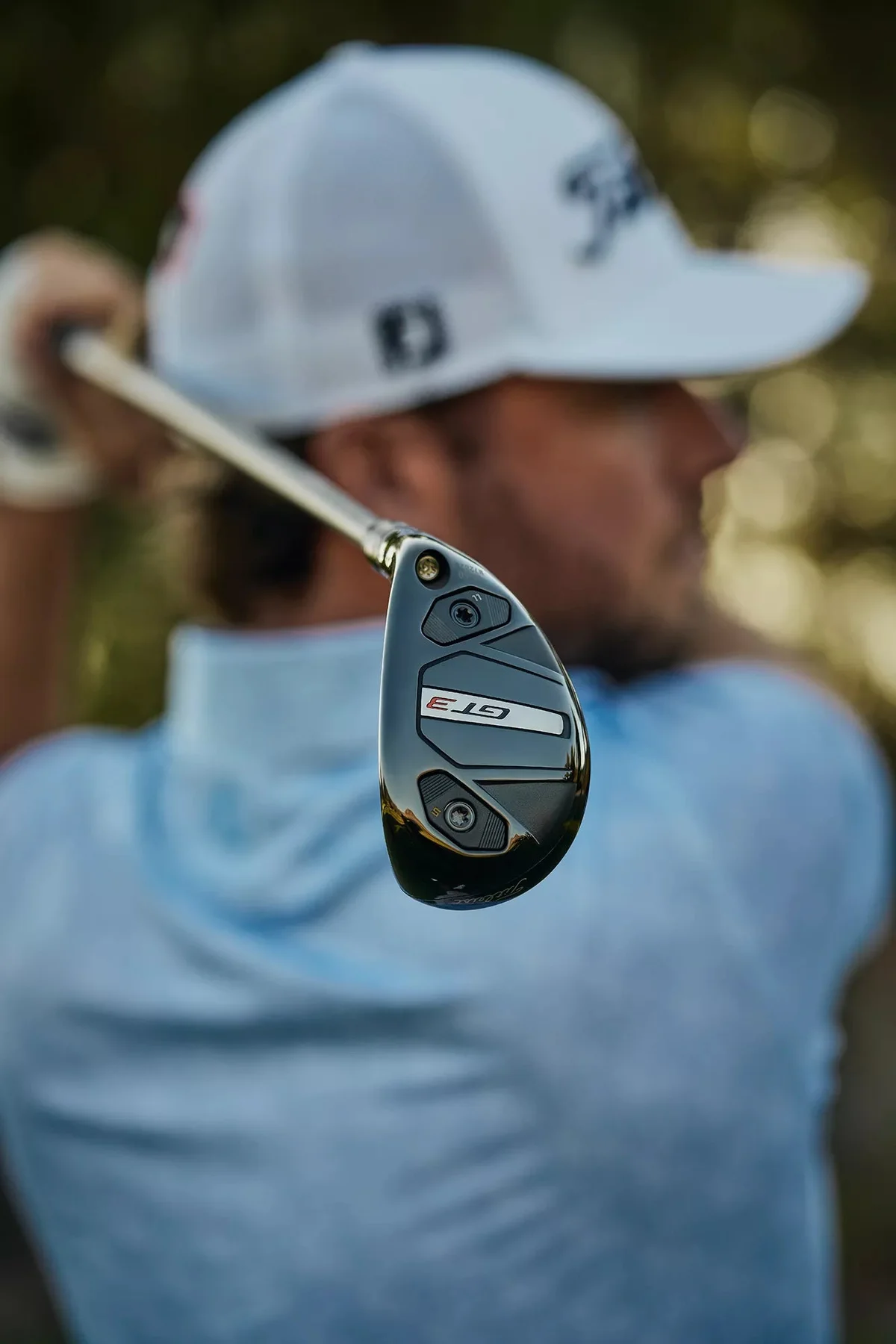
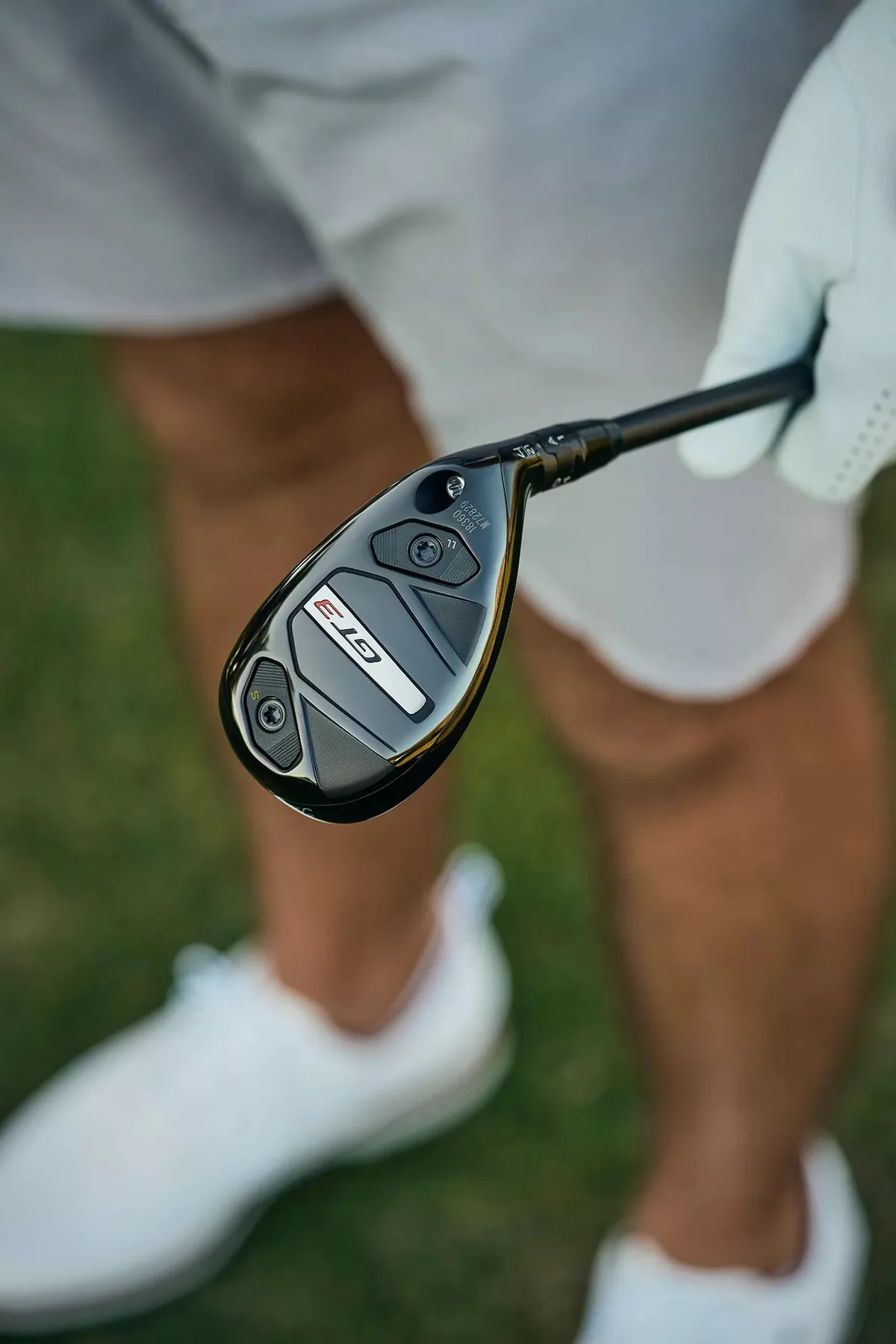
Close-up sole view showing GT3 badge and adjustable weight ports
Beyond the adjustability, the GT3 offers genuine workability. Unlike high-MOI hybrids that resist shaping, the GT3 responds to face manipulation and swing path changes. I could move the ball both directions with reasonable predictability, which is exactly what a better player wants from a hybrid. Draw shots held their shape, and fades landed softly. Dispersion was tight for the category -- my lateral spread on full swings was roughly 20 yards, which is competitive with the best player's hybrids on the market.
The sixteen-position SureFit hosel adds another layer of tunability. Being able to adjust loft and lie independently means you can optimize launch conditions and directional bias to match your specific swing without changing shafts or heads.
Verdict
The Titleist GT3 Hybrid is a thoughtfully engineered club that delivers on its promise of iron-like control with hybrid ball speed. The compact head shape, refined sole, and muted acoustics create a package that will appeal to better players who have been reluctant to put a hybrid in the bag. The 15 percent MOI improvement over the TSR3 is the most significant upgrade -- it means this smaller head is substantially more forgiving than its predecessor without growing in size, which is the kind of advancement that actually changes how the club performs on the course.
Strengths include the compact, confidence-inspiring shape at address, excellent ball speed for the head size, a penetrating mid-flight that performs well in wind, genuine shot-shaping capability, and a versatile weighting and hosel system that allows precise tuning.
Weaknesses are worth noting. The compact profile and lower launch will not suit mid-to-high handicappers who need a hybrid to replace a long iron they cannot hit. This is a club built for players who already have the swing speed and strike quality to take advantage of what it offers. Golfers who need maximum forgiveness and high launch should look at the GT2 instead. The $330 price point is also at the top end of the hybrid market, which may give value-conscious buyers pause.
The GT3 is best suited for low-to-mid handicap players -- roughly 0 to 12 -- who want a hybrid that transitions seamlessly from their irons and provides the workability to attack pins from 220 yards and beyond. If you have been waiting for a hybrid that does not feel like a compromise, the GT3 is one of the best options available.