TaylorMade M6 Fairway Wood
TaylorMade — TaylorMade M6 Fairway Wood · By Andy · Nov 17, 2025
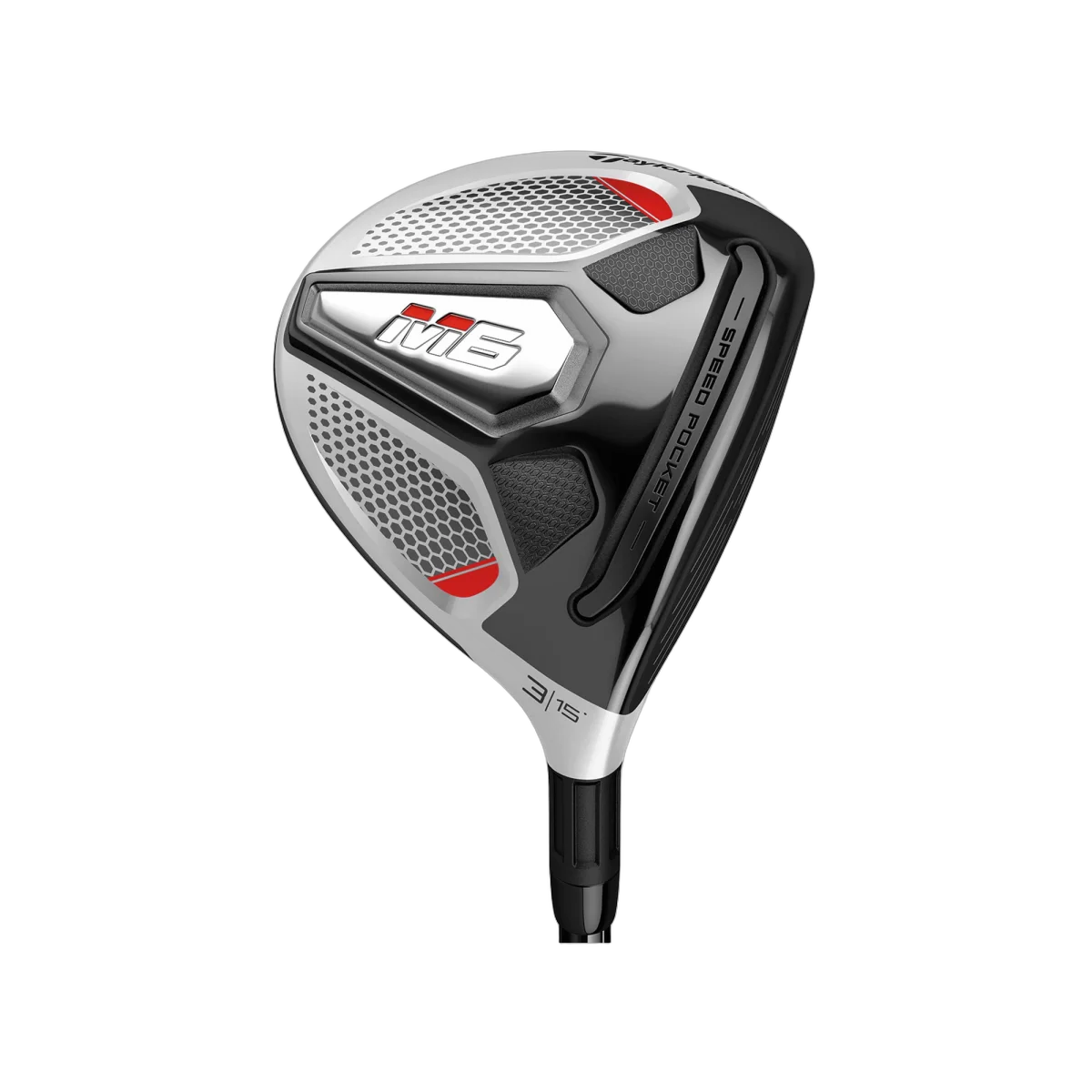
TaylorMade's Twist Face technology meets Speed Bridge construction in a fairway wood that prioritizes straight ball flight and forgiveness over adjustability.
The Big Picture
The TaylorMade M6 fairway wood arrived in early 2019 as the more forgiving, non-adjustable sibling to the M5 fairway wood. Where the M5 offered a sliding weight track for shot-shape tuning, the M6 took the opposite approach: lock everything down for maximum forgiveness and let the technology do the work. Several years on, the M6 has settled into the used and discount market as a budget-friendly fairway wood that still delivers legitimate performance, particularly for mid-to-high handicappers who need help keeping the ball in play.
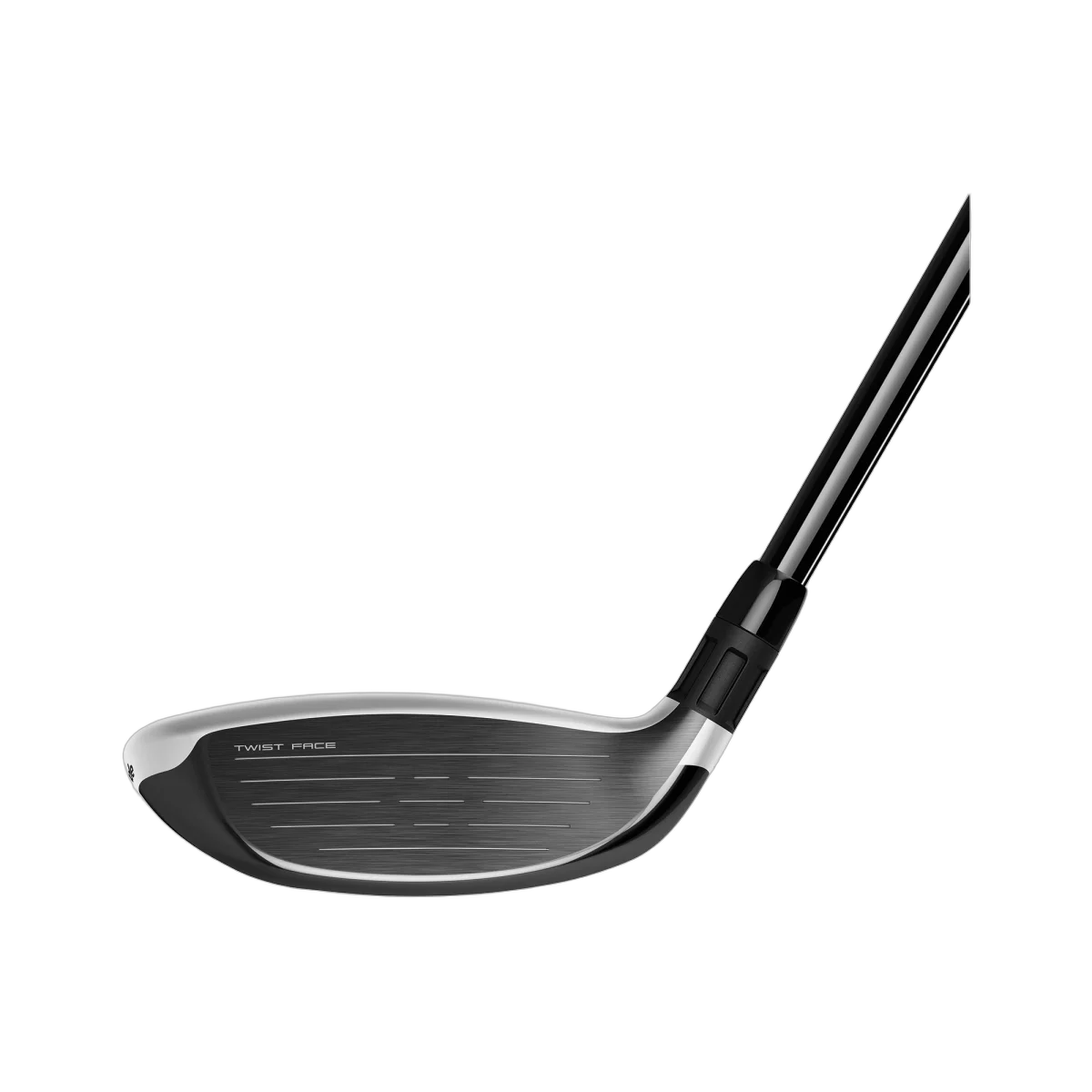
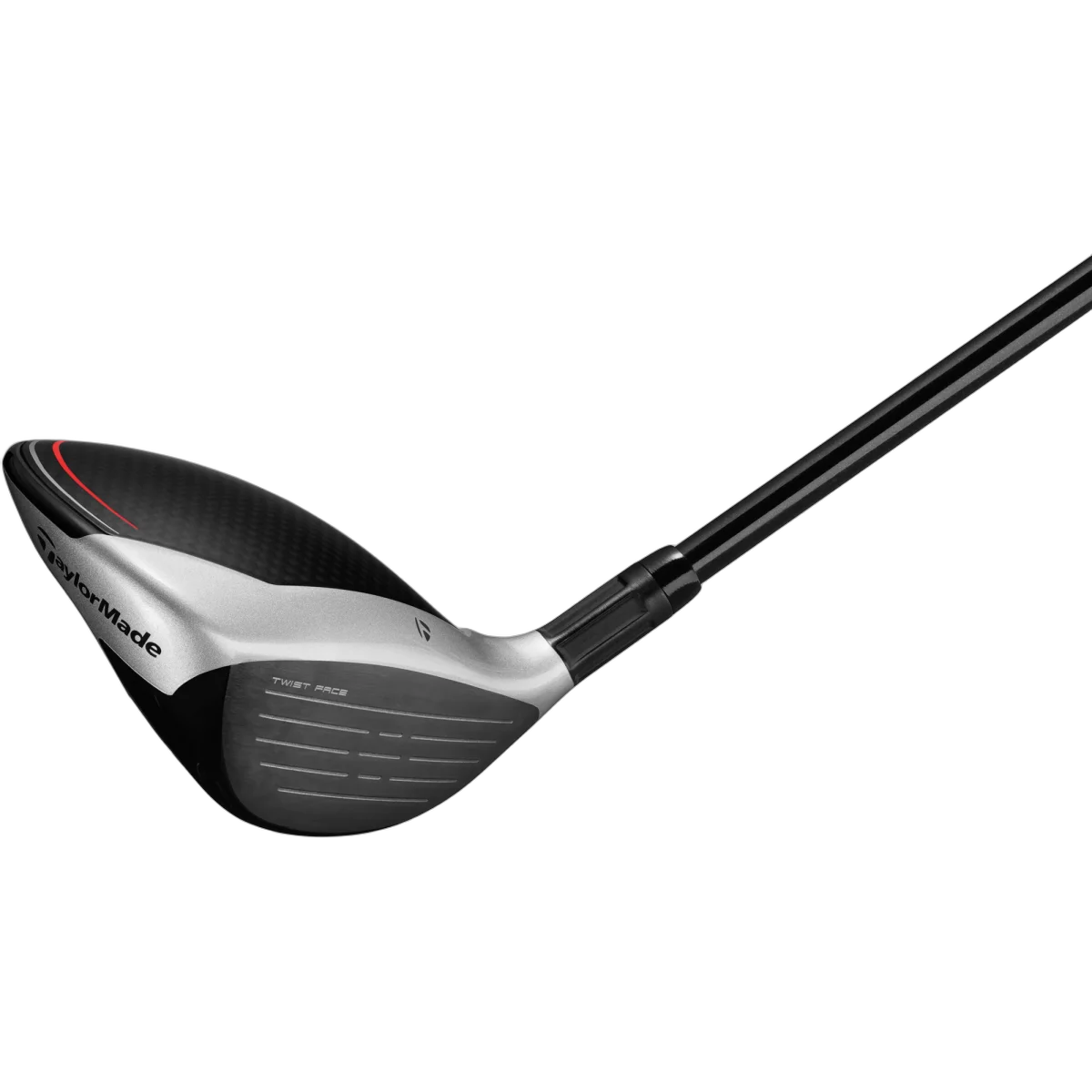
The headline technologies here are Twist Face and Speed Bridge. Twist Face is TaylorMade's corrective face curvature that applies more loft and a slightly open face angle in the high toe area and less loft with a slightly closed face angle in the low heel area. These are the two most common mishit zones on a fairway wood, and the idea is to produce straighter results on off-center contact rather than amplifying the miss. Speed Bridge is a structural beam connecting the sole and the crown behind the face, which allowed TaylorMade to make the sole more flexible without sacrificing structural integrity. The result is a thinner, hotter face that performs more consistently across a wider area.
The M6 was available in 3-wood (15 degrees), 3HL (16.5 degrees), 5-wood (18 degrees), 7-wood (21 degrees), and 9-wood (24 degrees) configurations, all with a bonded hosel -- meaning no adjustability. For golfers who want to tinker with loft and lie settings, the M5 was the answer. The M6 is for the player who wants to pull a fairway wood out of the bag and simply hit it.
At Address
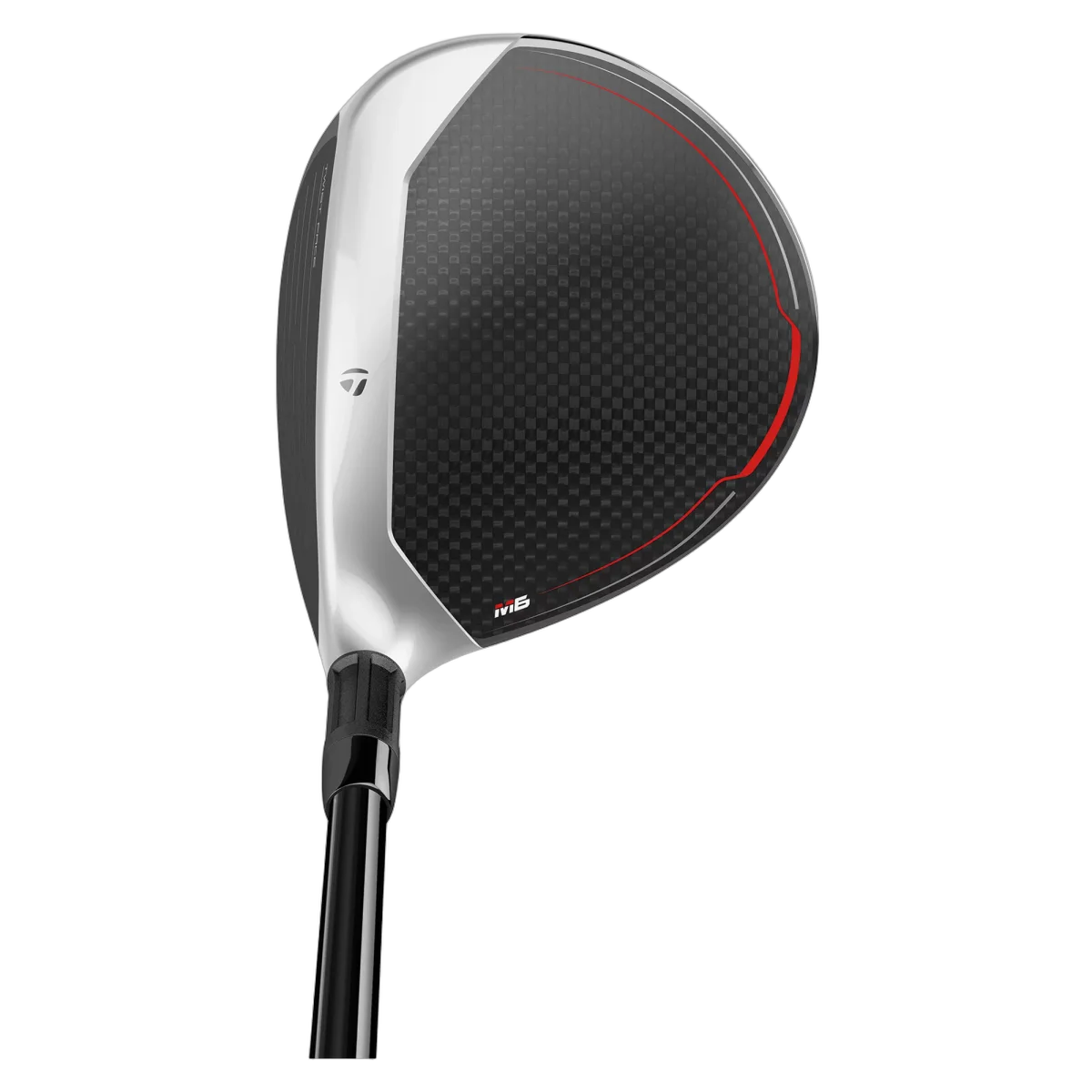
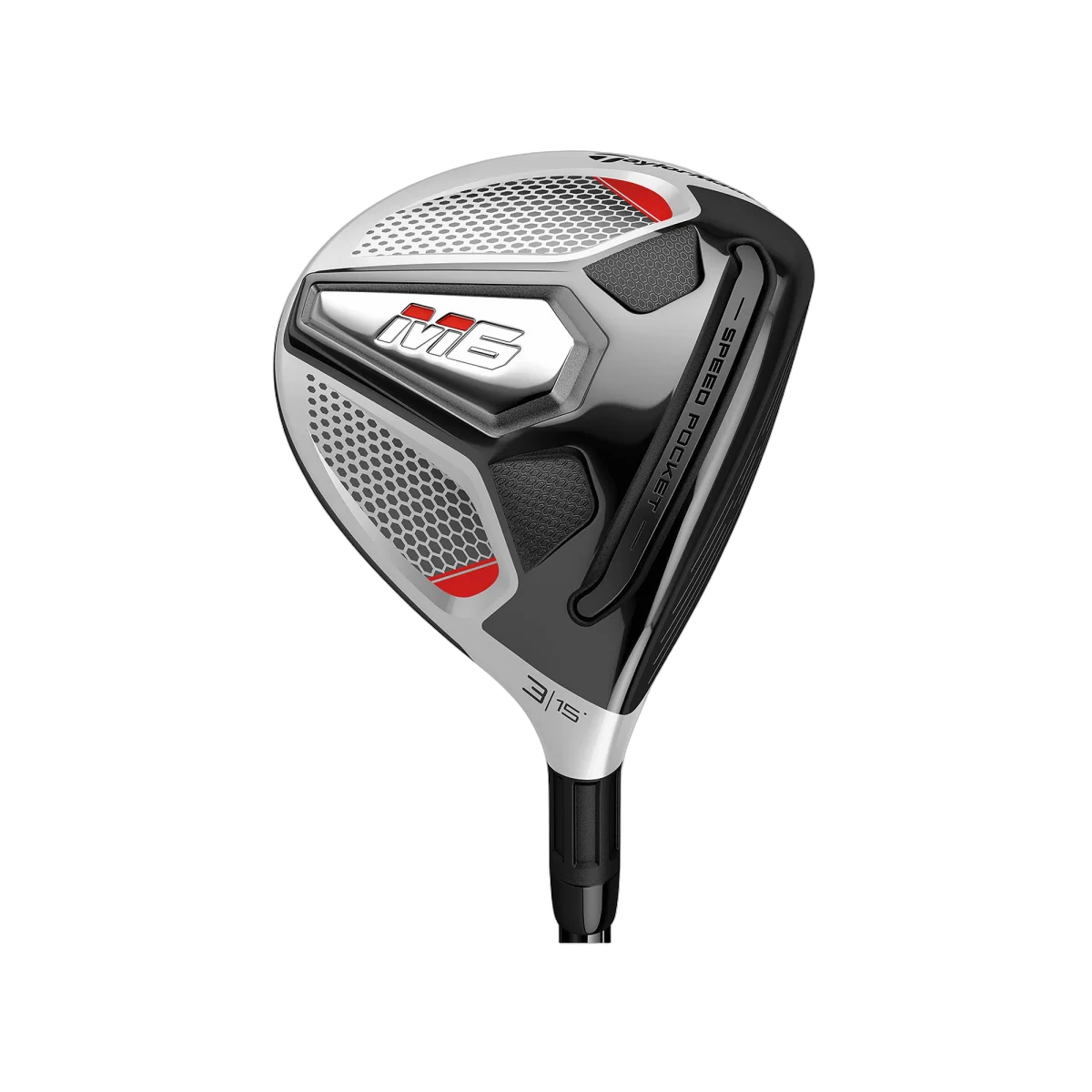
The M6 fairway wood presents a clean, modern profile behind the ball. The crown is a dark carbon fiber composite with a subtle silver TaylorMade logo, and the overall head shape is a conventional pear profile that sits square and flush at address. There is nothing unusual or distracting about it. The head is moderately sized -- large enough to inspire confidence without feeling unwieldy for shots off the deck.
Top-down view showing carbon crown with red accent line
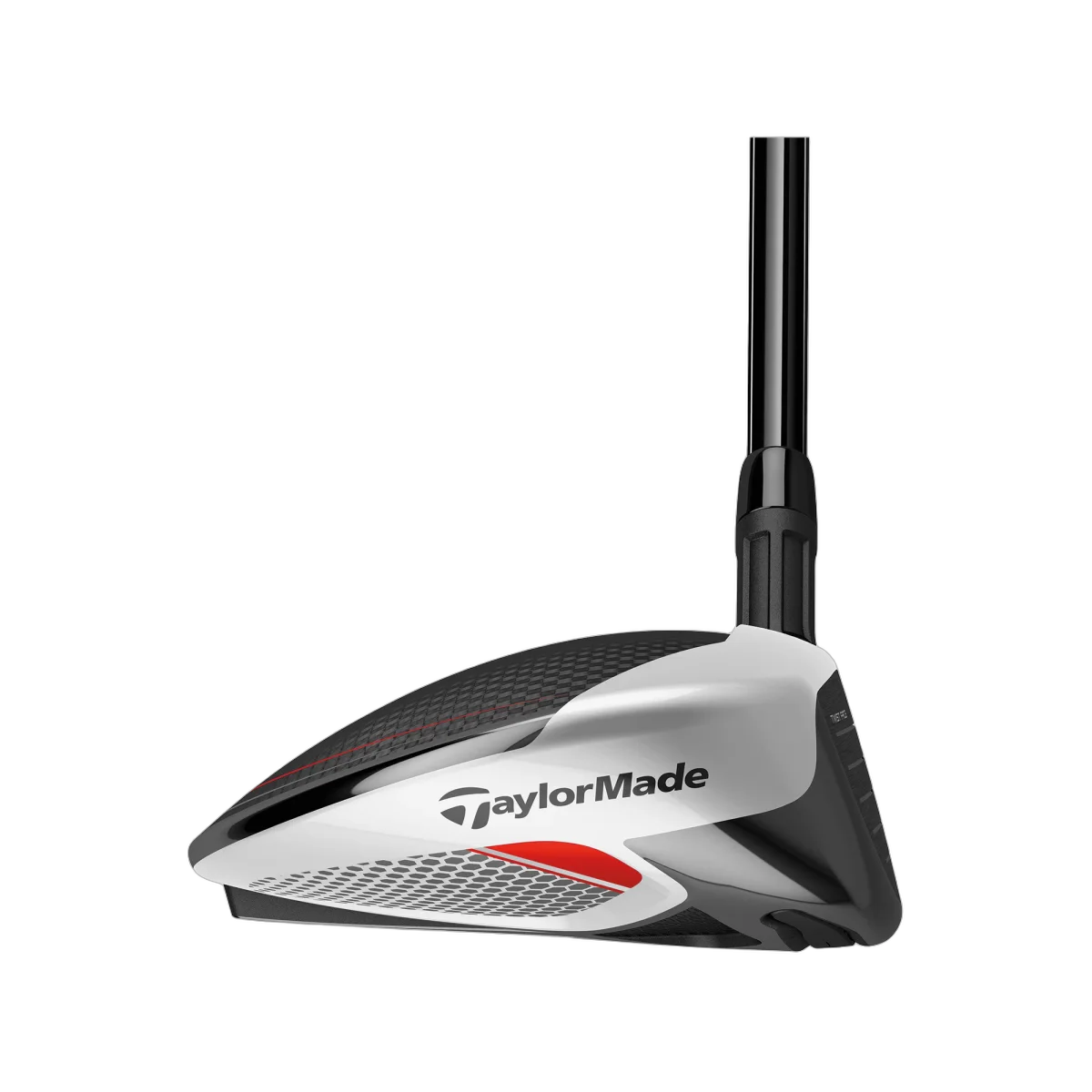
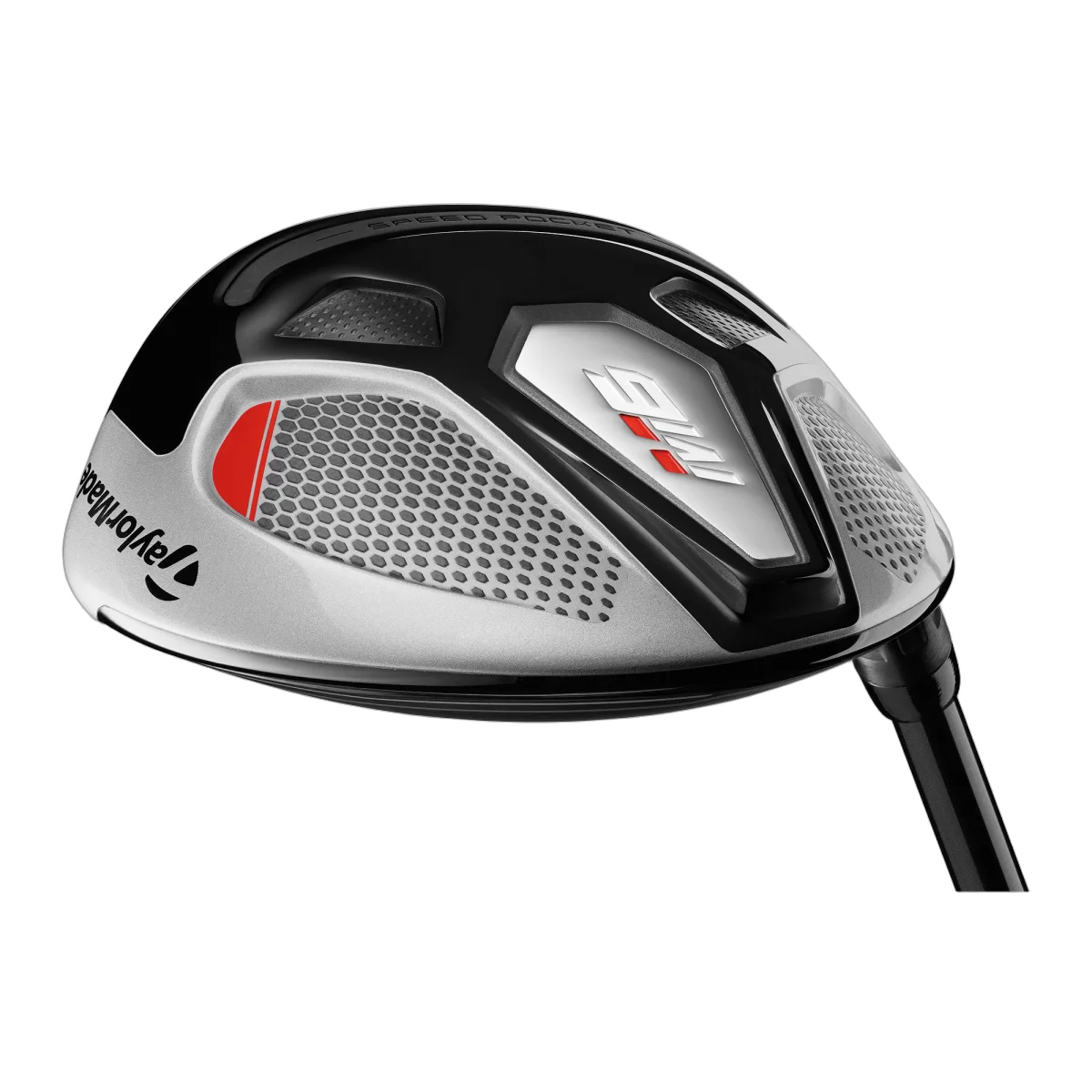
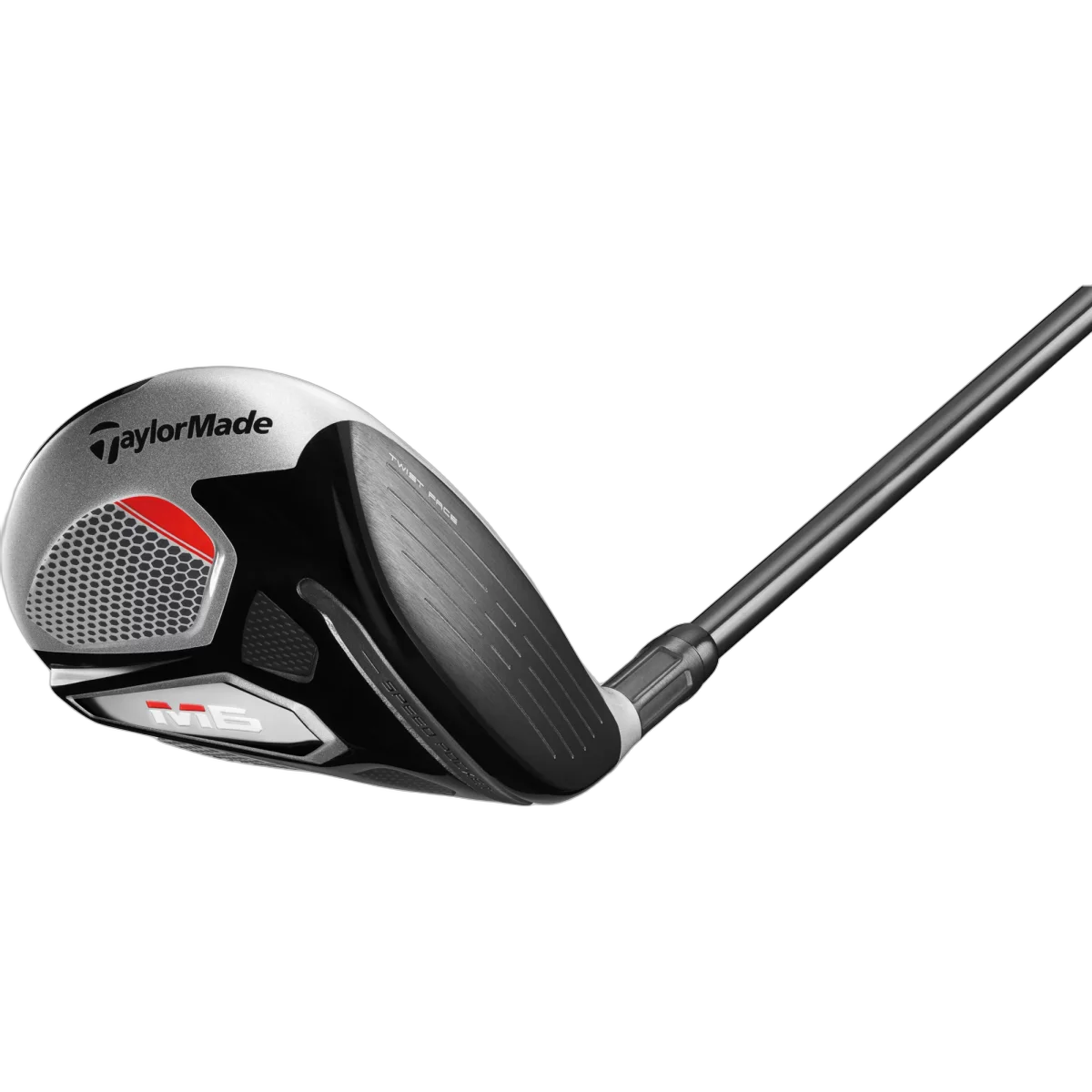
The sole features a contrasting black-and-silver colorway with blue accents that were characteristic of the M6 family. A Speed Bridge bar is visible behind the leading edge, running from the sole up to the crown, which gives the club a somewhat distinctive look from certain angles. The face has a slightly taller profile than some competitors, which is a welcome trait for golfers who are not entirely comfortable hitting fairway woods off tight lies. At address, the topline is medium-thick and the overall impression is one of straightforward, no-nonsense confidence.
Sound & Feel
The M6 fairway wood produces a moderately loud, metallic crack at impact that sits somewhere between a sharp ping and a full-bodied thud. Center strikes feel solid and energetic -- there is a sense of liveliness off the face that communicates speed. The Speed Bridge construction contributes to a face that feels hot without feeling thin or tinny, which is a balance some fairway woods in this era struggled to achieve.
On mishits, the feedback is honest but forgiving. Toe strikes lose a bit of the crispness and feel slightly muted, while heel strikes carry a faintly hollow sensation. Neither is punishing, and both still produce playable results. The overall acoustic signature is not going to win awards for refinement -- it is louder and more metallic than, say, a Callaway Rogue or a PING G410 fairway wood from the same era -- but it communicates impact feedback clearly and never sounds cheap.
Performance
Ball Speed & Distance
The M6 fairway wood is a legitimate distance performer. In my experience, the 3-wood configuration produced carry distances in the 230 to 245 yard range depending on strike quality and conditions, with total distances regularly pushing past 250 yards off the tee. The 5-wood sat comfortably in the 215 to 230 yard carry window. These numbers put the M6 solidly in the conversation with the best fairway woods from its generation and even competitive with some newer models.
Twist Face with score lines and silver-black contrast
The combination of the Speed Bridge and a thinner, faster face translates to strong ball speeds, particularly on center and slightly off-center contact. Where the M6 really earns its keep is on the mishits. Toe-side strikes that might lose 8 to 10 mph of ball speed on a less forgiving fairway wood lost closer to 4 to 6 mph with the M6. That kind of ball speed retention on imperfect contact is where average golfers gain the most real-world distance, because most of us are not flushing every fairway wood we hit.
Launch & Spin
The M6 launches on the higher side of mid for a fairway wood, which is by design. TaylorMade positioned the CG low and deep in the head to promote an easy, high launch that carries well and lands at an angle steep enough to hold greens. The 3-wood typically launched in the 12 to 14 degree range in my testing, with spin rates settling around 3,200 to 3,600 rpm. The 5-wood pushed launch angles closer to 15 to 16 degrees with spin in the 4,000 to 4,500 rpm range.
These are user-friendly numbers. The relatively generous spin rates mean the ball gets airborne easily, even off the deck on fairway lies, which is a critical trait for golfers who find lower-spinning fairway woods difficult to elevate from the turf. Players with faster swing speeds who already generate plenty of height may find the M6 spins a touch more than they would prefer off the tee, and those golfers should consider whether a lower-spinning option or a stiffer shaft pairing might better suit their game.
The stock Fujikura Atmos Orange shaft is a mid-launch, mid-spin profile that complements the head well for the target demographic. It is a competent stock shaft that does not demand an immediate upgrade the way some stock offerings do.
Dispersion & Shot Shape
This is the M6's strongest suit. Twist Face technology genuinely narrows the dispersion window, and the effect is more pronounced in a fairway wood than it is in a driver simply because fairway wood mishits tend to be more dramatic. The corrective face curvature reduces the sideways deviation on high-toe and low-heel strikes, which are exactly the mishits that produce the ugly hooks and slices that send fairway wood shots into trouble.
Sole view with M6 badge Speed Pocket and honeycomb design
In my rounds with the M6, I found the miss pattern to be remarkably tight for a non-adjustable fairway wood. Off the tee, it produced a slight draw bias with a dispersion that rarely strayed more than 15 to 20 yards offline in either direction. Off the deck, the results were similarly consistent, though naturally with a bit more variability due to the added difficulty of turf contact.
The trade-off for this built-in forgiveness is limited workability. The M6 does not want to be shaped. It wants to go relatively straight with a mild draw tendency, and fighting against that tendency takes deliberate effort. Better players who want to flight the ball low, hit controlled fades, or otherwise manipulate trajectory will find the M6 somewhat stubborn. But for the golfer who just wants to aim and swing, that stubbornness is a feature, not a bug.
Verdict
The TaylorMade M6 fairway wood is a forgiving, distance-producing club that does exactly what it was designed to do: help average golfers hit straighter, more consistent fairway wood shots. Twist Face narrows the dispersion on common mishits, Speed Bridge and the thin face generate strong ball speeds, and the easy launch profile makes it accessible from both the tee and the fairway.
Strengths: excellent forgiveness on off-center strikes, strong ball speed retention across the face, easy-to-launch profile that works well from the turf, tight dispersion pattern that keeps the ball in play, and a competitive price point in the current market.
Weaknesses: no adjustability for loft or lie angle, limited shot-shaping capability for better players, slightly higher spin rates that may not suit faster swing speeds seeking a penetrating flight, and a sound profile that some golfers will find a bit loud and metallic.
The M6 is best suited for mid-to-high handicap golfers who want a reliable fairway wood that minimizes the damage on bad swings without sacrificing distance on good ones. At its current discounted price point, it represents solid value -- you are getting technology that was genuinely innovative at launch and that still holds up well against newer, more expensive alternatives. If you do not need adjustability and you prioritize forgiveness over workability, the M6 is a smart, no-frills choice.