PXG Lightning Fairway Wood
PXG — PXG Lightning Fairway Wood · By Troy · Jan 14, 2026
PXG's Lightning fairway wood delivers remarkable shot-to-shot consistency and an absurd amount of adjustability -- but the $379 price tag and limited source data keep it from being a slam dunk.
The Big Picture
PXG has built its reputation on premium, technology-forward golf equipment, and the Lightning fairway wood is a clear continuation of that philosophy. Replacing the 0311 Black Ops fairway wood line, the Lightning brings a redesigned face, a full carbon fiber crown, and one of the most comprehensive adjustability systems available in any fairway wood on the market.
The headline technology here is what PXG calls Progressive Face Geometry -- a loft-specific approach to bulge and roll curvature. In the 3-wood at 15 degrees, the face features more corrective curvature to help keep mishits on line, while the higher-lofted models (all the way up to the 27-degree 11-wood) dial that correction back since those lofts naturally produce less sidespin. The face itself is 12.5 percent thinner around the perimeter compared to the Black Ops, which PXG says creates about 4 percent more face deformation at impact. In practical terms, that translates to roughly 1 mph of additional ball speed and about 1.5 yards of extra carry.
The Lightning lineup is extensive. Six standard models span from 15 to 27 degrees, and two Lightning Tour models (3-wood and 5-wood) offer a more compact shape with a penetrating trajectory for stronger players. All models start at $379.
At Address
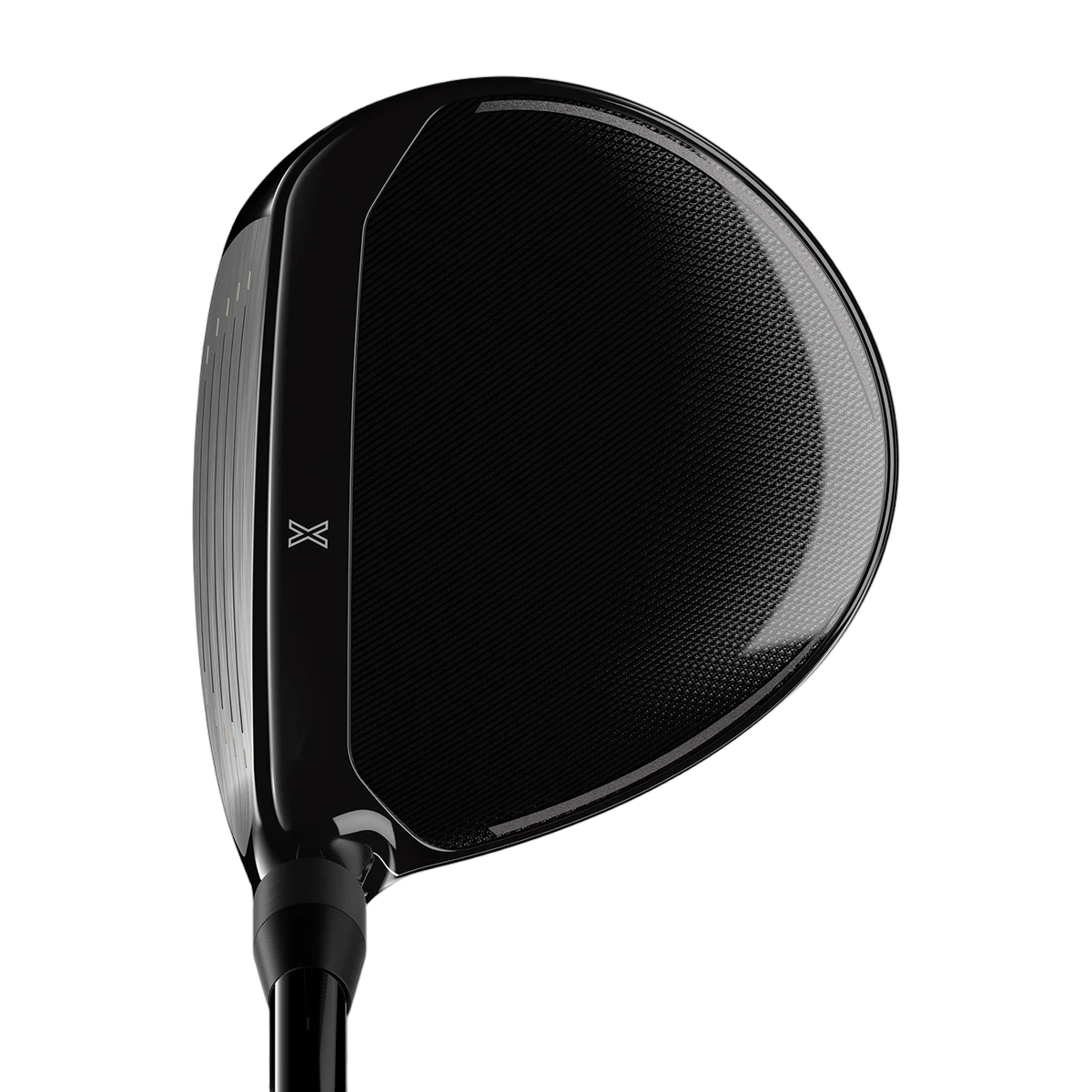
Setting the Lightning down behind the ball, the first thing you notice is the carbon fiber crown -- shiny, black, and clean, with a white "X" alignment aid that is simple and functional without being distracting. The overall profile is about average for a modern fairway wood, with a square face and shallow body that sits low to the ground. The shape is not perfectly symmetrical, but it looks balanced and purposeful.
Top-down address view of black fairway wood crown with PXG logo
This is a confidence-inspiring look. The square toe and low profile create a wide footprint that makes the club feel like it is ready to sweep the ball off any lie. PXG has leaned into a stealthy, all-black aesthetic here, and the high-strength carbon fiber gives it a premium, modern appearance without any flashy graphics cluttering the crown.
Sound & Feel
The Lightning produces a mid-low pitched pop at impact -- punchy on center strikes, with volume that sits below average for the category. It is not a loud fairway wood by any stretch, but there is enough acoustic variation between flush hits and mishits that you get genuine feedback through sound alone.
The feel leans toward solid rather than explosive. Center strikes feel fast and powerful -- there is a satisfying density to the impact that reminds you this is a substantial, well-engineered clubhead. Off-center hits retain that solid sensation to a surprising degree, which is a real confidence booster when you are trying to advance the ball 230-plus yards from the fairway. The overall impression is more sledgehammer than paper-thin face, which I found reassuring rather than limiting.
Performance
Ball Speed & Distance
The thinner face perimeter is the engine behind the Lightning's ball speed gains. On solid strikes, I was seeing ball speeds around 157 mph with the 3-wood, which represents a marginal but real gain of about 1 mph over the previous-generation Black Ops. That does not sound like a lot on paper, but fairway wood technology is mature enough that 1 mph is a meaningful step forward. The additional face deformation means the ball is staying on the face slightly longer and compressing more efficiently, and the result is about a yard and a half of extra carry.
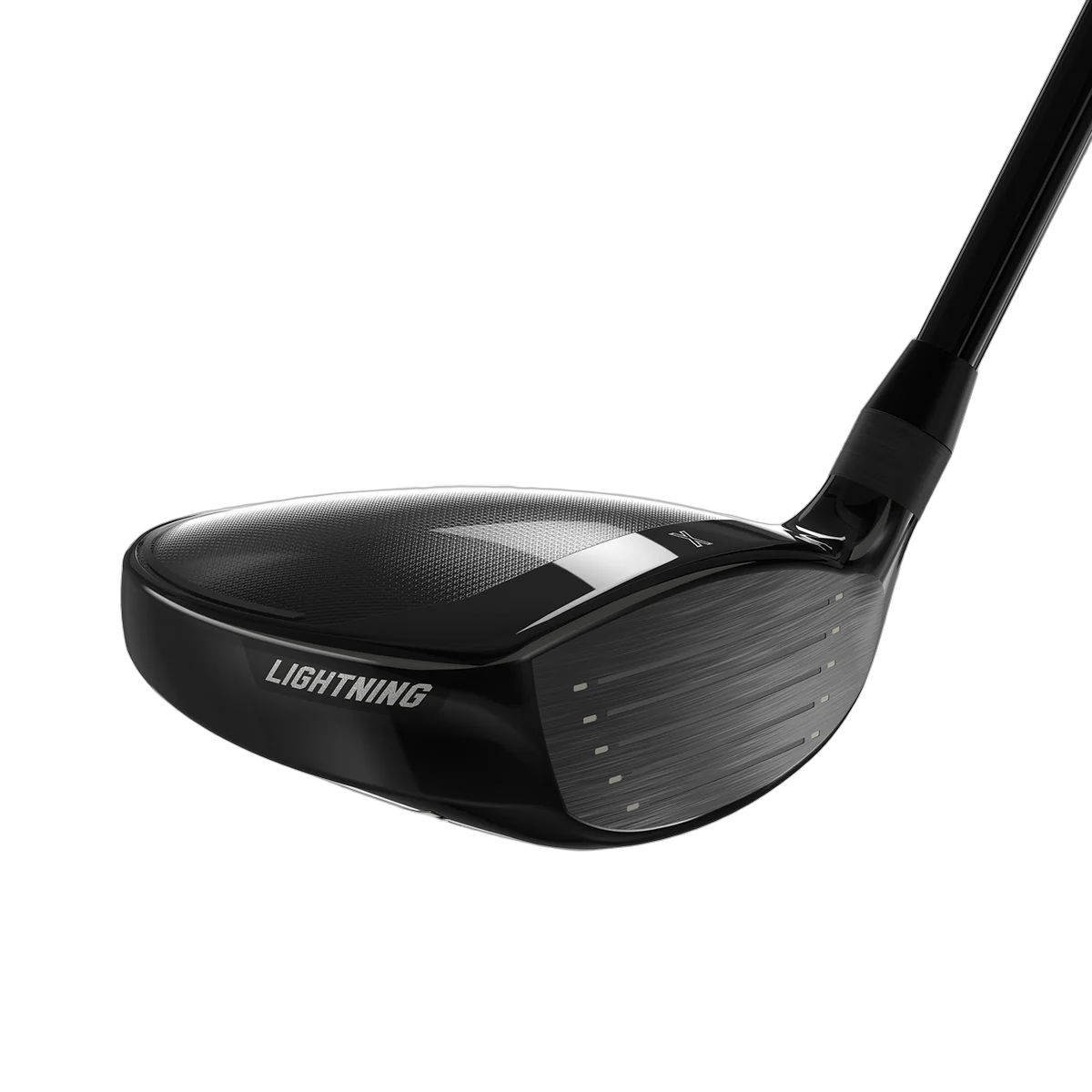
Open face view showing Lightning branding and milled face grooves
Where the Lightning really impressed me was consistency. Over a series of 13 measured shots on a Foresight GC3 launch monitor, the front-to-back dispersion was less than two yards. That kind of distance consistency is exceptional for a fairway wood and speaks directly to how well the face performs across its entire hitting area, not just the sweet spot.
Launch & Spin
The Lightning launches about a degree higher than the Black Ops, which makes it easier to get the ball airborne from tight lies without needing to manufacture extra loft through swing mechanics. The carbon fiber crown plays a role here -- by reducing mass up top, PXG has been able to push the center of gravity lower and further back, which promotes a higher, more effortless launch.
Spin rates settled in just above 3,000 rpm from the deck in my testing, which is a good window for maximizing carry without the ball ballooning in windy conditions. Off a tee, spin dropped slightly below that mark, producing a more penetrating flight that rolled out well. Moving the heavier weight to the back port added roughly 200 rpm of spin and a touch more height -- useful for golfers who want a higher peak and softer landing on longer approach shots into firm greens.
Dispersion & Shot Shape
The combination of Progressive Face Geometry and perimeter weighting makes the Lightning one of the more forgiving fairway woods I have hit. Mishits that caught the heel or toe still tracked reasonably well toward the target, and the distance penalties on off-center strikes were modest. The square face design allows PXG to keep the CG low while maximizing MOI through perimeter weighting, which is a smart engineering trade-off that pays dividends on imperfect swings.
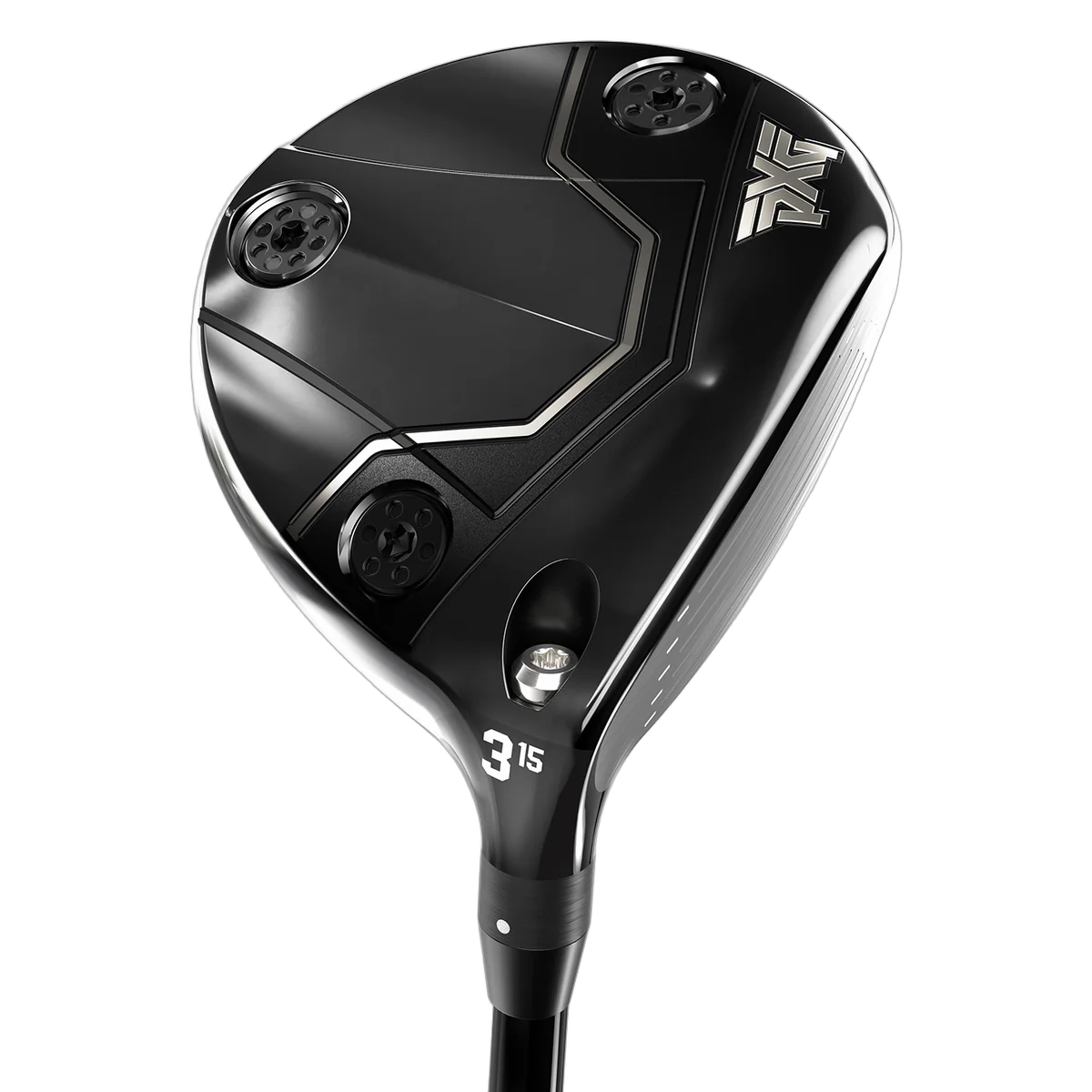
The adjustability system deserves special mention. Three weight ports -- one in the back and one each at the heel and toe -- accept weights ranging from 2.5 grams to 20 grams. Combined with the eight-way adjustable hosel that controls loft, lie, and face angle, you have an enormous amount of tunability at your disposal. Want to set up a draw bias? Move weight to the heel port. Need a fade-friendly configuration? Shift it to the toe. This is genuinely one of the most adjustable fairway woods on the market, and for golfers who work with a fitter, the possibilities are extensive.
Verdict
The PXG Lightning fairway wood is a well-engineered club that prioritizes consistency and adjustability above all else. The distance gains over the previous generation are modest -- about 1.5 yards of carry -- but the shot-to-shot consistency is genuinely impressive, with sub-two-yard dispersion in testing that puts it among the tightest-grouping fairway woods available. The sound and feel are solid and satisfying, the carbon fiber crown looks premium, and the three-port weight system combined with the adjustable hosel gives you more fitting options than almost any competitor.
Strengths: exceptional distance consistency, extensive adjustability through weight ports and adjustable hosel, solid and confidence-inspiring feel, wide model range from 15 to 27 degrees, premium build quality and appearance.
Weaknesses: the $379 price point puts it in premium territory, the distance gains over the previous generation are incremental rather than transformative, and the below-average sound volume may not appeal to golfers who prefer a louder, more explosive impact. The overall sentiment from the golf community has been mixed -- some players love the consistency, while others feel the performance gains do not justify upgrading from a current-generation fairway wood.
The Lightning is best suited for mid-handicap golfers who value consistency and want a fairway wood they can dial in through fitting. Better players may prefer the Lightning Tour for its more compact shape and penetrating trajectory. If you are in the market for a premium fairway wood and plan to take advantage of the adjustability system with a proper fitting, the Lightning is a strong contender.