Jones Rider Golf Bag
Jones — Jones Rider Golf Bag · By Troy · Feb 13, 2026
A nostalgic throwback that strips golf down to the essentials -- for better and for worse.
The Big Picture
The Jones Rider is not trying to compete with the feature-loaded stand bags and cart bags that dominate the market in 2025. It is doing something entirely different. Originally cobbled together by a part-time golfer and cab driver in Portland, Oregon in 1971, the Jones bag became the face of amateur, high school, and collegiate golf for generations. After fading from view as modern bags loaded up with stand mechanisms, dual straps, and dozens of pockets, Jones brought the Rider back with updated materials and the same minimalist philosophy that made the original iconic.
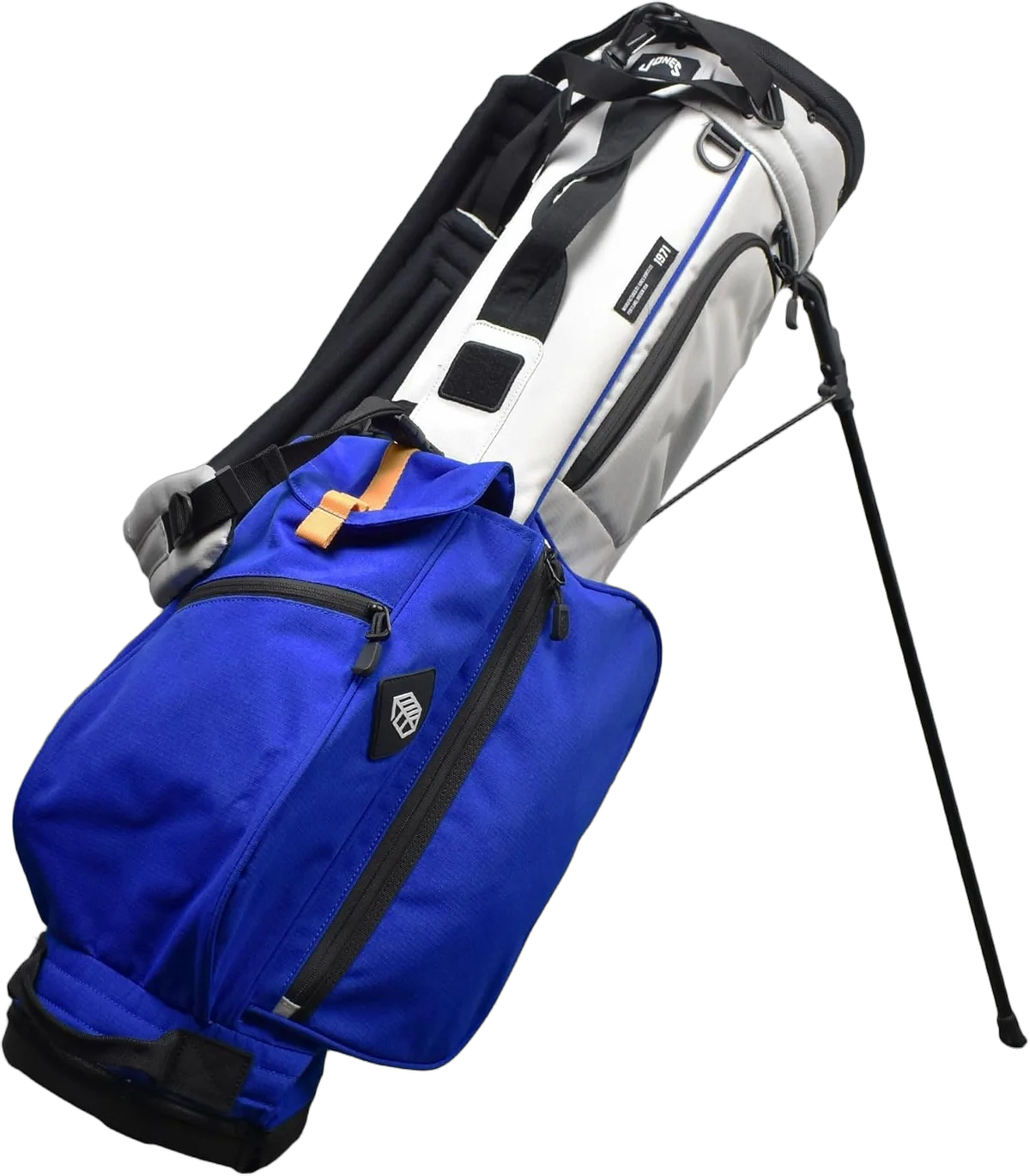
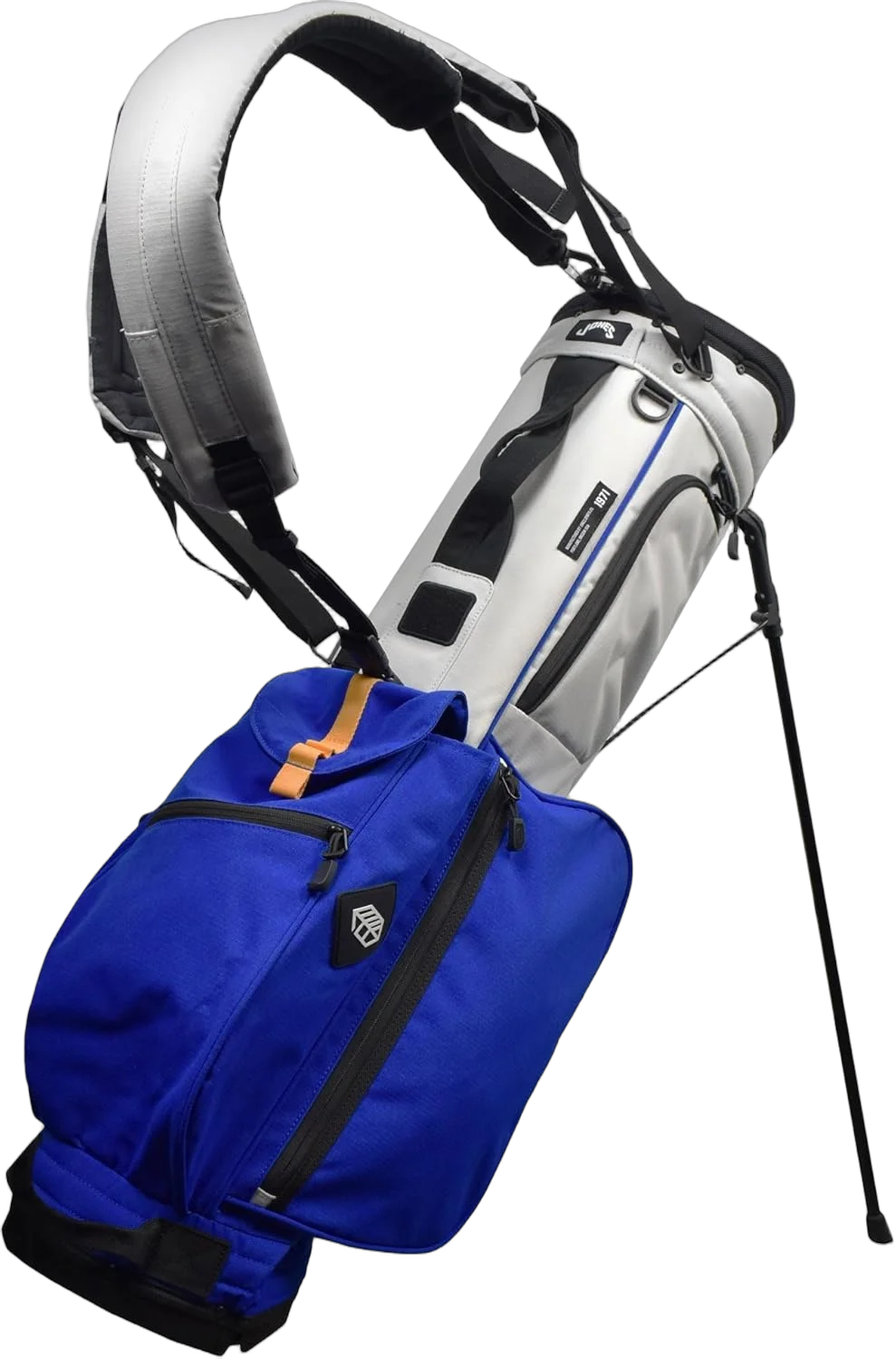
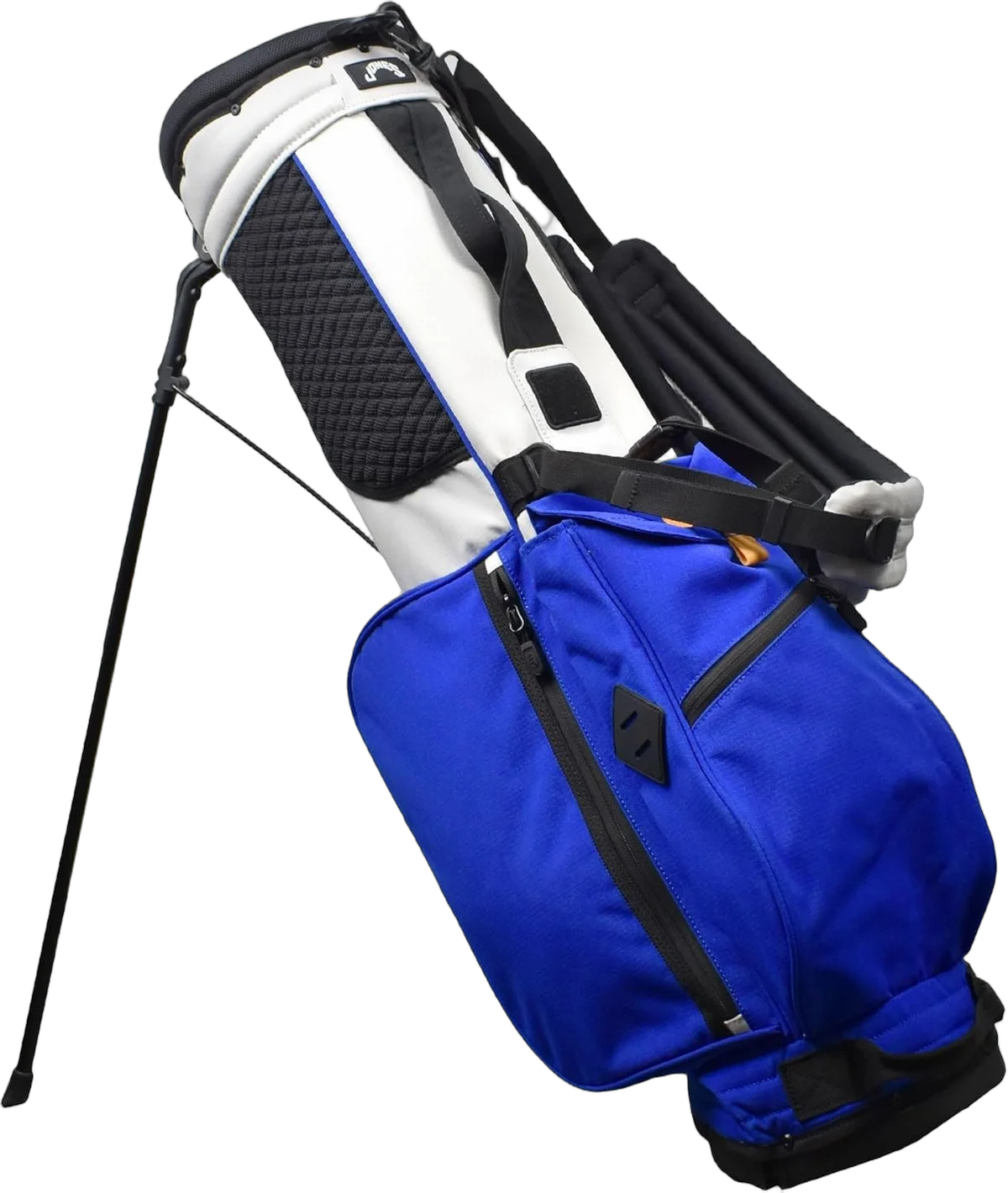
Front view of blue and white Jones Rider stand bag with straps
Crafted from 660 denier nylon with vinyl accents, the Rider is a single-strap carry bag with a 6-way divider, four pockets, and zero pretension. It measures 7.5 by 15.5 by 35 inches with a top opening of 8.75 by 7.5 inches. It comes in three colorways -- Black/White, Red/White, and Blue/White -- and can be customized with embroidery for a personal touch. At around $200, it sits at the entry point for premium carry bags, though what you are paying for here is design heritage and simplicity rather than feature count.
Design & Aesthetics
The Rider is a genuinely beautiful bag in a way that most modern golf bags simply are not. The clean two-tone design, the metallic Jones plaque, the Jones-logo zip pulls, and the twisted carry handle create an understated elegance that evokes the golden era of golf. Where competitors are trying to impress with magnetic closures, carbon-fiber legs, and modular pocket systems, the Rider impresses by doing less. It looks right at home at a classic links course, and it draws compliments from golfers who remember the original.
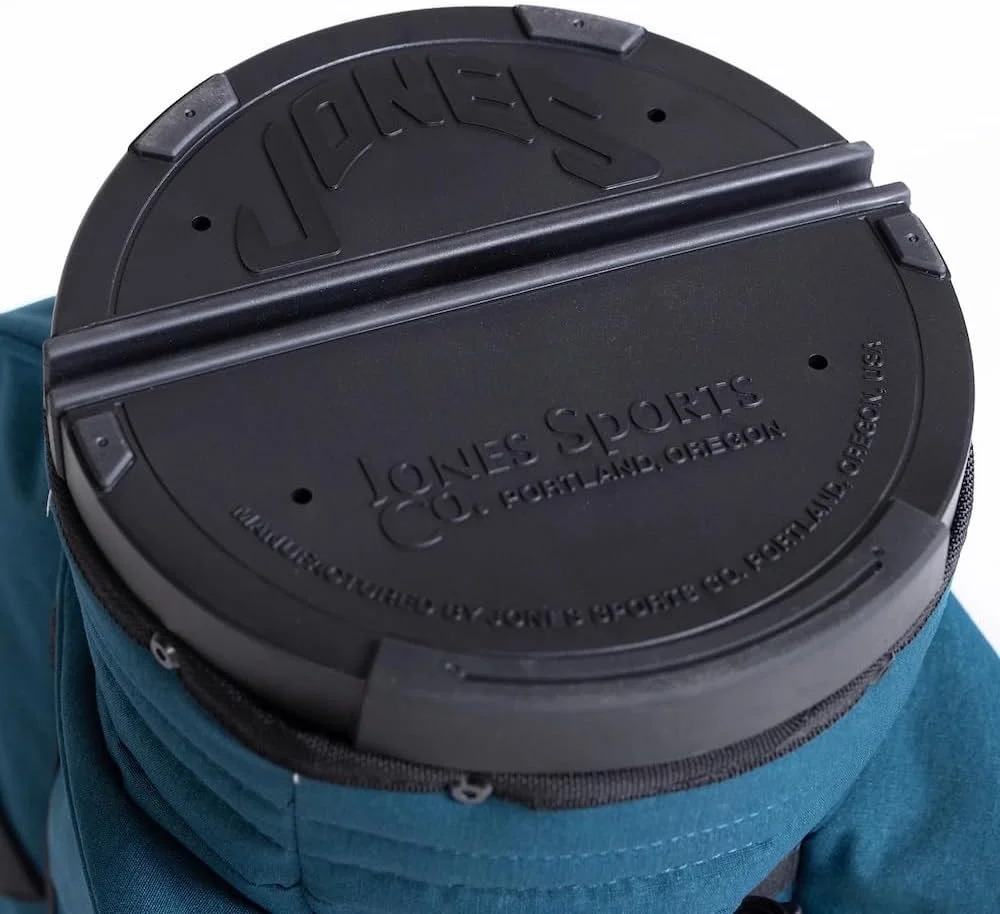
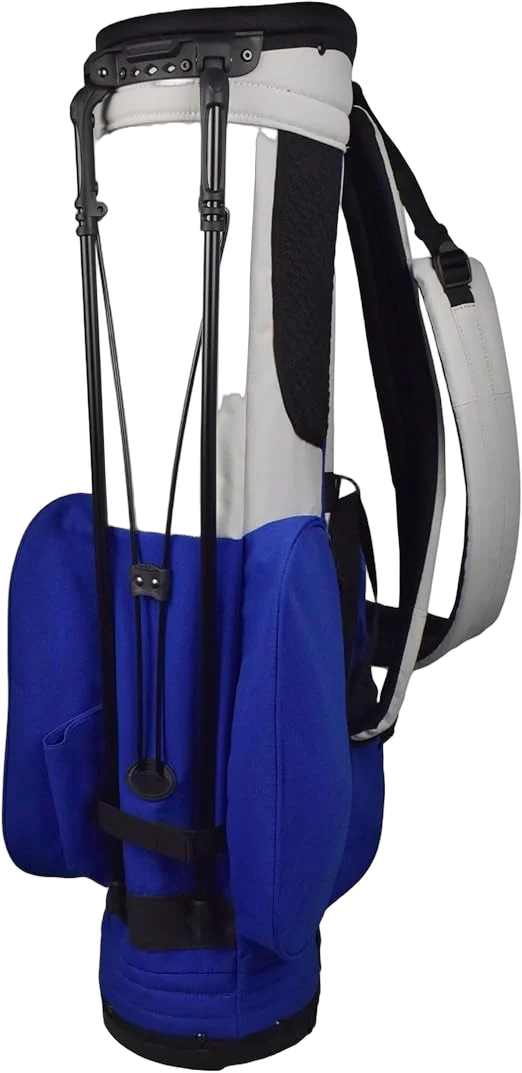
The hard-shell bottom mold is a practical design element that prevents the bag from collapsing when set on the ground. It also provides a durable contact point that protects the nylon body from wear. The bag has a slightly twisted profile when viewed from the side, which is both an aesthetic signature and a functional choice -- it helps the bag sit naturally against your hip when carried.
Jones offers custom embroidery, which is a meaningful differentiator. Whether you want your initials, a team logo, or a course name stitched onto the bag, that personalization option adds real character.
Storage & Functionality
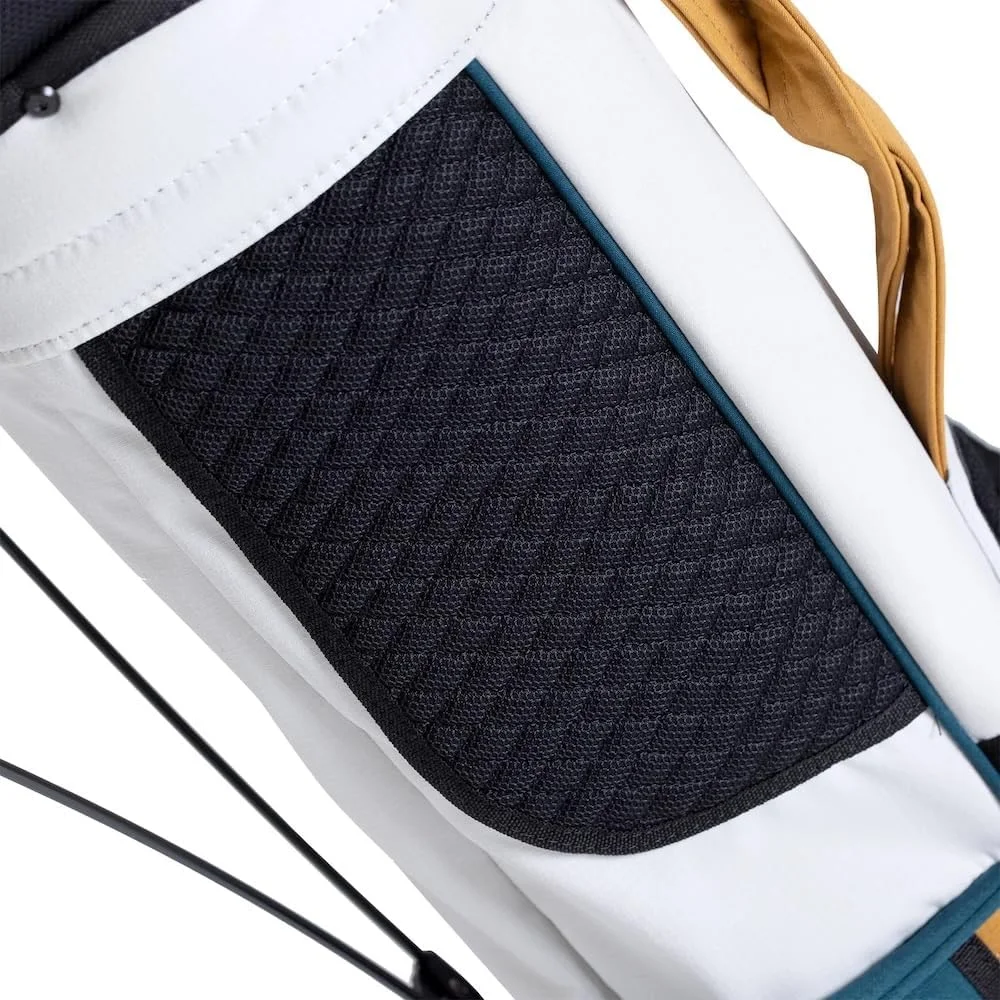
This is where you need to calibrate your expectations. The Rider has four pockets -- two in front and one in back, plus a smaller valuables pocket. That is it. You get enough room for balls, tees, a glove, a phone, your wallet, and maybe a lightweight rain jacket. There is no cooler pocket, no rangefinder pocket, no dedicated shoe compartment. An umbrella sleeve handles your umbrella, and a water bottle sleeve keeps a bottle accessible.
Close-up of mesh ventilated pocket panel with zipper detail
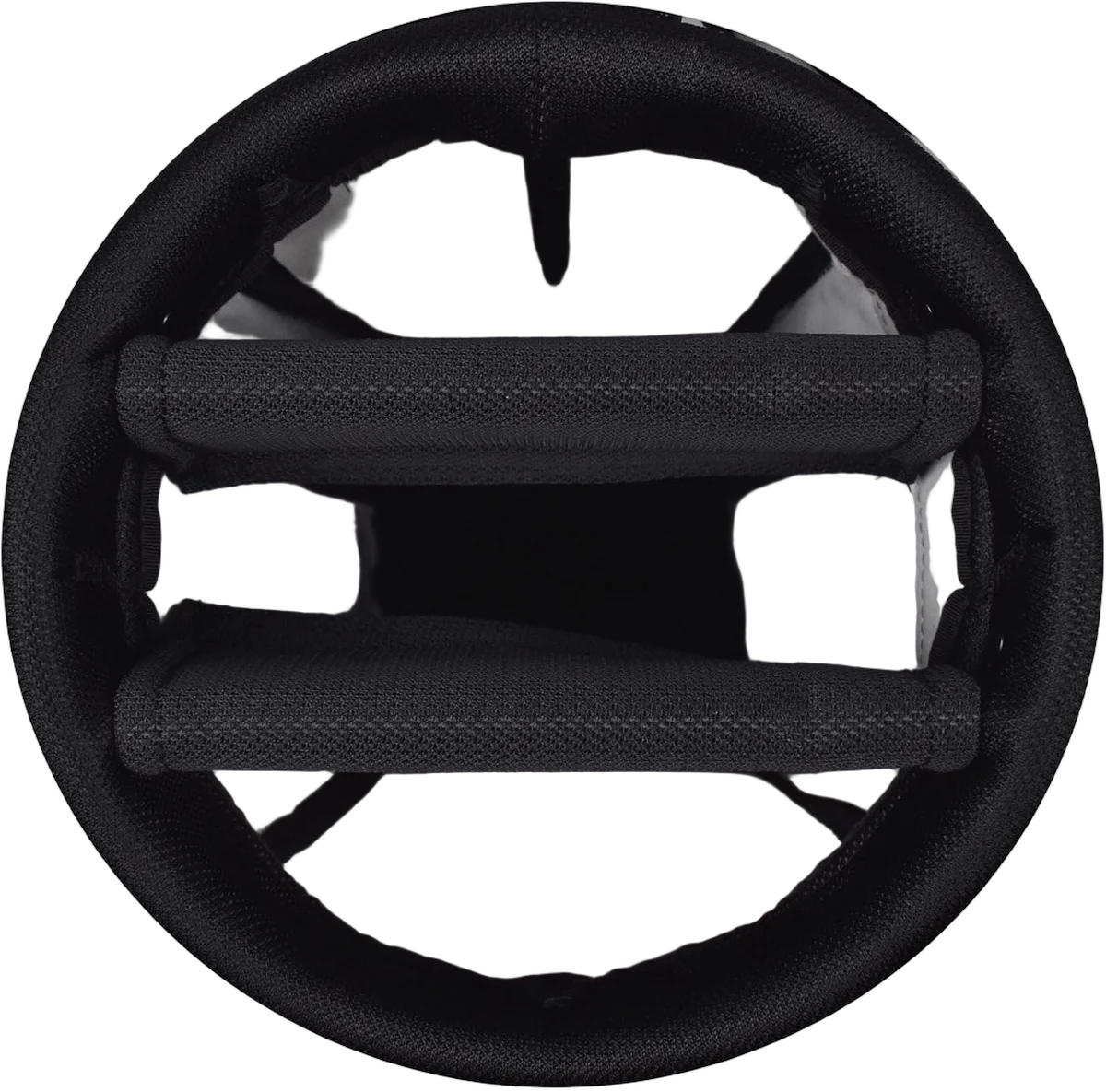
The 6-way divider with three full-length dividers keeps clubs reasonably organized without the individual-slot precision of a 14-way system. Clubs will touch within their shared sections, which is fine for most golfers but worth noting if you are particular about shaft protection. The dividers do their job -- clubs do not tangle, and extraction is quick and easy.
The single strap is padded and comfortable for a few holes, though it will fatigue your shoulder on a full 18 more than a dual-strap system would. This is an inherent limitation of the single-strap design that Jones has chosen to preserve rather than modernize. If you grew up carrying a Jones on one shoulder, it will feel like coming home. If you have only ever used dual-strap bags, the adjustment period is real.
On-Course Performance
I took the Rider out for several walking rounds, and the experience was a study in simplicity. Without a stand mechanism, you set the bag on the ground and lean it against something -- your cart, a bench, your leg. The hard-shell bottom means it will not collapse or tip easily on flat ground, but on slopes or in wind, you need to be mindful about placement. This is how golf bags worked for decades before stand legs became standard, and it demands a slightly different routine.
The light weight is genuinely appreciated over 18 holes. Without the mechanism, hardware, and extra pockets that add pounds to modern stand bags, the Rider disappears on your shoulder in a way that heavier bags simply cannot. For a quick nine holes or a casual round where you want to move fast and travel light, it is a joy to carry.
The limited storage forces you to think about what you actually need on the course. Balls, tees, a glove, a divot tool, and your phone. That is really all you need, and the Rider accommodates those essentials without excess. There is something refreshing about the discipline it imposes.
Where It Falls Short
The Rider's minimalism is both its greatest strength and its most significant limitation. Golfers accustomed to the storage capacity of modern stand or cart bags will feel constrained. There is no room for rain gear beyond a lightweight jacket, no space for multiple water bottles, and no place to stash a rangefinder where you can grab it quickly. If you play in variable weather or like to bring a full complement of accessories, the Rider will leave you wanting.
The single-strap system, while nostalgic, is objectively less comfortable than a dual-strap setup over 18 holes. Your shoulder will feel the weight difference, particularly on hilly courses. This is not a design flaw -- it is a deliberate choice -- but it limits the bag's appeal for golfers who play long walking rounds regularly.
The lack of a stand is the biggest functional compromise. You will need to find something to lean the bag against at every stop, and on open fairways, that means setting it on the ground. For some golfers, that ritual is part of the charm. For others, it is an inconvenience they are not willing to accept.
At around $200, the Rider is not cheap for a single-strap carry bag with four pockets and no stand. You are paying for the Jones name, the heritage, and the quality of construction. Whether that represents good value depends entirely on what you prioritize in a golf bag.
Verdict
The Jones Rider is a golf bag with character. In a market saturated with feature-packed, logo-covered bags competing to out-spec each other, the Rider takes the opposite approach and strips the experience down to its essence. The build quality is solid, the design is timeless, and the customization options add a personal dimension that mass-produced bags cannot match.
It is not for everyone. Golfers who need storage, stand legs, dual straps, or modern conveniences should look elsewhere. But for the minimalist golfer who values simplicity, tradition, and a connection to golf's history -- the kind of player who would rather carry seven clubs and walk nine holes than ride with a fully loaded cart bag -- the Jones Rider is one of the most satisfying bags you can own.