Garmin Approach Z82 Golf Rangefinder
Garmin — Garmin Approach Z82 Golf Rangefinder · By Troy · Jan 22, 2026
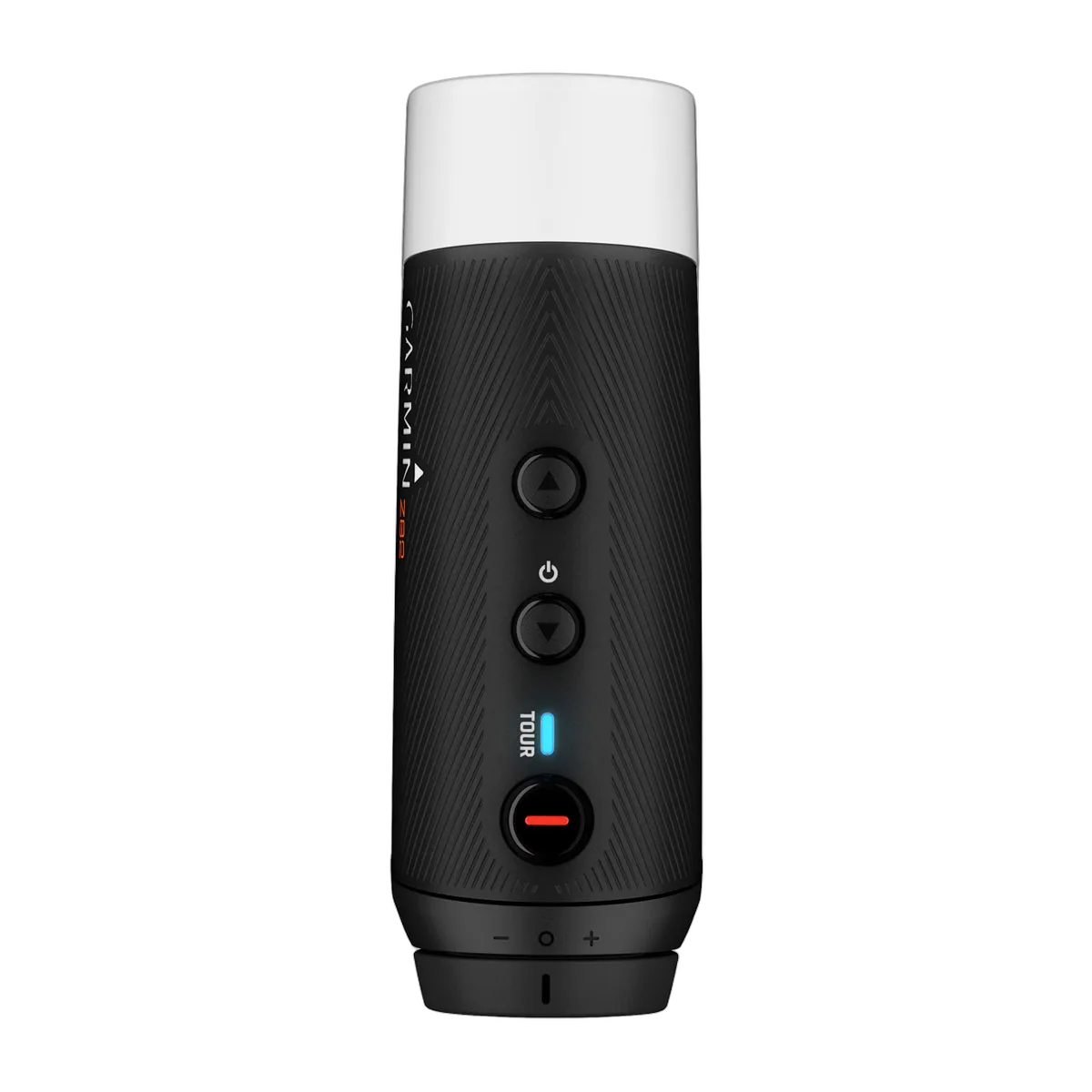
The most feature-packed rangefinder on the market asks a difficult question: how much technology is too much technology between you and a yardage?
The Big Picture
The Garmin Approach Z82 is a hybrid laser rangefinder with built-in GPS that attempts to combine everything a golfer could want into a single viewfinder. It has 6X magnification, image stabilization, vibrational flag lock, PlaysLike Distance slope adjustment, full-color 2D CourseView mapping for over 43,000 courses, hazard view, green view with front/middle/back distances, a PinPointer feature for blind shots, wind speed and direction display (when paired with a smartphone), a laser range arc overlay, and tournament mode with an external indicator light. It measures within 10 inches of the flag at distances up to 450 yards and uses LIDAR-Lite technology, the same ranging system used on NASA's Ingenuity Mars Helicopter.
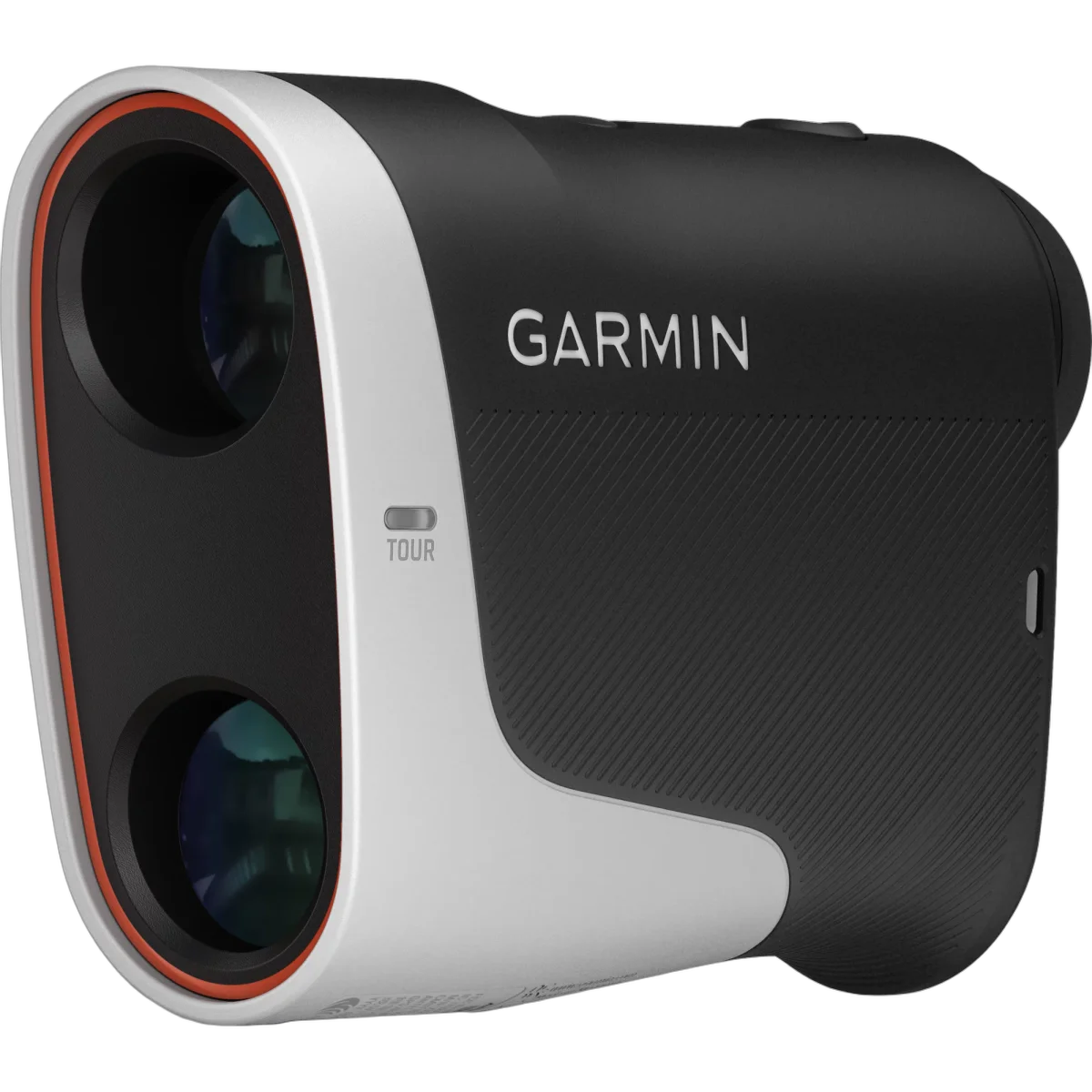
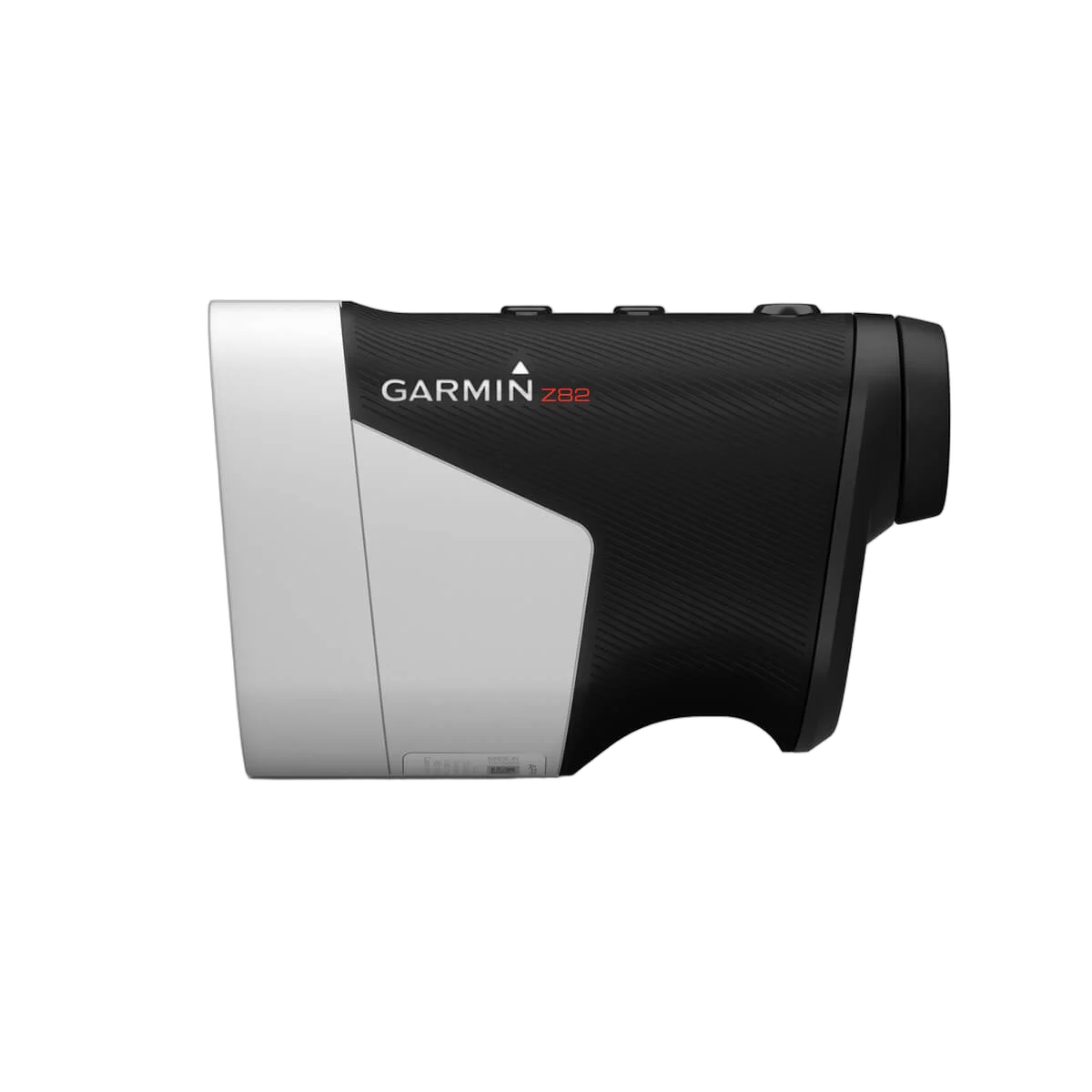
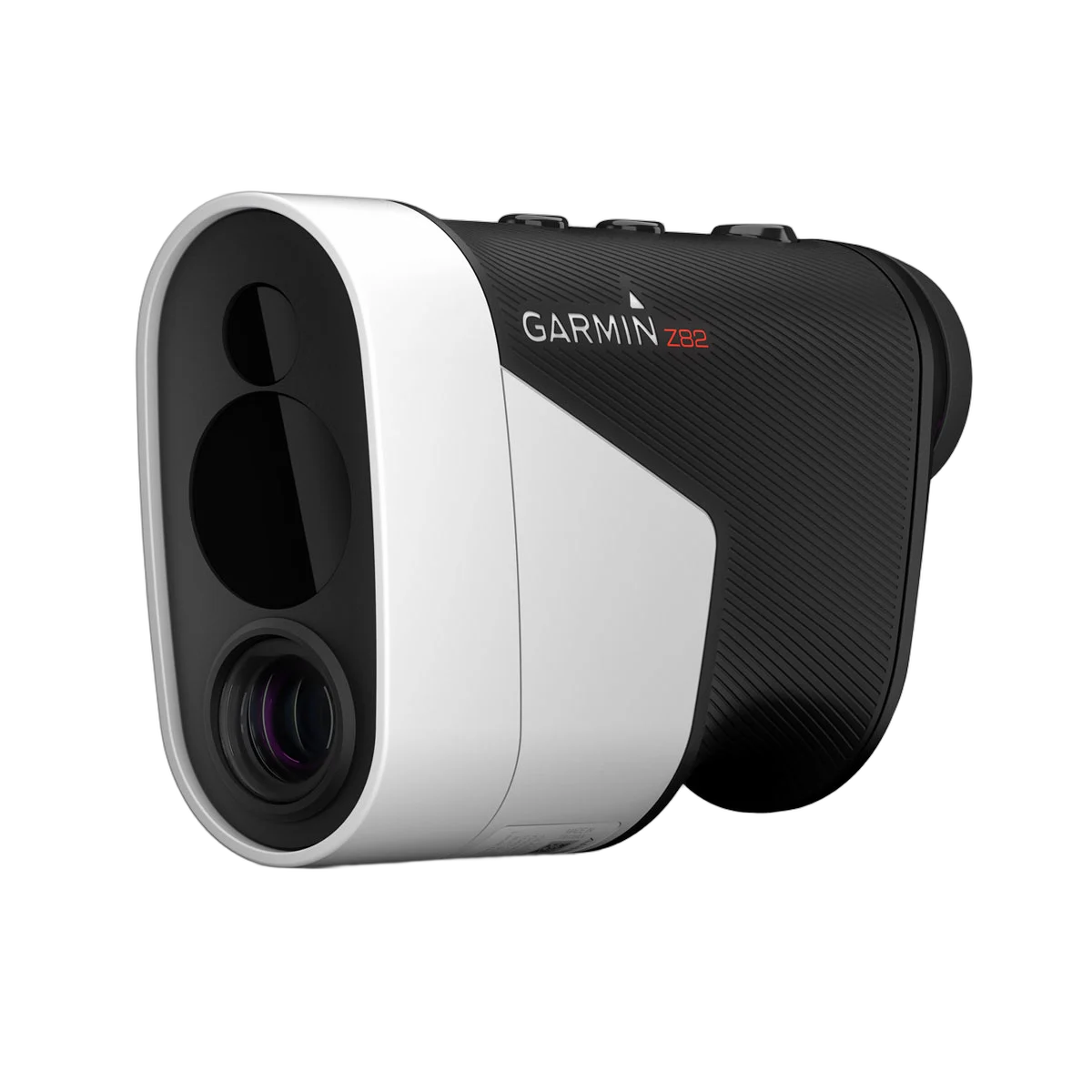
Front-angled view of Garmin Z82 showing lens and branding
On paper, this is the most advanced golf rangefinder available. In practice, it's a rangefinder that does an extraordinary number of things, some of them very well and others in ways that can frustrate rather than help.
The Z82 uses a rechargeable battery with approximately 15 hours of GPS-mode life (compared to the Z30's one-year CR2 battery). It retails around $500-600 depending on the retailer, positioning it at the premium end of the market alongside the Bushnell Pro X3+.
At Address
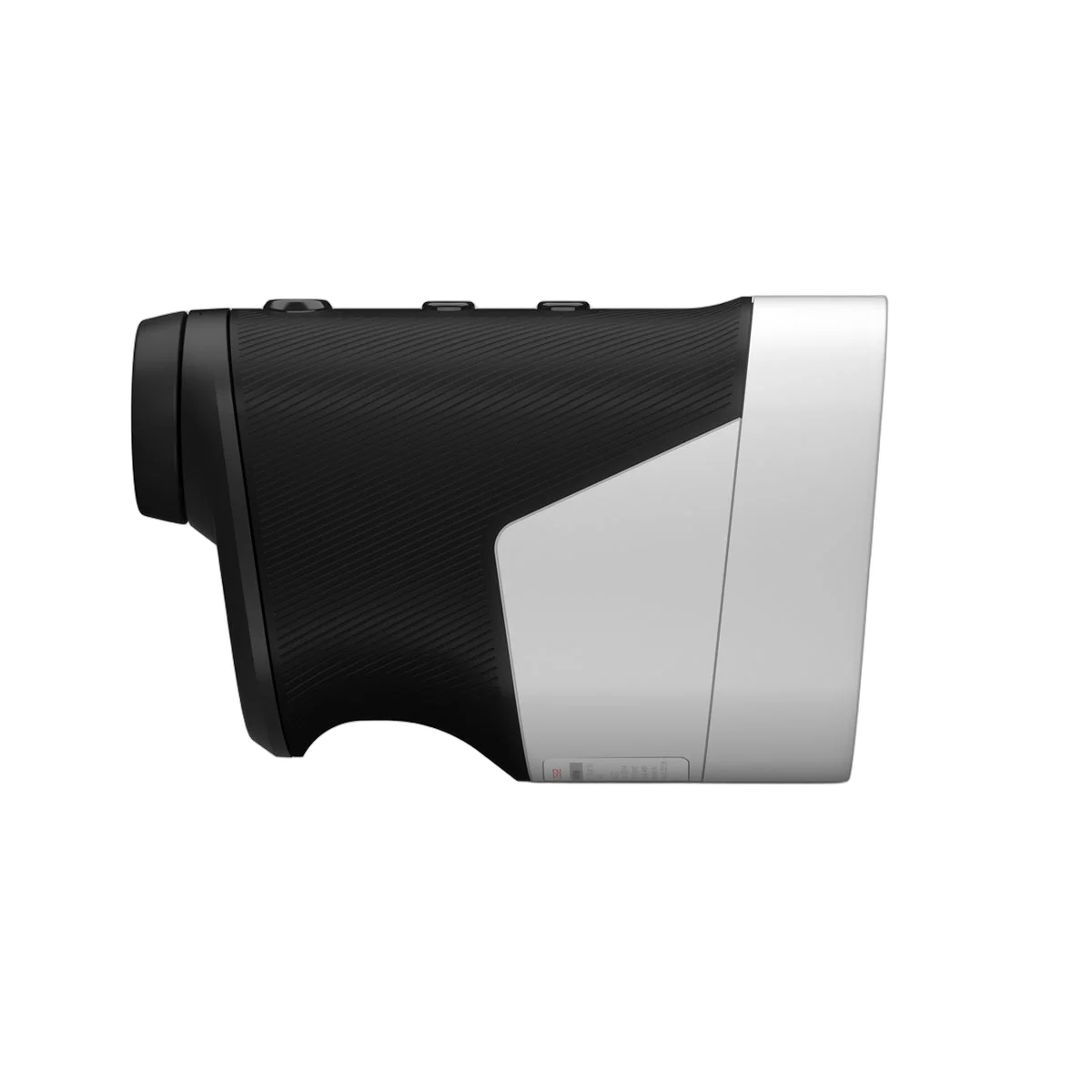
The Z82 sits comfortably in the hand with a textured accent that provides adequate grip. The buttons are well-positioned and intuitive. The overall build feels purposeful, this is clearly a premium device, and the physical quality reflects the price tag. MyGolfSpy noted the ergonomics as a positive, and the unit balances well during ranging.
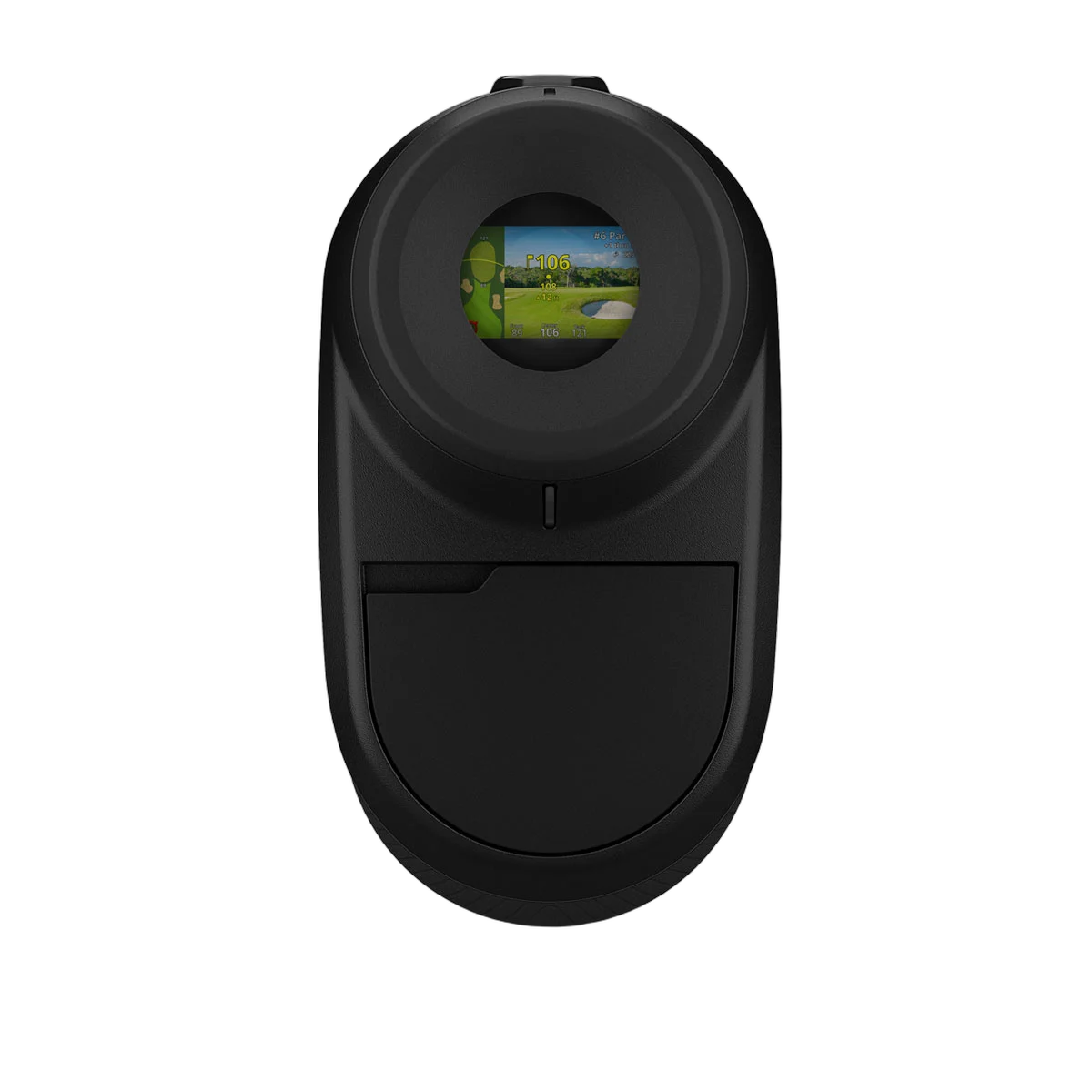
The full-color display visible through the viewfinder is where the Z82 diverges sharply from every traditional rangefinder. Rather than a simple reticle with a distance number, the Z82 presents a layered information display: distance to pin, slope-adjusted distance, front/middle/back of green, course map overlay, hazard information, and wind data. It's a lot of information in a small viewing window.
Performance
Accuracy
When the Z82 locks onto the flag, it's accurate. LIDAR-Lite technology delivers measurements within 10 inches of the flag, and Today's Golfer named it "Best for Accuracy" in their 2026 rangefinder roundup. The 450-yard maximum range exceeds the Z30's 400 yards, though it falls short of Bushnell's Tour V6 Shift at 500 yards. For the vast majority of on-course situations, 450 yards is more than sufficient.
Viewfinder display showing course overlay with yardage readings
The accuracy qualifier, "when the Z82 locks onto the flag", is important, and I'll address it in a moment.
GPS Integration & Features
The built-in GPS is the Z82's defining feature and its biggest advantage over standalone lasers. With 43,000+ preloaded courses, you get a comprehensive course map through the viewfinder without needing a separate GPS watch or phone app. The green view showing front, middle, and back distances is immediately useful for approach shots. The hazard view lets you scroll through hazards and see critical distance information. The laser range arc draws a visual arc at the ranged distance on the course map, showing what's in play left and right of your target.
When paired with a smartphone via Bluetooth, the Z82 also displays wind speed and direction, data that can meaningfully influence club selection on exposed courses.
The PinPointer feature is designed to show you the direction to the green on blind shots. In theory, this solves one of golf's persistent annoyances. In practice, user reports suggest the feature's accuracy is inconsistent, one detailed user review documented it pointing nowhere near the green. This may be a calibration issue or a limitation of the technology, but it's worth noting that the feature may not deliver on its promise reliably.
Speed & Reliability Concerns
This is where the Z82's ambition creates friction. A traditional rangefinder workflow is: grab, point, press, read, two seconds total. The Z82's workflow is slower by design because the full-color GPS display needs time to initialize.
One detailed user account documented the screen taking 5-8 seconds to turn on, followed by additional time to acquire the pin. On a busy course with groups waiting, that delay compounds into real pace-of-play pressure. The same user reported that the Z82 repeatedly locked onto background objects (trees behind the green) rather than the flag, requiring 4-5 attempts to get an accurate pin distance. The GPS coordinates displayed on-screen would show inconsistencies, a "170 yards to pin" laser reading while the GPS showed 152 to the back of the green, for instance, revealing that the laser had grabbed the wrong target.
MyGolfSpy acknowledged this tension more diplomatically, noting the display "can feel gimmicky at times" and "occasionally looks a little washed out, like you're looking through a camera lens." The information-dense viewfinder is innovative, but it introduces visual complexity that a simple red number on a clean display doesn't have.
These concerns don't appear to be universal, MyGolfSpy's testers gave it top marks for accuracy and ease of use, and the rangefinder has earned a "Best for Accuracy" designation from Today's Golfer. But the negative user experiences are specific and detailed enough that they can't be dismissed as isolated defects.
Battery Life
The rechargeable battery provides approximately 15 hours in GPS mode. Enough for several rounds but requiring regular charging. This is a meaningful operational difference from CR2-powered rangefinders that last 6-12 months without attention. Today's Golfer flagged this specifically, noting that rangefinders with expanded connectivity "don't carry the same battery life" and typically deliver 10-12 hours of use. If you forget to charge before a round, you're carrying a dead device.
Tournament Mode
An external indicator light shows when slope and GPS features are disabled for tournament play. The light is visible to playing partners and officials, which is the right approach to compliance transparency.
Verdict
The Garmin Approach Z82 is the most ambitious rangefinder on the market. The built-in GPS with 43,000+ courses, full-color course mapping through the viewfinder, green view, hazard view, wind data, and laser range arc are features no other rangefinder combines into a single device. When everything works as designed, the Z82 provides the most informed ranging experience available — you're not just getting a distance, you're getting a complete picture of the hole.
The problem is that "everything working as designed" isn't guaranteed on every use. The speed trade-off is real: the GPS display takes time to initialize, and the pin-lock can struggle with background objects in ways that simpler rangefinders don't. For golfers who value instant grab-and-read speed above all else, the Z82 may actually slow them down. The rechargeable battery requires a charging habit that CR2 batteries don't. And the information-dense display, while innovative, can feel cluttered rather than clarifying.
The Z82 is best understood as a GPS device with an excellent laser built in, rather than a laser rangefinder with GPS added on. If you approach it with that mindset — appreciating the course mapping, green view, and hazard information as primary features and the laser as the precision tool within that ecosystem — the value proposition makes more sense. If you just want the fastest, most reliable way to get a number to the flag, the Bushnell Tour V6 Shift or Pro X3+ will serve you better.
At $500-600, the Z82 competes directly with the Pro X3+ ($550) and costs more than the newer Z30 ($500) which offers Garmin ecosystem integration with faster, simpler laser operation. For Garmin loyalists who want everything in one device without wearing a GPS watch, the Z82 remains unique. For everyone else, simpler is probably better.