Callaway Big Bertha B23 Fairway Wood
Callaway — Callaway Big Bertha B23 Fairway Wood · By Lauryl · Feb 11, 2026
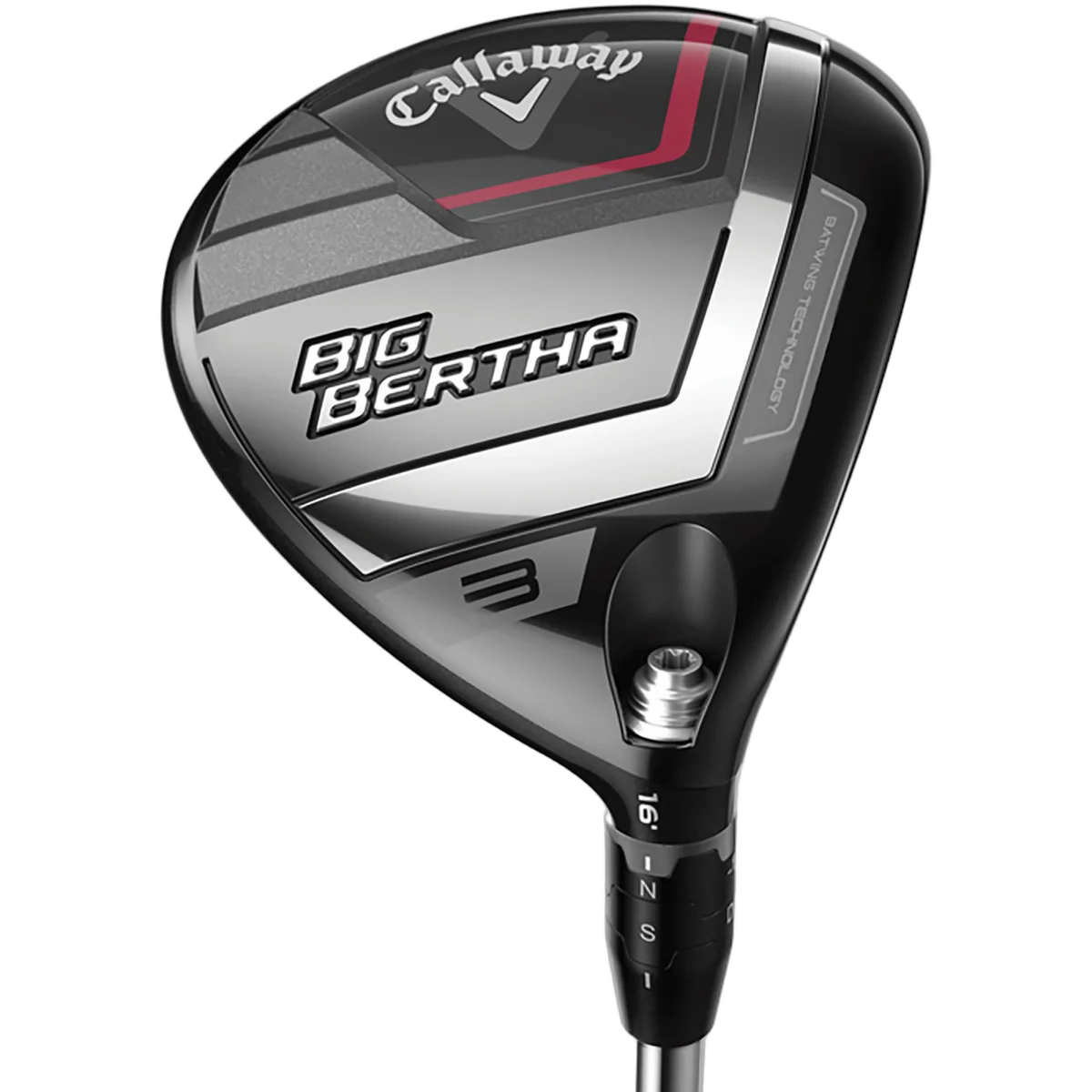
Callaway revives its most famous name to build a fairway wood that prioritizes launch and forgiveness for players who need help getting the ball in the air.
The Big Picture
The Big Bertha name has been synonymous with accessibility in golf equipment for three decades, and the B23 fairway wood continues that tradition without apology. This is not a club designed for tour players or low-handicappers looking to work the ball both ways off the deck. It is a club designed for the mid-to-high handicap golfer who struggles to get fairway woods airborne consistently and who needs a generous hitting area to compensate for less-than-perfect contact.
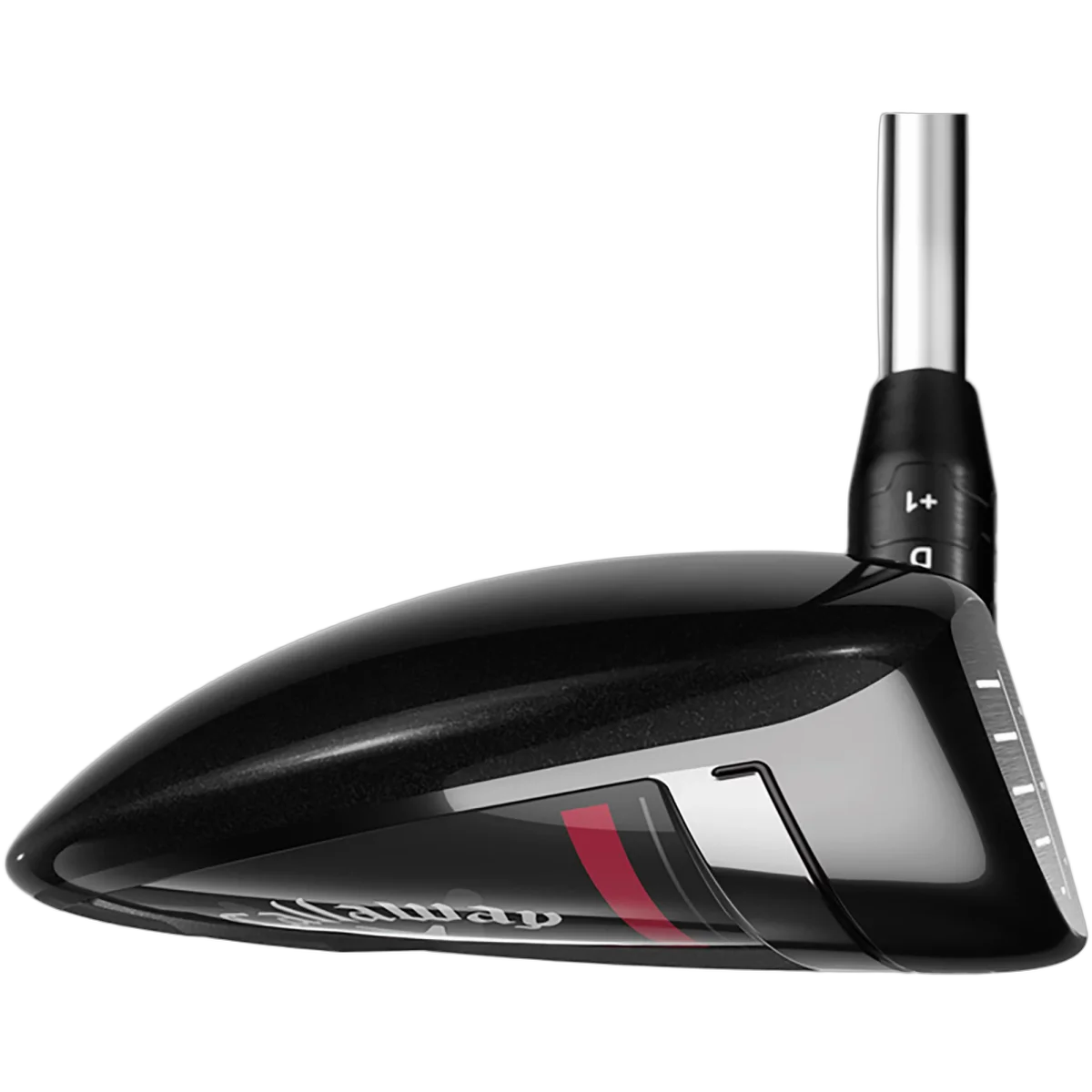
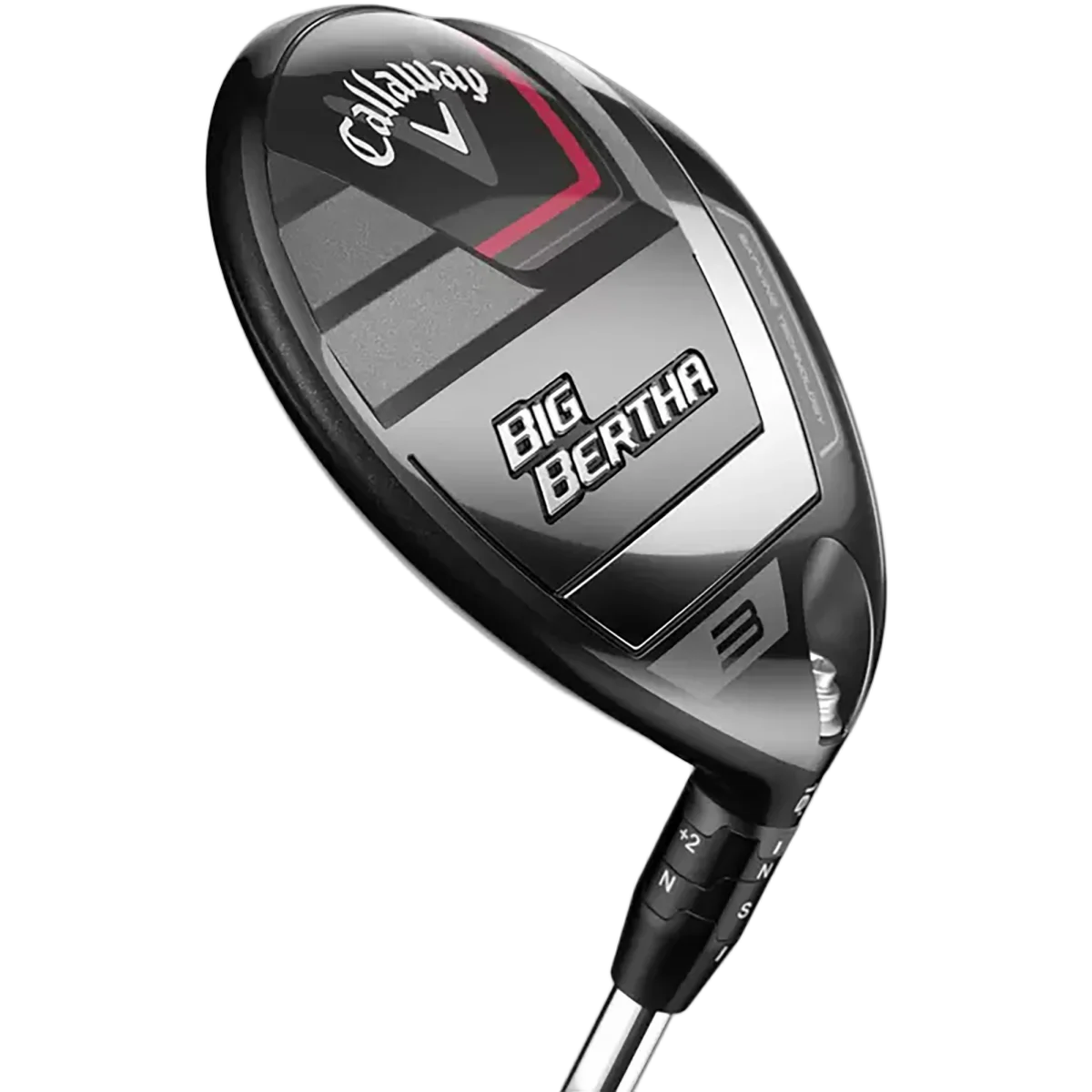
Heel-side profile showing sole design and red accent stripe
Callaway built the B23 around their Jailbreak AI Velocity Blades -- two internal bars that connect the sole to the crown, stiffening the body so that more energy transfers to the face at impact. The face itself is a high-strength C300 Maraging Steel construction, a material that allows Callaway to make the face thinner and hotter without sacrificing durability. The B23 also features a heavy tungsten weight positioned low and deep in the sole to push the center of gravity down, which directly promotes higher launch with less effort from the golfer.
At roughly $250 retail, the B23 slots in at a reasonable price point for a major-brand fairway wood. It is not budget territory, but it is well below the $300-plus range that Callaway's Paradym and Ai Smoke lines occupy. For the golfer it targets -- someone who wants reliable launch, decent distance, and forgiveness on off-center hits -- the value proposition is solid.
At Address
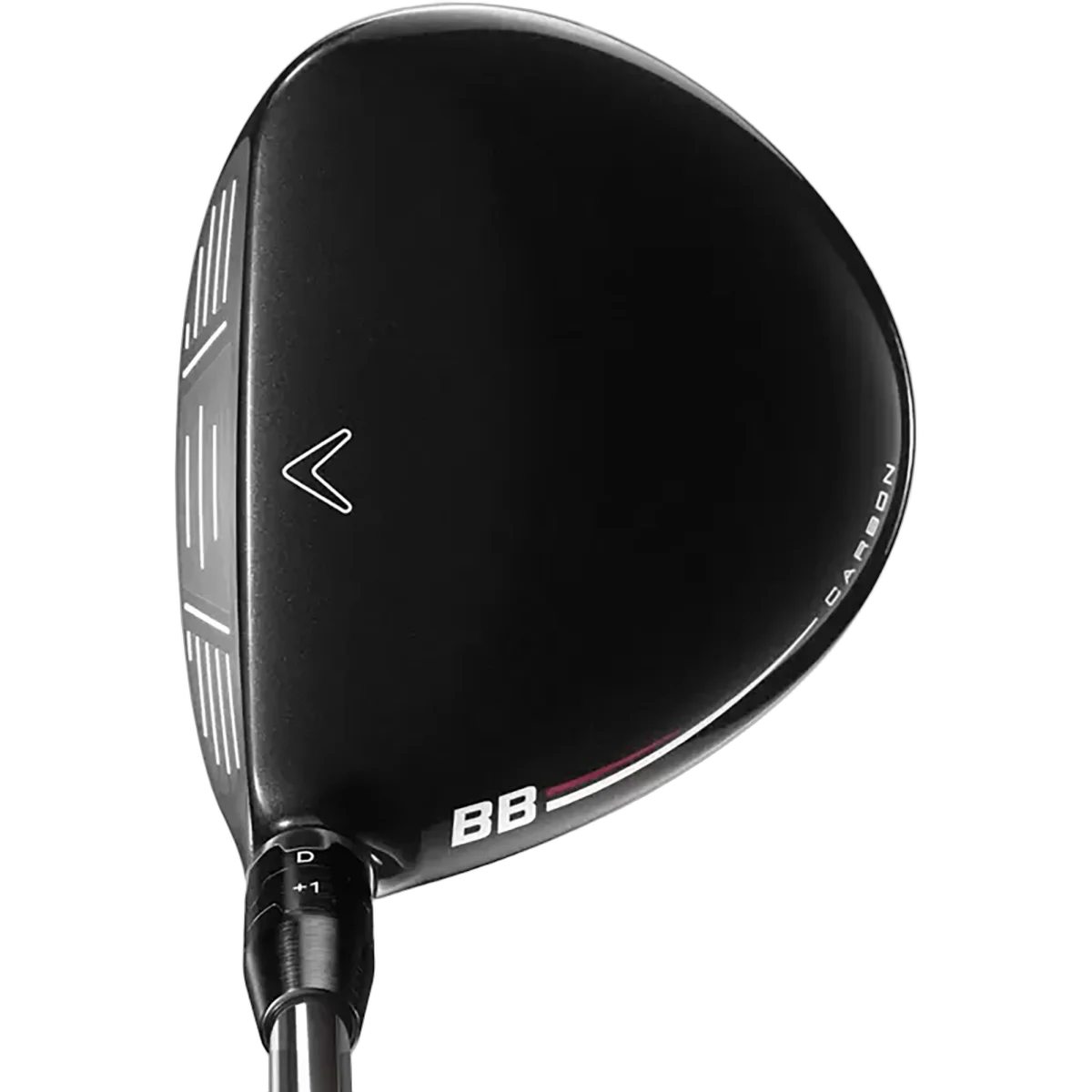
The Big Bertha B23 sits behind the ball with a decidedly oversized profile. Callaway leaned into a larger head shape here, and it shows. The footprint is noticeably bigger than what you will see from the Paradym or Rogue ST fairway woods, particularly from heel to toe. For the target player, that extra real estate is reassuring. For a better player accustomed to more compact, workable shapes, it may look bulky.
The crown is a matte black finish that keeps glare in check and gives the club a clean look despite its larger dimensions. There is a subtle alignment feature built into the crown that helps with aiming without being overly busy. The sole is more complex, with visible tungsten weighting and Jailbreak structures, but none of that is visible at address. Overall, the B23 looks like what it is -- a confidence-building fairway wood that tells you there is plenty of face to find.
Sound & Feel
Impact feel on the B23 is on the firmer side of the spectrum, which is consistent with what the Jailbreak bars produce. Center strikes generate a solid, medium-pitched crack that is satisfying without being particularly distinctive. There is enough feedback to know when you have caught it flush, but the sensation is more about solidity than liveliness.
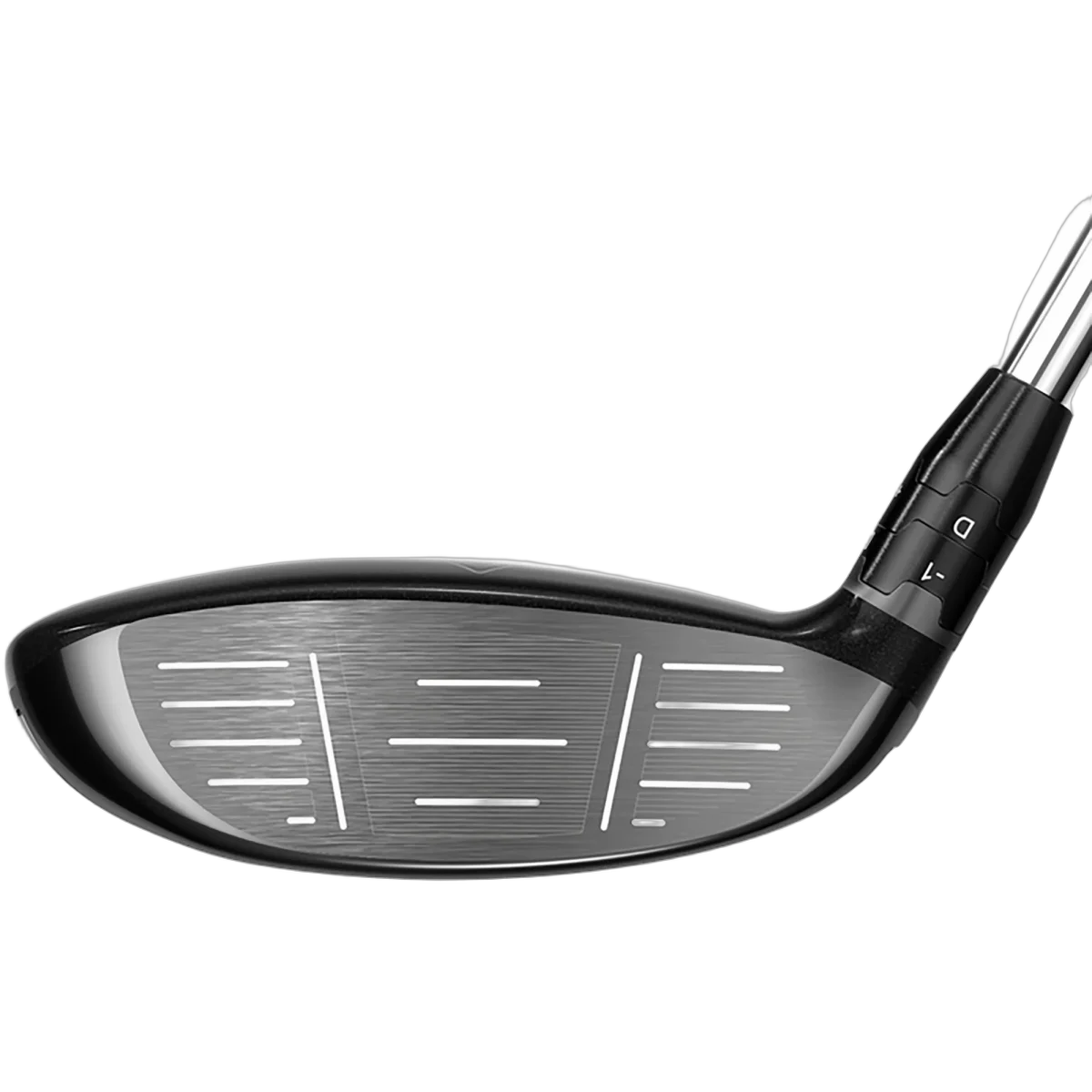
Close-up of Big Bertha fairway wood face and grooves
Off-center hits are where the B23 earns some points. The combination of high MOI and the maraging steel face does a reasonable job of muting the sting on toe and heel strikes. You can tell you have missed the center, but the club does not punish you the way a compact, low-spin fairway wood would. That said, the sound on mishits can get a bit hollow and tinny, particularly on strikes low on the face. It is not unpleasant, but it lacks the refined acoustic quality that Callaway achieves in their premium lines.
Performance
Ball Speed & Distance
The B23 fairway wood produces competitive ball speeds for its category, though it is not going to out-distance Callaway's own higher-end offerings or the best fairway woods from TaylorMade and Titleist. Where the Jailbreak AI Velocity Blades and maraging steel face earn their keep is on mishits. Ball speed retention across the face is genuinely good -- strikes that land a half inch toward the heel or toe hold speed better than I expected, and the practical result is that your average distance over a full round is higher than the pure center-strike numbers would suggest.
Off a tee on par fives and longer par fours, I saw carry distances that were respectable for a fairway wood in this class. Off the deck, the high-launch design makes it easier to get usable distance from the fairway compared to lower-spinning, lower-launching options that demand precise contact to perform.
The distance ceiling is not elite. Golfers with faster swing speeds who make consistent center contact will find more yards in the Paradym or Ai Smoke families. But for the 85-95 mph swing speed player who catches it a bit inconsistent, the B23 narrows the gap between good swings and mediocre ones, and that matters more over 18 holes than peak distance on your best strike.
Launch & Spin
This is the B23's calling card. The low and deep CG placement combined with the loft options make this one of the easiest fairway woods to launch that I have hit in recent memory. Golfers who struggle to get a traditional fairway wood up in the air will notice an immediate difference. The ball climbs quickly off the face and holds a high, towering flight that lands softly.
Spin numbers run on the higher side, which is the trade-off for all that launch assistance. For slower swing speed players, that additional spin is actually beneficial -- it keeps the ball in the air longer and helps maximize carry. For faster swingers, the elevated spin can become a liability, producing a flight that balloons and sacrifices distance, particularly in windy conditions. This is a club that works best when paired with the swing speed profile it was designed for.
Dispersion & Shot Shape
Forgiveness on the B23 is above average for fairway woods, which tends to be a category where off-center hits are punished more severely than with drivers. The oversized head and high MOI do their job -- mishits hold their line reasonably well, and the distance loss on off-center strikes is manageable rather than catastrophic.
Sole view showing Big Bertha branding and adjustable hosel
Shot shaping, however, is limited. The high MOI that makes the B23 forgiving also makes it resistant to manipulation. If you are trying to hit a controlled draw around a dogleg or hold a fade into a crosswind, this is not the club that will cooperate easily. It wants to go straight or follow whatever slight bias your swing naturally produces. For the target demographic, that is a feature, not a bug. Predictability is more valuable than versatility for the golfer who just wants to advance the ball 200-plus yards toward the green.
Verdict
The Callaway Big Bertha B23 Fairway Wood is a well-executed club for a specific golfer. If you are a mid-to-high handicapper who struggles with fairway wood consistency, who has trouble getting the ball up in the air, or who simply wants a larger, more forgiving option that inspires confidence at address, the B23 delivers on its promises. The easy launch, solid mishit performance, and forgiving profile make it a reliable tool for the player it was built for.
Strengths: exceptional ease of launch, strong ball speed retention on off-center strikes, confidence-inspiring head shape, and a reasonable price point relative to Callaway's premium lines.
Weaknesses: the oversized profile will not appeal to better players, spin runs high for faster swing speeds, shot shaping ability is minimal, and the sound and feel lack the refinement of Callaway's top-tier offerings. This is also not a distance leader in the category -- golfers who make consistent center contact will find more yards elsewhere.
The B23 is a solid choice for the golfer who knows they need help with their fairway woods and is not chasing tour-level performance. It does what Big Bertha clubs have always done -- make the game a little easier for the player who needs it most.